Business
A day without Mexicans in Mammoth? Locals mull how to get a message to Trump

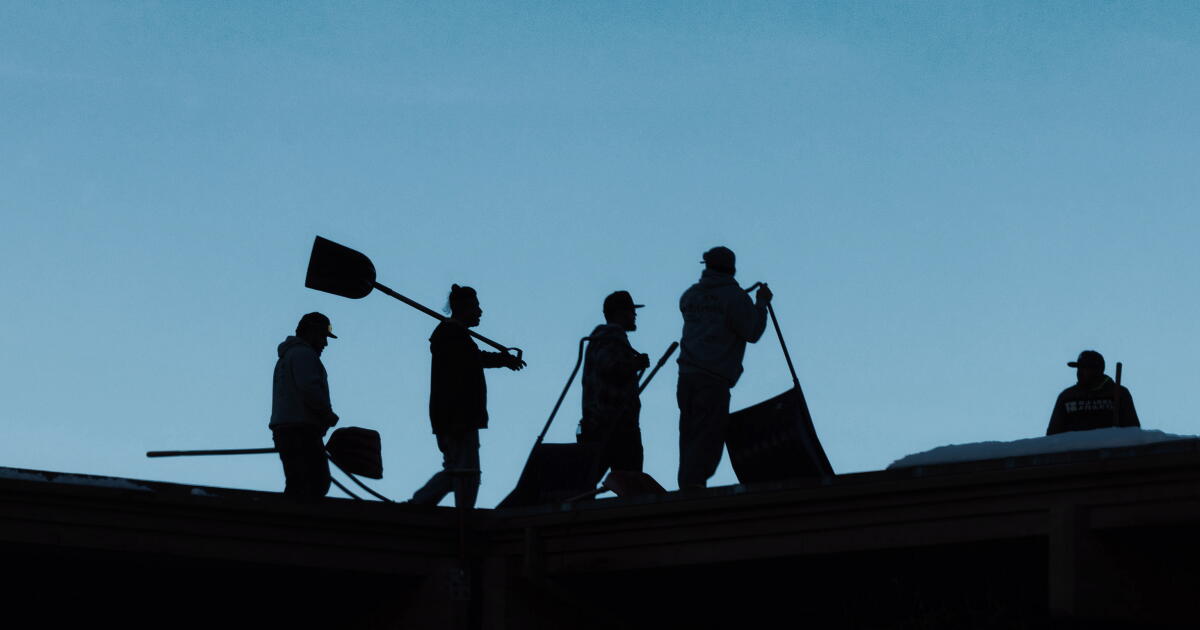
MAMMOTH LAKES, Calif. — If all the service workers born in Mexico stayed home from their jobs for just one day in this thriving resort town perched high in California’s Sierra Nevada, the humming tourist economy would probably faceplant harder than a first-time skier on an icy expert slope.
Most of the restaurants would have no staff, residents say. Hotels and Airbnbs would suffer the same fate. Construction projects across this posh skiing destination would come to a grinding halt.
“I think that would be like one of those zombie movies,” said Jose Diaz, 33, from Sinaloa, a supervisor at the Stove, a cozy breakfast spot in the heart of town.
Like so many others who have made their way here from small towns in Mexico, Diaz didn’t come for the skiing. He had heard through the grapevine that Mammoth was a good place to earn a steady paycheck.
Restaurant kitchens and hotel break rooms in Mammoth Lakes have been buzzing with the notion of Latino workers staging a one-day strike to demonstrate the town’s dependence on imported labor.
(Brian van der Brug / Los Angeles Times)
That was 14 years ago. Now, Diaz and his wife — she’s from Guadalajara, and they met working at a Mammoth restaurant — are both here legally, he said. They have two kids born in the U.S. and recently bought a condo in town.
But, like almost everyone else in this alpine community of about 7,000 people, they have friends and family who would be vulnerable if President-elect Donald Trump’s pronouncements about deporting millions of undocumented immigrants actually come to pass.
Locals are torn about how exactly to respond. Some workers say they are counting on Trump, given his business background, to take a softer stance when it comes to resort towns such as Mammoth and South Lake Tahoe, whose economies would be devastated by mass deportations.
Others urge something more proactive: Restaurant kitchens, hotel break rooms and group chats have been buzzing with the notion of Latino workers staging a one-day strike to demonstrate the town’s dependence on imported labor.
Mayor Chris Bubser said she sympathizes with the growing anxiety around deportations, but hopes the strike doesn’t materialize.
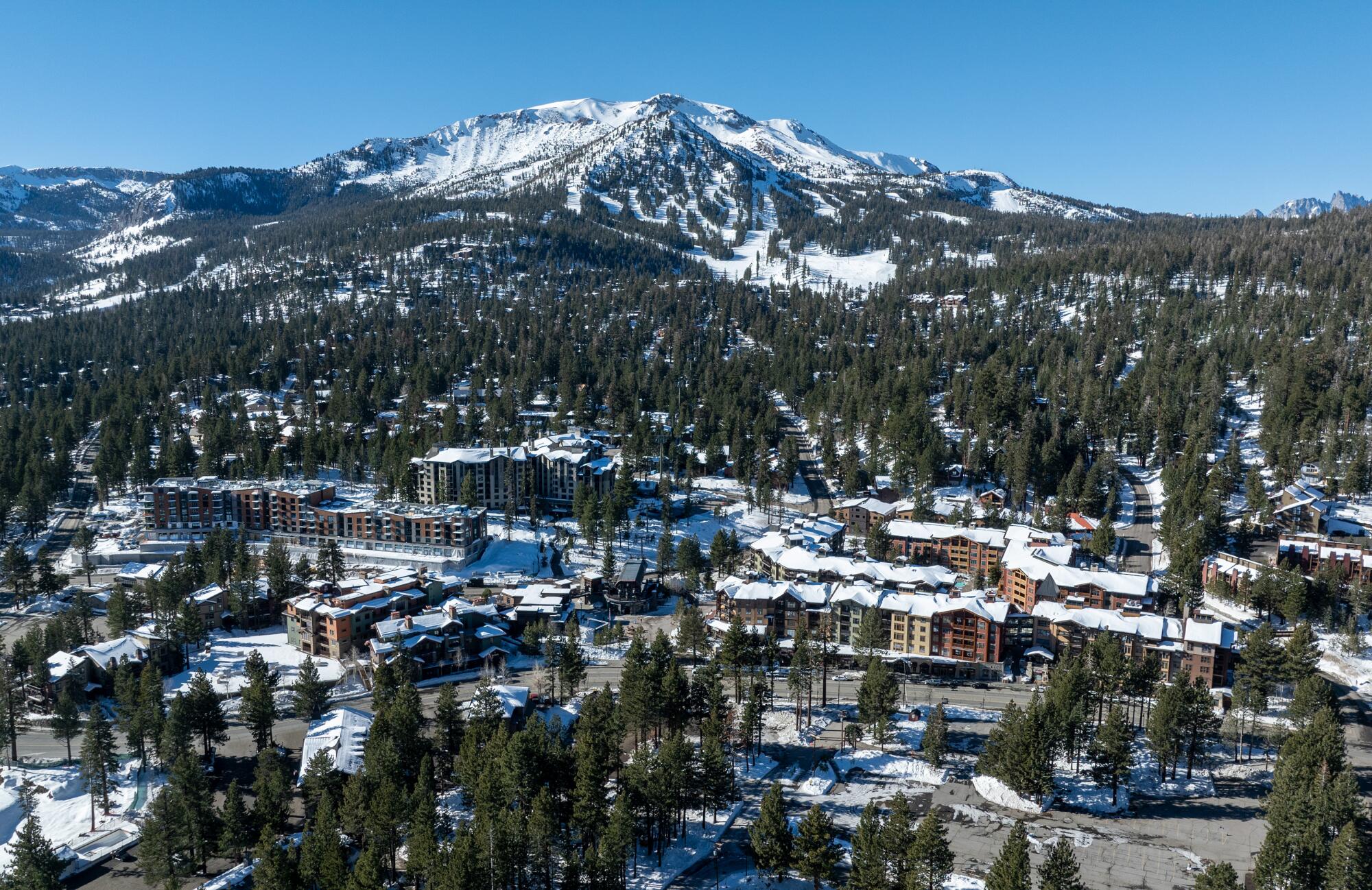
Mammoth Lakes residents say their resort town would be devastated if the undocumented workers who provide much of the labor were swept up in mass deportations.
(Brian van der Brug / Los Angeles Times)
“I feel badly for the business owners, because they’re not the ones making these awful threats and they’d be left in the lurch,” Bubser said.
As state and local officials across California grapple with the potential consequences of Trump’s proposed deportations, the natural focus is on farm communities in the Central Valley, where roughly half the people working in the fields and orchards are believed to be undocumented.
But pricier ZIP Codes are vulnerable, too, and it’s hard to imagine anywhere in the state that would suffer more than Mammoth Lakes if a substantial percentage of its undocumented workforce suddenly disappeared.
That’s because almost all of the tourists who flock to this internationally renowned resort are white-collar professionals. And the people who own property are, by and large, real estate investors, skiers with enough money to afford a second home or well-to-do retirees who headed for the hills to escape the congestion of coastal cities. None of them are likely to respond to help-wanted ads for line cooks and snowplow drivers.
So, immigrants end up doing most of the labor.

A worker moves lumber at a condominium construction site in Mammoth Lakes.
(Brian van der Brug / Los Angeles Times)
About a third of Mammoth’s population is Hispanic, according to the U.S. Census Bureau, and more than half the students in the local public school system are from Spanish-speaking homes.
Many of the Latinos in town are citizens or green card holders, some from families who have lived here for generations. But residents guess at least half are in the country illegally. They’re not hard to find.
On a recent chilly afternoon, about a half dozen men were clearing snow from a commercial office building in town. The roofing company owner asked to be identified only as Julio, because he is undocumented. He said he has been doing construction work in the U.S. since 1989, most of that time in Mammoth Lakes.
His company has 15 employees, he said. He also has three kids, all U.S. citizens; his oldest is an officer for the California Highway Patrol.
He has doubts about the benefits of a one-day strike by Latino workers: “The purpose of doing it is to show that Hispanic labor is necessary, but I’m pretty sure everyone already knows that,” he said with a shrug.
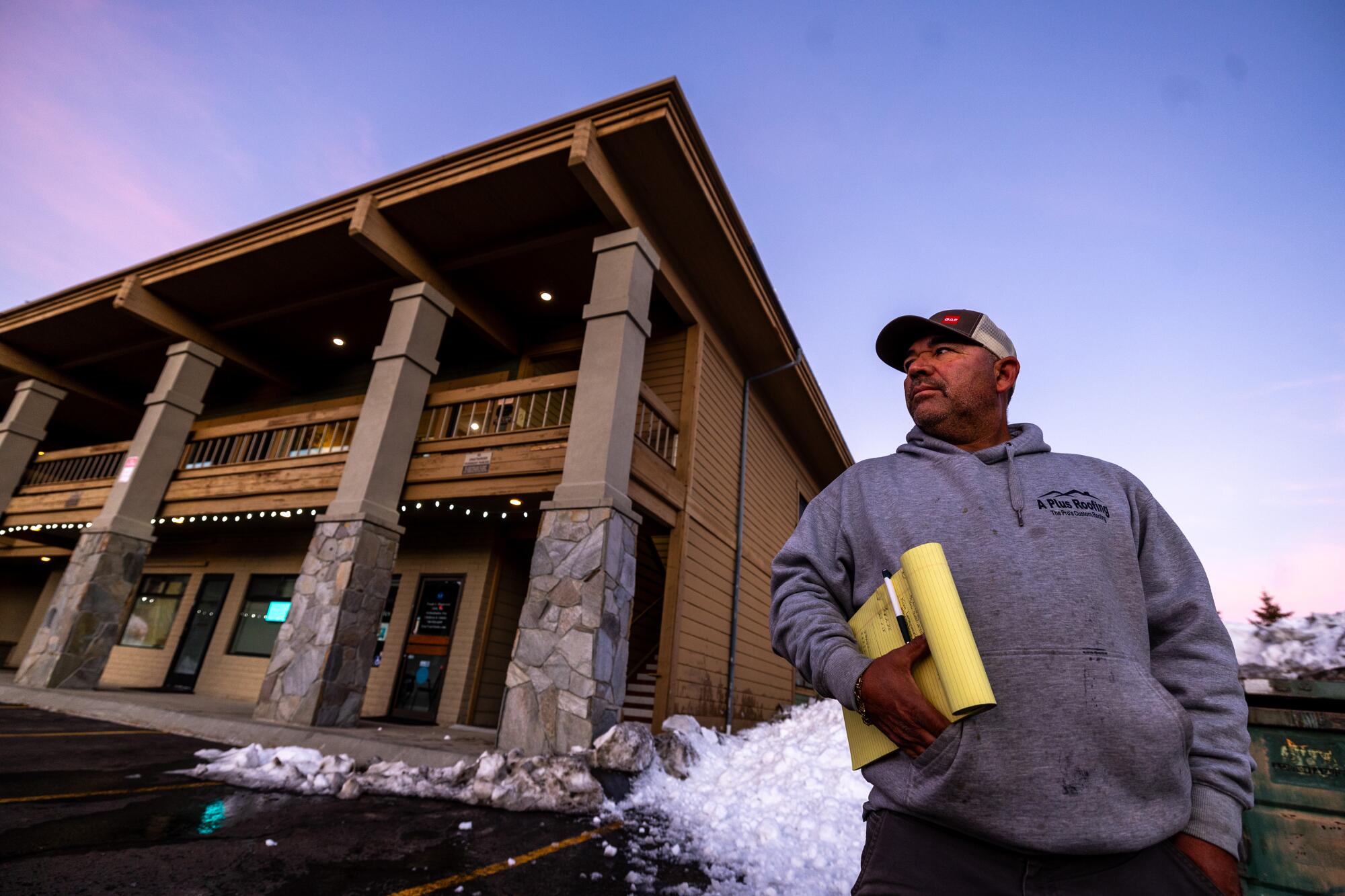
Roofing contractor Julio at a Mammoth Lakes job site last week.
(Brian van der Brug / Los Angeles Times)
He mentioned the record snowfall in the winter of 2022-23, when homeowners were desperate to get snow off their roofs before their houses collapsed.
“I didn’t see a whole lot of Americans, you know, white guys, up on those roofs,” Julio said.
He’s not worrying much about the talk of deportations, he said, in part because he sees no point in stressing about something he can’t control. But he also said he thinks Trump is a rational businessman who must know how much undocumented laborers add to the economy.
And Trump is in construction, Julio joked, so, “I’m pretty sure he’s got some undocumented people working for him, too.”
In fact, while Julio was put off by the sweeping, derogatory comments Trump made about Mexicans during the campaign, he thinks Trump is “a pretty good president.” He’s right about deporting people who come across the border illegally “looking for free stuff,” Julio said.
“I’ve been working my ass off,” Julio said. “I pay all my medical bills out of my pocket, my dentist, my vision. I didn’t get any low-income housing, because I don’t think I need it.”
He hopes Trump will spare hard workers, like him, who “make the country stronger,” he said. But he’s fine with deporting lazy people.

A kitchen worker at a popular Mammoth Lakes restaurant takes a short break for breakfast.
(Brian van der Brug / Los Angeles Times)
“Whoever doesn’t benefit the country, kick them out of here,” he said.
For others, the shocking breadth of Trump’s threat to deport up to 11 million undocumented U.S. residents is terrifying. It’s hard for them to imagine how a dragnet of that size could pause to consider the merits of individual cases.
A secretary in the Mammoth school system, who asked only to be identified as Maria, is one of the people who is worried.
She said she came from Mexico with her mother when she was a kid and has since been granted U.S. citizenship. But her husband, who has worked in construction in Mammoth for more than 20 years, is undocumented.
He got caught coming across the border illegally when he was 14, and has not been able to “adjust his status,” she said.
Maria and her husband have three kids, all born in the U.S. One is about to join the military, she said. But the kids follow the news and hear the gossip at school, and their anxiety is building.
“My 10-year-old is terrified with the new president saying he’s going to deport everyone,” Maria said.
In addition to working in construction, her husband has worked as a bus driver for the school district and recently started his own snow removal business. He has an Individual Taxpayer Identification Number, or ITN, a document issued by the Internal Revenue Service to foreign nationals — including undocumented immigrants — so that they can pay taxes like everybody else.
“He is a responsible guy, a hard-working guy, with no ugly background at all,” Maria said.
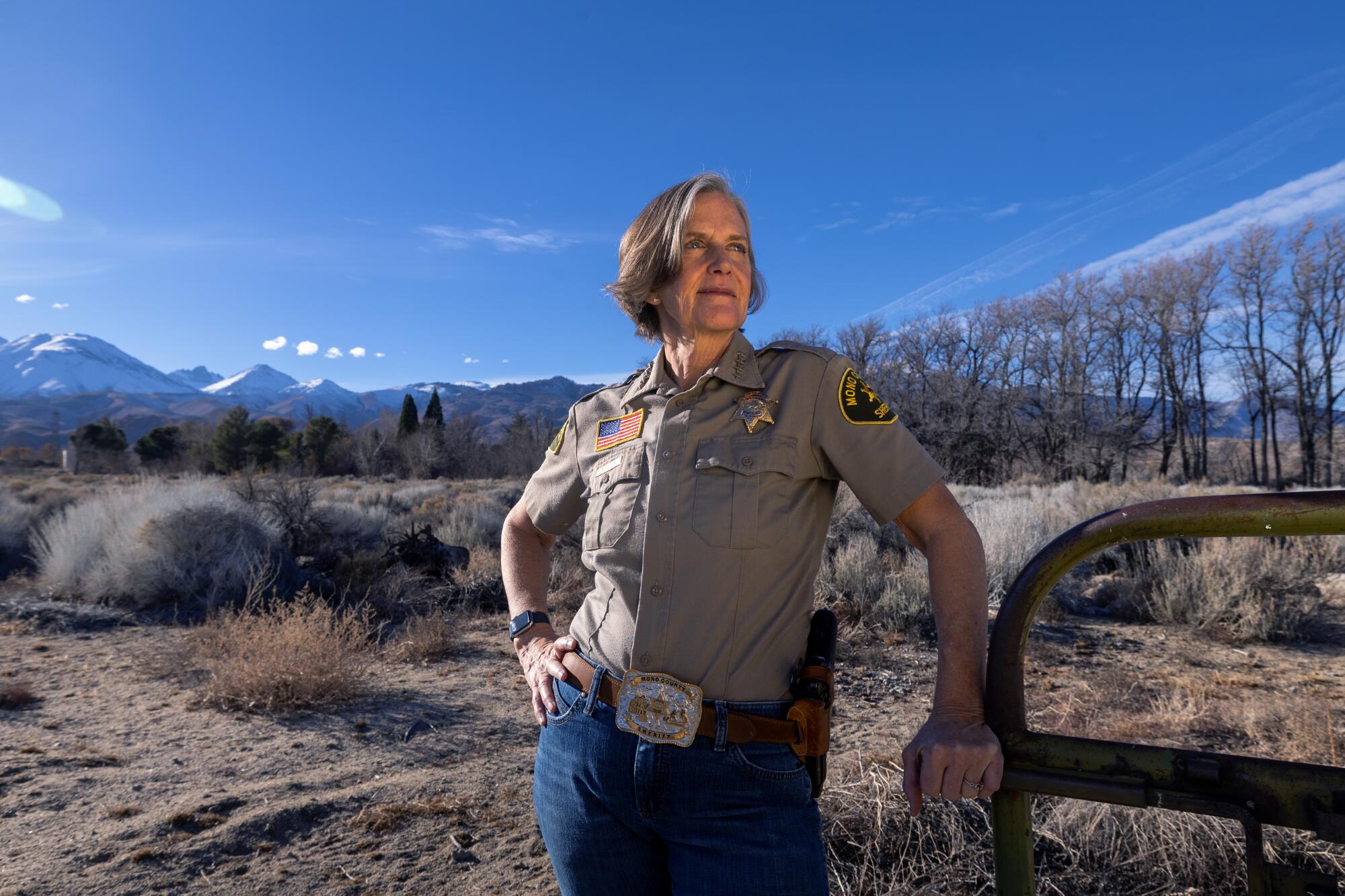
Mono County Sheriff Ingrid Braun worries that fear of federal immigration agents will prevent crime victims from reaching out to her for help.
(Brian van der Brug / Los Angeles Times)
A few years ago, his kidneys failed. He was able to get dialysis and, eventually, a transplant, thanks to the health insurance Maria gets through her job at the school district. But he now depends on very specific medication to stay alive, Maria said.
If he gets deported and has to return to the village they’re from in Michoacan, Maria worries that he’ll lose access to the lifesaving pills.
“People in Mexico die from things like that,” she said.
Like many law enforcement officers in California, Mono County Sheriff Ingrid Braun said she won’t help round up undocumented residents for deportation. But she worries that fear of federal immigration agents will prevent people from reaching out to her for help when they’ve been robbed, assaulted by a romantic partner or otherwise victimized.
“They’re not going to call if they’re afraid he’s going to get deported, or that they’ll be separated from their kids,” Braun said.
For the moment, Braun said, she’s skeptical the roundups will actually materialize. “I don’t think they have a plan. I think it was all a bunch of talk,” she said.
Though she can’t do anything to stop federal agents if they show up, she said, news travels fast in a small town and she thinks outsiders who don’t know the lay of the land would struggle to catch locals who would almost certainly know they were coming.

Mammoth High School students walk home after school in Mammoth Lakes.
(Brian van der Brug / Los Angeles Times)
She also thinks the disruption to the economy would be so severe that immigration officials would get little cooperation from others in town. One way or another, most everyone here depends on the immigrants.
“People think resort towns like Mammoth are just full of rich people playing,” Braun said. But it’s immigrants who do all the work and keep the “industry humming.”









For the trendiest tenants in Hollywood office buildings, it’s the latest fad that goes way beyond designer furniture and art: mini studios
To capitalize on the never-ending flow of stars and influencers who come through Los Angeles, a growing number of companies are building bright little corners for content creators to try products and shoot short videos. Athletic apparel maker Puma, Kim Kardashian’s Skims and cheeky cosmetics retailer e.l.f. have spaces specifically designed to give people a place to experience and broadcast about their brands.
Hollywood, which hasn’t historically been home to apparel companies, is now attracting the offices of fashion retailers, says CIM Group, one of the neighborhood’s largest commercial property landlords.
“When we’re touring a space, one of the first items they bring up is, ‘Where can I build a studio?’” said Blake Eckert, who leases CIM offices in L.A.
Their studio offices also serve as marketing centers, with showrooms and meeting spaces where brands can host proprietary events not open to the public.
“For companies where brand visibility is really important, there is a trend of creating spaces that don’t just function as offices,” said real estate broker Nicole Mihalka of CBRE, who puts together entertainment property leases and sales.
Puma’s global entertainment marketing team is based in its new Hollywood offices, which works with such musical celebrity partners as Rihanna, ASAP Rocky, Dua Lipa, Skepta and Rosé, said Allyssa Rapp, head of Puma Studio L.A.
Allyssa Rapp, director of entertainment marketing at Puma, is shown in the Puma Studio L.A. The company keeps a closet full of Puma products on hand to give VIP guests. Visits to the studio sanctum are by invitation only, though.
(Kayla Bartkowski / Los Angeles Times)
Hollywood is a central location, she said, for meeting with celebrities, stylists and outside designers, most of whom are based in Los Angeles.
The office is a “creation hub,” she said, where influencers can record Puma’s design prototyping lab supported by libraries of materials and equipment used to create Puma apparel. The company, founded in 1948, is known for its emblematic sneakers such as the Speedcat and its lunging feline logo, and makes athletic wear, accessories and equipment.
Puma’s entertainment marketing team also occupies the office and sometimes uses it for exclusive events.
“We use the space as a showroom, as a social space that transforms from a traditional workplace into more of an experiential space,” Rapp said.
Nontraditional uses include content creation, sit-down dinners, product launches, album listening parties and workshops.
“Inviting people into our space and being able to give them high-touch brand experiences is something tangible and important for them,” she said. “The cultural layer is really important for us.”
The company keeps a closet full of Puma products on hand to give VIP guests. Visits to the studio sanctum are by invitation only, though. There’s no retail portal to the exclusive Hollywood offices.

Puma shoes are on display in the Puma Studio L.A.
(Kayla Bartkowski / Los Angeles Times)
Puma is also positioning its L.A studio as a connection point for major upcoming sporting events coming to Los Angeles, including the World Cup this summer, the 2027 Super Bowl and 2028 Olympics.
In-office studios don’t need to be big to be impactful, Mihalka said. “These are smaller stages, closer to green screen than a massive soundstage.”
Social media is the key driver of content created by most businesses, which may set up small booth-like stages where influencers can hawk hot products while offering discounts to people watching them perform.
Bigger, elevated stages can accommodate multiple performers for extended discussions in front of small audiences, with towering screens behind them to set the mood or illustrate products.
Among the tricked-out offices, she said, is Skims. The company, which is valued at $5 billion, is based in a glass-and-steel office building near the fabled intersection of Hollywood Boulevard and Vine Street.
The fashion retailer declined to comment on the studio uses in its headquarters, but according to architecture firm Odaa, it has open and private offices, meeting rooms, collaboration zones, photo studios, sample libraries, prototype showrooms, an executive lounge and a commissary for 400 people.

Pieces of a shoe sit on a workbench in the Puma Studio L.A.
(Kayla Bartkowski / Los Angeles Times)
The brands building studios typically want to find the darkest spot on the premises to put their content creation or podcast spaces, Eckert said, where they can limit outside light and sound. That’s commonly near the center of the office floor, far from windows and close to permanent shear walls that limit sound intrusion.
They also need space for green rooms and restrooms dedicated to the talent.
Spotify recently built a fancy podcast studio in a CIM office building on trendy Sycamore Avenue that is open by invitation-only to video creators in Spotify’s partner program.
“Ambitious shows need spaces that support big ideas,” Bill Simmons, head of talk strategy at Spotify, said in a statement. “These studios give teams room to experiment and keep pushing what’s possible.”
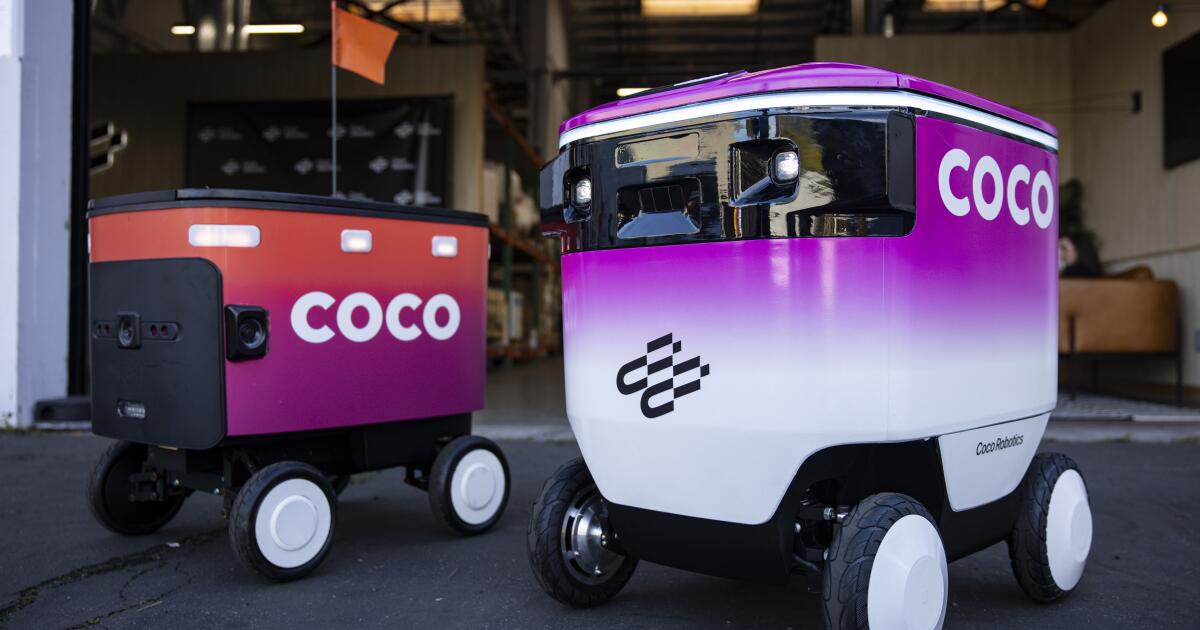
The rolling robots that deliver groceries and hot meals across Los Angeles are getting an upgrade.
Coco Robotics, a UCLA-born startup that’s deployed more than 1,000 bots across the country, unveiled its next-generation machines on Thursday.
The new robots are bigger, tougher and better equipped for autonomy than their predecessors. The company will use them to expand into new markets and increase its presence in Los Angeles, where it makes deliveries through a partnership with DoorDash.
Dubbed Coco 2, the next-gen bots have upgraded cameras and front-facing lidar, a laser-based sensor used in self-driving cars. They will use hardware built by Nvidia, the Santa Clara-based artificial intelligence chip giant.
Coco co-founder and chief executive Zach Rash said Coco 2 will be able to make deliveries even in conditions unsafe for human drivers. The robot is fully submersible in case of flooding and is compatible with special snow tires.
Zach Rash, co-founder and CEO of Coco, opens the top of the new Coco 2 (Next-Gen) at the Coco Robotics headquarters in Venice.
(Kayla Bartkowski/Los Angeles Times)
Early this month, a cute Coco was recorded struggling through flooded roads in L.A.
“She’s doing her best!” said the person recording the video. “She is doing her best, you guys.”
Instagram followers cheered the bot on, with one posting, “Go coco, go,” and others calling for someone to help the robot.
“We want it to have a lot more reliability in the most extreme conditions where it’s either unsafe or uncomfortable for human drivers to be on the road,” Rash said. “Those are the exact times where everyone wants to order.”
The company will ramp up mass production of Coco 2 this summer, Rash said, aiming to produce 1,000 bots each month.
The design is sleek and simple, with a pink-and-white ombré paint job, the company’s name printed in lowercase, and a keypad for loading and unloading the cargo area. The robots have four wheels and a bigger internal compartment for carrying food and goods .
Many of the bots will be used for expansion into new markets across Europe and Asia, but they will also hit the streets in Los Angeles and operate alongside the older Coco bots.
Coco has about 300 bots in Los Angeles already, serving customers from Santa Monica and Venice to Westwood, Mid-City, West Hollywood, Hollywood, Echo Park, Silver Lake, downtown, Koreatown and the USC area.

The new Coco 2 (Next-Gen) drives along the sidewalk at the Coco Robotics headquarters in Venice.
(Kayla Bartkowski/Los Angeles Times)
The company is in discussion with officials in Culver City, Long Beach and Pasadena about bringing autonomous delivery to those communities.
There’s also been demand for the bots in Studio City, Burbank and the San Fernando Valley, according to Rash.
“A lot of the markets that we go into have been telling us they can’t hire enough people to do the deliveries and to continue to grow at the pace that customers want,” Rash said. “There’s quite a lot of area in Los Angeles that we can still cover.”
The bots already operate in Chicago, Miami and Helsinki, Finland. Last month, they arrived in Jersey City, N.J.
Late last year, Coco announced a partnership with DashMart, DoorDash’s delivery-only online store. The partnership allows Coco bots to deliver fresh groceries, electronics and household essentials as well as hot prepared meals.
With the release of Coco 2, the company is eyeing faster deliveries using bike lanes and road shoulders as opposed to just sidewalks, in cities where it’s safe to do so. Coco 2 can adapt more quickly to new environments and physical obstacles, the company said.

Zach Rash, co-founder and CEO of Coco.
(Kayla Bartkowski/Los Angeles Times)
Coco 2 is designed to operate autonomously, but there will still be human oversight in case the robot runs into trouble, Rash said. Damaged sidewalks or unexpected construction can stop a bot in its tracks.
The need for human supervision has created a new field of jobs for Angelenos.
Though there have been reports of pedestrians bullying the robots by knocking them over or blocking their path, Rash said the community response has been overall positive. The bots are meant to inspire affection.
“One of the design principles on the color and the name and a lot of the branding was to feel warm and friendly to people,” Rash said.
Coco plans to add thousands of bots to its fleet this year. The delivery service got its start as a dorm room project in 2020, when Rash was a student at UCLA. He co-founded the company with fellow student Brad Squicciarini.
The Santa Monica-based company has completed more than 500,000 zero-emission deliveries and its bots have collectively traveled around 1 million miles.
Coco chooses neighborhoods to deploy its bots based on density, prioritizing areas with restaurants clustered together and short delivery distances as well as places where parking is difficult.
The robots can relieve congestion by taking cars and motorbikes off the roads. Rash said there is so much demand for delivery services that the company’s bots are not taking jobs from human drivers.
Instead, Coco can fill gaps in the delivery market while saving merchants money and improving the safety of city streets.
“This vehicle is inherently a lot safer for communities than a car,” Rash said. “We believe our vehicles can operate the highest quality of service and we can do it at the lowest price point.”

President Trump on Friday directed federal agencies to stop using technology from San Francisco artificial intelligence company Anthropic, escalating a high-profile clash between the AI startup and the Pentagon over safety.
In a Friday post on the social media site Truth Social, Trump described the company as “radical left” and “woke.”
“We don’t need it, we don’t want it, and will not do business with them again!” Trump said.
The president’s harsh words mark a major escalation in the ongoing battle between some in the Trump administration and several technology companies over the use of artificial intelligence in defense tech.
Anthropic has been sparring with the Pentagon, which had threatened to end its $200-million contract with the company on Friday if it didn’t loosen restrictions on its AI model so it could be used for more military purposes. Anthropic had been asking for more guarantees that its tech wouldn’t be used for surveillance of Americans or autonomous weapons.
The tussle could hobble Anthropic’s business with the government. The Trump administration said the company was added to a sweeping national security blacklist, ordering federal agencies to immediately discontinue use of its products and barring any government contractors from maintaining ties with it.
Defense Secretary Pete Hegseth, who met with Anthropic’s Chief Executive Dario Amodei this week, criticized the tech company after Trump’s Truth Social post.
“Anthropic delivered a master class in arrogance and betrayal as well as a textbook case of how not to do business with the United States Government or the Pentagon,” he wrote Friday on social media site X.
Anthropic didn’t immediately respond to a request for comment.
Anthropic announced a two-year agreement with the Department of Defense in July to “prototype frontier AI capabilities that advance U.S. national security.”
The company has an AI chatbot called Claude, but it also built a custom AI system for U.S. national security customers.
On Thursday, Amodei signaled the company wouldn’t cave to the Department of Defense’s demands to loosen safety restrictions on its AI models.
The government has emphasized in negotiations that it wants to use Anthropic’s technology only for legal purposes, and the safeguards Anthropic wants are already covered by the law.
Still, Amodei was worried about Washington’s commitment.
“We have never raised objections to particular military operations nor attempted to limit use of our technology in an ad hoc manner,” he said in a blog post. “However, in a narrow set of cases, we believe AI can undermine, rather than defend, democratic values.”
Tech workers have backed Anthropic’s stance.
Unions and worker groups representing 700,000 employees at Amazon, Google and Microsoft said this week in a joint statement that they’re urging their employers to reject these demands as well if they have additional contracts with the Pentagon.
“Our employers are already complicit in providing their technologies to power mass atrocities and war crimes; capitulating to the Pentagon’s intimidation will only further implicate our labor in violence and repression,” the statement said.
Anthropic’s standoff with the U.S. government could benefit its competitors, such as Elon Musk’s xAI or OpenAI.
Sam Altman, chief executive of OpenAI, the company behind ChatGPT and one of Anthropic’s biggest competitors, told CNBC in an interview that he trusts Anthropic.
“I think they really do care about safety, and I’ve been happy that they’ve been supporting our war fighters,” he said. “I’m not sure where this is going to go.”
Anthropic has distinguished itself from its rivals by touting its concern about AI safety.
The company, valued at roughly $380 billion, is legally required to balance making money with advancing the company’s public benefit of “responsible development and maintenance of advanced AI for the long-term benefit of humanity.”
Developers, businesses, government agencies and other organizations use Anthropic’s tools. Its chatbot can generate code, write text and perform other tasks. Anthropic also offers an AI assistant for consumers and makes money from paid subscriptions as well as contracts. Unlike OpenAI, which is testing ads in ChatGPT, Anthropic has pledged not to show ads in its chatbot Claude.
The company has roughly 2,000 employees and has revenue equivalent to about $14 billion a year.

Mass shooting at Austin, Texas bar leaves at least 3 dead, 14 wounded, authorities say

Newsom’s ‘disgraceful’ call for Dems to be ‘culturally normal’ is ‘dangerous,’ far-left podcaster says

Judge orders Ilhan Omar attack suspect to remain in custody pending trial

RICK PERRY: Where’s the beef? Trump knows and he’s trying to make it affordable

Virginia Democrats talk affordability — and vote to nearly triple their own pay

Florida High School Football Rankings: Top 25 teams – Oct. 21

Cleary's 21 help Le Moyne down Central Connecticut State 69-64 in OT

How old is Bo Nix? What to know about Oregon quarterback ahead of 2024 NFL Draft

99th annual Pony Swim held in Virginia

Indiana Members Credit Union announced as new anchor tenant at Bottleworks District
Mass shooting at Austin, Texas bar leaves at least 3 dead, 14 wounded, authorities say

Mamdani’s response to Trump’s Iran strike sparks conservative backlash: ‘Rooting for the ayatollah’

Activists hail ‘historic’ EU’s decision on accessible abortion

A long-buried recording and the Supreme Court of old (CT+) : Consider This from NPR

2 Survivors Describe the Terror and Tragedy of the Tahoe Avalanche
-

 World3 days ago
Exclusive: DeepSeek withholds latest AI model from US chipmakers including Nvidia, sources say
-

 Massachusetts4 days ago
Mother and daughter injured in Taunton house explosion
-

 Montana1 week ago
2026 MHSA Montana Wrestling State Championship Brackets And Results – FloWrestling
-

 Denver, CO4 days ago
10 acres charred, 5 injured in Thornton grass fire, evacuation orders lifted
-

 Louisiana6 days ago
Wildfire near Gum Swamp Road in Livingston Parish now under control; more than 200 acres burned
-

 Technology1 week ago
YouTube TV billing scam emails are hitting inboxes
-

 Technology1 week ago
Stellantis is in a crisis of its own making
-

 Politics1 week ago
OpenAI didn’t contact police despite employees flagging mass shooter’s concerning chatbot interactions: REPORT