Connect with us

Fitness

From Weight Loss to Lasting Value: Structured Exercise and the Economics of GLP-1 Therapy – Health & Fitness Association

Published

on

From Weight Loss to Lasting Value: Structured Exercise and the Economics of GLP-1 Therapy – Health & Fitness Association

This white paper is complimentary.

GLP-1 medications are reshaping obesity care and creating new opportunities to improve long-term health outcomes. But weight loss alone is not the full measure of success. As use of these medications grows, policymakers, payers, healthcare providers, and patients face an important question: what helps ensure that the benefits of GLP-1 therapy are sustained over time?

This first-of-its kind multi-country research examines the health and economic value of combining GLP-1 therapy with structured exercise. The findings make clear that structured exercise help protect and extend the investment being made in GLP-1 treatment by supporting more sustainable health outcomes, reducing costly downstream medical events, and generating substantial economic value.

Across all five studied markets, the research projects that combining structured exercise with GLP-1 therapy can generate substantial health, economic, and societal value compared with GLP-1 therapy alone:

  • United States: US$120 billion in economic and societal value over 10 years and a 496% return on investment, rising to 1,572% and US$393 billion over 30 years.
  • Australia: A$182 million in economic and societal value over 10 years and a 59% return on investment, rising to 457% and A$1.4 billion over 30 years.
  • Canada: C$3.5 billion in economic and societal value over 10 years and a 105% return on investment, rising to 526% and C$17.9 billion over 30 years.
  • New Zealand: NZ$51 million in economic and societal value over 10 years and a 27% return on investment, rising to 306% and NZ$592 million over 30 years.
  • United Kingdom: £2.7 billion in economic and societal value over 10 years and a 164% return on investment, rising to 717% and £13 billion over 30 years.

If public and private payers are investing in GLP-1 therapy, they should also be asking what helps that investment produce more sustainable health and economic returns. Structured exercise is one of the clearest answers.

Methodology

Advertisement

The research was conducted by by FTI Consulting’s Center for Healthcare Economics and Policy in partnership with a multinational coalition of fitness sector organizations, including the Health & Fitness Association, the HFA Foundation, AUSactive, Exercise New Zealand, Fitness Industry Council of Canada, and ukactive. 

Drawing on the existing body of research on GLP-1 therapy, weight loss, physical activity, and related health outcomes, the analysis modeled the incremental health and economic impact of adding structured exercise to GLP-1 therapy across participating markets. The model compares combined treatment against GLP-1 therapy alone over 10-year and 30-year horizons.

Continue Reading
Click to comment

Leave a Reply

Your email address will not be published. Required fields are marked *

This site uses Akismet to reduce spam. Learn how your comment data is processed.

Fitness

Fitness: Beyond exercise, move more and live longer

Published

on

Fitness: Beyond exercise, move more and live longer

With so much emphasis being placed on accumulating a minimum of 150 minutes of moderate to vigorous exercise a week, there’s little discussion about what you should be doing the other 9,930 minutes.  

Sure, the estimated 20-per-cent reduction in mortality risk among individuals who meet the recommended amount of physical activity is impressive enough on its own. But there’s even greater improvements in longevity when you do more than just rest on the laurels of meeting the bare minimum.

A recent study published in the journal of Applied Physiology, Nutrition and Metabolism took on the challenge of determining the impact of supplementing 150 minutes of intentional physical activity with more incidental movement during the day.  

“Important questions remain regarding the joint and comparative benefits of light physical activity and moderate to vigorous physical activity,” said the study’s authors, who hail from the School of Kinesiology and Health Studies at Queen’s University in Kingston, Ont. 

Light physical activity broadly covers most of the movement behaviours outside of deliberate exercise. Household chores and yard work, strolling to the store, bus stop or coffee shop, playing with the kids, walking the dog and low-intensity recreational activities like lawn games, fishing and leisurely paddling are examples of the type of activity that people engage in over the course of a day and/or weekend. 

Advertisement

Early studies on the benefits of light physical activity have been faced with difficulty distinguishing between light and moderate intensity activity — especially when using self-reported data. But the newest generation of wearables, which track any and all activity over the course of the day, have negated the bias related to personal recall and the self-determination of movement/exercise intensity. Using data from the National Health and Nutrition Examination Study, the researchers extrapolated a subset of 3,949 study subjects (an almost equal number of males and females) aged 40 and older who wore an accelerometer to record their daily activity. Their movement history was then cross-referenced with death records to establish mortality risk.

“The most notable finding was the substantial joint effect of light physical activity and moderate to vigorous physical activity on reducing mortality risk, which exceeded the maximal benefit of either intensity alone,” the researchers said. 

The combination of 335 minutes a day of light physical activity and 20 minutes a day of moderate/vigorous physical activity yielded an impressive six-fold reduction in mortality risk. But even about half that effort, 220 minutes of light physical activity a day and 10 minutes of moderate/vigorous activity, resulted in three-fold lessening in risk.

If that seems like a lot of minutes to be active, keep in mind that light physical activity is pretty much any movement you perform while not sitting. And in this particular cohort most of the higher-intensity activity was more moderate than vigorous and 45 per cent of the participants accumulated their exercise minutes in short bouts of less than 10 minutes.  

“These comparisons underscore how crucial physical activity is as a modifiable risk factor for longevity, emphasizing that its protective effect likely surpasses the impact of major health risks, particularly when light physical activity and moderate/vigorous physical activity are considered together,” the researchers said.

Advertisement

Still not convinced you can find the time to make a significant dent in your mortality risk?  A substantial number (58 per cent) of the study subjects accumulated the combined amount of light and moderate/vigorous physical activity needed to realize the three-fold improvement in longevity. Twenty-six per cent combined both intensities in a dose large enough to obtain a six-fold reduction in mortality risk. 

“This suggests that health-enhancing levels of physical activity are reasonable and attainable for most adults,” the researchers said. 

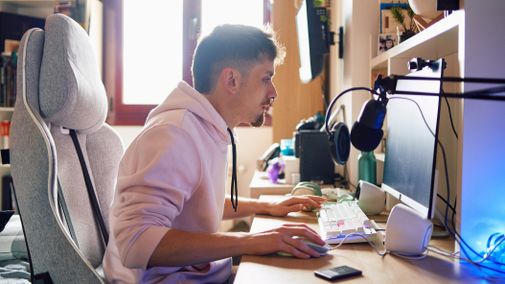
That’s an important message for both active and not-so-active Canadians. What you do all day matters as much as a single workout. That’s not to downplay the benefits gained by hitting the gym regularly, but if you spend the rest of the day sitting at a desk or staring at a screen, you’re not doing all you can to add years to your life. 

As for those of you who struggle sustaining a regular workout schedule, the impact of short bouts of exercise combined with getting out of your chair more often is not only doable, it’s impressive enough to make you rethink your current lifestyle. Simple choices like going to the park with the kids, biking to the library, getting up from your desk more often and leaving the car at home the next time you want to hang out at the coffee shop all contribute toward the goal of four to six hours a day of light physical activity. Combine that with 150 minutes a week of intentional exercise in the moderate to vigorous range, even in short bouts, and you’ll have more years to enjoy life to its fullest. 

Those extra years might be motivation enough to get you out of your chair, but knowing that you’re also more likely to be in good health and with energy enough to continue doing the things you love is added incentive to move more and sit less. 

Advertisement

Editor’s Picks

Continue Reading

Fitness

Brisbane to get $5.6m boost to health and wellness programs

Published

on

Brisbane to get .6m boost to health and wellness programs

The Brisbane City Council has announced it will invest millions of dollars in a new health and wellness program.

The council will allocate $5.6 million in its 2026/2027 budget to boost healthy activities across Brisbane with the new Move Well Brisbane campaign.

It is the next stage of the council’s Active and Healthy program, which provides thousands of free and low-cost active programs in the city council area.

Lord Mayor Adrian Schrinner said the program to be delivered in Wednesday’s budget would be “the biggest boost to active and healthy programs that the city has ever seen”.

“It’s about making sure that Brisbane residents have the opportunity to stay active and healthy, to get out, to enjoy our amazing city, but also without hurting the hip pocket,” Cr Schrinner said.

Advertisement

Mayor Adrian Schrinner says the program will build on existing fitness activities, including Pilates and yoga. (ABC News: Jordan Bissell)

The new program will see the number of participating businesses expand to 400, and sessions more than double to 20,000 over the next two years.

“This is a great opportunity for local businesses as well to get involved,” Cr Schrinner said.

“We’ve got opportunities for you to provide services to the people of Brisbane and to provide those free services, free classes, free activities that people really want to get involved with.

Cr Schrinner said the Move Well Brisbane program would build on existing fitness activities, including Pilates and yoga, with nutritional and cooking classes. 

Advertisement
Three people, one in an apron, at a barbecue with Brisbane river and city in background.

Nutrition Australia Queensland will partner with the council to provide nutrition and healthy cooking classes. (ABC News: Jordan Bissell)

Nutrition Australia Queensland chief executive Kirsty Elliott said the organisation was “thrilled” to be providing food and cooking experiences under the new program. 

“Cost of living is affecting so many households at the moment so we’re hoping that people can come away really understanding how to produce meals for themselves in their households that really are helping them to stretch the dollar a bit further as well,” she said. 

Ms Elliott said the cooking and nutrition classes were intended to “help people really build their repertoire” of what they can cook.

“We try to keep it delicious, easy, and like I said: very budget friendly.”

Cost-of-living budget

Cr Schrinner said Wednesday’s budget would have a “big focus” on cost-of-living relief for Brisbane residents. 

Advertisement

“I can assure you we’ve worked really, really hard to try and keep the costs down for Brisbane residents,” he said. 

“We know that we can’t solve every problem for people when it comes to cost of living, but certainly the things that we can control we want to keep down as low as possible and provide cost benefits and cost savings to people.”

He said the council would fulfil its promise to deliver the lowest council rates in south-east Queensland. 

“We’ve seen other council budgets come out already and we’re working to make sure that we keep our rates the lowest possible and the lowest in south-east Queensland.”

Advertisement
Continue Reading

Fitness

‘It takes 2-6 weeks’: This Hollywood PT (who’s trained Pedro Pascal, ScarJo, Margot Robbie & more) shares his go-to exercise for a pain-free back — and how long it takes to ‘restore proper glute activation’

Published

on

‘It takes 2-6 weeks’: This Hollywood PT (who’s trained Pedro Pascal, ScarJo, Margot Robbie & more) shares his go-to exercise for a pain-free back — and how long it takes to ‘restore proper glute activation’

In your 30s? Years of sitting — at a desk, in a car, on a sofa — gradually teach the body to stop recruiting the glutes properly. It could be that your hip flexors feel a little tighter, or that your lower back picks up the slack when other muscle groups should be working.

Then, one day, that back starts aching for reasons that seem to come from nowhere.

Continue Reading
Advertisement

Trending