Business
Barbie brand takes another hit with festival flop

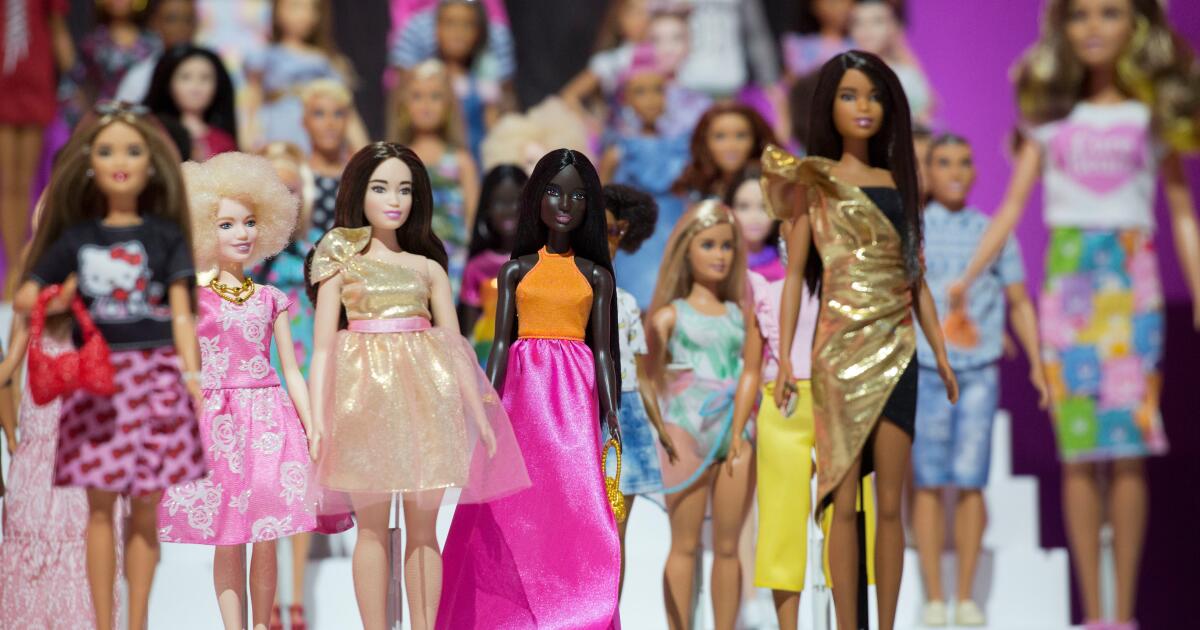
Jacqueline Kerr arrived to a Florida convention center Friday, suitcases stuffed with intricate, hand-made costumes — pink sequined ball gowns, a leopard bodysuit and an all-white rhinestone cowgirl ensemble — all paying homage to classic Barbie looks.
None of them made it out of her suitcase.
Kerr and her best friend had spent hundreds of dollars preparing for Barbie Dream Fest, a three-day event that organizers touted as a chance for fans to “live the dream life.”
But when Kerr arrived Friday, it felt more like a nightmare.
“I was so excited to have an event where I could finally put on my most Barbie-esque outfits and have an excuse to wear them without looking like a fool,” the 32-year-old from Florida said. “We were so disillusioned after that first day.”
Hundreds of posts from angry attendees flooded social media sites this weekend, many of whom said the event was a far cry from what was advertised. The event was organized by Mischief Management in Fort Lauderdale, Fla.
Tickets for adults were hefty, ranging from $69 for a day pass to $449 for a 3-day VIP experience. Kerr and her friend purchased a pass that cost $249 per person and included a swag bag that she never received, she said.
Mischief Management confirmed to The Times that the company is issuing full refunds to all ticket holders. Kerr was told the refund would process in three to four weeks.
The event was meant to be an intimate fan convention designed to offer fans closer access to the Barbie universe, a spokesperson for the company said.
“We appreciate the passion and engagement from the Barbie community,” said a spokesperson from Mischief Management. “Bringing fans together — alongside Barbie role models, designers, partners, and global icons who embody the true spirit of Barbie — was at the heart of this event.”
The event comes during a tough time for the Barbie brand. The doll, one of the most popular toys in Mattel’s inventory, has struggled to garner sales, despite gaining momentum in 2023, when the “Barbie” movie had widespread success.
Mattel’s shares plummeted in February after the company announced weak holiday season sales, with Barbie products taking a big hit. The company recently announced it’s laying off 65 employees in May, and let go of 89 other workers in January.
The Barbie brand was licensed by Mischief Management, a spokesperson for Mattel said.
“We want every fan experience to be an excellent one,” the spokesperson said.
The event sold ticket-holders a big dream, including an ’80s-themed neon roller-skating party, an interactive Barbie Dream House, a bicycle course and a free glam bar. The schedule also boasted a star-studded lineup of speakers, including Serena Williams and Angel Reese.
But that dream fell flat, attendees said.
Instead, eventgoers roamed a largely empty convention center with bare concrete walls void of pink and glitter. A small, makeshift rink sectioned off by barricades was stationed in the corner, and the glam bar was closed down by the second day of the event. The bicycle course featured four small bikes with training wheels, only suitable for young children.
Kerr and her friend worked their way through the convention in less than 45 minutes on Friday, she said.
Williams, Reese and other celebrities did hold speaking events over the weekend, though the audience was mostly empty, Kerr said. The Mattel designers responsible for making Barbie also spoke at the convention.
The schedule promoted a free glam bar, which wasn’t staffed for most of the weekend, said Brielle Cenci, a vendor who paid several thousand dollars to have a booth.
Cenci owns a company that sells mermaid clip-on hair extensions and flew in from New Jersey. The event felt poorly organized and vendors received little communication ahead of the convention that only dwindled as the weekend went on, she said.
Vendors expected the convention to be packed with thousands of people, but Cenci said she saw only about 100 attendees a day.
“It felt like a farmers market,” Cenci said. “It was a ghost town. It felt awkward for the people attending, because it was so silent and empty… We were just as in the dark about the event as the attendees were.”


Hotel rooms in Los Angeles and other FIFA World Cup host cities could sit empty, despite high expectations that the global sporting event would be a boon to the city.
The soccer tournament, which has sold more than 5 million tickets so far, has historically triggered a surge of international and domestic tourism and infused host cities with an economic boost.
This year, however, 80% of hotels surveyed by the American Hotel and Lodging Assn. said bookings are lagging behind initial forecasts. The hotel association partly blames FIFA for the slowdown, saying the organization overbooked blocks of hotel rooms that did not reflect true demand.
Travel also is being hampered by higher airfares and gas prices due to the conflict in Iran. Visa barriers and broader geopolitical concerns are suppressing international travel demand, the report said.
“With just two months until kickoff, indicators suggest the anticipated economic lift may fall short of expectations,” the report said. The number of tickets sold for the tournament “has not yet translated into strong hotel bookings.”
In L.A., where World Cup games will be played next month at SoFi stadium, more than 65% of hotel respondents said room bookings were below estimated demand.
Many respondents said bookings were even lagging behind that of a typical summer.
Visitors enter a hallway at the Hotel Figueroa downtown on Friday.
(Genaro Molina/Los Angeles Times)
Hotels in Los Angeles cited visa complications and long distances from the venue as obstacles to bookings. According to the report, FIFA booked thousands of rooms in downtown Los Angeles that it canceled.
Ahead of all World Cup tournaments, FIFA places large blocks of rooms on hold across various properties for FIFA staff, mediaand other stakeholders. As the tournament draws closer, FIFA will adjust its plans based on demand.
“All room releases were conducted in line with contractually agreed timelines with hotel partners, a standard practice for an event of this scale,” a FIFA spokesperson said in a statement. “Throughout the planning process, FIFA’s Accommodations team maintained consistent discussions with hotel stakeholders.”
The spokesperson added that global demand for the 2026 World Cup is unprecedented.
“FIFA room block over-commitment created an artificial early demand signal that has since unraveled,” the hotel association report said. “Many hotels indicate that early booking signals overstated true demand.”
About half of hotel respondents reported cancellations or releases of previously booked blocks of rooms, the report said.
The staggering price of World Cup tickets this year could also be keeping away fans, said journalist and author Simon Kuper, who writes about soccer economics. Face values for tickets have climbed as high as $7,875.
“All the ticket prices in this World Cup are inconceivable for previous World Cups,” Kuper said. “It’s very much a new phenomenon.”
FIFA is projecting revenue between $11 billion and $13 billion for the four-year World Cup cycle, which ends when the tournament does.
Nonetheless, L.A. is expecting a major jump in tourism for the World Cup in June and the 2028 Olympic Games.
That would be welcome for an industry that is coming off some tough times.
Last year, tourist spending in L.A. fell for the first time since the pandemic began as wildfires, raids by Immigration and Customs Enforcement agents and trade tensions discouraged people from visiting, including tourists from Canada who traditionally flock to Palm Springs and other cities in Southern California during the winter months.

A visitor walks under a display of hats in the lobby of the Hotel Indigo on Friday.
(Genaro Molina/Los Angeles Times)
International air arrivals to L.A. County fell more than 30% from August to November of 2025. In Los Angeles, current international arrivals are fewer than in previous months, though the state saw an overall 3% increase last year.
The L.A. market “faces several challenges that are tempering hotel performance expectations,” said Ralph Posner, chief communications officer for the American Hotel and Lodging Assn.
“L.A.’s purported hotel underperformance is compounded by a unique combination of early FIFA block over-commitment creating artificial demand, concerns about visa barriers and operating costs,” he said. “The market was positioned as a flagship host city but is now absorbing a gap between expectation and reality.”
Surging hotel room costs in host cities are also a deterrent. For example, the Renaissance Hotel in Seattle, within walking distance of Lumen Field, is renting a King guest room for less than $300 the weekend before the World Cup. For the weekend of the U.S. game there, the rate is more than $1,000 for the same room.
To save costs, some fans are choosing to stay farther from the venues or opting for alternative lodgings such as Airbnbs. Airbnb’s chief financial officer said the World Cup is expected to be the largest event in the company’s history.
The hotel association said that even though initial indications are bad, things could still get better.
“We are hopeful that momentum will build over the next few weeks in the lead up to the games,” Posner said.
Times staff writer Kevin Baxter contributed to this report.
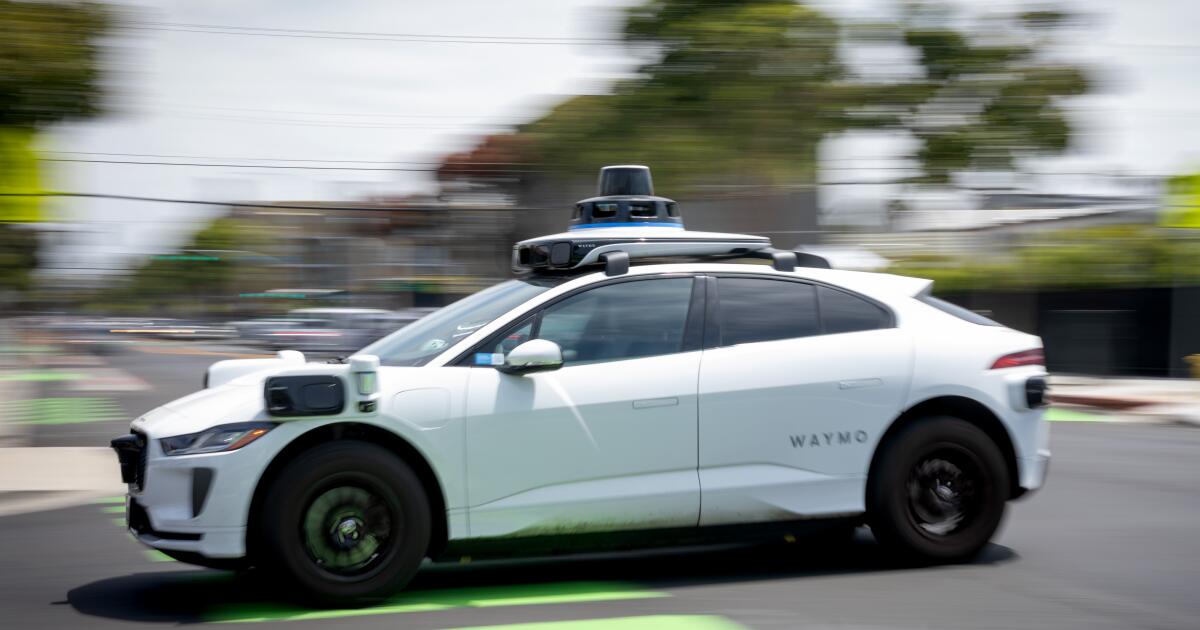
Waymo said that it’s pausing its robotaxi services on freeways in the U.S. as it updates its software to improve performance around construction zones and flooded roads.
Before the suspension, freeway operations were available in San Francisco, Los Angeles, Phoenix and Miami. The company said that street and other off-highway operations of Waymos will continue.
The company first confirmed the temporary pause to Reuters, and said that it was working to integrate recent technical learnings into software and expects to resume these routes soon.
“We are committed to being good neighbors for our riders and our communities. As part of that commitment, we make proactive decisions including temporarily pausing aspects of our service. We know riders count on us to get around, and we appreciate their patience as we work to get them where they’re going safely and reliably,” a Waymo spokesperson said in an email statement.
The company also paused operations in Atlanta, after a Waymo stopped in flood water. In early May, about 3,800 of Waymos autonomous taxis were recalled after a software defect caused some vehicles to drive into flooded roadways.
The suspension comes at a time when the Alphabet-backed company, which is based in Mountain View, Calif., has increased its pace of expansion into a number of new cities in the U.S. and across the globe, and getting them on freeways and local airports is important for expansion.
Competitors Tesla and Zoox have been playing catchup but don’t match the scale of Waymo yet.
The company said it has collected 170 million autonomous miles, with 13 times fewer injury-causing collisions compared with human drivers in the routes they operate in.
Waymo said it provides 500,000 trips every week, and aims to cross 1 million paid rides per week by 2026. While most Waymo models in use are Jaguar SUVs, it recently began testing a Chinese model Zeekr called Ojai in Los Angeles.
Waymo did not cite a specific instance that prompted the most recent recall, but the company has been forced to pause operations to improve software in several Southern states that have been hit by flash floods, including Texas, Tennessee and Georgia.
In 2025, Waymo recalled more than 1,200 vehicles due to a software defect resulting in minor crashes against obstacles in the road. Earlier this year, it faced renewed scrutiny after hitting a child outside a school in Santa Monica and running over a cat in San Francisco.

Since the war with Iran broke out, the average American household has spent an extra …
$190.47 on gasoline.
For many households, that is the equivalent of a month’s electricity bill.
Or a week’s worth of groceries for a couple.
The gasoline calculation is part of an analysis conducted by researchers at Brown University as they and others try to assess the economic costs of the prolonged fighting.
Calculating the cost of war — a skipped meal or a drive not made — is an imperfect science. But these estimates can offer a sense of how fighting far away can change behaviors large and small each day, disrupting American life.
Discomfort has not been spread evenly. As the price of gasoline has shot up, the national average is now …
$4.55 a gallon
In Illinois, it is more expensive …
$4.99 a gallon.
In California, it’s …
$6.13 a gallon.
Diesel, which is used to power factories and move most goods around the country, also quickly climbed.
Taken together, the amount of extra money Americans have collectively spent on gasoline and diesel since Feb. 28, when the United States and Israel attacked Iran, is staggering:
$0.0 billion
Hunting for cheaper gas, Americans are going to Costcos and Sam’s Clubs more often to fill up their tanks.
Drivers visited Sam’s Club gas stations 18 percent more in the last week of April than the same time last year.
They are filling their tanks with less gas.
One gallon fewer at a time.
They are riding more subways and commuter trains.
They are using bike shares more often.
People rode more buses in March than before the war:
45 million more rides.
People are spending less on essentials.
More than 40 percent of people in a recent poll said they were spending less on groceries and medical care.
They are putting less into savings.
Richer households are spending a relatively small share of their income on gas:
2.7%.
Poorer households are spending far more:
4.2%.
This is not the first time in recent years that the economy has been shocked by war.
After Russia invaded Ukraine in 2022, oil prices spiked, sending gasoline soaring. At its peak, the national average was …
$5.02 a gallon.
Where things go this time around is anyone’s guess. When the war does end, it will still take weeks or months for energy supplies to level off.
Nearly three out of four goods move across the country by truck.
Many of those trucks are powered by diesel, making them much costlier to drive, and what’s inside them costlier for consumers.
Last month, a tomato cost …
40% more
than it did the same time last year.
More expensive fuel isn’t the only culprit for rising costs. Extreme weather, tariffs and other factors have forced prices up for many industries. Gasoline also becomes more expensive as the summer approaches.
But inflation last month rose at its fastest pace in nearly three years, and gasoline was among the fastest rising categories.
-

 South Dakota4 minutes ago
May proclaimed Archaeology & Historic Preservation Month
-

 Tennessee10 minutes ago
What Tee Martin said about joining Lane Kiffin’s staff, son’s transfer to LSU
-

 Texas16 minutes ago
2026 NCAA softball tournament: Bracket, schedule for the Women’s College World Series, scores
-

 Utah22 minutes ago
Utah father now accused of abusing 2 teen girls
-

 Vermont28 minutes ago
Police search for missing Pownal, Vt., teen
-

 Washington40 minutes ago
Washington State Ferries makes room for pets, paws with new policy launching this summer
-

 Wisconsin46 minutes ago
12 Offbeat Wisconsin Towns To Visit In 2026
-

 West Virginia52 minutes ago
How to watch Kansas baseball play West Virginia in Big 12 tournament

