Politics
Anti-regulation Democrats? Top takeaways from governor’s race forum in Fresno


FRESNO — Four of the top Democrats running for California governor on Wednesday told a agriculture-friendly Central Valley audience that the left-leaning state’s restrictions on business and the environment have made life more difficult for farmers and should be rolled back.
The candidates onstage at the Fresno State political forum, including two Republicans, did their best to appeal to voters in the midsection of California who often feel neglected by a state government dominated by big-city politicians from Southern California and the Bay Area.
“I’m here today because for far too long, the interests of our ag economy and our rural towns and cities and communities have been second tier, if they’ve even been on the agenda in Sacramento,” said San José Mayor Matt Mahan, a moderate Democrat whose campaign has yet to live up to the high expectations it initially received.
Mahan and five others invited to the forum focused on the state’s affordability crisis, water, government regulations and other issues facing the agricultural hub — all doing their best to play up any ties to the farmers and farmworkers who are so essential to providing food to California and the nation.
Mahan recalled growing up in Watsonville, an agricultural community that is the home of Driscoll’s berries and Martinelli’s apple cider. Fellow Democrat and former U.S. Health and Human Services Secretary Xavier Becerra noted his family’s personal ties to the valley. His father picked crops along State Route 99 as a young man, he grew up in Sacramento, and his wife is from Hanford and Fresno.
Former conservative commentator Steve Hilton said his family had a small farm in Hungary, which they fled because of communism. Former Democratic Orange County Rep. Katie Porter, who grew up in Iowa during the farming crisis of the 1980s, spoke of being the descendant of generations of farmers and being a member of 4-H as well the Future Farmers of America.
“I’m not a farmer today, but I thought I would be. … I believe in the future of agriculture with a faith born not of words, but of deeds,” Porter said, repeating FFA’s creed.
The event marked the first gathering of gubernatorial hopefuls since USC pulled the plug on its debate last week. USC officials canceled the event less than 24 hours before it was scheduled to begin after facing criticism for excluding the top candidates of color. The university said it used opinion polls and financial viability to determine which candidates were invited.
Organizers of the Fresno State event invited candidates who have earned at least an average of 3% in recent polls compiled by RealClearPolitics. Along with Mahan, Becerra, Hilton and Porter, the candidates invited included former Los Angeles Mayor Antonio Villaraigosa and Riverside County Sheriff Chad Bianco. State Supt. of Public Instruction Tony Thurmond and former state Controller Betty Yee, both Democrats, were not invited.
Two leading Democratic candidates were not at the Fresno State forum: billionaire Tom Steyer was scheduled to tour the polluted Tijuana River Valley in San Diego County. Rep. Eric Swalwell’s campaign cited a scheduling conflict but did not elaborate. Swalwell (D-Dublin) appeared to be doing media interviews in San Francisco on Tuesday.
Cutting gas taxes and other ways to save
California’s high cost of living is one of the most visible and pressing issues in the race to replace termed-out Gov. Gavin Newsom, and candidates pitched their plans to address it, primarily by lowering housing and energy costs.
Bianco, Hilton, Villaraigosa and Mahan have floated plans to cut oil industry regulations and suspend the state’s 61-cent-per-gallon gas tax. Bianco went further, saying he would completely eliminate the gas tax. Hilton said he would cap vehicle registrations at $71 per year no matter the type of car. Porter said her top priority is to lower housing costs by “building housing faster, building more housing, changing how we permit housing and innovating in construction and design and materials.”
Republican candidates blamed Democratic policies for the state’s high cost of living and argued that it would not be solved under a new governor of the same party. Both Bianco and Hilton pledged to gut state agencies responsible for regulating air and water quality.
“We’re never going to reduce the cost of groceries or anything else until we abandon the climate dogma that has got us to this point,” Hilton said, invoking the state’s goal to reach carbon neutrality by 2045 as a major cost driver.
According to a recent UC Berkeley IGS/L.A. Times poll, lowering the state’s cost of living was the top issue that likely voters want the state’s next governor to address. It was followed by cutting government waste and corruption — the top priority for Republican voters — and addressing homelessness.
Republicans take their shots
Wednesday’s forum was among the rare instances when Hilton and Bianco appeared before the same crowd. The Republicans have led polls for months, raising the specter of two Republicans and no Democrats appearing on the November general election ballot under California’s top-two primary system.
On Wednesday, they each tried to appeal to a more conservative-leaning audience than many other gubernatorial forums by blasting their Democratic opponents and statewide leaders.
”I think every single Democrat on this stage today should start with an apology,” Hilton said. “An apology for what their party has done to this area and this industry, stealing your water, piling on the regulations — 1,000% increase in the last decade or so, cutting the pay of agricultural workers, on and on.”
The Democrats onstage were repeatedly challenged and at times interrupted by Republican candidates who argued that electing another Democratic governor would bring more of the same problems to the region.
“You can’t just believe what’s on this stage,” Bianco said. “You have to listen to what they say in front of groups that don’t think like you, because everything that they’re saying here contradicts what they say in those groups with more cap-and-trade, more regulation, more everything else.”
Democrats talk up their experience
Democrats largely concurred on issues such as reducing regulations and increasing water supply to farmers. So they sought to differentiate themselves based on their experience and records in office.
Mahan painted himself as a pragmatist who led to San José being named the safest large city in the nation, reducing homelessness by one-third and spurring the construction of housing by reducing regulatory restrictions and fees.
“I’m accountable every day for making people’s lives better. I don’t get to make excuses and blame another party,” Mahan said. “You deserve better from Sacramento, and I’ll work with you to make sure we deliver it.”
Villaraigosa pointed to his eight-year tenure as mayor of Los Angeles, saying the city went from being the most violent big city in the country when he took office to being the safest by the time he left. He also said he took on the teachers union, which he once worked for, resulting in a 60% increase in the graduation rate.
Becerra pointed to his experiences leading the sprawling federal health agency in the Biden administration, including dealing with the COVID-19 pandemic, the wildfires that devastated Maui, Hawaii, avian flu and monkey pox.
“We do not need someone who needs training wheels,” he said.
Porter highlighted that she was the only candidate on the stage who refuses to take money from corporations and corporate PACs. The former congresswoman, who gained fame for her aggressive questioning of chief executives and Trump administration officials while in Congress, also pointed to her longtime focus on oversight.
“There are too many regulations that we are passing,” she said. “That is why I’m running for governor, to make sure that when things come to my desk, the first question is going to be, why did we need this?”
Water is for fighting
Nearly half of the forum was dedicated to questions about water policy, a complicated and politically thorny issue for Central Valley farmers and California as a whole. Most agreed the state should fast-track new reservoirs, raise some existing dams and increase water recycling to boost supply.
“We need an ‘all of the above’ solution,” Villaraigosa said. “That means we need recycling, we need [groundwater] recharge. We need dams. We need underground aquifers.”
Some Democrats, along with Hilton, continued to distance themselves from the proposed Sacramento-San Joaquin River Delta tunnel, a huge project to transport water to the Central Valley and Southern California that has been tied up by legal challenges.
Bianco lambasted “environmental regulation[s] that makes weeds and bugs more important than your life,” and Hilton slammed “ridiculous bureaucracy” created by environmental laws such as the 2014 Sustainable Groundwater Management Act.
Fourth-generation tomato and pepper farmer Briana Giampaoli described herself as moderate and said she hasn’t decided whom to support for governor yet, but she was impressed by the candidates’ breadth of knowledge on water and the regulatory hurdles farmers face, particularly Hilton.
“That was really surprising, and I’m glad that both parties seem to understand that there needs to be a change in California, that something is not working,” she said. “The industry is changing as a whole across the country, and the regulations here continue to make it harder and harder to farm.”
Democrats on immigration
Democratic candidates faced a friendlier audience at the Fresno City College forum later in the day, where they unanimously expressed support for immigrant communities and said the state should fully fund Medi-Cal coverage for undocumented people. To close a budget deficit, Newsom and state lawmakers froze enrollment and raised premiums for undocumented adults on the program.
Porter and Thurmond called for Immigration and Customs Enforcement to be abolished but said, short of that, the state should monitor the federal agency’s operations in the state to protect civil liberties. The other candidates agreed; Villaraigosa pledged to ensure federal detention centers comply with all health and safety rules.

Politics
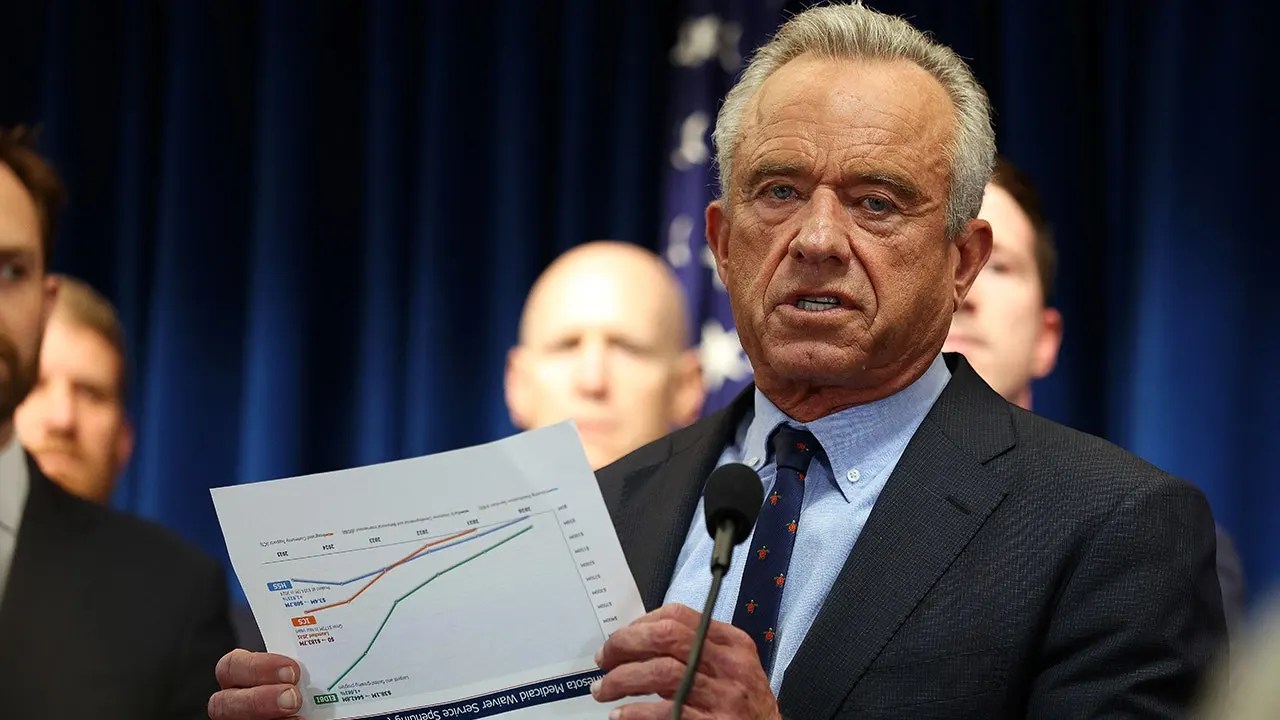
RFK Jr announces ‘largest autism fraud bust in American history’ with $46.6M Medicaid scheme indictment
Jonathan Fahey discusses DOJ’s $90 million Minnesota fraud ring bust
Jonathan Fahey, former DHS deputy assistant secretary, discusses the Department of Justice’s $90 million Medicaid fraud bust in Minnesota. Fahey explains that the widespread fraud is likely just the tip of the iceberg, with more revelations expected from cooperating defendants. He questions why Democrats previously ignored these programs for political reasons.
NEWYou can now listen to Fox News articles!
Health and Human Services (HHS) Secretary Robert F. Kennedy Jr. announced the indictment of two Minnesota defendants charged in what officials called the “largest autism fraud bust in American history.”
The U.S. Department of Justice (DOJ) indicted 55-year-old Shamso Ahmed Hassan and 25-year-old Hanaan Mursal Yusuf, slapping them with numerous counts of fraud and related charges for their alleged $46.6 million scheme to defraud Minnesota Medicaid’s Early Intensive Developmental and Behavioral Intervention (EIDBI) Program.
The indictment was part of a wider enforcement action taken by the DOJ’s National Fraud Enforcement Division that swept up 15 alleged fraudsters in indictments for schemes that targeted over $90 million in taxpayer funds.
“Today’s arrests represent the largest autism fraud bust in American history. This was not a paperwork error. It was not a technical violation. This was organized theft that exploited the most vulnerable children in America, deceived families, stole taxpayer dollars meant to help children with autism access legitimate care and support,” Kennedy Jr. said in a Friday news conference.
‘EPICENTER OF FRAUD’: MINNESOTA’S EMPTY STOMACHS, FAKE AUTISM THERAPY AND A SCANDAL THAT COULD TOP $2 BILLION
Health and Human Services Secretary Robert F. Kennedy, Jr., speaks to the media about alleged Medicaid fraud, and charges that were brought up against 15 individuals at the federal courthouse in Minneapolis, Minnesota, on May 21, 2026. (Christopher Juhn/Anadolu via Getty Images)
Hassan was a shareholder in two autism centers, Smart Therapy Center and Star Autism Center, but she did not disclose her ownership to the Minnesota Department of Human Services as required by law, prosecutors said. Yusuf worked at the Smart Therapy Center and helped operate the center, including by submitting the businesses’ claims for Medicaid reimbursement, according to the indictment.
MINNESOTA FRAUD SUSPECT WHO JUMPED FROM BUILDING IS ARRESTED, FBI SAYS
The pair allegedly paid kickbacks to families to incentivize them to send their children to Smart Therapy Center and Star Autism Center so they could bill for autism-related services in their children’s names. They then billed Medicaid for services that were not rendered or were not reimbursable by Medicaid, according to the indictment.
Of the $46.6 million they filed for reimbursement, $21.6 million was paid out, per the indictment. The DOJ is seeking restitution for that money.
Assistant Attorney General for the National Fraud Enforcement Division Colin McDonald addresses the media to announce actions combating fraud in Minnesota at the U.S. Attorney’s Office for the District of Minnesota on May 21, 2026 in Minneapolis, Minnesota. The Department of Justice is bringing charges against 15 people for fraud that targeted seven Medicaid programs and over $90 million in taxpayer dollars. (David Berding/Getty Images)
The pair “diverted hundreds of thousands of dollars of the fraud proceeds” to “their families’ personal use and benefit, including through real property purchases and transferring funds overseas, including to Kenya,” according to the indictment.
CLICK HERE TO DOWNLOAD THE FOX NEWS APP
The defendants were each charged with one count of conspiracy to commit healthcare fraud and one count of money laundering. Yusuf was charged with five counts of healthcare fraud, while Hassan was charged with two.
Secretary of Health and Human Services Robert F. Kennedy, Jr. addresses the media to announce actions combating fraud in Minnesota at the U.S. Attorney’s Office for the District of Minnesota on May 21, 2026, in Minneapolis, Minnesota. (David Berding/Getty Images)
“Every fraudulent autism diagnosis steals time, care, and resources from the children for whom this program was designed and who desperately need this care. Families with autistic children already face enormous challenges navigating therapies, specialists, and support systems. Fraud makes those barriers even steeper,” Kennedy Jr. said in the announcement.

CLOVIS, Calif. — In the waning days before California’s primary election, the two top Republicans running for California governor delivered closing arguments in front of a friendly Central Valley audience Friday evening.
Though Riverside County Sheriff Chad Bianco and former Fox News host Steve Hilton have attacked each other throughout the campaign, they abstained from feuding and instead focused on common enemies — Gov. Gavin Newsom and Democratic lawmakers who control the Legislature.
Hilton criticized Newsom’s new $20-million program to provide free diapers for families of newborn babies, referring to the outgoing governor as “the great loaded diaper of California himself.”
Earlier this year, Hilton and Bianco topped the governor’s race polls as a packed field of Democrats split many of the state’s liberal voters. Under California’s “jungle primary” system, where the top two candidates advance from the primary to the general election regardless of political affiliation, that led to fleeting hope among Republicans that the two candidates could shut Democratic candidates out of the November election.
“That idea was always a fantasy,” Hilton wrote in an op-ed published in the New York Post earlier this week in which he urged Bianco to drop out of the race “for the sake of the state we both love.”
“Steve, it is time for you to drop out,” Bianco retorted in a video posted to social media soon after. “In no world, no world does Steve Hilton beat a Democrat in November.”
After winning an endorsement from President Trump in early April, Hilton has steadily outpaced Bianco in polls. A poll commissioned by the California Democratic Party released last week showed Hilton leading the field with support from 22% of likely voters, followed by Democrat and former Biden Cabinet member Xavier Becerra with 21%. Bianco was at 10%, down from 15% in a previous poll conducted two weeks prior.
Still, Bianco, the two-term sheriff of California’s fourth most populous county, is a favorite of many Republicans in the state and won more support from delegates during the party’s recent endorsing convention than Hilton, though neither reached the necessary 60% to win the party backing.
While the two candidates have needled each other with personal digs and insults throughout much of the campaign, they appeared to set that energy aside during the Clovis forum and even traded some compliments. Hilton praised “sheriffs like Chad who actually understand what public safety looks like” while Bianco acknowledged that his opponent “should be very proud” to have Trump’s endorsement.
State Sen. Shannon Grove (R-Bakersfield), who moderated the more than 90-minute event, praised their “extraordinary civility” before she pressured each to commit to backing whichever Republican makes it through the June 2 primary — or if they both advance, continue to focus on policy debates over attacks.
The forum was hosted by the Fresno County & City Republican Women Federated as part of a fundraiser and dinner honoring the upcoming 250th anniversary of the nation’s founding. About 450 attendees were served dishes inspired by presidential favorites including sirloin steak for Theodore Roosevelt, a chopped salad from Chasen’s, a favorite Los Angeles eatery for Ronald Reagan, and a chocolate pie with cherry vanilla ice cream for Trump.
The Central Valley stretches from Bakersfield to Redding and is home to some of the nation’s most lucrative farmland. It also includes the heart of California oil country in Kern County. Yet residents feel largely neglected by statewide politicians who are more drawn to the ample votes and wealthy donors in Southern California and the Bay Area.
“We are the breadbasket of the world but we’ve been overlooked for too long,” said Andrea Shabaglian, a vice president of the Fresno Republican women’s group. “When gubernatorial candidates come here to sit down and listen to our communities, they realize that a stronger Valley means a stronger California.”
Though he lost California handily to former Vice President Kamala Harris in the 2024 election, Trump dominated in the state’s midsection. Even in Fresno County, where the Republican forum was held, Trump beat Harris by a four percentage point margin despite Democratic voters slightly outnumbering Republicans.
“We need a Republican in office because California is a mess. I mean, anybody with common sense can see that,” said LuAnne Pinedo-Madden, a retiree living in the Sierra foothill community of Coarsegold who listed transgender girls being allowed to compete in girls’ sports and government corruption as her top concerns.
Pinedo-Madden said she was “pretty sure” she had decided which of the Republican candidates to vote for but declined to say whom. “I feel that if we don’t get a Republican in office, we’re looking at moving” to Utah, Idaho or Nevada, she said. “We can’t take this anymore.”
Bianco and Hilton spoke about their plans to improve public safety, small businesses, homeowner’s insurance and water management, a crucial issue for the conservative-leaning owners of vast swaths of California’s agricultural heartland.
Signs along the major highways that straddle California’s Central Valley proclaim that “Food grows where water flows” and criticize Newsom for allowing water to flow into the ocean instead of capturing and storing more of it for farming.
Both of the GOP candidates described their visions for the state, which include building new dams and raising existing ones to store more water.
“We don’t have the water problem. We have a water management problem,” Bianco said before falsely arguing that “we get more water every single year than any other state in the country” and that California has “never, ever, ever been in a drought.”
“The water will be flowing to our farmers, the oil will be flowing to our refineries, the forests will be managed, the timber will be harvested” and used to build new single-family homes, Hilton said. “We’ve got the best weather, we’ve got the best people, we’ve got the best farmers, we’ve got everything we need to make this place amazing, except a good governor. Very soon we’ll have that as well.”
Though a Republican governor would likely face a hostile Legislature intent on blocking many priorities, Bianco and Hilton both promised sweeping cuts and cutbacks of state agencies. Both pledged on Friday to replace every member of the state’s parole review board, which drew criticism in February when it granted elderly parole to a man convicted of 16 counts of kidnapping and child molestation in 1999.
“California criminal justice is absolutely broken and it was forced upon us in the name of reform. What I’m going to do is make it a crime to hear the word reform again, because we lost track of what that word even means,” Bianco said.
He also pledged to eliminate laws and environmental regulators often blamed for slowing housing development: the California Environmental Quality Act, the California Coastal Commission and the state Air Resources Board.
Though his opponent has the coveted Trump endorsement, Bianco argued that it will hurt Hilton’s chances of winning the general election. The Republican president has never been popular in deep-blue California; just 25% of adults in the state approved of Trump’s performance according to a February survey by the Public Policy Institute of California.
“Steve should rightfully be proud of being endorsed by President Trump [but] we have to actually realize, is that a good thing in California? It’s a good thing in this room,” Bianco said as the crowd cheered at the mention of the president’s name. “We have to realize strategically that President Trump ran three elections in this state, and he lost 60-40 in all three of them.”
The Riverside sheriff argued he is “the only person that can actually sway Democrats to vote for a Republican across party lines on a public safety platform.”

new video loaded: Tulsi Gabbard Resigns as Intelligence Chief
transcript
transcript
Tulsi Gabbard Resigns as Intelligence Chief
Tulsi Gabbard, the director of national intelligence, announced on social media on Friday that she would be leaving her post to care for her husband, who is battling an “extremely rare form of bone cancer.”
-
I’m honored and grateful to President Trump for his trust and confidence in nominating me to serve our country as the director of national intelligence, at a time when trust in the intelligence community, unfortunately, is at an all-time low.

By Jamie Leventhal
May 22, 2026
-

 South Dakota4 minutes ago
May proclaimed Archaeology & Historic Preservation Month
-

 Tennessee10 minutes ago
What Tee Martin said about joining Lane Kiffin’s staff, son’s transfer to LSU
-

 Texas16 minutes ago
2026 NCAA softball tournament: Bracket, schedule for the Women’s College World Series, scores
-

 Utah22 minutes ago
Utah father now accused of abusing 2 teen girls
-

 Vermont28 minutes ago
Police search for missing Pownal, Vt., teen
-

 Washington40 minutes ago
Washington State Ferries makes room for pets, paws with new policy launching this summer
-

 Wisconsin46 minutes ago
12 Offbeat Wisconsin Towns To Visit In 2026
-

 West Virginia52 minutes ago
How to watch Kansas baseball play West Virginia in Big 12 tournament

