


(L-R) Macarena García (Elena) and Anna Castillo (Bárbara) in ‘Many People Need to Die’
World
US diplomat Marco Rubio denounces settler violence, tolls in Hormuz strait


United States Secretary of State Marco Rubio has offered wide-ranging remarks upon his departure from the latest Group of Seven (G7) ministers’ meeting in France, denouncing Iran’s continued chokehold on the Strait of Hormuz as well as settler violence in the occupied West Bank.
Standing on an airport tarmac on Friday, Rubio fielded questions from journalists about reports that Iran plans to implement a tolling system in the strait, a vital waterway for the world’s oil supply.
list of 3 itemsend of listRecommended Stories
Rubio used the topic to double down on pressure for countries to participate in securing the Strait of Hormuz, a demand US President Donald Trump has repeatedly made.
“One of the immediate challenges we’re going to face is in Iran, when they decide that they want to set up a tolling system in the Strait of Hormuz,” Rubio said.
“Not only is this illegal, it’s unacceptable. It’s dangerous for the world, and it’s important that the world have a plan to confront it. The United States is prepared to be a part of that plan. We don’t have to lead that plan, but we are happy to be a part of it.”
He called on the G7 members — among them, Japan, Canada, France, the United Kingdom, Italy, Germany and the European Union — as well as countries in Asia to “contribute greatly to that effort”.
Rubio calls toll plan ‘unacceptable’
The Strait of Hormuz is a key artery for the global transport of oil and natural gas, and prior to the start of the US and Israel’s war against Iran on February 28, an average of 20 million barrels of oil per day passed through the waterway.
That amounted to roughly 20 percent of the world’s liquid petroleum supply.
But since the outbreak of war, Iran has pledged to close the Strait of Hormuz, which borders its shores. The threat of attacks has ground most of the local tanker traffic to a standstill, though a few vessels, some linked to Iran or China, have been allowed to pass through.
Media reports suggest that Iran is setting up a “tollbooth system” that would require passing ships to put in a request through Iran’s armed forces, the Islamic Revolutionary Guard Corps (IRGC). There would also be a fee to secure passage.
“ They want to make it permanent. That’s unacceptable. The whole world should be outraged by it,” Rubio said on Friday.
He added that he conveyed a warning about the polling scheme to his colleagues at the G7.
“All we’ve said is, ‘You guys need to do something about it. We’ll help you, but you guys are going to need to be ready to do something about it,’” Rubio said.
“Because when this conflict and when this operation ends, if the Iranians decide, ‘Well, now we control the Strait of Hormuz and you can only go through here if you pay us and if we allow you to, that’s not only is it illegal under international law and maritime law. It’s unacceptable, and that can’t be allowed to exist.”
The Trump administration, however, has struggled to rally allies and world powers to join the US in its offensive against Iran.
Legal experts have criticised the initial strikes against Iran as an unprovoked act of aggression, though the Trump administration has cited a range of rationales for launching the attack, including the prospect that Iran may develop a nuclear weapon.
Many of the US allies in Europe have maintained that they would limit their involvement to defensive actions. Trump, meanwhile, has accused members of the NATO alliance of being “cowards”, adding in a social media post, “We will REMEMBER.”
In a statement following the G7 meeting, member countries reiterated their stance that there should be an “immediate cessation of attacks against civilians and civilian infrastructure”.
They also underscored the “absolute necessity to permanently restore safe and toll-free freedom of navigation in the Strait of Hormuz”. But the statement fell short of pledging any resources or aid to the US and Israeli war effort.
Achieving goals ‘without any ground troops’?
It is unclear when the war might end. On Saturday, it reaches its one-month anniversary, having stretched for four weeks.
Rubio on Friday echoed Trump’s assessment that the war was going as planned and that the US was achieving its objectives, including to destroy Iran’s navy, missile stockpiles and uranium enrichment programme.
“ We are ahead of schedule on most of them, and we can achieve them without any ground troops, without any,” he said, addressing an oft-raised concern about the prospect of US troops being deployed to Iran.
Rubio also briefly addressed the increasing levels of Israeli settler violence against Palestinians in the occupied West Bank.
Footage has shown settlers this month torching Palestinian homes and vehicles, as well as assaulting residents.
On March 19, the United Nations estimated that more than 1,000 Palestinians have been killed in the West Bank since Israel began its genocidal war in Gaza in October 2023. The international body underscored that a quarter of the victims were youths.
“ Well, we’re concerned about that, and we’ve expressed it. And I think there’s concern in the Israeli government about it, as well,” Rubio responded, adding that it was a “topic we follow very closely”.
He suggested that the Israeli government may take action to stop the violence, though critics argue that Israel has largely turned a blind eye to settler violence.
“Maybe they’re settlers, maybe they’re just street thugs, but they’ve attacked security forces, Israelis, as well. So, I think you’ll see the government going to do something about it,” Rubio said.
Upon taking office for a second term in January 2025, President Trump also moved to cancel sanctions against Israeli settlers accused of grave abuses in the West Bank.


The EU and European Parliament on Monday agreed a controversial law aimed at speeding up the return of migrants with no legal right to stay in Europe, marking the bloc’s toughest migration policy shift in decades.
ADVERTISEMENT

ADVERTISEMENT
Policymakers say the so-called Return Regulation is key to accelerating returns and is the cornerstone of the EU’s crackdown on irregular migration.
It also reflects a broader political shift in Europe, with conservatives — sometimes backed by the far right — pushing for a tougher approach to migration.
According to official figures, only 29% of migrants with no legal right to remain in Europe leave the EU.
“This is a really very important step in making sure that we have control over what is happening in the EU, over who comes but also who has to leave the EU,” Home Affairs Commissioner Magnus Brunner told reporters at the end of the talks.
At the heart of the law is a provision allowing EU countries to set up deportation centres outside the bloc, known as return hubs, if they conclude an agreement with a non-EU country.
“The next step is working more on migration diplomacy, together with third countries,” Brunner said, avoiding mentioning any possible third country to place return hubs.
The hubs can be either places of transit or locations where a person is expected to stay, marking a significant departure from current rules.
Most migrants can only be returned to their country of origin or to a country with which they have a proven connection. Under the new system, that requirement would be removed. Only unaccompanied minors would be exempt from being deported to a return hub, while families with children will be eligible.
Some EU countries are already working to identify potential partner countries for future return centres. Germany, the Netherlands, Austria, Denmark and Greece teamed up last March to implement the controversial project, while Italy is already running a similar scheme in Albania, with two centres accommodating fewer than a hundred migrants in total.
The law also allows EU countries to search a “place of residence or other relevant premises” of irregular migrants, a provision that NGOs and civil society compare to the notorious raids conducted by the US Immigration and Customs Enforcement (ICE).
“The provision is vague on purpose, to allow a broad interpretation in the different member states. It opens the doors to home raids and also raids in the premises of associations helping migrants and healthcare facilities,” Eleonora Celoria from Asgi, an Italian association of legal experts, told Euronews.
While she acknowledged that in many member states, police will still need a judicial warrant to enter private residences, she described the law as “worrying”, as it can encourage authorities to broaden their powers.
Other provisions include longer detention periods, tougher entry bans and new powers to locate irregular migrants.
The maximum legal detention period for irregular migrants waiting to be returned is increased from six months to two years, with a possible six-month extension and an unlimited duration for persons considered as posing a security risk.
Entry bans would also become significantly tougher, rising from five to ten years in most cases, with the possibility of lifetime bans for those considered a security risk.
Another change concerns appeals. Under current rules, deportations are automatically suspended while legal challenges are pending, while the new law would end that automatic protection, leaving courts to decide on a case-by-case basis whether a return order should be halted.
The regulation also introduces a European Return Order to facilitate the mutual recognition of return decisions across member states, but it will remain voluntary.
The implementation timeline was the most difficult issue in negotiations between the Council and Parliament. Under the compromise deal, some provisions will take effect 12 months after the regulation enters into force. The Council initially pushed for two years.
Civil society associations and left-wing MEPs have criticised the text, saying it will put migrant lives in danger and violate fundamental rights.
“The text finalised today is the result of a shameful agreement: the legal arsenal serving a xenophobic ideology is now complete,” Greens/EFA MEP Mélissa Camara told Euronews after the talks concluded.
“This regulation will create a draconian detention and deportation system, from holding people in immigration detention for up to 30 months to tearing families apart and sending people to countries they do not know,” said Silvia Carta, advocacy officer at Picum, a network of different organisations supporting undocumented migrants.
The law will now need to be formally approved by MEPs and EU countries and could enter into force as soon as next month.
World
Conecta Magaluz-Mallorca: Buzz Titles, AI, What’s Shocked in TV, Latin America’s Microdrama Bonanza and Other Takeaways

Unspooling over May 25-28 in the Meliá Calvià Beach Hotel at Magaluf, Mallorca, the 10th anniversary of edition Conecta afforded extraordinary vistas of Magaluf Bay, its turquoise Mediterranean waters worthy of laptop wallpaper.
Bowing an all-in-one boutique model, Conecta Magaluf Mallorca was attended by 400 delegates, including executives from HBO Max, Prime Video, YouTube, France TV, RAI, RTVE, SkyShowtime, TVI, Atresmedia, Telemundo Studios, Mediaset Italia, Movistar Plus, 3Cat and Balearic Islands pubcaster IB3.
“Our new, more compact and all-in-one format is focused on facilitating connections and maximising the value of time spent together, which we believe is far more efficient for everyone,” Conecta Magaluf-Mallorca director Géraldine Gonard said at a closing session.
Beyond classic sea vistas, Conecta Magaluf-Mallorca’s conference strand also allowed delegates a rapid, often incisive catch-up on the state of the international TV business, as well as how cutting edge tourist concerns have become a new driver for part of the film-TV industry.
Also often stage center was Mallorca’s emerging film industry. That needs to be taken seriously. In 2025, according to Cannes Marché du Film’s Focus report, Spain produced 426 feature films, up 30% on 2024 and nearly twice the volume of France (228). One driver, the report says, is not only national but regional support schemes.
Takeaways from Conecta Magaluf-Mallorca:
The Long Tail Wags the Dog: Global Streamer Viewing
Conecta Fiction began with a bang: Jonathan Broughton at Plum Research drilling down on key global streamer metrics. SVOD began as DTC, for instance, accounting for 98% of business in 2014. It is now becoming increasingly BTC with DTC set to rep 76% of turnover in 2029 and BTC – led by advertising – up to 24%. Most important of all, however, a stunning 90% of views and 75% of titles viewed takes place on the long tail: Think “Star Trek,” “Dark,” “Archer” and “Primal,· not first run-hits such as “Squid Game.” That has given rise to a new superclass, which Broughton dubs Neo-Evergreens.
Mallorca Reigns
Conecta’s May 27 Pitch sessions prized multiple local titles, such as “Mallorca Things to Do,” an RTVE Play Award winner, produced by Palma de Mallorca-based Bastera Films, behind 2025 Toronto Fipresci prize winner “Forastera.” Other winners linked Mallorcan companies with prime players on Catalonia’s film-TV scene, which is surely one way to go for the island’s industry. One case in point: “Naked,” a Triodos Bank Award laureate, is co-produced by Empatic Films (“Favàritz,” “Rock Bottom”) and Barcelona’s Corte y Confección de Películas, behind Canneseries winner “Perfect Life” and Cannes Festival laureate “Sirāt.”
Buzz Titles
One buzz Conecta project, “To Catch an Old Lady,” captures the emotional indigence of advanced age, turning on an elderly woman who attempts to commit a crime serious enough to get locked up with the only friend left to her. Others impressed by their ingenious use to narrate effect of a Mallorcan setting. In Germany’s “Idyllic,” from Brains Narrative Studio, a Mallorca-set cozy crime series which won Tallinn’s TV Beats Forum Award, a retired British-German couple investigate murders before discovering they live inside a VR retirement simulation. Its creators were inspired by their vision of Mallorca as “an idyllic place to end your days, but almost too good to be true,” they told Variety.
Latin America: Microdrama Leader
No line was longer for any session at Conecta Magaluf Mallorca than the May 27 Focus on Microdrama: The Game Is On – When to Make Your Move. The game is most certainly on, Omdía’s Maria Rua Aguete said at Conecta Magaluf Mallorca, noting that Brazil reached 24 million monthly active microdrama users in 2025 and Mexico 20 million. “Brazil and Mexico are already demonstrating the scale that this format can achieve outside China,” Rua Aguete said. “What we are seeing is not simply the growth of a new content category but a fundamental shift in how audiences consume entertainment on mobile devices,” she added, noting 75% of video consumption now takes place on smartphones. Via Variety, Brazilian media giant Globo announced a new microdrama just before last week’s Rio2C, the soccer-themed “Quando o Coração Entra em Campo.” Globo’s catalog of 25 microdrama titles takes in five original productions, nine spinoffs of telenovela characters, and 11 internationally licensed titles. That, however, may just be the beginning.
The Rise and Rise of Spain
All major categories have Neo-Evergreens: Serials (“Breaking Bad”), anime (“One Piece”), kids (“Victorious”) and procedurals (“Seinfeld”). So do countries. In 2018, for example, “Money Heist” (“La Casa de Papel”) broke out as Netflix’s first true global non-English blockbuster. So 2018 was one of Netflix’s best years ever for Spain? Not at all. Hours watched of Spanish content on Netflix top 40 markets has increased 73% from 2018 to now, according to Plum Research. Two factors look to be at work. While it still has new hits, Netflix Spain now has a long tail. And diversity of consumption has never been higher. Other territories outside export markets (the U.S. Brazil, Mexico, Argentina and France) for Spanish-language content repped 35% of total viewing hours in 2018. That number had climbed to 45% by 2024.
Spain’s Comedy Surge
Announced May 27, over half Conecta’s Pitch prizes went to comedies, including José Luis Rugeles’ “Rookies,” from Colombia’s Rhayuela Films and “Breakdowns,” from Argentina’s Lab Producciones. RTPA’s Lucía Herrera, head of programming at RTPA, the state TV of Spain’s Asturias, drilled down on at Conecta on rural sitcom “Coworkinaos,” its first co-production with neighbor Galicia’s RTVG. RTVE executive producer Mar Díaz said Spain’s nationwide pubcaster was looking for comedies. Comedy is on the rise. Reasons? “Spain has seen some surprising hits in the comedy genre, like Netflix’s ‘Animal’ and ‘Macho Alphas,’ which reinvent comedy to a large format sale potential,” The Wit’s Caroline Servy said earlier this year. Also, they offer a lighter way into contemporary concerns.
A TV Talent to Track: Victoria Martín
It was no coincidence that Conecta Magaluf Mallorca climaxed May 27 with a special screening of “Many People Need to Die,” Few comedies have tackled Millennial angst with such withering realism, nailing how its members’ searing frustration at living lives imposed by older generations prompt acts of outrageous LOL egotism, such as when the hoity-toity Elena, married to a 60-year-old millionaire, passes off benzo-popping Bárbara, her lifelong friend, as a junkie she’s offered to accompany for a day. A Canneseries world premiere, the Movistar Plus original, co-produced again by Corte y Confección de Películas, certainly marks out YouTube-podcast comedian Martín as a talent to track.
The Pain in Spain
That said, Spain and especially public broadcaster RTVE, is hurting. Spain stands out in non-fiction as the second biggest importing territory in the world for formats, after the U.S., suggested The Wit’s Caroline Servy at a keynote on the formats business. Over 2025-26, Spain has launched 19 new adaptations, led by RTVE with 12, and six a piece by Atresmedia and Mediaset, she announced. Format adaptation can be highly cost-efficient, of course. It is sad, however, when a public broadcaster has to count so much the cost.
Tourism: an Ever Bigger AV Driver
Brazil’s Tourist Board Embratur has launched eight film-TV-gaming-YouTube initiatives to support sustainable development for its tourist industry. Conecta Magaluf-Mallorca hosted the world premiere of “Mallorca Confidential,” a noirish gypsy drug queenpin thriller produced by Mallorca’s Cinética. Equally, held in association with the Calviá Town Council, Conecta this year was financed via the Balearic island’s Sustainable Tourism Tax (ITS). “Investing ITS funding in Conecta is perfect exemplifies our tourist strategy, supporting quality and deseasonalized tourism which generates year-round returns at nil territory consumption cost,” Jaume Bauzá, the Balearic Islands’ Councillor for Tourism, Culture and Sports said at Conecta’s closing ceremony.

Lolita Flores in ‘Mallorca Confidential’
Lolita Flores in ‘Mallorca Confidential’ Credit, Lucia Faraig.
Artificial Intelligence
Conecta’s AI focus was organized not as a panel but debate with speakers aligned in practitioner and concerned camps. Some of them called for larger protocols. The European Union already has one via its AI Act, in force from August 2024. On May 26, Spain’s government approved a bill for its enforcement in Spanish law. Meanwhile, on May 29, “The Book of Life” director Jorge Gutiérrez pulled out of Amazon’s genAI animation initiative, just days after announcing his involvement. Expect the backlash, posing risks of fandom ostracism for any significant animator seemingly endorsing AI, to play out at late June’s Annecy Festival.
What’s Shocked in the Last 10 Years, or May Shock in the Future
Conecta Magaluf-Mallorca’s conference strand closed with a panel in which analysts and journalists confessed what had amazed them during the last 10 years, as well as suggesting some of the next big calls.
“We talk about globalization but I’ve met with more local companies that are more important than ever. The shocking thing now is that actually there is less U.S. dominance of shows of original content, but more local and regional content going around in the world,” said Omdia’s Rua Aguete.
Brazil, Flanders and Indonesia are current hot spots, said another speaker who voiced their concern for the future of state-backed TV operators which accounted in 2024 for 56% of all TV fiction titles produced in Europe, compared to 14% for global streamers.
As long as regulation ensures that big events – sports, Eurovision – are reserved for public broadcasters, they will bring people together in front of TV screens, said Laure Steinville at Glance.
What’s most shocking, often, is what hasn’t happened. Spanish companies still labor under fiscal pressures, noted Irene Jiménez at Audiovisual 451. “Many things have happened [in Spain], but in some ways it’s as if nothing has changed at the same time.”
“I have access to something like 45 billion data points on audiences and what they’re watching across the world. It actually doesn’t do that much in terms of designing a show,” said Plum Broughton. “What is still very true is that they can help people understand what’s done well. But still a machine can’t yet produce something which is authentic and credible and creative.”
What has happened with the emergence of global platforms, at least for Latin America, is “a cross-pollination of storytelling, between more plot-driven Anglo storytelling and in the Latino case, more character-driven storytelling,” Manuel Martí, at Cohn-Duprat, told Variety during Conecta Magaluz-Mallorca. We are still living that reality now.

NEWYou can now listen to Fox News articles!
U.S. Central Command (CENTCOM) announced that it carried out “self-defense strikes” against Iran over the weekend.
“U.S. Central Command (CENTCOM) conducted self-defense strikes on Iranian radar and command and control sites for drones in Goruk, Iran and Qeshm Island this weekend,” a press release noted.
“The measured and deliberate strikes occurred on Saturday and Sunday in response to aggressive Iranian actions that included the shootdown of a U.S. MQ-1 drone that was operating over international waters. U.S. fighter aircraft swiftly responded by eliminating Iranian air defenses, a ground control station, and two one-way attack drones that posed clear threats to ships transiting regional waters,” CENTCOM continued.
TRUMP WARNS IRAN US WILL ‘FINISH THE JOB’ IF DEAL COLLAPSES AS ISRAEL EXPANDS LEBANON OFFENSIVE
U.S. Secretary of War Pete Hegseth listens as Adm. Brad Cooper, Commander of U.S. Central Command, speaks during a press briefing at the Pentagon on April 16, 2026 in Arlington, Va. (Alex Wong/Getty Images)
“No American service members were harmed. CENTCOM will continue to protect U.S. assets and interests in response to unwarranted Iranian aggression during the ongoing ceasefire,” the release added.
The Associated Press reported that Kuwait noted its air defenses opened fire on Monday to intercept drone and missile attacks. Around the same time, Iran’s paramilitary Revolutionary Guard said it responded to an American attack without saying where, likely referring to the attack on Kuwait. The Guard, via a statement reported by the state-run IRNA news agency, indicated that America targeted a telecommunications tower, according to the AP.
Asserting that Iran “really wants” to strike an agreement, President Donald Trump declared in a Monday morning Truth Social post that chattering critics are making it more difficult for him to negotiate.
MOJTABA KHAMENEI TOUTS NEW ANTI-US ALLIANCE AS GULF BACKCHANNELS SEEP INTO TEHRAN: ANALYST
He urged people to “sit back and relax,” claiming that the issue will ultimately turn out “well.”
“Iran really wants to make a deal, and it will be a good one for the U.S.A. and those that are with us. But don’t the Dumocrats, and various seemingly unpatriotic Republicans, understand that it is MUCH tougher for me to properly do my job and negotiate, when political hacks keep negatively ‘chirping,’ at levels never seen before, over and over again, that I should move faster, or move slower, or go to war, or not go to war, or whatever,” he declared in a Truth Social post early on Monday.
“Just sit back and relax, it will all work out well in the end – It always does!” he declared.
TRUMP REVEALS KEY IRAN CONCESSION, WARNS US WILL ‘FINISH IT OFF MILITARILY’ IF DEAL FAILS
U.S. President Donald Trump looks on during a swearing in ceremony for new Chairman of the Federal Reserve Kevin Warsh in the East Room of the White House in Washington, D.C. on May 22, 2026. (Aaron Schwartz / AFP via Getty Images)
CLICK HERE TO DOWNLOAD THE FOX NEWS APP
The U.S. is continuing to conduct a blockade against Iran.
“U.S. forces operating in the Gulf of Oman enforced blockade measures by disabling a Gambia-flagged maritime vessel attempting to sail toward an Iranian port, May 29,” CENTCOM announced in a Saturday press release.
The Associated Press contributed to this report
-
 Entertainment2 minutes ago
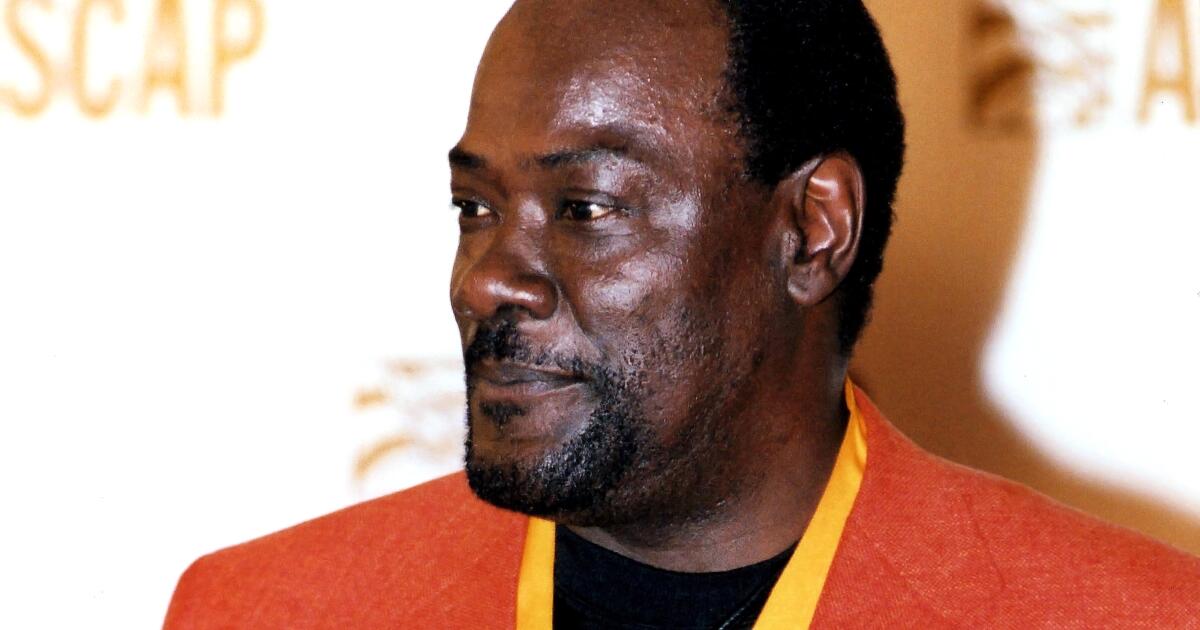
Ronald LaPread, Commodores’ co-founder and bassist, dies at 75
-
 Lifestyle9 minutes ago
Hoover Dam, challenged by drought, now wears a U.S. flag the size of a football field
-
 Politics12 minutes ago
’60 Minutes’ veteran Scott Pelley rips CBS News bosses, saying they are ‘murdering’ the program
-
 Sports24 minutes ago
Rams acquire Myles Garrett for Jared Verse and draft picks in blockbuster trade
-

 World32 minutes ago
EU approves strictest-ever migration law, including return hubs
-

 News57 minutes ago
Remains of Los Alamos National Laboratory employee missing for nearly a year found in New Mexico forest | CNN
-

 Los Angeles, Ca2 hours ago
Sticker shock not just affecting World Cup match ticket prices, but parking costs too
-

 Detroit, MI3 hours ago
Frankie Valli cancels tour. Why Four Seasons won’t be back in Detroit

