Politics
Rebecca Kutler wants to spin MS NOW into the post-cable future

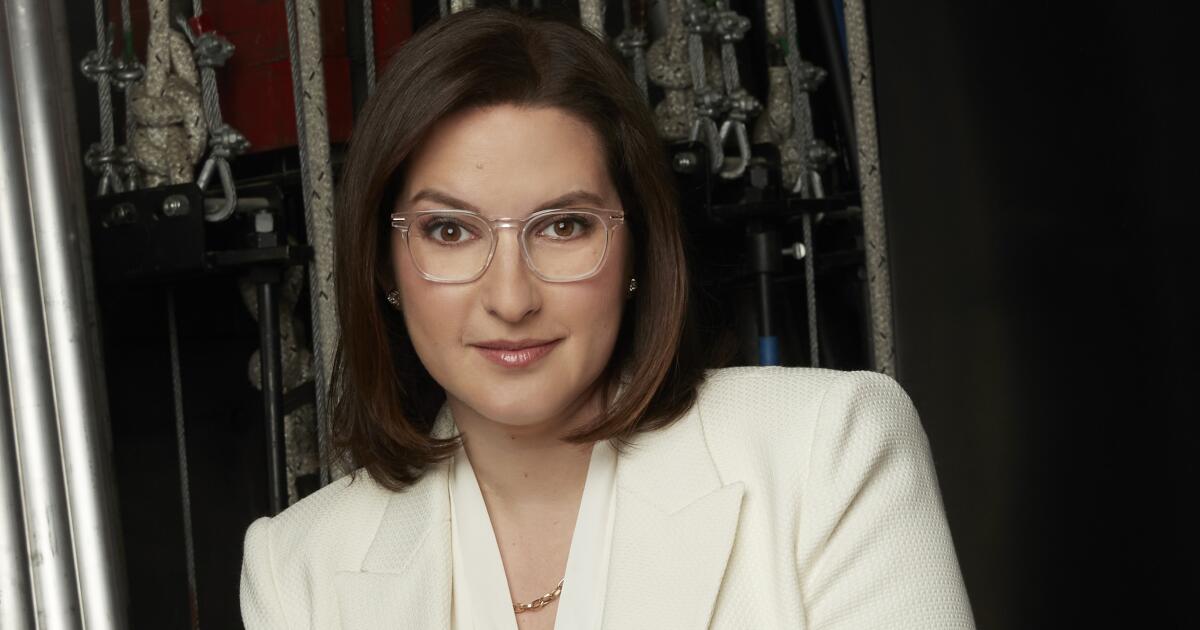
One year ago, Rebecca Kutler was promoted to president of the cable news network then known as MSNBC.
Taking the helm at a major news organization is the pinnacle of a journalist’s career. But a lot changed after Kutler landed the job.
In August, MSNBC announced it was dropping its name of nearly 30 years to become MS NOW — as its now-former owner NBCUniversal wanted a clean break from the channel, which was spun off to be part of a new media company called Versant.
The spin-off, which NBCU parent Comcast initiated because its cable networks are considered slow-dying properties that weighed down its stock price, was hardly a vote of confidence in the business. Losing the moniker that had decades of brand equity among its politically progressive viewers was not going to help.
At a recent lunch near her Washington office, Kutler acknowledged the circumstances were less than ideal. But with more than 20 years in the TV news business where she began as a production assistant at CNN, she understood the audience’s connection to her channel begins with the people on-screen, and not the logo.
“I was pretty confident the audience wouldn’t really blink because when they turn on the their television, they see Rachel Maddow, they see Jen Psaki, they see Joe Scarborough,” Kutler said. “The fact that two letters change does not change any of those audience habits.”
Still there was work to be done. Kutler no longer had the resources of NBC News at her disposal. Instead of paying $60 million annually for its newsgathering services, she chose to have MS NOW build its own newsrooms in Washington and New York. The operation was tested Tuesday as President Trump’s State of the Union address was the first major event MS NOW covered as a freestanding entity.
Kutler has some big professional challenges, but none as daunting as the one that emerged in October when she was diagnosed with breast cancer. Kutler found herself watching the newly rechristened MS NOW on a TV in a hospital room as she received chemotherapy treatments every few weeks.
“If anything it just made me appreciate and love what I do even more,” Kutler said.
As she works through her recovery, Kutler’s spirits have been buoyed by data that prove her point about MS NOW’s audience loyalty. From Nov. 15 — the date of the rebrand — through Feb. 14, MS NOW’s average daily audience has grown to 613,000, up 25% compared to the same period a year ago, according to Nielsen. Weeknight prime time is up 27% to 1.2 million viewers, still a distant second to conservative-leaning Fox News but well ahead of CNN.
There was an audience exodus from MSNBC in the months following President Trump’s election in 2024 as viewers unhappy with the results typically tune out after a presidential campaign. But anxiety over the activities of the second-term Trump White House sent them back into the familiar tent to hear Maddow, Lawrence O’Donnell, Ari Melber and others weigh in.
Lawrence O’Donnell and Rachel Maddow at an MSNBC fan festival in New York City in October 2025.
(MSNBC)
When the name change to MS NOW was announced in October, the network’s internal research showed 31% of viewers found the idea somewhat unappealing or very unappealing, a warning light for what might be ahead. Two months later, that figure dropped to 17%, while the percentage of viewers who found it very appealing or somewhat appealing jumped from 30% to 44%.
A $20-million promotional campaign that focused on the network’s personalities helped. “We made sure the audience knew that it was just a name change, not a strategy change,” Versant Chief Executive Mark Lazarus said.
Programming moves Kutler implemented ahead of the switch helped. Longtime evening host Joy Reid was replaced with an ensemble program “The Weeknight,” with Symone Sanders-Townsend, Michael Steele and Alicia Menendez, and the audience level rose by 30% in February compared to a year ago.
Kutler moved Psaki, the former press secretary to President Biden, to the 9 p.m. Eastern slot Tuesday through Friday, where viewership is up 41%.
At CNN, Kutler had a strong reputation as a producer and in talent development. She was being groomed for a top job at the network before jumping to MSNBC as an executive vice president in 2022. Agents have been impressed with her swift decision-making.
“They have exceeded expectations in an especially challenged environment,” said Bradley Singer, a partner at William Morris Endeavor whose clients include Sanders-Townsend and “The Weekend” co-host Eugene Daniels. “And I would argue that Rebecca is the right leader for this moment because she’s willing to move quickly to try new things. And the business doesn’t really have time to spare.”

Jen Psaki is the host of MS NOW’s “The Briefing.”
(MS NOW)
Psaki credits Kutler for guiding her transition into TV news. “I wasn’t hired because I spent 20 years as a local news anchor, right?” Psaki said in a recent telephone interview. “I could learn those skills, but Rebecca helped me really start the task of figuring out how to ask the questions that needed to be asked, while also sharing my unique perspective as somebody who’s worked in government and politics.”
MS NOW did have to fill a major hole when political data guru Steve Kornacki chose to stick with NBC after the spin-off. Kutler tapped Ali Velshi, the network’s versatile chief correspondent, to take over the number-crunching during election nights and other big events.
While Kutler can point to ratings increases, she is aware of the long-term doomsday scenario that faces the cable TV industry as more viewers turn to streaming. The people who still have cable like MS NOW a lot — the network has four times as many viewers today as it did 20 years ago when there were far more pay-TV subscribers. But Versant needs to become less dependent on traditional TV as subscriber numbers are sliding every year.
Wall Street will get its first look at Versant’s financial performance when the new company delivers an earnings report next week, expecting to show $6.6 billion in revenue last year. While there have been declines in revenues because of cord-cutting, the company, which includes USA Network, SYFY, CNBC, Golf Channel, E! and Oxygen, says it still delivers double-digit profit margins.

MS NOW President Rebecca Kutler at Vesant’s investor day in New York on Dec. 4.
(MS NOW)
By early fall, MS NOW will launch a direct-to-consumer subscription product aimed at people who don’t have a pay-TV package. CNN launched such a service last year, while Fox News, the perennial ratings leader in cable, is available as part of Fox One, which also offers Fox Corporation’s broadcast network and sports channels.
Kutler said MS NOW‘s direct-to-consumer service will be part of a broader digital offering that can serve as a community for progressives. She describes subscriptions as “memberships.”
“We’re trying to build a product that meets the needs of people who love news, care about democracy and want to come together in a shared space,” she said.
MS NOW already has a strong presence on YouTube. In January, the network had 339 million views of its content, second only to Fox News (466 million) among cable and broadcast TV news outlets.

Mika Brzezinski and Joe Scarborough on the set of MS NOW’s “Morning Joe.”
(MS NOW)
MS NOW also stepped up its podcast business, scoring 140 million downloads last year. The long-form interview program “The Best People with Nicolle Wallace” has been a top download onApple Podcasts, and a new entry, “Clock It” with Sanders-Townsend and Daniels, launched this month.
Kutler also is looking at outside podcast companies to supply programming. Last week, MS NOW announced a deal with Crooked Media to produce a weekly compilation of its podcasts, including “Pod Save America,” which will air Saturdays at 9 p.m. Eastern.
“If there’s content our audience is interested in, we should find a way to bring it to them,” she said.
Overall, the moves at MS NOW show a willingness to invest in growing the business, a situation that did not exist under NBCU, which has been focused on building its Peacock streaming platform. “Liberating us from that was part of the strategy of the entire spin because we now need to do all of those things in order to create a growth company,” Lazarus said.
Kutler even had the green light to enter talks with Anderson Cooper — one of the highest-paid on-air talents in TV news — about joining MS NOW before he decided to re-sign with CNN.
Kutler had her final chemo session last Friday, and doctors say her health prognosis is good. She draws inspiration from her mother, a Philadelphia-area lawyer who raised Kutler as a single parent and successfully battled the disease in her 60s.
“My hardest day would have been my mom’s easiest day,” said Kutler, who is married with three teenaged children. “I was born watching somebody power through stuff. The idea of doing a job that’s busy and demanding and loving your kids and making them a priority is the only thing I ever knew.”
It wasn’t easy to go into Lazarus’ office to break the news about her condition after just six months on the job and a massive task ahead. But Kutler said he didn’t flinch, and the new company has been “1,000%” supportive.
“She’s a tremendous leader and an example of resilience and strength,” Lazarus said.


NEWYou can now listen to Fox News articles!
A coalition of blue states and jurisdictions is suing the Trump administration over new Medicaid work requirements designed to prevent fraud, arguing the policy unlawfully restricts access to health care coverage.
The lawsuit, filed by at least 25 states and the District of Columbia, alleges the newly implemented Interim Final Rule (IFR) — issued by the Centers for Medicare & Medicaid Services (CMS) — violates federal law and departs from Congress’ original intent and early CMS guidance.
The IFR requires certain individuals to provide documentation proving they are exempt from Medicaid rules requiring enrollees to work, volunteer or attend school due to severe medical conditions.
Before the rule was issued in early June, highly vulnerable Medicaid recipients were set to be automatically exempt from such requirements. Agencies would have granted those exemptions by reviewing existing health records, without requiring individuals to complete additional paperwork ahead of the requirements taking effect in January 2027.
DR. OZ UNVEILS MEDICAID OVERHAUL, CLAMPS DOWN ON $2B FOR ILLEGAL IMMIGRANTS AND MANDATES WORK FOR ABLE-BODIED
Dr. Mehmet Oz, administrator of the Centers for Medicare & Medicaid Services, discussed a number of healthcare topics during a news conference with reporters on Tuesday, June 2, 2026. (Aaron Schwartz/CNP/Bloomberg via Getty Images)
The lawsuit names Dr. Mehmet Oz, administrator of the Centers for Medicare & Medicaid Services (CMS), which issued the IFR, and Robert F. Kennedy Jr., secretary of Health and Human Services (HHS), as defendants.
Oz previously argued that such guardrails are designed to prevent programs from being “defrauded into a turmoil,” adding that able-bodied enrollees receiving American tax dollars should contribute to society.
“If you can work, you should get up and work,” Oz said.
“If we put guardrails around these programs, we’ll allow them to thrive. I’m here because I love Medicaid. The president has already said he loves and cherishes Medicaid and Medicare. … We cannot allow these programs to be defrauded into a turmoil that they cannot pull up from. If we love these programs, we will make the difficult decisions.”
The new rule would require able-bodied individuals to work 20 hours a week, volunteer, or pursue education while enrolled in free healthcare coverage.
Fox News reached out to the White House and HHS for comment.
FED AUDIT, EMERGENCY MEDICAID UNDERCUT DEMS ON ILLEGAL IMMIGRANT HEALTH COVERAGE
Health and Human Services Secretary Robert F. Kennedy Jr. speaks during an interview. ((Photo by Jason Mendez/Getty Images))
The plaintiffs involve California, Connecticut, Delaware, the District of Columbia, Hawaii, Illinois, Maine, Maryland, Massachusetts, New Jersey, New York, Oregon, Rhode Island, Vermont, Washington, Arizona, Colorado, Michigan, Minnesota, Nevada, New Mexico, North Carolina, Pennsylvania, Virginia, Wisconsin and Kentucky.
“People with disabilities, patients in the middle of cancer treatment, or those struggling with another serious or complex health condition, shouldn’t be at risk of losing the care that helps maintain their health,” the suit stated.
REPUBLICANS PRAISE ‘BIG, BEAUTIFUL BILL’S’ WORK REQUIREMENT FOR MEDICAID: ‘WE’VE GOT TO GET BACK TO WORK’
According to the suit, CMS’s own projections estimate that 2.3 million enrollees will lose Medicaid coverage in the first year alone.
The agency also estimates that 7% of enrollees who are working or qualify for an exemption will lose coverage due to confusing paperwork requirements, strict deadlines or missing documentation, according to the document.
Beginning in 2028, enrollees who do not have immediate medical records on file would be limited to a single opportunity to submit a “self-attestation” form declaring, under penalty of perjury, that they are too sick to work.
Under previous guidance, enrollees were allowed to use self-attestation multiple times as their medical needs evolved.
An examination bed sits inside a medical clinic. (AP Photo/Matt York)
CLICK HERE TO DOWNLOAD THE FOX NEWS APP
In addition, plaintiffs said the new rules would force states to abandon automated systems they have already invested in and instead build more complex and costly manual review processes.
As the Aug. 31 deadline to mail notices to Medicaid enrollees approaches, the plaintiffs are seeking a temporary stay and a preliminary injunction to block CMS and HHS from enforcing the rules.

California Democratic senators failed to advance a proposal Tuesday that would have barred registered sex offenders from running for office.
State Sen. Scott Wiener (D-San Francisco) voted against Assembly Bill 2753, while fellow Sens. Tom Umberg (D-Santa Ana) and Ben Allen (D-Santa Monica) abstained from a vote that ultimately failed 2-1-2 in the Senate Elections and Constitutional Committee.
The committee’s lone Republican, Steve Choi (R-Irvine), and Sen. Sabrina Cervantes (D-Riverside) voted in favor of the bill, which is likely dead because it failed to get support from a majority of the five-member panel.
AB 2753 could be reviewed in a floor session Thursday, but staff from the office of Assemblywoman Esmeralda Soria (D-Fresno), who authored the bill, are conceding that’s unlikely.
The defeat comes on the heels of unanimous support, including a 60-0 vote in favor on the Assembly Floor on May 7.
“I am deeply disappointed and disheartened after the Senate Elections Committee has failed to advance AB 2753, a bill that would have prohibited any registered sex offender in the State of California from running for local or state public office,” Soria said in a statement.
The bill’s wording said the legislation would “prohibit a person from being a candidate for, or elected to, any state or local elective office if the person has ever been required to register as a sex offender.”
Inquiries to the offices of Sens. Wiener, Umberg and Allen were not immediately returned.
Sex offenses in California are broken up into three tiers. First-tier offenses call for a minimum of 10 years placement on the sex offender registry. Second-tier offenses call for a minimum of 20 years and third tier crimes could result in a lifetime on the registry.
The types of offenses for each tier vary. Tier 1 offenses range from indecent exposure to misdemeanor child pornography and sexual battery. Tier 2 includes incest and penetration with a foreign object, and Tier 3 includes felony possession of child pornography, rape and pimping and pandering of a minor.
Wiener asked for amendments to the bill during the bill’s review and in the committee meeting, including that the lifetime ban only be applied to Tier 3 members.
He pointed to committee analysis of the bill that could affect so-called “Romeo and Juliet” couples — those close in age, for instance with one partner being 19 and the other being 17. If the younger partner sent sexually explicit digital content to the older partner (a misdemeanor), this law could ban the older partner from public office for life.
There were also concerns listed in the analysis that the registry, which dates back to 1947, could include LGBTQ+ offenders from decades ago who were convicted of offenses that are no longer crimes.
Wiener mentioned in the committee meeting civil rights strategist and fighter Bayard Rustin being placed on the California sex offender’s registry list after being arrested by Pasadena Police for having consensual sex with another man in 1953.
“Without the amendment contained in the analysis, I will be voting ‘no’ on this bill and recommending that the committee vote ‘no,’” Wiener said at the committee hearing.
He added that the sex offender list was “not punishment,” but instead “a tool for law enforcement to monitor who may potentially cause a risk.”
While Soria agreed to one bill amendment, she did not accept other provisions, including the elimination of lifetime bans on Tier 1 or 2 offenses.
“The bottom line is this: I was not willing to make additional amendments to this bill,” she said. “I made a promise to my community that I would do everything in my power to ensure they would never have to go through something like this again. Accepting additional amendments to this bill would have jeopardized that promise.”
Some of the impetus behind her bill revolved around the June 2 Fresno City Council election. Registered sex offender Rene Campos fell short of the necessary votes in his bid to run for Central Valley Council.
He was charged with possession of child pornography in 2018 and hosted his campaign kickoff in front of an elementary school.
Nelson Esparza, Fresno City Council President, spoke at the Senate Elections and Constitutional Committee meeting in favor of AB 2753.
“My office received dozens of calls from our residents asking how this could be allowed,” Esparza said of Campos’ candidacy. “AB 2753 closes this loophole.”
It’s unclear if this bill will be reintroduced next year at least at the Assembly level, as Soria is running for the state senate in November.
Politics
Mamdani ripped for claiming victory over capitalism after NYC’s multi-billion dollar taxpayer funded bailout

NEWYou can now listen to Fox News articles!
New York City’s mayor is again under fire after spewing outlandish claims that his socialist policies are to credit for a balanced budget in the Big Apple, just after the city received a multi-billion dollar bailout from the state.
“In January, our administration inherited a $12 billion budget deficit — a fiscal crisis greater than the Great Recession,” Mayor Zohran Mamdani said in a Tuesday post on X announcing that the debt had been cleared.
“We balanced the budget by taxing the rich and making government more efficient,” Mamdani continued. “We did not balance this budget on the backs of working people, and we never will.”
New York City Mayor Zohran Mamdani speaks during a primary-night watch party for NYC Congressional candidate Claire Valdez at 99 Scott Studio on June 23, 2026 in the East Williamsburg neighborhood of the Brooklyn borough in New York City. (Michael M. Santiago/Getty Images)
MAMDANI ALLOCATES $500K FOR REPARATIONS TALKS AS NYC FACES $5.4B DEFICIT
But the real reason the budget it balanced is because the city was handed $1.5 billion by the state of New York in January — funded by working class taxpayers across the state — as part of a multi-year plan to bail out the fiscally-challenged city. In late May, the city received another $4 billion.
Of the combined $8 billion provided to the city’s bailout fund under former Mayor Eric Adams’ tenure and now Mamdani’s mayorship, $5 billion was directly earmarked for the city to address fiscal measures. This includes allowing city government to defer pension contributions to close the budgetary gap.
Mamdani’s claims about socialist policies producing results — and his failure to mention the massive bailouts provided by taxpayer dollars — did not fly on social media.
New York Gov. Kathy Hochul holds media availability press conference and makes an announcement on abortion rights at the office on 633 3rd Avenue. (Lev Radin/Pacific Press/LightRocket via Getty Images)
MAMDANI ALLOCATES $500K FOR REPARATIONS TALKS AS NYC FACES $5.4B DEFICIT
“This is a lie,” independent journalist Nick Shirley said in a reply to the mayor.
“You balanced the budget by borrowing billions from the NY state government which pushed back pension payments, so you literally took money from ‘the backs of hardworking people.’ Don’t get it twisted,” he added.
Commentator and journalist Nick Sortor also flamed the mayor over the loan and his classification of the bailout.
“Are you saying New Yorkers can ‘balance their budgets’ by taking out massive credit card loans?” he asked sarcastically.
Independent journalist Nick Shirley sat down for an interview with Riley Gaines as part of the launch of Outkick’s “The Riley Gaines Show.” (OutKick)
BROADCAST NETWORKS TOUT MAMDANI’S VICTORIES, PROCLAIM SOCIALISM IS ‘RESONATING’
“Mamdani balanced the budget by taking money from Albany, who in turn taxed Rochester and Buffalo” another social media user said. “That’s who is paying for all of Mamdani’s free crap.”
In a press conference earlier in the day, Mamdani claimed victory over capitalism.
“Throughout this process I have been reminded of the words of the Austrian economist Friedrich Hayek: ‘if socialists understood economics, they wouldn’t be socialists.’”
A man sleeps on the E train, one of the subway lines most utilized by homeless New Yorkers for shelter, in Queens, New York, on Monday, April 7, 2025. (Victor J. Blue for The Washington Post/Getty Images)
After the Republican National Convention (RNC) posted that clip, Mamdani also faced ridicule for that.
“It always looks good at first until the chickens come home to roost,” one person replied.
CLICK HERE TO DOWNLOAD THE FOX NEWS APP
“He’ll soon ‘deliver’ bread lines instead,” said another.
Mamdani’s office did not return Fox News Digital’s request for comment.
-

 Wisconsin3 minutes ago
How much will Shawn Eichorst make as Wisconsin Badgers’ athletic director?
-

 West Virginia5 minutes ago
Moundsville police investigate pharmacy break-in, narcotics theft
-

 Wyoming10 minutes ago
Win By Colorado Socialist Could Galvanize Wyoming Independence, Says Politico
-

 Crypto13 minutes ago
Robert Kiyosaki Says Spiritual Mission Led Him to Financial Education
-

 Finance18 minutes ago
Former Semmes finance director indicted on ethics, theft charges
-

 Fitness25 minutes ago
6 Best Exercise Bikes (2026): Trainer Approved | Fortune
-

 Movie Reviews33 minutes ago
Sender
-
World43 minutes ago
Bereaved South Koreans try AI-generated videos of deceased loved ones


