Maine
When it comes to emergency shelter, Maine has a choice to make | Opinion


Katie Spencer-White is president and CEO of Mid-Maine Homeless Shelter & Services.
Back in January, like emergency shelter directors across the state, I fielded calls
from police and fire chiefs, civic leaders and concerned community members, all of whom were deeply worried about a severe drop in temperature that was anticipated, compounded by predictions of significant snowfall.
I reassure them: as with every winter storm, our doors are open, and no one will be turned
away.
But this service is not guaranteed. Too many of Maine’s emergency shelters are facing a
perilous future due to chronic underinvestment by federal, state and local policy makers,
and a philanthropic community that wants to solve systemic problems rather than address
never-ending emergencies like homelessness.
According to a 2024 study by MaineHousing, current state and federal funding for
emergency shelters in Maine is just $7.16 per night for a service that costs $102 per diem.
That means shelter providers must fundraise the rest, which is much harder than it used to be.
It should be an easy sell. As a community, we pride ourselves on looking out for one another, especially when winter sets in and the cold turns dangerous. The decision to sustain an emergency shelter is not just a charitable act; it is a moral responsibility rooted in compassion, dignity and common sense. It is also a decision that strengthens, rather than burdens, our local economy.
At its core, an emergency shelter reflects the simple belief that no one should risk serious injury or death from exposure because they lack safe shelter on the coldest nights of the year. When temperatures drop in Maine, exposure can become life-threatening within hours. Providing a warm, supervised space is the most basic expression of our shared humanity.
We do not ask whether someone “deserves” warmth, safety or life itself. We recognize that protecting human life is a value that transcends politics, income and circumstance. Beyond its moral necessity, the emergency shelter also makes sound economic sense for our community. Emergency services are expensive. When people are forced to remain outdoors in extreme cold, the result is often frostbite, hypothermia, emergency room visits, ambulance calls and hospital stays, all of which place far greater strain on taxpayer-funded systems than prevention ever does.
A single hospitalization can cost tens of thousands of dollars, while a night at an emergency shelter costs a fraction of that. Prevention is not only more humane; it is far more fiscally responsible.
Local businesses also benefit when the most vulnerable among us are supported rather than pushed into crisis. A healthier, safer community means fewer emergency disruptions for downtown businesses, fewer public safety calls that draw resources away from other needs and a more stable environment for commerce. When community systems work proactively, everyone benefits — from shop owners and employees to customers and visitors who expect safe, welcoming cities.
Some may worry that providing emergency shelter invites problems or encourages dependency. In reality, the opposite is true. Well-run emergency shelters are structured, supervised and time-limited responses to extreme circumstances. They improve public order, reduce unsafe encampments and connect people to existing local services. They are a stabilizing force, not a destabilizing one.
Ultimately, the question before us is what kind of community we want to be. Do we turn
away from people in crisis and absorb the far greater costs later — or do we act with foresight, compassion and integrity?
Supporting an emergency shelter says that we value human life, public safety and economic responsibility all at once. In moments of extreme cold, warmth becomes a public good. By providing it, we affirm that our community is both caring and wise — and that we understand the true cost of doing nothing.


A meal that would normally cost more than $30 is available for less than $12 at Governor’s Restaurants on Wednesday.
Governor’s is celebrating its 67th anniversary by offering its lobster roll for $11.67.
The annual promotion, known as Lobster Roll Day, begins when restaurants open at 8 a.m. and continues until supplies run out.
Governor’s operates six locations across Maine in Old Town, Bangor, Ellsworth, Waterville, Lewiston and Presque Isle.
Customers should be aware that several locations are offering cash-only drive-thru service for the event.

Join Girl Scouts of Maine for a sweet summer stop you won’t want to miss!
We’re popping up at local ice cream shops around Maine for our Ice Cream Socials—fun, casual events where families can enjoy a free treat and learn more about Girl Scouts.
Here’s what to expect:
🍦 One FREE kid-sized cone per family when you stop by and connect with us
🌱 Hands-on activity for kids (like a planting activity or fidget spinner craft)
💬 A chance to chat with our team and learn how Girl Scouts builds confidence, friendships, and unforgettable experiences
Whether you’re curious about joining, looking for activities for your child, or just want to enjoy a sweet treat, we’d love to meet you!
✨ Open to all families—no registration required. Just stop by, say hello, and enjoy some ice cream with us.
The Saco Scoop
05:30 PM – 07:30 PM on Tue, 14 Jul 2026
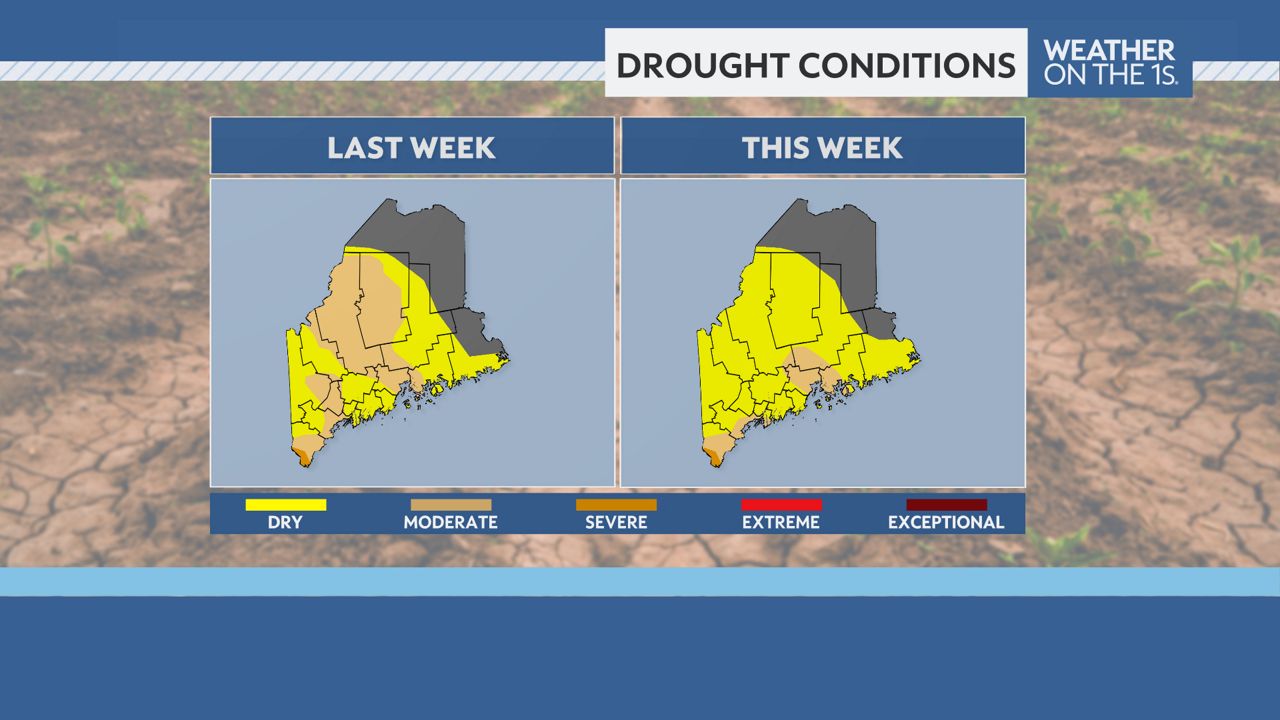
The recent rain in Maine is easing the drought that parts of the state have been experiencing since the fall.
Scott Dean, a Spectrum meteorologist, said much of Maine has been at least “dry” for several months. Parts of the state, including Portland, Bangor and Bar Harbor, are under a “moderate” drought.
Much of the country is also experiencing a drought, Dean added. The Southeast is seeing extreme levels of drought, and the West coast has been under a drought for years. There are many factors that go into this, including climate change, weather patterns like El Niño and La Niña and other factors.
And, when an area does experience drought, it can become a feedback loop. With less moisture in the ground and atmosphere, the drought can “feed upon itself,” Dean said.
“It takes a while to get into a drought and it also takes a while to get out of one,” Dean said.
But, the rainy days in Maine have been alleviating the drought, Dean said. And, the trend is likely to continue — the forecast is predicting above average levels of precipitation for the next three to four weeks.
“Hopefully, we are continuing to head in the right direction as the drought has eased in these areas,” Dean said.
In fact, if these rains do continue, Maine could come out of the drought sometime this summer.
-

 Sports2 minutes ago
2026 World Cup Third-Place Standings: Who’s In, Who’s On The Bubble
-

 Technology9 minutes ago
FCC phone ID plan could end burner phones
-
 Business12 minutes ago
Sony Pictures invests $100 million in virtual reality venue Cosm
-
 Entertainment17 minutes ago
Culture Clash knows the end is near. It wants to go out with a bang
-
 Politics27 minutes ago
Vice President JD Vance’s visit gives ‘The View’ a ratings boost
-
 Sports39 minutes ago
‘Super blessed’: Karim López makes NBA history as first Mexican-born first-round draft pick
-

 World47 minutes ago
Will the UK rejoin the European Union? MEPs debate Brexit on The Ring
-
News1 hour ago
Federal judge bars Trump from implementing proof of citizenship requirement to vote


