Business
Warner nixes Paramount’s bid (again), citing proposed debt load

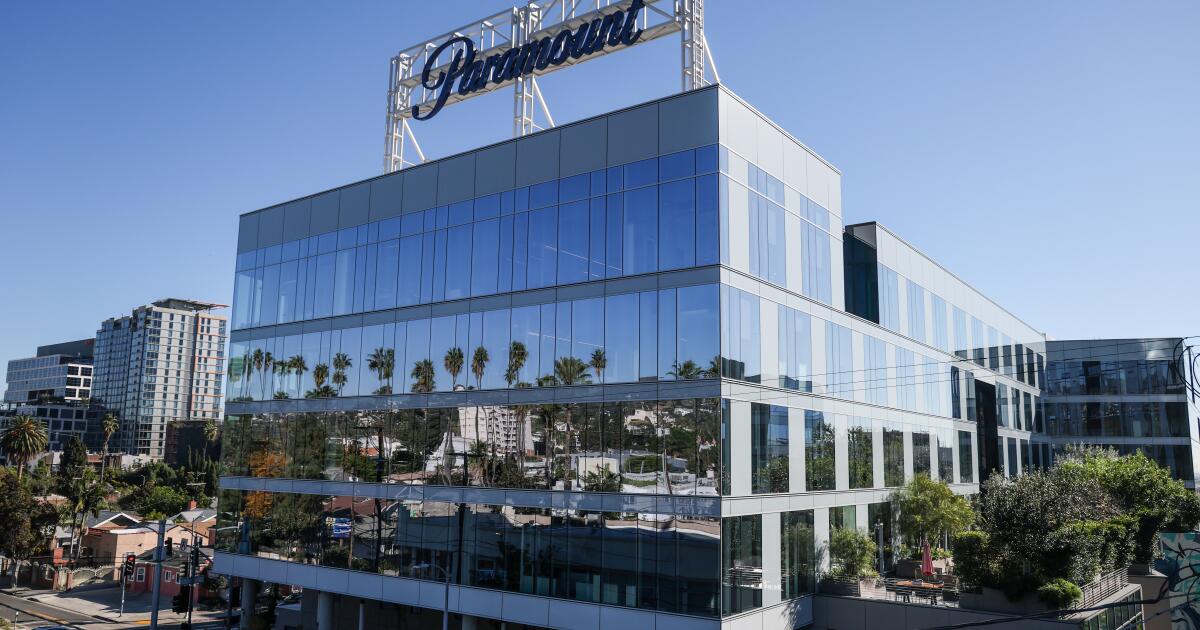
Paramount’s campaign to acquire Warner Bros. Discovery was dealt another blow Wednesday after Warner’s board rejected a revised bid from the company.
The board cited the enormous debt load that Paramount would need to finance its proposed $108-billion takeover.
Warner’s board this week unanimously voted against Paramount’s most recent hostile offer — despite tech billionaire Larry Ellison agreeing in late December to personally guarantee the equity portion of Paramount’s bid. Members were not swayed, concluding the bid backed by Ellison and Middle Eastern royal families was not in the best interest of the company or its shareholders.
Warner’s board pointed to its signed agreement with Netflix, saying the streaming giant’s offer to buy the Warner studios and HBO was solid.
The move marked the sixth time Warner’s board has said no to Paramount since Ellison’s son, Paramount Chief Executive David Ellison, first expressed interest in buying the larger entertainment company in September.
In a Wednesday letter to investors, Warner board members wrote that Paramount Skydance has a market value of $14 billion. However, the firm is “attempting an acquisition requiring $94.65 billion of [debt and equity] financing, nearly seven times its total market capitalization.”
The structure of Paramount’s proposal was akin to a leveraged buyout, Warner said, adding that if Paramount was to pull it off, the deal would rank as the largest leveraged buyout in U.S. history.
“The extraordinary amount of debt financing as well as other terms of the PSKY offer heighten the risk of failure to close, particularly when compared to the certainty of the Netflix merger,” the Warner board said, reiterating a stance that its shareholders should stick to its preferred alternative to sell much of the company to Netflix.
The move puts pressure on Paramount to shore up its financing or boost its cash offer above $30 a share.
However, raising its bid without increasing the equity component would only add to the amount of debt that Paramount would need to buy HBO, CNN, TBS, Animal Planet and the Burbank-based Warner Bros. movie and television studios.
Paramount representatives were not immediately available for comment.
“There is still a path for Paramount to outbid Netflix with a substantially higher bid, but it will require an overhaul of their current bid,” Lightshed Partners media analyst Rich Greenfield wrote in a Wednesday note to investors. Paramount would need “a dramatic increase in the cash invested from the Ellison family and/or their friends and financing partners.”
Warner Bros. Discovery’s shares held steady around $28.55. Paramount Skydance ticked down less than 1% to $12.44.
Netflix has fallen 17% to about $90 a share since early December, when it submitted its winning bid.
The jostling comes a month after Warner’s board unanimously agreed to sell much of the company to Netflix for $72 billion. The Warner board on Wednesday reaffirmed its support for the Netflix deal, which would hand a treasured Hollywood collection, including HBO, DC Comics and the Warner Bros. film studio, to the streaming giant. Netflix has offered $27.75 a share.
“By joining forces, we will offer audiences even more of the series and films they love — at home and in theaters — expand opportunities for creators, and help foster a dynamic, competitive, and thriving entertainment industry,” Netflix co-Chief Executives Ted Sarandos and Greg Peters said in a joint statement Wednesday.
After Warner struck the deal with Netflix on Dec. 4, Paramount turned hostile — making its appeal directly to Warner shareholders.
Paramount has asked Warner investors to sell their shares to Paramount, setting a Jan. 21 deadline for the tender offer.
Warner again recommended its shareholders disregard Paramount’s overtures.
Warner Bros.’ sale comes amid widespread retrenchment in the entertainment industry and could lead to further industry downsizing.
The Ellison family acquired Paramount’s controlling stake in August and quickly set out to place big bets, including striking a $7.7-billion deal for UFC fights. The company, which owns the CBS network, also cut more than 2,000 jobs.
Warner Bros. Discovery was formed in 2022 following phone giant AT&T’s sale of the company, then known as WarnerMedia, to the smaller cable programming company, Discovery.
To finance that $43-billion acquisition, Discovery took on considerable debt. Its leadership, including Chief Executive David Zaslav, spent nearly three years cutting staff and pulling the plug on projects to pay down debt.
Paramount would need to take on even more debt — more than $60 billion — to buy all of Warner Bros. Discovery, Warner said.
Warner has argued that it would incur nearly $5 billion in costs if it were to terminate its Netflix deal. The amount includes a $2.8-billion breakup fee that Warner would have to fork over to Netflix. Paramount hasn’t agreed to cover that amount.
Warner also has groused that other terms in Paramount’s proposal were problematic, making it difficult to refinance some of its debt while the transaction was pending.
Warner leaders say their shareholders should see greater value if the company is able to move forward with its planned spinoff of its cable channels, including CNN, into a separate company called Discovery Global later this year. That step is needed to set the stage for the Netflix transaction because the streaming giant has agreed to buy only the Warner Bros. film and television studios, HBO and the HBO Max streaming platform.
However, this month’s debut of Versant, comprising CNBC, MS NOW and other former Comcast channels, has clouded that forecast. During its first three days of trading, Versant stock has fallen more than 20%.
Warner’s board rebuffed three Paramount proposals before the board opened the bidding to other companies in late October.
Board members also rejected Paramount’s Dec. 4 all-cash offer of $30 a share. Two weeks later, it dismissed Paramount’s initial hostile proposal.
At the time, Warner registered its displeasure over the lack of clarity around Larry Ellison’s financial commitment to Paramount’s bid. Days later, Ellison agreed to personally guarantee $40.4 billion in equity financing that Paramount needs.
David Ellison has complained that Warner Bros. Discovery has not fairly considered his company’s bid, which he maintains is a more lucrative deal than Warner’s proposed sale to Netflix. Some investors may agree with Ellison’s assessment, in part, due to concerns that government regulators could thwart the Netflix deal out of concerns about the Los Gatos firm’s increasing dominance.
“Both potential mergers could severely harm the viewing public, creative industry workers, journalists, movie theaters that depend on studio content, and their surrounding main-street businesses, too,” Matt Wood, general counsel for consumer group Free Press Action, testified Wednesday during a congressional committee hearing.
“We fear either deal would reduce competition in streaming and adjacent markets, with fewer choices for consumers and fewer opportunities for writers, actors, directors, and production technicians,” Wood said. “Jobs will be lost. Stories will go untold.”


Ferrari’s first-ever fully electric vehicle triggered some fans who said it looks more like an iPhone than an Italian supercar.
The $640,000 Ferrari Luce, which was unveiled on Wednesday, looks like a distant relative of many Apple products. It was built with the help of Jony Ive, the person who designed the look and feel of the Cupertino company’s iPhone, iPod and Macintosh through 2019.
“Legend has it that if you pull the Ferrari badge off the side of the new Luce you see an Apple logo underneath,” one user wrote on X.
A meme circulated portraying the Luce with iPhone applications photo-shopped onto the top, and another showing the car upside down and plugged into an iPhone charger.
To accommodate more batteries and seats, the new EV is bigger and boxier than most classic Ferraris. Ive’s design firm, LoveFrom, which he started in San-Francisco after leaving Apple, was brought in to try to meld the traditions of Ferrari with the new functionality and form allowed by a battery-powered engine.
In a marketing video, Ferrari’s chief design officer, Flavio Manzoni, said he sees the Luce “acting as a bridge between San Francisco and Maranello,” the northern Italian city where Ferrari is headquartered.
The four-door, five-seat car comes onto the scene at a difficult moment for electric vehicles, an industry that has been battered by President Trump’s policies.
Trump has cut EV incentives for manufacturers and customers, prompting several major automakers to move away from EV efforts and focus on gas-powered options.
A luxury EV effort from Sony and Honda, a high-tech vehicle dubbed Afeela, was shut down before it ever hit the road due to Honda paring back its EV offerings.
Legacy automakers such as Ferrari face a particularly difficult landscape for launching an EV, as die-hard fans are attached to traditional, gas-powered models.
Ferraris are known for roaring engines and bold, angular designs, a far cry from the smooth, rounded exterior of the Luce.
To be sure, aggressive redesigns often attract ridicule. The early electric Mustang models were shunned by some but have become popular.
One X user posted a meme with a photo of fictional Italian gangster Tony Soprano saying, “I don’t want any California bulls—.”
The online launch page for the car emphasizes that the Luce is “100% Ferrari.”
Still, Luca di Montezemolo, Ferrari’s former chairman, told reporters on Tuesday that the automaker is “risking the destruction of a legend.”
Ferrari shares have fallen about 8% since the launch of the Luce, signaling investors’ concerns that the car won’t resonate with customers.

NEW YORK — Donald E. Newhouse, president of one of the largest family-controlled publishing companies in the nation and a former board chairman of the Associated Press, died Tuesday. He was 96 and died at his home in New Jersey, his family said.
During his career, Newhouse served as president of the Star-Ledger in Newark, N.J., and head of Advance Publications’ newspaper group, which he navigated into the internet age.
“You reveled in his company. He filled you with energy and humor when you felt doubtful and weak,” said Anna Wintour, the global editorial director of Vogue and Conde Nast’s chief content officer.
“He was scrupulous about not interfering in editorial business, but if you turned to him for counsel, he invariably offered judicious advice,” she said in an obituary released Tuesday night by the Newhouse family.
Newhouse, who lived in New York, spent nearly 50 years overseeing the 35 newspapers of Advance Publications, the media business started by his late father, Samuel Irving Newhouse Sr., in 1922. His older brother, S.I. Newhouse Jr., was chairman of the company and oversaw Conde Nast magazines. He died in 2017.
Louis D. Boccardi, retired president and chief executive of the AP, said Newhouse was an extraordinary chairman for the cooperative.
“His voice was never the loudest in the room, but it was often the wisest,” Boccardi said. Newhouse was instinctively private, but behind that, Boccardi said, was a generous man, at home anywhere and curious about everything.
“He could come across as self-effacing and deferential, but in Don’s skilled hands those were qualities that made him an enormously strong and effective leader,” Boccardi said. “You don’t often see the adjective ‘warm’ attached to a titan of industry, but it applied to him.”
A man who didn’t chase the spotlight
Newhouse, born in 1929, was known for staying out of the public eye. A reporter once asked him to list the biggest chances he took in his career. The answer: “Inviting your questions.”
The usually reserved Newhouse did step into the spotlight when he took on the role of chairman of the Newspaper Assn. of America from 1993 to 1994 and then chairman of the AP board of directors from 1997 to 2002. He had served on the AP board for nine years before becoming its chairman.
“He was a smart and shrewd businessman but as thoughtful and kind a man as you’ll find. Being in his presence was always a joy,” said Doug Clifton, editor of one of Newhouse’s papers, the Plain Dealer in Cleveland, from 1999 to 2007.
Newhouse attended Syracuse University but never graduated, heading into the family’s newspaper business instead. He would regularly visit his newspapers but left the ultimate authority of running them to his publishers.
“Each of our newspapers operates independently, with publishers who are strong, who set policy for their individual organizations and who have the authority and responsibility of carrying out the policies they set,” he said in 1993 when taking over as chairman of the newspaper association.
Newhouse was known for spending money to make sure that papers got the best stories. Jim Willse, editor of the Star-Ledger in Newark, N.J., from 1995 until 2010, said he would give “us all the resources we needed to make the Ledger really special.” Willse said Newhouse loved newspapers and newspaper people.
“He especially enjoyed it when we’d have a story about some politician caught with his hand in the cookie jar, or a spicy feature about stuffed shirts behaving badly,” Willse said.
Newhouse’s philosophy of spending money to produce quality coverage and a hands-off approach toward his editors led to many successes, including multiple Pulitzers.
Many of those newspapers were able to thrive and remain profitable because they dominated their market, but Newhouse said he was very much aware of what he called the “dramatically changing media landscape” and how people get their news.
“The 15th-century revolution was epitomized by the printing of the Gutenberg Bible; ours by Ted Turner’s cable news network and by web-based news sites — news in real time from anywhere to everywhere,” he said in 2004 at the rededication of a communications school named after his father at Syracuse University.
Three years later, he told one of his papers, the Post-Standard of Syracuse, N.Y., that newspapers can survive “by producing content that is relevant, interesting, accurate and entertaining for newspapers and the internet.”
He steered through financial struggles
Yet the papers did ultimately struggle financially.
Advance was known in the industry for a pledge that employees who weren’t in a union would have jobs regardless of economic downturns or technological advances. In 2009, the company announced that the pledge would be withdrawn.
The company also moved away from daily publishing of several papers. In 2012, it announced that the Post-Standard; the Times-Picayune in New Orleans; the Patriot-News in Harrisburg, Penn.; and the Birmingham News, the Press-Register of Mobile and the Huntsville Times, all in Alabama, would cease daily publication and would only offer print editions on Wednesdays, Fridays and Sundays. Those changes were accompanied by hundreds of layoffs.
“His conservative approach left both the papers and its employees somewhat unprepared for the realities of the internet,” said Thomas Maier, who wrote a 1994 biography of the family.
Newhouse’s eldest son, Steven, spearheaded the company’s growth on the internet and on mobile devices. Steven Newhouse is currently co-president of Advance Publications.
“My dad spent his life in the newspaper business and was devoted to it, built it up and enjoyed many good years. When it became more challenging, he was first in line to work through, finding solutions to keep the local journalism franchise going,” he said.
Newhouse is also survived by another son, Michael, daughter Katherine Mele and grandchildren. His wife, Susan, died in 2015.
Mayerowitz writes for the Associated Press.

Child safety advocates say the massively popular gaming platform Roblox could be bad for kids.
Fairplay and the National Center on Sexual Exploitation have requested the Federal Trade Commission to investigate if the games on Roblox are designed to make kids spend an unhealthy amount of time and money on their screens.
Roblox’s core users are young kids.
In a letter submitted to the FTC, the groups argue that Roblox’s engagement-maximizing design features, virtual currency system, and voice and text chat communication features are inappropriate for the platform’s user base and pose a substantial risk of harm.
“Alone and in combination, these three components capitalize on young users’ developmental vulnerabilities, exploit their desire for authentic self-expression, monetize their lack of impulse control, and turn in-game purchasing power into a form of social status,” the groups noted in the letter submitted Thursday to the FTC.
Roblox allows the purchase of virtual assets — clothing and dance moves, for example — which can only be purchased with the platform’s in-game currency, Robux. The platform obscures the exchange rate between dollars and the in-game currency, leaving young players to navigate a complex system of fluctuating conversion rates that increases the amount of real-world money players spend, according to the letter.
For instance, players can receive more Robux per dollar by purchasing larger bundles of currency or buying a “Roblox Premium” subscription, making it harder for children to perform financial calculations on how much they are spending on the platform.
The letter pointed to instances of unexpected Roblox charges, as one parent discovered that his daughter spent more than $5,000 on Roblox without understanding that she was spending real money.
The letter also outlined examples of “scarcity marketing” techniques that increase demand through limited-quantity assets and time-based reward to drive sales of virtual items, driving a false sense of urgency. Some see it as a strong-arm sales technique that should not be used on children:
“Items only available for a limited time encourage both rapid purchases and returning to the platform frequently — sometimes multiple times per day — to avoid missing out on items,” the letter said.
A Roblox spokesperson said that the company “strongly disputes these claims. Our platform is designed to provide a positive, healthy and enjoyable experience — we build for fun and connection, not short-term engagement. While no system can be perfect, we have a set of safeguards designed to support a safe and civil environment, and clear policies for game creators that require fair treatment of players.”
The groups pointed out that third-party games developed on Roblox are designed to profit from in-game purchases, and have “gambling-like” engagement mechanisms such as lootboxes, in which players cannot see what’s inside until after they have purchased it — and the items vary in value.
“We have clear policies prohibiting both actual and simulated gambling, and a set of rules governing how game creators can use gameplay mechanics like paid random items,” the Roblox spokesperson said. “Most games on Roblox are free to play and no one is required to purchase Robux. In the first quarter of 2026, only 1.4% of our 132 million daily active users were payers on the platform.”
The letter also alleged that the voice and text chat features on the platform expose children to sexual content, and argue that recent changes to age checks have not eliminated opportunities for adult-minor contact.
-
 Sports10 minutes ago
High school softball: Wednesday’s City Section playoff scores
-

 World22 minutes ago
Newsletter: ‘A dangerous place’, Magyar’s moment, Europe’s mouthpiece
-

 News52 minutes ago
Ex-CIA official arrested after $40M in gold bars allegedly found inside his home
-

 Los Angeles, Ca2 hours ago
Family members searching for 2 missing Southern California girls
-

 Detroit, MI3 hours ago
Detroit police revise initial account after body cam shows man fatally shot himself during search of home
-

 San Francisco, CA3 hours ago
San Francisco rapper Frak blends hip-hop, comedy and Jewish culture
-

 Dallas, TX3 hours ago
Federal, local agencies tout results of North Texas anti-crime operation before World Cup
-

 Boston, MA3 hours ago
East Boston couple accused in alleged racist attack on restaurant patio after calling in noise complaint

