World
Honduras issues warrant for former president pardoned by Trump


NEWYou can now listen to Fox News articles!
Honduras’ attorney general is calling for the arrest of former President Juan Orlando Hernández, who was recently pardoned by President Donald Trump.
Johel Antonio Zelaya Alvarez said Monday that he ordered Honduran authorities and asked Interpol to execute a 2023 arrest order against Hernández for alleged fraud and money laundering charges. Hernandez, who in 2024 was sentenced to 45 years for allegedly helping to move tons of cocaine into the U.S., was released from federal prison in the U.S. a week ago.
“We have been lacerated by the tentacles of corruption and by the criminal networks that have deeply marked the life of our country,” Zelaya said, according to a translation of a post he wrote on X.
Zelaya included a photo of the two-year-old order signed by a Honduras Supreme Court magistrate that says that it must be executed “in the case that the accused is freed by United States authorities.”
FORMER HONDURAN PRESIDENT RELEASED FROM US PRISON AFTER TRUMP PARDON
Former Honduran President Juan Orlando Hernández, right, was pardoned by President Donald Trump on Tuesday, Dec. 2, 2025. (Anna Moneymaker/Getty Images; Dursun Aydemir/Anadolu Agency/Getty Images)
Dozens of Honduran officials and politicians were implicated in the so-called Pandora case in which Honduran prosecutors alleged government funds were diverted through a network of nongovernmental organizations to political parties, including Hernández’s 2013 presidential campaign, according to The Associated Press.
Hernández went from supposed U.S. ally in the war on drugs to the subject of a U.S. extradition request shortly after he left office in 2022, the AP added. He was detained and sent to the U.S. by current President Xiomara Castro of the social democrat LIBRE party.
A lawyer for Hernández, Renato Stabile, told the AP in an email that, “This is obviously a strictly political move on behalf of the defeated Libre party to try to intimidate President Hernandez as they are being kicked out of power in Honduras. It is shameful and a desperate piece of political theatre and these charges are completely baseless.”
Hernández was freed after Trump announced he was issuing him a “full and complete pardon” following his conviction of conspiring with drug traffickers to import more than 400 tons of cocaine into the U.S.
FORMER WORLD LEADER THANKS TRUMP FOR PARDON: ‘YOU CHANGED MY LIFE’
Former Honduran President Juan Orlando Hernandez, second from right, is taken in handcuffs to a waiting aircraft as he is extradited to the United States, at an Air Force base in Tegucigalpa, Honduras, on April 21, 2022. (Elmer Martinez/AP)
Trump said Hernández was “treated very harshly and unfairly,” implying that his trial was politically motivated or over-prosecuted.
Hernández was convicted in New York on charges of conspiring to import cocaine into the U.S. and two related weapons offenses after a two-week trial.
Hernández portrayed himself as a hero of the anti-drug trafficking movement who teamed up with American authorities under three U.S. presidential administrations to reduce drug imports, according to the AP. But the judge said trial evidence proved the opposite and that Hernández employed “considerable acting skills” to make it seem that he was an anti-drug trafficking crusader while he deployed his nation’s police and military, when necessary, to protect the drug trade.
Hernández later thanked Trump for pardoning him, writing on social media that he was “wrongfully convicted.”
Honduras’ President Juan Orlando Hernandez speaks during the opening ceremony of the U.N. Climate Change Conference COP26 in Glasgow, Scotland, on Monday Nov. 1, 2021. (Andy Buchanan/AP)
CLICK HERE TO DOWNLOAD THE FOX NEWS APP
“My profound gratitude goes to President @realDonaldTrump for having the courage to defend justice at a moment when a weaponized system refused to acknowledge the truth. You reviewed the facts, recognized the injustice, and acted with conviction. You changed my life, sir, and I will never forget it,” Hernández wrote on X.
Fox News Digital’s Ashley Carnahan, Michael Dorgan, Bradford Betz and The Associated Press contributed to this report.



Johannesburg, South Africa – In April, African Union ministers gathered in Tangier, Morocco, to discuss artificial intelligence at a moment when governments across the continent are racing to develop AI strategies, attract investment and expand digital infrastructure.
Beneath the enthusiasm, however, sits a more fundamental question. As foreign technology companies invest in data centres, cloud services and AI systems across Africa, how much control will African countries ultimately have over the infrastructure on which those technologies depend?
The debate reflects a broader shift in how policymakers are thinking about AI. For years, discussions focused largely on adoption: how governments, businesses and public services could use the technology. Increasingly, attention is turning to ownership, governance and the terms on which AI systems are developed and deployed.
Several governments have framed the issue in those terms. Nigeria, Kenya, Egypt and Ghana have all released national AI strategies in recent years that highlight the need to build local capacity and reduce dependence on foreign technology providers. Ghana’s national strategy, launched in April, describes AI as a “sovereign capability”. Forty-nine countries, along with the African Union, have endorsed the Africa Declaration on Artificial Intelligence, which calls for greater investment in African AI infrastructure, talent and innovation, alongside proposals for coordinated financing mechanisms.
At the same time, translating ambition into policy has not always been straightforward. In South Africa, a draft national AI policy was withdrawn earlier this year after officials identified references that could not be verified and appeared to have been generated by AI tools, highlighting the practical challenges governments face in regulating rapidly evolving technologies.
Global competition, local leverage
The discussion is unfolding as global competition over AI intensifies. Major technology companies, cloud providers and governments are competing for access to data, computing power and new markets. For African countries, that competition may also create space to negotiate.
Priyal Singh, a geopolitical analyst at Signal Risk, told Al Jazeera that the fragmented nature of the global AI industry could strengthen that position.
“African states will indeed be provided with greater room for manoeuvre on AI and data infrastructure, precisely due to how contested and fragmented this industry is amongst global leaders,” he said.
He pointed to regulatory tensions surrounding Starlink’s expansion in parts of Africa as an example of governments becoming more assertive in their dealings with global technology firms.
“Major tech companies will need to bend to local concerns much more often than they would otherwise expect,” Singh said.
The infrastructure gap
Yet leverage in the AI era is not only political. It is also infrastructural.
Africa remains significantly underrepresented in the global digital economy’s physical backbone. Industry estimates suggest the continent accounts for less than one per cent of global data centre capacity, despite being home to roughly 18 per cent of the world’s population. Research by McKinsey has found that Africa’s five largest data centre markets combined have less capacity than France. Across much of the continent, unreliable electricity supply remains a major constraint on expansion.
Those limits help explain why negotiations over data centres and cloud infrastructure have become increasingly sensitive.
Kenya’s contested data centre deal
One of the most closely watched projects has been a proposed $1bn data centre development involving Microsoft and Emirati technology company G42 in Kenya.
The project drew attention after Kenyan President William Ruto highlighted the scale of its energy demands, warning that infrastructure of that size would require substantial additional power generation.
Reports have also pointed to discussions over commercial arrangements and long-term commitments linked to computing capacity. Kenyan officials have maintained that talks around the project remain ongoing.
Whatever the outcome, the episode illustrates the trade-offs governments face: attracting investment in AI infrastructure while weighing energy needs, financing costs and long-term strategic dependence.
What countries gain and what they give up
The question of who builds Africa’s digital future extends beyond Western technology companies.
Sanusha Naidu, a senior research fellow at the Institute for Global Dialogue, told Al Jazeera that debates about diversification are often more complicated than they appear.
“Whether it’s seen as diversifying from Western tech companies or shifting towards Chinese-based companies, I think it’s generally part of the cost-benefit factor,” she said.
For governments, she argued, the key issue is what is returned through these partnerships.
“Whether it’s a US company, a company from Europe, or a Chinese company,” she said, policymakers must weigh the broader developmental impact of such investments.
She compared current AI infrastructure debates with earlier waves of foreign investment.
“What we saw in the 1990s around the textile industry is investment comes in, but there’s a lot of subsidisation by the recipient country. With data centres, it’s much more intense. It’s also how big consumers of water these data centres are, and how that impacts socioeconomic issues within African countries.”
Data, surveillance and sovereignty
Concerns about dependence extend beyond data centres.
Over the past decade, African governments have adopted a growing range of foreign-built digital systems, from cloud computing platforms and digital public services to surveillance and smart city technologies. At the same time, debates over data governance, digital sovereignty and where sensitive information should be stored and processed have become increasingly prominent across the continent.
Similar arguments have been made by supporters of plans to establish an Africa Credit Rating Agency, designed to offer African-led assessments of sovereign creditworthiness rather than relying exclusively on established international ratings agencies.
The missing public
Yet much of the discussion about AI governance remains concentrated among policymakers, regulators and technology companies.
Joseph Asunka, chief executive of Afrobarometer, told Al Jazeera that the debate is still far removed from everyday citizens.
“These negotiations should not just be conducted at the elite level and dumped on citizens,” he said. “If citizens do not trust their government’s actions in this space, it creates a trust gap, which could have negative implications for the adoption of fintech, e-commerce and e-government tools.”
He added that concerns about data protection and digital security are already widespread across African populations, even if AI itself is not yet widely understood.
Beyond dependency
The debate echoes older questions about economic sovereignty that have shaped African politics for decades. Independence-era leaders argued that political freedom meant little without control over economic resources. Today, similar questions are emerging around data, computing power and digital infrastructure.
Alongside large-scale investment, governments and development agencies are also exploring ways to build local capacity. Projects such as the United Nations Development Programme’s timbuktoo initiative aim to strengthen African technology ecosystems through support for innovation, entrepreneurship and digital infrastructure.
Such efforts remain modest compared with the scale of global AI investment. But they reflect a broader attempt to ensure African countries participate not only as consumers of AI systems, but also as contributors to their development.
Africa is unlikely to become self-sufficient in artificial intelligence, nor is that the objective for most governments. The continent remains deeply integrated into global technology supply chains and will continue to rely on international investment, expertise and partnerships.
The question that remains
The question facing policymakers is therefore less about whether Africa will use AI than about the terms on which it should do so. As governments negotiate new investments, draft regulations and build digital infrastructure, decisions made now could shape who controls the technologies that increasingly influence economies, public services and everyday life.
“These negotiations should not just be conducted at the elite level and dumped on citizens,” Afrobarometer’s Asunka said.
“If citizens do not trust their government’s actions in this space, it creates a trust gap, which could have negative implications for the adoption of fintech, e-commerce and e-government tools.”

A magnitude 7.1 earthquake shook north-central Venezuela on Wednesday afternoon, near capital Caracas, with residents in neighboring Colombia also reporting feeling tremors.
Residents in Caracas rushed to evacuate as the quake shook buildings. One witness said that cracks had formed up the side of their apartment and glass in the entryway had shattered.
The U.S. Tsunami Warning System issued a tsunami threat for Puerto Rico and the U.S. and British Virgin Islands following the earthquake, adding that islands off the coast of Venezuela – Aruba, Curacao and Bonaire – could also be hit by hazardous waves.
(Reporting by Reuters staff; Editing by Chris Reese and Daina Beth Solomon)
World
Israel slams UN report as ‘political blood libel’ for alleging deliberate targeting of Palestinian children

NEWYou can now listen to Fox News articles!
Israel reacted angrily over a new United Nations’ Commission of Inquiry report alleging the Jewish state had engaged in the “deliberate targeting of Palestinian children.”
Prior reports from the Independent International Commission of Inquiry on the Occupied Palestinian Territory, Including East Jerusalem, and Israel garnered accusations of antisemitism and incitement to violence.
The latest report, released Wednesday, said that, “based on the evidence reviewed, and consistent with its previous reports, the Commission finds on reasonable grounds that the Israeli authorities and the Israeli security forces have continued to commit the crime of genocide, crimes against humanity and war crimes in the Gaza Strip and war crimes in the West Bank, including East Jerusalem.”
UN EXPERT REPEATS ISRAEL ‘GENOCIDE’ CLAIMS AFTER US CALLS FOR HER REMOVAL
A woman kneels by a memorial site in Kibbutz Kfar Aza, southern Israel, as the community commemorates members killed, taken hostage, or who died in captivity following the Oct. 7, 2023, Hamas attack. (Hannah McKay/Reuters)
Israel’s Ambassador to the U.N., Danny Danon, told Fox News Digital that “this is not an investigative report. It is a political blood libel disguised as a U.N. document. This commission reaches its conclusions before examining the facts and repeatedly publishes reports that serve one purpose only: to vilify Israel. Instead of addressing Hamas’ crimes, the October 7 massacre, the hostages, and Hamas’ cynical use of children and civilians as human shields, the commission has once again chosen to place Israel in the dock.”
Danon added that “Israel will continue to defend its citizens and fight terrorism, regardless of how many false reports are published by fringe actors within U.N. institutions.”
Representatives from the COI and Human Rights Council did not respond to Fox News Digital’s requests for comment on the concerns addressed about the report.
Asked for a reaction from U.N. chief Antonio Guterres to the report, his spokesman, Stéphane Dujarric, told Fox News Digital “it’s not his report to comment on.”
ISRAELI AMBASSADOR LASHES OUT AT UN OFFICIAL, CONDEMNS UK, FRANCE, CANADA STATEMENT ON AID
A bloodied handprint stains a wall inside a house in the Nir Oz kibbutz near the Gaza border after a Hamas attack days earlier. (Alexi J. Rosenfeld/Getty Images)
Srinivasan Muralidhar, Chair of the Commission told reporters during a press briefing that, “The evidence shows that Palestinian children have been deliberately targeted and killed by the Israeli security forces.” He said “Even after the October 2025 ceasefire, children continue to be killed and seriously injured, with continued disregard by Israel for the ceasefire and for the protection owed to Palestinian children under international law.”
SIGN UP FOR ANTISEMITISM EXPOSED NEWSLETTER
Anne Bayefsky, President of Human Rights Voices and Director of the Touro Institute on Human Rights and the Holocaust, told Fox News Digital that the COI’s “sham ‘inquiry’ makes the totally unjustified claim of legal authority, while at the same time systematically violating every conceivable legal rule of fairness, impartiality, and due process. Since its creation in 2021, every call for submissions, every consultation and every hearing held, has been contrived to take seriously the allegations of only one side – trashing literally millions of data points both historical and current to the contrary.”
She said, “the first COI report focused on children…fails to even mention the sickening murders of 9-month-old Kfir Bibas and 4-year-old Ariel Bibas.” She says that “also ignored in the COI report are the hundreds of thousands of Israeli children traumatized by October 7th, by the subsequent mass displacement, and by the excruciating longing for parents absent while defending their country against an inhumane foe.”
Photos of the Bibas family and Oded Lifshitz, 84, who were kidnapped during the Oct. 7, 2023, Hamas attack and later killed, are displayed next to candles in the dining room in Kibbutz Nir Oz, Israel, on Feb. 25, 2025, the day of Lifshitz’s funeral after their bodies were returned under a ceasefire agreement. (Amir Cohen/Reuters)
NETANYAHU SHOWS PICTURE OF BIBAS FAMILY AT COMBAT OFFICERS’ GRADUATION: ‘REMEMBER WHAT WE ARE FIGHTING FOR’
Bayefsky complained that though the current COI report “was produced weeks ago,” the COI members “deliberately withheld” the report when appearing before the Human Rights Council last week. “They didn’t publish it until June 23, minutes prior to holding a stage-managed press conference designed to avoid accountability for their wild, unverified accusations,” she claimed.
Another member of the commission told reporters in Geneva that, “There can be no doubt in anyone who reads today’s report that every international legal norm has been violated by the actions of the Israeli authorities towards Palestinian children and they need to be held accountable.”
United Nations Secretary General Antonio Guterres speaks during a Security Council meeting at the United Nations headquarters in New York on April 18, 2024. (Yuki Iwamura/AP)
Jonathan Conricus, senior fellow at the Foundation for Defense of Democracies and former Israel Defense Forces spokesperson, told Fox News Digital that the latest report contains “no evidence to support any of the claims against Israel” and is filled with “inconsistencies in methodology.”
He said the report represents “an escalation, and it marks maybe the most severe attempt by the U.N. ecosystem to delegitimize Israel.”
CLICK HERE TO DOWNLOAD THE FOX NEWS APP
Salo Aizenberg, director of media watchdog group HonestReporting, who has researched and debunked many of the claims made by those claiming genocide in Gaza, told Fox News Digital that the COI’s “report is built on a fictional battlefield where Hamas and [Palestinian Islamic Jihad] do not exist, and where hospitals are treated as purely civilian spaces despite extensive evidence of their military use and infiltration by Hamas operatives. It then accuses Israel of deliberately targeting children without producing a single incident supported by evidence of intent.”
Conricus said the report erases “Hamas and Palestinian Islamic Jihad from the battlefield to create the false kind of perception that Israel was operating out of wanton aggression in a vacuum without there ever being a need for Israeli operations and this is a reoccurring theme.” He also noted that this report and others “use the statements of medical professionals as evidence, even when it’s way beyond their medical expertise, specifically when it comes to how wounds were inflicted.”
-
 Entertainment59 seconds ago
La Cruz offers a musical memorial to Pulse shooting victims on Pride Month
-
 Politics13 minutes ago
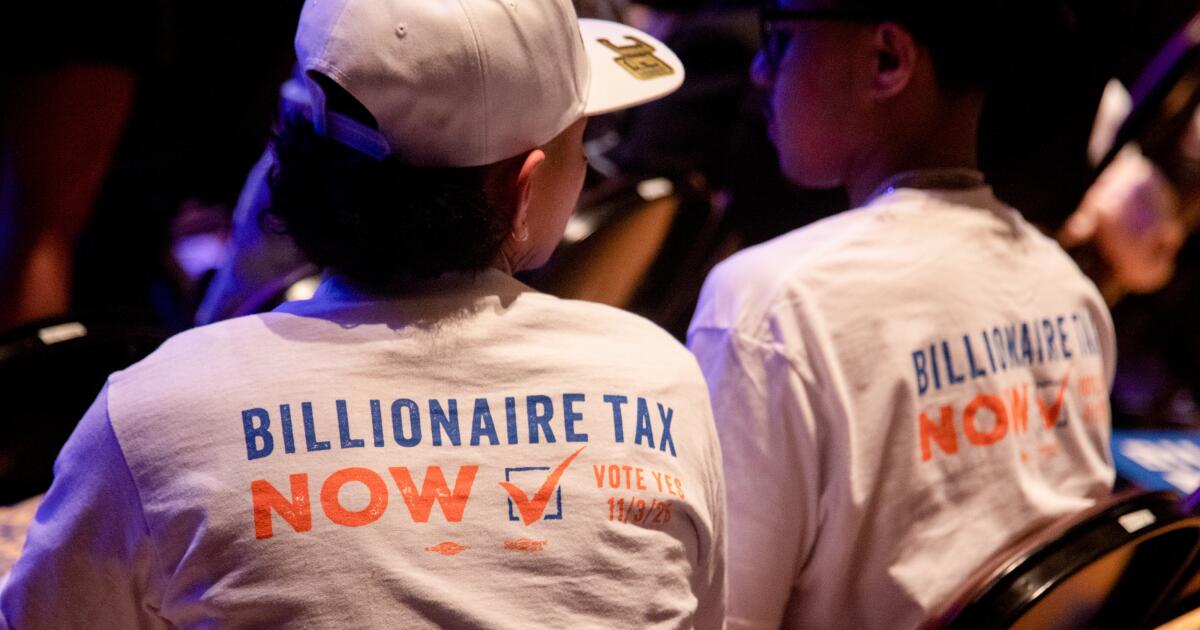
Controversial billionaire tax proposal will appear on November ballot
-
 Sports21 minutes ago
Shohei Ohtani is the first Dodger to be named 2026 All-Star
-

 World31 minutes ago
Who will control Africa’s AI infrastructure and at what cost
-
 News58 minutes ago
The Supreme Court says the U.S. can turn away asylum seekers at the border
-

 Los Angeles, Ca2 hours ago
Jury says it is deadlocked in trial of man accused in Palisades Fire
-

 Detroit, MI3 hours ago
Scene active as police shoot, kill man on Detroit’s west side
-

 San Francisco, CA3 hours ago
Civil grand jury report warns of wildfire risk at SF’s Glen Canyon Park

