Utah
Is Kratom ‘gas station heroin’ or a misunderstood plant? A Utah lawmaker pushes to ban it


A Utah legislator just introduced a bill that would put a state ban on the controversial — and somewhat obscure — drug kratom. If passed, Utah would join at least seven other states in banning its sale altogether, making the law stricter than federal government regulations.
Kratom derives from a tropical tree in Southeast Asia. Depending on dosage, it can have either sedative or stimulating effects. The kratom leaf contains two major psychoactive ingredients, mitragynine and 7-hydroxymitragynine, the latter better known as 7-OH.
The Food and Drug Administration has not approved the drug for any type of medical use and the Justice Department’s Drug Enforcement Agency has identified it as a “drug and chemical of concern.”
At the heart of the kratom debate is a core disagreement: Is kratom itself the problem, or are look-alike synthetic kratom products being sold in stores to blame?
The Trump administration’s focus is on synthetic products. In a recent press conference, FDA Commissioner Marty Makary said the administration believes “it’s a night and day (difference) in terms of the public health risk” between natural and synthetic kratom.
The sponsor of Utah’s new bill, Sen. Mike McKell, R-Spanish Fork, sees kratom in all forms as a dangerous opioid masquerading as a supplement. He doesn’t differentiate between natural kratom products and what might be synthetic/manipulated compounds.
The American Kratom Association disagrees, insisting to the Deseret News that science supports regulation — not prohibition — and that synthetic kratom-like substances, like 7-OH, are the problem, not natural kratom.
7-OH occurs naturally in the plant, but many products on the shelves that are labeled as kratom have chemically altered 7-OH or are extracted to be far stronger than what the plant produces on its own.
Mac Haddow, senior fellow on public policy for the American Kratom Associationa, said McKell is lumping together natural kratom with synthetic 7-OH, and that Utah already has in place a law that “has become the model around the country.”
He’s referring to the Kratom Consumer Protection Act, which established penalties for not following specific labeling and selling requirements of the drug, etc. McKell said he voted for the protection act in 2019 and now regrets it.
“We’re for banning 7-OH and other synthetically derived compounds from 7-OH called pseudondoxal and MGM 15,” Haddow said. “That’s what his bill should do … and I think that’s what he wants to do, is to protect the public.”
But rather than regulating the drug, McKell said, banning is the only appropriate course of action to protect lives. Haddow said the American Kratom Association is willing to work with McKell on the bill; McKell said that won’t be happening,
“I want to make clear, my goal is to protect the public, not kratom,” he said. “And I think it needs to be clear that there are hundreds of thousands of dollars flowing to the people pedaling kratom in this state and other states.”
“I think the industry is abused,” and “these products are becoming far more dangerous,” McKell said. “Kratom is harming people.”
He shared data gathered from the Utah Department of Health and Human Services that was viewed by the Deseret News, showing kratom was involved in 152 overdose deaths from 2020 to 2025, and increased by 43% from 2021 to 2025. The Mayo Clinic has noted that a kratom drug overdose is possible, but it is rare. And the FDA has said that in these cases, “kratom was usually used in combination with other drugs, and the contribution of kratom in the deaths is unclear.”
The Deseret News recently did a deep dive investigation into the drug, speaking to health care professionals and addiction specialists, lobbyists for the drug and victims of its addictive nature, which gave it its infamous nickname, “gas station heroin.”
Why McKell believes a ban is necessary
During his investigation, McKell said one of his greatest concerns is how easily obtainable kratom and kratom-containing products are. Products can be found in gas stations, convenience stores, smoke shops and even grocery stores.
McKell said he went to 15 different locations and asked for their most popular kratom product and had nine samples tested at the state lab, where the results showed the 7-OH levels were all within the legal limit.
“The reality is they are extracting the plant form of kratom, and they are making the plant form of kratom, the mitragynine, way more potent,” he said. He argues that “the kratom plant itself is harmful, and people are getting addicted to it.
McKell noted that it doesn’t shock him when he hears a story of someone who started taking natural kratom and it solved all their pain problems. “It doesn’t surprise me that somebody who is using opioids is able to replace one opioid with another? What’s happening is, you do have people that have been able to replace the opioid they’re currently using, and replace it with kratom. … because kratom is just like an opioid.”
Though it isn’t classified as one, kratom has been shown in studies to “produce opioid- and stimulant-like effects,” per the National Institute on Drug Abuse. “People report using kratom to manage drug withdrawal symptoms and cravings (especially related to opioid use), pain, fatigue and mental health problems,” but studies have found that users can become addicted to it and experience withdrawals when trying to quit.
McKell said one of his constituents admitted to consuming eight to 10 of the two-pack “heavily extracted” kratom pill options that he said cost around $20 each at the gas station.
On top of the financial hardship the addiction causes, McKell was blown away by the accessibility. The U.S. regulates opioids — “We run it through a pain clinic, we run it through your physician, we run it through a pharmacy, and we’ve got strong drugs sitting there at the gas station. … I don’t think there’s a (valid) argument we should sell opioids in gas stations where it’s readily available to public,” where it is also known to attract more vulnerable populations, he said.



It’s on nights like these that I’m reminded of the ravine that divides the NBA from all other levels of basketball. This Summer League tilt was sloppy on both sides, and not many fringe players earned an NBA contract tonight, by the looks of it.
This matchup has always been about the number-one pick AJ Dybantsa and the number-two pick Darryn Peterson. Rivals since high school, these two are in an eternal struggle for the designation of being “number-one”. They wanted to be the best in their high school class. They wanted to be the first off the board in the NBA Draft. Rest assured, these two will be battling for Rookie of the Year honors by the season’s end.
Advertisement
Both stars were fully aware of the magnitude of this game, and both wanted to be the first to strike in the Thomas and Mack Center.
Dybantsa took his first touch all the way to the basket and forced up an off-kilter shot that missed everything.
Peterson took the ball the other way and forced up a top-of-the-key three-pointer that missed badly.
Dybantsa quickly picked up the slack, flipping an under-and-around lay-in and following that up with a good leading bounce pass through traffic to find a cutting teammate.
From there, the 1-2 combo settled in and let the game flow around them.
For the first time in a Utah Jazz uniform, Darryn Peterson walked among mortal men as a commoner. He had a very slow start in his Las Vegas debut, opening the night 0-for-3 from the floor and even whiffing on his first all-or-nothing foul shot. His steps were hurried, and he stood unstable before his first trip to the bench. Not quite so infallible outside of the mountain air in Salt Lake City.
Advertisement
AJ claimed the first quarter, dicing up the defense with fadeaways, dribble chains, and this vicious, inhumane slam that will dominate your social media feed for the next day or so.
Washington set the tone for some — should we say physical — defense out on the perimeter, and the officials gave the Wizards liberty to reside in Peterson’s chest for the majority of the game. The number-two pick couldn’t get himself into a rhythm as he’d step out of bounds, dribble off his foot, and sputter under the heat of the Wizards’ aggressive double-team scheme.
They were incredibly handsy from end to end, frustrating Jazz ball handlers as the whistles piled up at the other end.
Advertisement
AJ Dybantsa lives at the foul stripe — that’s his superpower — and he has since his days at BYU, where he led the nation in foul shots taken per game. Perfectly within his idiom, Dybantsa was 6-of-7 from the foul stripe — keeping in mind the experimental do-or-die free throw rule. Considering how much more physical the Wizards played at the defensive end, it’s a mystery how the Wizards managed to reside in the comfort of the bonus for the entire first half.
Neither player was efficient from the floor, but Dybantsa won the first half of this marquee matchup.
Dybantsa finished the first half with 19 points on 4-of-12 shooting.
Peterson lagged behind with 11 points on 3-of-9 shooting and a pair of dimes.
The lead shrank to single digits, and what appeared to be a blowout in the first half — Washington led by as much as 20 — rapidly drew tighter in the second half. It had become a two-possession game before the clock hit 0:00 in the third quarter.
Advertisement
Both stars lived up to the bill in this one, clearly displaying their individual talents despite their efficiency not leaping off the box score.
Peterson’s tendency to cough up possession has to get straightened out. He’ll be a target for his whole career, so learning to handle and exploit on-ball pressure will be critical to maximize his effectiveness and keep his teammates involved.
Cody Williams stole the show a bit for the Jazz, despite a rocky opening to the night. Though he struggled to stop Dybantsa on the defensive end, he notched 16 points on great efficiency (6-11, 2-3 3PT) plus 5 rebounds. He’s not a ball-handler, despite the Jazz’s wishes, but thrived on a newly added stepback mid-range jumper tonight.
Dybantsa had a strong night, finishing with 27 points on 7-for-18 shooting, 7 rebounds, and 2 steals.
Advertisement
The Wizards ultimately won this game behind the strength of their NBA guys, Tre Johnson and Will Reily, who combined for 41 to pair with Dybantsa’s 27. They also strongly benefited from Jamir Watkins, Darryn Peterson’s assignment fouling a grand total of 9 times (not a typo).
Peterson likewise fouled 9 times in this one, an ugly blemish on what was an unsteady night for the rookie. He finished with 24 points on 6-18 shooting and 2-7 from three-point land (thanks to a bank-shot heave at the final horn). Dybantsa will be crowned the winner of this head-to-head with Peterson thanks to better highlights and the team win, but neither player dominated, despite what X will likely tell you.
Washington defeats Utah with a final score of 92-88.
Calvin Barrett is the Associate Editor for SLC Dunk. Originally from Springville, Utah, he currently lives in Japan and has covered the NBA and college athletics since 2024.

LAS VEGAS (KSNV) — The man arrested for murder in the 2006 death of his wife at a Utah national park left behind a suicide note in his Las Vegas jail cell, according to a police report.
Las Vegas Metropolitan Police released a public report on the death of David Vander Meer, 49, who was in custody on an out-of-state warrant.
The Washington County District Attorney’s Office said in an affidavit that Vander Meer, a former youth pastor, was a suspect in the death of his then-wife, 28-year-old Bernadette Vander Meer, 20 years ago.
Bernadette fell to her death at Angels Landing in Zion National Park. Prosecutors said in their affidavit that they received new information implicating David, alleing that he began having a close relationship with a young girl when she was 14 and he was her youth pastor.
A fugitive task force took Vander Meer into custody in Summerlin, according to an arrest report, and he was booked into Clark County Detention Center on June 22.
In the report on his death, LVMPD said a corrections officer was conducting visual checks at about 9:30 p.m. June 24 when he noticed Vander Meer lying face down on the ground and unresponsive.
Several sections are redacted, but police wrote that the officer performed chest compressions until medical personnel arrived. Vander Meer was taken to UMC, where he was pronounced dead just after 2:36 a.m. June 25.
Investigators wrote that because of “the nature of his case,” Vander Meer was placed into protective custody. He was seen sitting upright and awake at 9 p.m., and he had no known medical conditions. He also did not mention being suicidal during a mental health screening.
Inside the cell, police wrote that Vander Meer “left a hand written suicide letter and a hand written will in his cell which has been photographed and impounded.” The following paragraph of the report was redacted, and no further details on Vander Meer’s death were disclosed.
The Clark County Coroner’s Office has not yet released its official rulings on his cause and manner of death.
Bernadette’s parents, Richard and Laura Gudenkauf, told News 3 they long suspected Vander Meer played a role in her death.
“Because of the girlfriend,” said Laura. “I found insurance policies months later that he had, lots of them.”

It has been a long time since the Jazz last played a meaningful game I desperately wanted them to win, and it is unhealthy how excited I am for this matchup. After a solid three games in the SLC Summer League, the Jazz head south to Las Vegas, and as hot as the desert sun is sure to be outside, on the court, the Thursday night primetime game featuring the top two picks in the draft will be much hotter.
How to Watch the Las Vegas Summer League?
Who: Utah Jazz vs Washington Wizards
When: Thursday, July 9, 2026 | 7:00 MT
Where: Thomas & Mack Center, Las Vegas, NV
How to watch: ESPN, Jazz+
Darryn Peterson and AJ Dybantsa
Summer league games do not matter in the record books, but this game is a statement-making opportunity for both AJ Dybantsa and Darryn Peterson. Given the historical nature of this draft class, especially at the top, there is some real juice to this game that is atypical of most Summer League games. AJ has the chance to silence the noise that has swelled after Darryn’s remarkable performances in the SLC Summer League. Meanwhile, Darryn has the chance to ratchet up the noise and take the NBA world by storm with another solid performance against the Wizards. Can you imagine the narratives if Darryn were to come out and dominate AJ as he has through high school and college? In the words of the great Charles Barkley, I have two words for you… Darryn Peterson, AJ Dybantsa, must-see TV.
Ace Bailey looked really impressive in his 2.5 quarters of play in Salt Lake before missing games with back spasms. It is unknown whether or not he will be ready to go for the Vegas opener, but if he is available, he will probably be the one checking AJ Dybantsa on defense. His combination of length and athleticism could not only make things difficult for AJ on the defensive end but also expose his lackadaisical defense on the offensive end. If Ace is able to go, he will be looking to show the Jazz and the NBA that he is ready to take a leap in year two.
Which Jazz Big Man Will Stand Out?
Which big man will step up this game? In Game 1, we saw a lot of Kylor Kelley, who was a little less than impressive. Against Memphis, Jaxon Kohler, the Utah native, showed up and showed out against Cam Boozer. In game three, although the number of NBA-level players was few and far between, Jonas Aidoo stole the show with his rebounding and ability to play his role. Will we see one of those same three guys seize their opportunity, or will another guy like Micah Handlogten or Eric Dixon steal the show? We saw how vital a big that can roll and catch passes is for Darryn Peterson as a lead guard, playmaking-wise. It will be interesting to see who steps up to the plate to relieve pressure when he is blitzed and double-teamed.
SIDE NOTE: Adam Silver is LAME
No one should ASPIRE to be as boring as Adam Silver. After much excitement was made about Keyonte George making his unofficial coaching debut on Thursday night, according to Sarah Todd, the league has nixed that excitement and won’t allow Keyonte to be coaching on the sideline because who knows why…? I guess they were worried about the Jazz circumventing the salary cap to pay Keyonte or something. Anyways, I guess Will Hardy’s coaching TREE will have to wait for more branches to grow. Adam Silver remains evil in my book.
-
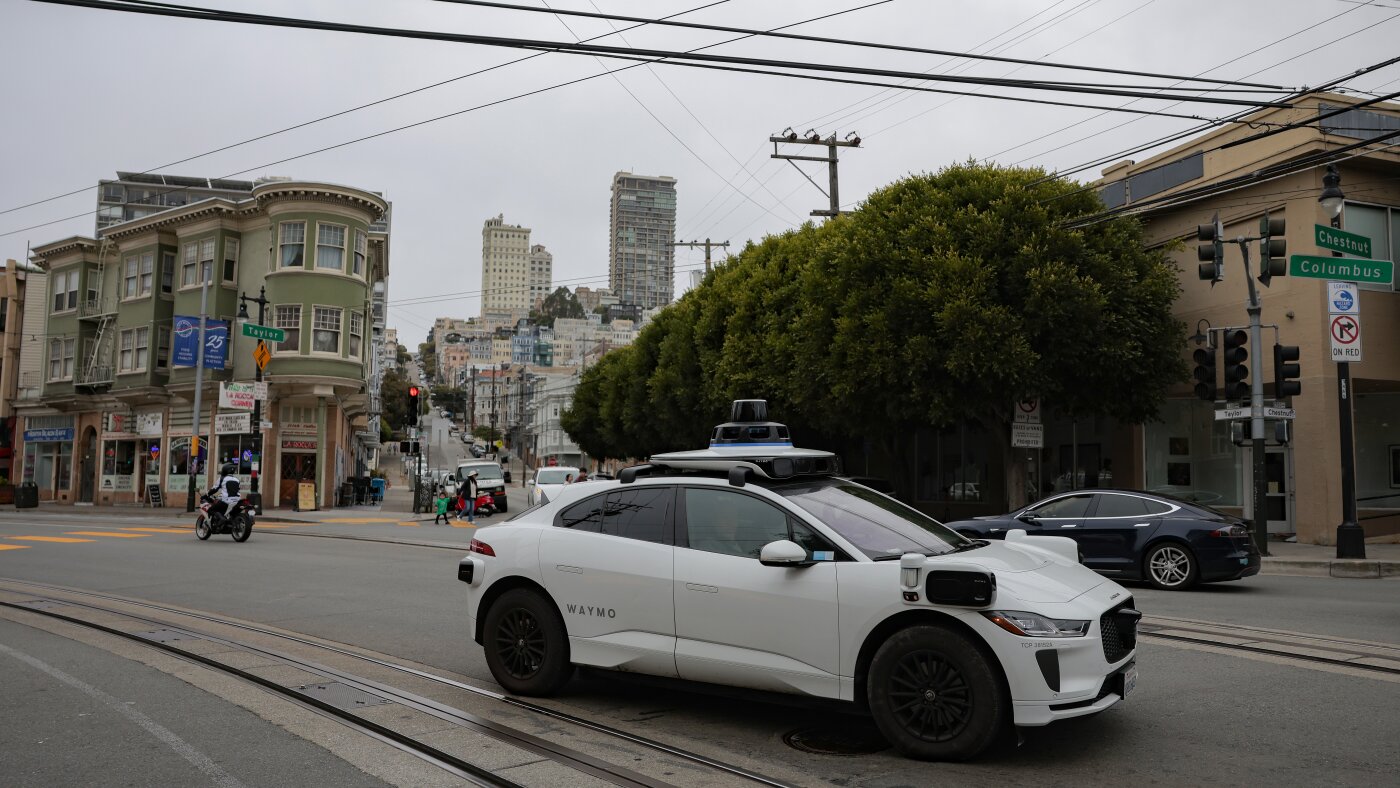 News13 minutes ago
Waymo called the cops on teen riders, raising privacy concerns
-

 Los Angeles, Ca2 hours ago
O.C. police prep for beach, theme park ‘takeovers’ promoted on social media
-

 Detroit, MI2 hours ago
Detroit city leaders to DHS: Stop ICE pursuits which endanger the community
-

 San Francisco, CA2 hours ago
SF Supervisor Jackie Fielder hosts listening session after medical leave
-

 Dallas, TX2 hours ago
The Stewpot artists find healing, purpose and income through art in Dallas
-

 Miami, FL2 hours ago
Can Jason Marshall push for a starting spot – The Splash Zone 7/10/26
-

 Boston, MA2 hours ago
Police investigating shooting in Downtown Crossing – Boston News, Weather, Sports | WHDH 7News
-
 Denver, CO2 hours ago
Denver mayor announces new $100 million plan to bring in 10,000 jobs

