World
Fact check: Has Marine Le Pen’s appeal been denied?


Misleading posts circulating on X claim that an appeal lodged by French far-right leader Marine Le Pen against a conviction barring her from running in the 2027 presidential election has been rejected.
In March, Judge Bénédicte de Perthuis sentenced Le Pen to a five-year ban on holding public office, effective immediately, after finding she was “at the heart” of a scheme to embezzle European parliamentary funds.
The Paris Criminal Court also handed down a four-year prison sentence — two years suspended and two to be served with an electronic bracelet — along with a €100,000 fine. Le Pen has described the verdict as a “political witch-hunt” and declared she would exhaust all legal avenues to overturn it.
One widely shared post, which has amassed more than 600,000 views, claims that her appeal has already been denied, that the “French people are outraged”, and that the “EU is behind” the rejection.
But where does Le Pen actually stand, and do any of the post’s claims hold weight?
Has Le Pen’s appeal been rejected?
Essentially, to try and overturn her presidential ban as quickly as possible, Le Pen launched two separate challenges along French administrative and criminal paths.
On 15 October, the Council of State — France’s highest administrative court — rejected a legal challenge made by Le Pen against the country’s electoral rules.
It’s this administrative challenge that the post is likely referring to. As it happened weeks ago, it’s not breaking news, and it’s also separate from the appeal against her criminal conviction, which hasn’t been heard yet.
The administrative challenge concerned Le Pen’s removal from the electoral list in the Pas-de-Calais department, where she is an MP.
“Since she’s hit a wall in the criminal courts, Le Pen tried a side route: taking her case to the administrative courts,” Camille Aynès, constitutional law expert at the University of Paris Nanterre, told The Cube.
“Why go that way? Not really to win back her council seat. The real goal was strategic — to create a case that would allow her to raise a ‘priority question of constitutionality’ (QPC),” she said. “That’s a special French mechanism allowing someone in a lawsuit to ask whether the law applied in their case violates the Constitution.”
Ultimately, the Council of State refused to pass her challenge along. The criminal provisions that Le Pen contested, according to the court, were either non-existent or unrelated.
“The criminal provisions she was challenging weren’t even applicable in this administrative dispute,” Aynès told The Cube. “In other words, this wasn’t a backdoor appeal of her criminal conviction.”
The main impact of the Council of State court’s rejection is that Le Pen lost an opportunity to have the issue reviewed quickly, instead of waiting months for her appeal trial.
It’s an issue that she will have wanted to resolve quickly amid the political unrest in France — if President Emmanuel Macron called snap presidential elections, they could take place before Le Pen’s criminal appeal ruling, leaving her unable to run, whatever the subsequent result is.
Appeals yet to come
Despite claims made by online users that her appeal has been denied, Le Pen is launching a separate and larger appeal against her criminal conviction — the outcome of which is far from decided. A trial has been scheduled from 13 January until 12 February next year.
A verdict in this trial is expected before the summer, which would still give Le Pen time to stand in the 2027 presidential election, provided her sentence is overturned or reduced.
“The Council of State still has to rule on another QPC Le Pen filed over her removal as a regional councillor — but experts expect the outcome to be the same: no referral to the Constitutional Council,” Aynès told The Cube.
In July, Le Pen also sought an interim measure from the European Court of Human Rights — a Strasbourg-based court which interprets the European Convention on Human Rights — to quash the immediate application of her five-year ban. Her request was denied.
“At this point, only the criminal appeal can change things,” Aynès said. “If her verdict is upheld, she can then turn to the Court of Cassation [France’s supreme court for civil and criminal cases].”
Is the European Union to blame and how popular is Le Pen?
As for the claims that the “EU is behind” Le Pen’s ban, they’re also wrong: the case and the conviction are entirely under the French judiciary.
The details in the case date back to when Le Pen was an MEP. Prosecutors say that, between 2004 and 2016, she and several of her party members diverted funds meant to pay for parliamentary assistants to finance party activities in France.
According to Aynès, the wrongdoing only stopped because the European Parliament blew the whistle.
“That’s the only sense in which the EU can be said to have been ‘involved’ — it alerted prosecutors,” she said.
Similar narratives conflating the European Union’s role in national courts were repeated on social media after Romanian presidential candidate Călin Georgescu was banned from running in the country’s presidential election by the constitutional court.
Despite her legal woes, Le Pen and the National Rally (RN) party remain popular, so that part of the X post is true. At the time of her conviction, an Ifop Opinion poll placed her at 37%. More recent polling puts her and RN president Jordan Bardella between 33 and 37%, ahead of their political rivals.
Other claims that Bardella will run for her party as a presidential candidate are also unconfirmed, despite the 30-year-old having Le Pen’s vocal backing. RN did not respond to The Cube’s request for comment on the matter as of the time of publishing.



President Trump said Iran had agreed to the “highest level” inspections, hours after an Iranian official said there were “no detailed discussions on the nuclear issue,” as the two sides continued to present different narratives of their latest talks.
World
Turkey detains over 200 suspects, including alleged ISIS militants, in sweeping raid ahead of NATO summit
NEWYou can now listen to Fox News articles!
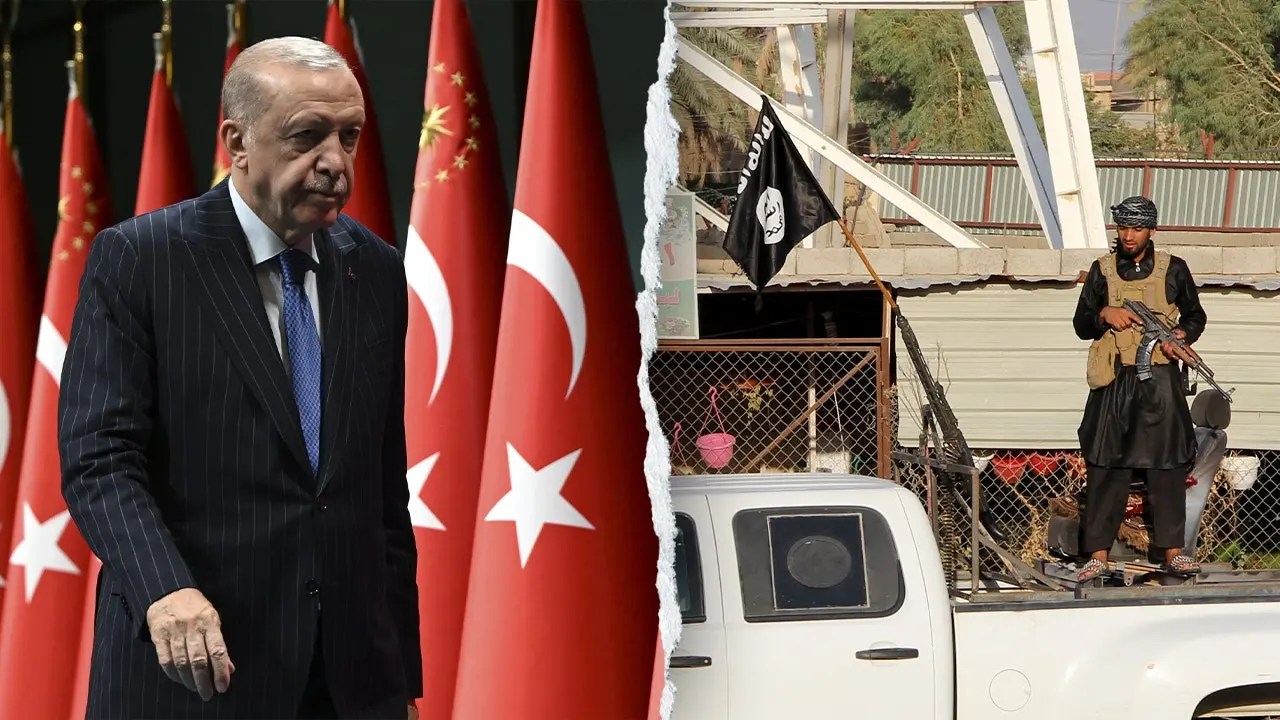
Turkish authorities reportedly detained more than 200 people, including suspected ISIS-linked militants, in a sweeping Tuesday raid in capital Ankara ahead of a July 7-8 NATO summit.
The raid came after Turkish authorities issued detention orders for 241 suspects, 209 of whom were taken into custody, The Associated Press reported, citing a statement from the office of Turkey’s chief prosecutor.
Among the 209 detained, 56 were allegedly ISIS militants, according to the AP. This comes after Turkish authorities said they detained 125 ISIS members in December.
The detention operations occurred just two weeks before a planned NATO summit in Ankara on July 7 that President Donald Trump is expected to attend.
TURKEY’S NATO ROLE UNDER SCRUTINY AMID NEW REPORT ON HAMAS, MUSLIM BROTHERHOOD TIES
President Donald Trump greets Turkey’s President Recep Tayyip Erdogan during a summit in Sharm El Sheikh, Egypt, on Oct. 13, 2025, to support ending the Israel-Hamas war in Gaza after a breakthrough ceasefire deal. (Evan Vucci/AP Photo/Pool)
Other militants scooped up were 35 alleged members of the Revolutionary People’s Liberation Party/Front, which a Turkish statement described as “a far‑left group known for armed attacks and assassinations in Turkey,” according to the AP.
The ISIS-combating operations demonstrate the terrorist group’s ongoing activity in the region, showing the group is still functioning despite the U.S. campaign during Trump’s first term to eliminate the group’s caliphate and its control of large swaths of territory in the Middle East.
Iraqi government forces celebrate while holding an Islamis Sate (IS) group flag after they claimed they have gained complete control of the Diyala province, northeast of Baghdad, on January 26, 2015 near the town of Muqdadiyah. (YOUNIS AL-BAYATI/AFP via Getty Images)
In recent years, ISIS has spread into the African continent, prompting a strong response from the U.S. In May, Trump authorized a series of strikes in Nigeria to combat the group.
PENTAGON SLASHES NATO COMBAT COMMITMENTS AS TRUMP PUSHES EUROPE TO DEFEND ITSELF
A May 16 strike killed ISIS leader Abu-Bilal al-Minuki, who was the group’s second-in-command globally.
U.S. and Nigerian forces conducted kinetic strikes against ISIS fighters in northeastern Nigeria on May 17, 2026, AFRICOM said. (X/U.S. Africa Command)
CLICK HERE TO DOWNLOAD THE FOX NEWS APP
“Abu-Bilal al-Minuki, second in command of ISIS globally, thought he could hide in Africa, but little did he know we had sources who kept us informed on what he was doing,” Trump wrote in a post on Truth Social after the strike. “He will no longer terrorize the people of Africa, or help plan operations to target Americans.”
The group’s renewed activity also includes a call to supporters to make attacks on U.S. soil during the World Cup.
The Associated Press contributed to this report.

By Euronews with AFP
Published on
Two whales were killed off the coast of Iceland overnight Sunday, two days after commercial hunting resumed, local media and animal rights activists reported Monday.
ADVERTISEMENT

ADVERTISEMENT
The kill ends a two-year pause and marks the first catches since 2023.
Icelandic public broadcaster RUV reported that two fin whales were killed. The fin whale is the second largest animal on Earth after the blue whale.
Before the vessels set off on Friday, a protester had attached himself to one of the masts in the port of Reykjavik, but climbed down and was escorted away by police.
Iceland, Norway and Japan are the only three countries that still openly permit whaling, despite international condemnation from the public and animal welfare organisations.
Iceland cancelled its whale hunt over the past two years, partly because economic problems had cut demand and the industry was not deemed profitable enough.
“The first fin whale deaths in Iceland’s hunt this year are devastating,” said Joanna Swabe, European senior public affairs director for animal rights group Humane World for Animals.
“Iceland has killed more than 1,000 fin whales in the past two decades — not only the second largest animal on the planet but also a species classified as globally vulnerable to extinction,” Swabe said in a statement.
Iceland’s government has said it is planning to introduce a bill aimed at banning whaling this autumn.
The International Whaling Commission banned the commercial killing of whales in 1986 amid alarm at the declining stock of the marine mammals.
Iceland’s Marine and Freshwater Research Institute has recommended that no more than 150 fin whales are caught in the 2026 season.
That represents a 28-percent drop on the annual quota it recommended for the period 2018–2025, it said.
The institute has set an annual catch of 168 animals for the minke whale hunt this year, a 23-percent drop on 2018-2025.
-

 Milwaukee, WI4 minutes ago
Bucks draft Burries, Ament after Giannis trade: 'We're building'
-

 Atlanta, GA11 minutes ago
Sports with Sam: Hawks draft Kingston Flemmings & Zuby Ejiofor
-

 Minneapolis, MN14 minutes ago
Concerns grow over south Minneapolis homeless encampment near child care center
-

 Indianapolis, IN19 minutes ago
Karl E. Muszar Jr.
-

 Pittsburg, PA26 minutes ago
Prince of Pittsburgh: Cole Young delivers go-ahead homer in 3-2 Mariners win
-

 Augusta, GA29 minutes ago
Augusta-based E-Z-GO could be sold, Textron announces
-

 Washington, D.C34 minutes ago
Kronenwetter mom in D.C. to remember son, victims of internet crimes
-

 Cleveland, OH41 minutes ago
Cleveland Cavaliers Trade out of No. 29 Overall in 2026 NBA Draft

