World
Fact check: Has Marine Le Pen’s appeal been denied?


Misleading posts circulating on X claim that an appeal lodged by French far-right leader Marine Le Pen against a conviction barring her from running in the 2027 presidential election has been rejected.
In March, Judge Bénédicte de Perthuis sentenced Le Pen to a five-year ban on holding public office, effective immediately, after finding she was “at the heart” of a scheme to embezzle European parliamentary funds.
The Paris Criminal Court also handed down a four-year prison sentence — two years suspended and two to be served with an electronic bracelet — along with a €100,000 fine. Le Pen has described the verdict as a “political witch-hunt” and declared she would exhaust all legal avenues to overturn it.
One widely shared post, which has amassed more than 600,000 views, claims that her appeal has already been denied, that the “French people are outraged”, and that the “EU is behind” the rejection.
But where does Le Pen actually stand, and do any of the post’s claims hold weight?
Has Le Pen’s appeal been rejected?
Essentially, to try and overturn her presidential ban as quickly as possible, Le Pen launched two separate challenges along French administrative and criminal paths.
On 15 October, the Council of State — France’s highest administrative court — rejected a legal challenge made by Le Pen against the country’s electoral rules.
It’s this administrative challenge that the post is likely referring to. As it happened weeks ago, it’s not breaking news, and it’s also separate from the appeal against her criminal conviction, which hasn’t been heard yet.
The administrative challenge concerned Le Pen’s removal from the electoral list in the Pas-de-Calais department, where she is an MP.
“Since she’s hit a wall in the criminal courts, Le Pen tried a side route: taking her case to the administrative courts,” Camille Aynès, constitutional law expert at the University of Paris Nanterre, told The Cube.
“Why go that way? Not really to win back her council seat. The real goal was strategic — to create a case that would allow her to raise a ‘priority question of constitutionality’ (QPC),” she said. “That’s a special French mechanism allowing someone in a lawsuit to ask whether the law applied in their case violates the Constitution.”
Ultimately, the Council of State refused to pass her challenge along. The criminal provisions that Le Pen contested, according to the court, were either non-existent or unrelated.
“The criminal provisions she was challenging weren’t even applicable in this administrative dispute,” Aynès told The Cube. “In other words, this wasn’t a backdoor appeal of her criminal conviction.”
The main impact of the Council of State court’s rejection is that Le Pen lost an opportunity to have the issue reviewed quickly, instead of waiting months for her appeal trial.
It’s an issue that she will have wanted to resolve quickly amid the political unrest in France — if President Emmanuel Macron called snap presidential elections, they could take place before Le Pen’s criminal appeal ruling, leaving her unable to run, whatever the subsequent result is.
Appeals yet to come
Despite claims made by online users that her appeal has been denied, Le Pen is launching a separate and larger appeal against her criminal conviction — the outcome of which is far from decided. A trial has been scheduled from 13 January until 12 February next year.
A verdict in this trial is expected before the summer, which would still give Le Pen time to stand in the 2027 presidential election, provided her sentence is overturned or reduced.
“The Council of State still has to rule on another QPC Le Pen filed over her removal as a regional councillor — but experts expect the outcome to be the same: no referral to the Constitutional Council,” Aynès told The Cube.
In July, Le Pen also sought an interim measure from the European Court of Human Rights — a Strasbourg-based court which interprets the European Convention on Human Rights — to quash the immediate application of her five-year ban. Her request was denied.
“At this point, only the criminal appeal can change things,” Aynès said. “If her verdict is upheld, she can then turn to the Court of Cassation [France’s supreme court for civil and criminal cases].”
Is the European Union to blame and how popular is Le Pen?
As for the claims that the “EU is behind” Le Pen’s ban, they’re also wrong: the case and the conviction are entirely under the French judiciary.
The details in the case date back to when Le Pen was an MEP. Prosecutors say that, between 2004 and 2016, she and several of her party members diverted funds meant to pay for parliamentary assistants to finance party activities in France.
According to Aynès, the wrongdoing only stopped because the European Parliament blew the whistle.
“That’s the only sense in which the EU can be said to have been ‘involved’ — it alerted prosecutors,” she said.
Similar narratives conflating the European Union’s role in national courts were repeated on social media after Romanian presidential candidate Călin Georgescu was banned from running in the country’s presidential election by the constitutional court.
Despite her legal woes, Le Pen and the National Rally (RN) party remain popular, so that part of the X post is true. At the time of her conviction, an Ifop Opinion poll placed her at 37%. More recent polling puts her and RN president Jordan Bardella between 33 and 37%, ahead of their political rivals.
Other claims that Bardella will run for her party as a presidential candidate are also unconfirmed, despite the 30-year-old having Le Pen’s vocal backing. RN did not respond to The Cube’s request for comment on the matter as of the time of publishing.



Monitor ranks Toronto as having the worst air quality on earth, surpassing Kinshasa, DR Congo, and New Delhi, India.
Published On 16 Jul 2026
Toronto’s air quality has ranked the worst among all major cities in the world as smoke from wildfires in northwestern Ontario blankets the skies and spreads into the northeastern United States, triggering multiple health warnings and evacuations.
Wildfires continued burning through sparsely populated areas hundreds of miles from Toronto, Canada’s largest city, on Wednesday, sending smoke over a wide area, although cities in the area are not being threatened.
list of 3 itemsend of listRecommended Stories
Environment Canada reported an Air Quality Health Index reading of 10+, classified as “very high risk”, for Toronto. Forecasts suggested that hazardous conditions could persist through Thursday night.
IQAir, a Swiss air quality technology company, ranked Toronto as having the worst air quality across the globe, surpassing the Democratic Republic of the Congo’s Kinshasa and India’s New Delhi.
“The biggest contributor to Toronto’s spike in air pollution right now is wildfires, though the higher-than-average temperatures are also playing a role,” Armen Araradian of IQAir told the AFP news agency.
While this year’s wildfire season in Canada has been fairly muted compared with recent years, there are more than 800 active fires nationwide.
A video that went viral on social media showed a Canadian National train surrounded by fire near Armstrong, Ontario. Canadian National employees in the area and residents of Armstrong were evacuated on Monday night, the railroad operator said in a statement. It suspended rail operations near Armstrong as a precaution.
Smoke from the wildfires also worsened air quality across the border in the US, with the states of Pennsylvania, New York, Connecticut, Massachusetts, Maine and New Hampshire particularly affected.
Authorities in New York City have issued an alert over unhealthy air quality, urging residents to reduce strenuous outdoor activity and take extra breaks if they are outside on Wednesday and Thursday.
The National Weather Service said smoke could linger until the end of the week.
“We probably haven’t seen the worst of it yet for New York City. We probably haven’t seen the worst of it yet for the Great Lakes and upstate, and New England yet either,” Dan Westervelt, Lamont associate research professor at Columbia University, told the Reuters news agency.
More than 80,000 people are expected to attend the FIFA World Cup final at an open-air stadium in New Jersey on Sunday, with another 50,000 planning to watch the game from New York City’s Central Park, where skies appeared hazy.
New York Governor Kathy Hochul urged people, especially those with health conditions, to exercise caution.
The Canadian government has said that wildfire season began more slowly this year than in 2023 or 2025 – the two worst seasons for wildfires – but warned that fires were likely, due to warmer-than-usual temperatures across the country.
It said some 835 active fires were burning across the country on Wednesday, with 112 considered out of control, and most in the central provinces of Manitoba, Saskatchewan and Ontario.
They have burned 1.9 million hectares (4.7 million acres) so far.
Greg Evans, a professor of chemical engineering and applied chemistry at the University of Toronto, said the city had been simultaneously hit with severe heat and wildfire smoke.
“I expect that this will occur more frequently over the coming decades, so cities and residents need to prepare for this in the future,” he said.

Getting home, and turning back the clock, has long been at the root of Christopher Nolan’s films. The astronauts of “Interstellar” painstakingly lose 23 years in space travel, almost the same length of time Odysseus is away from home in “The Odyssey”: a decade fighting the Trojan War, a decade trying to return to Ithaca.
So, to a remarkable degree, Nolan’s “The Odyssey” — faithful as it is to Homer’s epic poem — feels, down to its nonlinear DNA, like a Nolan movie. The authorship of the epic poem, dated to the 7th or 8th century BC, is complex. But no one could question the maker of this “Odyssey,” an earthy, existential epic that ravishingly melds the storytelling of antiquity with contemporary IMAX-sized bravado.
As a story about a man whose cunning offends the gods, “The Odyssey” feels very much like a companion piece, if not a downright sequel, to “Oppenheimer.” Odysseus (Matt Damon, in the role of his life) is increasingly racked with guilt for the violence and death he’s wrought after his ingenuity led to the sacking of Troy.
This image released by Universal Pictures shows Matt Damon, as Odysseus, in a scene from “The Odyssey.” (Melinda Sue Gordon/Universal Pictures via AP)
The arrival of any new Nolan spectacle inevitably leads to its own kind of assault, and avalanches of “masterpiece” proclamations. (I’m notinnocent.) But while “The Odyssey,” Nolan’s first film shot entirely with IMAX cameras, doesn’t skimp on grandiosity, it works surprisingly well as a simpler, human-sized tale.
The journey — you may have heard, it’s about the journey — is sometimes a little clunky, and the sheer Nolan-ness of the production, not to mention the historic nature of the tale, inevitably saps it of some freshness. You could make a credible case that Nolan has already made a movie about a guy trying to reach his family through strata of mind-warping illusion, and it’s called “Inception.” Such is the trouble with urtexts.
But “The Odyssey” is rarely not transfixing, and it’s a ripping adventure story, besides. At the least, it’s the definitive big-screen adaptation of one of literature’s oldest tales — a not-too-shabby accomplishment for a filmmaker of restless ambition.
It’s not until Book 5 that Odysseus enters Homer’s poem, and Nolan, who also wrote the screenplay, likewise begins in Ithaca. There, Odysseus’ home is overrun by feasting suitors in pursuit of his wife, Penelope (Anne Hathaway). Foremost among them is Antinous, who’s played with sleazy perfection by Robert Pattinson. For an actor often (pleasingly) at odds with the movies around him, Pattinson has never slid more seamlessly into a part.
Telemachus (Tom Holland, also well-cast), the youthful son of Penelope and Odysseus, resolves to go in search of his father. Meanwhile, we catch up with Odysseus, weathered and white-bearded, following the fall of Troy. His forced conscription, by Agamemnon, is shown in flashbacks. Agamemnon is depicted with an imposing Darth Vader-like presence and played by Benny Safdie, but the real star is his hulking, mohawked helmet.
This image released by Universal Pictures shows, from left, Anne Hathaway as Penelope, and Tom Holland as Telemachus, in a scene from “The Odyssey.” (Melinda Sue Gordon/Universal Pictures via AP)

Such vivid details abound in Nolan’s richly textured film. The simple rocking of Odysseus’ longship, off the Mediterranean coast, is glorious. Some of Nolan’s and cinematographer Hoyte van Hoytema’s most impressive work has come when they’re faced with the elements (as in “Dunkirk” ). And “The Odyssey” is flooded with stormy seas and enchanted isles. If anything, the movie could have gone further; I was promised rosy-fingered dawns.
The first line of Homer’s poem, as translated by Emily Wilson (the version Nolan leaned on), refers to Odysseus as “a complicated man.” James Joyce, whose “Ulysses” was based on “The Odyssey,” once noted that while Hamlet is merely a son, Ulysses, or Odysseus, is a father, a husband, a lover and a warrior. In short, he’s an Everyman, albeit an especially smart one. And Damon, the most amiable of Everymen, proves especially attuned to the multifaceted nature of the archetypal hero.
We meet him first as a soldier, leading a small group of ships away from Agamemnon’s fleet, setting a southerly course with his second-in-command Eurylochus (an excellent Himesh Patel). Their route takes them on a series of episodic quests: a cave encounter with Polyphemus, the Cyclops; a pine forest attack by the man-eating giants, the Laestrygonians; a meal with the witch Circe (Samantha Morton); and Odysseus’ seven-year interlude with the sea nymph Calypso (a beguilingly sincere Charlize Theron).
This image released by Universal Pictures shows a scene from “The Odyssey.” (Melinda Sue Gordon/Universal Pictures via AP)

You could argue that the movie can feel like a series of sketched-together set pieces, but what set pieces! That includes the tale of the Trojan horse, a fleeting mention in the poem but here a centerpiece. You can tell that Nolan, who nearly made “Troy” more than two decades ago, has had the sequence — beginning with the Trojan horse sunk in the sand and leading to the burning of Troy — on his mind for years.
Each stop on Odysseus’ journey gives Nolan a mythic playground to explore imagery that verges on the stuff of horror. I was most intoxicated by “The Odyssey” in its most surreal moments: the sight of a giant hand emerging out of the shadows, the meeting with the “shades” of Odysseus’ dead army, risen from the black soil of Hades.
“A time of apparent magic” is how the movie is introduced. Nolan has wisely opted to keep the gods sidelined. Their powers are real, but with the exception of Zendaya’s Athena, who appears like a confidant to Odysseus, the gods, themselves, remain off-screen.
That choice draws Nolan’s “Odyssey,” and its themes of sacrifice, fidelity and honor, closer to reality. And it makes Nolan’s decision to cast his film widely all the more essential. This is a story, passed down for centuries by singers and storytellers, that belongs to all of humankind. Casting the movie with a wide spectrum of actors, including Lupita Nyong’o as Helen of Troy, is not only fair game for a purely mythic tale but it gives the movie a present-day vitality. Seeing actors like Elliot Page (indelible as a fallen soldier), John Leguizamo (as the loyal servant Eumaeus) and Damon in this ancient context is a very big reason to see “The Odyssey,” and why Homer’s told and retold tale is worth revisiting, at all. If today has no role, what’s the point? They didn’t have cameras in 700 B.C., either.
This image released by Universal Pictures shows a scene from “The Odyssey.” (Melinda Sue Gordon/Universal Pictures via AP)

Nolan’s “Odyssey” is nearly three hours long but never slow going. And it’s the friction between past and present that propels the movie as much as Odysseus’ wayward path. Gender roles are examined even while traditional masculinity is upheld. The ending of the poem, a tricky thing since it features mass murder, is given a more palatable action-movie melee. But the essence of “The Odyssey” is here, and Odysseus’ quest to live down his mistakes and uphold his convictions feels vibrant again. Nolan, you might say, is at home.
“The Odyssey,” a Universal Pictures release in theaters Thursday, is rated R by the Motion Picture Association for violence and some language. Running time: 172 minutes. Three and a half stars out of four.

NEWYou can now listen to Fox News articles!
American mother Jamey Carney was remembered at her funeral as a devoted parent who had built a happy life in Ireland before her life was violently cut short.
Carney, 43, a New York native who moved to Ireland in 2021 with her teenage daughter, was violently beaten and suffocated in her home in Killarney, County Kerry, last week. A Jordanian failed asylum seeker who was living in Ireland and was romantically involved with Carney was arrested in relation to the case in his home country after fleeing Ireland via Istanbul after her death, according to Irish media.
Mourners gathered at St. Mary’s Cathedral in Killarney to pay their final respects during a service celebrating Carney’s life. The service was livestreamed, allowing friends and family around the world to join in mourning before a private cremation.
AMERICAN MOTHER MURDERED IN IRISH TOURIST TOWN AS INTERNATIONAL MANHUNT TARGETS ALLEGED ASYLUM SEEKER
The remains of Jamey Carney are carried from St Mary’s Cathedral, Killarney by her mother Kathleen (left), sister Devon (blue hair) and relatives in Killarney, Kerry, Ireland, Wednesday, July 15, 2026. The 43 year-old New York native was found dead in her home on July 7. (Michael Mac Sweeney/Provision for Fox News Digital))
“Today we don’t dwell on Jamey’s death, but we dwell on her life,” Fr. Kieran O’Brien told mourners.
During the service, O’Brien reflected on Carney’s life growing up in New York alongside her sister, Devon, before recalling her “big decision” to move to Killarney—a choice he described as “the best decision of her life.”
He said she and her daughter, Michaela, had found a place they proudly called home, with Michaela settling into school and becoming actively involved in Irish sports.
The priest described Carney as a woman whose “joy radiated” from her, saying she had built a close circle of friends after moving to Killarney and found happiness in simple things. He recalled her love of country music, travel, shopping, going to concerts and spending time with friends.
“She was happy in life and she was happy with life because life was good to her,” he said.
“But her real love in life was you, Michaela,” he added, addressing Carney’s daughter.
“We thank God for Jamey’s life, remembering at all times her joy, and the ray of sunshine that she brought to all of your lives,” he added.
Jamey Carney’s sister Devon, is consoled at the funeral for the 43 year-old at St Mary’s Cathedral, Killarney, Kerry, Ireland, Wednesday, July 15, 2026. The New York native was found dead in her home on July 7. (Michael Mac Sweeney/Provision for Fox News Digital)
Family members carried a series of personal items to the altar celebrating Carney’s life, including photographs of her daughter, Michaela, and her dog, Penny. A cowboy hat symbolizing her love of country music, the passports she and Michaela used to start their new life together in Ireland and an angel statue were also brought forward.
A framed photograph of Carney rested atop her coffin, which was positioned before the altar and draped in a white pall.
As Carney’s coffin departed St. Mary’s Cathedral following the funeral mass, young members of Dr. Crokes GAA Club formed a guard of honor outside the church. Carney’s grieving sister, Devon, wearing a Kerry GAA jersey and clutching a sunflower, was distraught as family members gathered around the hearse.
The service centered on celebrating Carney’s life, her family and the community she built in Ireland rather than the disturbing circumstances surrounding her death and subsequent murder investigation.
Detectives believe Carney was killed around 11 p.m. Monday, roughly 14 hours before her 13-year-old daughter discovered her body at about 1:30 p.m. Tuesday. By then, the man had traveled roughly 200 miles by bus to Dublin Airport and boarded a flight to Istanbul, according to the Irish Independent.
Irish police have yet to publicly identify the person they want to question in the investigation or release his name, photograph or any physical description.
Irish police confirmed to Fox News Digital they were aware “of the arrest of a male in Jordan by the Jordanian authorities,” but did not identify the man or confirm he was the person of interest in the investigation. Police also confirmed they “have not made any request to the Jordanian authorities for the arrest of any person at this time.”
WATCH: Person of interest detained in murder of US mom in Ireland
MIGRANT WHO FLED IRELAND AFTER AMERICAN MOTHER’S MURDER IS ARRESTED IN JORDAN
Irish media have widely identified the man as the person of interest in the investigation, though Irish police have not publicly confirmed his identity.
Ireland does not have an extradition treaty with Jordan, where the man is being detained, according to the Irish Independent.
Fox News Digital asked Irish police and Ireland’s Department of Justice to confirm reports that the man had previously been refused asylum while appealing that decision. Neither agency confirmed the reports.
The man had been living in state-run accommodation for asylum seekers in Killarney before spending increasing amounts of time at Carney’s home after they became romantically involved, according to the Irish Mirror.
American citizen Jamey Carney, left, was found dead at her home in Killarney, County Kerry, last week. Irish police have launched a murder investigation into her death. (Jamey Carney/Facebook | iStock)
He first arrived in the United Kingdom before traveling through Northern Ireland and eventually settling in County Kerry, according to the Irish Mirror.
His social media accounts contain posts from the United Kingdom and Turkey in recent years.
Meanwhile, the FBI told Fox News Digital it stands ready to assist Irish authorities if requested.
CLICK HERE TO DOWNLOAD THE FOX NEWS APP
“Through our Legal Attaché in London, we have strong, established relationships and stand ready to assist in any way that the Irish government may request,” the FBI said in a statement.
The State Department told Fox News Digital it is providing consular assistance to the family.
-

 Sports6 minutes ago
Marcello Hernández roasts Jake Paul, Tiger Woods and Bill Belichick in ESPYS monologue
-

 Technology12 minutes ago
You paid for it. So why is your device showing ads?
-
 Business18 minutes ago
Paramount shareholder lawsuit accuses Ellisons of corruption
-
 Entertainment24 minutes ago
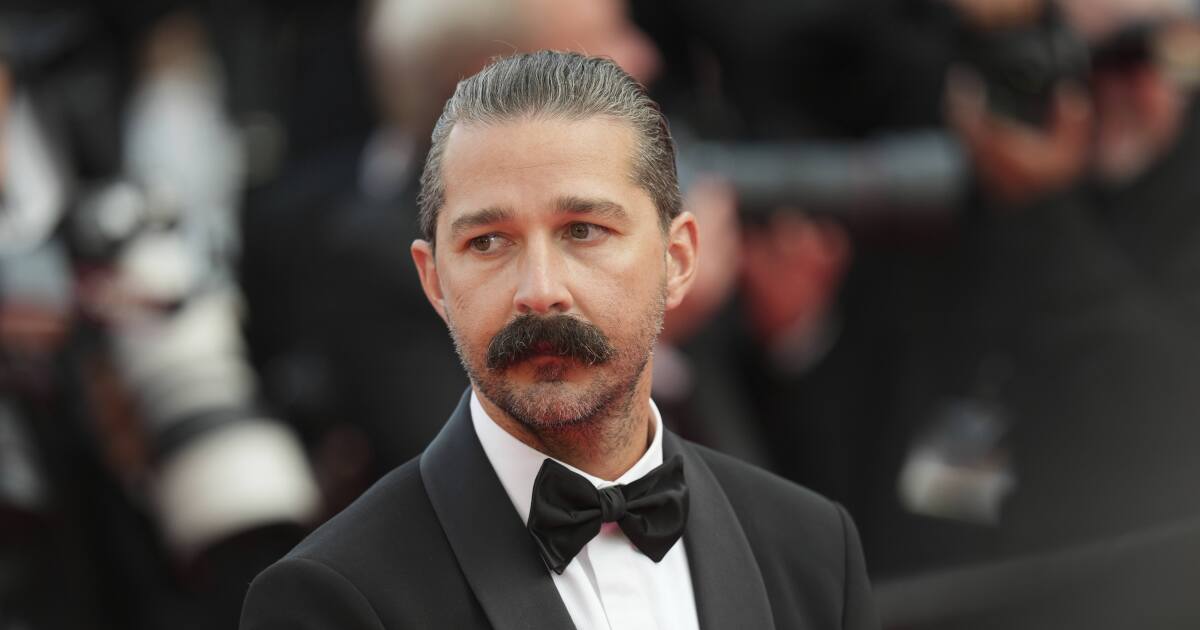
‘You’re scaring my people.’ Shia LaBeouf’s alleged stalker arrested after posting viral video
-
 Politics36 minutes ago
Californians back Becerra and reject AI data centers by big margins, poll finds
-
 Science42 minutes ago
How to eat safely amid outbreak of diarrhea-causing cyclosporiasis
-
 Sports48 minutes ago
Magical Lionel Messi leads Argentina past England for trip back to World Cup final
-

 World60 minutes ago
Toronto engulfed by wildfire smoke as US cities threatened

