Midwest
Fierce Israel critic launches Senate bid in Michigan high-stakes 2026 midterm race

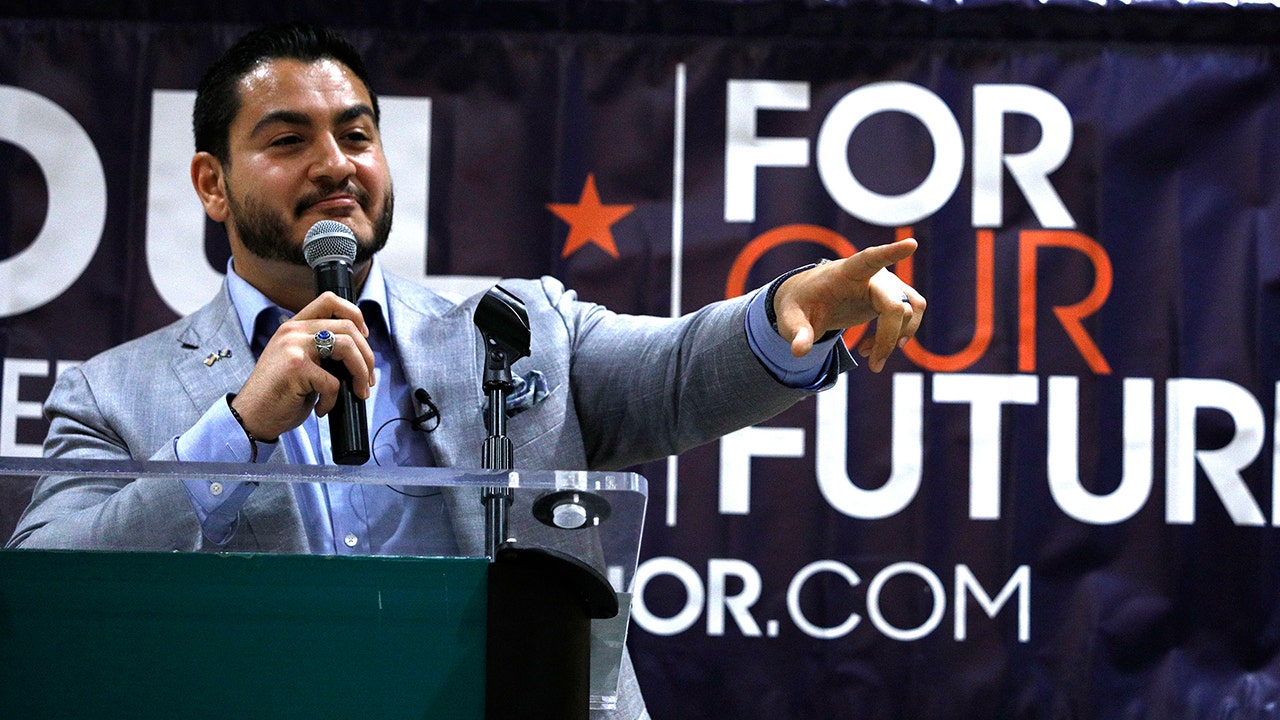
A former Michigan public health official and Democratic candidate for governor entered the race for the state’s open U.S. Senate seat on Thursday in what could be one of the most watched races in the 2026 midterm elections.
Abdul El-Sayed, 40, is the second Democrat to put his name in the running to replace Democratic Sen. Gary Peters, who is not seeking reelection.
El-Sayed, a prominent figure in a movement that was highly critical of support for Israel in the 2024 election cycle, aims to set himself apart from the other Democratic candidates in the race to replace Peters, state Sen. Mallory McMorrow.
McMorrow has said she would vote against Senate Majority Leader Chuck Schumer, D-N.Y., retaining his leadership position should she prevail in the primary and general election to represent the battleground state in the upper chamber of Congress.
However, El-Sayed held back criticism of Schumer.
“Anybody who tells you that they’re going to unilaterally oppose one potential candidate without knowing who the alternative is, is either unnuanced or unsophisticated,” El-Sayed told Politico. “So I want to know who is available, who is actively seeking the leadership. I’ll make a decision from there.”
GRETCHEN WHITMER RIBBED ONLINE FOR SEEMING TO HIDE FACE IN OVAL OFFICE
Michigan Democratic then-gubernatorial candidate Abdul El-Sayed campaigns with support from New York Democrat Alexandria Ocasio-Cortez at a rally on the campus of Wayne State University on July 28, 2018, in Detroit. (Bill Pugliano/Getty Images)
“What we need right now is somebody who’s willing to take the fight directly to Trump and Musk, but then also knows how to rebuild a version of our federal government that better serves working people after the carnage that Musk and Trump are going to leave behind, and I think I offer that,” he told Politico.
Other Democrats considering a run to replace Peters include U.S. Rep. Haley Stevens and Michigan Attorney General Dana Nessel.
El-Sayed was active in the “uncommited movement,” a group of anti-Israel, traditionally Democratic voters in Michigan, a critical swing state, who threatened to withhold support from then-President Joe Biden, and then then-Vice President Kamala Harris, over the administration’s stance on Gaza. He did say he would back whoever was the eventual Democratic choice for the presidential ticket to oppose now-President Donald Trump, according to Politico.
The Israel-Hamas war exposed deep divisions within the Democratic Party last election cycle, and there is concern the conflict could again make for a messy Senate Democratic primary in Michigan if the American Israel Public Affairs Committee intervenes. The powerful pro-Israel lobby group financially backed Stevens in 2022, when redistricting forced a competitive primary run against fellow Democrat, Rep. Andy Levin.
“Everybody is unified around leadership that reminds the Democratic Party that we ought to be the party of peace and justice, that we ought not to be the party sending bombs and money to foreign militaries to drop bombs on other people’s kids in their schools and their hospitals, when our kids need more, our hospitals and schools need more, and we should be spending that money here at home,” El-Sayed told Politico.
Abdul El-Sayed speaks during a coronavirus public health roundtable with presidential candidate Sen. Bernie Sanders on Monday, March 9, 2020. (Erin Kirkland/Bloomberg via Getty Images)
FIRST ON FOX: REPUBLICAN LAUNCHES SECOND STRAIGHT BID TO FLIP DEMOCRAT-HELD SENATE SEAT IN KEY BATTLEGROUND
El-Sayed ran for governor in 2018 as a progressive Democrat and was endorsed by Sen. Bernie Sanders, I-Vt., and Rep. Alexandria Ocasio-Cortez, D-N.Y.
He came in second in the Democratic primary, losing to Gretchen Whitmer by more than 20 points and beating now-U.S. Rep. Shri Thanedar by more than 12 points. Whitmer went on to win the general election and is in the midst of a second term. She cannot run again because of term limits.
A resident of Ann Arbor, El-Sayed recently served as director of the Department of Health, Human and Veterans Services in Wayne County, home to Detroit. Before that, he was the public health director of the city after it declared bankruptcy in 2013.
El-Sayed cautioned Democrats against learning the “wrong lessons” from their defeats.
Democratic presidential candidate Sen. Bernie Sanders participates in a coronavirus public health roundtable with healthcare professionals, including Abdul El-Sayed, left, as he campaigns on March 9, 2020, in Detroit. (Scott Olson/Getty Images)
“If you cut corners and trim your message, and you triangulate to the least common denominator, you can find something that’s perfectly inoffensive to everyone, and the problem with that is that you’re not actually saying anything,” he told Politico.
El-Sayed said he met with the Democratic Senatorial Campaign Committee on Tuesday. He told Politico that it was his “understanding” that the Senate Democrats’ campaign arm would not get involved in the primary. If that happens, that deviates from how the DSCC previously acted to clear the field of potential primary candidates to make for an easier primary victory for then-Rep. Elissa Slotkin. Now-Sen. Slotkin, D-Mich., easily won the primary over Hill Harper, and then won the general election.
El-Sayed is also the second candidate this week to launch a campaign to replace Peters. On the Republican side, former U.S. Rep. Mike Rogers launched his bid on Monday after losing the Senate race last year by 19,000 votes to Democrat Slotkin.
The Associated Press contributed to this report.
Read the full article from Here


The Paramore frontwoman appears to be mapping out tour dates behind her 2025 solo album, ‘Ego Death at a Bachelorette Party.’
Hayley Williams will soon have a date with Detroit.
The Paramore frontwoman’s website was updated Saturday with a list of cities underneath the header, “cu_soon.jpg.”
Detroit was one of 28 cities listed on the itinerary, along with Atlanta, Boston, Cincinnati, Raleigh and Los Angeles, and a handful of South American cities.
Over the course of the last week, Williams, 37, has been slowly rolling out dates on her latest solo tour, which comes on the heels of her 2025 solo album “Ego Death at a Bachelorette Party.” An earlier round of touring behind the project did not include a Detroit date.
The singer’s last local visit came when Paramore played Little Caesars Arena in June 2023.
agraham@detroitnews.com
Milwaukee, WI
Ascension Wisconsin held its one-day Medical Mission at Home event in Milwaukee, Racine, and Appleton
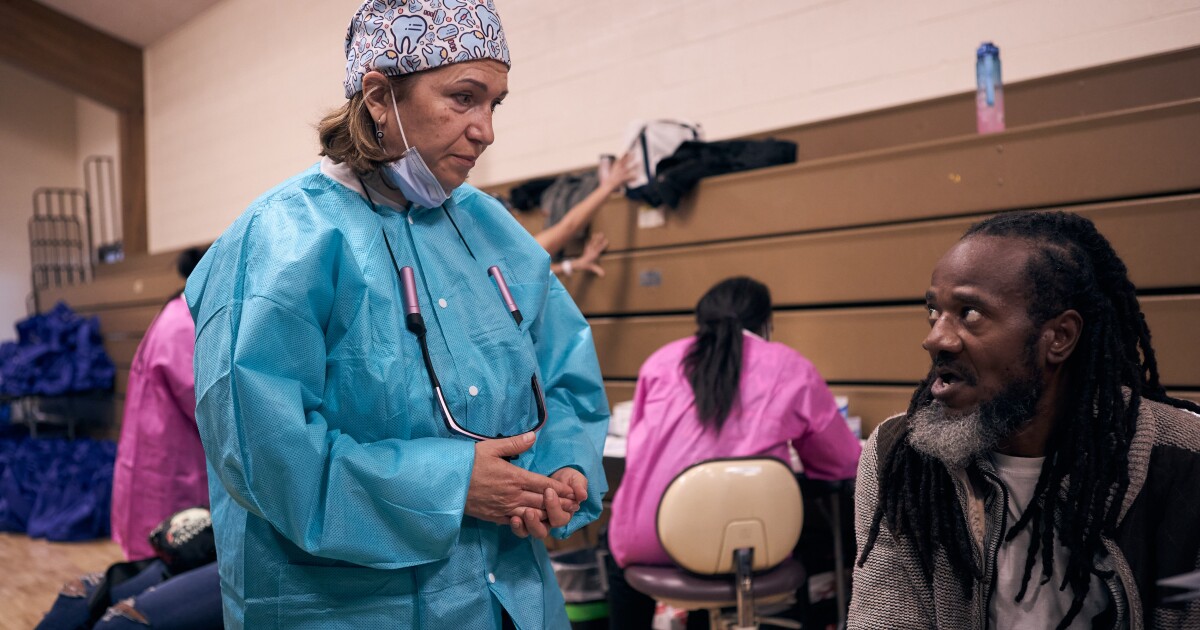
Ascension Wisconsin delivered free healthcare services across Milwaukee, Racine, and Appleton on Saturday at its Medical Mission at Home events.
The one-day event brought high-quality care to the communities, removing barriers for those who are uninsured, under-insured, or having issues accessing any care.
Ascension Wisconsin
The care teams provided free healthcare services, such as comprehensive physical exams with primary care physicians, specialty screenings, and respiratory and physical therapy. Patients also received free medications that were donated by the Dispensary of Hope and dispensed by Ascension Rx pharmacists.
The Milwaukee location also had free dental services.
Those in attendance also received bags of non-perishable food, shoes, and children were given teddy bears.
Ascension Wisconsin

“Our Medical Mission at Home is a powerful expression of our mission in action,” Chief Mission Integration Officer at Ascension Wisconsin, Andy Santos, said in a press release. “Access to care remains a significant challenge for many in our communities. By stepping beyond our walls, we meet people where they are, remove barriers, and create meaningful pathways to better health. The dignity and hope restored in these moments are what inspire our volunteers to serve.”
More than 600 people volunteered, including Ascension physicians, nurses, pharmacists, chaplains, associates and more.
Let’s talk:
Hey there! At TMJ4 News, we’re all about listening to our audience and tackling the stuff that really matters to you. Got a story idea, tip, or just want to chat about this piece? Hit us up using the form below. For more ways to get in touch, head over to tmj4.com/tips.
It’s about time to watch on your time. Stream local news and weather 24/7 by searching for “TMJ4” on your device.
Available for download on Roku, Apple TV, Amazon Fire TV, and more.
Report a typo or error // Submit a news tip
Minneapolis, MN
Sheriff: Driver of stolen vehicle flees traffic stop in St. Paul, hits State Patrol car in Minneapolis

The driver of a stolen car fled a traffic stop Friday night in St. Paul before crashing into a Minnesota State Patrol car in Minneapolis, according to the Ramsey County sheriff’s office.
A Ramsey County sheriff’s deputy attempted to stop the stolen Hyundai sedan at about 10:30 p.m. in the Highland Park neighborhood of St. Paul. The driver fled and crossed the Ford Parkway Bridge into Minneapolis before the deputy lost sight of the vehicle and ended the pursuit, according to the sheriff’s office.
The suspect was then observed driving recklessly and ran a stop sign at West 46th Street and Aldrich Avenue South at 80 mph. The vehicle collided with a State Patrol squad car, causing significant injuries to the trooper and passengers in the stolen vehicle, the sheriff’s office said.
The 19-year-old suspect was quickly arrested after attempting to flee on foot. The driver has two prior arrests for fleeing police and is being held at the Ramsey County jail, according to the sheriff’s office.
Police say the same vehicle was involved in a pursuit Thursday night in the west metro, during which it reportedly swerved at emergency vehicles but did not hit them.
-
 News14 minutes ago
Bard College’s president to retire after scrutiny of relationship with Jeffrey Epstein
-

 New York2 hours ago
She’s Riding in Five Boro Bike Tour, and She’s Happy to Wear a Helmet
-

 Detroit, MI2 hours ago
Hayley Williams says ‘c u soon’ to Detroit, hinting at upcoming tour
-

 San Francisco, CA2 hours ago
SF’s Union Square showing signs of recovery, though some challenges remain
-

 Dallas, TX3 hours ago
FC Dallas vs New York Red Bulls: Lineup notes 📝
-

 Miami, FL3 hours ago
Mercedes’ Kimi Antonelli continues strong form with Miami Grand Prix Pole
-

 Boston, MA3 hours ago
With Jayson Tatum out, Celtics debut brand-new starting lineup in Game 7
-

 Denver, CO3 hours ago
2026 Denver Supercross Results