Business
Vietnam Urges United States to Delay Imposing Tariffs On It


Vietnam’s top leader, To Lam, has asked President Trump to delay the imposition of tariffs for at least 45 days so the two sides can avert a move that would devastate the Vietnamese economy and raise prices for American consumers.
The 46 percent tariff rate the United States has said it will impose on Vietnam is among the highest any country faces. The prospect of such a steep tariff has left Vietnam with a sense of whiplash and deep apprehension. It also presents a sharp contrast to Washington’s recent embrace of Hanoi as an important bulwark against China and a manufacturing destination for many American apparel brands.
Mr. Lam’s proposal to President Trump was laid out in a letter dated Saturday, according to a copy obtained by The New York Times. In the letter, Mr. Lam called on Mr. Trump to appoint a U.S. representative to lead negotiations with Ho Duc Phoc, a Vietnamese deputy prime minister, “with the goal of reaching an agreement as soon as possible.”
Mr. Lam had been one of the first world leaders to reach out to Mr. Trump after the tariffs were announced. In a phone call, he offered to reduce tariffs on U.S. imports to zero, and urged Mr. Trump to do the same, according to the Vietnamese government. Vietnam has said its tariffs on U.S. goods is an average of 9.4 percent.
Mr. Trump later described the call as “very productive.”
In his letter, Mr. Lam asked Mr. Trump to meet him in person in Washington at the end of May “to jointly come to an agreement on this important matter, for the benefit of both our peoples and to contribute to peace, stability and development in the region and the world.”
Vietnam’s Foreign Ministry did not respond to a request for comment.
Vietnam, which faces punishingly high tariffs along with China, Cambodia and Laos, would be the hardest-hit economy in Asia if the tariffs are imposed as planned on Wednesday, according to economists. The United States is Vietnam’s largest export market, accounting for about 30 percent of the country’s total exports. A 46 percent tariff rate would put 5.5 percent of Vietnam’s gross domestic product at risk, according to ING, a Dutch financial services company.
It would also hurt American consumers, because Vietnam is crucial in the global manufacturing supply chain. For decades, the country has built its economy around attracting foreign investment with cheap labor and a young work force. It is now a top manufacturer of brands such as Adidas and Lululemon. Nike makes about 50 percent of its footwear in Vietnam.
After Mr. Trump imposed tariffs on China during his first term, Vietnam benefited from companies shifting their manufacturing there.
Within Hanoi, the recent moves by the Trump administration have cast doubts on the reliability of the United States, which in recent years has assiduously courted Vietnam. In 2023, the two former enemies cemented a new strategic relationship, a move seen as a milestone in U.S. foreign policy. Even though Vietnam fought a brutal, decades-long war against the United States, surveys had shown that many Vietnamese welcomed the political and strategic influence of the United States.
The Biden administration viewed Vietnam — one of the few Southeast Asian nations that has publicly pushed back against China’s assertiveness in the South China Sea — as critical to the U.S. effort to counter China’s mounting ambitions in the region.
“Vietnam’s position in the Pacific, its view on China, its willingness to work with America, was its strongest card,” said Huong Le Thu, the deputy program director for Asia for the International Crisis Group. “Trump doesn’t see it that way. He doesn’t see allies or strategic values. He just sees numbers and tariffs, so Vietnam needs to try harder.”
Analysts say Vietnam had a largely positive opinion of Mr. Trump during his first administration, seeing him as a pragmatic businessman who would not moralize with them over human rights.
While explaining the tariffs, Mr. Trump said: “Vietnam: great negotiators, great people, they like me. I like them.” He said “the problem” was that the country charges the United States “90 percent,” a figure apparently reached by basing it on Vietnam’s current trade surplus with the U.S., worth $123.5 billion. (Vietnam disputed that calculation.)
The tariffs come at a precarious time for Mr. Lam, who was named as general secretary of Vietnam’s ruling Communist Party last year after the death of the previous party chief, Nguyen Phu Trong. Mr. Lam needs to secure a strong economic performance as he heads into next year’s party congress, where the country’s top leaders will be selected.
Even before Mr. Trump’s tariff announcement, Vietnam was working to win favor with the new administration. It signed provisional deals to import U.S. liquefied natural gas, cut some tariffs on American imports, and allowed SpaceX to open a company to launch its Starlink satellite internet service in Vietnam. The Trump organization is developing a $1.5 billion golf course and hotel project in Vietnam’s northern Hung Yen province, Mr. Lam’s home province.
Alexandra Stevenson contributed reporting.



In a high-stakes decision that will shape California’s economy for years, air officials late Friday approved a sweeping overhaul of the state’s signature climate program, cap-and-invest.
The 10-3 vote from the California Air Resources Board determines how aggressively the Golden State will curb planet-warming greenhouse gas emissions in the years ahead — and how billions of dollars in revenue will flow through communities, businesses and public programs statewide.
Cap-and-invest was nation-leading when it launched in 2013. The program forces major polluters to pay for their share of emissions by buying allowances at auctions or being granted them for free. It uses the revenue to fund public transit projects, wildfire prevention, affordable housing, clean energy, electric vehicles and safe drinking water.
The pollution limit — or cap — declines each year, reducing the total amount of emissions in the state and helping California reach its ambitious climate targets, including 100% carbon neutrality by 2045.
The Legislature voted last year to extend cap-and-invest through 2045. Officials at the Air Resources Board then spent the last several months drafting and revising the plan voted on this week, which received considerable feedback from oil and gas companies, environmental groups, lobbyists and lawmakers all jockeying for different priorities.
Some 200 people testified in person during the marathon two-day meeting preceding the vote, and the final proposal received more than 1,000 written comments.
Industry groups warned that capping emissions too much and too quickly would push refineries out of the state and drive up already soaring energy costs. But environmentalists and other stakeholders said giving too many concessions to fossil fuel interests would defeat the program’s purpose, which is to drive down emissions along a pathway consistent with what scientists say could preserve a recognizable climate.
The program was always planned to become stricter as the years unfolded, to give businesses more time to make the stronger reductions in their emissions.
Officials were under legal, market and budgetary pressure to pass a plan without delay, and also said it’s important for California to signal market certainty.
“It is no secret that climate policy is at a crossroads — under attack by an openly hostile and well-funded opposition and upended by global economic upheaval,” CARB chair Lauren Sanchez said during the meeting. “At a moment of uncertainty at the federal and international levels, California has the opportunity to lead with consistency.”
Among the key updates to the program are the removal of 118 million pollution permits, or allowances, from the market by 2030, and 900 million after 2030. Officials say this will amount to a steep, 11% annual lowering of the cap by the end of this decade, and 7% from 2031 to 2045, in keeping with the state’s mandated targets.
Critically, however, the update will also create a new pool of 118 million allowances above the cap that polluters can apply for and receive if they invest in decarbonization projects, a program dubbed the Manufacturing Decarbonization Incentive.
The incentive program is intended to discourage regulated industries from leaving the state. Two major refineries have announced exit plans in recent years, including Valero’s Benecia refinery and Phillips 66’s Los Angeles refinery, which shut down in 2025.
But many critics — including transit, affordable housing, environmental justice and clean water groups — said this amounts to a dismantling of the program.
“CARB has proposed creating exactly 118.3 million additional allowances … outside the cap, the precise number of allowances that must be removed from the cap to keep us on track for our 2030 targets,” said Caroline Jones, a senior analyst with the nonprofit Environmental Defense Fund. “This undermines the cap’s role in actually limiting climate pollution, which is the core function of this program.”
The board approved the decarbonization incentive but committed to additional workshops and evaluations of the program before issuing any allowances for it.
Other updates include more free allowances for industrial facilities and refineries, which regulators said will help reduce pressure on gasoline prices. Critics described the free permits as subsidies for oil and gas.
The update will also shift some allowances from gas to electric utilities, and increase funding for the California Climate Credit, a rebate that appears automatically on people’s utility bills.
But perhaps most controversial is how the update will affect the program’s multibillion-dollar revenue, which flows into the state’s Greenhouse Gas Reduction Fund each year and is distributed to various programs. Cap-and-invest has delivered $35 billion for climate projects in California since its inception.
The new incentive pool will mean the loss of $2 billion annually to the fund, or roughly half the amount it has received in recent years, according to an analysis from the Legislative Analyst’s Office.
While the Air Resources Board does not determine how the fund is divvied up — that’s the Legislature — opponents warned that this could amount to significant cuts for the Affordable Housing and Sustainable Communities Program, the Low Carbon Transit Operations Program, the SAFER drinking water program and the Community Air Protection Program, among many others that rely on revenue from cap-and-invest.
“This could create serious consequences, including a potential zeroing out of the state’s support for critical emission reduction programs,” said Phillip Fine, executive officer at the Bay Area Air District. “Striking the right balance is critical, but all consequences must be fully considered.”
It was a sentiment echoed by many who delivered comments during the board meeting.
“These additional allowances would not only endanger our emissions targets, they would also flood the auction market and depress cap-and-invest revenues,” said Pam Odell of the group Climate Action California. “These revenues fund vital programs, promote climate resilience, clean transit and transportation, and public health, especially in the most heavily exposed front-line communities.”
Some groups came out in support of the update, however, including Southern California Edison and Pacific Gas & Electric. The plan strikes a “balance between program stringency and affordability,” Fariya Ali, air and climate policy manager with PG&E, said during the meeting.
Assemblymember Jacqui Irwin (D-Thousand Oaks), who authored the bill that reauthorized the program last year, was cautiously supportive, noting that she would like to see more guardrails around the incentive program to ensure it aligns with state climate targets. But delaying the update would only create more uncertainty at a time when the Trump administration is already canceling clean energy funds and revoking California’s authority to set clean vehicle standards, she said.
“If we fail now to adopt the proposed amendments to cap-and-invest, it would be without a doubt the greatest victory that the Trump administration could possibly hope for to achieve against California’s climate policies this year,” Irwin said.
Oil and gas groups were tepid. Jodie Muller, chief executive of the Western States Petroleum Assn., said the update provides some near-term relief for refineries, but leaves too much uncertainty after 2030 to drive continued investment.
Brian McDonald, regulatory affairs manager with Marathon Petroleum Corp., said similarly that the oil company is “deeply concerned that the current proposal does not go far enough to provide the regulatory certainty needed to sustain in-state fuel production.”
In a briefing ahead of the vote, California climate economist Danny Cullenward said the update threatens both the “cap” aspect of the program by introducing the new allowance pool, and the “invest” aspect by threatening to reduce the program’s revenues.
The proposal is “being presented as a compromise when in fact it is sacrificing both of the key goals of the program,” he said.
The new plan is slated to go into effect Sept. 1.

Layoffs have continued with another tech company saying it was cutting people to enable it to use more artificial intelligence.
Groupon announced in a security filing this month that it will cut up to 400 jobs, or nearly 25% of its worldwide workforce, as part of a broader restructuring plan to make the platform AI-native. The Chicago company plans to carry out the layoffs in the coming months.
Earlier the company’s Chief Executive Officer Dušan Šenkypl had said the company “fell short of our expectations” last quarter.
Since 2022, more than 800,000 tech workers have been laid off, according to Layoffs.fyi, a website that tracks job cuts.
The surge in pink slips started in 2023, when companies that had gone on hiring sprees during the COVID-19 pandemic began to cut back. From January to April this year, U.S. tech employers announced 85,411 job cuts, up 33% from the same period last year, according to global outplacement and executive coaching firm Challenger, Gray & Christmas.
Groupon said in the filing that the decision to shift toward an AI-based company is to “better deliver on our mission, serving both customers and merchants.”
The company said the layoffs will cost it as much as $13 million, but save it more than $20 million per year.
This announcement comes as many e-commerce companies are shifting their business models to AI to reduce costs by automating many roles.
Artificial intelligence has also triggered fierce competition for top talent and is also fueling tens of thousands of layoffs this year. The result is that the class divide is widening in Silicon Valley as a tiny group of employees are landing unprecedented packages for AI skills, while many others struggle to find work.
The have-nots are doing everything that used to guarantee great jobs — refreshing resumes, optimizing LinkedIn profiles and doing interviews — but companies are much more picky these days. The tech jobless are rethinking their lives. Some are taking pay cuts, while others are leaving tech. Some are going back to study or launch startups. Some have retired.
Groupon shares, which have fallen 27% over the last 12 months, slipped 1% on Thursday to $21.20.
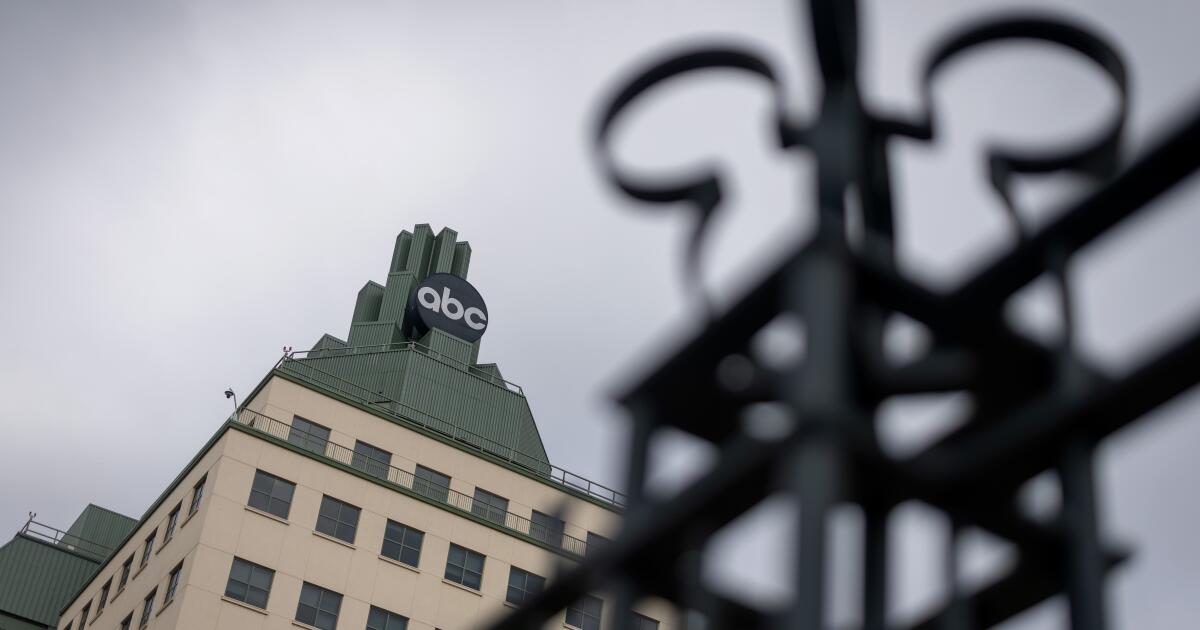
Walt Disney Co.’s ABC has filed renewal applications with the Federal Communications Commission “under protest” after an order mandating a years-early review of the network’s eight television station licenses.
The criticism was part of the network’s applications for the FCC review, which were filed ahead of a deadline Thursday. In an objection to the early renewal, Disney’s New York station WABC called the FCC order “unlawful, arbitrary and unconstitutional” and said it was “legally indefensible.”
“The Commission had not demanded early renewal in over five decades,” the station wrote in its filing. “And it has never before demanded simultaneous license renewal applications from a group of stations commonly owned with a network as it has here. The order has no legitimate purpose.”
The licenses for the eight ABC-owned TV stations, including KABC in Los Angeles, were originally scheduled for renewal between 2028 and 2031.
The FCC order came shortly after ABC late-night host Jimmy Kimmel made a joke about First Lady Melania Trump looking like an “expectant widow” days before a gunman tried to breach the White House Correspondents’ Assn. gala last month that President Trump attended.
Trump has frequently threatened to have TV station licenses pulled when he is unhappy with their coverage, but the order is the first time the government has acted on his wishes, sparking anger from free speech advocates. The FCC has said the order is part of an investigation into whether Disney’s diversity and inclusion policies violate federal law and the agency’s rules against “unlawful discrimination.”
In its response, WABC said the “only plausible reason” to issue the order was to “punish the station for speech the government does not like.”
“The ultimate injury here is not to the station or its parent company. It is to the public,” WABC wrote. “When a broadcaster must weigh regulatory retaliation before making editorial decisions, the public loses access to journalism that is free from government influence.”
FCC Chairman Brendan Carr said in a statement Thursday that Disney filed its applications to renew its broadcast licenses only after the company was told its previous answers were “disingenuous, deficient and improper.”
“Contrary to Disney’s claim that the FCC called in their broadcast licenses for early renewal for no reason, the record shows something very different,” Carr said. “Broadcast licensees have a unique obligation to operate in the public interest. The FCC will follow the facts and law wherever they may lead.”
FCC Commissioner Anna M. Gomez, the panel’s only Democrat who has backed Disney in its fight, cheered the Burbank media and entertainment company’s filing, saying in a post on X that she was “glad to see them expose the FCC’s actions as nothing more than naked political retribution and an unlawful assault on free speech and a free press.”
Times staff writer Meg James contributed to this report.
-

 Georgia3 minutes ago
Storms, flooding possible across Southeast Georgia, Northeast Florida today
-

 Hawaii10 minutes ago
County housing official sentenced to nearly 4 years in prison – West Hawaii Today
-

 Idaho13 minutes ago
Idaho’s state park system remains a major draw more than a c…
-

 Illinois18 minutes ago
Real estate sales in Peoria, Tazewell, Woodford counties for May 30, 2026
-
 Indiana25 minutes ago
The newest spots to eat, drink and shop along the coast of Indiana and southwest Michigan
-

 Iowa28 minutes ago
Democrats put a ‘bullseye’ on Iowa, eager to turn the red state purple
-

 Kansas40 minutes ago
Where to watch Kansas City Royals vs Texas Rangers: TV channel, start time, streaming for May 30
-

 Kentucky43 minutes ago
It’s National Mint Julep Day! How many are served during Kentucky Derby weekend?

