Business
Asian Markets Slide as Global Sell-Off Continues


Fears over the future health of the global economy are continuing to rattle markets around the world, as President Trump’s resolute commitment to hold the line on tariffs fueled investor concerns about inflation and a pullback in consumer spending.
After the S&P 500 suffered its worst day of the year on Monday, the sell-off continued into Asia trading on Tuesday.
Asian markets opened mostly lower, with Japan’s Nikkei 225 index falling about 2 percent, weighed down by big declines in Japanese technology stocks. Stock markets in South Korea and Taiwan also fell more than 1 percent in midday trading.
Equity markets in China were faring slightly better. Shares in Shanghai, Shenzhen and Hong Kong ticked lower, down less than 1 percent in morning trading.
Investors have become increasingly cautious about the U.S. stock market in recent weeks as President Trump has flip-flopped on tariffs, causing confusion and uncertainty.
Growing unease about the inflationary effects of the tariffs, coupled with a broadly darkening mood about the economy, provided the catalyst for a sell-off in a market that investors have long worried was overvalued.
While current economic data has remained robust, surveys of consumers, business leaders and economists are growing pessimistic. Analysts at JPMorgan now say there is a 40 percent chance for a global recession.
The sell-off highlighted how carefully global markets are parsing the president’s public remarks about the economy.
Analysts pointed to Mr. Trump’s comments from an interview that aired on Sunday when he refused to rule out the possibility of a recession, stating that the economy is undergoing “a period of transition.” The Trump administration has offered little to assuage investors’ fears, continuing to drive a hard line on tariffs on the major U.S. trading partners Canada, Mexico and China.
In a research note on Tuesday, Takahide Kiuchi, executive economist at Nomura Research Institute, said financial markets were caught off-guard by Mr. Trump’s “unwavering” commitment to push ahead with tariffs despite the economic pain that it might cause.
“Even if the tariffs lead to inflation and economic deterioration, President Trump is likely to place the blame squarely on former President Biden rather than acknowledge any shortcomings in his own economic policies,” Mr. Kiuchi wrote.
Technology stocks tumbled in the United States on Monday. Tesla shares plunged more than 15 percent, as investors assess falling sales and worry that the company’s chief executive, Elon Musk, has been distracted by his role in the Trump administration. Shares of Alphabet, Apple and Nvidia each fell more than 4 percent.
Technology shares also declined in Japan, with Sony, SoftBank, Hitachi and Fujitsu each falling more than 4 percent during trading early Tuesday morning. Other tech declines in Asia included the chip giant Taiwan Semiconductor Manufacturing Company and the Apple supplier Foxconn in Taiwan, both down 2 percent.
Shares of the Japanese automakers Toyota Motor and Honda Motor, as well as the South Korean automaker Hyundai Motor, dipped slightly. Nissan Motor, which has struggled more than others with slumping sales and political headwinds, saw its stock price fall more than 4 percent on Tuesday.
Japanese and South Korean automakers are expected to be particularly damaged by a potential 25 percent tariff on foreign cars that Mr. Trump has indicated could take effect as soon as April 2.
In a note on Friday, Goldman Sachs said the stocks making up the main equity indexes in Taiwan, South Korea and Japan would be the most exposed in Asia if the Trump administration imposed a universal tariff on trading partners.
Bruce Pang, an adjunct associate professor at the Chinese University of Hong Kong business school, said Chinese markets are moving out of step with the United States and other global counterparts. Chinese shares are getting a lift from the government’s ambitious target of around 5 percent growth and recent business-friendly comments about supporting the private sector and entrepreneurship from top leaders.
“These factors collectively help mitigate the headwinds arising from the Trump administration’s news flows,” he said.
In the year to date, shares of Chinese companies listed on the Hong Kong Stock Exchange have risen nearly 20 percent, compared with a 4 percent slide on the S&P 500.
Late on Monday, Delta Air Lines issued another warning signal about a worsening economy. The airline announced that it had cut its profit forecast for the first three months of the year, saying that rising economic worries among consumers was denting demand for air travel.
In a statement, Delta blamed the decline in demand on a “recent reduction in consumer and corporate confidence caused by increased macro uncertainty.”



Steven Spielberg’s latest sci-fi thriller, “Disclosure Day,” topped the box office this weekend, an encouraging sign for what could be a big summer for theaters.
The film, which stars Emily Blunt and Josh O’Connor, brought in $44 million in the U.S. and Canada for a worldwide total of $92.9 million, according to studio estimates. The opening weekend totals beat box office analysts’ expectations of about $40 million to $50 million.
“Disclosure Day” is Spielberg’s latest alien-centric movie that charts a desperate race to show the world the truth about extraterrestrials.
The film, which had a production budget of about $115 million, was also scored by legendary composer and longtime Spielberg collaborator John Williams, who is now 94 years old.
Spielberg described the film in April as “way closer to truth than fiction” during a speech at the CinemaCon trade convention in Las Vegas. The veteran director of 1977’s “Close Encounters of the Third Kind,” 1982’s “E.T. the Extra-Terrestrial” and 2005’s “War of the Worlds” said at the time that he’s been curious about “what’s going on in the night” since he was a child and “been very fixated on the possibilities.”
Focus Features’ “Obsession” came in second at the box office with a domestic haul of $19 million, a continuation of the film’s strong run in theaters.
“Scary Movie,” “Backrooms” and “Masters of the Universe” rounded out the top five at the box office.
Recent box office performance — particularly with Gen Z hits “Obsession” and A24’s “Backrooms” — along with a slate of upcoming blockbuster franchise installments has buoyed the hopes of exhibitors and studio executives for a strong summer.
Next week, Walt Disney Co. and Pixar will release “Toy Story 5,” while Warner Bros.’ DC Studios has “Supergirl” landing in late June.
Universal Pictures and Illumination’s “Minions & Monsters,” Disney’s live-action “Moana,” Christopher Nolan’s “The Odyssey” and Sony Pictures’ “Spider-Man: Brand New Day” are all slated for July.
That steady cadence of new and different films is key for a healthy box office and a successful summer, said Daniel Loria, editorial director at the Box Office Co.
“We’re seeing that momentum come back on a weekend-by-weekend basis,” he said. “What we needed to get back to a healthy industry post-pandemic is consistency, and that’s the difference here in 2026.”

As inflation rates rise to their highest in years, Californians are again getting hit the hardest at the gas pumps, with a regular tank costing upwards of $100 at some stations in Los Angeles.
Inflation figures released this week show consumer and producer price rises at more than three-year highs, driven by the energy crisis stemming from the war with Iran.
Gasoline prices took the biggest bite out of consumer spending power, with prices up 41% in May from a year earlier.
While the national average for gasoline prices is a little above $4 per gallon, in California, it is near $6 per gallon. In a small number of gas stations in Los Angeles, it is even tipping toward $7.
When asked about inflation in the Oval Office on Wednesday, President Trump told reporters the numbers looked great.
“I love inflation,” Trump said. “The numbers are going to be phenomenal because what’s showing is that despite the fact that we’re in a war, the numbers are much lower than anticipated, and when we’re out of that war, the numbers will be at lower numbers than they were even before it started.”
Consumers aren’t feeling the love.
Workers in front of a crude oil storage container at Sable Offshore Corp.’s Santa Ynez Unit in Santa Barbara on Friday, June 5, 2026. California producer Sable Offshore Corp. expects to restart a platform capable of pumping 10,000 barrels of oil a day some time in the third quarter this year, the company said in an investor presentation Monday.
(Caroline Brehman / Bloomberg)
The Costco gas pumps in Inglewood were busy Thursday morning, with a constant flow of cars looking to save money on its relatively low per-gallon price of about $5.50.
Inglewood resident Eddin, who chose to not give his last name, said even though his Honda Civic isn’t a big gas guzzler, he has switched to using his girlfriend’s hybrid for longer trips.
“We just take her car now just because it’s more cost-effective,” he said as he filled his tank. “I wish there was more the government could be doing for not just gas prices, but for prices in general. It seems like prices have gone up for everything.”
The unforgiving prices at the pump are set to make everyone’s summer more expensive. After gas, the largest price rise for consumers was in airline tickets, which jumped 27%.
Even staying home doesn’t shelter shoppers — the beef they might want to put on their backyard barbecues is up 15%.
Virginia resident Mario, who also opted to not give his last name, got hit twice with the inflation tax as he left Los Angeles this week. He was paying more to refill his rental as he headed for a flight home, after having paid much more for the ticket than earlier in the year.
“All of the flights are way more expensive than they used to be,” he said as he paid almost $5.80 per gallon at the 76 on Century Boulevard near Los Angeles International Airport.
The average price for a gallon of gas is around $3.90 in Virginia.
While the surge in prices is happening around the world, gas costs more in California than almost anywhere else because of higher taxes, fees and cleaner-fuel requirements.
The state’s gas supply is also particularly vulnerable because it has lost much of its drilling and refining capacity in recent years, making it more dependent on fuel from other states and countries.
As gas prices continue to climb in L.A., locals are forced to adjust their lives to the price at the pump. For some, that includes cutting back on other necessities such as food, budgeting strictly to afford half a tank of gas a week and rethinking side hustles such as food delivery service.
Public transit has become a more favorable option for some — weekday commutes on the Metro increased by nearly 8% from January to May.
Recent reports have shown a decline in spending on expensive household goods, and credit card data show that both luxury and discount shoppers spent less than usual recently on lodging, groceries, clothes and theaters to accommodate a larger gas budget.
Another Inglewood native who opted to not give her last name, Liz, is putting off filling up her gas entirely because it is so expensive. Instead, she makes more frequent visits, putting a little gas in her car at a time.
“I have to budget and do half a tank now, and half a tank later, or ask for an advance on my paycheck just to get gas,” she said.
Most people at the pumps agreed: Something needs to change.
Wayne Faulkner is from Los Angeles but now lives in Indiana, where gas is about $3.50 per gallon. He complained as he filled up his rental at the LAX stand.
“Our gas situation is much better than here,” he said.

Anthropic PBC has disabled access to its most advanced artificial intelligence models, including Mythos, following an unprecedented order by the Trump administration to keep the technology out of the hands of all foreign nationals.
The U.S. government told Anthropic to suspend access to the Fable 5 and Mythos 5 models by any foreign national “whether inside or outside the United States,” citing national security concerns, the company said in a statement.
A U.S. official confirmed that the Commerce Department sent the letter. The model developer has since shut off access to both systems to all customers to ensure compliance.
Never before has the U.S. government taken such sweeping measures to rein in foreign access to frontier AI models developed by an American company. The Trump and Biden administrations have limited access abroad to other consequential technologies such as semiconductors and supercomputers, and some have debated the merits of blocking access to AI models. But restrictions on the software itself have raised constitutional and commercial concerns.
Anthropic said it believes the U.S. government issued the order after discovering that it’s possible to “jailbreak,” or bypass the guardrails, of Fable 5, a recently released version of Mythos that the company blocked from carrying out cybersecurity tasks.
“We disagree that the finding of a narrow potential jailbreak should be cause for recalling a commercial model deployed to hundreds of millions of people,” Anthropic said in its website post. “If this standard was applied across the industry, we believe it would essentially halt all new model deployments for all frontier model providers.”
Researchers at Amazon.com Inc. had conducted jailbreak research that revealed some vulnerabilities in Anthropic’s model, according to a report in the Wall Street Journal.
Amazon and the U.S. government were in contact about the vulnerability before the controls were imposed, according to people familiar with matter who were granted anonymity to discuss sensitive conversations. Amazon Chief Executive Andy Jassy was involved in those exchanges, one of the people said. The Information reported earlier that Jassy raised concerns to senior U.S. officials.
An Amazon spokesperson said it’s not uncommon for governments to consult with the company on security risks, but declined to share details of any such discussions.
The government’s move to so widely restrict access to a set of AI models in the name of national security threatens to set a precedent for all major AI model developers including OpenAI, Alphabet Inc.’s Google and Meta Platforms Inc. Industry leaders such as Nvidia Corp. Chief Executive Officer Jensen Huang and OpenAI CEO Sam Altman have in the past encouraged the US government to instead promote worldwide adoption of American AI systems and protect the nation’s lead.
“For anyone who was naive and perhaps hoping that this leverage wouldn’t be exerted, it’s a massive wake-up call,” Aidan Gomez, the co-founder of Cohere Inc., a Nvidia Corp.-backed AI startup, said Saturday in an interview. “No one can deny it any more.”
Anthropic said it received the government order at 5:21 p.m. New York time on Friday. The end-of-day directive runs counter to earlier statements, as well as an executive order recently signed by President Trump, which suggested the administration wouldn’t pursue a licensing regime for model reviews.
Friday’s directive also threatens to escalate long-standing tensions between Anthropic and some within the Trump administration. Earlier this year, the AI developer clashed with the Pentagon over the use of its technology for military and surveillance purposes. The administration declared the company a U.S. supply-chain risk as a result of the blowup and ordered U.S. agencies to phase out the use of its products.
Privately held Anthropic, which has long positioned itself as a more responsible AI developer, first released its Mythos model in April to a very limited group of companies and institutions, warning that its ability to find cybersecurity vulnerabilities made it too risky to distribute more widely.
There were signs that the limited release was working to ease tensions between Anthropic and the Trump administration: In April, the U.S. government was preparing to make a version of Mythos available to major federal agencies, Bloomberg previously reported.
Mythos also accelerated the Trump administration’s efforts on AI policy, which included the recent executive order that called for voluntary model review. That order explicitly said that nothing in it should be construed as creating a mandatory licensing regime.
David Sacks, Trump’s former AI czar and current co-chair of the President’s Council of Advisers on Science and Technology, said that Anthropic refused to fix a jailbreak of the guardails in its Fable model.
“The Admin’s hope now is that Anthropic remediates the safety issue, the export control is lifted, and Fable goes back into general release,” he wrote in a post on X. “The Admin wants all of this to happen as soon as possible. It is frankly bewildered that Anthropic hasn’t wanted to comply with safety requests that it previously said were its highest priority.”
The latest government restriction is colliding with a race among U.S. developers to deliver the most advanced AI models and prove to their investors that the technology can turn a profit. Both OpenAI and Anthropic are seeking initial public offerings as soon as this year, following SpaceX’s own historic IPO.
The rush to deliver the most cutting-edge AI models spurred Anthropic itself to post a lengthy blog earlier this month, calling for the creation of a system in which governments and AI developers collectively decide when to slow work on the technology to stave off the risks it may pose.
“It would be good for the world to have the option to show or temporarily pause” AI work that may be dangerous, the company said in the post at the time. AI is advancing to the point where the technology can make human work thousands of times more efficient or even replace it, creating a new set of risks, the company said.
The European Union’s executive arm said that it’s assessing Anthropic’s statement and is continuing to talk to allies about the potential risks and cybersecurity concerns related to powerful new AI models. The European Commission added that the latest developments underline Europe’s need for technological sovereignty.
‘“s a person in the field, I’m not particularly thrilled to see this,” said Cohere’s Gomez. “I don’t think this is partnerly, I don’t think this is the right thing to do for the broader technological alliances that have developed over the course of the past 80 years.”
Eastland and Lowenkron write for Bloomberg. With assistance from Shirin Ghaffary, Yi Wei Wong, Gian Volpicelli, Spencer Soper and Thomas Seal.
-

 Hawaii3 minutes ago
From Crown to Cause: Miss Hawaii Teen USA drives awareness on impaired driving
-

 Idaho10 minutes ago
East Idaho braces for first 90-degree day of the season – East Idaho News
-

 Kansas13 minutes ago
MSHP recover missing Kansas person from Table Rock Lake
-
 Illinois13 minutes ago
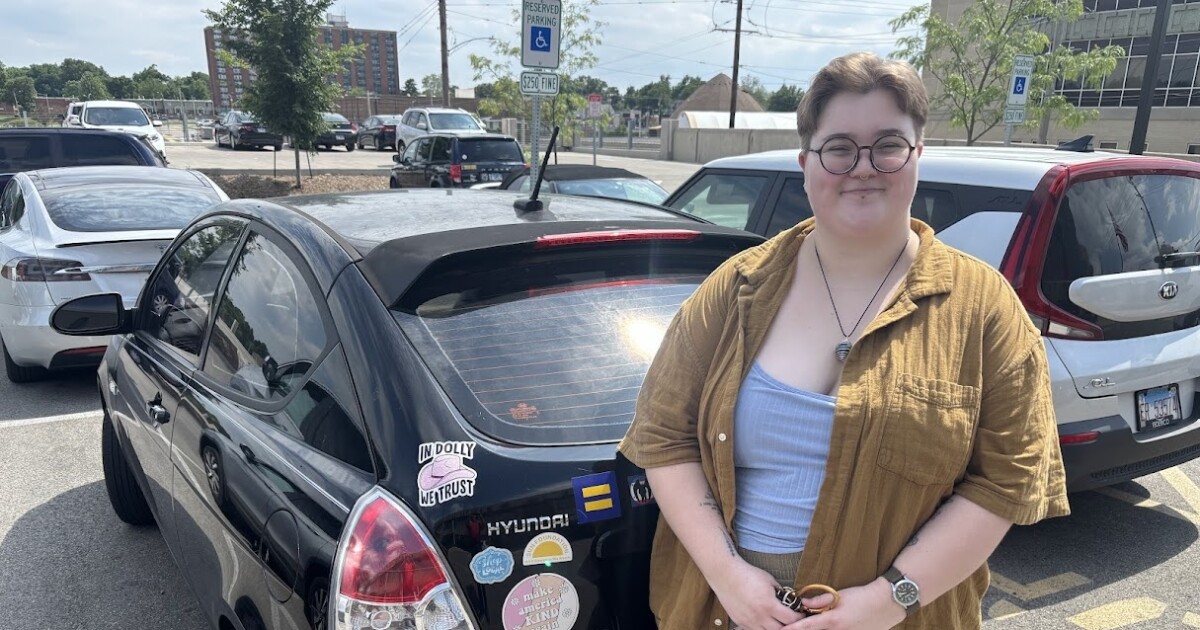
Central Illinois residents face tough compromises as gas prices pinch budgets
-

 Indiana18 minutes ago
21-year-old Indiana man shot, killed near Ford City Mall, Chicago officials say
-

 Iowa25 minutes ago
Staffing new Iowa prisons may be “impossible,” union president warns
-

 Kentucky40 minutes ago
Kentucky Lottery Cash Ball, Pick 3 Evening winning numbers for June 14, 2026
-
Louisiana43 minutes ago
Louisiana Lottery Pick 3, Pick 4 results for June 14, 2026

