Lifestyle
Haider Ackermann Leads Tom Ford Into a New Era


One evening in late January, Haider Ackermann, the new designer at Tom Ford, was tucked into a velvet banquette at La Reserve, the discreet, tryst-worthy hotel not far from the Élysée Palace in Paris. He was doing his best impression of Tom Ford, the man.
“Hello, Haider,” Mr. Ackermann purred, his voice dropping an octave and taking on a sultry tone. He was acting out a phone call he had received. “It’s Tom.” He paused to take a breath, as if he were tasting the air. “Call me,” he said, making it sound like “come here.”
Then, his voice back to normal, he added, “Of course I did.”
That was about eight months ago. It turned out Mr. Ford, who had sold the company that bears his name to Estée Lauder in 2022, had a proposition for Mr. Ackermann. After only a year, the new owners — Lauder and Ermenegildo Zegna — had decided that Mr. Ford’s immediate successor, Peter Hawkings, was not the right man for the brand.
To replace him, they had only one name on their list, “and that name was me,” Mr. Ackermann said. Though he had recently taken a job as creative director of the outdoor company Canada Goose and was in the midst of negotiations to become the designer of a big French fashion house, Mr. Ackermann started fantasizing about Tom Ford.
“I was immediately thinking about what I should do,” he said. “What I would do.”
Now, after multiple conversations with Mr. Ford, Mr. Ackermann is on the verge of introducing a new Tom Ford collection for men and women. The goal is to do what Mr. Hawkings could not and redefine Tom Ford for the post-Tom Ford era.
Mr. Ackermann has moved the fashion show to Paris from Milan and is in the process of moving the company headquarters from London. He has teased his new look on his friend Timothée Chalamet, who wore custom Tom Ford by Haider Ackermann on the red carpet at the Golden Globes in January: a skinny, rhinestone-speckled black suit with a sky blue polka-dot silk scarf slung around his neck. But he is still trying to find “the thread between what I call sensuality and what Mr. Ford called sexuality,” he said.
“The exercise is more difficult than I thought it would be,” Mr. Ackermann said, noting that he had not made a knee-length pencil skirt, a Tom Ford signature, in his entire career. But, he went on, “the man, the woman, they are not strangers to me. I know we will get together, but it takes time.”
Especially because it turns out this particular relationship is kind of a throuple.
The Ghost in the Machine
“The complexity of this story is that the house of Tom Ford is Mr. Ford,” Mr. Ackermann said. “There’s no other ambassador than Mr. Ford.” Tom Ford is his ghost in the machine.
Plenty of designers have taken over houses that still bear the names of the designers who founded them: Dior, Chanel, Givenchy, Gucci, Saint Laurent — these were all real people. That’s where the idea of brand “DNA” originates.
But at a certain point, a brand can become so divorced from its founder that the name is just an abstraction. Once enough other designers have inherited the title, it’s hard to remember that clients were once loyal to a specific silhouette or design. That opens up the possibility for new creative directors to make the house their own.
A house like Tom Ford is somewhat different. That’s because it’s only 20 years old, and, whatever his official status, Mr. Ford still seems very much around.
Founded by Mr. Ford and his business partner, Domenico De Sole, in 2005, Tom Ford-the-brand was a kind of test case: Would Mr. Ford, who had become a celebrity by remaking Gucci and creating Gucci Group (the seed of the conglomerate that eventually became Kering) before leaving in 2004 to make movies, have enough name recognition to build a label from scratch on the mere power of his stubbly, unbuttoned-shirt appeal?
The partners started by licensing fragrance (to Lauder), then eyewear and then expanded into men’s wear (with Zegna) and women’s wear. But while the beauty line became a smash hit, and the suiting did fine, the women’s line always seemed more of a red-carpet indulgence than an actual business.
Nevertheless, just over two years ago, after Mr. Ford’s husband died and he decided to focus on filmmaking (again), Estée Lauder paid $2.8 billion to buy the house, enlisting Zegna to handle the fashion side. Mr. Hawkings, who had worked with Mr. Ford for 25 years, was named designer. He was, Mr. Ford said in an Instagram post, “the perfect creative director.”
It did not take long, however, before rumor had it that Mr. Ford was not happy with comments Mr. Hawkings had made that seemed critical. The reception of Mr. Hawkings’s first collections was mixed, and Mr. Ford, in what seemed like a very public repudiation, wore Saint Laurent to last year’s Met Gala. By July, Mr. Hawkings was out. Soon after, Mr. Ford was on the phone with Mr. Ackermann.
“Mr. Ford and I, we had always been flirting with each other professionally,” Mr. Ackermann said. When Mr. Ackermann was fired from a previous job as creative director of Berluti in a designer reshuffle, Mr. Ford “wrote me such a beautiful letter,” Mr. Ackermann said. “Karl Lagerfeld was the first, and he was the second. It was so moving.”
Haider and the Big Ts
Mr. Ackermann, 52, is something of a fashion designer’s designer. A Colombian orphan who was adopted by a French couple, he spent his childhood moving around the world with his cartographer father before his parents settled in the Netherlands. He attended the Academy of Fine Arts in Antwerp but was kicked out before graduation. (If he did not feel he had anything to say to a teacher, he said, he just did not go to class.) He started his own namesake label in 2003.
His work was characterized by an extraordinary facility with color and decadent romance; he calls his aesthetic “bohemian dreamer.” At one point, Mr. Lagerfeld was enchanted enough to suggest that Mr. Ackermann succeed him at Chanel.
He spent two years at Berluti, but after a dispute with his backer, he lost control of his label and name. Though he has since regained ownership of that name, he was off the runway for a time, save for a much lauded one-off stint as a guest designer for Jean Paul Gaultier couture and the occasional custom order from his famous friends, Mr. Chalamet (whom he has been dressing since 2017) and Tilda Swinton. He calls them “the big Ts.”
As Ms. Swinton tells it, they met in 2004. He sent her a gown for the Cannes Film Festival, but he did not show up for the fittings because he had promised his partner at the time a trip to India. Later, he said, she called and invited him for a patisserie and asked him why he had not been there, and they bonded over the idea of putting relationships over business. She has worn his designs ever since, and they speak, she said, “several times a week.”
“He’s a proper romantic and proper punk, which is the best combination,” Ms. Swinton said, describing his work as “ancient and supersonic at the same time.”
Daphne Guinness, the artist and collector, said Mr. Ackermann was “a Saint Laurent for the space age.” At this point, she calculated that she had about 40 Ackermann pieces in her wardrobe, including the first four looks of his Gaultier couture collection.
During his time away from the runway, Mr. Ackermann did a collaboration with Fila. Then Canada Goose got in touch. “It was very interesting,” he said, going from “being this very niche designer to talking to thousands of people. I had never worn a parka before. Now, I love it. But somebody told me recently that it made my legs look very short.”
Mr. Ackermann has been converted to the joys of camping instead of clubbing. He is a famously good dancer — “incredible,” Ms. Swinton said — and his favorite haunt used to be a club in Rotterdam where, he said, “I was the only boy who didn’t have a shaved hair.” His last summer vacation, however, was spent in a tent in British Columbia. It’s good for perspective.
That’s when he realized that the “massive failure” of losing his own brand “brought me to today, where I understand what I do and why I’m doing it.”
Serving the House
It also brought him to Tom Ford. Gildo Zegna, the chief executive of the Ermenegildo Zegna Group (which also owns Zegna and Thom Browne), described meeting Mr. Ackermann in Paris. “We clicked,” Mr. Zegna said. “We had two long days together, walking around, sitting in the garden, and the social part, the friendly part, was as important as the business part.”
Well, that and the fact that, Mr. Zegna said, “he had the support of Tom Ford, which was very important.”
Which raises the question of what Mr. Ford was doing pulling the strings of a brand he supposedly had nothing to do with. Though Mr. De Sole is on the board of Zegna, Mr. Ford has had no official role in the company since the sale. He declined to comment for this piece, and Mr. Zegna was quick to de-emphasize his role, even as he acknowledged that Mr. Ackermann was Mr. Ford’s idea. But it further raises the stakes for Mr. Ackermann.
“The moment that you work for a house, you have to know your place,” Mr. Ackermann said. “It’s not about you. It’s about you at the service of the house.”
“I didn’t think it was going to be easy to take the role, knowing that somebody has been kicked out in a violent way,” he continued, referring to the departure of Mr. Hawkings. “I’ve been through it. I know what rejection can feel like.”
He is very careful to use the honorific “Mr.” when he speaks of Mr. Ford. (He calls him Tom when they meet in person, he said.) Even as he added: “If people are expecting hot sex, no, you will not see it from me. I don’t have that talent, to be very provocative or very avant-garde. I have different codes. I’m not there to continue exactly the past.”
No More Hot Sex
“We had an appointment in London for lunch one time,” Mr. Ackermann said, describing a meeting with Mr. Ford when they were in the wooing stages. “I arrived earlier, and when he entered the restaurant, he didn’t see me standing in the corner, so I could just observe him. The way he entered the room — the security, the audacity he had in his posture — everyone in the room was looking. It intrigued me. Perhaps, coming from a very Catholic background, I could not be this person. But perhaps, somewhere deep inside, I would like to be this person. To have that kind of freedom.”
That, Mr. Ackermann said, is what his Tom Ford man represents. As for the woman: “I don’t believe in big words like glamour and power. The power of women is not big shoulders. The power of women is what she’s got inside her, the fragility that she eventually wants to show.”
It was two weeks before the Paris show, and he was sitting in his atelier with a vase of white calla lilies behind him. “They are a little more pure than Black Orchid,” he said, referring to one of Mr. Ford’s signature perfumes. “But I think still poisonous and dangerous.” He had decided that his connection to the brand was more about his own memories than any specific silhouette.
“Like in 2012, I went to the Met Gala,” he said. “I was really nervous. I was like, ‘Oh my God, what am I going to wear?’ I’m too shy. But Anna Wintour said: ‘You’ve got no choice. You have to come.’”
So Mr. Ackermann went to a Tom Ford shop and bought a black suit with black dots. And when he was on the Met red carpet, he bumped into Mr. Ford. “He looked at me and said, ‘Oh, you look so smart,’” Mr. Ackermann said. “I was so happy. Then I realized he was not looking at me. He was looking at his suit. So obviously, you will see black dots in the show.”
There will also be knee-length skirts, though Mr. Ackermann was still “trying to find the right line that doesn’t feel too vulgar or too much secretary. I’m challenging myself for sure.”
Mr. Zegna said he believed growth would come for women’s wear, accessories and the European business. Because of the Hawkings issue, the owners are a year behind in their strategic plan. The turnaround has to happen “fast,” he said. “We have not invested to not get returns.”
That’s partly why Mr. Ackermann moved the show to Paris: to signal an ambition to compete at the highest level. Also, he said, “I don’t think Mr. Ford had the easiest time in Paris,” a reference to the period when Mr. Ford appointed himself head of Saint Laurent, to the public criticism of Pierre Bergé and Yves Saint Laurent.
“For me, it was a way to say thank you for trusting me, giving me the honor to continue your story,” Mr. Ackermann said. “I want the world to look at Tom Ford in Paris. The name deserves it, and you deserve it.”
Only 200 people are invited to the show, including Mr. Ford and Mr. De Sole. “I wanted to have something intimate,” Mr. Ackermann said. “I believe that’s what luxury is. It shouldn’t be accessible to everything and everyone. I think the world needs less of a circus. I want it to feel rich, and I want it to feel noble, but I also want it to be quiet. To command attention without screaming.”
Mr. Ackermann has scattered the collection with Easter eggs for Mr. Ford — “things,” he said, “where he will be the only one to see it.”
“If it goes wrong, it goes wrong,” he continued. “But I have no fear. If, after the 5th of March at 7:30, Mr. Ford can say, ‘I made the right choice,’ if I make Mr. Zegna and Mr. Lauder proud, then, OK. Let’s go for it. I’m going to a secret place with the team members and my friends, and we’re going to dance the hell out of it.”



Lonnie Bunch III is the 14th Secretary of the Smithsonian. He’s pictured above in September 2017.
J. Scott Applewhite/AP
hide caption
toggle caption
J. Scott Applewhite/AP
In a memo addressed to staffers sent Tuesday, the secretary of the Smithsonian, Lonnie G. Bunch III, defended the institution after the White House issued a 162-page report that characterizes the National Museum of American History as a place which has become “subject to institutional capture by a radical, activist ideology that is fundamentally opposed to telling the noble, honest story of the great country we know and love.”
In his email, which NPR has obtained, Bunch wrote in part: “While there will always be room for improvement, this report is not a fair characterization of the work and totality of the National Museum of American History. At the Smithsonian, our work is driven by scholarship, accuracy and an uncompromising commitment to tell the fullness of America’s story. As public servants and the keepers of this institution, we are charged with helping a nation find understanding, hope and clarity and as part of that duty, we are dedicated to excellence, reflection and growth.”

He continued: “We remain focused on what grounds us: a steadfast commitment to scholarship, nonpartisanship, independence, accuracy and integrity. For nearly 180 years, the Smithsonian has worked alongside partners across government — from the White House to Congress to our governing Board of Regents — guided by our enduring mission to increase and diffuse knowledge. That purpose remains: to pursue knowledge with rigor and to serve the American public with clarity and care.”
The White House report was issued on July 4 by the Domestic Policy Council under the title “Saving America’s Story: How Ideological Capture at the Smithsonian Institution’s National Museum of American History Erases Our Heritage.”

The council faults the National Museum of American History on a multitude of fronts, saying it underemphasized the Founding Fathers and early colonial and Revolutionary history; was not sufficiently celebratory of the country’s 250th anniversary; and that it engaged in “anti-white,” “illegal alien” and transgender activism.
It also accuses the museum of trying to “indoctrinate” teachers and students through its exhibitions, programming and teaching resources.
In the report, the council also specifically criticizes museum director Anthea Hartig, who has led the National Museum of American History since 2019 and is concurrently the president of the Organization of American Historians, calling her “an activist advancing an ideological agenda contradictory to the museum’s founding purpose of fostering patriotism.”

The Trump administration has made the Smithsonian museums one of its primary targets in its efforts to reshape cultural narratives to align with its viewpoints. In August 2025, the White House requested a “comprehensive internal review” of eight Smithsonian museums, including the National Museum of American History, following an executive order issued by President Trump in March 2025 in which he called for the removal of “improper ideology” from the Smithsonian’s offerings.
According to the Smithsonian’s charter, all of its 21 museums, 14 education and research centers, and the National Zoo are meant to be run independently of the federal government. The Smithsonian is overseen by Bunch and a board of regents, which includes Vice President Vance, Supreme Court Chief Justice John Roberts and other members appointed by Congress.
In an interview with NBC’s Meet the Press on Sunday, Bunch spoke about the Smithsonian’s 250th anniversary special exhibition at the Smithsonian Castle, which is called “American Aspirations.”
He told NBC: “It’s really important for people to understand that America is much an ideal as it is a place, that it’s a series of aspirations that have really shaped who this country is. And so for me, what is so powerful is to say, ‘Let us honor the words of Thomas Jefferson and the founders, but let us use those to challenge us to be better.’”
Jennifer Vanasco edited this story.

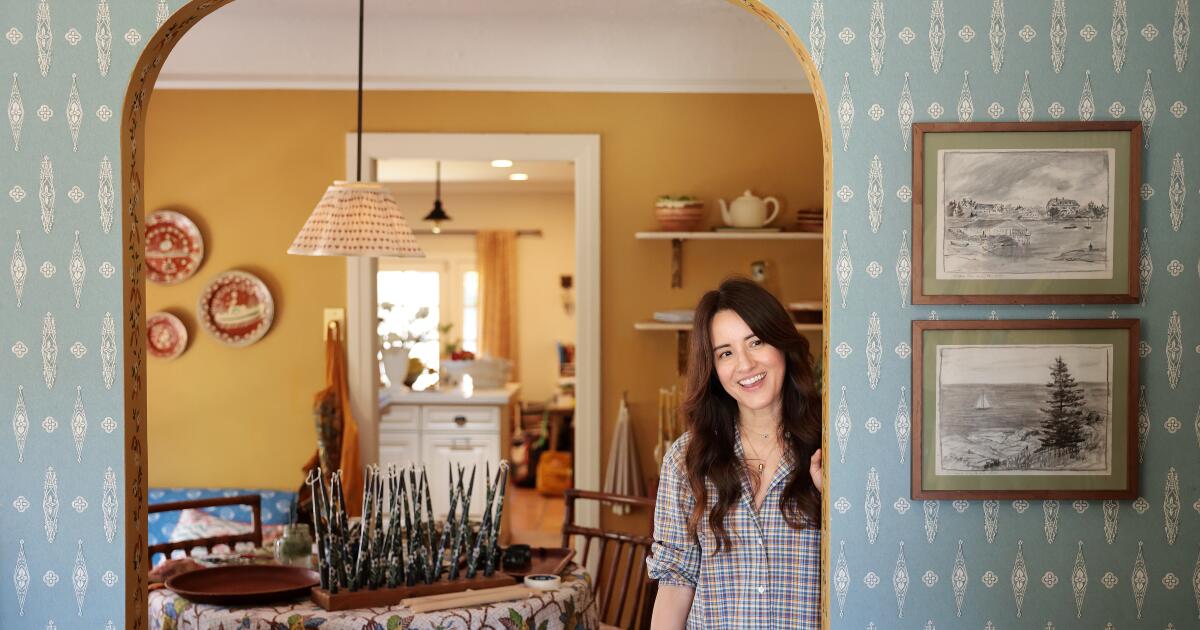
It was after the death of her son, Laith, that Esme Saleh decided to become a folk artist.
She had always been creative, experimenting with watercolors and learning to sew and embroider at a young age.
“I had a creative inkling,” she said, “but I never pursued it.”
Everything changed on Aug. 17, 2013.
In this series, we highlight independent makers and artists, from glassblowers to fiber artists, who are creating original products in and around Los Angeles.
When Saleh was nine months pregnant, she woke up with stomach pains and presumed she was in labor. She and her husband, Nasim, immediately went to the hospital, where doctors checked her and put the baby on a heart monitor. Saleh’s blood pressure was high, however, and the baby’s heart rate kept dropping. After about an hour, his heartbeat stopped. Doctors rushed her in for an emergency C-section, but it was too late. Laith did not survive.
Saleh lost a tremendous amount of blood and developed postpartum HELLP syndrome, a dangerous form of preeclampsia, but doctors were able to stabilize her.
When she woke up, the first thing she asked was, “How’s my baby?”

After losing her son in 2013, Esme Saleh left her job as a television producer. Since then, she has sold her hand-painted candles to local designers in Los Angeles and to LVMH in Paris.
“Aug. 17, 2013, was the most difficult day of my life, and Aug. 22 was the second most difficult, the day we drove home with an empty car seat,” she said of her and her husband’s new reality.
They named their son Laith Finn Saleh.
“His first name means ‘lion’ in Arabic. His middle name is an ode to Huckleberry Finn — sharp wit, kind heart, strong moral compass — all the attributes he’s imparted on us in spirit,” said Saleh, 45.
After such a devastating loss, she found it difficult to trust the world again. “It was hard to trust anything,” she said. “The medical system. Myself. It made me realize the fragility of bringing anything to life. We take so much for granted.”
So after years of working as a television producer, Saleh left broadcast journalism and leaned into her creative spirit.
She grew up in San Diego. Her mother was raised on a farm in Mexico, and her father moved from Tijuana to Los Angeles to be near her mother, who started working for a family in Sherman Oaks at 16. They eventually settled in San Diego, where Saleh’s father, now a church deacon, worked as a car salesman.


“The word Mystic has also become a driving force of what this journey means to me,” Saleh says. “A magical, otherworldly journey that has led me to some beautiful friendships, projects and unlimited well of curiosity. When I paint each pair of candles, it feels like I’m imparting a piece of that magic.”
“He always wanted to be a weatherman on TV,” she said, explaining how he hoped to get his big break on television by doing a weather report from the car lot.
Saleh wanted to be a broadcast journalist as her father had. After graduating from San Diego State, she interned in the sports department at CBS affiliate KFMB-TV although she didn’t know much about sports. She enjoyed sharing information with people, learned how to write plays of the week and felt she had found the right career.
But during a summer class at Mesa College, she started to think journalism might not be for her.


Saleh’s home is filled with her artwork. “My home expresses a lot of the things that I do,” she says. “If it works here, then I feel like I can put it out in the world.”
“I’m an empath — a sensitive soul — so when I was reading news about death and destruction, my eyes could not lie,” she said. Her professor told her, “This may not be your thing.” But when she arranged flowers on camera, she really came alive. She decided to work behind the scenes as a producer.
Her professor helped her get her first network news job in 2003, and she moved to Los Angeles, working on hard news and entertainment coverage.
After losing Laith a decade later, she couldn’t keep doing red-carpet interviews and acting like everything was fine. “It all felt so different, superficial and hard,” she said. “I felt like there was a bigger purpose out there for me. It’s in the small things that we find the big things.”
She started by painting folk art-inspired invitations for a friend’s baby shower. She painted delicate flowers, oranges and leaves on glass, leather and even lampshades. She created a logo. “I was just trying to say yes to things that were really scary,” she said. “Laith gave me the courage to do that.”

“I was just trying to get out of hole,” Saleh says of taking up painting after her son died.
Her first son, she said, became “a catalyst for painting.”
Then, at the first Thanksgiving during the COVID-19 pandemic when people could gather again, she had a light-bulb moment. “I was setting the table and didn’t have flowers or anything to add to decorate, so I thought, ‘I have these candles. I’m going to paint them and make them fancy,’ ” she said.
Her guests were impressed.
As time went on, painting taper candles helped her find joy again, and others noticed too.
“The one thing I hear when people pick up a pair of my candles is, ‘This makes me so happy. It makes me feel like there’s life here,’ ” she said.
1

2

3

1. Saleh sometimes leads painting workshops where participants can decorate items like ornaments and lampshades.
2. Leather napkin rings Saleh has painted for Nathan Turner. 3. Saleh’s hand-painted candles retail for approximately $42 to $50.
One of the hardest parts of losing a child “is that you’re not just grieving the person, you’re grieving the future you imagined with them,” said Chicago-based grief specialist Carla Harvey. “A lifetime of love suddenly has nowhere to go. Creating art doesn’t erase grief, but it can become a way to carry it.”
Saleh created her brand Mystic by Esme in 2021, but it took her some time before she could gather the courage to try to sell them.
When she brought a shoebox full of samples to Nickey Kehoe, the L.A. store agreed to carry her candles. “I was beside myself,” Saleh said.
“Her candles were absolutely beautiful, and she had a fantastic spirit that made selling them a no-brainer,” said interior designer Todd Nickey, co-founder of Nickey Kehoe.

Saleh gets a surprise kiss from her dog Olive while painting candles at her dining room table.
Saleh viewed her new side project as a way to earn extra money for piano lessons for her 11-year-old son Linus, who is an entrepreneur like his mother. “I felt proud painting the candles while he was in lessons in the next room,” she said. “It became this circular economy, and it led to bigger opportunities for me.”
Last year, luxury conglomerate LVMH commissioned Saleh to paint 465 pairs of candles, or 930 candles in total, for its Chaumet jewelry brand. The collection was unveiled at an elaborate event at the Abbaye des Vaux de Cernay, just outside Paris.
“It was fun,” Saleh said about the process, which took six months from conception to delivery. “I felt like I was dressing my candles up for a party.”
Always a hard worker, which she attributes to being a first-generation child of immigrant parents, Saleh has now created a candle collection for Pierce and Ward in Los Feliz, leather napkin holders for interior designer Nathan Turner and pomegranate wrapping paper for Olive Ateliers. The candles retail between $42 to $50 for a pair, and recently, she developed a handsome pewter candle shaver that will be released in the winter.

Her dining room can sometimes feel like “an assembly line,” Saleh says.

Saleh holds a pair of candles she has embellished with florals.
Occasionally, she leads painting workshops, and she loves helping others tap into their creativity. The most meaningful one for her was an ornament workshop attended by several victims of the 2025 Los Angeles wildfires. “Without saying anything, we understood each other,” she said. “I understood that they were trying to create memories.”
Saleh knows what it means for things not to last — “impermanence,” she calls it — whether it is homes, candles or life itself.
She paints every day in the art-filled dining room of her home (unless it’s Little League season), surrounded by her family, candles and her two dogs, Lennon and Olive. ”Painting is like meditation,” she said. “You can sit in your dining room and tune everything out and just be in the moment.”

Even the family’s summer bucket list receives an artistic flourish.

An arch inside Saleh’s home receives a personalized touch.
She knows painting candles isn’t new, but she believes her motivation and the care she puts into each candle makes them special beyond their looks.
She has learned to look at the world that way, that painting in her dining room has offered her healing and joy, that she can trust herself and her body, that continuing to be inspired by her two boys — “one in spirit and the other here on Earth” — means that Laith will always be with her.
Many people think healing means moving on, said grief specialist Harvey, but “it’s really about finding ways to move forward while keeping the people we love woven into our lives. That’s what I see in her candles, not an ending, but an ongoing relationship with her son.”
“I feel like my son is channeling through this medium,” Saleh said, her voice breaking as she painted a taper. “He’s whispering to me, ‘Mom, this is your path.’ That has been my driving force. We’re going to grow this together.”
Lifestyle
Terry Tempest Williams on why women with big ideas get labeled ‘crazy’ : Wild Card with Rachel Martin
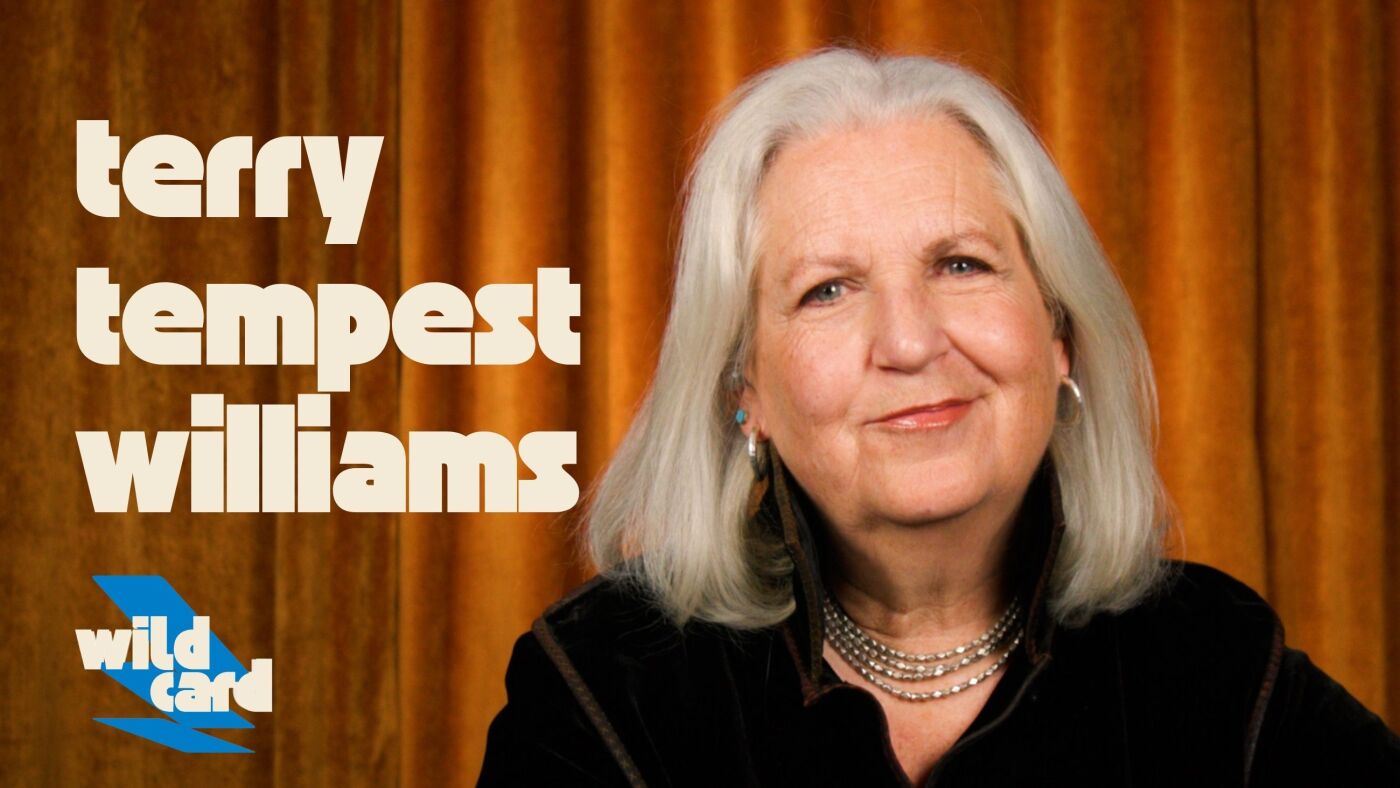
A note from Wild Card host Rachel Martin: I met Terry Tempest Williams about 25 years ago at a writer’s conference in Yosemite Valley. I was a young reporter who was there to do a story about how literature was addressing climate change and she made such a huge impression on me. I had never heard someone talk about the natural world the way Terry did and she had a spiritual depth I hadn’t encountered in my life at that point.
To this day, Terry’s writing always reorients me towards what is good, what is beautiful, and what is true. Her newest book is called “The Glorians.”
-

 Iowa8 seconds ago
McKeever’s 7′3″ frame made Iowa the ‘obvious choice’ in the transfer portal
-
 Kansas7 minutes ago
Kansas City to reduce bus transit frequency, extended hours after World Cup matches end
-

 Kentucky10 minutes ago
Public Health Student Hollie Hagan found her calling in rural Kentucky
-

 Louisiana15 minutes ago
Inside the lab at the heart of Louisiana’s mosquito-borne disease prevention network
-
 Maine22 minutes ago
Meet 16 obscure Maine Democrats shaping Graham Platner’s replacement
-

 Maryland25 minutes ago
Justice Department sues Maryland over immigration policies
-

 Michigan30 minutes ago
How two Michigan stamping plants power Stellantis turnaround plan
-

 Massachusetts37 minutes ago
3 hospitalized after vehicle crashes into Danvers business

