Connect with us

News

Trump envoy to meet Venezuelan leader Maduro on migrant deal

Published

on

Trump envoy to meet Venezuelan leader Maduro on migrant deal

Unlock the White House Watch newsletter for free

Donald Trump’s crisis negotiator has flown to Venezuela to discuss a deal on migrants with its authoritarian leader Nicolás Maduro, sparking alarm among the country’s embattled opposition.

Richard Grenell, the US president’s envoy for special missions, arrived in Caracas on Friday to press Maduro to potentially accept thousands of Venezuelan deportees “without condition”, according to US officials.

Grenell’s visit comes just before Secretary of State Marco Rubio embarks on his own trip to Latin America aimed at demonstrating renewed US interest in the western hemisphere.

Advertisement

Grenell, a close confidant of Trump’s, made the trip after Venezuela’s authoritarian Maduro signalled his willingness to talk with Trump’s team, sources said. Russia, one of Maduro’s backers, sent a government plane to Caracas that landed 15 minutes before Grenell’s arrival on Friday.

“He is there on a special mission,” said Mauricio Claver-Carone, the US state department special envoy for Latin America. “President Trump expects Nicolás Maduro to take back all of the Venezuelan criminals and gang members that have been exported to US, and to do so unequivocally and without condition.”

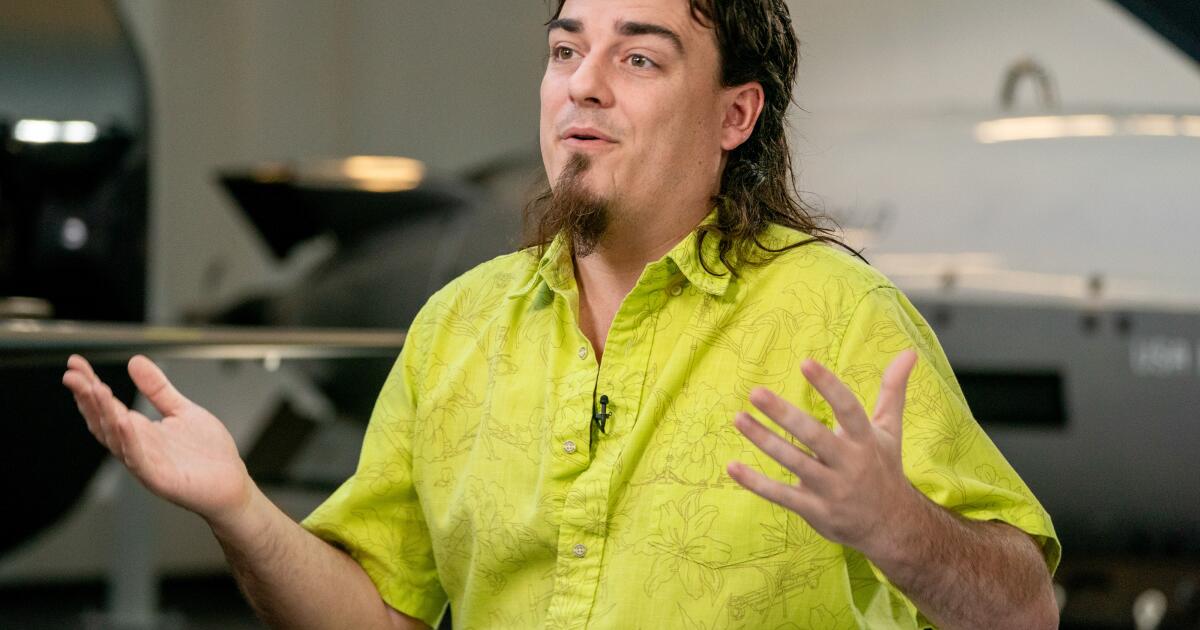
Richard Grenell is a close confidant of Donald Trump’s © Rebecca Noble/Getty Images

Details of the discussions with Washington remain unclear. But a deal could involve an easing of US sanctions on Venezuela and dropping a US reward offered for Maduro’s capture in return for Caracas taking back thousands of Venezuela migrants from the US, shipping more oil to American Gulf Coast refineries and releasing US nationals held in Caracas.

Maduro, a close ally of Russia and Iran, has been shunned by the West and much of Latin America after claiming victory in a presidential election last July, whose result was widely regarded as fraudulent. The Biden administration and the European parliament recognised the main opposition candidate, Edmundo González, as “president-elect”.

Rubio and Claver-Carone are both Cuban-American hawks who have strongly opposed a deal with Maduro in the past. However it is not clear whether their view will prevail with Trump.

Advertisement

Claver-Carone stressed that the US demands were not part of a diplomatic haggle and said Maduro would be pressed to release US “hostages” in the country. “This is not a quid pro quo, this is not a negotiation in exchange for anything. President Trump himself has made very clear, we don’t need Venezuelan oil,” he said.

If Maduro did not heed Grenell’s demands and the proposal he offered, “there will be consequences”, said Claver-Carone, who insisted that the Trump administration remained committed to democratic change in Venezuela.

It is unclear how many US citizens are being held in Venezuela, though officials there have mentioned at least nine in public statements, with most accused by Maduro’s regime of terrorism and coup-plotting.

Grenell tweeted on January 20 that “diplomacy is back”, saying he had held “multiple conversations with Venezuelan officials” and that “talking is a tactic”. He held a private meeting with Maduro’s top political operator Jorge Rodríguez in Mexico in 2020 in the final days of the first Trump administration.

González this week urged Trump not to cut a deal with Maduro and the Venezuelan opposition has been alarmed by meetings it held with him before Grenell travelled to Caracas.

Advertisement

“Grenell’s nonchalance and lack of concern for democracy and human rights has left everyone very concerned,” said an opposition source. The opposition fears that business interests will lobby Trump to cut a deal giving the US more access to Venezuela’s oil reserves, the world’s biggest.

Trump’s own position on Venezuela is unclear. He has said little about the country during the election campaign or since taking office, beyond accusing Maduro of ruining the country and saying on January 20 that “we don’t have to buy their oil” — remarks interpreted by some as a negotiating tactic to put pressure on Maduro.

A former official who worked in Trump’s first administration said the US president was mainly concerned about migration. “He’s just revoked temporary protected status for 600,000 Venezuelan (migrants) in the US and there are easily twice that number there illegally,” the former official said. “Trump has got to get rid of them all from the US.”

During the first Trump administration, the president imposed “maximum pressure” sanctions on Maduro’s government and recognised then-opposition leader Juan Guaidó as Venezuela’s legitimate president. But the strategy failed to dislodge Maduro, who remained in power with the help of Russia, China and Iran, while Guaidó eventually fled to Florida.

“Trump regards the opposition as losers,” the former official said. “He gave them a lot and they failed. There is no way he is going back down that road again.”

Advertisement

News

Video: Minnesota Governor Condemns ICE Shooting

Published

on

Video: Minnesota Governor Condemns ICE Shooting

new video loaded: Minnesota Governor Condemns ICE Shooting

transcript

transcript

Minnesota Governor Condemns ICE Shooting

Governor Tim Walz of Minnesota slammed the fatal shooting of a woman by an immigration agent. President Trump said that the agents had acted in self-defense.

This morning, we learned that an ICE officer shot and killed someone in Minneapolis. We have been warning for weeks that the Trump administration’s dangerous, sensationalized operations are a threat to our public safety, that someone was going to get hurt. Just yesterday, I said exactly that. What we’re seeing is the consequences of governance designed to generate fear, headlines and conflict. It’s governing by reality TV. And today, that recklessness cost someone their life.

Advertisement
Governor Tim Walz of Minnesota slammed the fatal shooting of a woman by an immigration agent. President Trump said that the agents had acted in self-defense.

By Jiawei Wang

January 8, 2026

Continue Reading

News

U.S. to exit 66 international organizations in further retreat from global cooperation

Published

on

U.S. to exit 66 international organizations in further retreat from global cooperation

The symbol of the United Nations is displayed outside the Secretariat Building on Feb. 28, 2022, at United Nations Headquarters.

John Minchillo/AP


hide caption

toggle caption

Advertisement

John Minchillo/AP

WASHINGTON — The Trump administration will withdraw from dozens of international organizations, including the U.N.’s population agency and the U.N. treaty that establishes international climate negotiations, as the U.S. further retreats from global cooperation.

President Trump on Wednesday signed an executive order suspending U.S. support for 66 organizations, agencies, and commissions, following his administration’s review of participation in and funding for all international organizations, including those affiliated with the United Nations, according to a White House release.

Most of the targets are U.N.-related agencies, commissions and advisory panels that focus on climate, labor, migration and other issues the Trump administration has categorized as catering to diversity and “woke” initiatives. Other non-U.N. organizations on the list include the Partnership for Atlantic Cooperation, the International Institute for Democracy and Electoral Assistance and Global Counterterrorism Forum.

Advertisement

“The Trump Administration has found these institutions to be redundant in their scope, mismanaged, unnecessary, wasteful, poorly run, captured by the interests of actors advancing their own agendas contrary to our own, or a threat to our nation’s sovereignty, freedoms, and general prosperity,” Secretary of State Marco Rubio said in a statement.

Trump’s decision to withdraw from organizations that foster cooperation among nations to address global challenges comes as his administration has launched military efforts or issued threats that have rattled allies and adversaries alike, including capturing autocratic Venezuelan leader Nicolás Maduro and indicating an intention to take over Greenland.

U.S. builds on pattern of exiting global agencies

The administration previously suspended support from agencies like the World Health Organization, the U.N. agency for Palestinian refugees known as UNRWA, the U.N. Human Rights Council and the U.N. cultural agency UNESCO. It has taken a larger, a-la-carte approach to paying its dues to the world body, picking which operations and agencies it believes align with Trump’s agenda and those that no longer serve U.S. interests.

“I think what we’re seeing is the crystallization of the U.S. approach to multilateralism, which is ‘my way or the highway,’” said Daniel Forti, head of U.N. affairs at the International Crisis Group. “It’s a very clear vision of wanting international cooperation on Washington’s own terms.”

It has marked a major shift from how previous administrations — both Republican and Democratic — have dealt with the U.N., and it has forced the world body, already undergoing its own internal reckoning, to respond with a series of staffing and program cuts.

Advertisement

Many independent nongovernmental agencies — some that work with the United Nations — have cited many project closures because of the U.S. administration’s decision last year to slash foreign assistance through the U.S. Agency for International Development, or USAID.

Despite the massive shift, the U.S. officials, including Trump himself, say they have seen the potential of the U.N. and want to instead focus taxpayer money on expanding American influence in many of the standard-setting U.N. initiatives where there is competition with China, like the International Telecommunications Union, the International Maritime Organization and the International Labor Organization.

The latest global organizations the U.S. is departing

The withdrawal from the U.N. Framework Convention on Climate Change, or UNFCCC, is the latest effort by Trump and his allies to distance the U.S. from international organizations focused on climate and addressing climate change.

UNFCC, the 1992 agreement between 198 countries to financially support climate change activities in developing countries, is the underlying treaty for the landmark Paris climate agreement. Trump — who calls climate change a hoax — withdrew from that agreement soon after reclaiming the White House.

Gina McCarthy, former White House National Climate Adviser, said being the only country in the world not part of the treaty is “shortsighted, embarrassing, and a foolish decision.”

Advertisement

“This Administration is forfeiting our country’s ability to influence trillions of dollars in investments, policies, and decisions that would have advanced our economy and protected us from costly disasters wreaking havoc on our country,” McCarthy, who co-chairs America Is All In, a coalition of climate-concerned U.S. states and cities, said in a statement.

Mainstream scientists say climate change is behind increasing instances of deadly and costly extreme weather, including flooding, droughts, wildfires, intense rainfall events and dangerous heat.

The U.S. withdrawal could hinder global efforts to curb greenhouse gases because it “gives other nations the excuse to delay their own actions and commitments,” said Stanford University climate scientist Rob Jackson, who chairs the Global Carbon Project, a group of scientists that tracks countries’ carbon dioxide emissions.

It will also be difficult to achieve meaningful progress on climate change without cooperation from the U.S., one of the world’s largest emitters and economies, experts said.

The U.N. Population Fund, the agency providing sexual and reproductive health worldwide, has long been a lightning rod for Republican opposition, and Trump cut funding for it during his first term. He and other GOP officials have accused the agency of participating in “coercive abortion practices” in countries like China.

Advertisement

When President Biden took office in January 2021, he restored funding for the agency. A State Department review conducted the following year found no evidence to support GOP claims.

Other organizations and agencies that the U.S. will quit include the Carbon Free Energy Compact, the United Nations University, the International Cotton Advisory Committee, the International Tropical Timber Organization, the Partnership for Atlantic Cooperation, the Pan-American Institute for Geography and History, the International Federation of Arts Councils and Culture Agencies and the International Lead and Zinc Study Group.

Continue Reading

News

GOP gearing up to face tough midterms. And, Pentagon reviews women in ground combat

Published

on

GOP gearing up to face tough midterms. And, Pentagon reviews women in ground combat

Good morning. You’re reading the Up First newsletter. Subscribe here to get it delivered to your inbox, and listen to the Up First podcast for all the news you need to start your day.

Today’s top stories

President Trump continues to suggest that the U.S. will have a lengthy and active role in Venezuela after capturing the ousted president Nicolás Maduro. Trump has proposed several plans for Venezuela’s future government and economy. In those proposals, U.S. companies are expected to play a key role.

President Trump dances as he departs after speaking during a House Republican retreat at The John F. Kennedy Center for the Performing Arts on Jan. 6, 2026, in Washington, DC. House Republicans will discuss their 2026 legislative agenda at the meeting.

Alex Wong/Getty Images


hide caption

Advertisement

toggle caption

Alex Wong/Getty Images

  • 🎧 Trump and his aides are unclear about the future of Venezuela, NPR’s Franco Ordoñez tells Up First. When the president says the U.S. will run the country, many eyes are on Stephen Miller, Trump’s deputy chief of staff for policy. Miller, known for his stringent immigration policies, is one of the U.S. officials overseeing Venezuela. Ordoñez also says Miller has more recently described ruling over the hemisphere by force.
  • ➡️ Last night, Trump posted on social media that Venezuela will turn over between 30 million and 50 million barrels of sanctioned oil to the U.S. While seizing current oil production is one thing, overhauling Venezuela’s oil industry requires a far greater effort. Here’s why.

While meeting with House Republicans yesterday, Trump attempted to offer his party a roadmap to victory in this year’s midterm elections. The president acknowledged the possibility of his party losing the majority in the House this year. Trump said in his speech that the president’s party often loses the midterms.

  • 🎧 NPR’s Domenico Montanaro says that while it’s true the midterms are hard on the president’s party, it is even worse when a president’s approval rating is below 50%. Trump is facing his lowest second-term approval ratings, largely due to the rising cost of living. During yesterday’s speech, the president didn’t offer much on the topic. When he did discuss the economy, it was about how the stock market is at historic highs. He also touted his tariffs, which have actively raised prices on many things. People have informed pollsters for months that they believe the president’s policies have harmed the economy. Montanaro says one area where Trump and Republicans could take action is legislation on health care.

The Pentagon is preparing a six-month review to evaluate what it calls the military “effectiveness” of women serving in ground combat roles. Undersecretary Anthony Tata requested that the Army and Marine Corps submit data on the readiness, training, performance, casualties and command climate of ground combat units and personnel by Jan. 15. The effort aims to determine how gender integration has influenced operational success over the last decade.

Special series

j6_pod_1_wide.png

Trump has tried to bury the truth of what happened on Jan. 6, 2021. NPR built a visual archive of the attack on the Capitol, showing exactly what happened through the lenses of the people who were there. “Chapter 3: Assault on the Capitol,” lays out the timeline of key moments throughout the day as the riot unfolded.

Advertisement

On the morning of Jan. 6, 2021, Trump held a “Save America” rally at the Ellipse, a site near the White House and U.S. Capitol. Multiple speakers promoted voter fraud myths and urged Vice President Mike Pence to overturn the election. Meanwhile, a group of 200 Proud Boys marched toward the Capitol. Before Trump’s speech ended, violence erupted on Capitol grounds. The Jan. 6 attack on the Capitol “was the most videotaped crime in American history, if not world history,” according to Greg Rosen, a former federal prosecutor who led the Justice Department unit that investigated the riot. But conspiracy theories still falsely label the assault a “normal tourist visit.” NPR’s review of thousands of court videos shows rioters assaulting officers with weapons, calling for executions and looting the building. These videos show the exact timing of events as they occurred. Corresponding maps show the locations where the conflict took place.

To learn more, explore NPR’s database of federal criminal cases from Jan. 6. You can also see more of NPR’s reporting on the topic.

Picture show

The tin soldier, a marionette puppet made by Nicolas Coppola and the main character in "The Steadfast Tin Soldier" show at Puppetworks.

The tin soldier, a marionette puppet made by Nicolas Coppola and the main character in “The Steadfast Tin Soldier” show at Puppetworks.

Anh Nguyen for NPR


hide caption

Advertisement

toggle caption

Anh Nguyen for NPR

For more than 30 years, Puppetworks has staged classics like The Tortoise and the Hare, Pinocchio, Aladdin and more in Brooklyn’s Park Slope neighborhood. Every weekend, children gather on foam mats and colored blocks to watch wooden renditions of the shows. The company’s founder and artistic director, 90-year-old Nicolas Coppola, has been a professional puppeteer since 1954. The theater has puppets of all types, including marionettes, swing, hand, and rod. They transport attendees back to the 1980s, when most of these puppets were made. Over the years, Coppola has updated the show’s repertoire to better meet the cultural moment. Step inside his world with these images.

3 things to know before you go

An overhead view of Ascot Hills Park in Los Angeles, CA. A 10,000 square foot patch of green stands out against a dirt path and brown weeds.

This tiny forest in Los Angeles, CA is one of many micro-forests around the world offering green space and contributing to local biodiversity.

Demian Willette/Loyola Marymount University

Advertisement


hide caption

toggle caption

Demian Willette/Loyola Marymount University

Advertisement
  1. Scientists are establishing micro-forests in big cities to boost biodiversity and rejuvenate compromised land. Short Wave producer Rachel Carlson visited California’s largest micro-forest. Tune in to hear her account of the experience.
  2. The Hungarian arthouse director Béla Tarr has died at 70. He’s best known for his bleak, existential, and challenging films, including Sátántangó.
  3. While we often associate serendipity with luck or happy accidents, its origin suggests it’s more than just happenstance. This week, NPR’s Word of the Week explores the historical impact of serendipity and offers tips on how to cultivate it.

This newsletter was edited by Suzanne Nuyen.

Continue Reading

Trending