Miami, FL
Miami Is Nearing the Finish Line for Its New 10-Mile Park


Editor’s note: This story is part of Governing’s ongoing Q&A series “In the Weeds.” The series features experts whose knowledge can provide new insights and solutions for state and local government officials across the country. Have an expert you think should be featured? Email Web Editor Natalie Delgadillo at ndelgadillo@governing.com.
- The Underline, envisioned as both transportation infrastructure and a recreational amenity, is expected to be complete next year.
- The project has been in development for more than a decade.
- Miami-Dade County’s transportation chief recently left to lead Friends of the Underline, a nonprofit group supporting the effort.
For the last decade, Miami-Dade County has been working to turn a 10-mile bike path beneath a Metrorail track into a linear park. The project is part of a new generation of linear parks that have been started or revived in American cities during the last few decades. The Underline is partly inspired by the High Line in New York — and partly designed by the same landscape architecture firm that worked on that project, Field Operations. It shares some of the same features, like public-private partnerships and the backing of a “Friends Of” nonprofit group that strives to provide most of the capital and operating budget for the effort. Essentially a multi-use path studded with parks, recreational space, playgrounds, plantings and stormwater infrastructure, the Underline is expected to be complete next year.
Recently, Friends of the Underline hired Eulois Cleckley, the former director of Miami-Dade County’s Department of Transportation and Public Works, as its new CEO. Cleckley was responsible for building and operating transportation and transit infrastructure for the county — including some aspects of the Underline project itself. He previously held transportation positions in Denver, Houston, and Washington, D.C., and served as president of the Conference of Minority Transportation Officials. Cleckley recently spoke with Governing about multimodal transportation infrastructure, what the Underline has learned from other linear parks, and building financial support for the construction and maintenance of the project. The interview has been edited for length and clarity.
Governing: What was the appeal of taking on this role with the Underline? How does it intersect with the transportation work you were doing prior to this?
Eulois Cleckley: I consider myself a leader in the transportation space. My whole career has been about developing and building and implementing projects to make people’s lives better in metropolitan areas and cities. From the very inception, from when I came down on a visit to Miami before I took the role with the county, one of the very first projects I saw was the Underline, which I wasn’t familiar with coming from Denver. I was blown away by what I saw, and that was just the half-mile segment that was open in Brickell. What I saw was the best in city building, where you are building out spaces that not only provide great mobility options for people, but it’s a space that can be activated and be an amenity that people can use in their everyday lives. I took the job with the county, and my department at the time was the one actually building some of the phases of the Underline when the opportunity with Friends of the Underline became available to me. It allows me to take my expertise and experience and help this project to become something that is first class and a global destination for visitors and residents to enjoy. To me it was a no-brainer. I tell people that there are over 2,000 transit agencies in the U.S. and there’s only one Underline. To be a part of that was really a great honor.
What do you think people in Miami should be most excited about? What goals are you trying to accomplish with this project and what public benefits do you expect to deliver?
There’s several goals. First and foremost, the fact that we’re building and redeveloping the unutilized space underneath an existing rail corridor really lends itself to developing out a full-fledged multimodal corridor. There’s very few of these types of corridors where you have mass transit, you have walking and bike paths for 10 miles. That’s what we’re going to have.
The High Line in New York is a great project, but it’s a shorter distance, about a mile and a half. The BeltLine in Atlanta is a fantastic project but they’re still working on the transit component. When we are done in 2026 with all of the phases of the project, we’ll be a fully comprehensive multimodal corridor that people can walk, bike and take transit and experience the Underline as a whole. Also, because we have 112,000 residents within half a mile and nearly 20,000 businesses, this is a true community asset.

Courtesy Friends of the Underline
Everything from the design to how we’re programming a lot of our activities are community-based and purpose-driven. We have these other elements across this space that we’re building out that people may not be familiar with from a sustainability standpoint. We have these dense pockets of plantings called microforests. We just installed the first microforest in the state of Florida. It’s not only a way to encourage nature but it’s creating a sustainable environment. We’re hoping to be at the leading edge of doing something innovative that hopefully can go to scale and be installed throughout the length of the Underline, but also other jurisdictions can take them on. We have bioswales that do a great job of stormwater management in capturing and filtering water and preventing flooding in and around the walking and bike paths of the Underline.
It’s also important to note that yes, we are building out a safe walk and bike path, but this is an economic development project. Businesses have the opportunity to consider the Underline as a venue for food or beverage or other commerce. We’re looking at opportunities to provide great entertainment and great programming for people to enjoy this place.
The High Line obviously was a very successful project but it accelerated gentrification in the area where it was built. The BeltLine has been wrapped up in similar debates about gentrification but also questions about what its overall use is, what kind of transit infrastructure to put there and things like that. What have you learned from other big linear park projects?
For both the High Line and the BeltLine, although they might have their challenges, every project has its challenges. But there’s overwhelming support and positivity for both of those projects and the same thing here for the Underline. Our takeaways from those projects are, one, the way you can galvanize a community and provide support to not only appreciate the project, with respect to the High Line, but also to support it financially and keep it as something that is a sustainable project. Those approaches and methods to clearly articulate the benefit of that particular project really lend themselves to having a strong, long-term public-private partnership. That’s something we’re trying to build here for the Underline.
The BeltLine is a fantastic project. It’s interesting that the reuse of that corridor has generated a considerable amount of developments, but if you talk to residents or individuals about the Atlanta BeltLine they consider that whole project as a neighborhood in itself. There’s an extreme focus on ensuring that there’s community involvement and community engagement at every step of the way for the BeltLine project. I know they’ve also figured out ways to provide affordable housing along the BeltLine as well as integrating small businesses and minority-owned businesses and the like into a lot of their programming.
Even though there might be challenges that exist when you’re developing these spaces, ultimately the communities deserve it. Transportation infrastructure is more than just concrete and steel. As the former USDOT Secretary Rodney Slater said one time, it’s about building a community.
There’s been a lot of debate and discussion around the future of transit and transportation infrastructure in Miami generally. How do you see the Underline intersecting with that discussion?
Miami and all of South Florida is a place that people want to move to. We have an influx of residents and businesses. We need to ensure we’re building out the infrastructure to be able to support that increase. From my perspective, the Underline feeds right into the type of infrastructure that will be required now and in the future to be able to move people in a multitude of ways, outside of just relying on their individual cars. When we are fully built out, we anticipate having over 8,000 visitors daily to the Underline. Those individuals are going to be moving about the county and the three municipalities that the Underline traverses without needing a car. Whether it’s walking, biking or taking transit, it’s a project that encourages that type of multimodal use. That’s the future of our American cities. Every city is going to be figuring out ways to help support and build these types of multimodal projects and at the same time connect communities. I think the Underline is the pre-eminent project that demonstrates that.
What are the biggest components that you still have to finish?
The entire footprint of the Underline is 10 miles, 120 acres. We’ve completed two of the three phases, and have finished about three miles. So the last phase is seven miles of walking and bike trails and amenity spaces. Just to give you an example of what we’re building, we plan to have two amphitheaters where folks can be entertained and have outdoor learning spaces. We’ll be installing more microforests in phase 3, as well as more stormwater infrastructure, bioswales and the like. We’re building out space that can be used for a farmers market and other commerce. We’re building out a full basketball court, a full set of pickleball courts and other amenities. And again we’re providing those solid connections to our transit system and making the intersections along the corridor safer for biking and walking.
What have been the biggest challenges of getting it to this point and what are the biggest remaining challenges?
Ensuring that as a part of the planning and design process that we’re including all of the necessary stakeholders, although I think that’s more an opportunity. Every time this project has been presented to the public and the surrounding neighborhoods, everybody’s been extremely supportive.
Lastly, just ensuring that we build out a first-class asset that people are excited to support and that we can continue to have the right financial support long term is always going to be at the forefront of our responsibility. We feel very blessed to have that funding in place from a variety of different sources — federal, state and municipal, but also the private investment has been critical to our success as well. We need to make sure we continue to have that healthy funding mix moving forward.



Jeff Hafley: Miami Dolphins players, coaches must lead in 2026 season
Miami Dolphins coach Jeff Hafley speaks to the media on May 27, 2026, during team OTAs.
MIAMI GARDENS ― The Miami Dolphins held a third and final mandatory minicamp practice on Thursday, June 4, at the Baptist Health Training Complex.
The Dolphins plan a practice open to media next Tuesday, June 9 and soon after the entire NFL will shut down for summer break for about five to six weeks.
Get ready to enjoy the World Cup.
Here is some of what we saw at mandatory minicamp practice three:
*Coach Jeff Hafley said offensive lineman Jamaree Salyer and wide receiver Caleb Douglas escaped serious injury at a recent practice.
*Hafley said he believes in the value of immediate correction on the field. Some coaches want to just keep moving practice along and wait for film review.
*Hafley suggested Dolphins might need to look into value of Tush Push and Malik Willis.
^Malik Willis completed passes underneath to Greg Dulcich and Malik Washington, a consistent theme.
*Ben Sims could not complete the catch on a pass from Quinn Ewers into the end zone.
*Cam Miller overthrew a potential touchdown near a front pylon of an end zone.
*Malik Willis ripped the throw on a touchdown over the middle to Theo Wease.
*Kevin Coleman looked slippery after a short completion from Quinn Ewers.
*Terrace Marshall skied high to catch a touchdown from Quinn Ewers.
*Miami focused heavily on red zone work and the offense performed quite well.
*Safety Louis Moore had a pass breakup in the red zone.
Joe Schad is a journalist covering the Miami Dolphins and the NFL at The Palm Beach Post. You can reach him at jschad@pbpost.com and follow him on Instagram and on X @schadjoe. Sign up for Joe’s free weekly Dolphins Pulse Newsletter. Help support our work by subscribing today.
Miami, FL
Patients left scrambling for care after Miami-Dade woman accused of operating an unlicensed surgery recovery center

A 38-year-old woman is behind bars after authorities say she operated an unlicensed plastic surgery recovery center out of an Airbnb in southwest Miami-Dade County, leaving several patients scrambling for care after her arrest.
Kerri Smith faces charges of operating an assisted living facility without a license and an organized scheme to defraud. Investigators say she collected more than $200,000 from clients seeking post-surgical care. Her arrest disrupted the recoveries of at least six women who were staying at the home after undergoing cosmetic procedures.
“I’m really disappointed. Extremely disappointed,” said Janell Dunn, one of the patients who traveled from Orlando for surgery and aftercare.
Dunn said that during her five-day stay, she saw about 12 women cycle through the property. She described chaos unfolding when deputies arrived to arrest a caretaker. “We were all looking at each other like, ‘What are we going to do now?’” Dunn said.
Authorities allege the operation was unsafe and poorly managed. In court, a prosecutor cited complaints of overcrowding, bug infestations, rodents, and improper handling of medical waste.
Despite those allegations, Smith told a judge she had been working to bring the business into compliance, stating, “I got educated. Hired a consultant.”
Patients, however, say they were left with little warning to find new accommodations after paying thousands of dollars for post-operative care. Dunn said she struggled physically in the aftermath, forced to move and lift items despite being in the early stages of recovery.
“I’ve been pushing, pulling, tugging, doing things I shouldn’t be doing at this point,” she said.
Some women booked hotel rooms after being forced out. Tonita Caban, a woman with experience caring for post-surgery patients, took in Dunn. Caban said she couldn’t turn Dunn away after hearing her story through a social media group for post-op patients. She calls Dunn an “angel”.
“And you’re here with me, and you’ll always be my little sister,” Caban told her. “Someone you can count on.” Caban said she is not charging Dunn for her stay, acknowledging the money she already lost to Smith’s now-shuttered operation.
Smith remained in custody at TGK on Wednesday evening.

In a city where menus can read like novellas and cocktails arrive with enough smoke, sparks and theatrics to qualify as performance art, a new Brickell restaurant is taking the opposite approach and betting that fewer choices might actually make dinner better.
At Allegro Ma Non Troppo, a new 38-seat Italian restaurant that recently opened at 1000 South Miami Avenue, you’ll find exactly 10 food items on the menu. Not 10 sections. Not 10 pages. Just 10 dishes, period.
The concept comes from a group of longtime restaurant industry colleagues who wanted to create something that feels more like an Italian grandmother’s dining room than a typical Miami restaurant. There are no reservations, no phone number and no sprawling menu. Instead, guests simply show up, grab a table and eat what the kitchen does best.
The menu follows a simple formula: four appetizers, three mains, two sides and one dessert. Among the highlights are a Caesar salad made using Caesar Cardini’s original 1924 dressing recipe from Tijuana, a Wagyu bolognese “lazy lasagna” layered with Italian sausage and slow-cooked ragù, a free-range chicken cotoletta alla Milanese and a whole branzino prepared with little more than olive oil, lemon and rosemary. And then, of course, there’s the shareable dessert course. Every main course is cooked in the restaurant’s single oven and there are no fryers anywhere in sight.
What makes Allegro Ma Non Troppo particularly personal is the story behind it. The restaurant serves as a tribute to co-owner Carlos Galan’s mother, who died earlier this year at age 102. Many of her belongings now decorate the space, helping the restaurant feel more like a family home than a polished dining concept.
“The goal was never to create a perfect luxury restaurant,” Galan said. “It was to create a place where people feel genuinely welcomed, nourished, and emotionally connected the moment they walk through the door.”
Co-owner Vanessa Velez says the team hopes diners remember more than just what was on their plates. “We always want to touch the customer emotionally, because when you touch someone’s emotions, you leave a mark,” she said. “Our goal is to leave a lasting imprint on our guests’ hearts.”
Whether the 10-item menu becomes Miami’s next dining obsession remains to be seen. But in a neighborhood packed with restaurants competing to do more, Allegro Ma Non Troppo is making a compelling case for doing less.
-

 Los Angeles, Ca14 minutes ago
Overnight military training brings loud flash bangs, simulated gunfire to quiet Pasadena neighborhood
-

 Detroit, MI36 minutes ago
Detroit Lions add UDFA rookie WR during OTAs
-

 San Francisco, CA44 minutes ago
How to watch San Francisco Giants vs. Milwaukee Brewers
-

 Dallas, TX51 minutes ago
3 different Cowboys 53-man roster projections pinpoint contested roster spots
-

 Miami, FL54 minutes ago
Jeff Hafley suggests Miami Dolphins entertain Malik Willis Tush Push
-

 Boston, MA59 minutes ago
Karen Read sues the police agencies that investigated her Boston police boyfriend’s death
-
 Denver, CO1 hour ago
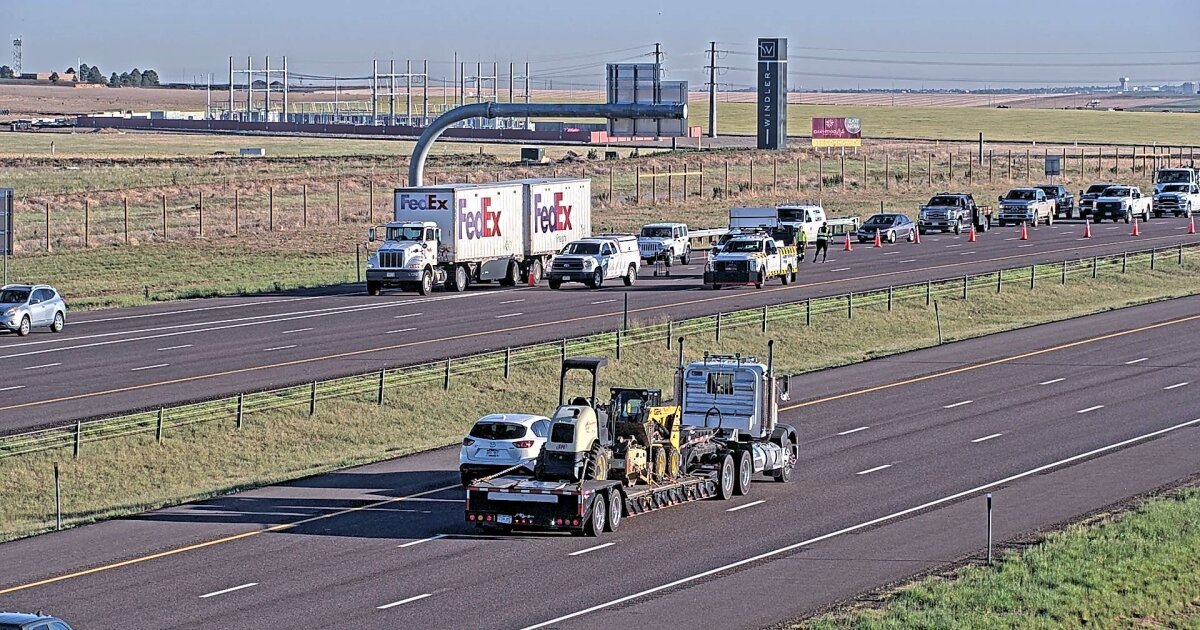
Pedestrian dies after hit by car on southbound E-470, Aurora police say
-

 Seattle, WA1 hour ago
Seattle paying $2.6M to settle sexual harassment lawsuit filed by four female SPD officers – MyNorthwest.com

