West
Liberal California may have a political 'reawakening' after wildfire disaster, historian predicts

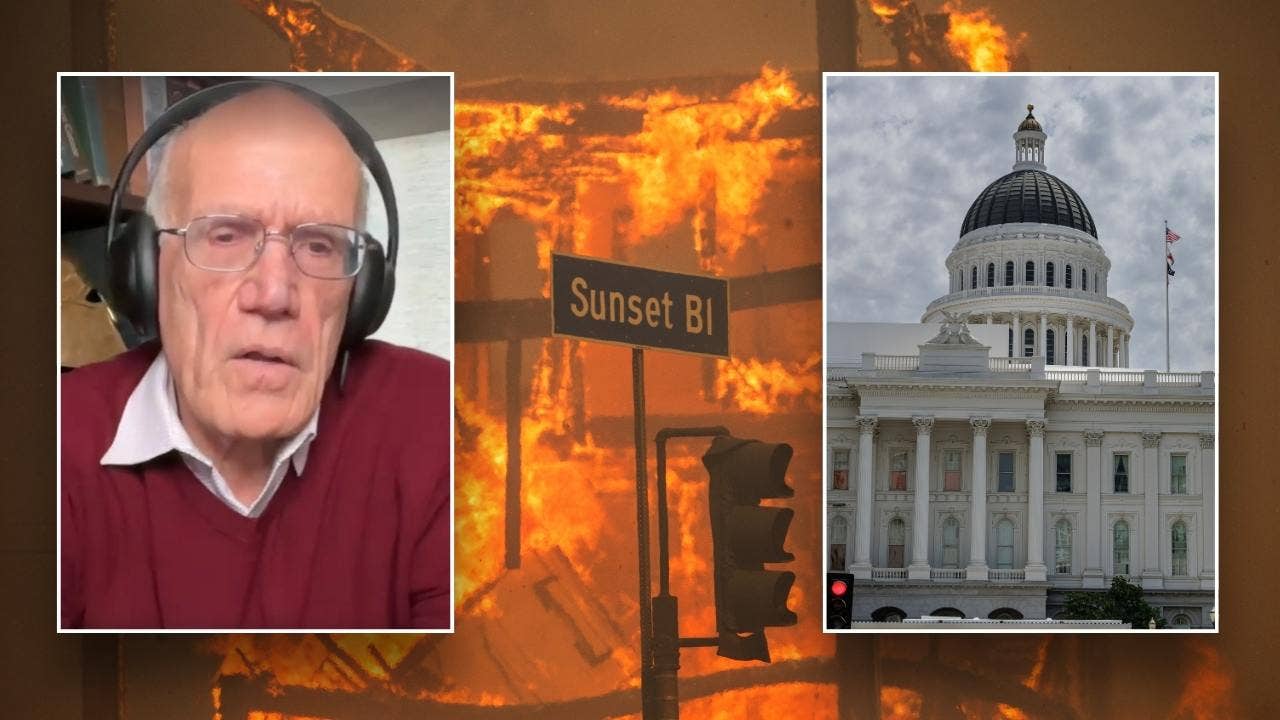
Californians may have a “reawakening” that could trigger a “political shock” among the nation’s top decision-makers after the state’s highly criticized response to the Los Angeles wildfires brought to light the state’s vulnerability and leadership failures, historian Victor Davis Hanson predicts.
“So, there is a group of people in California that could fuel a revolt of liberals or Democrats,” Hanson, a Hoover Institution public policy think tank senior fellow, told Fox News Digital in an interview on Tuesday.
That group of people could include the wealthy on the coastal line whose homes were destroyed or damaged by the wildfires that broke out Jan. 7. Several celebrities, including filmmaker Mel Gibson and actor Michael Rapaport, openly blasted California leadership for its response to the crisis as the blaze destroyed several Los Angeles districts.
NEWSOM CALLS FOR LOOTING TO BE A FELONY IN EVACUATION ZONES AMID LA INFERNO
Historian Victor Davis Hanson analyzes how California may undergo a cultural shift after the destruction of the LA wildfires. (Penny Collins/NurPhoto via Getty Images)
“So, the shock of LA is most of the people that were burned out in Pacific Palisades or on the areas around it were very, very left-wing and very wealthy,” Hanson said. “And this was what’s shocking politically, because the consequences of their votes and their ideology had never really personally affected them to this degree.
“This is going to be an accelerant or a force multiplier. That’s because it affects two different groups of people,” Hanson explained. “It affects the very wealthy. For the first time, they got firebombed. Looks like Dresden, and that’s going to be $300 or $400 billion when it’s all over. And they’re going to have to deal with the Coastal Commission, the Los Angeles Planning Commission and permits for building. And they’re going to be irate when they have to do that.
“The net result is, I don’t think any California politician is going to have a national profile after this.”
Los Angeles Mayor Karen Bass’ absence during the first 24 hours of the inferno, coupled with empty hydrants, a malfunctioning reservoir, a defunded fire department and a lack of new water infrastructure — despite Gov. Gavin Newsom’s backing of billions for new reservoirs — highlighted severe flaws in the state’s response, noted by lawmakers and experts.
The state’s response to the crisis has fueled further criticism, particularly regarding its bureaucracy. In response, Newsom signed an executive order Sunday to suspend certain state commission requirements, aiming to speed up the rebuilding process for homeowners.
“Goodbye, red tape,” Newsom wrote in a post on X. “Through an executive order, we are making it easier for victims of the SoCal fires to quickly rebuild their homes and lives.”
LA COUNCILWOMAN WHOSE DISTRICT RAVAGED BY WILDFIRES LOOKS TO HOLD LEADERS ACCOUNTABLE FOR EMPTY RESERVOIRS
The auditorium at Elliott Junior High is barely recognizable Jan. 11, 2025, after being ravaged by a wildfire in Altadena, Calif. (Derek Shook for Fox News Digital)
“If he could do it now, why didn’t he do it before the fire?” Hanson said of the order.
Another issue that has been a multiyear problem is California’s loss of residents to red states. Dubbed the “California exodus” by experts, California has lost hundreds of thousands of residents over the past few years, many of them citing high taxes, unaffordable housing, crime and difficult business regulations.
‘DEVASTATING’: CALIFORNIA HAD RECORD RAINFALL LAST YEAR, BUT LACKED INFRASTRUCTURE TO STORE IT
California Gov. Gavin Newsom is defending his response to the Los Angeles wildfires as mounting backlash continues. (Jae C. Hong/AP; Jeff Gritchen/MediaNews Group/Orange County Register via Getty Images )
Many former California residents have relocated to states with lower taxes and more business-friendly environments, such as Texas, Florida, Tennessee and North Carolina. Top companies — Tesla, Oracle, Charles Schwab and Chevron — have also moved to other states.
Nearly 240,000 people moved out of California between 2023 and 2024, according to the Census Bureau. This was the largest net domestic migration loss in the country during that time period. Between April 2020 and July 2022, the state saw a net loss of more than 700,000 residents.
“They’re getting very, very angry that it’s hard to do business … and they are angry at the gasoline prices,” Hanson said. “And so I think there’s the potential, if there were a clever, adroit, enlightened Republican candidate or political figure that could capitalize on. So far, the Republican Party doesn’t know what to do. They don’t know whether to go left and try to accommodate this left-wing population or go further right and galvanize it.
“There’s no dissenting voices … and I think that’s going to change after what we saw.”
Read the full article from Here


HELENA, Mont. — The Department of Veteran Affairs appointed a new healthcare system director.
Kimberly Adkins is responsible for 21 sites of care statewide including a medical center at Fork Harrison, a health care center in Billings, 13 community-based outpatient clinics and oversees delivery of health care services covering 1447,000 square miles in Montana.
Adkins has been a federal employee since May 1989 when she began as a GS-3 clerk-typist with the U.S. Department of Housing and Urban Development.
Officials say she brings experience overseeing emergency management, fiscal, facilities management, safety, strategic planning, supply chain management, police, privacy, human resource, contacting and more.
The Department of Veteran Affairs provided the information in the following press release:
The Department of Veterans Affairs (VA) is pleased to announce the appointment of Ms. Kimberly Adkins, as the new director of Montana VA Health Care System (MTVAHCS). Ms. Adkins is responsible for 21 sites of care statewide including: a Medical Center at Fort Harrison, a Health Care Center (HCC) in Billings, 13 Community Based Outpatient Clinics, and oversees delivery of health care services covering 147,000 square miles within the state of Montana.
“We are excited to bring Ms. Adkins on board as the new director of the VA Montana Health Care System,” said Sunaina Kumar-Giebel, Veterans Integrated Service Network (VISN) 19 Director. “Her sound leadership qualities and proven experience will be valuable assets for the facility, the employees and volunteers, and most importantly, for the Veterans we are honored to serve.”
Mrs. Adkins has been a Federal employee since May of 1989 when she began her career as a GS-3 clerk-typist with the US Department of Housing and Urban Development. She has more than 29 years of Federal service. She brings experience overseeing emergency management, fiscal, facilities management, safety, strategic planning, supply chain management, police, privacy, human resources, contracting, and more.
The Montana VA Health Care System provides essential services is a Joint Commission accredited, level two complexity facility serving Veterans across Montana; the largest catchment area in the lower 48 states (about 147,000 square miles) and operates on a budget of over $612 million. MTVAHCS has approximately 47,300 enrolled Veterans and has capacity to provide services to the estimated 65,000 eligible Veterans in Montana. MTVAHCS has 21 sites of care statewide including: a Medical Center at Fort Harrison, a Health Care Center (HCC) in Billings, 13 Community Based Outpatient Clinics (Bozeman, Butte, Browning, Cut Bank, Glasgow, Glendive, Great Falls, Hamilton, Havre, Kalispell, Lewistown, Miles City, Missoula), a Primary Telehealth Outpatient Clinic in Plentywood, a 14-bed Community Living Center in Miles City, a nationally accredited Sleep Disorders Center in Helena, and ATLAS telehealth sites in Eureka, Bozeman and Missoula. Fort Harrison VA Medical Center has 29 authorized/18 operational acute care medical/surgical beds; which includes six Intensive Care Unit (ICU) beds offering a broad range of acute, chronic, and specialized inpatient and outpatient services for Veterans. Fort Harrison operates a 24-bed residential rehabilitation unit offering 2 tracks: the treatment of Veterans with PTSD and the treatment of Veterans with substance abuse. Billings Health Care Center (HCC) provides Primary Care, Mental Health, Specialty Care services, as well as Dental, Laboratory, Pharmacy, Physical Therapy, Diagnostic Imaging, and outpatient specialty procedures and surgical interventions for the largest metropolitan area in Montana and vast rural area of the eastern half of Montana. Billing’s secondary service area includes northern Wyoming. Telehealth services are available at all sites of care.

RENO, Nev. — The Washoe County Sheriff’s Office (WCSO) is investigating a battery with a deadly weapon at the Nevada Cares Campus Resource Center in Reno on Tuesday afternoon.
Deputies responded to a report of an assault with a deadly weapon at the Nevada Cares Campus Resource Center on Line Drive around 1 p.m. on June 30.
Upon arrival, deputies determined the suspect had stabbed one victim. The victim was taken to a local hospital for treatment of injuries, and the suspect was taken into custody.
The identity of the suspect has not been released.
This remains an active investigation. The public is asked to avoid the area while deputies continue processing the scene.
BE THE FIRST TO COMMENT
Police say there is no ongoing threat to the public related to this incident.

LAS VEGAS, N.M. (KRQE) – Las Vegas police and firefighters are warning residents that they are on the lookout for illegal fireworks this Independence Day. Following the area’s severe drought conditions and elevated risk of wildfire, the City of Las Vegas said they will be strictly enforcing fireworks laws.
Banned fireworks this year include aerial devices like bottle rockets, roman candles, and mortars, as well as any ground firecrackers that make loud noises.
-
 Kentucky2 minutes ago
Cumberland Falls’ renowned moonbow draws visitors from across the country to Kentucky
-

 Louisiana7 minutes ago
Louisiana summers are getting hotter and more humid, researchers say
-

 Maine14 minutes ago
Cooling centers to open in Maine as heat, air quality advisories take effect Wednesday
-

 Maryland17 minutes ago
Teen allegedly hits off-duty officer, crashes into Maryland home
-

 Michigan22 minutes ago
Michigan mayor’s 7-year-old nephew found dead in Menands, New York, authorities say
-

 Massachusetts29 minutes ago
Missing Massachusetts cat miraculously found underneath owners’ new bathtub — after disappearing for 30 hours
-

 Minnesota32 minutes ago
St. Paul resident’s special connection to the Declaration of Independence
-

 Mississippi37 minutes ago
Amy Carruth named director of Mississippi State Hospital – SuperTalk Mississippi

