Fitness
Why The 'Silly Little Walk' Will Be Your New Favorite Exercise


There’s a productive exercise trend making waves on social media, and it’s called the “silly little walk.” It’s extremely easy to do and requires no equipment other than a solid pair of walking shoes. It’s gained quite a bit of attention under the #sillylittlewalk hashtag on TikTok—for good reason. The fitness trend starts by getting up and taking a little stroll outside, but we won’t spoil all the fun just yet!
Below, we outlined everything you need to know about the “silly little walk” workout trend and how to get started.
In This Article:
What Is the Silly Little Walk?

This outdoor walking trend prides itself on something to do that will make you feel better—mentally and physically—by getting active outside. (And we all know that some fresh air, vitamin D, and nature can work wonders on the mind, body, and soul!)
One TikToker dubbed her silly little walk “peace over everything,” while another TikTok user wrote in their video, “POV: You go on a silly little walk for your silly little mental health, and it actually works.”
Even when it’s incredibly cold outside, that’s no excuse—as long as your walking route is absolutely safe to walk, you’ll be so glad you carved out some time to do so. After all, everyone is hopping on the “silly little walk” bandwagon and reaping some pretty great physical and mental health rewards.
Now, as far as how you’d like to personalize your “silly little walk,” the sky really is the limit. You can opt for a few laps around your neighborhood, head to one of your favorite trails, see wherever your feet take you, or make plans to meet up with one of your besties as you enjoy your favorite caffeinated beverage, as a bunch of TikTokers are doing.
Catch up on your latest playlist while putting some serious distance to your outing, or even tailor your stroll to a personal “plogging” adventure. Every step you take counts, and hey—it’s healthy in more ways than one, so why not join in on the fun?
If you need a bit of inspiration, under the TikTok hashtag, you’ll find people documenting their walking routes and “silly little walk” adventures. The clips are likely to put a big smile on your face and motivate you to get up and active in the great outdoors.
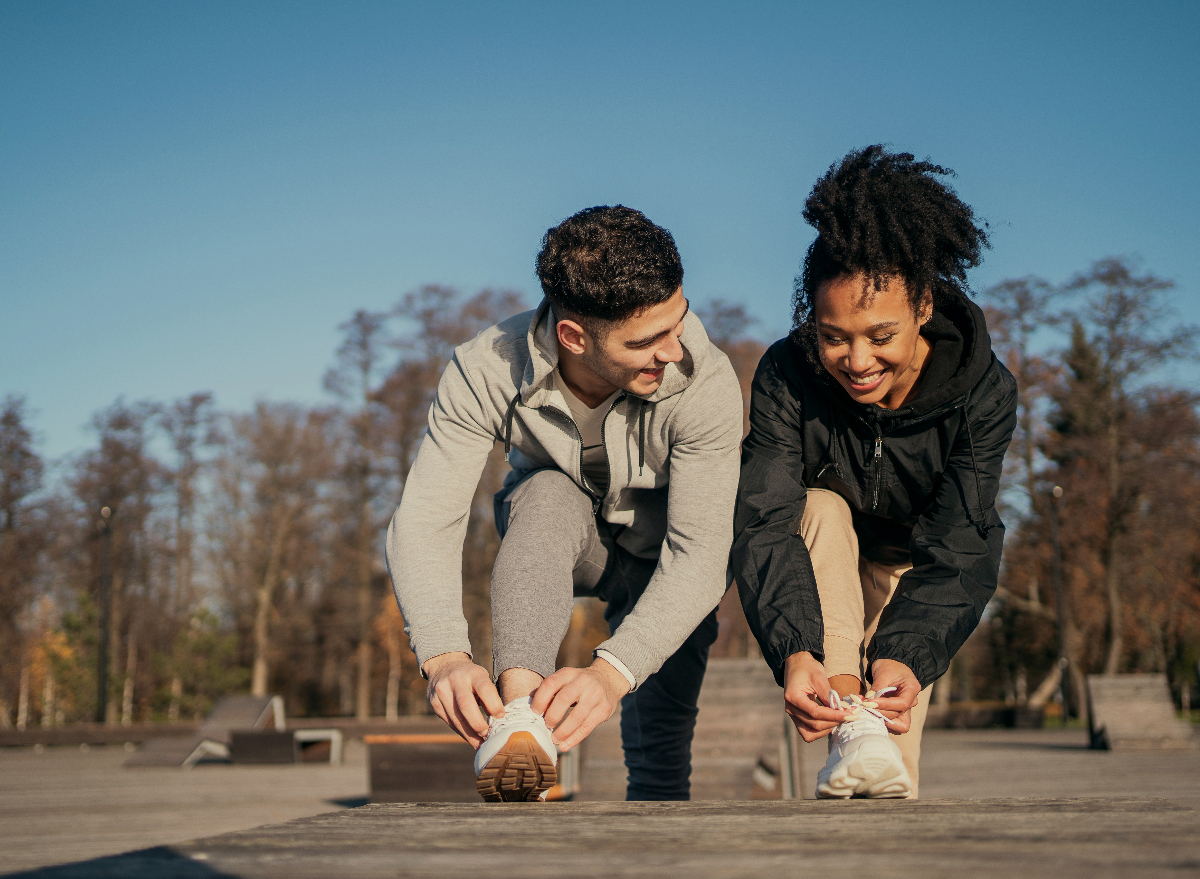
Even when the temperatures are a bit chilly or you feel inclined to push off your workout to the next day, it’s important to still get your body up and moving. That’s where the silly little walk comes in clutch. It’s a stellar, low-impact way to add extra movement to your day while catching up with a friend or two—zero excuses!
Being social has a huge impact on your mental well-being. Research has proven that bonding with people plays a role in your health. As a matter of fact, being socially isolated can negatively impact you, both physically and psychologically. An article in the Journal of Health and Social Behavior notes adults who have a lot of social connections tend to be much healthier and lead longer lives than their peers who isolate themselves.
The Mental and Physical Benefits of the Silly Little Walk
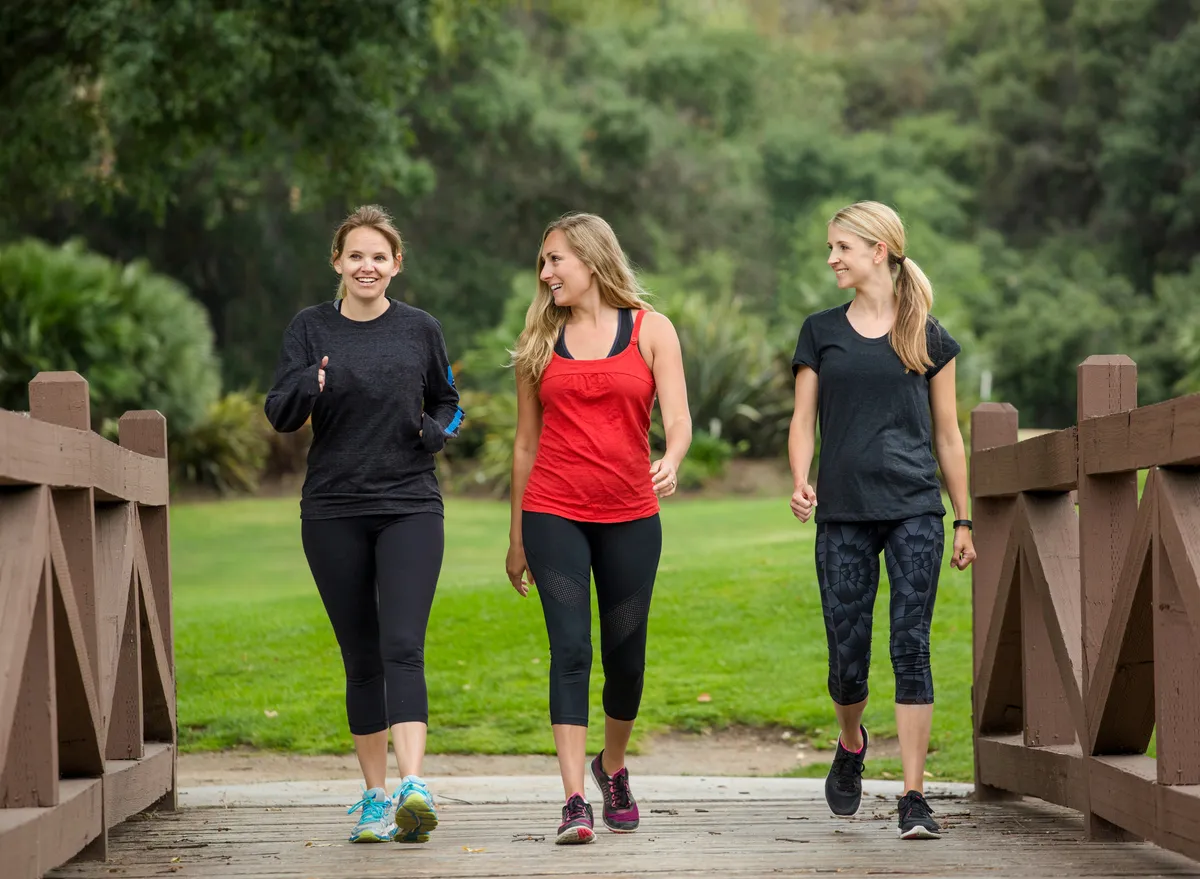
By going on a silly little walk, you will get some valuable cardio and maybe even a bunch of laughs with friends. Reaping the benefits from physical exercise of any sort doesn’t mean the activity has to be a hardcore workout, either. A fun, brisk walk is all you need daily to increase your chances of maintaining a healthy lifestyle.
Walking will help you burn calories, along with maintaining or preventing several health disorders, such as high blood pressure, heart disease, diabetes, and cancer. In addition to giving you a solid energy boost, walking can help strengthen your bones and muscles and enhance your balance and coordination.
A strong walk will bring your anxiety and stress levels down and put you in a much better mood. You will sleep better, too!
Researchers at the University of California studied almost 6,000 women who were 65 years of age and up. The study revealed that women who walk more often are less likely to experience a memory decline from age. More specifically, 17% of the women who walked the most on a weekly basis experienced memory decline, compared to 24% of the women who walked the least amount in the study.
Another previous study published in the Proceedings of the National Academy of Science concluded that participants who took a 90-minute nature walk experienced less activity in the part of the brain that’s connected to one’s risk of developing a mental illness.
So even when it seems like you have absolutely no extra time in your schedule, do yourself a favor and get outside for a “silly little walk!” Your mind and body will certainly thank you—and getting active in the fresh air will feel so rejuvenating.

Sign up for our newsletter!
Alexa Mellardo



Fitness
Kylie Minogue, 58, shares how she stays fit without a strict exercise routine – ‘I don’t really work out’

Kylie Minogue has stayed active her whole life, but, refreshingly, she doesn’t follow a punishingly strict routine to stay fit.
‘I wish I was one of those women who do their exercises first thing in the morning, or run straight to the fitness studio as soon as they get up,’ she told Star Magazine. ‘But unfortunately, I’m just not that disciplined!’
Instead, the ‘I Should Be So Lucky’ singer partly relies on her hectic schedue to keep her moving. ‘I don’t really work out, but I’m constantly on the go,’ she told Express.
‘My guilty confession is that there isn’t [a routine]!…I think I stay in shape with an active (read, exhausting!) lifestyle,’ she continued on Reddit. ‘My fitness is really sporadic. I have to thank my mum for good genes.’
Kylie Minogue’s go-to exercises
Despite her self-professed low-key approach, the global multi-platinum recording artist incorporates several workout methods into her day, preferring mainly low-impact and moderate-intensity exercise.
‘I do Pilates,’ she continued to Star. But she’s careful to keep things balanced. ‘I don’t overdo it,’ she clarified.
‘I like to at the very least do 15 minutes on the Yoga Studio app. I know how to do it without the app but the tone of the woman’s voice and that it’s timed, it goes by so quickly,’ she told WSJ. ‘Then I feel like that’s done and I feel good.’
Often, her exercise of choice also depends on what equipment is available.
‘If there’s a treadmill nearby, I like to do that. We say in my family, “Minogues don’t run.” None of us run. But we like to walk, so that works for me,’ she added. ‘If I’m somewhere where there’s Pilates, I love that.’
Workouts that provide holistic physical and mental benefits are often a favourite.
‘I’ve also tried Gyrotonics; that was really fun,’ she continued, referring to the gymnastics-and-swimming-inspired movement system developed by Julia Horvath in the 80s. Designed to decompress the body, build strength and flexibility, and improve posture, it’s increasingly being adopted by Olympic athletes and celebrities alike.
‘I loved aerobics and I used to do Callanetics,’ she added to Express. Created by classical ballet-trained Callan Pinckney around 40 years ago, Callanetics uses ‘small, precise pulsing movements’ to ‘activate muscles’. ‘I would travel everywhere with this home workout on a VHS tape and put it on in hotel rooms,’ Kylie revealed.
However, being the ‘Princess of Pop’ does mean that the physical demands are considerable, and often her endurance, coordination and overall fitness are put to the test when she’s on stage.
‘I would say my ultimate workout is being on tour. I’m never as fit as when I’m on tour, so I can’t wait to tour again. My body needs it.’
One of our most frequently asked questions here at Women’s Health? How to build muscle and burn fat at the same time. So, we asked superstar trainer Oyinda Okunowo exactly how to do it. In this 4-week plan – created exclusively for Women’s Health COLLECTIVE members – you’ll get the workouts and nutrition guidance needed to help you on your way to better body composition. Tap the link below to unlock 14 days of free access to Oyinda’s plan and start training today.
Get the plan

Exercise played a pivotal part in Alison Hammond, 51, losing 11 stone. The This Morning presenter hired personal trainer Ellis Gatfield five years ago, and while introducing regular strength training helped her hit her goal, there were a few fitness habits she was also required to quit.
Below, Gatfield shares exactly what she stopped doing, how doing so helped her lose weight and build muscle and her full weekly workout routine.
A quick caveat: sustainable weight loss isn’t driven by exercise or nutrition alone. Movement helps preserve muscle, support metabolic health and improve how your body uses energy, but what you eat still matters. The most effective approach combines smart training with nourishing, realistic nutrition habits you can maintain long term.
1. She stopped doing long treadmill sessions
Gatfield says: ‘She never particularly enjoyed traditional cardio, so instead of forcing long treadmill sessions, I focused on raising her heart rate through resistance training performed in a circuit format, using mainly compound movements. This allowed her to get the cardiovascular benefits while also building strength and shaping her body. The biggest mistake from her training before was believing that exercise had to mean long, boring cardio sessions to lose weight. That mindset made training feel like a chore rather than something to enjoy.’
2. She stopped forcing exercise she didn’t enjoy
Gatfield says: ‘Once we shifted to a style of training she genuinely liked, everything became easier. Training stopped feeling forced, consistency improved naturally, and results followed. Enjoyment is often the missing piece in successful weight loss and it’s something I prioritise with all my clients.
‘Strength training played a huge role in Alison’s weight loss because it allowed her to burn calories, build lean muscle, and improve her metabolism, without relying on long or exhausting cardio sessions. Resistance-based circuits kept her heart rate elevated while also improving strength and body composition which is key for long term fat loss.
‘Just as importantly, she genuinely enjoyed this style of training. She loved being able to come in, work hard for 30 minutes, feel accomplished, and get on with her day. That enjoyment made consistency easy, and consistency is where results come from.
‘With Alison, the priority was keeping training effective, enjoyable, and realistic around her schedule. Sessions were always kept to around 30 minutes, which meant they were easy to commit to and never felt overwhelming.’
3. She stopped skipping rest days
Gatfield says: ‘Rest was equally essential [to her results]. Scheduled recovery days helped regulate stress, reduce fatigue, and allow her body to adapt and improve. That balance between training and recovery meant she could show up strong, train with intent, and sustain results long term.
‘For most women, especially those new to resistance training, I’d recommend two-three sessions per week. The focus should always be on learning proper technique, moving well, and recovering properly. More isn’t always better – consistency and quality matter far more.’
Alison Hammond’s weekly workout schedule
According to Gatfield, a typical week in workouts for Alison included:
- Monday: 30-minute resistance circuit
- Tuesday: 30-minute boxing session
- Wednesday: rest or low-intensity walk
- Thursday: 30-minute kettlebell circuit
- Friday: 30-minute boxing session
- Saturday: rest or low-intensity walk
- Sunday: rest

One of our most frequently asked questions here at Women’s Health? How to build muscle and burn fat at the same time. So, we asked superstar trainer Oyinda Okunowo exactly how to do it. In this 4-week plan – created exclusively for Women’s Health COLLECTIVE members – you’ll get the workouts and nutrition guidance needed to help you on your way to better body composition. Tap the link below to unlock 14 days of free access to Oyinda’s plan and start training today.
Get the plan
As Women’s Health UK’s fitness director and a qualified Pilates and yoga instructor, Bridie Wilkins has been passionately reporting on exercise, health and nutrition since the start of her decade-long career in journalism.
After earning a first-class degree in journalism and NCTJ accreditation, she secured her first role at Look Magazine, where she launched the magazine’s health and fitness column, Look Fit, before going on to become Health and Fitness writer at HELLO!
Since, she has written for Stylist, Glamour, Cosmopolitan, Marie Claire, Elle, The Metro, Runner’s World and Red. Today, she oversees all fitness content across Women’s Health online and in print, spearheading leading cross-platform franchises, such as ‘Fit At Any Age’, which showcases the women proving that age is no barrier to exercise.
She has also represented the brand on BBC Radio London, plus various podcasts and Substacks – all with the aim to encourage more women to exercise and show them how. Outside of work, find her trying the latest Pilates studio, testing her VO2 max for fun (TY, Oura), or posting workouts on Instagram.
Fitness
Gary Neville’s 5-Day-a-Week Fitness Routine – and How Exercise Changed His Life After Football

If there’s one man who could do with a rest, it’s Gary Neville. But in between managing his media and business interests, the former footballer still starts most weekdays the same way: waking up early for a 6am workout.
‘My whole life has been about routine and repetition,’ Neville told The Times. ‘Even now, I need structure in every part of my life.
‘I’m up every morning at quarter past five. I’ll have a coffee, review all the news – sports news mainly, but news as well. All your papers, so I’m across everything. Five mornings a week I’ll then walk to the gym for six, and finish at 6:50 before walking back home for seven.’
The 51-year-old favours high-intensity, circuit-style training rather than traditional bodybuilding workouts, having regularly attended Barry’s classes over the years. That said, strength work still forms part of his routine.
It’s an approach Neville adopted after learning a difficult lesson in retirement. Having stepped away from professional football in 2011, he admits he spent the first couple of years enjoying himself a little too much.
The Wake-Up Call That Changed Gary Neville’s Fitness
‘The impact of not training every day surprised me,’ Neville said in a social media video.
‘I think I took for granted how training made me feel good about myself – in my body, in my head. And then when I finished playing football, I started to have a glass of wine at night regularly, I started to have a bit of cheese, I started to have more chocolate.
‘I started to think I could just relax and enjoy my life from a nutrition and fitness point of view. I didn’t work very hard at all – in fact I didn’t train much in the first year or two [after retirement].’
The weight gain that followed eventually prompted an intervention from his wife.
‘If you look at those first couple of years outside of football, you’ll see that I put weight on,’ he said.
‘I remember my wife coming up to me one day and saying, “Look, come on, you need to sort yourself out. You’ve been fit all your life.”
‘And it completely transformed the way I thought. From that moment on, I started at it again.’
Why Neville Calls Exercise a Form of Medicine
These days, Neville says training has become non-negotiable.
He’s not preparing for a sporting event or chasing specific performance goals, but he notices a significant difference in both his physical and mental wellbeing whenever he stops exercising for too long.
‘I feel like I can’t go without training,’ he explained. ‘If I go three, four or five days without training then it’s not the end of the world, but if I go two weeks without it, I start to feel heavy.
‘I start to feel like I’m losing strength. You start to feel like you’re going under a little bit. I didn’t prepare for the fact that not training, eating more and not being able to cope without that fitness structure in my life every single day.’
The former Manchester United captain believes the mental benefits are just as important as the physical ones.
‘People who don’t train are missing out on a great medicine,’ he said. ‘I stopped for two to three years and the impact it had on my mental health was terrible.’
More than a decade after retirement, Neville’s routine looks very different to the one he followed as a professional footballer. But the principle remains the same: move regularly, stay consistent and make exercise part of your day rather than something you squeeze in when you get the chance.
If there’s one thing Kori Sampson knows, it’s how to optimise your body composition for performance. To tap into his knowledge as an elite athlete and coach, we asked him to create a 4-week plan to help you move faster, recover quicker and keep pushing when the fatigue sets in – all while improving your muscle-to-fat ratio.
Ready to build muscle, burn fat and come out the other side looking, feeling and performing better? Click here to get 14 days of free access to the plan via the Men’s Health app.
Ryan is a Senior Writer at Men’s Health UK with a passion for storytelling, health and fitness. Having graduated from Cardiff University in 2020, and later obtaining his NCTJ qualification, Ryan started his career as a Trainee News Writer for sports titles Golf Monthly, Cycling Weekly and Rugby World before progressing to Staff Writer and subsequently Senior Writer with football magazine FourFourTwo.
During his two-and-a-half years there he wrote news stories for the website and features for the magazine, while he also interviewed names such as Les Ferdinand, Ally McCoist, Jamie Redknapp and Antonio Rudiger, among many others. His standout memory, though, came when getting the opportunity to speak to then-Plymouth Argyle manager Steven Schumacher as the club won League One in 2023.
Having grown up a keen footballer and playing for his boyhood side until the age of 16, Ryan got the opportunity to represent Northern Ireland national futsal team eight times, scoring three goals against England, Scotland and Gibraltar. Now past his peak, Ryan prefers to mix weightlifting with running – he achieved a marathon PB of 3:31:49 at Manchester in April 2025, but credits the heat for failing to get below the coveted 3:30 mark…
You can follow Ryan on Instagram or on X
-

 Colorado1 minute ago
Colorado’s Deion Sanders With Controversial Big 12 Coach Ranking
-

 Connecticut4 minutes ago
Sierra Club Connecticut, State Representatives Host Black Lungs Matter: Juneteenth Press Event – CleanTechnica
-

 Delaware9 minutes ago
From blueprint to breakthrough: Tackling affordable housing in Wilmington
-

 Florida16 minutes ago
Weather Aware Day declared for Friday as heat and strong storms threaten Central Florida
-

 Georgia19 minutes ago
DHS appears to axe plan to construct immigration detention megacenter in small Georgia town
-

 Hawaii24 minutes ago
Ambassadors of aloha: Food events aim to boost tourism with unique Hawaii-made products
-

 Idaho31 minutes ago
Idaho State Police arrest Dillon Thorpe on rape, child enticement charges in Elmore County
-

 Illinois34 minutes ago
Beecher City farm suffers heavy damage following ‘wicked storm’

