Lifestyle
Here are some of the NPR stories that had a big impact in 2024
Photos from some of our most impactful stories of 2024.
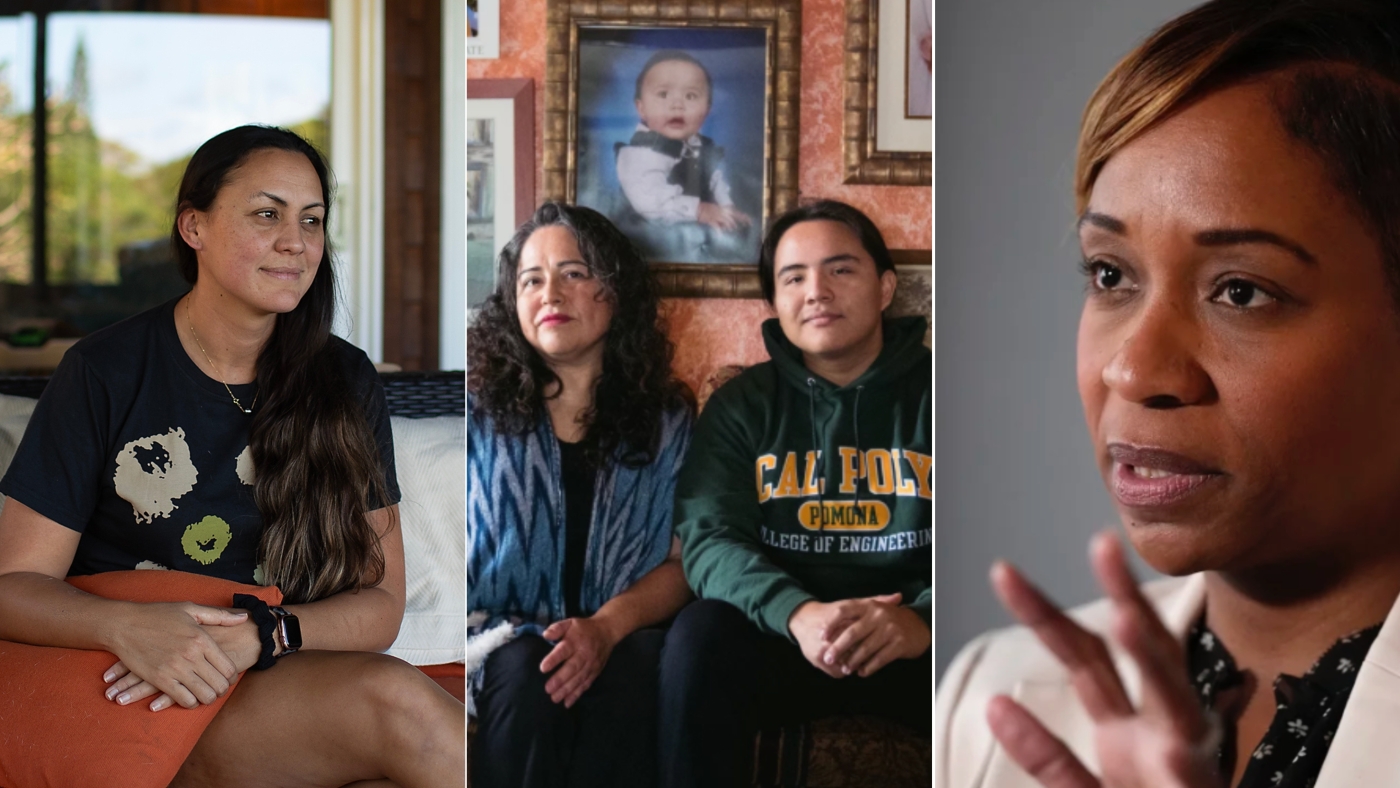
Ryan Kellman/Gabriella Angotti-Jones/Charles Krupa/AP/NPR
hide caption
toggle caption
Ryan Kellman/Gabriella Angotti-Jones/Charles Krupa/AP/NPR
As journalists working to fulfill NPR’s mission of creating a more informed public, the metrics of success for our work can be a bit more amorphous than in other professions.
How do you measure impact when your independent, nonprofit newsroom isn’t pressuring you to meet a quota on sales, clicks or signups?

If you ask the reporters, editors and producers from all over the world involved in creating our award-winning coverage on everything from TikTok’s internal policies to new voting districts in a disenfranchised Alabama community, they’d all have a different answer.
Sometimes it can be one email from a listener sharing how the information they’ve learned has helped them in their own lives.
Impact can be practical, like finally learning what kind of electric car to buy. And impact can be personal, like feeling a little more seen by reporting that covers the expanse of the opioid epidemic in the United States. Other times, impact can translate to real changes in local communities, or even the federal government.

The important thing to remember is that every ripple made by our coverage is tied to NPR’s core belief that we should live in a world challenged and invigorated by a deeper understanding and appreciation of events, ideas and cultures.
Below, you’ll find a list of stories compiled by NPR staffers that we felt prompted some of the strongest changes and reactions from our listeners, and the leaders in their communities too. It’s a good reminder of what our work can do — and how much we have cut out for us in the years to come.
The Education Department fixes its $1.8 billion FAFSA mistake
NPR’s Education Desk covered the problematic rollout of the FAFSA form in December 2023 and early January 2024, and it was our story that broke the news that the Biden administration was finally going to fix the biggest problem behind the rollout — a mistake that would have cost lower-income students dearly.
“For this story, we personified the mistake’s toll by finding a student and his mother who seemed to have been hurt by it (not easy since it was still early days),” reporter Cory Turner says. “Once we had the story ready, we did our due diligence, taking it to the Education Department for comment and to ask, once again, why they hadn’t yet agreed to fix this incredible mistake. It was in this back-and-forth, in this case just hours before the story was set to publish and air, that the Biden administration officially reversed itself and told NPR that it would, at last, fix the problem. … It’s impossible to know precisely what was happening behind the scenes at the Department, but this story — and the further discomfort it would have caused the administration — was certainly softened by the sudden, exclusive commitment to NPR in the opening sentences that a fix was finally on the way.”
Helping victims of crypto scams get their money back
This is a follow-up story to an investigation NPR reporter Bobby Allyn did of a crypto scam that was stealing the life savings of elderly people. After this story, the Massachusetts attorney general sued the obscure company Allyn investigated and got its crypto assets frozen by a judge, and one of the victims in the story got all of his money back — more than $140,000 that had been stolen from him.
“I first stumbled upon this story after meeting an elderly victim of the scam at a police station in LA,” Allyn says. “He was reporting the crime, and I chased him down after overhearing it, and took down his information. And months later, I published an investigation on the company’s tactics and how it managed to defraud him and others out of hundreds of thousands of dollars.”
Helping people learn how to reduce their stress
This year NPR offered our audiences a unique opportunity to learn science-backed stress reduction techniques through a collaboration with researchers at Northwestern University.
NPR Health Correspondent Allison Aubrey has been covering health and well-being for decades. She reported on a study by Judith Moskowitz, which showed that stress reduction techniques can help improve well-being in people who are dealing with significant stress, like caring for a loved one with Alzheimer’s disease or living with a cancer diagnosis.
Aubrey wanted to know if these same techniques would help people cope with everyday stress. Moskowitz agreed to open her stress reduction course to our audiences, and she will be analyzing the data in the new year. Aubrey also talked to many other researchers to bring our audiences the best science has to offer to help people cope with stress.
The response to this series was incredible. But most rewarding were the personal notes we got from people who took part in our series. Here are a few examples:
- “Thank you for creating this for everyone!” wrote Andy C., a high school counselor in Delaware. He has started a “Mid-Week Reset,” for his colleagues. “It helps my staff feel more connected to making the school a better place and allows me time to connect with my colleagues which makes me feel less alone and that I matter.”
- Kris G. is another teacher who loved our series. “I love its suggestions because they are realistic and usable for high school, middle school and elementary school. As a teacher, students always express their ‘stress’ and inability to move forward. These techniques quickly move them beyond the stress and make them re-center their fears as focus.”
Prompting a multimillion-dollar hospital donation from a tech billionaire after investigating his real estate investments
Dara Kerr reported this scoop about billionaire Marc Benioff buying up hundreds of acres of land in a small rural Hawaii town. Discussion in Hawaii among locals and the ensuing attention and questions the story generated galvanized Benioff himself to donate $150 million to hospitals in Hawaii within days of the story publishing.
The story generated a lot of buzz, with many big names in journalism “writing about it in their own columns or newsletters, focusing on the consequences of how billionaires choose to spend their money,” said chief business editor Pallavi Gogoi.
Prompting the VA to reassess an error in its mortgage program
In a yearlong series of stories, NPR held the Department of Veterans Affairs accountable for an error in its mortgage program that put tens of thousands of veterans at risk of losing their homes. Chris Arnold and Quil Lawrence won several awards for the early stories, but the impact was steady all year.
First the VA froze all foreclosures for six months. After more NPR stories, the VA extended that freeze at least until the end of this year. Further investigation revealed thousands of vets forced into terrible modified mortgages by the same VA screwup.
Natalie Donaldson is currently dealing with Veteran Affairs forbearance policy changes that resulted in her monthly payments jumping 50%.
Michael Noble Jr. for NPR/For NPR
hide caption
toggle caption
Michael Noble Jr. for NPR/For NPR
Eventually reporters were able to discover that at least 1,300 vets had been forced into loan modifications that raised their payments by 50%.
“Natalie Donaldson is one, and getting her help felt great, since she’d survived a traumatic time in the military. Keeping her home seemed key to her hard-won peace of mind,” Lawrence said.
Inspiring legislation to ban the practice of octopus farming in the U.S.
In February, NPR published a story looking at a Spanish seafood company’s bid to build what would be the world’s first massive octopus-farming facility, in the Canary Islands.
Sen. Sheldon Whitehouse, D-Rhode Island, noticed NPR’s story — and a few months later, he introduced a bill in Congress to ban any similar projects in the U.S.

“It was a neat surprise to get a note from the senator’s office saying he had noticed the story and was about to introduce a bill banning octopus farming. The bill hasn’t passed — but in August, 100 experts published a letter in Science magazine supporting the bill,” reporter Bill Chappell explained.
Shining a spotlight on what community care can look like worldwide
This is a bilingual visual story about Colombia’s caregivers that shows hard-working families, men, women and children taking care of themselves and their community. It was a finalist at the National Association of Hispanic Journalist awards this year in the digital story category, in Spanish and in English, and was also a finalist in photography.
“It’s about a unique solutions story from a part of the world which we don’t hear many solutions stories from. Their community center is funded by a local government assistance project; the images show them in everyday activities at home and in their community. The story brings to life a community we don’t hear much about. The world needs to know there are efforts afoot to make this world a better place,” wrote NPR’s Laura Soto-Barra, who contributed to the story.
Amplifying the growing worldwide struggle for families to be able to feed their children
This story spotlighted a “silent” issue — the struggle of working families to afford three healthy meals a day for their kids — to the fore. Reader response was strong, expressing a desire to help. One of the families will be featured on the Dr. Phil talk show next year, and one of the photographers said he brought food and other gifts to the family he’d profiled.
JUL 21, 2024. Snacks are an important part of Tomás’ nutritional diet. So his parents have followed a diet outside of junk food on most occasions. Here Tomás eats puffed rice cereal while his parents cook.
Alejandra Leyva for NPR
hide caption
toggle caption
Alejandra Leyva for NPR
“A U.N. report this year highlighted the growing issue of malnutrition among kids under age 5 as families struggle to afford food that is often more expensive due to climate-related growing issues. We wanted to know who those families are and worked with The Everyday Project, a global consortium of photojournalists, to identify and profile 9 families around the world, from Mississippi to Mexico to Malaysia,” wrote Marc Silver, one of the story’s editors.
Connecting listeners with a community land trust in Lahaina
After this story aired on the uncertainty of property rights in Lahaina after the fire disaster there, the folks in the story received a surge in donations, as well as support and offers to help from around the country. At first, they were confused why people so far from the Maui community were getting in touch. Then they realized their story had been on NPR.
Lauren Sommer was one of the first reporters in Lahaina after the extreme wildfire destroyed homes and took lives.
“I stayed in touch with a few sources, including a few that were very concerned their friends and neighbors wouldn’t be able to afford to rebuild, allowing developers to buy properties in a tourism hotspot. They started the community land trust from scratch, learning as they went, and I was able to go back to Maui to cover it and a few other stories. At a time when they felt the national media had forgotten about Lahaina’s disaster, they were very grateful that NPR returned,” Sommer wrote.
Giving listeners tools to stay healthy while scrolling
In 2024, season two of Body Electric featured host Manoush Zomorodi diving further into the impact of technology on our health, including how scrolling affects our breathing and what earbuds are doing to our hearing. The BE team also started a new type of podcast episode: 5-minute walk-and-talk breaks with Zomorodi.
As part of this series, the team worked with researchers at Columbia University Medical Center to understand how we can offset the detrimental effects of this screen-filled lifestyle. Last year, the team at Columbia published a study that found regular movement breaks — five minutes out of every thirty — counteracted the harmful effects of sitting all day.
“In 2023, over 23,000 people joined a Body Electric challenge to move for five minutes every half-hour, every hour or every two hours for two weeks and report back to researchers,” said host Manoush Zomorodi on NPR’s Morning Edition.
Spurring the DOJ to investigate how targeted violence was handled in some Virginia schools
“This was way off my usual beat — I’m a business reporter — but I’d previously done a story on growing Latino populations in the area and how that fueled the growth of different businesses,” said WHRO reporter Ryan Murphy.
One of the contacts from that story called him months later to say she’d heard from families about this targeted violence in the schools, and the dismissiveness of school officials, and didn’t know where else to turn for relief, Murphy said.
Teresa Rodriguez (left) and Leo Medina (center right) worry about sending their sons to school after the boys were attacked in December by a large group outside Norview High.
Ryan Murphy/WHRO
hide caption
toggle caption
Ryan Murphy/WHRO
“This source connected me with families and translated during interviews to help me tell a story about a community that, because of language barriers, often goes overlooked — a story I couldn’t have brought to light by myself,” he said.
Now, the Department of Justice has launched an (still ongoing) investigation into how this violence was handled.
Helping consumers across the Gulf South navigate outlandish utility bills
This series from the Gulf States Newsroom highlighted a utility billing issue — and its possible solution — each month from around the Gulf South.
The work of reporters Stephan Bisaha and Drew Hawkins produced a variety of impacts, including engaging the community through callout sourcing. Many people featured in the stories reported back that their experiences prompted utility companies to look into their issues — some for the first time, despite many previous calls, and some reported that their stories prompted utility companies to move their issue up the priority list.
“The thing is, though, these complaints tend to act like the problems are unique to each city. In reality, they’re endemic across the region. It took a few years of hearing stories of missing water bills in Birmingham, inexplicable power expenses in New Orleans and the 2022 water crisis in Jackson for me to realize how this is really a shared tradition,” wrote Bisaha, who also won a Murrow award for his reporting on this piece.
Providing resources to voters in a historically disenfranchised and newly formed voting district in Alabama
Maya Miller and Nellie Beckett spent months leading up to the November election covering the issues facing Alabama’s newly created District 2, and the effort there to get out the vote and represent this historically marginalized area. With support from WFYI’s America Amplified initiative, they produced stories and social content that highlighted the intersecting challenges and concerns of central Alabama.
Gulf States Newsroom community engagement reporter Maya Miller hears from Alabama State University student leader and District 2 voter Tyrin Moorer outside of the Dunn-Oliver Acadome in Montgomery, Alabama, on Nov. 5, 2024.
Nellie Beckett/Gulf States Newsroom
hide caption
toggle caption
Nellie Beckett/Gulf States Newsroom
The impact included local political strategists sharing out the FAQ voter guide, and 527 downloads of the Gulf States Gumbo podcast unpacking the project to cover District 2.
The team pursued this coverage to tell the story of a historically marginalized area in Alabama, newly recognized with redistricting as a focus of Black voting power and a region with assets to frame as well as challenges to tackle. Tackling stories of issues and voting power led Maya and Nellie down the path of community engagement reporting.
This story received contributions from Arielle Retting, Manuela López Restrepo, and Amy Morgan.

Lifestyle
The Nerve Center of This Art Fair Isn’t Painting. It’s Couture.
The art industry is increasingly shaped by artists’ and art businesses’ shared realization that they are locked in a fierce struggle for sustained attention — against each other, and against the rest of the overstimulated, always-online world. A major New York art fair aims to win this competition next month by knocking down the increasingly shaky walls between contemporary art and fashion.
When visitors enter the Independent art fair on May 14, they will almost immediately encounter its open-plan centerpiece: an installation of recent couture looks from Comme des Garçons. It will be the first New York solo presentation of works by Rei Kawakubo, the brand’s founder and mastermind, since a lauded 2017 survey exhibition at the Metropolitan Museum of Art’s Costume Institute.
Art fairs have often been front and center in the industry’s 21st-century quest to capture mindshare. But too many displays have pierced the zeitgeist with six-figure spectacles, like Maurizio Cattelan’s duct-taped banana and Beeple’s robot dogs. Curating Independent around Comme des Garçons comes from the conviction that a different kind of iconoclasm can rise to the top of New York’s spring art scrum.
Elizabeth Dee, the founder and creative director of Independent, said that making Kawakubo’s work the “nerve center” of this year’s edition was a “statement of purpose” for the fair’s evolution. After several years at the compact Spring Studios in TriBeCa, Independent will more than double its square footage by moving to Pier 36 at South Street, on the East River. Dee has narrowed the fair’s exhibitor list, to 76, from 83 dealers in 2025, and reduced booth fees to encourage a focus on single artists making bold propositions.
“Rei’s work has been pivotal to thinking about how my work as a curator, gallerist and art fair can push boundaries, especially during this extraordinary move toward corporatization and monoculture in the art world in the last 20 years,” Dee said.
Kawakubo’s designs have been challenging norms since her brand’s first Paris runway show in 1981, but her work over the last 13 years on what she calls “objects for the body” has blurred borders between high fashion and wearable sculpture.
The Comme des Garçons presentation at Independent will feature 20 looks from autumn-winter 2020 to spring-summer 2025. Forgoing the runway, Kawakubo is installing her non-clothing inside structures made from rebar and colored plastic joinery.
Adrian Joffe, the president of both Comme des Garçons International and the curated retailer Dover Street Market International (and who is also Kawakubo’s husband), said in an interview that Kawakubo’s intention was to create a sculptural installation divorced from chronology and fashion — “a thing made new again.”
Every look at Independent was made in an edition of three or fewer, but only one of each will be for sale on-site. Prices will be about $9,000 to $30,000. Comme des Garçons will retain 100 percent of the sales.
Asked why she was interested in exhibiting at Independent, the famously elusive Kawakubo said via email, “The body of work has never been shown together, and this is the first presentation in New York in almost 10 years.” Joffe added a broader philosophical motivation. “We’ve never done it before; it was new,” he said. Also essential was the fair’s willingness to embrace Kawakubo’s vision for the installation rather than a standard fair booth.
Kawakubo began consistently engaging with fine art decades before such crossovers became commonplace. Since 1989, she has invited a steady stream of contemporary artists to create installations in Comme des Garçons’s Tokyo flagship store. The ’90s brought collaborations with the artist Cindy Sherman and performance pioneer Merce Cunningham, among others.
More cross-disciplinary projects followed, including limited-release direct mailers for Comme des Garçons. Kawakubo designs each from documentation of works provided by an artist or art collective.
The display at Independent reopens the debate about Kawakubo’s proper place on the continuum between artist and designer. But the issue is already settled for celebrated artists who have collaborated with her.
“I totally think of Rei as an artist in the truest sense,” Sherman said by email. “Her work questions what everyone else takes for granted as being flattering to a body, questions what female bodies are expected to look like and who they’re catering to.”
Ai Weiwei, the subject of a 2010 Comme des Garçons direct mailer, agreed that Kawakubo “is, in essence, an artist.” Unlike designers who “pursue a sense of form,” he added, “her design and creation are oriented toward attitude” — specifically, an attitude of “rebellion.”
Also taking this position is “Costume Art,” the spring exhibition at the Costume Institute. Opening May 10, the show pairs individual works from multiple designers — including Comme des Garçons — with artworks from the Met’s holdings to advance the argument made by the dress code for this year’s Met gala: “Fashion is art.”
True to form, Kawakubo sometimes opts for a third way.
“Rei has often said she’s not a designer, she’s not an artist,” Joffe said. “She is a storyteller.”
Now to find out whether an art fair sparks the drama, dialogue and attention its authors want.
Lifestyle
They set out to elevate karaoke in L.A. — and opened a glamorous lounge that pulls out all the stops
Brothers Leo and Oliver Kremer visited karaoke spots around the globe and almost always had the same impression.
“The drinks weren’t always great, the aesthetics weren’t always so glamorous, the sound wasn’t always awesome and the lights were often generic,” says Leo, a former bassist of the band Third Eye Blind.
As devout karaoke fans, they wanted to level up the experience. So they dreamed up Mic Drop, an upscale karaoke lounge in West Hollywood that opens Thursday. It’s located inside the original Larrabee Studios, a historic 1920s building formerly owned by Carole King and her ex-husband, Gerry Goffin — and the spot where King recorded some of her biggest hits. Third Eye Blind band members Stephan Jenkins and Brad Hargreaves are investors of the new venue.
Inside the two-story, 6,300-square-foot venue with 13 private karaoke rooms and an electrifying main stage, you can feel like a rock star in front of a cheering audience. Want to check it out? Here are six things to know.
The Kremer brothers hired sculptor Shawn HibmaCronan to create an 8-foot-tall disco-themed microphone for their karaoke lounge.
1. Take your pick between a private karaoke experience or the main stage
A unique element of Mic Drop is that it offers both private karaoke rooms and a main stage experience for those who wish to sing in front of a crowd. The 13 private rooms range from six- to 45-person capacity. Each of the karaoke rooms are named after a famous recording studio such as Electric Lady, Abbey Road, Shangri La and of course, Larrabee Studios. There is a two-hour minimum on all rentals and hourly rates depend on the room size and day of the week.
But if you’re ready to take the center stage, it’s free to sing — at least technically. All you have to do is pay a $10 fee at the door, which is essentially a token that goes toward your first drink. Then you can put your name on the list with the KJ (karaoke jockey) who keeps the crowd energized throughout the night and even hits the stage at times.
Harrison Baum, left, of Santa Monica, and Amanda Stagner, 27, of Los Angeles, sing in one of the 13 private karaoke rooms.
2. Thumping, high sound quality was a top priority
As someone who toured the world playing bass for Third Eye Blind, top-tier sound was a nonnegotiable for Leo. “Typically with karaoke, the sound is kind of teeny, there’s not a lot of bass and the vocal is super hot and sitting on top too much,” he says. To combat this, he and his brother teamed up with Pineapple Audio, an audio visual company based in Chicago, to design their crisp sound system. They also installed concert-grade speakers and custom subwoofers from a European audio equipment manufacturer called Celto, and bought gold-plated Sennheiser wireless microphones, which they loved so much that they had an 8-foot-tall replica made for their main room. Designed by artist Shawn HibmaCronan, the “macrophone,” as they call it, has roughly 30,000 mirror tiles. “It spins and throws incredible disco light everywhere,” says Leo.
Karaoke jockeys Sophie St. John, 27, second from left, and Cameron Armstrong, 30, right, get the crowd involved with their song picks at Mic Drop.
3. A concert-level performance isn’t complete without good stage lighting and a haze machine
Each karaoke room features a disco ball and dynamic lighting that syncs up with whatever song you’re singing, which makes you feel like you are a professional performer. There’s also a haze machine hidden under the leather seats. Meanwhile, the main stage is concert-ready with additional dancing lasers and spotlights.
Brett Adams, left, of Sherman Oaks, and Patrick Riley of Studio City sing karaoke together inside a private lounge at Mic Drop.
4. The song selection is vast, offering classics and new hits
One of the worst things that can happen when you go to karaoke is not being able to find the song you want to sing. At Mic Drop, the odds of this happening are slim to none. The venue uses a popular karaoke service called KaraFun, which has a catalog of more than 600,000 songs (and adds 400 new tracks every month), according to its website. Take your pick from country, R&B, jazz, rap, pop, love duets and more. (Two newish selections I spotted were Raye’s “Where Is my Husband” and Olivia Dean’s “Man I Need,” which both released late last year.) In the private karaoke rooms, there’s also a fun feature on Karafun called “battle mode,” which allows you and your crew of up to 20 people to compete in real time. KaraFun also has an entertaining music trivia game, which I tested out with the founders and came in second place.
The design inspiration for Mic Drop was 1920s music lounges and 1970s disco culture, says designer Amy Morris.
5. The interiors are inspired by 1920s music lounges mixed with ‘70s disco vibes
A disco ball hangs from the ceiling.
If you took the sophisticated aesthetic of 1920s music lounges and mixed it with the vibrant and playful era of 1970s disco culture, you’d find Mic Drop.
When you walk into the lounge, the first thing you’ll see is a bright red check-in desk that resembles a performer’s dressing room with vanity lights, several mirrors and a range of wigs. “So much of karaoke is about getting into character and letting go of the day, so we had the idea to sell the wigs,” says Oliver. As you continue into the lounge, the focal point is the stage, which is adorned with zebra-printed carpet and dramatic, red velvet curtains. For seating, slide into the red velvet banquettes or plop onto a gold tiger velvet stool. Upstairs, you’ll find the intimate karaoke studios, which are decorated with red velvet walls and brass, curved doorways that echo the building’s deco arches, says Mic Drop’s interior designer, Amy Morris of the Morris Project.
Sarah Rothman, center, of Oakland, and friend Rachel Bernstein, left, of Los Angeles, wait at the bar.
6. You can order nontraditional karaoke bites as you wait for your turn to sing
While Mic Drop offers some of the food you’d typically find at a karaoke lounge such as tater tots, truffle popcorn and pizza, the venue has some surprising options as well. For example, a 57 gram caviar service (served with chips, crème fraîche and chives) and shrimp cocktail from Santa Monica Seafood. For their pizza program, the Kremer brothers teamed up with Avalou’s Italian Pizza Company, which is run by Louis Lombardi who starred in “The Sopranos.” He’s the brainchild behind my favorite dish, the Fuhgeddaboudit pizza, which is made with pastrami, pickles and mustard. It might sound repulsive, but trust me.
As for the cheeky cocktails, they are all named after famous musicians and songs such as the Pink Pony Club (a tart cherry pomegranate drink with vodka named after Chappell Roan), Green Eyes (a sake sour with kiwi and melon named after Green Day) and Megroni Thee Stallion (an elevated negroni named after Megan Thee Stallion).
Lifestyle
You’re Invited! (No, You’re Not.) It’s the Latest Phishing Scam.
When John Lantigua, a retired journalist in Miami Beach, checked his email one recent morning, he was glad to see an invitation.
“It was like, ‘Come and share an evening with me. Click here for details,’” Mr. Lantigua said.
It appeared to be a Paperless Post invitation from someone he once worked with at The Palm Beach Post, a man who had left Florida for Mississippi and liked to arrange dinners when he was back in town.
Mr. Lantigua, 78, clicked the link. It didn’t open.
He clicked a second time. Still nothing.
He didn’t realize what was going on until a mutual friend who had received the same email told him it wasn’t an invitation at all. It was a scam.
Phishing scams have long tried to frighten people into clicking on links with emails claiming that their bank accounts have been hacked, or that they owe thousands of dollars in fines, or that their pornography viewing habits have been tracked.
The invitation scam is a little more subtle: It preys on the all-too-human desire to be included in social gatherings.
The phishy invitations mimic emails from Paperless Post, Evite and Punchbowl. What appears to be a friendly overture from someone you know is really a digital Trojan horse that gives scammers access to your personal information.
“I thought it was diabolical that they would choose somebody who has sent me a legitimate invitation before,” Mr. Lantigua said. “He’s a friend of mine. If he’s coming to town, I want to see him.”
Rachel Tobac, the chief executive of SocialProof Security, a cybersecurity firm, said she noticed the scam last holiday season.
“Phishing emails are not a new thing,” Ms. Tobac said, “but every six months, we get a new lure that hijacks our amygdala in new ways. There’s such a desire for folks to get together that this lure is interesting to people. They want to go to a party.”
Phishing scams involve “two distinct paths,” Ms. Tobac added. In one, the recipient is served a link that turns out to be dead, or so it seems. A click activates malware that runs silently as it gleans passwords and other bits of personal information. In all likelihood, this is what happened when Mr. Lantigua clicked on the ersatz invitation link.
Another scam offers a working link. Potential victims who click on it are asked to provide a password. Those who take that next step are a boon to hackers.
“They have complete control of your email and, in turn, your entire digital life,” Ms. Tobac said. “They can reset your password for your dog’s Instagram account. They can take over your bank account. Change your health insurance.”
Digital invitation platforms are trying to combat the scam by publishing guides on how to spot fake invitations. Paperless Post has also set up an email account — phishing@paperlesspost.com — for users to submit messages for verification. The company sends suspicious links to the Anti-Phishing Working Group, a nonprofit that maintains a database monitored by cybersecurity firms. Flagged links are rendered ineffective.
The scammers’ new strategy of exploiting the desire for connection is infuriating, said Alexa Hirschfeld, a founder of Paperless Post. “Life can be isolating,” Ms. Hirschfeld said. “When it looks like you’re getting an invitation from someone you know, your first instinct is excitement, not skepticism.”
Olivia Pollock, the vice president of brand for Evite, said that fake invitations tended to be generic, promising a birthday party or a celebration of life. Most invitations these days tend to have a specific focus — mahjong gatherings or book club talks, for instance. “The devil is in the details,” Ms. Pollock said.
Because scammers don’t know how close you are with the people in your contact list, fake invitations may also seem random. “They could be from your business school roommate you haven’t spoken to in 10 years,” Ms. Hirschfeld said.
Alyssa Williamson, who works in public relations in New York, was leaving a yoga class recently when she checked her phone and saw an invitation from a college classmate.
“I assumed it was an alumni event,” Ms. Williamson, 30, said. “I clicked on it, and it was like, ‘Enter your email.’ I didn’t even think about it.”
Later that day, she received texts from friends asking her about the party invitation she had just sent out. Her response: What party?
“The thing is, I host a lot of events,” she said. “Some knew it was fake. Others were like, ‘What’s this? I can’t open it.’”
Andrew Smith, a graduate student in finance who lives in Manhattan, received what looked like a Punchbowl invitation to “a memory making celebration.” It appeared to have come from a woman he had dated in college. He received it when he was having drinks at a bar on a Friday night — “a pretty insidious piece of timing,” he said.
“The choice of sender was super clever,” Mr. Smith, 29, noted. “This was somebody that would probably get a reaction from me.”
Mr. Smith seized on the phrase “memory making celebration” and filled in the blanks. He imagined that someone in his ex-girlfriend’s immediate family had died. Perhaps she wanted to restart contact at this difficult moment.
Something saved him when he clicked a link and tried to tap out his personal information — his inability to remember the password to his email account. The next day, he reached out to his ex, who confirmed that the invitation was fake.
“It didn’t trigger any alarm bells,” Mr. Smith said. “I went right for the click. I went completely animal brain.”
The new scam comes with an unfortunate side effect, a suspicion of invitations altogether. It’s enough to make a person antisocial.
“Don’t invite me to anything,” Mr. Lantigua, the retired journalist, said, only half-joking. “I’m not coming.”
-
Politics6 minutes agoContributor: Carlson’s cautious apology does little to repair Trumpism’s damage
-
Sports18 minutes agoCancer left him blind. When his son was diagnosed, ex-USC long snapper found Trojans had his back again
-
World30 minutes agoOrbán-style vetoes undermine EU democracy, Kallas tells Euronews
-
News60 minutes agoAfter 2 failed votes, Mike Johnson unveils new plan to extend key U.S. spy powers
-
New York2 hours agoShould a Straight Person Represent Stonewall’s City Council District?
-
Detroit, MI3 hours agoBlake Miller has high floor, big upside, says Lions GM Brad Holmes
-
San Francisco, CA3 hours agoHighway 1 closure in San Francisco expected to snarl Sunset traffic all weekend
-
Dallas, TX3 hours agoHow UCF EDGE Malachi Lawrence Fits With The Dallas Cowboys