Lifestyle
Here are some of the NPR stories that had a big impact in 2024

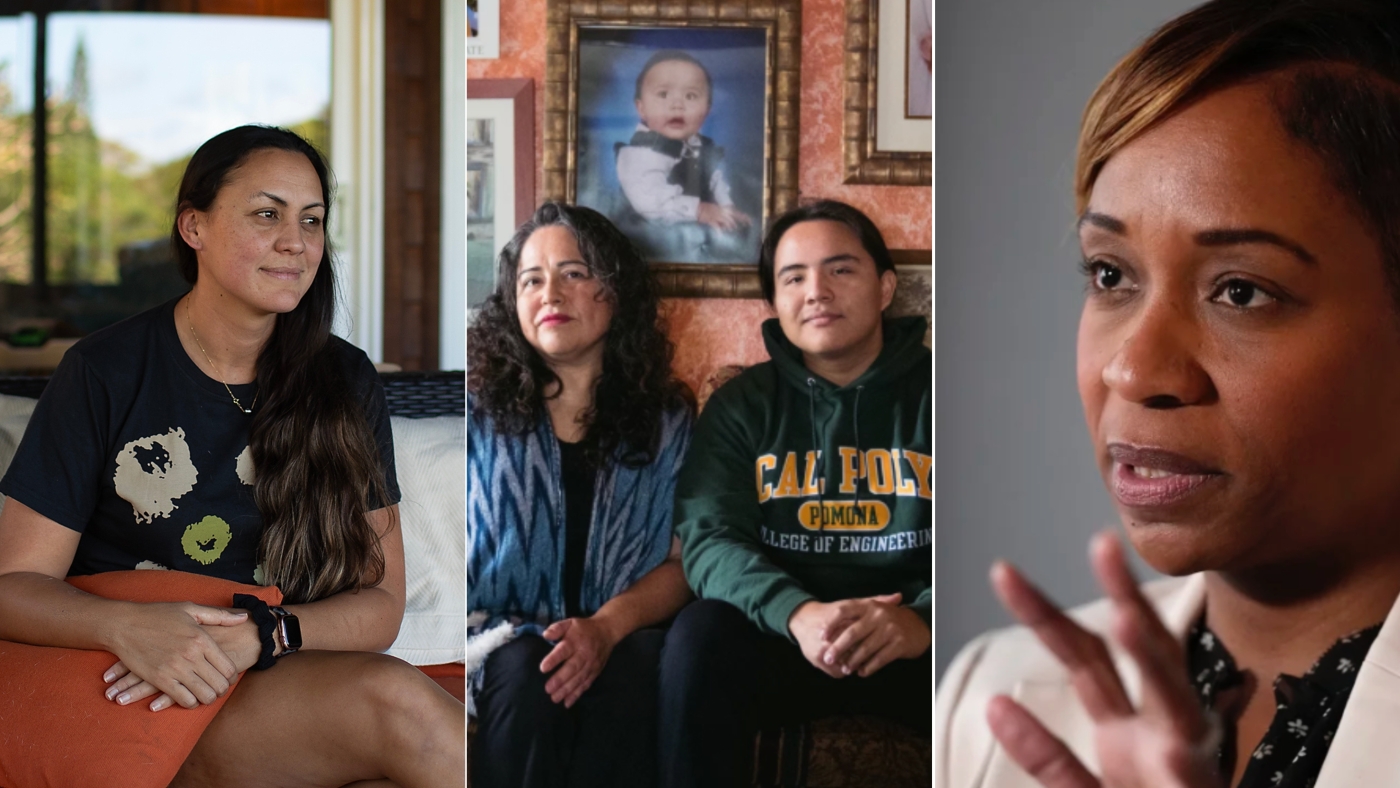
Photos from some of our most impactful stories of 2024.
Ryan Kellman/Gabriella Angotti-Jones/Charles Krupa/AP/NPR
hide caption
toggle caption
Ryan Kellman/Gabriella Angotti-Jones/Charles Krupa/AP/NPR
As journalists working to fulfill NPR’s mission of creating a more informed public, the metrics of success for our work can be a bit more amorphous than in other professions.
How do you measure impact when your independent, nonprofit newsroom isn’t pressuring you to meet a quota on sales, clicks or signups?

If you ask the reporters, editors and producers from all over the world involved in creating our award-winning coverage on everything from TikTok’s internal policies to new voting districts in a disenfranchised Alabama community, they’d all have a different answer.
Sometimes it can be one email from a listener sharing how the information they’ve learned has helped them in their own lives.
Impact can be practical, like finally learning what kind of electric car to buy. And impact can be personal, like feeling a little more seen by reporting that covers the expanse of the opioid epidemic in the United States. Other times, impact can translate to real changes in local communities, or even the federal government.

The important thing to remember is that every ripple made by our coverage is tied to NPR’s core belief that we should live in a world challenged and invigorated by a deeper understanding and appreciation of events, ideas and cultures.
Below, you’ll find a list of stories compiled by NPR staffers that we felt prompted some of the strongest changes and reactions from our listeners, and the leaders in their communities too. It’s a good reminder of what our work can do — and how much we have cut out for us in the years to come.
The Education Department fixes its $1.8 billion FAFSA mistake
NPR’s Education Desk covered the problematic rollout of the FAFSA form in December 2023 and early January 2024, and it was our story that broke the news that the Biden administration was finally going to fix the biggest problem behind the rollout — a mistake that would have cost lower-income students dearly.
“For this story, we personified the mistake’s toll by finding a student and his mother who seemed to have been hurt by it (not easy since it was still early days),” reporter Cory Turner says. “Once we had the story ready, we did our due diligence, taking it to the Education Department for comment and to ask, once again, why they hadn’t yet agreed to fix this incredible mistake. It was in this back-and-forth, in this case just hours before the story was set to publish and air, that the Biden administration officially reversed itself and told NPR that it would, at last, fix the problem. … It’s impossible to know precisely what was happening behind the scenes at the Department, but this story — and the further discomfort it would have caused the administration — was certainly softened by the sudden, exclusive commitment to NPR in the opening sentences that a fix was finally on the way.”
Helping victims of crypto scams get their money back
This is a follow-up story to an investigation NPR reporter Bobby Allyn did of a crypto scam that was stealing the life savings of elderly people. After this story, the Massachusetts attorney general sued the obscure company Allyn investigated and got its crypto assets frozen by a judge, and one of the victims in the story got all of his money back — more than $140,000 that had been stolen from him.
“I first stumbled upon this story after meeting an elderly victim of the scam at a police station in LA,” Allyn says. “He was reporting the crime, and I chased him down after overhearing it, and took down his information. And months later, I published an investigation on the company’s tactics and how it managed to defraud him and others out of hundreds of thousands of dollars.”
Helping people learn how to reduce their stress
This year NPR offered our audiences a unique opportunity to learn science-backed stress reduction techniques through a collaboration with researchers at Northwestern University.
NPR Health Correspondent Allison Aubrey has been covering health and well-being for decades. She reported on a study by Judith Moskowitz, which showed that stress reduction techniques can help improve well-being in people who are dealing with significant stress, like caring for a loved one with Alzheimer’s disease or living with a cancer diagnosis.
Aubrey wanted to know if these same techniques would help people cope with everyday stress. Moskowitz agreed to open her stress reduction course to our audiences, and she will be analyzing the data in the new year. Aubrey also talked to many other researchers to bring our audiences the best science has to offer to help people cope with stress.

The response to this series was incredible. But most rewarding were the personal notes we got from people who took part in our series. Here are a few examples:
- “Thank you for creating this for everyone!” wrote Andy C., a high school counselor in Delaware. He has started a “Mid-Week Reset,” for his colleagues. “It helps my staff feel more connected to making the school a better place and allows me time to connect with my colleagues which makes me feel less alone and that I matter.”
- Kris G. is another teacher who loved our series. “I love its suggestions because they are realistic and usable for high school, middle school and elementary school. As a teacher, students always express their ‘stress’ and inability to move forward. These techniques quickly move them beyond the stress and make them re-center their fears as focus.”
Prompting a multimillion-dollar hospital donation from a tech billionaire after investigating his real estate investments
Dara Kerr reported this scoop about billionaire Marc Benioff buying up hundreds of acres of land in a small rural Hawaii town. Discussion in Hawaii among locals and the ensuing attention and questions the story generated galvanized Benioff himself to donate $150 million to hospitals in Hawaii within days of the story publishing.
The story generated a lot of buzz, with many big names in journalism “writing about it in their own columns or newsletters, focusing on the consequences of how billionaires choose to spend their money,” said chief business editor Pallavi Gogoi.
Prompting the VA to reassess an error in its mortgage program
In a yearlong series of stories, NPR held the Department of Veterans Affairs accountable for an error in its mortgage program that put tens of thousands of veterans at risk of losing their homes. Chris Arnold and Quil Lawrence won several awards for the early stories, but the impact was steady all year.
First the VA froze all foreclosures for six months. After more NPR stories, the VA extended that freeze at least until the end of this year. Further investigation revealed thousands of vets forced into terrible modified mortgages by the same VA screwup.

Natalie Donaldson is currently dealing with Veteran Affairs forbearance policy changes that resulted in her monthly payments jumping 50%.
Michael Noble Jr. for NPR/For NPR
hide caption
toggle caption
Michael Noble Jr. for NPR/For NPR
Eventually reporters were able to discover that at least 1,300 vets had been forced into loan modifications that raised their payments by 50%.
“Natalie Donaldson is one, and getting her help felt great, since she’d survived a traumatic time in the military. Keeping her home seemed key to her hard-won peace of mind,” Lawrence said.
Inspiring legislation to ban the practice of octopus farming in the U.S.
In February, NPR published a story looking at a Spanish seafood company’s bid to build what would be the world’s first massive octopus-farming facility, in the Canary Islands.
Sen. Sheldon Whitehouse, D-Rhode Island, noticed NPR’s story — and a few months later, he introduced a bill in Congress to ban any similar projects in the U.S.

“It was a neat surprise to get a note from the senator’s office saying he had noticed the story and was about to introduce a bill banning octopus farming. The bill hasn’t passed — but in August, 100 experts published a letter in Science magazine supporting the bill,” reporter Bill Chappell explained.
Shining a spotlight on what community care can look like worldwide
This is a bilingual visual story about Colombia’s caregivers that shows hard-working families, men, women and children taking care of themselves and their community. It was a finalist at the National Association of Hispanic Journalist awards this year in the digital story category, in Spanish and in English, and was also a finalist in photography.
“It’s about a unique solutions story from a part of the world which we don’t hear many solutions stories from. Their community center is funded by a local government assistance project; the images show them in everyday activities at home and in their community. The story brings to life a community we don’t hear much about. The world needs to know there are efforts afoot to make this world a better place,” wrote NPR’s Laura Soto-Barra, who contributed to the story.
Amplifying the growing worldwide struggle for families to be able to feed their children
This story spotlighted a “silent” issue — the struggle of working families to afford three healthy meals a day for their kids — to the fore. Reader response was strong, expressing a desire to help. One of the families will be featured on the Dr. Phil talk show next year, and one of the photographers said he brought food and other gifts to the family he’d profiled.

JUL 21, 2024. Snacks are an important part of Tomás’ nutritional diet. So his parents have followed a diet outside of junk food on most occasions. Here Tomás eats puffed rice cereal while his parents cook.
Alejandra Leyva for NPR
hide caption
toggle caption
Alejandra Leyva for NPR
“A U.N. report this year highlighted the growing issue of malnutrition among kids under age 5 as families struggle to afford food that is often more expensive due to climate-related growing issues. We wanted to know who those families are and worked with The Everyday Project, a global consortium of photojournalists, to identify and profile 9 families around the world, from Mississippi to Mexico to Malaysia,” wrote Marc Silver, one of the story’s editors.
Connecting listeners with a community land trust in Lahaina
After this story aired on the uncertainty of property rights in Lahaina after the fire disaster there, the folks in the story received a surge in donations, as well as support and offers to help from around the country. At first, they were confused why people so far from the Maui community were getting in touch. Then they realized their story had been on NPR.
Lauren Sommer was one of the first reporters in Lahaina after the extreme wildfire destroyed homes and took lives.
“I stayed in touch with a few sources, including a few that were very concerned their friends and neighbors wouldn’t be able to afford to rebuild, allowing developers to buy properties in a tourism hotspot. They started the community land trust from scratch, learning as they went, and I was able to go back to Maui to cover it and a few other stories. At a time when they felt the national media had forgotten about Lahaina’s disaster, they were very grateful that NPR returned,” Sommer wrote.
Giving listeners tools to stay healthy while scrolling
In 2024, season two of Body Electric featured host Manoush Zomorodi diving further into the impact of technology on our health, including how scrolling affects our breathing and what earbuds are doing to our hearing. The BE team also started a new type of podcast episode: 5-minute walk-and-talk breaks with Zomorodi.
As part of this series, the team worked with researchers at Columbia University Medical Center to understand how we can offset the detrimental effects of this screen-filled lifestyle. Last year, the team at Columbia published a study that found regular movement breaks — five minutes out of every thirty — counteracted the harmful effects of sitting all day.
“In 2023, over 23,000 people joined a Body Electric challenge to move for five minutes every half-hour, every hour or every two hours for two weeks and report back to researchers,” said host Manoush Zomorodi on NPR’s Morning Edition.
Spurring the DOJ to investigate how targeted violence was handled in some Virginia schools
“This was way off my usual beat — I’m a business reporter — but I’d previously done a story on growing Latino populations in the area and how that fueled the growth of different businesses,” said WHRO reporter Ryan Murphy.
One of the contacts from that story called him months later to say she’d heard from families about this targeted violence in the schools, and the dismissiveness of school officials, and didn’t know where else to turn for relief, Murphy said.

Teresa Rodriguez (left) and Leo Medina (center right) worry about sending their sons to school after the boys were attacked in December by a large group outside Norview High.
Ryan Murphy/WHRO
hide caption
toggle caption
Ryan Murphy/WHRO
“This source connected me with families and translated during interviews to help me tell a story about a community that, because of language barriers, often goes overlooked — a story I couldn’t have brought to light by myself,” he said.
Now, the Department of Justice has launched an (still ongoing) investigation into how this violence was handled.
Helping consumers across the Gulf South navigate outlandish utility bills
This series from the Gulf States Newsroom highlighted a utility billing issue — and its possible solution — each month from around the Gulf South.
The work of reporters Stephan Bisaha and Drew Hawkins produced a variety of impacts, including engaging the community through callout sourcing. Many people featured in the stories reported back that their experiences prompted utility companies to look into their issues — some for the first time, despite many previous calls, and some reported that their stories prompted utility companies to move their issue up the priority list.
“The thing is, though, these complaints tend to act like the problems are unique to each city. In reality, they’re endemic across the region. It took a few years of hearing stories of missing water bills in Birmingham, inexplicable power expenses in New Orleans and the 2022 water crisis in Jackson for me to realize how this is really a shared tradition,” wrote Bisaha, who also won a Murrow award for his reporting on this piece.
Providing resources to voters in a historically disenfranchised and newly formed voting district in Alabama
Maya Miller and Nellie Beckett spent months leading up to the November election covering the issues facing Alabama’s newly created District 2, and the effort there to get out the vote and represent this historically marginalized area. With support from WFYI’s America Amplified initiative, they produced stories and social content that highlighted the intersecting challenges and concerns of central Alabama.

Gulf States Newsroom community engagement reporter Maya Miller hears from Alabama State University student leader and District 2 voter Tyrin Moorer outside of the Dunn-Oliver Acadome in Montgomery, Alabama, on Nov. 5, 2024.
Nellie Beckett/Gulf States Newsroom
hide caption
toggle caption
Nellie Beckett/Gulf States Newsroom
The impact included local political strategists sharing out the FAQ voter guide, and 527 downloads of the Gulf States Gumbo podcast unpacking the project to cover District 2.
The team pursued this coverage to tell the story of a historically marginalized area in Alabama, newly recognized with redistricting as a focus of Black voting power and a region with assets to frame as well as challenges to tackle. Tackling stories of issues and voting power led Maya and Nellie down the path of community engagement reporting.
This story received contributions from Arielle Retting, Manuela López Restrepo, and Amy Morgan.


Lifestyle
L.A. Affairs: It’s hot when a man drives to me. But would this new guy make the trek from the Valley?

I met Dan on Hinge.
He lives in Woodland Hills, and I live in Venice. In Los Angeles, this is considered a long-distance relationship. In another city it might be nothing. Here, it’s a factor.
But I believe that with the right person, you can make anything work, so I stay open. I’m a native New Yorker, and if I were living in Brooklyn and a guy lived on the Upper West Side, that would be a 45-minute subway ride, which is truly nothing in New York. So with that same logic, I try to have flexibility with men in L.A.
When we started planning our first date, Dan suggested three options: a hike on mushrooms, a wine tasting or a walk on the beach.
A hike on mushrooms is something I’d only do with someone I already trust, not someone I just met online. I don’t do first-date hikes because I don’t like feeling trapped if the guy’s a dud. So I chose the wine tasting.
Then I learned the wine tasting was in West Hills.
On a Friday night, driving there from Venice would be insane. So I said I didn’t want to meet there because of the traffic. He suggested Malibu. That was also not ideal on a Friday.
I was getting annoyed — this was a pink flag because in my dating world, the guy is supposed to come to the woman’s neighborhood in the early days. I’ve gone out with plenty of men from the Valley who effortlessly suggested they come to me. It’s not rare or impossible.
I suggested he come to the Westside. I didn’t specifically say Venice, and in hindsight, I probably should have. He landed on Brentwood, which was manageable for both of us. On our first date, we met at an Irish pub on Wilshire Boulevard. He was cuter and more interesting than I had expected, and with the Guinness flowing, we had fun.
When I got home, he texted me: “Well, I like you 🙂 Less the tik tok and the lack of rock music in your life, but it’s not a deal breaker — there are other qualities 🙂 What are your thoughts?”
I noticed the slight negativity but was mostly dazzled that a man texted immediately after the date to say he liked me. In the modern dating economy, this felt rare.
The next day, both of our evening plans fell through, so we made a last-minute date. The wine tasting he originally suggested still sounded like fun, and although it meant me driving to the Valley, I was up for it now that we’d met.
We sipped flights at Malibu Wines & Beer Garden in its airy, romantic courtyard and played a flirty version of Truth or Dare. Halfway through, he dared me to kiss him.
We ended with sushi on Ventura Boulevard and a short make-out session in his car. He invited me to Thanksgiving at his uncle’s, which felt too soon, but also sweet.
After the second date, he texted and said he had his kids that week and was also hosting an event on Thursday, so his only day to meet was Wednesday. I said great.
On Tuesday night, he checked if we were still on, and I said yes.
Then he texted: “I’m flexible on time but not on location. I have a big event on Thursday, hopefully you can come to me again.”
My stomach tightened. This again?
So I texted back: “I drove to you last time, which was a bit of an exception for me especially in the early days, but the wine tasting location sounded special. Usually guys come to my area. How about we switch it up this time?”
He replied: “I appreciate the effort! Because of my event, I’d rather be close to a computer just if needed … Here is what i offer:
— I’ll come to your area anytime next week/end
— Lunch/dinner on me
I want to continue where we stopped last time 😉 No pressure of course, but let’s snuggle”
I responded: “Ok let’s meet next week. Snuggles sound nice … let’s see what happens …”
Then he wrote: “So I won’t see you tomorrow?”
I replied: “Unless you wanna come to me and bring your laptop along, let’s rain check until you have more flexibility.”
He said: “Dang, you are hard. I’ll let you know tomorrow around midday if it’s ok.”
And then — surprise — he decided to come.
He drove to Venice for a 5 p.m. date. He said his ETA was 5 p.m., and it ended up being 5:25 p.m., typical 405 Freeway.
When he showed up, he was in a cranky mood. On our way to KazuNori in Marina del Rey, I thanked him for picking me up and told him I think it’s hot when the guy comes to the girl.
“You’re just saying that because you want me to come to you more,” he said, not playfully, but aggressively.
That was basically the end for me. But there I was, in his car, heading to dinner. So I stayed pleasant and tried to make the best of it.
I shared that in the early stages of dating, I find it’s good etiquette for the guy to come to the woman’s neighborhood. He immediately disagreed and started ranting about how dating rules are ridiculous and how they swing in women’s favor. He resented paying for dates and declared he wasn’t looking to “sponsor a woman’s life.”
“If women want equality and equal rights,” he said, “then it should apply all across the board, including dating, and the man shouldn’t have to pay.”
I said women don’t actually have equal rights because we get paid less than men and often receive lower salaries than men in the same position.
I tried to change the subject and reset the mood, but he insisted we keep hashing it out.
I tried to explain masculine/feminine dynamics: providing and protecting, giving and receiving.
“What does the man get out of this arrangement?” he asked.
It was like watching someone’s personality warp into Mr. Hyde. Then he brought up another point: He’s a single dad of two kids, so he gets tired; and because I don’t have kids, that should factor into who drives where.
At this point, I was barely engaging and focused on eating my hand rolls, and I couldn’t wait to get home.
The check came, and I happily split it, wanting nothing further from him.
In the car back to my place, he remarked: “It’s obvious we’re never gonna see each other again.”
Obvious, but did it need to be stated?
Then he showed me a Spotify playlist he’d made for me of his favorite electronic music, because he knows I like EDM.
“Oh, that’s sweet,” I said.
“Yeah, that’s how I show interest. Through things like this, not who drives to who,” he replied.
When I got out of the car, we wished each other luck, and I headed inside and shut the door.
Two hours later, he sent me the playlist. I’ve yet to listen to it.
It wasn’t the distance that ruined it. It was the resentment. I’m not looking for a man who feels burdened by the effort. I’m looking for a man who sees the value of courting a woman in the first place.
The author is a writer, comedian and former psychologist who lives in Venice. She is the creator of the new vertical series “Manfari.” She’s on Instagram: @solange_neue and @manfari.show.
L.A. Affairs chronicles the search for romantic love in all its glorious expressions in the L.A. area, and we want to hear your true story. We pay $400 for a published essay. Email LAAffairs@latimes.com. You can find submission guidelines here. You can find past columns here.

Lonnie Bunch III is the 14th Secretary of the Smithsonian. He’s pictured above in September 2017.
J. Scott Applewhite/AP
hide caption
toggle caption
J. Scott Applewhite/AP
In a memo addressed to staffers sent Tuesday, the secretary of the Smithsonian, Lonnie G. Bunch III, defended the institution after the White House issued a 162-page report that characterizes the National Museum of American History as a place which has become “subject to institutional capture by a radical, activist ideology that is fundamentally opposed to telling the noble, honest story of the great country we know and love.”
In his email, which NPR has obtained, Bunch wrote in part: “While there will always be room for improvement, this report is not a fair characterization of the work and totality of the National Museum of American History. At the Smithsonian, our work is driven by scholarship, accuracy and an uncompromising commitment to tell the fullness of America’s story. As public servants and the keepers of this institution, we are charged with helping a nation find understanding, hope and clarity and as part of that duty, we are dedicated to excellence, reflection and growth.”

He continued: “We remain focused on what grounds us: a steadfast commitment to scholarship, nonpartisanship, independence, accuracy and integrity. For nearly 180 years, the Smithsonian has worked alongside partners across government — from the White House to Congress to our governing Board of Regents — guided by our enduring mission to increase and diffuse knowledge. That purpose remains: to pursue knowledge with rigor and to serve the American public with clarity and care.”
The White House report was issued on July 4 by the Domestic Policy Council under the title “Saving America’s Story: How Ideological Capture at the Smithsonian Institution’s National Museum of American History Erases Our Heritage.”

The council faults the National Museum of American History on a multitude of fronts, saying it underemphasized the Founding Fathers and early colonial and Revolutionary history; was not sufficiently celebratory of the country’s 250th anniversary; and that it engaged in “anti-white,” “illegal alien” and transgender activism.
It also accuses the museum of trying to “indoctrinate” teachers and students through its exhibitions, programming and teaching resources.
In the report, the council also specifically criticizes museum director Anthea Hartig, who has led the National Museum of American History since 2019 and is concurrently the president of the Organization of American Historians, calling her “an activist advancing an ideological agenda contradictory to the museum’s founding purpose of fostering patriotism.”
The Trump administration has made the Smithsonian museums one of its primary targets in its efforts to reshape cultural narratives to align with its viewpoints. In August 2025, the White House requested a “comprehensive internal review” of eight Smithsonian museums, including the National Museum of American History, following an executive order issued by President Trump in March 2025 in which he called for the removal of “improper ideology” from the Smithsonian’s offerings.
According to the Smithsonian’s charter, all of its 21 museums, 14 education and research centers, and the National Zoo are meant to be run independently of the federal government. The Smithsonian is overseen by Bunch and a board of regents, which includes Vice President Vance, Supreme Court Chief Justice John Roberts and other members appointed by Congress.
In an interview with NBC’s Meet the Press on Sunday, Bunch spoke about the Smithsonian’s 250th anniversary special exhibition at the Smithsonian Castle, which is called “American Aspirations.”
He told NBC: “It’s really important for people to understand that America is much an ideal as it is a place, that it’s a series of aspirations that have really shaped who this country is. And so for me, what is so powerful is to say, ‘Let us honor the words of Thomas Jefferson and the founders, but let us use those to challenge us to be better.’”
Jennifer Vanasco edited this story.

-

 World4 minutes ago
Belgium to introduce new road tax in 2027, even for transiting drivers
-
 News29 minutes ago
Graham Platner makes it official in Maine, submitting paperwork to leave Senate race
-

 Los Angeles, Ca2 hours ago
Knee irritation forces Shohei Ohtani out of Friday start, All‑Star game
-

 Detroit, MI2 hours ago
Detroit Evening Report: Waymo cars blocking first responders – WDET 101.9 FM
-

 San Francisco, CA2 hours ago
San Francisco Mayor Daniel Lurie Blocks Vacant Grocery Store Tax Proposal | KQED
-

 Miami, FL2 hours ago
Oregon Battling Miami, Mario Cristobal for Four-Star EDGE Recruit
-

 Dallas, TX2 hours ago
FC Dallas Forward Logan Farrington Inks Contract Extension
-

 Boston, MA3 hours ago
Red Sox face lengthy travel issues ahead of series vs. Mets

