West
Bob Fernandez, a 100-year-old Pearl Harbor survivor, dies peacefully at home 83 years after bombing

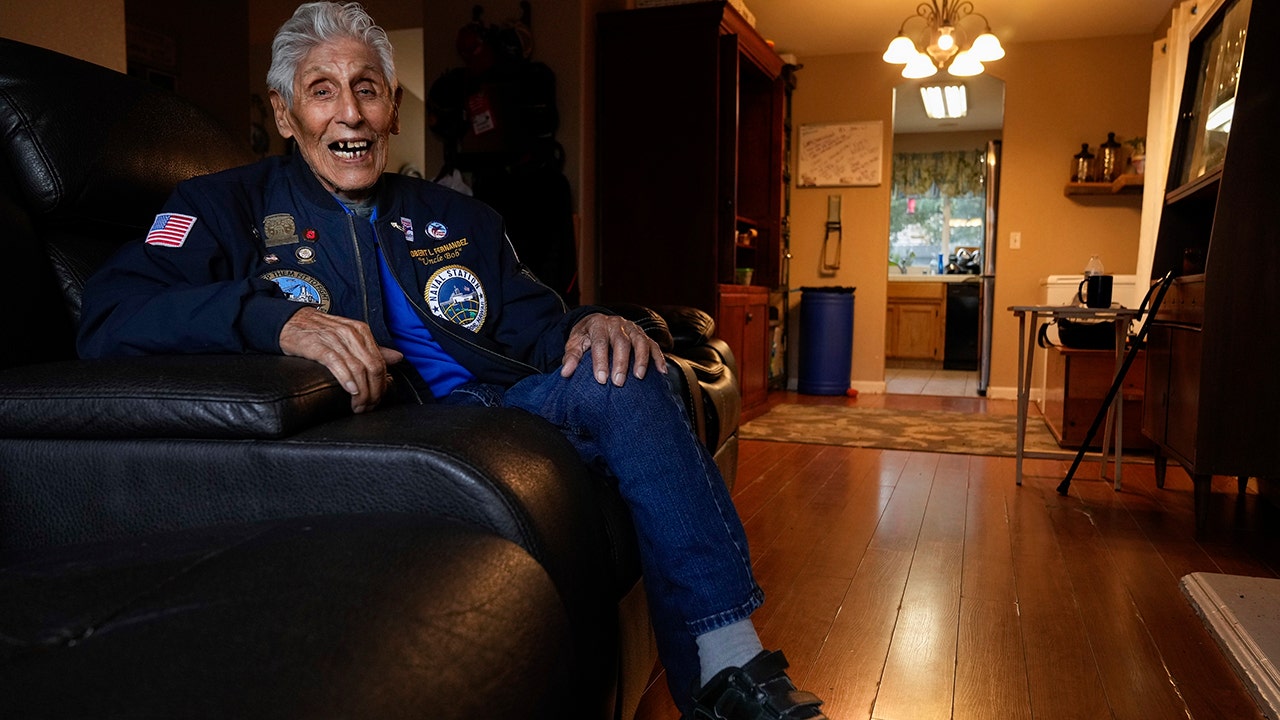
Bob Fernandez, a 100-year-old survivor of the Japanese bombing of Pearl Harbor, died shortly after deteriorating health prompted him to skip a trip to Hawaii to attend last week’s remembrance ceremony marking the 83rd anniversary of the attack.
Fernandez died peacefully at the Lodi, California, home of his nephew, Joe Guthrie, on Wednesday. Guthrie’s daughter, Halie Torrrell, was holding his hand when he took his last breath. Fernandez suffered a stroke about a month ago that caused him to slow down but Guthrie said doctors attributed his condition to age.
ON THIS DAY IN HISTORY, DECEMBER 7, 1941, PEARL HARBOR ATTACK KILLS 2,403 AMERICANS, LAUNCHES US INTO WWII
“It was his time,” Guthrie said.
Fernandez was a 17-year-old sailor on board the USS Curtiss during the Dec. 7, 1941, attack that propelled the U.S. into World War II. A mess cook, he was waiting tables and bringing sailors morning coffee and food when they heard an alarm sound. Through a porthole, Fernandez saw a plane fly by with the red ball insignia known to be painted on Japanese aircraft.
Pearl Harbor Navy veteran Bob Fernandez is photographed at home Tuesday, Nov. 19, 2024, in Lodi, Calif. (AP Photo/Godofredo A. Vásquez)
He rushed down three decks to a magazine room where he and other sailors waited for someone to unlock a door storing shells so they could pass them to the ship’s guns. He has told interviewers over the years that some of his fellow sailors were praying and crying as they heard gunfire above.
“I felt kind of scared because I didn’t know what the hell was going on,” Fernandez told The Associated Press in an interview weeks before his death.
Fernandez’s ship, the Curtiss, lost 21 men and nearly 60 of its sailors were injured. The bombing killed more than 2,300 U.S. servicemen. Nearly half, or 1,177, were sailors and Marines on board the USS Arizona, which sank during the battle.
“We lost a lot of good people, you know. They didn’t do nothing,” Fernandez said. “But we never know what’s going to happen in a war.”
Fernandez had been planning to return to Pearl Harbor last week to attend an annual commemoration hosted by the Navy and the National Park Service but became too weak to make the trip, Guthrie said.
He was “so proud” of his six years in the Navy, all of it aboard the USS Curtiss, Guthrie said. Most of his casual clothes, like hats and shirts, were related to his service.
“It was just completely ingrained in him,” his nephew said.
Fernandez worked as a forklift driver at a cannery in San Leandro, California, after the war. His wife of 65 years, Mary Fernandez, died in 2014.
He enjoyed music and dancing, and until recently attended weekly music performances at a local park and a restaurant. He helped neighbors in his trailer park take care of their yards until he moved in with Guthrie last year.
“I’d do yard work and split firewood and he’d swing the axe a little bit,” Guthrie said. “We’d call it his physical therapy.”
Fernandez’s advice for living a long life included stopping eating once you’re full and marching up stairs. He said it was OK to take a nap, but do something like laundry or wash dishes before going to bed. He recommended being kind to everyone.
Guthrie said he thinks Fernandez would want to be remembered for bringing people joy.
“He would rake people’s yards if they couldn’t do it. He would paint a fence. He would help somebody,” Guthrie said. “He would give people money if they needed something. He was so generous and such a kind person. He made friends everywhere.”
Fernandez is survived by his oldest son, Robert J. Fernandez, a granddaughter and several great-grandchildren.
There are 16 known survivors of Pearl Harbor that are still alive, according to a list maintained by Kathleen Farley, the California state chair of the Sons and Daughters of Pearl Harbor Survivors. All of them are at least 100 years old.
Fernandez’s death would have brought the number to 15, but Farley recently learned of an additional survivor.
Read the full article from Here


LOS ANGELES, Calif. (KCAL/KCBS/CNN) – A former California State Parks superintendent is accused of secretly filming male employees in the nude while they changed in a locker room.
“It was like getting punched in the stomach,” said California State Parks employee Matthew Dawson.
Dawson is afraid that he was one of the Bolsa Chica lifeguards or other workers allegedly recorded in a men’s locker room in Orange County by his then-boss Kevin Pearsall.
Pearsall, who has retired, was charged by the district attorney last week with eavesdropping, secretly filming and sharing some of the nude images.
“When I was naked changing into uniform in the locker room, I remember Kevin directing me to the back area. I never thought anything of it; it just seemed eccentric and now I feel he was setting me up to undress on camera,” he said.
Attorney Gloria Allred said a lawsuit has been filed on behalf of Dawson and three other State Parks employees.
Senior Park Aide Manager Richard Corey said workers were encouraged to change in and out their uniforms in the locker room before and after their shifts.
“What happened with Kevin Pearsall is the ultimate betrayal of trust. He not only was in one of the highest positions of California State Parks, but he was a sworn, post-certified peace officer, a position of trust, and you know he, he swore not only to protect the public but also us, his employees, he failed us,” said Corey.
Pearsall is accused of hiding a USB stick that was also a tiny camera in the locker room for at least a year, recording both audio and video.
An attorney representing another potential victim says 2 million images were recorded.
Pearsall was expected to be in court in August.
Copyright 2026 CNN Newsource. All rights reserved.

IDAHO FALLS — The CEO of the Greater Idaho Falls Chamber resigned Friday amid allegations of misappropriation of funds from a local podcast.
According to a social media post posted Friday from the Greater Idaho Falls Chamber of Commerce, the board of directors accepted the resignation of Paul Baker as chief executive officer.
“We thank Paul for his years of service to the Chamber and wish him well in his future endeavors,” says the post.
The post says that Baker will continue assisting the chamber in a transitional capacity for the next few weeks “to facilitate an orderly leadership transition.”
We have reached out to Paul Baker for comment, and have not received a response. If we hear back, we will update this article.
The resignations come after weeks of scrutiny from a local podcast, IFAF, hosted by Mike Nelson and Karley Morgan. In multiple episodes, the podcasters read questions from an alleged whistleblower who claims that Baker may have misappropriated funds from the chamber, among other allegations.
RELATED | IFAF podcasters reflect on more than two years of rebellious recordings
EastIdahoNews.com has been watching this closely; some facts have been verified, others have not been or appear to be factually incorrect. We will continue investigating and update if we learn more.
“To date, the Board has not found any evidence that Chamber funds have been misappropriated. The Board remains committed to the Chamber’s mission of serving its members and supporting a strong business community,” says the post. “Chamber operations will continue uninterrupted as we move forward with a leadership transition and an independent audit.”
As of Friday, no criminal charges have been filed against Baker for any of the allegations.
The podcast has also linked Baker to Cristie Stone, the former President of the Portneuf Valley Soccer Club, who was recently charged with allegedly embezzling $219,000 from the club. Baker was previously the club’s executive director. Numerous social media posts also indicate that Baker and Stone have been in a romantic relationship.
Local authorities have not indicated Baker is involved in Stone’s embezzlement case.
RELATED | Former president of Portneuf Valley Soccer Club embezzled over $219K, police say
The board says it appreciates the continued support of its members, partners, and the community and will provide additional information “as appropriate.”
EastIdahoNews.com will update when we learn more.
=htmlentities(get_the_title())?>%0D%0A%0D%0A=get_permalink()?>%0D%0A%0D%0A=htmlentities(‘For more stories like this one, be sure to visit https://www.eastidahonews.com/ for all of the latest news, community events and more.’)?>&subject=Check%20out%20this%20story%20from%20EastIdahoNews” class=”fa-stack jDialog”>

The Montana Department of Environmental Quality is reminding the public to check the harmful algal bloom map ahead of the holiday weekend.
HABs can discharge toxins that may be harmful to humans and animals.
If you suspect a HAB, stay out of the water, including your furry friends. Don’t allow dogs to drink from the water or lick their fur if you suspect they came in contact with affected water.
Officials say avoid swimming in areas where the water looks discolored and resembles spilled paint, pea soup or grass clippings.
A list of reported HABs in the past week was provided by the Montana DEQ:
- Lake Helena Causeway and Fishing Access Site, Lewis & Clark County (confirmed 6/25/2026)
- Canyon Ferry Reservoir at Duck Creek Campground, Broadwater County (confirmed 6/24/2026)
- Cooney Reservoir, Carbon County (confirmed 6/23/2026)
The Montana Department of Environmental Quality posted the following on Facebook:
-

 Hawaii7 minutes ago
State parks superintendent accused of having 2 million secret nude recordings of employees
-

 Idaho10 minutes ago
Idaho Falls Chamber of Commerce CEO resigns amid podcast allegations – East Idaho News
-

 Illinois15 minutes ago
Illinois legislation to regulate cannabis market
-

 Indiana22 minutes ago
Prostitution charges filed against two women in Westfield
-

 Iowa25 minutes ago
After convictions for theft and abuse, Iowa nurse faces sanctions from licensing board
-

 Kansas30 minutes ago
Kansas man injured after jet ski incident at Lake of the Ozarks
-

 Kentucky37 minutes ago
Kentucky Picks Up Latvian Record Holder Nikolass Deicmans For Class of 2026
-

 Louisiana40 minutes ago
Republicans outpace registered Democrats in Louisiana for first time in history

