West Virginia
This Is the Perfect Small Mountain Town—And Few Know About It


There isn’t much to Davis, West Virginia (population 581). Its downtown is only a few blocks long. There’s no movie theater, no Starbucks. The entire county has one stoplight. You could feasibly drive through Davis and miss it entirely if you were engrossed in a good podcast.
Davis sits on the northern rim of Canaan Valley, a broad, high-elevation basin roughly 2.5 hours west of Washington, D.C. It’s surrounded by 4,000-foot peaks, most managed as public land, and hubs for hiking, biking, and skiing. But Davis’s best attribute? It’s full of people stoked to be here.
Why I Love Visiting Davis, West Virginia, Year-Round
Some might be deterred by Davis’s lack of sushi or nightlife or community theater or even a Target. But I’ve been going there for 20 years, and every time I visit I’m mesmerized by the town’s bounty. The few restaurants are great for such a small town, there’s a proud beer scene, and access to outdoor adventure is off the charts.
Just ask Ian Beckner, a Davis native who moved away for college, then bounced around to other mountain towns before settling back in Davis to open a ski shop.
“There’s just so much here—so many trails, such good skiing,” he says. “People usually have to work two jobs to make ends meet”—there are no large employers or industries in the area—“but they don’t care too much about money. They just want to be here. Once you’re here, you don’t leave. I can’t tell you the last time I drove more than an hour away.”

The adventure portfolio is exceptionally diverse, considering Davis’s location in the southern Appalachians, a region not renowned for robust winter-sports opportunities. But this particular nook of West Virginia has four distinct seasons. Mountain biking rules the warm months and skiing takes center stage in the winter, thanks to a hefty average snowfall and a trio of ski resorts. And West Virginia gets powder: Lake Effect snow from the Great Lakes on one side, and storms from the Northeast coast on the other. On average, it enjoys more than 150 inches of snow annually. Compare that to the 30 to 40 inches of snow that typically fall on ski resorts in neighboring Virginia.
I can’t decide if I like Davis more when it’s warm or has powder on the ground. I’ve logged countless miles on the valley’s notoriously rocky and rooty singletrack and celebrated epic rides with friends by passing around jars of moonshine. I’ve also floated through knee-deep powder in both lift-served and backcountry glades. Ditto with sharing the moonshine then, too.
The Great Mountain-Biking-Versus-Skiing Debate

So which is better? The mountain biking or the skiing? This is something debated by locals.
On the one hand, hundreds of miles of singletrack wind through adjacent state-park, national-forest, and national-wildlife-refuge land. Remember the hardcore 24-hour mountain-bike races that were so popular in the ’90s and early 2000s? They began here, with the 24 Hours of Canaan.
On the other hand, you can be at either of the downhill ski resorts, the 95-acre Canaan Valley and 100-acre Timberline, in about 10 minutes. Each offers more than 1,000 vertical feet of skiing, as well as a touring center that pulls in hundreds of cross-country junkies daily when there’s fresh snow.
“The skiing is what attracted me first,” says Todd Romero, who moved to Davis in 2011, switching jobs from the tech industry to the public-school system and taking a huge pay cut in the process. “When there’s a solid base of snow, and you can ski the trees. It’s amazing. But the mountain biking is like nowhere else. I’ve been to other bike towns, but you have to drive to the trailhead. Here in town you’re at the trailhead.”
The More Some Things Change…
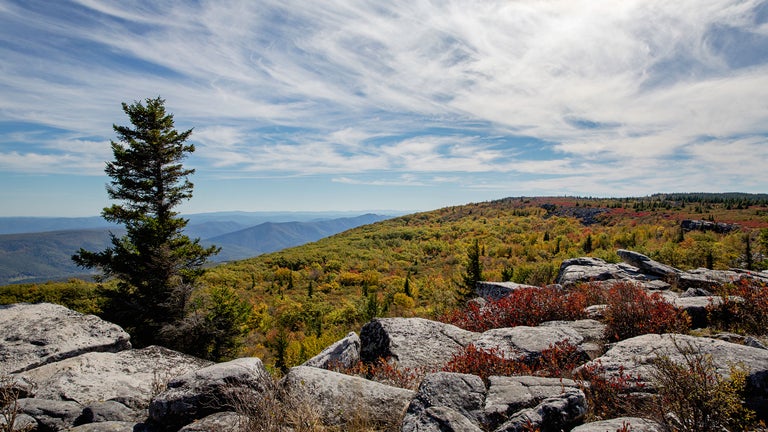
As a Davis outsider, I’d say the town hasn’t changed much in two decades. The mountains surrounding town keep it relatively isolated, as do the serpentine roads between it and larger burgs. Locals say housing prices have skyrocketed and those in the service industry say they have a hard time making rent. It’s tough to find rental data on a town of this size, but housing prices in general have climbed almost 4 percent each year since the pandemic. And it’s only getting pricier; according to Zillow, home prices in Davis jumped 10 percent in the last year alone, with the average home value sitting at just under $330K. Davis is suffering from the second-home crunch that has impacted just about every mountain town I know of in the past decade. The same thing is happening in my hometown of Asheville, North Carolina.
Beckner says there are now more restaurants to accommodate increasing numbers of visitors (the amount of money the county collects via hotel tax has almost doubled in the last decade, according to the Tucker County CVB), and the downhill resorts are more crowded on weekends. But the Davis of today still feels like the Davis from his childhood, he says.

“We’re still a small town. It’s not commercialized,” Beckner says. “We have all these miles of trail, but still only one bike shop. We might have more of an influx of people trying to enjoy the vibe that we all live with, that’s true, but the core value is still what it was when I was a kid. People are here to get outdoors.”
Beckner tells me that his favorite weekly event is the weekly mountain-bike group ride, the epicenter of Davis’s social scene.
“If it’s Thursday night, you know where everyone will be. It feels like the whole town rides together, and then we all go get burritos together, and then we all go to the brewery together,” he says. “You’re mingling with your doctor and your accountant and your kid’s teacher. It’s loud, and it’s always a party. It doesn’t matter what you wear, what bike you’re on, everyone is out enjoying what we have.”
Without further ado, here’s the best of Davis and the surrounding Canaan Valley.
What’s Cool About the Winter in Davis, West Virginia
Skiing and Snowboarding

Two downhill resorts are minutes apart from each other. Canaan Valley, part of Canaan Valley State Park, has loads of blue and green terrain, perfect for families and beginners. More advanced skiers can head for the fun, mellow glades off the black-diamond Dark Side of the Moon, from the top.
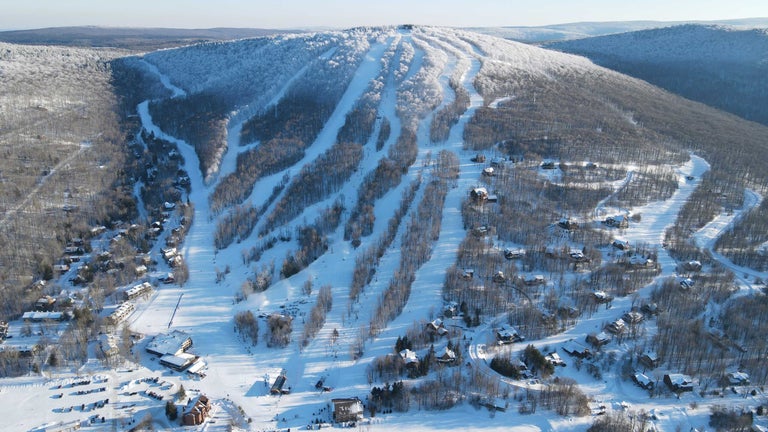
Timberline Resort has steeper terrain and better tree skiing. It also has a high-speed six chair that gets you to the summit in under five minutes, so you can knock out laps until your quads quake. Pearly Glades, closer to the base area, offers steep pitches with comfortable space between trees, but mainly you’ll find tight tree runs all over this mountain, so you’ll need to focus. Driftland Ski and Sport, downtown, has all the gear you need.

As great as the downhill skiing is, to me, the Whitegrass Ski Touring Center is what makes winter in Davis truly special. It offers more than 25 kilometers of groomed cross-country trails and more than 60 kilometers of ungroomed trails that climb and descend some 1,200 vertical feet. This isn’t flat-road skiing but backcountry fun). A dozen warming huts are scattered throughout the system, most stocked with pieces of chocolate. The Whitegrass café and gear shop welcomes skiers with a warm après scene that includes multiple firepits, and Chip Chase, the center’s owner and a local legend, often mills around, sharing stories and his personal stash of whiskey.
Biking
Cyclists don’t have to give up riding just because it’s winter. A local trail builder, Zach Adams, has started grooming more than eight miles of fat-bike trails at Canaan Valley State Park. The place is even a stop on an annual fat-bike race series that hits the valley and a few other spots in West Virginia and Maryland.
Ultimate Sledding
If you have kids, hit up the sled run at Blackwater Falls State Park, which has a magic carpet and a hot-chocolate hut.
How to Maximize the Warm Months in Davis
Hike, Fish, and (Much) More

Dolly Sods Wilderness, a small but spectacular 17,000-acre roadless area known for its high-elevation bogs and rocky outcroppings, is the destination for hiking and backpacking. Hit Red Creek Trailhead for fly-fishing, creek stomping (wading and exploring), and hiking on paths that range from easy three-mile out-and-backs to multiday 20-mile loops.

I have never yet played the golf course at Canaan Valley State Park, but I would love to.
Biking
But if you’re coming to Davis, you’re bringing mountain bikes. The singletrack is notoriously difficult and, at least in my opinion, all uphill. That’s part of the charm.

If you agree that rocks are fun, start with Plantation Trail, which forms the backbone of the singletrack within Canaan Valley. Many offshoots and well-worn social trails branch off this eight-mile point-to-point route, and I guarantee you’ll get off your bike at least once during particularly spicy sections, so give it twice as much time as you think you’ll need.
Plantation Trail
Don’t fret if that sounds like more torture than fun; some new, machine-groomed flow trails have been built for us mere mortals. Hit Promised Land, a six-mile swoopy loop in Canaan Valley State Park. Blackwater Bikes has beta, rentals, and gear.
Promised Land
Where to Eat and Drink in Davis, West Virginia
Davis and the Canaan Valley only have a few restaurants, but those have everything I crave when I’m there.
Hellbender Burritos and Sirianni’s, serving pizza, are staples. But my favorite place to eat is at Whitegrass, whose café caters to a more elevated palate; its great vegetarian chili hits just right on a cold afternoon. Sometimes there’s live music, and the specials change daily, but there’s always a crowd of rosy-nosed cross-country skiers, fresh off the trails and hungry, clustered in a handful of tables in the middle of the gear and rental shop. The place is cozy, loud on a busy afternoon, and really fun. When it’s time for a beer, head to Stumptown Ales, the locals’ favorite drinking hole.
Where To Stay in Davis
You’ll find Airbnbs throughout the valley, including a two-bedroom option attached to the bike shop. The lovely Canaan Valley State Park has lodge rooms and cabins fresh off a renovation (from $178.50), as well as campsites with electricity. I’ve camped in my 4Runner here in the winter, running a space heater from the outlet. Searching for something a bit more sophisticated? Book a night at the ten-room Billy Motel and Bar, and enjoy its mid-century vibe (from $100).
Find Airbnbs in Davis
Book flights to Elkins, West Virginia
Graham Averill of Asheville, North Carolina, is Outside Online’s national-parks columnist. He’s hoping to bring his wife and kids to Davis this winter to ski at White Grass and sled on the hill in Blackwater Falls State Park. He recently wrote about the most beautiful towns in the Southeast and the best ways to get outside in West Virginia, as well as an on-the-ground account of what it was like to survive Hurricane Helene in Asheville, and why he rues not visiting Capitol Reef National Park sooner.




West Virginia
Community Catalyst Grant applications are open through West Virginia First Foundation through June 30 – WV MetroNews

The West Virginia First Foundation, which was established to use drug lawsuit settlement money to try to alleviate problems related to addiction, reported having access to $378.5 million in financial resources and noted that more than $34 million in grants have been awarded since the organization’s start.
The West Virginia First Foundation met for a few minutes Thursday at Ascend West Virginia in Charleston. The meeting was also available for view through streaming.
Executive Director Jonathan Board highlighted the launch of the Community Catalyst Grant application and a statewide needs assessment intended to identify service gaps.
Designed as a three-year, outcomes-driven investment, the program will support projects focused on public safety response, day report centers and generational prevention efforts. The program opened for applications on June 1 and remains open through June 30.
“We’re very encouraged by the interest and engagement so far,” Board said.
The board also approved a $4 million funding request for the Rockefeller Neuroscience Institute. The project is focused on expanding access to innovative addiction treatment and recovery support tools while building the technology and infrastructure needed to support implementation across West Virginia.
Additional details about the project and funding agreement are to be released in the coming weeks following the completion of final documentation. West Virginia First Foundation and Rockefeller Neuroscience Institute plan to issue a joint announcement once the agreement process is complete.
“They’ve gone through a very rigorous process for the correct funding,” Board said. “Their team has presented an opportunity to fund a project that will build technology, training and support systems of care needed to expand access to an innovative addiction treatment approach throughout the state of West Virginia, and really beyond.”
The West Virginia First Foundation is a non-profit organization established in 2023 to manage and distribute 72.5% of the state’s opioid settlement funds, totaling hundreds of millions of dollars. The organization is aimed at combatting the addiction crisis through grants and regional projects.
The next regular meeting of the Foundation’s Board of Directors is scheduled for Sept. 17 although it’s subject to change.

West Virginia may have come up empty-handed in two tries against North Carolina in the College World Series, but they earned the respect of their head coach, Scott Forbes, who was incredibly complimentary of the Mountaineers following Wednesday’s game.
“I want to congratulate West Virginia. A heck of a team, a heck of a run,” he opened his postgame press conference with. “They are very well coached. They just play the game the right way. It’s a credit to their coaching staff. They come at you a lot of ways. A lot of speed, deep pitching staff, so we really had to work in those two games to beat them. I’ve been in their shoes, and I know what that feels like, and it’s a stinker. But man, they got a lot to be proud of, and they should be extremely proud of how they represented their university.”
The culture at WVU is as strong as it gets
Multiple times this season, West Virginia looked like they were well on their way to a loss and were rewarded with a win because they never stopped playing hard. Everyone thinks of the two games against Kentucky in the Morgantown Regional, and rightfully so, but they also came back to win after trailing by eight against UCF and after trailing by five to BYU.
For a moment, there was a belief that the magical moment was going to come again during Wednesday’s game against Forbes’ Tar Heels. With two outs in the 7th and trailing 12-1, Armani Guzman busted his tail down the first base line to beat out a grounder to short. It ultimately led to a five-run inning for the Mountaineers, all of a sudden turning a laugher into a semi-interesting game. Gavin Kelly hit a solo home run in the 8th to make it a five-run deficit, and in the ninth, Ben Lumsden just missed a three-run shot that would have really put pressure on North Carolina, even with two outs.
To have your team still playing hard when trailing by 11 with their season likely about to come to an end, it says a lot about the character of this group, but also how deeply ingrained the culture is at WVU. There’s a reason this program has turned the corner over the last 14 or so years and is continuing to trend up. They’ve had the right people in place leading it.
 Add us as a preferred source on Google
Follow
West Virginia
Proposed 107.5-mile transmission line could leave W.Va. ratepayers on hook for $440M-$900M

CHARLESTON, W.Va. (WCHS) — A 107.5-mile transmission line project has been proposed, the MidAtlantic Resiliency Link, which would cut through parts of West Virginia to ultimately help power Virginia’s data center hub since there is not enough generation locally to serve them.
“Virginia gets the power and West Virginia gets the towers,” Del Chris Anders said. “What they did is they look west and said, hey, we’ll just use West Virginia but we’ll get this power and we’ll run this big extension cord. I’m all for exporting power from West Virginia. We are a power production state, but I’m not going to do so out of the wallets of West Virginians and allowing their property to be taken.”
During the 2026 legislative session, lawmakers put a bill on the table which was aimed at giving the state access to utilize these lines, but nothing made it to the finish line.
“We said, ‘Okay, if you’re going to run them through, you have to drop substations in West Virginia and by the way, West Virginia ratepayers will only pay for the amount of energy that stays within our state,’” Anders said.
A second line is also up for discussion. Valley Link Transmission hasn’t finalized any routes yet, but it would consist of 260 miles of transmission line and would add two substations between Frederick County, Maryland, and Putnam County.
With both of these lines, the main concern surrounding the proposals is who exactly is expected to foot the bill and whether or not it will ultimately fall back on West Virginia ratepayers.
“We’re going to be on the hook for anywhere between $440 million to over $900 million on both lines,” Anders said.
Lawmakers said those price tags continue to increase.
“At least for the MARL line, they went back to the grid operator, PJM, and said, ‘It’s going to cost significantly more money than it originally thought. Those estimates of the cost to West Virginia ratepayers are only going to go up,’” Del. Evan Hansen said.
These projects have gained bipartisan opposition. This is all beginning when representatives for these energy companies brought these proposals to lawmakers in January, noting that these lines would strengthen the entire grid.
But many lawmakers were not convinced, asking why they should support it if West Virginia has no direct benefit.
“It would increase our electric rates and private property owners might be faced with giving up their land or having their property values decline,” Hansen said.
It’s not only state officials voicing opposition. Public hearings have been held in the northern counties where community members shared their concerns with these projects that could go right through their backyards.
“We did hear from construction workers and electrical workers about the jobs, but otherwise it was uniformly against the construction of the project,” Hansen said.
An evidentiary hearing for MARL’s permit application will be held by the Public Service Commission on Oct. 26.
-
 Politics7 minutes ago
Political watchdog fines Newsom for failing to report $5.5M in solicited donations on time
-
 Sports19 minutes ago
Goalkeeper Raúl Rangel’s elite play and South Korea’s mistake help Mexico advance
-

 World27 minutes ago
US-Iran talks postponed as Israel attacks Lebanon
-
 News52 minutes ago
Luigi Mangione’s lawyers withdraw plans for psychiatric defense
-

 New York2 hours ago
Video: Knicks Fans Celebrate With Ticker-Tape Parade
-

 Los Angeles, Ca2 hours ago
Armed, dangerous CHP pursuit suspect tied to double homicide in Pomona
-

 Detroit, MI3 hours ago
First responders honored after rescuing 12 people from capsized sailboats near Belle Isle
-

 San Francisco, CA3 hours ago
Oakland man faces hate crime charges for Castro District attack

