Midwest
Serial killer’s daughter exposes chilling secret, turns him in to police

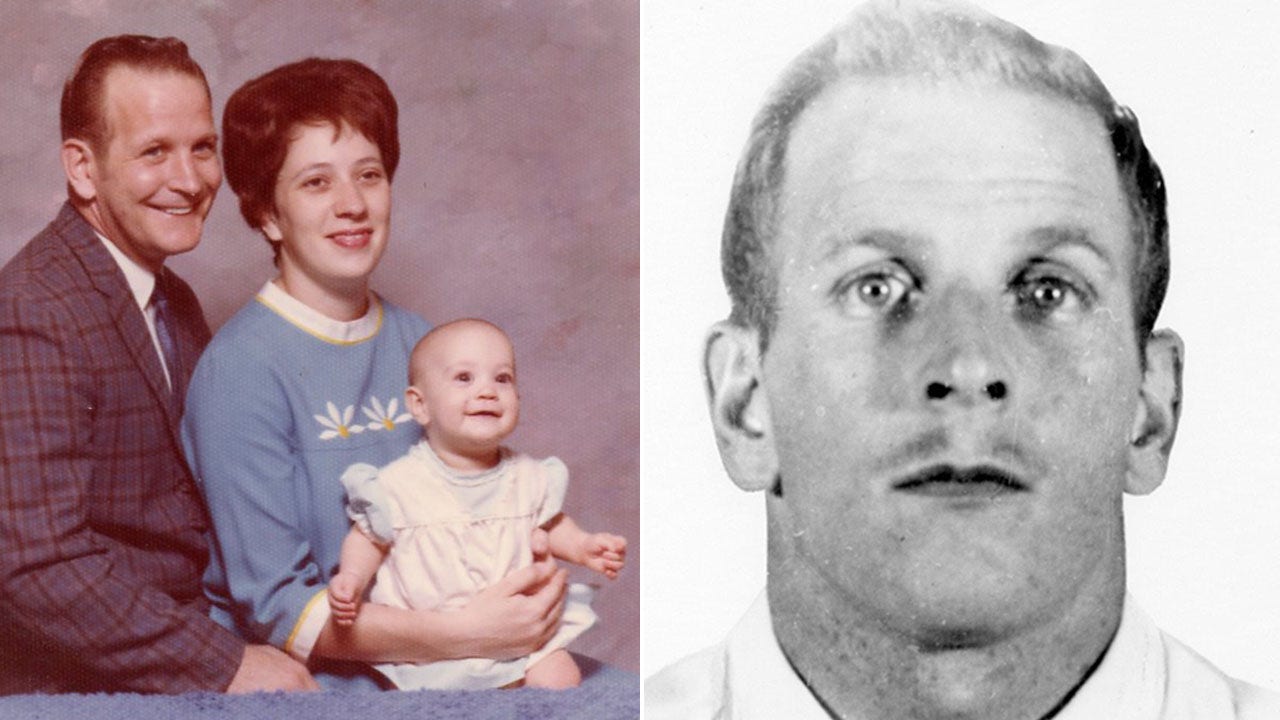
One night in 1980, April Balascio’s father, Edward Wayne Edwards, woke up the household and told everyone to start packing. They were leaving their home in Watertown, Wisconsin, after living there for a year.
It wasn’t new for Balascio, who was 11 years old. She was accustomed to moving every six months to a year without warning. It wouldn’t be until decades later when she discovered why.
“Each time we moved, it was hard,” Balascio told Fox News Digital. “You develop new friends each time, and then you have to leave them. But one thing that came out of it is you learn how to pack quickly and tightly because if you didn’t, your stuff would get left behind.
SERIAL KILLER’S DAUGHTER CONFRONTS HIM BEHIND BARS OVER EXPLOSIVE DIARY ENTRY THAT SUGGESTS SHE TOO WAS VICTIM
April Balascio as a child. (Courtesy of April Balascio)
“But it was hard having to upend everything,” she shared. “It was hard starting a new school every year or even sometimes twice a year. … He made us believe we were leaving because people were coming after us. So, there was also that fear that we were being hunted, that fear that we could be killed.”
Edward Wayne Edwards with his wife Kay Sept. 25, 1972. (Akron Beacon Journal/USA Today Network)
Balascio has written a new book, “Raised by a Serial Killer: Discovering the Truth About My Father.” In it, Balascio details how she discovered her father’s true identity and the horrific crimes he committed.
The patriarch died in 2011 at age 77 from natural causes. At the time, he was behind bars after being sentenced to death by lethal injection.
April Balascio’s memoir, “Raised by a Serial Killer,” is out now. (Gallery Books )
“I wanted this story to be told, but it took a long time to write it,” Balascio admitted. “It was a very difficult thing to do. I was protecting my memories.”
Balascio described Edwards as charismatic, a “big kid” who enjoyed parties and entertaining. But he also had “a very dark side.”
“It was scary,” she said. “He was abusive. And especially as I got older, I became more scared of hearing his tires on the gravel in the driveway. I would wonder how he was going to walk through the house. Was he going to be in a good mood or a bad mood? For a while, I hated him.
FOLLOW THE FOX TRUE CRIME TEAM ON X
Edward Wayne Edwards was charming and charismatic, but he also had “a dark side,” daughter April Balascio told Fox News Digital. (Courtesy of April Balascio)
“I witnessed his violence, and it was a common occurrence, whether he took his anger out on me or he took it out on my mom,” Balascio added. “Especially when I was younger, I witnessed more of him taking his anger out on my mom.
“I witnessed him hitting her, punching her in the face.”
For years, Balascio wondered why, at times, the family had to suddenly leave in the middle of the night. It stayed with her that Edwards also had a fascination with crime announcements in the local newspaper.
April Balascio had a nomadic upbringing. As an adult, she would discover why. (Courtesy of April Balascio.)
In March 2009, when Balascio was about 40, she began digging, revisiting the cases that intrigued her father. After searching for “cold case” and “Watertown” online, Balascio came across reports about the “Sweetheart Murders.”
In this Aug. 19, 1980, photo, a psychic, who was called in on the case of the two missing Jefferson County teens, stands near the car the couple had driven the night they were last seen, in Sullivan, Wis. (Michael Sears/USA Today Network)
In 1980, high school sweethearts Timothy Hack and Kelly Drew disappeared after a wedding reception. The remains of the 19-year-olds were found in a field two months later. Edwards, then a handyman, was questioned by police but insisted he had no information.
After the bodies were discovered, Edwards and his family left Wisconsin.
SIGN UP TO GET THE TRUE CRIME NEWSLETTER
Judith Straub, 18, of Sterling, Ohio, was found in Silver Creek Metropolitan Park in August 1977. She was one of Edward Wayne Edwards’ five known victims. (Akron Beacon Journal/USA Today Network)
“I suspected my dad was doing some bad things, but I didn’t verbalize it to anyone,” said Balascio. “There was no proof. … I can’t say I suspected that it was exactly murder, but I did believe he was harming people.”
People search for Timothy Hack and Kelly Drew in Jefferson County. (Benny Sieu/USA Today Network)
Balascio learned that investigators had reopened the case. She reached out to detectives, eager to share everything she remembered from her childhood. Balascio told them she suspected her father could have been responsible for the killings but didn’t have any proof, only memories of what she saw and felt.
She described how, when the pair were initially missing, Edwards talked about them “constantly.” One day he quipped to a pal, “I bet you they find them in a field.”
William Lavaco, 21, from Doylestown was found in Silver Creek Metropolitan Park in August 1977. (Akron Beacon Journal/USA Today Network)
At a lab, Edwards’ DNA and the genetic material at the crime scene matched, Oxygen.com reported. Edwards was arrested in Kentucky, where he had moved with his wife. He confessed to five murders.
“That’s when it truly hit me how evil my dad was,” said Balascio. “He was a bad man.”
As a child, Edwards was raised in an orphanage and spent time in juvenile detention, the outlet reported. In 1962, he was arrested for an armed bank robbery and spent five years behind bars. His life of crime didn’t end there.
GET REAL-TIME UPDATES DIRECTLY ON THE TRUE CRIME HUB
Edward Wayne Edwards at an orphanage. (Courtesy of April Balascio)
Edwards confessed to killing 21-year-old William “Billy” Lavaco and 19-year-old Judith Straub, another couple, in 1977. The murders took place in Ohio, where Edwards grew up.
Edward Wayne Edwards had a tumultuous childhood that led to a life of crime. (Alamy)
Edwards also confessed to murdering his foster son, Dannie Boy Edwards, in 1996. His motive was to collect the payout of the 23-year-old’s life insurance, which was worth $250,000.
Balascio remembers one of the last times she saw her father. He was hospitalized, and she decided to visit him with her children.
Edward Wayne Edwards died in 2011. He was 77. (David Harpe/USA Today Network)
“My daughter wrote my dad a get-well card,” Balascio recalled. “I don’t remember the exact words, but it said something to the effect that Jesus forgives everybody and everything. You just need to ask him. There was also something in there about God being forgiving and God being loving. My daughter was only in elementary school, but she had made this card for him.
“I remember my dad reading it and crying. He said, ‘It’s funny that you should say that because I was just thinking, telling God that he couldn’t forgive me for all the bad things that I had done.’
“We had to leave the room because he had an emergency that needed to be taken care of,” she shared. “I remember thinking, ‘Maybe he was going to change his ways.’”
April Balascio is seen here with her parents at 7 months old. (Courtesy of April Balascio)
Balascio said she was “relieved” when Edwards died.
“He was supposed to be executed, and he ended up dying before the execution,” she said. “I was not looking forward to the execution. I knew it would be a media circus. I knew the reporters would be knocking on the door again and calling because he asked for the death penalty. His dying before the execution was a blessing. It was a relief. It was all over.”
Edward Wayne Edwards follows court proceedings along with defense attorney Larry Whitney. Edwards entered guilty pleas on two counts of aggravated murder for the 1977 killings of Billy Lavaco of Doylestown and Judy Straub of Sterling. (Phil Masturzo/USA Today Network)
But the story isn’t quite over for Balascio, who now lives a more peaceful life on a farm. She has submitted her DNA, hoping it could lead to answers to any cold cases her father may have been involved in.
Police searched the area along Highway 16 for the bodies of Timothy Hack and Kelly Drew, who went missing in August 1980. (Ned Vespa/USA Today Network)
“You don’t have to be a product of your environment,” said Balascio. “We all make choices. My dad made the choices that he made, and they were bad choices. But he has children who are all law-abiding citizens who have made the right choices and have loving families.
“I have so much empathy and sympathy for the parents who lost their children. … To this day, I still break down and cry when I think about the devastation that my father has caused in people’s lives… There are still repercussions from the evil things my dad did. That doesn’t go away.
April Balascio lives a more peaceful life on a farm. (Jonathan Easterling)
“My dad did confess to five murders, yes, but I also believe … there’s more out there,” she reflected. “There are more victims out there.”
The Associated Press contributed to this report.
Read the full article from Here


A Michigan State student appeared to be brandishing a knife and running toward officers when he was shot in multiple waves of police gunfire, according to body camera video of the deadly confrontation released Friday.
MSU senior Isaiah Kirby, a 21-year-old Maryland native, was killed on April 15, and Friday marked the first time video of the fatal gunfire was shown to the public.
East Lansing police were called to Lake Lansing and Abbot roads on a theft call that “evolved into a stabbing by a suspect, which turned into an officer-involved shooting,” the department has said.
The officers’ video showed them driving to the scene when a man, identified by police as Kirby, came running toward them in the middle of the road. Kirby was brought down by an initial hail of gunfire as he came in their direction, video showed.
Kirby, screaming in agony, was on his knees as officers ordered him to drop a knife, according to video. Police then shot Kirby in two more hails of gunfire, with the first and last shots coming about 17 seconds apart, video showed.

“I want to thank the officers and employees of the East Lansing Police Department for their continued professionalism during this investigation,” said East Lansing Police Chief Jennifer Brown, who narrated the video.
“Furthermore, I want to thank the East Lansing community for their patience and understanding as this investigation proceeds,” she said.
Karyn Kirby, the slain student’s mother, and family attorney Teresa Bingman did not immediately return calls seeking comment early Friday evening.
Kirby’s family was shown heavily redacted footage last week that the slain student’s loved ones said didn’t show why deadly force was necessary.
“Where’s my truth? Where’s my transparency?” Karyn Kirby told supporters earlier this week.
“We have asked from the onset, to see raw, clear, unedited video,” she added. “That’s all I ask. It’s not that hard, right?”
The Michigan State Police are continuing to investigate the use of force by East Lansing officers, officials said.
East Lansing police identified the four officers involved in the shooting: field training officer Beck Martin, who has been on the job for three years; two-year veteran officer Brennan Surman; officer Benjamin Saylor, who has been on the job for one year; and officer Zane Johnson Chasteen, who has been on the job for three months and was paired with Martin.

ST. PAUL, Minn. (FOX 9) – Families and officers gathered outside the state capitol on Friday to remember and honor Minnesota’s fallen law enforcement officers.
Families honor loved ones killed in the line of duty
What we know:
The Peace Officers Memorial Day event began with a 24-hour vigil Thursday night, where officers from around Minnesota stood guard at the memorial.
The day included moments of silence, the playing of Taps and several wreath-laying ceremonies.
“Every once in a while, something tragic happens and somebody dies in the line of duty,” said Chief Brian Hubbard, president of the Minnesota Law Enforcement Memorial Association, which organized the service.
According to organizers, 314 officers have died in the line of duty in Minnesota.
Behind every name is a family, a story and painful memory.
Tina Arendt of Cold Spring was young when her father, Stearns County Senior Sheriff’s Deputy Edwin Arendt, 61, died in the line of duty in November 1987. On Friday, she laid a wreath in his memory.
“It was just a random accident out in the middle of the country, and he didn’t make it home,” she recalled. “Things I remember about him – he loved his job. He loved being out helping people. There wasn’t a day that he wasn’t proud and honored to wear the badge.”
The event was as much about supporting families as it was about honoring the fallen.
“The main heart behind doing this is to make sure that those family members, those survivors left behind, know that we won’t forget about them,” said Hubbard.
The vigil and service at the memorial
Timeline:
The 24-hour silent vigil began Thursday night and ends Friday night. Officers took turns standing guard at the memorial throughout the day and night.
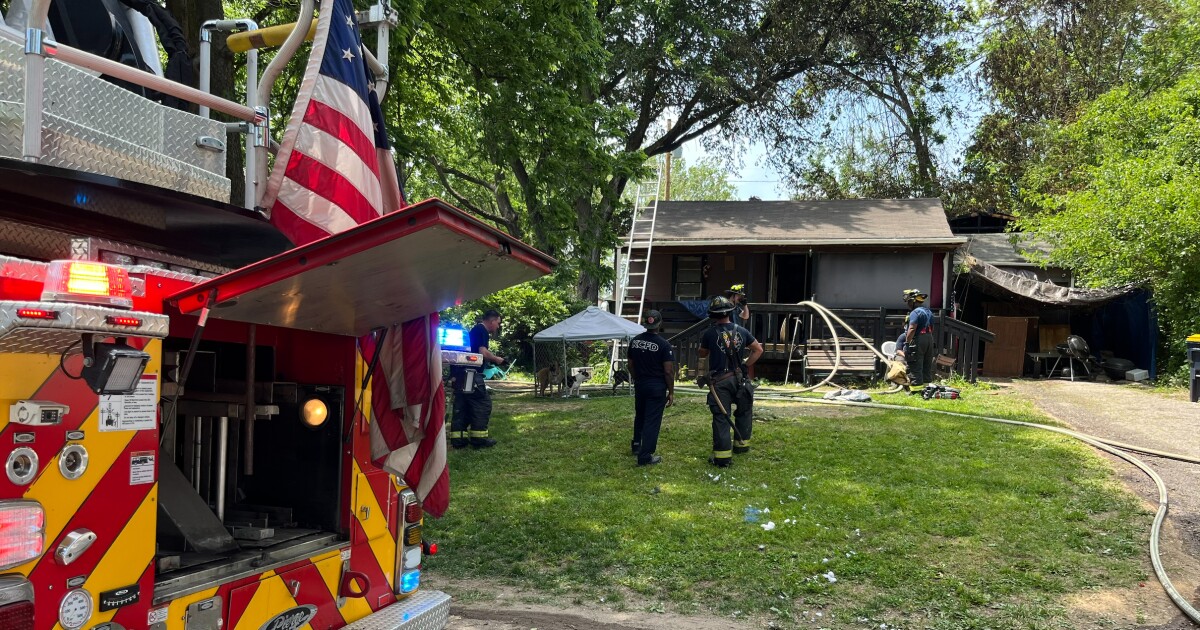
KANSAS CITY, Mo. — A resident of a home was able to escape serious injury Friday following a house fire in Kansas City, Missouri.
Crews were dispatched around 12:33 p.m. Friday to the 8000 block of Euclid Avenue in Kansas City.
The one-story residence had “heavy smoke and fire” showing when firefighters arrived, per a press release from KCFD.
The fire department brought one person from inside the house to safety, and the individual did not need medical treatment.
City Planning and Dangerous Buildings was requested.
An investigation into the cause of the fire is underway.
—
-

 Maryland5 minutes ago
Margie’s Intention Repeats Maryland Magic in DuPont
-

 Michigan11 minutes ago
Police release 911 calls and video connected to fatal shooting of Michigan State student
-

 Massachusetts17 minutes ago
Public asked to attend funeral services for Massachusetts World War II veteran with no known family
-

 Minnesota23 minutes ago
Minnesota honors 314 fallen officers in solemn St. Paul ceremony
-
Missouri35 minutes ago
Crews safely remove individual from house fire Friday in Kansas City, Missouri
-

 Montana41 minutes ago
Montana 250th Commission awards $100,000 to fund 40 events for America’s 250th in 2026
-

 Nebraska47 minutes ago
Concordia Nebraska to host Early Childhood Conference June 7-8, 2026, with preconference
-

 Nevada53 minutes ago
Vegas casino pulls plug on prediction market conference amid Nevada crackdown