Indiana
Following a nationwide trend, Indiana's teacher vacancies persist • Indiana Capital Chronicle


New federal data shows that the majority of the country’s public K–12 schools had difficulty hiring fully-certified teachers heading into the current academic year — and Indiana districts are not immune to vacancies.
Officials at nearly 75% of public schools nationwide said they had trouble filling one or more vacant teaching positions before kicking off the 2024-25 school year, according to a survey study released by the U.S. Department of Education’s National Center for Education Statistics.
The School Pulse Panel data published by NCES showed one-fifth of vacant teacher positions remained unfilled at the start of this school year — with many ongoing vacancies. As of Thursday, the Indiana Department of Education’s job board listed more than 1,300 available educator jobs statewide.
That’s an improvement from earlier this year. As of June, there were more than 2,200 vacancies for teaching positions statewide and nearly 1,000 openings for other jobs within school districts.
It’s a hopeful drop, too, compared to in 2022, when — not long after the COVID-19 pandemic — IDOE’s job board listed 4,200 open jobs within Indiana schools. More than 2,500 of the open positions posted were teaching jobs.
But many openings remain. Most of the unfilled positions in Indiana are for elementary, early childhood and special education positions.
The NCES data, collected in August, came from 1,392 participating public K–12 schools from every state and the District of Columbia. NCES did not release state-by-state numbers, however, instead releasing only aggregate country-wide results.
Areas with the most vacancies
On average, public schools reported having six open teacher positions before the start of the current academic year. By the first day of school, 79% of those positions were filled, according to NCES.
National survey results indicated that general elementary teaching positions, special education and English language arts positions were among the most commonly cited by public schools as having at least one teaching position to fill prior to the start of this school year. Special education remained the most difficult teaching position to hire for this year.
In the Hoosier state, 1,370 teaching positions were listed on IDOE’s jobs board as of Thursday. More than 2,600 school openings were available, overall.
A breakdown of specific teaching vacancies included:
- 15 in alternative education
- 23 in arts
- 25 in career and technical education
- 332 in early childhood
- 234 in elementary education
- 36 in ENL/ESL
- 33 in foreign language
- 58 in language arts
- 8 in library
- 77 in mathematics
- 25 in music
- 25 in physical education
- 77 in science
- 39 in social studies
- 286 in special education – 286
- 369 in other teaching positions
Why vacancies persist
Compared to the national estimate, public schools with a student body made up of less than 25% students of color reported filling a higher percentage of vacancies with fully certified teachers, per the NCES survey.
Schools with a student body made up of more than 75% students of color, as well as those in high-poverty neighborhoods, reported more vacancies.
Teacher shortages — especially in certain subject areas, like English-as-a-second-language classes and special education — have been particularly challenging for schools since the onset of the COVID-19 pandemic, according to the NCES report.
Teaching salaries have also largely failed to keep up with inflation, and teachers’ morale declined following the pandemic. National experts cited increased issues with student behavior and a rise in mental health problems as contributing factors, too.
Still, the NCES survey results also noted that 64% of schools said “an overall lack of qualified candidates” and “too few candidates” applying for open positions were the top challenges in finding teachers to fill vacancies.
Compared to years past, though, the percentage of schools saying candidates felt like salary and benefits were not enough dropped for both teaching and non-teaching staff.
Indiana’s latest teacher compensation report revealed that Hoosier teachers’ average annual pay exceeded $60,000 for the 2023-24 academic year — a new high for pay.
The average teacher salary in Indiana during the last school year was recorded at $60,557 — up from $58,531 the year prior — and nearly all Hoosier school districts gave teachers a raise. But many teachers in the state — especially those with little to no experience — still make less.
IDOE has targeted teacher recruitment with multiple grants and other programming to increase the number of Indiana teachers and cut down on lingering vacancies, including the I-SEAL program — run by the University of Indianapolis’ Center of Excellence in Leadership of Learning — that allows current teachers, including those on emergency permits, to get fully licensed in special education at no cost.
More than 1,100 teachers have enrolled in the program, and nearly 600 have completed it since its inception in 2021.
Nearly 3,600 new-to-teaching hires were also brought into schools during 2023-24, according to the most recent state data.
Separately, 4,464 full-time teachers who already had classroom experience were hired by districts across the state.
Indiana numbers further showed 55,971 teachers were retained in 2023-24 from the previous year. That’s compared to 55,227, the year before. There were 55,682 teachers who stayed in classrooms in 2021-22, and 56,999 in 2020-21.
Additionally, an education plan released by Republican governor-elect Mike Braun called for raises to Hoosier teachers’ base salaries, and “guaranteed” professional benefits like new parent leave, as well as improved health insurance options.
GET THE MORNING HEADLINES.



INDIANAPOLIS (WISH) — The Indiana Black Expo will present its Carolyn Brown Mosby Above and Beyond Award to Mathew Knowles on July 17 for his health advocacy work.
Knowles will receive the award during the Pacers Sports & Entertainment Corporate Luncheon. The Indiana Black Expo (IBE) website says the luncheon will be at 11 a.m. July 17 in the Sagamore Ballroom at the Indiana Convention Center in downtown Indianapolis. Knowles will be recognized for his work in health awareness and early detection.
Knowles will lead a fireside chat titled Beyond Pink: The Untold Story of Breast Cancer in Men at 10 a.m. July 18 on the Education Stage at the Summer Celebration.
An IBE news release issued Monday said Knowles has achieved global leadership in sales and marketing, brand development, entrepreneurship, and leadership. He has generated over $5 billion across multiple industries and managed over $100 million in sales and acquisitions. Knowles also developed, recorded, and distributed the careers of notable artists, including Beyoncé; Destiny’s Child; Earth, Wind & Fire; and Solange. The release also said he is a passionate advocate for health awareness and the importance of early detection.
Health Fair
In 2026, the nonprofit is celebrating 40 years of providing access-free health care through its Summer Celebration Health Fair, which will be July 16-19. IBE said it’s expanding its programming for the event on July 18, said a news release issued Monday.
IBE touts the fair as one of the Midwest’s premier community health events, bringing together more than 65 health-focused exhibitors, health care providers, and community organizations dedicated to improving health outcomes across Indiana.
Community Health Network, a platinum partner, will offer over $4,000 in free health screenings, resources, and education for each person at the Summer Celebration.
The Health Fair’s Education Stage will host discussions and activations on pressing health issues. These include digital health care access for older people through “Telehealth, Portals & Online Pharmacies: What Seniors Need to Know,” “Unfiltered: Real Conversations About Women’s Health,” and “Beyond Aesthetics: The Science of Beauty & Wellness.”
Cooking demonstrations focused on heart and kidney health will also happen.
The release also said A Mental Health Symposium, part of IBE’s educational series “Cherish Your Mind,” was scheduled for noon Saturday in rooms 130–132 of the Indiana Convention Center. The symposium will feature Sheryl Swoopes, a former WNBA player; Leon, an American actor, producer and singer who’s real name is Leon Preston Robinson; Dr. Russell J. Ledet, a physician, U.S. Navy veteran and triple-board resident; Amp Harris, a promoter and athlete consultant; and Executive Director Barbara Thompson of NAMI Indiana.
Dr. Lauren Dungy-Poythress and Dr. Ruemu Birhiray are co-chairs of the Health Fair.
This story was formatted for WISHTV.com using AI-assisted tools. Our editorial team reviews and edits all content published to ensure it meets our journalistic standards for accuracy and fairness.
Indiana
Indiana gov to Porter County: If you want to miss out on fun of giving $250m in tax money to Bears, your loss
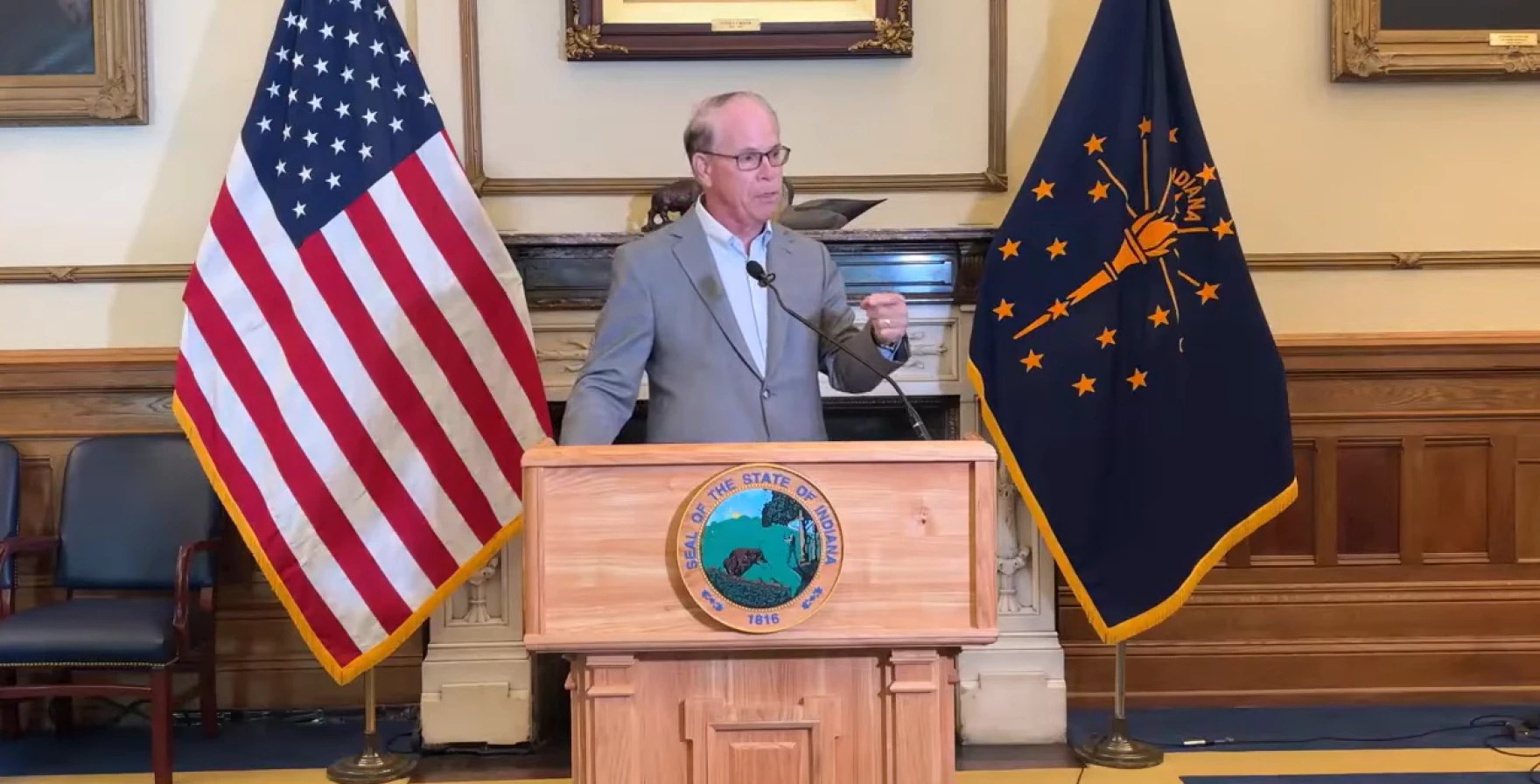
Indiana Gov. Mike Braun says he isn’t sweating Porter County leaders’ opposition to raising food and beverage taxes for a new Chicago Bears stadium the next county over, because really it’s Porter County that would be missing out on all the fun of taking part in shoveling money at the Bears owners:
Under the law, Porter County would have to approve a one-percent food and beverage tax to have representation on the stadium authority. The governor said if it doesn’t get approved, the biggest impact would be on Porter County itself.
“If they choose not to put any skin in the game, they’re not going to have any say-so for what happens from all the economic benefits we’re going to get from it,” Braun said.
Maybe you’re the one up a stump, Porter County! Does a county get a chance to fund a stadium deal every day?
The whole Porter County kerfuffle points up one of the weirder things about the Indiana Bears stadium deal: Though it was passed by the legislature back in February, it didn’t precisely spell out who would be spending what on a stadium, or even where exactly it would be. A newly created sports authority will be able to offer the Bears owners money from a whole bunch of taxes, only some of which actually exist yet:
- All new property tax, income tax, and sales tax for the next 35 years from an omni-TIF district encompassing the stadium and an undetermined number of square miles around it. This could certainly amount to billions of dollars, much of it potentially cannibalized from spending that has nothing to do with the Bears, but just as we saw in Kansas, it’s impossible to say exactly how much without knowing the size of the district.
- A doubling of the Lake County hotel tax from 5% to 10%, which would provide at least $90 million.
- Those 1% food and beverage tax surcharges in Lake and Porter counties, which would be worth about $250 million each, if approved.
- A 12% ticket tax, which would be worth about another $200 million, though as established ticket taxes are unlike other taxes in that they tend to come out of team owners’ revenues.
The best guess at the total public cost is “easily past $4 billion,” but that could go up or down depending on what gets approved in terms of that tax diversion district plus the new taxes. And a quarter-billion dollars from Porter County seems like a significant amount of money, though I suppose Braun is right in that if county leaders balk at that, the state could always compensate by running the omni-TIF district all the way to the Ohio border.
All this makes Indiana’s bid for the Bears a bit of a moving target in the state’s bidding war with Illinois, which is no doubt very much to Bears owner George McCaskey’s liking. (“You’re willing to give us $1.5 billion in property tax breaks and infrastructure money, you say? Well, what if I told you Indiana was offering a TIF district the size of the entire Local Group?”) Right now you have a three-way — or more, given the various Illinois factions — game of chicken going on, and nobody’s showing each other their cards, and … okay, maybe it’s too early in the day for me to be writing extended metaphors. If anyone says they know how much money Bears execs could get out of either Indiana or Illinois, they’re lying, that’s the upshot here.

(WISH) — Coming off a week’s rest, the Indiana Fever traveled to Las Vegas and beat the defending champion Aces, 84-68. The Aces’ 68 points scored marked the fewest points Indiana has allowed in a game this season.
On Sunday, the Fever were without Caitlin Clark for the second straight game. In her absence, center Aliyah Boston and point guard Kelsey Mitchell powered the offense to secure Indiana’s second straight win.
Boston recorded her sixth double-double of the season, finishing with 18 points and 10 rebounds. She also knocked down three triples, matching a season high last set on June 4 against the Atlanta Dream.
Although Mitchell shot 39 percent from the field, the ninth-year Fever guard posted a game-high 27 points and hit three triples.
As a team, Indiana shot 43 percent from the floor and 39 percent from three. The Fever also handed out 18 assists, compared to the Aces’ 14.
Indiana controlled the glass as well, outrebounding the Aces 39-30, and forced 13 Las Vegas turnovers compared to the Fever’s 7. Sunday’s win also marked the Fever’s first-ever win in Las Vegas after 11 previous losses.
With the win, Indiana improves to 12-8. Sunday’s matchup was the first of four straight road games before the Fever return to Gainbridge Fieldhouse to face the Golden State Valkyries on July 15.
Indiana is back on the road Wednesday, July 8, against the Los Angeles Sparks at 10 p.m. ET.
-

 Nebraska2 minutes ago
Pine-Richland receiver Khalil Taylor pulls hat trick, picks Nebraska over Penn State
-

 Nevada5 minutes ago
Nevada Youth Sports estimates $250K in damage after Fourth of July firework fire
-

 New Hampshire10 minutes ago
Suspected gunman in Hampton Beach shooting was in U.S. Navy
-

 New Jersey17 minutes ago
I took my kids to this New Jersey hotel and stopped making fun of the state (for now)
-

 New Mexico19 minutes ago
Storm chances continue all week for parts of New Mexico
-

 North Carolina25 minutes ago
Manns Harbor Bridge repairs to be ‘most complete’ in decades | Coastal Review
-

 North Dakota32 minutes ago
Today in History: July 7, 1940 – War children routed to Grand Forks
-

 Ohio35 minutes ago
Car crashes into fitness center in Warren

