Washington, D.C
I lived in rural Pennsylvania for 23 years before moving to a big city. The culture shock was real.

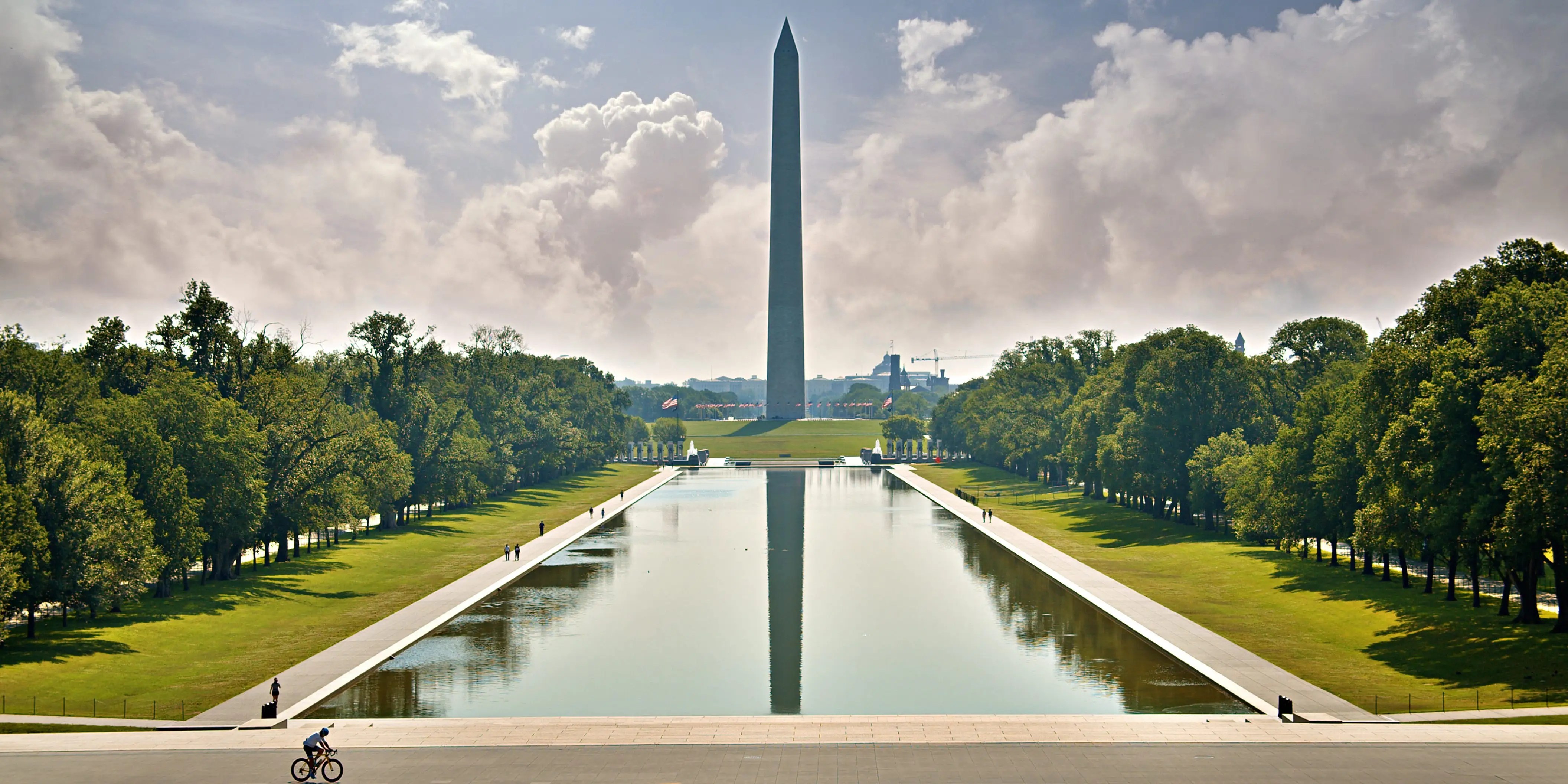
- I moved to Washington, DC, after living in rural Pennsylvania for 23 years.
- Learning how to commute was difficult at first, but it opened up so many options for me.
- The work culture was a bit intense, but I loved how much there was to do after work and on weekends.

I grew up in rural Pennsylvania, tucked away in a stretch of the Appalachian Mountains known as the Endless Mountains. It was beautiful and quiet there, and I spent many of my days reading in sunny patches of grass.
But right after college, I moved to the Columbia Heights neighborhood in Washington, DC, for work and traded mountains for monuments.
Transitioning from Amish country to hill-staffer-tech-bro culture led to immense culture shock. But in DC, I learned how to navigate city life and experienced a lot of firsts.
Here are the three biggest surprises I encountered when I moved.
Learning how to commute was difficult at first
kickstand/Getty Images
The fast-paced nature of the city surprised me. I grew up in a one-stoplight town, and the transition to DC traffic was jarring.
In the part of Pennsylvania where I grew up, driving was my only mode of transportation. In fact, I could anticipate a nearly hourlong drive to access the nearest chain stores.
However, learning about the different ways to use public transportation in the city was exciting. On my first day of work, I figured out how to ride the bus and use the metro system. I also started riding a bike consistently for the first time since I was 12 and walked more than I ever had before.
I also discovered new challenges, like surrendering to the mercy of public transit delays and struggling to carry my groceries home. However, I gained something I didn’t previously have access to — options.
The work culture in DC was intense
My first full-time job was in the Capitol Hill neighborhood, so right out of college, I felt like I was thrown into the most competitive work culture. For better or worse, every moment felt like a networking event.
One of the most “DC experiences” I had was joining a community pickleball group and discovering that the group was made up of people who worked for ESPN, the ACLU, and the Peace Corps.
Although I loved discovering what people do for a living, work culture is often prioritized over everything else. This was a part of life in DC that I had a hard time reckoning with.
I’m still trying to ditch the habit of asking, “So what do you do?” when I meet a stranger.
I had so many more opportunities for after-work activities
Olivia Bardo
After work, I rode my bike to the library and picked out brightly colored books. At night, I danced to live music at the 9:30 Club.
On Saturday mornings, I wove my way through places like the Hirshhorn Museum and Renwick Gallery, then wandered around to find a new coffee shop. Food was everywhere, and it was delicious. I indulged in tahini lattes, ube waffles, and bowls of spicy ramen.
Being in a big city also meant I could discover more of my interests, which had been patiently waiting to be found.
Although my time living in DC has concluded, I’m grateful for the many ways it has shaped me and directed my next steps.



Just in time for the Fourth of July, the Smithsonian Institution in Washington, D.C., has rolled out a big new exhibit highlighting nature in all its glory, with specimens from across America. But the Hawaiʻi offerings are a bit of a dud.
The Smithsonian’s National Museum of Natural History is a vast repository, occupying a stately edifice on the National Mall. It holds some 148 million objects, including more than a million from Hawaiʻi, including eight priceless feathered cloaks, but when the institution’s curators picked out one item to exemplify each state for this exhibit, they gave Hawaiʻi a rock.
Yes, a rock.
Seen in person, it’s a striking black clump of glittering pāhoehoe lava, and of course we are proud of our lava, but it comes across as, well, underwhelming.
Millions of visitors are expected to arrive in Washington, D.C. in the next two weeks. Many will be drawn by the fanfare associated with the 250th anniversary of the signing of the Declaration of Independence. In the eyes of many Americans, President Trump has tainted the occasion by claiming personal sponsorship of it.
To be fair, the city is looking pretty good, decked out in its finery for the events, and some improvements have been made. Flags are flying; the lawns look green and lush. The scene is drawing large crowds of tourists from all over the world, cheerfully milling about and popping into the many free museums that line the mall.
There are also some notable exceptions: The reflecting pond by the Lincoln Memorial is definitely tainted by algae infiltration. There’s also a bit of slime attached to what was reportedly a no-bid job for the renovation work by a Trump donor.
Also to be fair here: Hawaiʻi has had difficulties with its own reflecting pool, the now-waterless water feature at the State Capitol.

Amid the ongoing partisan warfare, Hawaiʻi’s state government, along with about 10 other Democratic-controlled states, has decided not to participate in the D.C. festivities. That includes the Great American State Fair, now being set up on the National Mall, which will host some 56 themed pavilions where individual states are expected to highlight what they believe makes them special. Sprawling over 10 city blocks, crowned by a 110-foot ferris wheel, the festival will feature concerts, military flyovers, fireworks displays, movie screenings and exhibit spaces representing the nation’s states and territories.
In a statement, Erika Engle, a spokeswoman for Gov. Josh Green, said the state is not officially participating, adding that no funds had been allotted for it by the Legislature or Congress.
She added that Washington, D.C, “is 5,000 miles away.”
That’s a distance that hasn’t previously inhibited the governor, whose peregrinations to the nation’s capital have almost qualified him as a frequent flyer.
This is supposed to be a sign of how Hawaiʻi’s leaders are effectively rejecting Trump. As if Trump cares whether Hawaiʻi participates or not.
It’s a strange place to make a stand. July Fourth is bigger than any president. The signing of the Declaration of Independence represents a rare kind of bravery. The 56 signers risked their lives to sign it, knowing they would have a target on their backs, placed there by King George III, one of the world’s most powerful monarchs.
In fact, people who signed resolutions against the king in the past could expect persecution not just in this life but in the next. In England in the 1630s, the autocratic King Charles I decided to bypass the elected body and instead to rule by executive order. Discarding established law and tradition, he disbanded Parliament for 11 years.
The English people thought that was high-handed and, amid a set of bloody civil wars that killed 200,000 people, he was eventually executed. But when his son was restored to the throne in 1660, the 59 people who had signed the former king’s death warrant were themselves hunted down. Many were drawn and quartered; the lucky were imprisoned for life.
Oliver Cromwell, the Parliamentary ringleader, had already died but his corpse was exhumed and he was hanged. His body was hung in chains and his decapitated head was impaled on a pike and put on public display for 20 years. Almost 100 years later, his embalmed head was still being carted about as a gruesome trophy, even as the signers of the Declaration of Independence put pen to paper.
Back in 1776, the memory of what vengeful kings do to their enemies was high in the minds of those who were publicly protesting Charles II’s autocratic heir, George III. In fact, one of the first ships built and commissioned by the Connecticut General Assembly, launched just two weeks before the Declaration of Independence was signed, was named the Oliver Cromwell.
Democracy has had its ups and downs.
Back to the exhibit at the Smithsonian.

The goal of the curators was to reflect America’s natural diversity and how humans interact with it. In dozens of exhibits spread over 5,000 square feet, visitors can learn about the oddities and idiosyncrasies in the natural world, from rocks to birds to butterflies to snakes to fossils to plants and also how humans have incorporated these items into crafts and artistry. It touched on the problems of animal extinction and climate change.
A video graphic allows people to track bird migration routes across the continental United States.
One display explains the long history of traditional blacksmithing in Guam, another provides examples of Samoan siapo bark cloth.
In addition to several lava rocks representing Hawaiʻi, the exhibit also featured a lovely Niʻihau snail shell necklace and a goby fish from Kāneʻohe Bay, which the exhibition touted as one of the largest sheltered bodies of water in Hawaiʻi, known for its living corals.
But more striking symbols of Hawaiʻi seemed notably sparse and some obvious elements are missing. How nice it would have been to see a feathered cape or an example of one of the brightly colored lizards that have played such an important role in Hawaiian mythology. I would have liked to have seen more of Hawaiʻi’s beautiful birds and butterflies.
Another thing that appears to have gone missing are Hawaiian philanthropic donors making the case for the state’s natural splendors. The display’s list of financial sponsors shows philanthropy from both blue and red states but nothing from Hawaiʻi.
That’s partly because we are suffering another form of extinction. We have a lot fewer large companies based in Hawaiʻi than we once did, and so there are fewer corporate sponsors. Even Hawaiian Airlines, once a mainstay of exhibits like this that appeal to frequent travelers, has been subsumed into an airline from another state.
We do have more billionaires than we once did, of course, but they own estates in so many places that it is hard to know what they actually consider home.
They just better not steal our rocks.
Sign up for our FREE morning newsletter and face each day more informed.

To mark Gun Violence Awareness Month, residents in Southeast D.C. came together to search for a lasting solution.
The Trigger Project held a peace walk Saturday afternoon reflecting on lives impacted by gun violence
The Trigger Project decided to host the walk to give victims’ loved ones a chance to be among others who have experienced the pain of losing a loved one.
The agency said it prides itself on getting the word out about how to prevent gun violence through lived experiences, community leadership and partnerships. The group aims to uplift young people through healing, opportunity and connection while addressing the root causes of gun violence. Another critical part of the event was to ensure that young people have a safe space where they can hang out.
“We’re losing too many of our babies to the streets, you know what I’m saying?” said Darlene Williams, who said she has been a victim of gun violence and also lost her granddaughter to gun violence. “Like I say, the guns don’t kill, people kill. [..] Be around other people, you know what I’m saying, that’s going through the same thing that we’re going through.”
Our site’s security protections triggered a block. If you
think this was in error, email us at
[email protected]. Please include how you got to this webpage and the
Cloudflare Ray ID located at the bottom of the page.
Cloudflare Ray ID: a125c701ea927623
Back to The Atlantic
-

 Indianapolis, IN50 seconds ago
Storms fade with dangerous heat building through midweek | June 27, 2026
-

 Pittsburg, PA6 minutes ago
Two dead in early morning crash on Pennsylvania Turnpike
-

 Augusta, GA13 minutes ago
Augusta CSRA Habitat for Humanity hosts third annual Build the Band benefit
-

 Washington, D.C16 minutes ago
Kirstin Downey: Hawaiʻi Is Rock Solid At This New Display In DC
-

 Cleveland, OH21 minutes ago
The Cleveland Cavaliers Announce Their Summer League Schedule
-

 Austin, TX28 minutes ago
Texas Ex Jahdae Barron empowers Austin youth at first annual football camp
-

 Alabama31 minutes ago
83-year-old man killed in Alabama boat crash | WKRG.com
-

 Alaska43 minutes ago
Opinion: Alaska’s $10,000 question: Leave or stay?

