Entertainment
Not into gore and gloom? Here's a guide to lighter Halloween viewing

I imagine that when you imagine a TV critic, you picture some hard-boiled, crusty, even heartless type. But I have always been a sensitive, delicate, please-leave-the-light-on sort of fellow.
So Halloween is a holiday I greet with mixed emotions. I am fine with its brighter expressions — candy, pumpkins, cute costumes on little children, “It’s Halloween” by the Shaggs, all that. But you can keep your haunted houses, the latest “It,” your “Scream” masks, your trouble-making teens using the cover of the holiday to terrorize a neighborhood. Even “The Simpsons Treehouse of Horror” I can find genuinely disquieting.
You will therefore find the following personal guide to Halloween viewing — some things specific to the day, some germane to the season, some featuring paranormal characters, some parodying monster movies — to be short on blood and guts (the kind worn outside the body) and long on comedy and cartoons. There is more than enough actual horror about.
More than anything, Halloween is an opportunity for me to once again steer you to the 2014 web comedy “Ghost Ghirls,” currently living its best afterlife on Vimeo. Created by stars Amanda Lund and Maria Blasucci, it comprises a dozen 10-minute episodes, which by some magic have the substance of full-blown sitcom episodes. As self-involved, childish, competitive ghost hunters-whisperers-busters, Lund and Blasucci visit various locations (a baseball field, a tax office, a middle school, a brothel, a recording studio) to help conflicted spirits move on into the light; the impeccable guest cast includes Jason Ritter, Jake Johnson, Natasha Leggero, Kumail Nanjiani, Colin Hanks, Larisa Oleynik, Paul F. Tompkins, Jason Schwartzman, Brett Gelman, Kate Micucci, Molly Shannon and, as a dead ’70s Southern-rock band fighting too much to finish their final song, Jack Black, Val Kilmer and Dave Grohl.
Helping spirits move on into the light also was the theme of the 2014 Tyler Labine comedy “Deadbeat” (Tubi), with a similarly impressive roster of guest stars. Labine was previously a regular on “Reaper” (stream on CWTV.com), in which Brett Harrison plays a slacker who, after his parents sold his soul to the devil (Ray Wise), sets to work as a kind of bounty hunter, returning the escaped damned to hell. Both these series are funny and charming and worth your attention.
Filmed in suburban New Jersey, “The Adventures of Pete and Pete,” originally on Nickelodeon, was not only the most beautifully fashioned kids show of the 1990s but a series that argues well for the very existence of television. And yet you will have to go to the wilds of YouTube to find it. In the holiday episode “Halloweenie,” little Pete (Danny Tamberelli) is out to beat a 31-year-old record for trick-or-treating 374 houses in one Halloween night, dragging along Halloween-hating older brother Big Pete (Michael C. Maronna), while avoiding the vandalizing Pumpkin Eaters. Helpful neighbor Nona (Michelle Trachtenberg, who would go on to play little sister Dawn Summers on “Buffy the Vampire Slayer”) pitches in. (Iggy Pop, who plays her father in a cardigan and khakis, would go on to re-form the Stooges.)
“School Spirits” stars Peyton List, center, as Maddie, a murdered teen stuck in the afterlife who attempts to find her killer.
(Ed Araquel / Paramount+)
As to “Buffy” itself, vamps and demons and the occasional tragic death of a beloved character aside, the series, which debuted in 1997 and changed the nature of television teenage storytelling, is at heart a comedy, an extended metaphor for the ordinary horrors of high school. It produced several Halloween episodes, beginning with the much-loved Season 2 “Halloween” (Hulu, Disney+, Tubi), which finds enchanted Sunnydale residents becoming the characters they’re costumed as. (An idea used by “Ned’s Declassified School Survival Guide,” now streaming on Paramount+, the greatest Nickelodeon kids show of the ’00s, for its own third-season Halloween episode.) The show’s legacy can be directly seen in such series as the recent, excellent “School Spirits” (Paramount+), in which a murdered teen, trapped in her high school among several generations of ghost students, attempts to find her killer, and Netflix’s “Dead Boy Detectives,” about a pair of teenage ghosts helping other specters to settle their unfinished business. (See “Ghost Ghirls,” above.)
Most network sitcoms have fielded a Halloween episode, but none more appropriately than “The Addams Family.” Creepy, kooky, mysterious, spooky, altogether ooky, they’re a peerlessly happy, hospitable family, ever welcoming to the straight-world figures who stumble into their eccentric manse. In the redundantly titled “Halloween With the Addams Family” (Freevee, YouTube) from 1964, escaping bank robbers, played by Don Rickles and Skip Homeier, are invited in as adult trick-or-treaters and made to celebrate in ways they don’t understand.
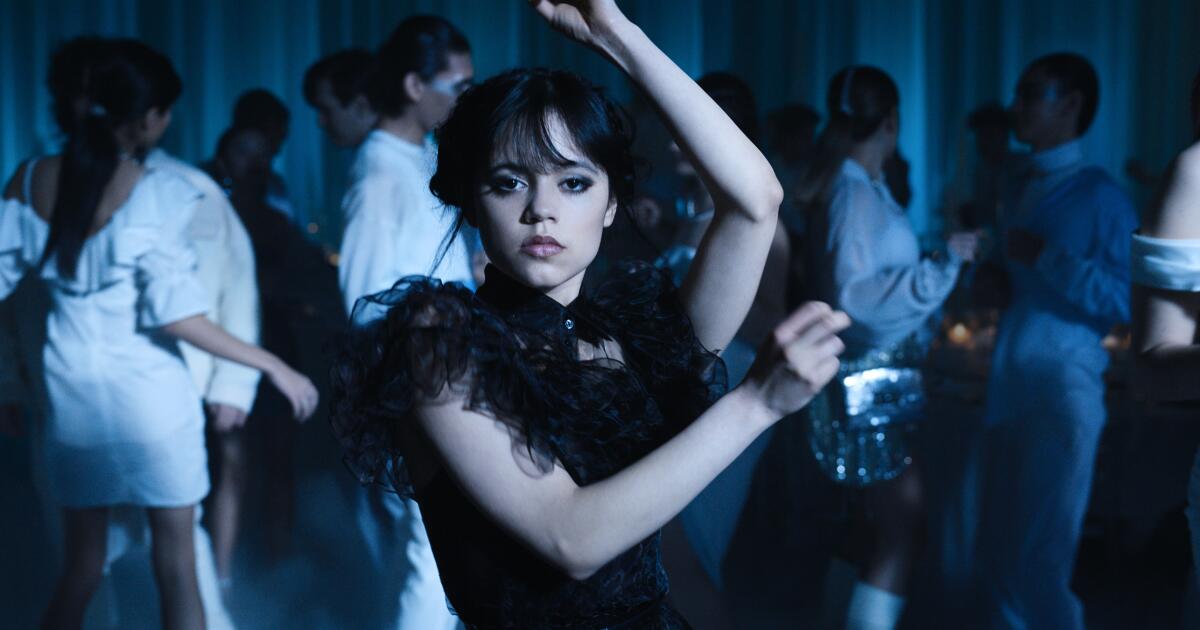
The sitcom, more than the Charles Addams cartoons that inspired it, provides the architecture upon which are built all subsequent Addams revivals and reimaginings, including, of course, “Wednesday,” the ongoing Netflix series that made an instant star of Jenna Ortega. While I absolutely recommend it, my heart lies with “Adult Wednesday Addams,” Melissa Hunter’s witty 2015 web series about the Addams daughter as a young woman making her way in the world — finding roommates, learning to drive, internet dating. You can find it on YouTube and at Hunter’s own website.
Oddly, the sitcom episode that most frightened me as a child — and still does, for all that it’s very funny — comes from “The Dick Van Dyke Show.” Not actually a Halloween episode, the 1963 “It May Look Like a Walnut” (streaming on Peacock, Prime, Filmrise and several other platforms) is a riff on “Invasion of the Body Snatchers” that finds Van Dyke’s Rob Petrie trapped in a science-fiction scenario in which walnut-loving aliens, led by a Danny Thomas look-alike, convert humans to their race, stealing their thumbs and sense of humor. Mary Tyler Moore emerging from the living room closet on an avalanche of nuts is the stuff of nightmares — and one of that series’ most replayed moments.
Given my predilections, it’s not surprising that there are a lot of cartoons on this list.
“It’s the Great Pumpkin, Charlie Brown” (Apple TV+) is the second-greatest Peanuts special, and the only other one I’d call required viewing. In its gorgeous, glorious evocation of autumn days and, especially, nights, its Vince Guaraldi score and Bill Melendez animation, it takes Schulz’s art somewhere new without betraying it; perhaps most important, Cathy Steinberg is back from “A Charlie Brown Christmas” as the voice of Sally Brown, the series’ secret star. (And you thought it was Snoopy.) Linus’ unique belief in the Great Pumpkin takes some heat off Charlie Brown, who nevertheless remains the victim of his friends, random neighbors and the universe. But that’s the “Peanuts” spirit, deep and troubling but endlessly relatable.
“Toy Story of Terror” from 2013, originally produced at the corporate nexus of Disney, Pixar and ABC, offers a delightful meta take on horror tropes — rainy night, roadside motel, characters imprudently wandering off. With the hedgehog Pricklepants (Timothy Dalton) offering commentary the whole time, it’s “Scream” without the murders, but not without its own brand of tension. The supergroup big-screen cast (Tom Hanks, Tim Allen, Joan Cusack, Rickles, Wallace Shawn, Kristen Schaal) are abetted by Kate McKinnon, Ken Marino and Carl Weathers, with Stephen Tobolowsky as the villain (a desk clerk, like Norman Bates). As a bonus, and in the spirit of Jamie Lee Curtis, it’s cowgirl Jessie (Cusack) who takes the lead here.
New this year is the special “SpongeBob SquarePants: Kreepaway Kamp” (Paramount+), in which practically the whole of Bikini Bottom is invited to a reunion at Kamp Koral, where a dark figure lurks and one by one the campers disappear — a moth-eaten premise immeasurably improved by its cast of cartoon sea creatures (and a squirrel). From 2019 comes “The Spooky Tale of Captain Underpants: Hack-a-ween” (Netflix), a delicious mix of animation, puppetry and photograph, in which elementary-school pranksters George and Harold fight a movement to cancel the holiday, with the help of their personal superhero, a hypnotized version of their principal and nemesis.

The Halloween special “SpongeBob Squarepants: Kreepaway Kamp” streams on Paramount+.
(Nickelodeon)
Some classic Halloween shorts can be found on Disney+ at most any season, and are worth your attention by virtue of being drawn and animated by hand — still the best way to make cartoons. In “Lonesome Ghosts” (first released on Christmas Eve 1937, of all days), Mickey, Goofy and Donald are unemployed ghostbusters called to a creaky old house by the bored specters themselves — derby-wearing, cigar-smoking — for their own slapstick entertainment. In “Trick or Treat,” from 1952, Donald pranks his nephews with firecrackers in their candy bags and dumps water on their heads; friendly Witch Hazel, passing by, helps them get revenge. Not on Disney+ but easy to find online is the 1933 Mickey Mouse short “The Mad Doctor,” in which Pluto is abducted by a scientist planning on putting the pup’s head on a chicken’s body. The black-and-white light and shadow effects are quite beautiful. Although Disney has become synonymous with a certain gentleness, these cartoons are sort of violent. (Though, as I like to say, it’s cartoon violence.)
Through its corporate owner Warner Bros., Max has a trove of golden-age Looney Tunes cartoons gathered into nonchronological “seasons,” where you can find at least a couple of monster-themed classics. Directed by Friz Freleng, “Hyde and Hare” (Season 20, Episode 2), from 1955, drops Bugs Bunny into a Jekyll-and-Hyde situation that includes an addiction metaphor and a Liberace joke. In “Hair-Raising Hare” (Season 11, Episode 6), Bugs is lured to the castle of an evil scientist — a neon sign flashes “Evil Scientist,” so you know — as lunch for his pet monster, the giant orange hairball in tennis shoes later known as Gossamer. You get some excellent fourth-wall-breaking and a finish that prefigures “Some Like It Hot.” And in “Scaredy Cat,” (Season 13, Episode 16), from 1948, also directed by Jones, Porky and Sylvester move into a house populated by murderous mice. Sylvester is panicked, Porky oblivious.
Of all classic cartoon characters, the most involved with the supernatural and the surreal was Fleischer Studios’ Betty Boop, whose jazzy adventures with spooks and demons can be easily found on YouTube. “Snow White,” from 1933 (voted the 19th greatest cartoon of all time in a 1994 survey of a thousand animators), features skeletons, a wicked witch who becomes a dragon and Betty’s pup pal, Bimbo, transformed into a ghost, rotoscoped over Cab Calloway singing “St. James Infirmary Blues.” In “Betty Boop’s Halloween Party,” also from 1933, a nasty gorilla interrupts Betty’s happy soiree, attended by a variety of woodland and jungle animals, and in “Red Hot Mama,” from 1934, Betty dreams herself in hell, where she dances with devils and anthropomorphic flames. When Satan tries to get fresh, she gives him the cold shoulder (literally, metaphorically).
And finally, neither TV series nor cartoon, is humorist Jean Shepherd‘s Oct. 31, 1972, broadcast of his nightly New York City radio show, preserved on YouTube. Shepherd, of course, is best known for a different holiday, as the author and voice of “A Christmas Story,” but he sinks his fangs deep into Halloween, with reminiscences, readings and meditations on the dark. Of everything listed here, this may be the most existentially disturbing, so listen with the lights on. Or don’t — but don’t say I didn’t warn you.


Comedy is a matter of taste and preference — it’s a deeply personal thing. Which makes it hard for a critic to give a blanket assessment of a specific kind of comedy, especially if it didn’t work for them, but clearly worked for others (the laughter or lack thereof is the indication). “It’s not funny,” the critic says, “well I had fun,” someone else can reply, and then we’re at an impasse.
Which is the dilemma one finds oneself in with “Gail Daughtry and the Celebrity Sex Pass,” a very strange and shaggy Hollywood satire of sorts from David Wain and The State crew, still riding the goodwill of “Wet Hot American Summer” after all these years. If only this were as funny.
“Gail Daughtry” lives in the same world as that iconic summer camp spoof, as well as Wain’s 2014 rom-com parody, “They Came Together,” in that he’s playing with genre convention and expectation, taking well-known norms to the goofiest extremes. But those films hewed more closely to their respective genres, while “Gail Daughtry” is totally scattered, combining crime and spy movie tropes with a fish-out-of-water comedy and a Hollywood send-up. It has far too many ideas for its own good, and yet no ideas that are good enough to sustain this bizarre curio of a comedy.
What’s ironic is that one of the problems driving this wacky plot forward is the characters have to come up with a movie idea to pitch to star Jon Hamm (playing himself of course), leading them to do some pretty inane and shockingly violent things. It’s almost as if Wain and co-writer and co-star Ken Marino had no idea for a movie, then baked their search for an idea into their script, and then turned it into a madcap adventure about a woman on a quest to have sex with Jon Hamm. What an ouroboros!
OK, about the sex quest. Gail Daughtry (Zoey Deutch) is a chipper hairdresser from Kansas born without the part of the brain that recognizes sarcasm or irony. She’s a cheerful, Pollyanna-ish naïf whose literal-mindedness is almost as extreme as Amelia Bedelia. Her childhood sweetheart and fiancé Tom (Michael Cassidy) is the same. She tells him about the concept of the “celebrity sex pass” as a joke, and he promptly boinks Jennifer Aniston at local book reading.
(Nitpicky aside: why didn’t they use the common nomenclature “hall pass”? Is it copyrighted? “Celebrity sex pass” is clunky and sounds like an off-brand version of the well-known slang.)
That infidelity crisis is how Gail ends up in Los Angeles determined to bang Hamm, collecting a motley crew of similarly clueless helpers along the way. There’s her best friend Otto (Miles Guttierez-Riley), her salon bestie; Caleb (Ben Wang), an overly ambitious intern at Creative Artists Agency; Vince (Marino), a screenwriter turned paparazzo with a heart of gold; and John Slattery, as John Slattery, down on his luck. An accidental briefcase swap has a pair of thugs on their tail, in a forgettable and underdeveloped B-plot.
With a parade of celebrity cameos and collaborators in bit parts, “Gail Daughtry” at times feels like an excuse for Wain and co. to make something at home with all of their friends. Fair enough, it’s great to see all these people employed, but what about what we’re watching? Behold, the Los Angeles of the middle-aged working comedian: the CAA lobby, the Chateau Marmont, Griffith Park, etc. And the plot is as half-baked as the pitch they present to Hamm.
What’s actually interesting about this comedy is the distinct streak of despair and even resentment that reveals itself at the climax, a feeling of helplessness and uselessness. Everyone’s been striving to make it in this crazy town: the intern, the actor, the paparazzo. But not even Jon Hamm can help them get a movie made; even he feels inherently powerless. There’s an unexplored anxiety vibrating there that feels the most thematically fruitful, about what it means, some 25 years after bursting onto the scene with a generation-defining comedy, about maintaining the work, the drive, a sense of purpose, after years of strikes, and in the face of a constricting industry. Do they still have it? Is the dream still alive?
Maybe that’s why Wain and Marino need to invent a dreamer stand-in with Gail, a guileless eternal optimist who knows nothing of the craven Los Angeles and accepts everything at face value (though she is filled with a scary bit of rage too). She might behave like she has a head injury, but she’s going to achieve her goal, dammit. “Gail Daughtry and the Celebrity Sex Pass” might not be as funny as “Wet Hot American Summer” (for this critic), but reframed, it serves as a fascinating status update on life in La La Land for this troupe.
‘Gail Daughtry and the Celebrity Sex Pass’
2 stars (out of 4)
MPA rating: R (for sexual content, violence/bloody images and language)
Running time: 1:33
How to watch: In theaters July 10
Entertainment
Emily Ratajkowski’s viral essay on sex life as a single mom scores her a seven-figure book deal
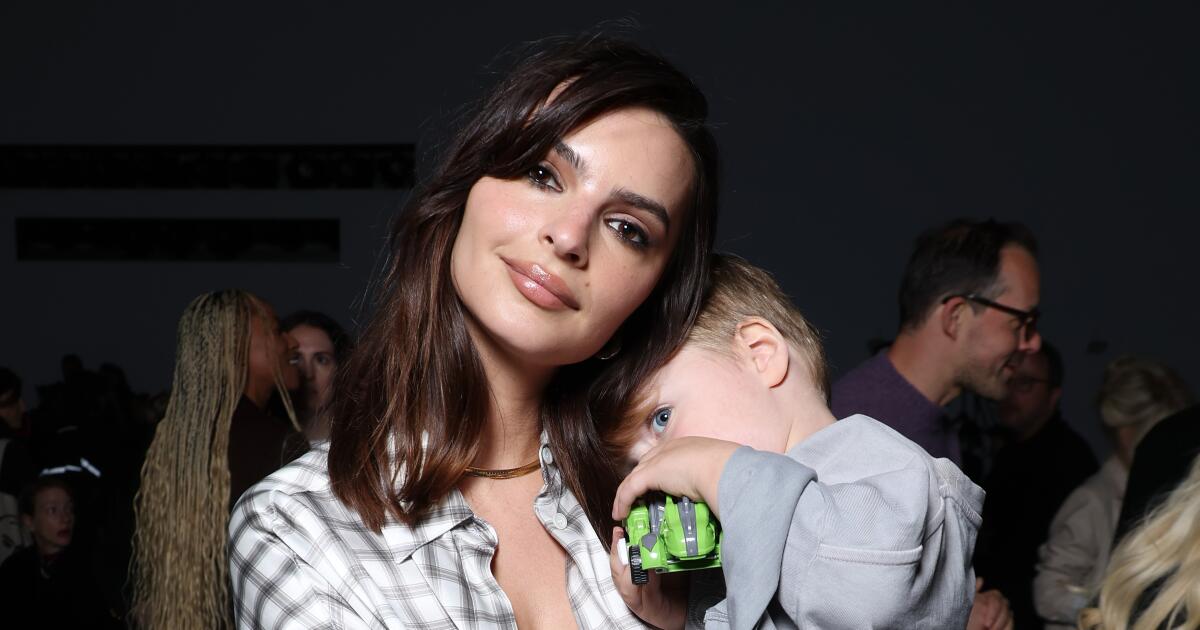
Emily Ratajkowski’s viral essay detailing her sex life as a single mom just landed her a seven-figure book deal.
According to Page Six, the model’s essay in the Cut had publishers champing at the bit in a 12-way bidding war that culminated in the hefty pay day. Editor Helen Rouner at Penguin Press — who also edited Lauren Christensen’s memoir “Firstborn” and Michael W. Clune’s novel “Pan” — reportedly landed the deal.
Penguin Press did not immediately respond to The Times’ request for comment Friday.
Publishers Marketplace announced the forthcoming memoir, describing it as “an examination of modern female identity through the story of the author’s own efforts as a newly single mother in New York City to discover what really constitutes a good life for a woman.”
The essay, which dropped a month ago and quickly broke the internet, drops the veil on EmRata’s sexual adventures (or maybe misadventures) since she and her former husband, Sebastian Bear-McClard, split in 2022.
“It was a violent transition into a new reality of screaming baby on my aching tit and ring on my swollen finger,” Ratajkowski writes of new motherhood. “And then, in a time period that felt both instant and excruciatingly slow, my marriage collapsed. Six months after my son was born, my husband and I stopped having sex. Less than a year later, we separated.”
In the missive, the model interrogates her sexuality — is she a Madonna or a whore? — while untangling bigger questions around gender, power and self-actualization. If Carrie Bradshaw wrote about “Sex and the City,” then Ratajkowski is writing about sex, the city and single motherhood. And naturally, her fleeting paramours have vague monikers: “Vegan Graffiti Artist,” “Spanish Gen-Zer” and “Son of a Billionaire.”
“And then there was the Elder Millennial: obsessed with dental hygiene, psychedelics, and dirty talk,” she writes. “He had approached the subject coyly at first, like it was something he was kind of embarrassed about — the way a kid will test you to see if you’ll talk to them about their dorky obsession of the moment. Do you like Godzilla? What about Star Wars?”
Would-be sleuths with Ratajkowski’s essay and a gossip rag handy will have their work cut out for them.
This will be Ratajkowski’s second book. The first, “My Body,” dropped in 2021 and was a bestselling collection of essays exploring gender, power dynamics, sexuality and the commodification of female beauty in the modeling and entertainment industries.
Ratajkowski’s foray into the spotlight came more than a decade ago when Robin Thicke’s controversial “Blurred Lines” music video made the model an overnight star. She was cast in David Fincher’s adaptation of “Gone Girl,” which hit theaters the following year, and catapulted to top fashion runways — Marc Jacobs, Versace, Victoria’s Secret and Dolce & Gabbana, to name a few. She she’s been romantically linked to Harry Styles, Eric Andre, Shaboozey, Brad Pitt and Pete Davidson, among others.
In 2023, she moonlighted as the host of the “High Low With EmRata” podcast, where she interviewed sex workers, investigated ethical nonmonogamy and pondered the etymology of the word “toxic.” The same year, she told The Times that she was coming into herself post-divorce, “Being able to assert what I want — that feels like it just started: My life as a creator and not as a muse.”

Wainheads will be delighted to see his alums in cameos: Kerri Kenney-Silver, Michael Ian Black, Thomas Lennon, and supporting roles for Zickel and Truglio. A large portion of the cast are his homies. But with Deutch, Gutierrez-Riley, Wang, Slattery, Impacciatore, and yes, Hamm, it’s as if they’re being inducted into a new mad family. Wain and Marino are basically catching Pokémon and hoping they can hold onto the roster (by that logic, yes, Paul Rudd is a legendary Pokémon). The film is anchored by Zoey — everything everywhere all this summer with Voicemails From Isabelle to Minions & Monsters — Deutch in the Dorothy Gale role, exuding a high level of perkiness consistent with the character’s can-do, wide-eyed, midwestern charm and heart.
A major standout, Ben Wang finally gets to show off his comedic abilities, portraying a self-assured, quick-witted agent who makes me laugh every time he reveals his sheltered upbringing in snappy whines at every inconvenience. Sabrina Impacciatore, who has proven to be a comedic juggernaut in The Paper, is having so much fun hamming it up as the mob boss-esque wicked witch counterpart, torturing her henchmen and deliciously chewing up the scenery whenever onscreen. I don’t think they use her to the height of her comedic prowess, but she’s a delight nonetheless. John Slattery is the film’s comedic MVP. The way the writers use his over-the-top character for comedy is downright hilarious every time. They use him as either a punchline or a force of nature, and he’s great. This movie is like Mad Men propaganda, and by God, it works. As someone who’s never seen it, Gail allowed me a better appreciation for Slattery and Hamm.
Man, we don’t deserve Jon Hamm. This is the second time I’ve seen him play a silly, fictionalized version of himself this year (the other being the SXSW crowd-pleasing rom-com Wishful Thinking, which Gail distributor Sony Pictures Classics acquired), and he also voice-acted in his comedic Mayor Jerry role in Hoppers. Maybe working with Wain in 2007’s The Ten was the canon event, but I consider his weird little sex scene with Kristen Wiig in Bridesmaids his awakening. Since then, I’ve only seen him as unserious, and it’s delightful. Oz-like in appearance, he’s funny and befitting the film’s overall light, joyful nature.
LAST STATEMENT
Ultimately, Gail Daughtry and the Celebrity Sex Pass is a campy, delightful romp that succeeds as both a distinctive Hollywood‑centric riff and a Wizard of Oz reimagining, retaining a loving, twisted, demented charm. It’s a weird description, but it’s so high‑spirited and light‑hearted despite being strangely ultraviolent. It might as well be a live‑action episode of Smiling Friends (RIP), yet it’s everything the theatrical market needs today. Ten years ago, this would’ve been a studio production rather than an indie Sundance acquisition, but thank God it exists for the big screen. More absurdist Gail Daughtrys for cinemas (not streaming), please, because this is the most fun to be had in a theater all summer, if not the year thus far.
-
 Politics1 minute ago
Trump administration clears path for controversial Mojave Desert water pipeline
-
 Sports9 minutes ago
World Cup fans flock to In-N-Out, Erewhon and Trader Joe’s for a taste of California
-

 World19 minutes ago
Hundreds of thousands evacuated as Typhoon Bavi barrels towards China
-
 News46 minutes ago
With the white nationalist group Patriot Front, what you see is not what you get
-

 New York2 hours ago
How ‘The Wire’ Star Jamie Hector Spends a Hot Day in Brooklyn
-

 Los Angeles, Ca2 hours ago
Burglars ransack Sherman Oaks condo building during fumigation
-

 Detroit, MI2 hours ago
Metro Detroit weather forecast, July 10, 2026 — 11 p.m. Update
-

 San Francisco, CA3 hours ago
Classical music series helps reconnect downtown San Francisco community

