Lifestyle
When did food become such a luxury?


The industrial food supply will be the last bastion of the luxury economy, and we might mirror the cannibals in doomsday movies before we cede our idiosyncratic eating habits to austerity.
Capitalism is amazing because it inspires unrelenting competition between brands and the branding of items that should be generic — organized and categorized by which boasts the best flavor, the most sustainably sourced ingredients, or fastest-ripening produce whose side effects might include the leaching of toxic chemicals into municipal food and water supplies. Then, these same brands dutifully patent an expensive snake oil antidote for poisoning you. The side effects of the contaminants might reveal themselves in the body as mineral depletion, heavy metal overload or lethargy (chronic fatigue, leaky gut, hyperactivity, dissociation, anhedonia). Luckily, the same system that instigated mass disease and physical and psychic atrophy can invent a market for “clean eating,” the branded backlash against factory farming’s poisoning and genetic modification of your food and soil and water and air.
What makes late capitalism even more special is that it can short-circuit just well enough that the so-called clean or whole foods deter most of society from examining where their food comes from and how it reaches them. What is a farm? What is a supply chain? Who are the farmers harvesting your food and the truckers driving it on interstates to you? Do they earn a living wage? Do you? What is topsoil? What is a supermarket? A muse for Allen Ginsberg, whose ecstatic litany of a poem “A Supermarket in California” captures the orgy of too many and just enough options, the numbness of excess. We forget that litany of questions under the fluorescent beams. Such are our funeral parlors for food, where mechanical reproduction haunts nourishment and we eat from the giant slot machines of industry. What is a supermarket?
In Memphis, Tenn., circa 1916, Piggly Wiggly opened its doors, offering the first self-service grocery vendor. Customers used carts and handheld baskets and ambled the aisles with their lists and often those lists expanded because there were so many products. Branding became essential to the differentiation that would earn the easy recognition and loyalty of customers, though labels about the purity of contents or lack thereof didn’t matter in this former landscape. What is called “Big Food” was born in the same region of the consumer temperament that brought us Elvis. By the 1950s and ’60s, middle-class and bourgeoisie America had a casual sense of access to meals and snacks and radio hits as if all were ready-mades built into their cities and suburbs like parts of a set. Personal fridges were stocked as well as the early markets but now there were more “processed foods” — frozen meals for lunch or dinner, an infinite variety of chips and dips for grazing. And the American teenager had enough disposable income to spend on frivolous quick food to accompany lighthearted music and lifestyles. The result is that we now have as many supermarket chains as we have categories of food product in those hallowed minor warehouses.

Before the self-service grocery, outlets required patrons to show up with detailed lists of items they needed and hand those lists to a clerk who would gather the items, which were either loose in bins or in flimsy generic packaging with no ingredients or labels. Today, this feels a step above state-sanctioned rations. At the same time, there’s a new niche market for containerless, “zero-waste,” grocery stores such as Re_Grocery in Los Angeles. And what these elite, boutique shops don’t necessarily realize is that they’re turning wellness into a luxury for the elite and those who replicate elitism for clout. It’s a sinister mode of decadence — decadent minimalism, where overt virtue signaling meets seemingly neurotic purity fantasies, where customers dance in the glow of the glare on bulk bins.
I remember supermarket parking lots from my childhood most vividly. There were times when my mom, my dad and I would make a trip for a jug of milk and my mom would go inside while we waited in the car. One such night my dad asked if we should leave her and drive away, as if to suggest before she owned us forever like the market. I returned a monotone no. The supermarket gave him a premonition of something sinister to come. In suburban San Diego, an area called Carlsbad, we’d call him from supermarket payphones as he sat in jail. His paranoia had been confirmed. And after he died and we moved to L.A., my mother went on her inevitable health kick-slash-healing journey. She hired a meditation coach who introduced her to Enya and a ’90s health-food chain called Mrs. Gooch’s. This store boasted muted neutral bins and amber-toned aisles, a drastic contrast from the buzzing neons of the popular chains. Instead of brand names like Fruit Roll-Ups, Mrs. Gooch’s carried fruit leather, made with real fruit, and it was tofu or other soy stuffed into the inner filet of the hot dogs instead of insinuations of pork. You could buy freshly pressed juices in glass bottles. On the way home, we’d stop for shots of wheatgrass. During her bouts of depression, she’d leave money on her nightstand and we’d walk ourselves to Vons or Ralphs and buy anything we wanted. At home, we had books on raw veganism by Dick Gregory and grape cures and detox methods and healing music. We had stakes in every market. We’d turned grocery shopping into a therapeutic symbol of semi-functional American family life, and of agency over our own lives. We were part of the group unknowingly beta testing the conflation of health, vitality and luxury shopping.
Whole Foods replaced Mrs. Gooch’s, but after being deracinated by Amazon, it became passé, less and less a signifier of status. Around the same time, terms like food desert went mainstream, defining the regions within cities where the only available food was the kind that is addictive and might kill you a little quicker. The newfound concern wasn’t accompanied by any remedy. The ability to articulate the struggle for decent food became another vain virtue signal.
And then came the rise of Erewhon, an upscale health food market that derives its name from the anagramic spelling of the word nowhere. It takes its name from a novel by Samuel Butler, in which ill health is a crime and citizens have to stay vital or risk incarceration — dark, with a little radiant grain of truth in depicting the persistent crisis of faith in the food supply. The market first opened in Boston in 1966, then reemerged in 2011 after a couple bought it from its original owner. Today a private equity firm — the Stripes Group — owns a minority stake, and the chain is expanding to every upscale neighborhood in Los Angeles. Thanks to the internet, its reputation transcends L.A. and has come to signify luxury eating nationwide. Tourists make pilgrimages to try its Hailey Bieber smoothie, replete with obscure superfoods and priced around $22. This is a typical price of an Erewhon smoothie. Everything in the store is organic, and local produce is prioritized. The aisles are sepia-toned and filled with everything from bone broth to raw fermented crackers to dried fruits (unadulterated by sulfur dioxide) to organic hygiene products to every brand of specialty water that exists in the world.

The prominence of Erewhon is the temporary response to the deterioration of Whole Foods, but its increasing popularity is also a reaction to the food scarcity trauma that 2020 instigated and the way we self-soothed with bougier tastes in food and wellness. It is no longer enough to wear designer- or even label-free “quiet luxury” clothing; the new way to indicate class is to shop Erewhon with no regard for cost and bypass the genetically modified, aggressively low-quality gut-busting food the U.S. is now renowned for. Celebrities shop at Erewhon and call paparazzi to photograph them there. Kim Kardashian collaborated with Balenciaga and carried a brown paper Erewhon shopping bag designed by the questionable brand to an outdoor L.A. fashion show. It was tacky. Influencers make TikToks and YouTubes taste-testing Erewhon smoothies and prepared foods mukbang-style. The satiety can be felt through the camera, its satisfaction with luxuriating in something so pure, so clean. And many of us have had slow evenings where we head there with a friend just to feel something. Erewhon is expanding to so many locations that the chain is bound to suffer the fate of Whole Foods and be replaced by a new, more conscientious iteration of the clean-eating superfood movement.
In the meantime, this aggressively revisionist supermarket, as indicated in Butler’s novel, has become part pharmacy, part a site of repentance for past consumption. We can’t see the farm from Nowhere. We are running on the energy of farmers’ labor and transmuting it into fetish object, and it feels almost beautiful on set in Los Angeles.
We’re in a game of survival of the fittest, where surviving itself feels akin to luxuriating in what should be hostile territory, mastering an environment we have come together to ravage. The next phase, of course, is making everything we consume from scratch like the tradwives and supermodels-turned-influencers. But you can’t buy their affect from Nowhere. It’s part Nara Smith, the German and South African supermodel who is now TikTok-famous for her gorgeous, tedious recipes for everything from gum to chips to real meals, and part Gwyneth Paltrow, who preaches her style of eating and sells it in batches that can be shipped direct to your doorstep, as if by a deity of celebrity fitness.
Smith began making her food from scratch after being diagnosed with lupus and eczema. As a model and mother of three married to model Lucky Blue Smith, she has become the embodiment of luxury fashion meeting its lifestyle counterpart, with only a glint of moralizing. This family is almost perfect in its All American-meets-New American mode, like they were dreamed up in the Erewhon origin novel, with beauty as their alias, so you’d never know there are underlying health issues inspiring their commitment to clean living. Nara Smith is idolized and also ridiculed, but the unbothered serenity she channels in every video is eerily effective. She manages to be vulnerable, venerable, semi-transparent and entirely opaque, like any of the great gurus. “Do as I do, but you can’t because you’re you and I am the embodiment of pure luxury” could be her slogan. You just wanna try the lifestyle out, slow down, buy a mortar and pestle, marry a devout model, and see if living that way is akin to falling in love, becoming a teenager again, sharing a sugarless homemade soda over whitewashed doo-wop while the wars cold and hot proliferate abroad.
There is rampant spiritual sickness pervading the West, and what is called luxury, in every area of life, seems to soothe its symptoms. When it comes to food — shopping for food like our lives depend on it, but casually, in refined and enchanting micro-climates — the spirit seems to swell with optimism at the thrill we feel when we pay more for the false security of organic, non-GMO, seed oil-free, Nara Smith-approved groceries. My mother, widowed but loyal to the lifestyle market as if it would protect her from the alienation of child rearing, was onto something. This is where the elite go to abandon and redeem themselves, where the almost elite go to feel like what they may never be and claim a lifestyle just beyond their reach, for now. Who could blame them?



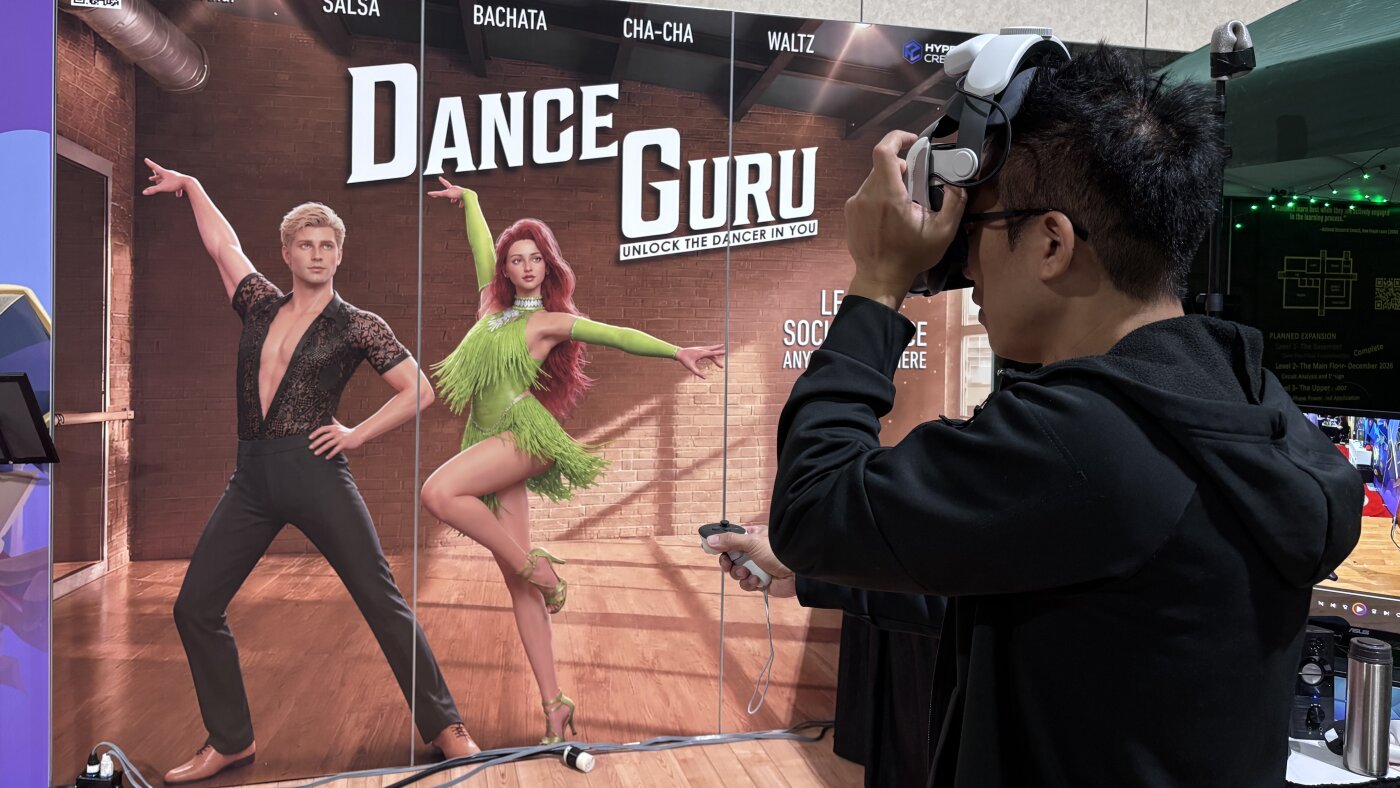
Entrepreneur David Huang tests out a VR headset while conducting demonstrations of the social dance lesson app Dance Guru at the Augmented World Expo in Long Beach, Calif., June 17, 2026.
Chloe Veltman/NPR
hide caption
toggle caption
Chloe Veltman/NPR
Wedding season is in full swing, bringing with it a familiar sense of dread for anyone who fears the dance floor.
But relief may finally be at hand with the help of a new app, Dance Guru, and a virtual reality (VR) headset.
The social dance instruction app transports users to a spacious, digital dance studio. Waiting inside is a computer-generated coach: a handsome, male avatar wearing a shirt open to his navel. He speaks with a slightly gravelly English accent.
“Watch me now,” he instructs at the start of a waltz lesson — which NPR tried out at the Augmented World Expo in Long Beach, Calif., an annual conference showcasing the latest developments in virtual and augmented reality.
The avatar then demonstrates a basic box step.
From there, the lesson becomes interactive. The coach tells the user to hold his hand while an electric pinging sound tracks the student’s foot placement.
“One, two, three, four, five, six,” the virtual teacher counts down.
When the user stumbles, he remains remarkably patient. “Do not worry, foundations take time. Let’s try that again. Work on grounding your steps more intentionally.”
Solving the beginner’s dilemma
Dance Guru creator David Huang said he came up with the idea for the app a couple of years ago out of frustration.
“I always wanted to learn to dance and I was always terrible at it,” Huang said. “And I always ended up stopping midway through the lessons.”
He soon realized that many beginners hit the exact same roadblocks.

“Private lessons are too expensive, and you feel like you’re always forgetting the dance steps,” Huang said. “You cannot find a partner to dance with. So I figured maybe I can create something like this.”
The Dance Guru platform currently offers tutorials in salsa, bachata, waltz, and cha-cha, in both lead and follow modes. To make the digital instruction feel authentic, Huang used motion-capture technology to record the movements of real-life dance teachers — with their permission.
Building on the legacy of online tutorials and video games
Dance Guru belongs to a small but growing wave of apps using VR to demystify social dance. At a nearby booth, conference attendee Victor Chen is testing out a competing app called Trip the Light. It currently offers salsa lessons, as well as freestyle options, where a user can dance with a partner without having to learn specific steps.

Trip the Light’s booth at the Augmented World Expo included posters of the app’s virtual instructors. Real-life performers, who gave Trip the Light permission to motion capture their movements, were used as a basis for these avatars.
Chloe Veltman/NPR
hide caption
toggle caption
Chloe Veltman/NPR
“A lot of times when you’re trying to learn a choreography, it’s watching a YouTube video and you have to pause it, rewind, and play it,” Chen said. “If you were to have a virtual avatar dancing in front of you and correcting for any parts that you missed, it might be a lot easier.”
Interactive video games like Dance Dance Revolution and Just Dance, and YouTube tutorials have been helping people improve their skills in private for years. But those games are mostly aimed at solo players. Unlike the new generation of immersive VR apps, they cannot simulate the mechanics or confidence required for partner dancing on a live dance floor.
The reality check
But this kind of app won’t work for every dancer.
“Everyone learns a little bit differently. And so unless you have a game that has lots of different ways of teaching, you’re going to have things that work for some people and don’t work for others,” said Ariana Katana, a trained contemporary dancer and dance content creator who’s active on YouTube, Twitch and other platforms. “Also, it’s hard to dance with a headset on.”
And then there’s the issue of not being able to physically feel a virtual partner’s hand or shoulder while dancing with them. Patrick Ascolese, the creator of Trip the Light, said the experience could become more tactile in the future. “Haptic suits and wearables will be coming, but I think we’re a little away from that,” he said.
Ascolese said even with their limitations, immersive tools like Trip the Light have immense potential as judgment-free training grounds — giving reluctant dancers the baseline confidence they need to eventually step onto the dance floor with real partners in the real world, including at weddings.
“Just like anything else, practice makes perfect,” said Ascolese. “So the more time you spend in VR with a virtual partner, it works towards helping you get over that social hurdle. We are teaching you the moves that you have to do in order to go out and have fun.”
Jennifer Vanasco edited the broadcast and digital versions of this story. Chloee Weiner mixed the audio.


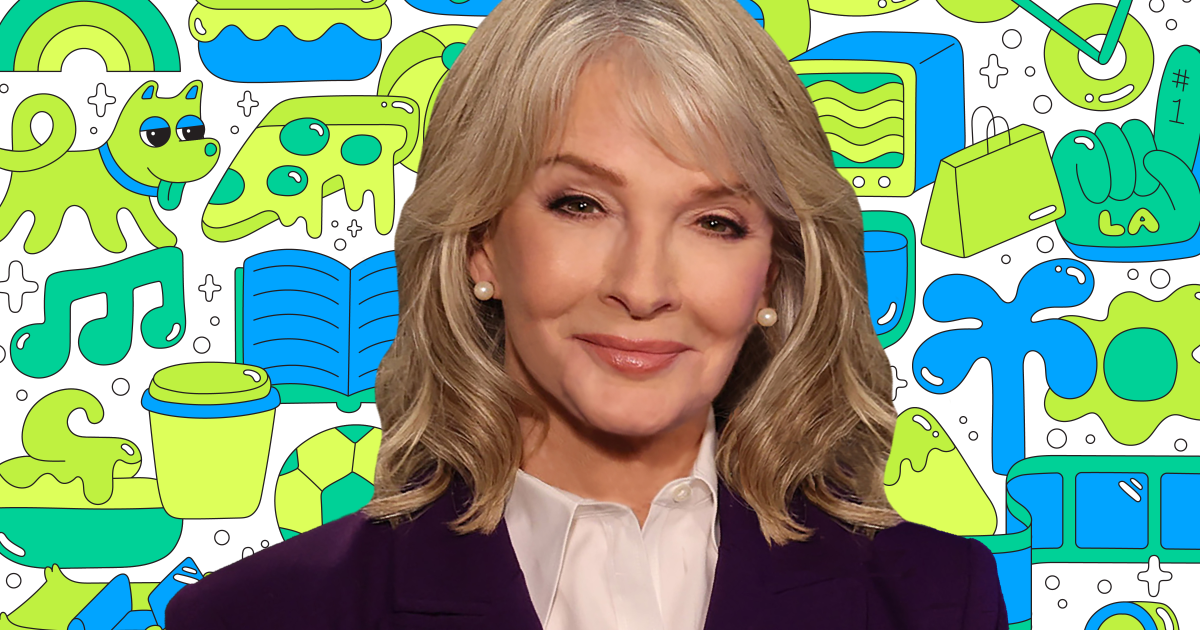
For half a century, Deidre Hall has taken on every kind of disaster in the drama-packed town of Salem, Ill., as a star of “Days of Our Lives.”
There was the time — actually, it happened twice — when her character, Dr. Marlena Evans, was famously possessed by the devil and even levitated.
In Sunday Funday, L.A. people give us a play-by-play of their ideal Sunday around town. Find ideas and inspiration on where to go, what to eat and how to enjoy life on the weekends.
Or the time a serial killer, who was actually Marlena under hypnosis, seemed to kill several beloved characters. The long-running show’s storylines have become legendary, and in March, while promoting “Hail Mary,” actor Ryan Gosling even gave Hall a shout-out, admitting he was a fan, praising the hard work of soap opera actors and calling her an “OG acting inspiration.”
But Hall’s real life in Santa Monica is much quieter than her character’s, and she likes it that way.
“When I bought my house in Santa Monica, I didn’t realize how great it would be to live near Montana Avenue,” says Hall, 78, about the popular shopping spot. Every day, she walks to the main street with her golden retriever, Riley, and enjoys Pilates, art and good food along the way. “The owners of the Farms Market even keep dog biscuits, so guess where the dog wants to go every time we walk — the Farms, of course,” she says, laughing.
When she isn’t filming the daily soap opera, which airs on Peacock, Hall enjoys raising monarch butterflies, exploring the shops and restaurants on Montana, and hosting movie nights at home with her two sons.
Here’s what a perfect day in L.A. looks like for her.
This interview has been lightly edited and condensed for length and clarity.

7 a.m.: Breakfast and dog walk
I usually kick off my day with a protein shake, feed our golden retriever and take her out for a walk. She’s a phenomenal girl. When we adopted her, her name was Riley, but I did think about naming her after Mrs. Hughes from “Downton Abbey.”

10 a.m.: Church and garden time
After I walk the dog and go to church, I like to spend some time in my yard. I’m not a natural gardener, but I really enjoy it. I started raising monarch butterflies because my identical twin sister, who played my twin on the show, planted a butterfly garden. Monarchs are amazing because they are transitional. Every year, they travel from Mexico to southern New England, but it’s getting harder for them. Their numbers have dropped by about 80%. To help, I plant milkweed, which is what they need to survive. I buy my milkweed from the Staghorn Garden on Wilshire Boulevard in Santa Monica. Julie, who owns the nursery, is delightful and has a wide variety of milkweed. The monarchs always seem to find my garden. Julie was raising some caterpillars too, and she cared a lot about them. We talked about how important it is to help the butterflies. That’s why I do this. Sometimes I get milkweed with eggs already on it, and Julie knows her butterflies are going to a good home.

1 p.m.: Walk to Montana Avenue for some lunch
I live near Montana and love taking long walks, going to Pilates and trying out the great restaurants nearby, like R+D Kitchen and La La Land. I’m a big fan of the waffles at the Courtyard Kitchen. Just a few days ago, I had a chicken salad on raisin bread with an Arnold Palmer, and it was delicious. It is right on Montana and has a nice outdoor seating area. It’s one of my favorite spots. La La Land always has a long line in the morning, which is perfect if you want coffee. They serve coffee, doughnuts, croissants and avocado toast. There’s plenty of outdoor seating, and you can even bring your dog.

2 p.m.: Peek inside a clock shop
There’s a small clock shop on Montana Avenue that’s closed on Sundays, but if you walk by, you’ll see all kinds of clocks — standing, table and wall clocks. The owner is great at fixing them. Once, I bought a wall clock from MacKenzie-Childs, but it didn’t work. And I was really upset because it matched everything else on my countertop. I brought it to the owner and said, “I love this, but I can’t make it work.” He fixed it right away. His name is John, but I call him Geppetto. And we all know why. He really does have a magic touch.

2:30 p.m.: Visit a neighborhood art gallery
Ten Women Gallery is run by 10 artists, all of whom show their work there. I was drawn to some watercolors there, bought a few cards and spoke with one of the artists. She told me, “You seem to love watercolors,” and mentioned that the artist who painted them, Pamela Harnois, lives in Los Angeles and teaches nearby. I got Pamela’s name and found out she taught at the Brentwood Art School. I was so inspired by her gift that I started taking private lessons with her on Saturdays. That gallery is where I discovered my love for watercolor painting.

3 p.m.: Grab some ice cream at Rori’s
The other day, my longtime girlfriend wanted to get ice cream and told me, “We are walking to Rori’s Artisanal Creamery.” It’s a small shop on Montana near Lincoln. They make everything themselves, using local ingredients from grass-fed cows with no added hormones. The place is family-owned and probably has the healthiest ice cream you’ll find. They switch up their flavors often, but my favorite is the salted caramel.

6 p.m.: Family dinner and movie night at home
R+D Kitchen is always packed, so my sons, who are 31 and 33, do the cooking. They come over, and together we make salads and cook dinner. There’s a neighborhood grocery store called the Farms, off Montana, a small family-run place that has everything we need. Everyone knows each other there, and people bring their dogs. We try to have movie night every Sunday. Sometimes the day changes, but we always make sure to have one night a week where we cook a meal and sit down as a family. Keeping that tradition has become really important to us. My sons are great cooks, which is funny because they definitely didn’t get that from me. [Laughs]
9 p.m.: Take Riley for one last walk and visit neighbors
After dinner, I take my dog for a walk. It’s a great way to meet neighbors. We always go around the same block. We’ve met so many people, and since she’s a golden retriever, she loves meeting everyone.

10 p.m.: News, knitting and bedtime
I am a news junkie, so I usually watch whatever is on the news before I go to bed. I have a long-standing passion for knitting. Lately, though, the news would make me drop a stitch.
For Iris van Herpen, couture is a laboratory as much as a runway. Our chief fashion critic, Vanessa Friedman, takes us inside this Dutch designer’s latest Paris show — from sci-fi-inspired gowns to an audacious attempt at a dress made of charged plasma.
-

 Wyoming2 minutes ago
Residents celebrate Wyoming Statehood Day by revealing their favorite thing about the Cowboy State
-
Crypto5 minutes ago
Trump’s crypto grift spins into its own industry
-

 Finance17 minutes ago
New changes to financial aid will be minor for UND students, bigger for loan borrowers in repayment
-

 Fitness20 minutes ago
The NHS has reignited the hybrid working debate – but WFH isn’t the health risk, this is
-

 Movie Reviews32 minutes ago
‘Only Beautiful Things to Look At’ Review: A Handsome but Muffled Portrait of State-Sanctioned Cruelty
-

 World40 minutes ago
Colombia Adds Massive Soundstage as Bogotá Audiovisual Market Attendance Soars and ‘Narcos’ Star-Led ‘Rookies’ Cleans Up in Project Prizes
-
News47 minutes ago
How a Beer Hall Keeps Up With a World Cup Crowd
-
Lifestyle1 hour ago
Shy on the dance floor? Virtual reality ‘partners’ aim to help you find your groove

