Milwaukee, WI
Some Milwaukee homes undergo lead abatement for free

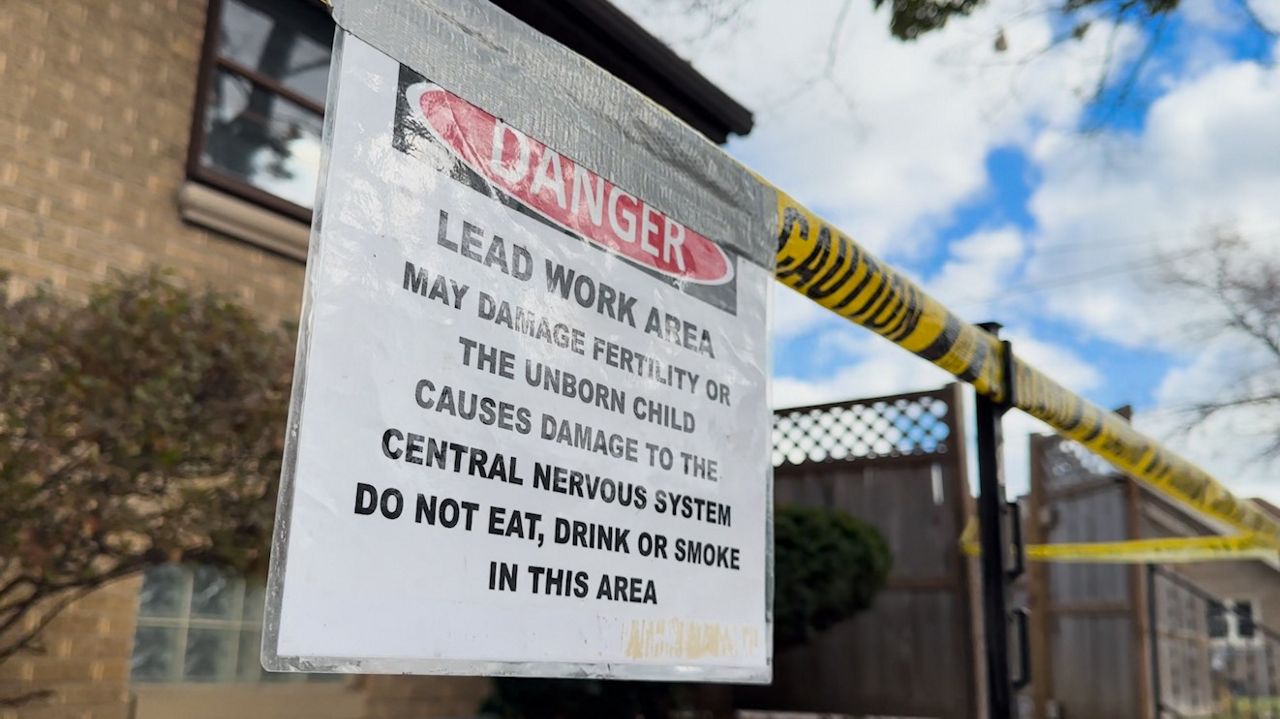
MILWAUKEE — Health officials said lead is still commonly found in older homes around Milwaukee. Lead paint was banned in the U.S. in 1978, according to the U.S. Environmental Protection Agency.
So many of the city’s homes are contaminated with lead that the Milwaukee Health Department is calling it a crisis.
Tyler Weber, the deputy commissioner of environmental health at the Milwaukee Health Department, said there are 200,000 homes in the City of Milwaukee contaminated with lead.
He said the older the home, the higher the levels of lead. That poses an array of health risks, especially for children.
“It can prevent a child from learning to read earlier in life,” Weber said. “It can decrease their vocabulary. There’s impulse control [and] potentially ADHD. So there’s a number of behavioral challenges and that can have a lifelong impact.”
Weber said lead can be found in walls, windows, water and soil. He said because it’s so prevalent in Milwaukee homes, $20 million in federal funds have been put toward reducing the lead hazard in low-income communities.
“They’ve been significantly red-lined, segregated economically and they have older homes with more windows, bigger square-footage and 80% of the families we work with are renters,” Weber said.
In Milwaukee, a resident may qualify for the Wisconsin Lead-Safe Homes Program (LSHP) if they meet the following criteria:
- “Your home was built before 1978
- “Your taxes are paid to date or you are enrolled in a tax payment plan
- “Children under age 19 or a pregnant woman living at or regularly visiting your home are on, or are eligible for, Medicaid or BadgerCare Plus. (“Regularly visiting” means visiting for at least three hours per day on two or more days per week, totaling at least 60 hours per year)”
The Morris sisters are just two of the many individuals impacted by lead exposure in the city. Their home was built in the early 1900s and riddled with lead.
A Habitat for Humanity flyer left in their mailbox that advertised free lead abatement services caught their interest.
“I told my sister, I said ‘Hey, I think this would be a good thing to look into,’ because it’s an older house. We have peeling paint and she had her two grandchildren living here with us,” Shawn Morris said.
They met the qualifications, as the grandkids living in the home had high levels of lead in their blood. Habitat for Humanity quickly got to work. The abatement took about three months to complete and was done free of charge.
“It’s a wonderful program,” Morris said. “They totally transformed our house. They gave us a new house. There’s no way we would have been able to afford it.”
The project saved the Morris family thousands of dollars and brought the grandkids’ lead blood levels back to normal. Weber is hoping to do just that for other families affected by lead exposure.
“Helping to get this crisis under control and bring awareness to the lead poisoning and the effects in can cause,” Weber said.
For more information on how to qualify and apply for free lead remediation in Milwaukee, click here.



Let’s talk about Giannis, and I want to address this trade, uh, Milwaukee made with Giannis in Miami in kind of three different ways, and I want to start with the Milwaukee side of it, and I’ll ask the question, um, did Milwaukee get enough?
Uh, we know by now what the package.
It it is, it was the 13th overall pick in this year’s draft.
Uh, two other 1st round draft picks, a pick swap, 2nd round pick.
You got some players.
Tyler Hero was at the forefront of it.
Jaime Haquez Jr.
Khalil Ware, uh, Cass Yakashoish, I believe I’m still saying that name correctly.
I think that’s very impressive, Chris.
I like, we can get to him, but I like that kid a lot actually.
I think he’s a potential to be a franchise point guard.
Uh, they don’t get kind of the superstar young player.
They don’t get the super high draft pick, at least not now.
We’ll see how that plays out.
Um, do you think the Milwaukee Bucks got enough for Giannisokopo?
What was available.
I, I’m just not sure that that’s the question in terms of what were they supposed to do to get more.
Did you hear any offers around the trade deadline that you thought were better than this?
I did not.
He, I mean, look, we can get to Boston and whether or not their offer was better given the caliber of player that Jalen Brown is, um, I, you know, I think there were a lot of teams kicking the tires on Giannis, uh, but ultimately Miami was the team that was willing to push all their chips in and say, look, besides Bam Adebayo, you can have basically whatever you want off our roster.
I, I don’t think other teams were willing to do that.
I mean, my question more about did they get enough or what did Miami give up is the Giannis decision making, because here’s a guy who I know, I, I’ve talked to him several times over the past 12 years.
That leaving Milwaukee was very hard for him.
All the waffling, the back and forth, all the stuff.
You might not like how he did it so publicly, but I promise you it was legitimate.
This is where his children were born.
This is his home in America.
It’s where he became who he is.
He feels a deep connection to that city, that community.
He and his wife do amazing things in Milwaukee .
It was.
Hard for him to leave.
So this was a basketball decision.
And if it’s a basketball decision to go to a team that has gutted their roster is always just, I mean, we saw Carmelo Anthony pushed to go to New York and they had to, you know, mess up the roster and then they were trying to make up for it for years, but Carmelo was much, I believe he was significantly younger, right?
When he forced that trade was in his twenties, yeah, yeah, um , and it’s just sort of, you know, I have a lot of faith in the Miami Heat front office.
I think Andy Ellsberg is one of the unsung guys of the league, probably because, you know, he’s like lasagna, he moves in the G, he moves in silence, but, um, you know, I, I think that that team structure.
great.
I think Erik Spoelstra is a knockout coach.
Um, I, I think that everything about Miami is as advertised.
However, you only have who you have.
They only have so much more money that they can give out.
They’ve now gutted a bunch of draft picks.
The team as it stands, him and and Bam.
I think it’s a good fit.
I don’t think people are gonna, you know, people are like, Oh, they can’t even play together.
I don’t believe that .
I think they can play together, but it is, I wanna get, I want, I wanna get to the Miami side of it in a second.
I do want to hit up, spend some time on that, but like, but it’s not gonna be, it’s not gonna be a championship team.
And for me, the question about You know, Giannis going there, you know, he had to say he was going to sign an extension for Miami to be willing to cut their roster and gut their asset trove.
And if I were in Giannis’s shoes, if I were a player who was being wrenched away from a community that they really loved because they wanted to make a basketball decision.
To win, I would have been a mercenary through this process.
I would have gone around to every team, all 29 other teams in my head.
I would have said, these are the four teams I want to play with, and only if they don’t give up very much, and then I would have picked the one.
The one, this is where the player can really have influence, where there isn’t a bidding war.
The one team that I wanted to most play for, where I could see this is where I could win, and I would say I am not signing long term with anyone else.
And the Bucks would have had you, when you said, did the Bucks get enough?
The Bucks could have gotten a lot less if Giannis had done that.
If Giannis had said, this is the one team I want to go to.
Then that team could have offered not very much at all, because nobody else would have offered very much at all, because Giannis would have said, this is the only team I’m signing a long term deal with.
And I know that’s not in Giannis’s nature.
I know he doesn’t want to be super demanding like in that way, but when you look at what the Bucks got for this, where Giannis is going, what the Boston.
And all of this.
That’s the only thing that I sort of look at this whole situation and I think, man, I would handle this differently if I was on the side.
I’m ruthless .
I thought that.
I, I, I thought that Milwaukee did as well as they could in this situation.
Um, they got some very good usable young players, which is important for them in the position that they’re in because they’re not in, yeah, they’re not in a position to tank.
They do not control their first round pick for the next 5 years.
So it, they have no incentive to be bad, um, moving forward, um.
I think that Tyler Hero may not be long for Milwaukee.
Um, I could see the Bucks turning around and flipping him for other assets, so the final yield of this trade may not fully be known right now.
Uh, but I think getting guys like Hakez Junior who can play where, who can play if they can get through to him, um, that’s certainly he could become kind of a franchise big man for there, and I like Yakohoish a lot.
I like him coming out of Illinois.
He’s big.
He’s a big tall point guard.
He’s a guy that averaged, uh, what, 18 minutes per game for Miami this season, played 53 games for them.
I think if you hand him the keys as your lead guard, there’s a decent chance he’s gonna take off and he could become a longtime starter, uh , in this league.
Miami liked him coming out of the draft, obviously, I think Milwaukee’s really gonna like him out there.
The question I would ask is all the things they got from Miami.
Is that better than getting their hands on Jalen Brown?
Because Jalen Brown is by a country mile better than anything that Miami was going to offer.
He’s significantly better than Tyler Hero, all the young pieces they have down there, and Boston was also willing to throw in.
A couple of first-round picks.
So if you were John Horst and you were that front office and you had to weigh these two offers, obviously they made a decision, but would you have made a different decision?
Would you have taken the bird in the hand that is Jalen Brown and the star player that he is with, by the way, 3 years remaining on his contract?
Yeah, I mean, it’s an interesting question.
For me, I am always fascinated by general managers who say, you know what I prefer?
I prefer a draft pick several years from now, who maybe possibly with some seasoning, some time in the league, some experience, could maybe best case scenario, turn into a Jalen Brown.
Instead of that, I’m gonna, I’m gonna do that instead of taking a Jalen Brown, who we know who he is.
I don’t know if this was a little bit about the fact that if they took Jalen Brown, they still aren’t going to be a team that’s going to be at the top of the east.
And so by the time his window as a prime in his prime runs out, are you getting sort of around him what you need, and then you’re kind of back to square one.
One again, you’re in a community where you still have to sell tickets.
They’re going to be reeling over using, losing Giannis, and you put Jalen Brown in there.
And I believe him when he’s on his twist treat and saying, you created a monster, all of that stuff.
I know Jalen, we know how hard he works.
I mean, we know how determined he can be.
We saw what he could do when he had his quote, own team this past season.
And so I would have taken Jalen Brown because he’s a guy to put.
The side of your building.
He’s a guy who can influence team culture with the other pieces you bring in and the other young players you have.
And there was a little draft capital in the deal to replenish some of the draft capital that they’ve given away in the past few years trying to build something around Giannis.
I would have taken the Jalen Brown deal.
I’ve heard people say taking the Miami deal gives you more run as a front office person in terms of uh You know, how much more rope you have on your contract because everything’s in the future.
And so, you know, you’re more likely to have the team owner let you play out the deal.
And also, there’s been reporting that the team owner, the guy who is controlling a lot of stuff there right now, and it’s always a murky situation because there are shared ownership of the team and there’s a rotation, all of these weird things, but that Jimmy Haslam walked in and said, I want the Miami deal.
You can’t go against what your owner wants, or you know it’s smart not to go against what your owner wants.
But yeah, to answer your question , I would have taken Jalen Brown, and partly because, you know, I’m always all about, you know, what are you doing to your fans in the building?
What are you giving them?
Only one team wins the title.
No one they traded for was likely to make them win the title in the next few years.
So give the, give the guy, give the people in Milwaukee a star.
I don’t know.
Yeah , um, I, I like the picks that they got because they’re into the 2030s and who knows what Miami’s gonna look like at that point.
Will Pat Riley still be around?
Will Erik Spoelstra still be around?
What will the team look like?
That, that has the potential to, they could be valuable picks and even if they’re not known to be right away, they’ll be valuable assets to deal over the next couple of years if they’re supposed to ask you about that.
Just about the pics before you go on to the rest of it.
So, this is, as I said, this is the part that I just, look, I’m not in the front office, I’m not a general manager like you, this is not what I do, um, and you not being a draft Nick, I am not a front office Nick.
This is not, you know, what I spend a lot of my reporting time on.
But I don’t get it.
You say those picks, at least one of them could be pretty valuable, because who knows what’s going on with Miami at that point.
Do you think with one of the picks that Milwaukee got in this deal, they will end up with as good a player as Jalen Brown?
In 2035, what was it, 2032, 2033, probably, probably not, um, but look, the thing with Jalen Brown is the reason I would have taken the Celtics deal is to go again.
You are not looking to be bad next year.
There’s no reason for you to be bad.
So if you get Jalen Brown, you play with him next year, you win 35, 40 games, whatever it may be with that group, which I don’t think is unrealistic given the players that they got.
Uh, and then summer of 2027, if Jalen Brown is still playing like an all NBA talent at the ripe age of 30, 31, you can deal him for other stuff.
Maybe there is a team out there that looks like the Clippers circa 2019 or, you know, the Knicks when they made the Carmelo deal or the Nets when they made the Paul Pierce, Kevin Gar.
Garnett deal.
You can wait for desperation, sniff desperation and see what happens and, and get a higher yield.
I think this, like you’re able to get stuff for Tyler Hero, sure, but Tyler Hero’s got 1 year left in his contract and not a lot of people are excited about the possibility of paying Tyler Hero like $35 million per year.
I think Jalen Brown could have made the final haul for this deal a lot better and could have made next year more palatable to this team, uh, as they’re.
It’s kind of treading water in their particular situation.
So where does Boston go from here is, is, of course, well, I wanna get, I wanna get to Boston.
We’ll get to Boston.
I wanna, I wanna pivot back to, to Miami here and, and, and with this team that Miami’s got now, uh, now you’ve got Giannita Deumpo.
You got Bam Adebayo.
You got a front court that, I don’t know, kind of makes sense, sort of.
I don’t know.
You could depends on how you look at it, uh, and you’ve got the rest of the roster which is kind of in flux.
You’ve got Andrew Wiggins who’s got a player option.
My belief is that.
They’ll try to get Wiggins to opt out of that contract, sign him to a new long-term deal at a smaller number.
Happens all the time in the NBA.
That would presumably give them the flexibility to bring back Norman Powell.
But after that, like, Daveon Mitchell is a good player, but, you know, he, he kind of is what he is.
He’s a good defensive player who’s never been a high-level offensive guy.
And, and then you’re kind of on the market for any vet minimum guys that want to come down and live in South Beach and play alongside.
Giannis and Bam.
Like, next season, I don’t have the heat over the Knicks.
I don’t have the heat over the Cavaliers.
I don’t have the heat over the Pistons.
I think they’re in.
They’re in a tricky spot and, and that is assuming full health for Giannis, which I don’t think you can assume.
I, I, you know, he’s coming off back to back years of soft tissue injuries.
A calf injury had limited him to what, 35 games this past season.
Look, these types of deals, and I mentioned a couple of them.
You talked about Carmelo.
Very rarely, at least in modern times, do they work out for the team that pushed all their chips in.
It didn’t work out for New York.
It didn’t work out for Brooklyn.
It didn’t work out for the Clippers.
I think if I was a betting man, I say a few years from now, the Heat are going, Oh wow.
Well, we took a shot.
We took a flyer, and it didn’t really work here.
I don’t love this deal for Miami.
Very much at all.
I understand why they did it.
They were kind of in this cycle of mediocrity over the last few years.
They weren’t going anywhere with the roster that they had.
Pat Riley’s only got so many years left on this job.
He wants to take a big swing.
It’s worked for them in the past when they made the free agent signings back in 2010, but I don’t love the fit with Giannis and Bam, and I don’t love the roster with the guys around them.
I mean, the fit with Giannis and Bam, as I, as I was saying, I, I don’t, I don’t worry about it.
Those are both guys who know how to play.
I think the paint will be fine.
You want guys who can, you know, within today’s NBA with the way things are trending, I think you want guys who can be down there, um, and the defensive, you know, prowess of both of those is, is certainly unquestioned.
Uh, it’s not an offensive team around them.
They need shooters.
I, I, I just don’t know how they’re gonna get them with the assets that they have and the money that they have, um, to your point, you know, if, if some of these guys who are vet minimum guys, uh, you know.
If people were desperate for them, they wouldn’t be vet minimum guys, right?
So what are they really bringing?
And by the way, you’re in a year where another really when you say, oh, maybe they just want to be in South Beach.
The Lakers want a bunch of vet minimum guys.
So now there’s gonna be a little bit of competition for, do you want to live in Los Angeles?
Do you want to live in South Beach?
It’s just not as clear as like, well, we’re the, we’re the better living spot.
Who knows?
It just depends on, I guess, how much taxes you want to pay.
But I, I think that Again, this brings me back to Giannis.
If I was Giannis, if I’m the guy who now has to go out and play for the next however many years in this new team I have gone to, and the express reason I have wanted to go somewhere is to win a title, I know it’s mercenary.
I get it.
I know it makes you the bad guy, but be the bad guy for one season, for one moment, and go around, find the one team you would most like to go to.
Announced to the world, you will only sign there, and then make sure that you are going to an asset heavy team.
By definition, a team that can win a title, and they’re just not, I, I just didn’t think anybody in these Giannis sweepstakes was gonna be in that position.
I’m not sure that Milwaukee would have traded him if he did that.
At least not before the draft.
Like, I don’t think that Milwaukee was in a position to do a deal like this where they got back 60 cents on the dollar.
And I know that Jimmy Haslam put the, threw the gauntlet down and said, hey, we’re gonna do this deal before the draft and we’re gonna settle this one way or the other.
But the Bucks did punt on a Giannis deal before the deadline.
I think they could have punted on this deal before the draft and then made a deal sometime in the offseason when maybe the dust settled a little bit.
I’m not sure they, if Giannis did all that and he said, I’m only going to play for Miami.
I don’t know.
And look, it doesn’t necessarily mean, you know, look what Damian Lillard did a couple of years ago.
I know he had more years on his contract, but the Blazers sent Dame to Milwaukee when he had no interest in going there.
So the Bucks still could have found a team potentially that was willing to give up real assets for him.
I, I just, the, the more, the more years on his contract is that’s not a yada yada yada.
Yeah, yeah, it’s big.
It’s big.
You, you’re, you’re protected by that, no doubt.
But I also, I look with Giannis, like I’m not convinced wherever he goes.
That the second he’s eligible to sign an extension, he’s not gonna sign an extension.
Like this is a guy that has a history of injuries.
He’s also a guy that like counts his money.
Like he’s the guy, the guy’s like a Calci ambassador.
Like he’s, he’s counting his money, and I think given his injury history, if I think it’s now January, they can get offered an extension, like whatever it is, October 1st, right?
No, it’s, I think now that he’s traded it to get, yeah, yeah, yeah, you’re right, um, I think whatever he gets off that extension is gonna take it because that injury history.
You never know what’s gonna come up over the next couple of years.
I think he’s gonna, he is now because he’s, because he’s, you know, I think, I, I think he might have taken it like in Houston or Atlanta or some.
I just think he would have.
I , I, I don’t think he would be willing to risk that money, leave that on the table for a free agency that might have gone a different direction.
Plus, you go into free agency, you have to hope teams have, have cap space which they don’t really have anymore.
I think it would have been a lot of risk involved for Giannis to play.
That card, uh, if he did, uh, with, but Miami though, like I don’t, I don’t look at, I don’t look at Miami as a, a championship contender now.
I don’t look at them as being one of the front runners to win the Eastern Conference.
Obviously a lot can change.
They can go out and add piece to that roster that I don’t expect, but again, when teams do this and they go all in.
More often than not, the team that goes all in winds up giving the other team the pieces they need to be a championship contender years from now.
It’s what Denver did or what, uh, New York did with Denver to a degree, I guess.
It’s definitely what Boston did with, what Brooklyn did with Boston.
It’s 100% what the Clippers did with Oklahoma City.
They gave all these assets to them and the Thunder wound up cashing in.
Plus the young player, like, who knows.
Maybe Yakohoni turns out to be Shay.
Never know.
You never know.
He’s a big guard, you know.
We didn’t think Shay was this guy, you know, coming over from LA all those years ago.
So we’ll see what happens there.


RACINE — Members of Racine’s Greek community are processing the news of Giannis Antetokounmpo’s trade from the Milwaukee Bucks — and the timing hits especially hard, just days before Greek Fest at Kimissis Greek Orthodox Church.
Tents are going up in the parking lot, rides are being assembled, and the kitchen is already busy with preparations for the annual celebration of Greek culture in Racine. But amid the excitement, the news of Giannis Antetokounmpo’s trade from the Milwaukee Bucks is on the minds of some church members.
Joyce Muffoletto, secretary at Kimissis tid Theotokou Greek Orthodox Church in Racine, said the news took some of the joy out of her Tuesday.
Watch: Racine’s Greek community discusses what Giannis meant to them:
Racine’s Greek community reflects on Giannis’ celebration of Greek culture
“Yeah, that puts a damper on everything,” Muffoletto said.
Giannis, who was born and raised in Athens, Greece, earned the nickname “the Greek Freak” during his time with the Bucks. For Muffoletto, his Greek heritage made her a fan.
“Oh, of course,” she said with a laugh.
TMJ4
“I’m a pretty reserved, quiet person, but my husband had to go to a different level in the house because I’d be screaming at the TV when he was playing, you know, I’d be like, ‘Giannis! Giannis!’” Muffoletto said.
While Muffoletto made it to multiple Greek night games with the Bucks, she said what she will miss most goes beyond Giannis’s performance on the court.
“It’ll be hard to replace him. And more than him the player, kind of, him the person,” said Muffoletto, referring to the impact Giannis had on the Milwaukee community.
Church member Mary Luccas said she is not a big basketball fan, but she holds Giannis in high regard for the values he represents.
“We will be sad to lose that, but he set a really good foundation going forward,” Luccas said. “And he will be doing the same thing wherever he goes, because it’s just the quality of person that he is.”
TMJ4

Luccas said Giannis and his family have embodied Greek values throughout his time in Wisconsin.
“Family centered. Philoxenia. The friendship, the love. The doors are open. They welcome everybody,” Luccas said.
“He embraces the Greek culture, like we embrace the Greek culture. And he celebrates Greece and his Greek culture,” Luccas said. “So wherever he is, it will be a celebration of his Greek heritage.”
And while the loyalty to the Bucks remains, Muffoletto acknowledged the bittersweet reality.
“I’ll be loyal, but it’s a bit of a loss,” Muffoletto said.
Racine’s Greek Fest runs Friday through Sunday at 1335 S. Green Bay Road.
This story was reported on-air by a journalist and has been converted to this platform with the assistance of AI. Our editorial team verifies all reporting on all platforms for fairness and accuracy.
Let’s talk:
Hey there! At TMJ4 News, we’re all about listening to our audience and tackling the stuff that really matters to you. Got a story idea, tip, or just want to chat about this piece? Hit us up using the form below. For more ways to get in touch, head over to tmj4.com/tips.
It’s about time to watch on your time. Stream local news and weather 24/7 by searching for “TMJ4” on your device.
Available for download on Roku, Apple TV, Amazon Fire TV, and more.
Report a typo or error // Submit a news tip
-

 Los Angeles, Ca38 minutes ago
Clue may identify SUV in Long Beach hit-and-run that left woman injured
-

 Detroit, MI1 hour ago
Ilitch Companies creates gaming platform, expands beyond Detroit
-

 San Francisco, CA1 hour ago
First of its kind queer museum in San Francisco Chinatown amplifies Chinese LGBTQ artists
-

 Dallas, TX1 hour ago
These children were sold for sex. Then the system failed them again
-

 Miami, FL1 hour ago
Hard Rock Cafe lets Downtown Miami lease lapse after 30-plus years
-

 Boston, MA1 hour ago
Federal judge in Boston bars Trump from implementing proof of citizenship requirement to vote – The Boston Globe
-

 Denver, CO2 hours ago
Denver Broncos Foundation launches extension of ‘ALL IN. ALL COVERED.’ emphasizing youth football participation
-
Seattle, WA2 hours ago
Iran and Egypt to play in Seattle ‘Pride Match’ despite earlier complaints | The Jerusalem Post


