Politics
Trump Draws, and Repels, Nevada Latinos With His Anti-Immigrant Message


Two months ago, Javier Barajas hosted former President Donald J. Trump at Il Toro E La Capra, one of five restaurants he owns in Las Vegas.
Mr. Barajas, 65, had eagerly backed Hillary Clinton when she ran for president in 2008; he previously welcomed President Biden to one of his other restaurants. But he has thrown his support to Mr. Trump this year for one major reason: skyrocketing prices on everything from the ingredients in his entrees to the gas for his catering truck.
His nephew, Justin Favela, was crafting a piece of traditional Mexican folk art from tissue paper when he began receiving angry and confused texts from friends and family who had seen the news of Mr. Trump’s visit on social media and the nightly news.
Mr. Favela, a 38-year-old artist, has economic concerns that resemble his uncle’s. Higher rents, increased costs for the supplies to create his art and student loans leave him stressed about his future.
But he will cast a reluctant vote for Vice President Kamala Harris, spurred primarily by Mr. Trump’s increasingly dark and racist portrayals of immigrants like those in his own family.
“I work 12 hours a day just to be alive — just to be able to pay rent. I can’t even afford a house. The Democrats have been weak,” Mr. Favela said, describing how the cost of a gallon of glue, which is essential for his work, has doubled in the last three years.
“But gun to my head I would not vote for Trump,” he added. “To still vote for somebody that called everybody from Mexico rapists and has these terrible violent border policies shows that you’re not interested in supporting humanity and helping people, you’re interested in the bottom dollar.”
The former president has braided his economic pitch that Americans would be better off under a second Trump administration to increasingly vitriolic and openly nativist attacks on undocumented immigrants. Appealing to voters of color, he has frequently claimed migrants are taking jobs and housing that might otherwise go to Black and Latino Americans, accusations that are not supported by available data. In rally after rally, he has cast migrants as a violent invading force responsible for degraded life in America’s towns and cities, and promised “the largest mass deportation operation in history.”
The message is registering among Nevada’s Latino voters in the closing weeks of the campaign. Interviews with nearly two dozen such voters, of various ideological stripes, reveal similar rifts between friends and family over whom to support. For some, despite the financial concerns that might otherwise sway them toward Mr. Trump, his incessant attacks on immigrants are too much. Still, many appear prepared to look past his escalations and back a candidate they believe will help their livelihoods.
Mr. Barajas’s frustrations capture the potency of the Republicans’ economic argument. Nevada’s service-heavy economy was crushed by the pandemic, and while the recovery has been strong, the state still has the highest unemployment rate nationally and some of the highest prices for gas and groceries.
“I used to pay three years ago, $32 for a case of eggs. Now it’s about $100” for the same crate of about 200 eggs, said Mr. Barajas, who arrived in the United States from Mexico in 1978 illegally and became a citizen in the early 1990s.
He added: “I don’t trust Trump 100 percent, but much better than Kamala. I know he is going to make mistakes. I know he is not going to do everything he says, but I know he is going to do much better for this country.”
Latino voters have been a key part of the coalition that has propelled Democrats to success in Nevada for the last 20 years. Ms. Harris’s campaign has promoted economic proposals that they believe would bring down the cost of staples, as well as housing. Nationally, the campaign has run millions in Spanish language television advertising and said it would spend close to $3 million in October on Spanish-language radio advertising. They didn’t offer numbers specific to Nevada.
Emilia Pablo, a spokeswoman for the campaign, said in a statement that Democrats were working to “drive home the stark choice they face at the ballot box this election.” She pointed to Mr. Trump repeatedly pushing for mass deportations, separating migrant children from their families and calling for the end to birthright citizenship.
Added Matt A. Barreto, a campaign pollster for the Harris campaign, “While some people may like Trump on the economy, they are not willing to give up their morals and give up American democracy and the Harris campaign is making a heavy play for those voters because of Trump’s extremism.”
He added, “Trump is not winning Latinos on the economy, but yes there are Latino Republicans who vote Republican.”
Still, Mr. Trump surprised in 2020 when he picked up 36 percent support from Latino voters nationally, up from 28 percent in 2016, according to the Pew Research Center. A recent national New York Times/Siena College poll found that 56 percent of Latinos support Vice President Kamala Harris, while 37 percent back Mr. Trump.
The poll showed that Latino women back Ms. Harris in much higher numbers than Mr. Trump; it also indicated that Mr. Trump’s escalating attacks on immigrants had not driven Latino voters to Ms. Harris. Two-thirds of those surveyed said they believed Mr. Trump was not referring to people like them when he spoke about immigrants. (Half of foreign-born Hispanic voters said the same.)
The survey also indicated a receptiveness to Mr. Trump’s policy stances like building a wall along the U.S.-Mexico border and deporting immigrants.
Jesus Marquez, a local political consultant and Trump surrogate, said Democrats thought Mr. Trump’s views on the border would hurt him.
“It’s actually resonating with Latinos,” Mr. Marquez said. “Legal Latinos, who are voting and paying taxes, it’s becoming a burden to them. They don’t like the open border situation.”
Latinos make up about 20 percent of the electorate in Nevada and are thus a key swing vote in a swing state. Former President George W. Bush was the last Republican presidential nominee to win Nevada, in his 2004 re-election bid
Support for Mr. Trump’s border stances were evident even among Latino voters who said his anti-immigrant escalations would keep them from voting for him in November.
Tony Muñoz, a former police officer who runs a catering business in Las Vegas, recently visited family in Juarez, Mexico, and said he was shocked by what he saw as a humanitarian disaster at the border, and faulted Democrats and Republicans for failing to manage it.
He has voted for Republicans in the past and would again — just not Mr. Trump.
“The rhetoric that Trump spilled on migrants, I’m not for it,” he said.
“Calling us murderers, rapists and drug dealers. It just hurts me as a Latino. It hurts me as just a person.”
However, Mr. Barajas, who after arriving in the United States fell in love with President Ronald Reagan’s strength and speaking style, separates his own experience as an undocumented immigrant from those that Mr. Trump demonizes.
“I came to work. I used to work two jobs. I didn’t ask the government for any money. I don’t mind people coming to work. They now come to” commit crimes, he said, using the Spanish word. (While Mr. Trump routinely claims falsely that undocumented immigrants are fueling a “migrant crime” wave, national crime statistics do not support that assertion.)
As the clock ticks down to Election Day, both candidates are working hard to win Latino support.
Ms. Harris’s campaign, conscious that the border and the economy are issues that tend to favor Mr. Trump, has focused on conveying to voters that she would be a better, more stable bet on both. Her campaign released an ad in August promising she would hire thousands of more Border Patrol officials and ending with: “Fixing the border is tough. So is Kamala Harris.”
During a Univision town hall of undecided Latino voters in Las Vegas last week, Ms. Harris was pressed repeatedly on the cost of living and talked up her proposals to tackle price gouging and make housing more affordable.
“The economy is top of mind, like that doesn’t change whether you were born here or you weren’t born here,” said Melissa Morales, the president of Somos Votantes, whose group has about 250 paid canvassers going door-to-door to lift Latino turnout for Ms. Harris and other Democrats in the state.
Last week, Antonio Montes, 22, stood at his front door chatting with a Somos Votantes canvasser in a working-class section of Las Vegas. Mr. Montes, who installs solar panels and doesn’t pay much attention to the election, voted for Mr. Biden in 2020 and is leaning toward Ms. Harris.
“I know a lot of people say that, ‘Oh, Donald Trump brought the economy up,’” said Mr. Montes, whose chief issue is the economy as he struggles to keep up on rent. “But in reality, I don’t feel like he really did. I feel like it was the president before him. The policies of the presidency take a while to kick in. So in reality the problems in the economy here could be Donald Trump’s fault.”



Politics
Graham’s death ignites GOP scramble for Senate seat as Trump hints he already has a favorite

NEWYou can now listen to Fox News articles!
Sen. Lindsey Graham’s, R-S.C., sudden death from an undisclosed illness has triggered a two-pronged approach to replace him, and President Donald Trump will likely be a focal point in the process.
Graham’s passing overnight comes at a time when Republicans in the upper chamber need every vote they can get. The Senate GOP now holds a 52-seat majority, and with the timetable for Sen. Mitch McConnell’s, R-Ky., absence still unclear, that majority is now effectively 51 votes.
That will up the pressure, and drama, to find a replacement for the longtime South Carolina lawmaker.
LINDSEY GRAHAM, SOUTH CAROLINA SENATOR WHO ROSE FROM SMALL-TOWN ROOTS TO GOP POWER BROKER, DIES AT 71
Sen. Lindsey Graham speaks with reporters aboard Air Force One with President Donald Trump and Secretary of Commerce Howard Lutnick on the way back to Washington, D.C., on Jan. 4, 2026. (Jim Watson/AFP via Getty Images)
Trump, during an appearance on NBC’s “Meet the Press” on Sunday, said, “I have somebody that I think would be great.”
“But I don’t want to say it now because it’s just, it’s too soon with Lindsey,” Trump said. “I don’t wanna even talk about anybody, but I do have somebody that I think is really good.”
It’s a process guided by the Constitution and state law. The first step will require South Carolina Gov. Henry McMaster, a Republican, to appoint a replacement for Graham on a temporary basis.
McMaster, a close ally of Trump, can appoint a temporary replacement as soon as he wants. That pick will serve until the next special or general election.
MCCONNELL FACES FRESH CALLS TO COME CLEAN ABOUT HEALTH ISSUES
Fox News Digital did not immediately hear back from McMaster’s office on when he would make the announcement, or who he was considering for the seat.
Graham was already in-cycle running for a fifth term in the upper chamber, and he easily cruised to a primary victory early last month. That means that whoever McMaster taps would serve until the end of the year to finish off the remainder of Graham’s fourth term.
The second prong is finding his long-term successor.
The candidate filing period for that special election to win the GOP nomination opens July 21. The election is slated for Aug. 11, according to South Carolina law.
That race could see several familiar faces in South Carolina GOP politics jumping in, including McMaster himself, who is termed out as governor.
TRUMP’S ENDORSEMENT POWER FACES ANOTHER GOP TEST IN SOUTH CAROLINA AFTER ALAN WILSON ADVANCES
Rep. Nancy Mace, R-S.C., departs the U.S. Capitol after a series of House votes on funding for Homeland Security and a War Powers resolution on Iran on March 5, 2026, in Washington, D.C. (Andrew Harnik/Getty Images)
Trump heaped praise on McMaster, noting that he endorsed his first bid for the White House in 2016.
“Henry’s been a great governor, you know now he’s termed out, but he’s going to do the right thing,” Trump said. “I think Henry will be fantastic.”
There are six members of South Carolina’s GOP congressional delegation who could toss their hats into the mix. Rep. Nancy Mace, R-S.C., who recently lost a bid for the GOP gubernatorial nomination, is eyeing jumping into the special election.
A person familiar with Mace’s plans told Fox News Digital, “Congresswoman Mace is considering a bid to run.”
Then there’s Rep. Joe Wilson, R-S.C., the longest-serving Republican member of the Palmetto State’s delegation. He quickly snuffed speculation about whether he’d leap into the fray.
CLICK HERE TO DOWNLOAD THE FOX NEWS APP
“I was grateful to speak with President Trump today reminiscing about our mutual friend, Senator Lindsey Graham,” Wilson said on X. “I assured him my goal is to remain in the House to keep his two-vote majority for the American people!!!”
Then there’s the remaining four: South Carolina Republican Reps. Ralph Norman, who also lost out on scoring the GOP nomination for governor, Russell Fry, William Timmons and Sheri Biggs, none of whom, so far, have signaled that they would jump into the battle for Graham’s seat.
Meanwhile, South Carolina Lt. Gov. Pamela Evette could also be in the mix.
A source familiar told Fox News Digital that Evette is receiving “tons of encouragement from all across the state and from around the country” to serve as the temporary caretaker for Graham’s seat.
The source said that Evette is also being encouraged to run to seek a full six-year term in the Senate.
Evette, a top South Carolina ally of Trump’s and McMaster’s, was endorsed by both as she finished first in South Carolina’s Republican gubernatorial primary in this year’s race to succeed McMaster.
But after Trump also endorsed her GOP rival in the runoff, State Attorney General Alan Wilson, she was trounced by Wilson a few weeks ago in the runoff election
Fox News Digital did not immediately receive responses to requests for comment from possible contenders in the House.
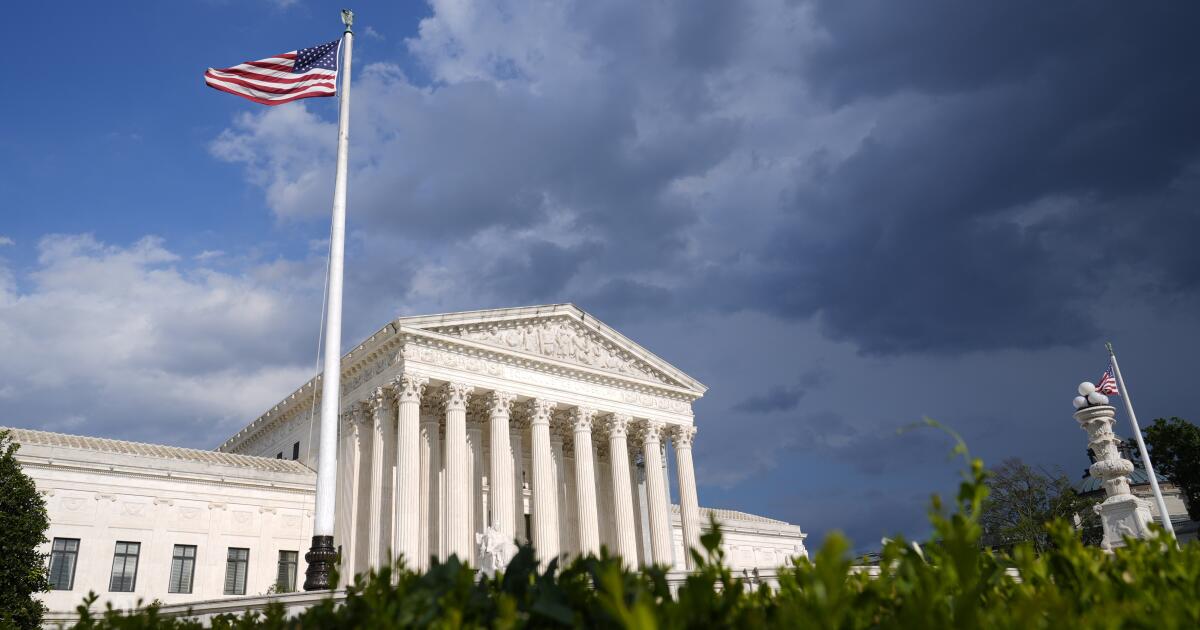
WASHINGTON — The Supreme Court’s conservative justices say they decide cases based on the words and original history of the Constitution — and not on their personal or political views.
Following the lead set by the late Justice Antonin Scalia, they say they see history and “originalism” as a guiding principle to prevent judges from changing the Constitution to adjust to new and changing times.
This text-and-history approach is said to contrast with an evolving or “living Constitution” favored by progressives and liberal activists.
But this year saw a flip of sorts on birthright citizenship.
The foremost conservatives agreed with President Trump that the surge of illegal immigration called for reconsidering the promise of citizenship at birth set out in the 14th Amendment of 1868.
“The number of illegal immigrants in this country exploded” in recent years, Justice Samuel A. Alito Jr. wrote in dissent. The rule of citizenship at birth provides “a powerful incentive to enter or remain in this country illegally,” he added.
“The Constitution is an enduring document,” wrote Justice Brett M. Kavanaugh, but its rules and meaning must adjust to “modern situations that were unknown or unanticipated by the Constitution’s Framers.”
In a concurring opinion, he said that “significant illegal immigration into the United States is a new circumstance that was largely unknown as of 1868.”
There were no federal immigration laws in the mid-19th century, but it was an era when a surge of Irish immigrants had settled on the East Coast and large numbers of Chinese immigrants came to California.
Under the law, their children were deemed to be citizens at birth.
Among the conservative originalists, only Justice Amy Coney Barrett signed the majority opinion that was written by Chief Justice John G. Roberts Jr. and joined by the three liberals.
The opening words of the 14th Amendment of 1868 say: “All persons born or naturalized in the United States and subject to the jurisdiction thereof are citizens of the United States.”
In 1898, the Supreme Court upheld the rule of citizenship at birth in the case of Wong Kim Ark, who was born in San Francisco to Chinese parents.
In an executive order, Trump proposed to end birthright citizenship for the newborns whose parents were in the country illegally or temporarily.
Writing for the court, the chief justice said the words of the 14th Amendment were clear and were clearly understood at the time. He dismissed the “dramatically revisionist view” that has been cited recently.
Kavanaugh voted with the majority to block Trump’s order from taking effect. He did so because Congress had adopted birthright citizenship in a 1952 law.
“Consistent with the 14th Amendment, Congress could … enact new legislation establishing exceptions to birthright citizenship,” he wrote.
Justices Clarence Thomas and Alito wrote long dissents arguing that the framers of the 14th Amendment did not or would not have favored birthright citizenship.
They pointed to recent scholarship by law professors that raised questions about the accepted understanding of the 14th Amendment and the citizenship rule.
Thomas said citizenship of the child should turn on whether the parents were “domiciled” in this country. Black people who were enslaved were undoubtedly domiciled here, but the same is not true of temporary visitors.
Justice Neil M. Gorsuch agreed in part with Thomas and questioned whether the newborns of temporary visitors should be deemed as citizens at birth.
Many court commentators were surprised by the close 5-4 divide on the constitutional issue.
“Given how clear the language was, I expected it to be 7 to 2,” said Melissa Murray, a New York University law professor. “I really gasped when I saw it was 5-4. This is not settled. We’re not done with this debate.”
Sarah Isgur, a podcaster and SCOTUSblog analyst, said that “originalism is getting more and more muddled. Either the history matters or it doesn’t.”
However, she agreed with Kavanaugh’s approach of leaving it to Congress to reconsider the issue.
Not all originalists are conservative.
Yale Law Professor Akhil Amar, a constitutional historian, argued that the history of birthright citizenship is clear and not subject to revisionist thinking. He said the Reconstruction Congress adopted this principle of citizenship at birth and stated their intent in clear words in the 14th Amendment.
“When a baby is born on American soil and an American flag flies above, that baby is a birthright citizen, as the Reconstruction Republicans across the land understood,” he wrote in February. This rule “has virtually nothing to do with the baby’s parents.”
Last week, he was mostly cheered by the court’s ruling.
“It’s a triumph, but it should have been 9-0,” Amar said on a review of the court term sponsored by SCOTUSblog. “Shame on the dissenters. They didn’t even the address the statute” and its wording.
But the majority led by Roberts “clearly affirmed the plain meaning of the constitutional text and its history. And that’s a win,” he said.
History has a recurring role at the Supreme Court.
Isgur noted the court will hear arguments in the fall on whether the 2nd Amendment of 1791 gives gun owners a right to have “assault weapons” like AR-15 rifles.
She said the court will decide then between history and changed circumstances.
At issue is whether these modern rapid-fire rifles fit within the history of the gun rights protected by the 2nd Amendment or instead represent a new and dangerous threat to public safety that was unknown in 1791.
Scalia’s opinion upholding gun rights in 2008 is often cited as a model of originalism, but it too emerged from a court divided 5-4.
The 2nd Amendment says, “A well-regulated Militia, being necessary to the security of a free state, the right of the people to keep and bears Arms, shall not be infringed.”
For decades, the Supreme Court had all but ignored the 2nd Amendment, viewing it as a somewhat outdated provision involving militias, akin to the 3rd Amendment. It forbids having soldiers “quartered in any house … in time of peace.”
Four liberal dissenters in 2008 said the court should stand by that understanding of history.
Justice John Paul Stevens said the 2nd Amendment was added to the Constitution to protect state militias from federal interference. Moreover, the reference to “bear arms” suggests it was about militias, he said.
But Scalia’s opinion stands as the landmark precedent, and he said the dissenters had the history all wrong.
The right to have guns for self-defense arose in England and came to the American colonies. “By the time of the founding, the right to have arms had become fundamental for English subjects,” he wrote.
The 2nd Amendment did not establish a new right, he said. Rather, it “codified a pre-existing right [of] having and using arms for self-preservation and [defense],” he wrote.
“There seems to us no doubt, on the basis of both text and history,” Scalia wrote, “that the 2nd Amendment conferred an individual right to keep and bear arms.”

NEWYou can now listen to Fox News articles!
Sen. Lindsey Graham, R-S.C., died Saturday evening following a “brief and sudden” illness, according to a statement from his office.
“On the evening of Saturday, July 11, U.S. Senator Lindsey Graham passed away from a brief and sudden illness,” his office said.
“Senator Graham’s family appreciates prayers at this time and asks for privacy during this incredibly difficult period,” it continued.
CLICK HERE TO DOWNLOAD THE FOX NEWS APP
Sen. Lindsey Graham, R-S.C., speaks with reporters about aid to Ukraine, on Capitol Hill, Wednesday, March 10, 2022, in Washington. (AP Photo/Alex Brandon)
This is a breaking story; check back for updates.
-

 Finance6 minutes ago
PERSONAL FINANCE: Finance 101 — the lessons every college-bound kid should learn now
-

 Fitness9 minutes ago
What Fitness Experts Want GLP-1 Users to Know About Exercise | NewBeauty
-

 Movie Reviews21 minutes ago
Movie Review: Black Teen faces the trials of being a “Mississippi Scholar”
-
World29 minutes ago
Disney’s live-action ‘Moana’ crashes to shore with an underwhelming splash at the box office
-

 News36 minutes ago
Map: 4.1-Magnitude Earthquake Shakes Southern California
-
 Lifestyle1 hour ago
Sunday Puzzle: Two words, same number of letters, matching first and last letters
-

 Technology1 hour ago
Apple’s failed self-driving car program left a legacy of powerful AI chips
-

 World1 hour ago
New Germany sex-crime figures reignite migration fight as exploitation probe expands

