South-Carolina
‘As fragile as a child’: South Carolina death row inmate’s letters show haunted man


Freddie Eugene Owens is set to be executed on Friday, Sep. 20, making him the first person to be killed by the state in South Carolina in the last 13 years. This is his story.
A deeply troubled South Carolina inmate scarred by a traumatic childhood wrote letters on death row that at times threaten the ones he loves in chilling terms and at others show a vulnerable man who describes himself as being “fragile as a child.”
The inmate, Freddie Eugene Owens, is set to be executed by lethal injection on Friday in South Carolina. If it moves forward, it will be the state’s first execution in 13 years and the 14th execution in the nation this year. It’s also the first of five executions the United States is carrying out in a six-day period between Sept. 20 and 26.
Owens, 46, was sentenced to death after being convicted of killing 41-year-old Irene Graves during a convenience store robbery on Halloween night in 1997. Owens, who was 19 at the time, has always maintained his innocence and fought his death sentence.
“(I’m) labeled as a ‘thug,’ ‘killer,’ ‘robber,’ and a person without remorse for the weak, but they’re wrong. I’m as fragile as a child,” Owens wrote in a letter to a woman he loved in 1998. ”People seem to forget one thing about us ‘brothers’ who are locked up, just because we’ve made mistakes and are accused of crimes or violence. We have souls and feelings − but most important we are also human.”
As Owens’ execution fast approaches, USA TODAY is looking at who he is, what he did and how he’s fighting the ultimate punishment.
A fateful October night
On a fateful Halloween night in 1997, Owens and another man, Stephen Andra Golden, robbed a convenience store in Greenville, South Carolina, according to court documents.
During the robbery, 41-year-old Irene Graves was shot in the head after she had told the men that she could not open the store safe. Graves was a single mother of three who worked three jobs to provide for her children.
Surveillance footage did not clearly show who fired the shot that killed Graves. Owens maintained he was at home in bed at the time of the robbery.
Prosecutors showed surveillance footage of the store, and Golden testified that Owens was the shooter. Golden reached a plea agreement with prosecutors to testify against Owens in order to avoid the death penalty, according to Owens’ attorneys. His murder charge was reduced to voluntary manslaughter and he was sentenced to 28 years in prison.
As for Owens, he said his conviction led him to kill his cellmate while awaiting sentencing, telling officials: “I really did it because I was wrongly convicted of murder.”
Who is Freddie Eugene Owens?
Owens’ childhood was filled with neglect, abuse, trauma and psychological difficulties.
Owens’ older sister, Marie Owens, said their father was an extremely violent person − physically, verbally and emotionally − to her, Owens, and their mother, according to court filings from 2016 seeking a reduced sentence for Owens.
“There was nothing he wouldn’t do to hurt my mother,” Marie Owens said. “He hit us all the time with whatever was closest at hand. A stick, a bat, a beer can, a drop cord, a belt … whatever … until we bled.”
Marie Owens added that the children ended up being taken to a group home by state officials after she was beaten so hard with an extension cord that she bled profusely.
“They had been left alone at home in a house with no food and no electricity and removed for physical neglect” when Owens was 5 years old, according to a report written by Stacey Wood from the psychology department at Scripps College
Owens’ mother, Dora Diane Mason, recounted how Owens’ father abused him as a child.
“I remember a time when Freddie was about 1 year old – he was very small – that his father got mad at him and whooped him and shook him so hard,” Mason said. “After he stopped and I was able to get Freddie, I couldn’t get Freddie to stop crying no matter how I tried.”
Today, Owens has chosen to go by a different name − Khalil-Divine Black Sun-Allah − after converting to Islam in prison.
Freddie Owens in letters: ‘Betrayers will be slayed’
In Owens’ letters, obtained by USA TODAY, he lamented his life and the way the world brought him up.
“I wasn’t born or raised this way and I can’t blame society, but I say that living in this world for 19 years has to be the worst mistake I’ve made,” Owens wrote. “I’d wish I knew before I came, that this world is corrupt and full of hate.”
His writings also show a more sinister side, one that threatens those he says he loves. He writes to a woman named Aisha about his love for her but also threatens her after learning she was pregnant by another man.
“I said I was gonna kill the baby, you and that (expletive). You know the things I’ve done, you know what I’m capable of doing, so why do you tend to play these (expletive) games with me?” Owens wrote in 1998. “Don’t let it be true or you try to abandon me, cause betrayers will be slayed, then I can come to jail for a reason. I don’t need this but I can use a couple of bodies under my belt.”
His tone flips on a dime in the same letter. He signs it by writing: “Love you always. Death will be the only thing to separate us.”
A punishment too harsh
Owens’ attorneys cites his client’s childhood as a major reason he doesn’t deserve the death penalty. They also cite his age at the time of the crime − 19 − and say that he suffered organic brain damage, all rendering the death penalty a disproportionate punishment, they say.
In response to the defense’s argument in a filing on Wednesday, the state said the attempts by Owens and his attorneys to stop his execution were baseless.
“A stay at this time would only result in unwarranted delay in carrying out the sentence that every sentencer has found appropriate for this petitioner – death,” the filing said.
The day after that filing was the deadline for Owens to choose his method of execution: electric chair, firing squad or lethal injection.
Saying his religious forbade him from choosing the way he’d die, his attorney, Emily Paavola, chose lethal injection.
Fernando Cervantes Jr. is a trending news reporter for USA TODAY. Reach him at fernando.cervantes@gannett.com and follow him on X @fern_cerv_.



South-Carolina
With 77 days until South Carolina football kicks off 2026 season, a look back at No. 77 George Schecterly

South Carolina football will take the field for the first time in 2026 on September 5 against Kent State. Williams-Brice Stadium will play host to the Gamecocks and Golden Flashes at 12:45 p.m., just 77 days from today.
The No. 77 is often worn by offensive linemen. One of two tough-nosed offensive tackles in a fun Gamecock era wore the number, as George Schechterly played for the Gamecocks from 1978 to 1980.
Questions about this story? Kevin Miller is discussing it with subscribers on The Insiders Forum.
Schechterly actually began his career at Penn State, playing for legendary coach Joe Paterno. However, as a redshirt, he didn’t meet the conditioning requirements to stay with the Nittany Lions. South Carolina gave him a second chance, and the offensive lineman dedicated himself to getting better. It paid off in a big way.
Despite being a little undersized, Schechterly earned a starting job at right tackle for the Gamecocks. He played opposite left tackle Chuck Slaughter, and the duo excelled at sealing off defensive ends with reach blocks.
That proved to be a big deal for South Carolina, as a running back named George Rogers made defenses pay on toss sweep plays. Of course, Rogers wound up winning the 1980 Heisman Trophy, and Schechterly and Slaughter provided a lot of assistance. The toss sweep play worked so well that the fanbase often joked that the best ideas in the team’s playbook were “George Sweep Right” and “George Sweep Left.”
See other jersey countdown stories like this on GamecockCentral.com.
That same 1980 season, Schechterly was an All-Independent selection at tackle and won the Jacobs Blocking Trophy as the top overall blocker among Independent School blockers. He was USC’s only tackle ever to earn the honor, though several interior blockers did.
Following his graduation, Schechterly played briefly in the NFL, CFL, and USFL.

BRYAN, Texas (KBTX) – Texas A&M baseball added left-handed pitcher, Logan Prisco, out of South Carolina through the transfer portal on Friday night.
Prisco worked as a relief pitcher for the Gamecocks this past season, appearing in 20 games. He posted a 3.45 ERA while tallying 34 strikeouts.
Prisco is the fifth pitcher the Aggies have picked up in the offseason along with Caleb Kimble (Houston), Johnny Nuanez (Wichita State), Jase Evangelista (UNLV) and Wade Cooper (Texas State). Prisco is the eighth overall player added to the Aggies roster this offseason.
Prisco will have two seasons of eligibility once he is in College Station.
Copyright 2026 KBTX. All rights reserved.

COLUMBIA, S.C. (WACH) — Advocates, caregivers, patients, and community leaders gathered at the South Carolina State House on Friday for the inaugural South Carolina Sickle Cell Day.
Organizers said the event focused on raising awareness of sickle cell disease.
The South Carolina CBO Collective Caucus hosted the event at 10 a.m., coinciding with World Sickle Cell Day and Juneteenth.
Organizers said the gathering brought together healthcare professionals, legislators, advocates, and supporters from across the state to discuss education, support, and action related to sickle cell disease.
The program is designed to amplify the voices of individuals and families impacted by the disease and encourage conversations about healthcare access, advocacy, research, and community support, organizers said.
Attendees heard personal stories and learned about challenges faced by those living with sickle cell disease.
“World Sickle Cell Day is a powerful call to action for all of us,” said founder and CEO of The B Strong Group Brenda Green. She said the collaboration expands support, strengthens community response, and stands with affected families.
The B Strong Group, founded in 2017 and based in Columbia, is a nonprofit organization focused on sickle cell awareness, advocacy, and caregiver support.
The group organizes blood drives, caregiver workshops, and awareness campaigns under the motto “Educate, Advocate, Empower.”
-
 Kansas4 minutes ago
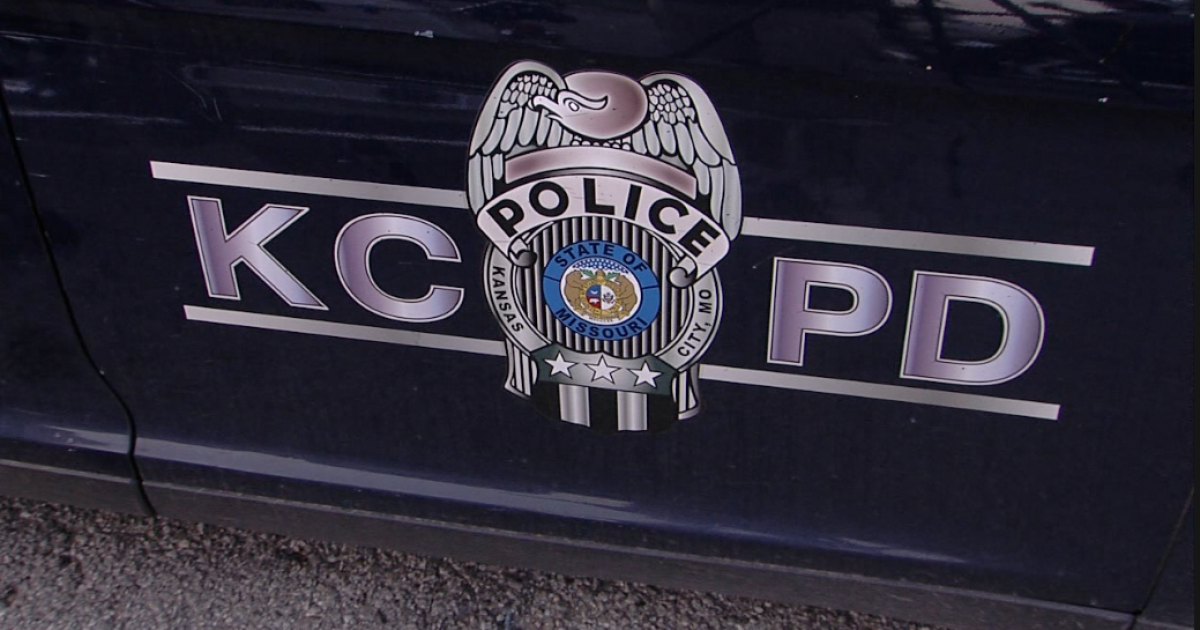
1 man dies after being shot June 9 in Kansas City, Missouri; police working to identify person of interest
-

 Kentucky11 minutes ago
Tornado ripped through Florence area during storms, NWS confirms
-

 Louisiana14 minutes ago
How Louisiana nitrogen gas executions could be affected by court ruling on Alabama
-

 Maine19 minutes ago
Two charged with assault after boater dies overboard in Hurricane Sound
-

 Maryland26 minutes ago
Two Injured In Waldorf Shooting, One Flown To Trauma Center – The BayNet
-

 Michigan29 minutes ago
Michigan QB Bryce Underwood on Year 1’s challenges and what’s next
-

 Massachusetts34 minutes ago
Mass. man charged with posing as teen, exposing himself to 12-, 13-year-old girls
-

 Minnesota41 minutes ago
Minnesota man arrested in WI for ‘numerous’ criminal sexual conduct charges against a child

