San Francisco, CA
Humboldt officials accuse San Francisco of busing the city's homeless problems north

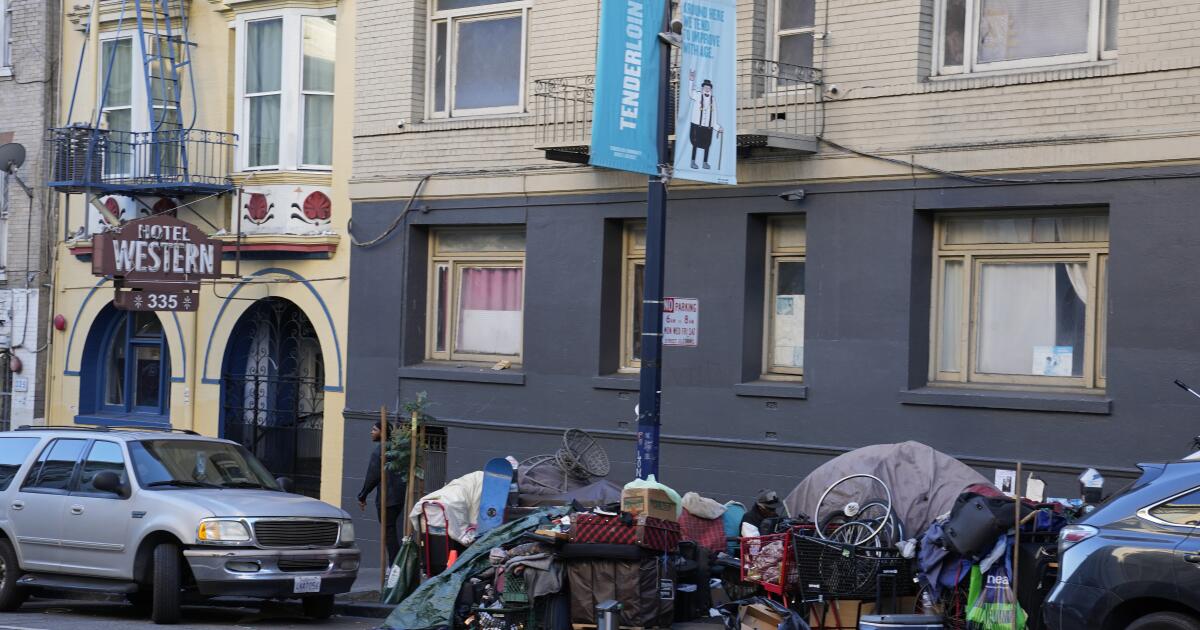
San Francisco and Humboldt County officials are trading jabs over Mayor London Breed’s plans to more aggressively promote a city program that pays to relocate homeless people to other communities where they have family or other ties.
During their Tuesday meeting, Humboldt County supervisors debated sending a draft letter, addressed to Breed, questioning whether San Francisco was making sure the homeless people it’s busing out actually land housing and jobs.
“We are concerned that providing bus tickets to other jurisdictions without verifying access to housing, family support or employment does not alleviate homelessness; it simply shifts the person to another county,” the letter states.
The supervisors were responding to a recent report in the San Francisco Standard that found the counties of Sacramento, Los Angeles and Humboldt were the top three destinations for homeless people bused out of San Francisco since September 2023.
“We don’t need to be a dumping ground,” Humboldt County Supervisor Rex Bohn said at the meeting. “Our cost for taking care of a homeless person that has nothing up here … it’s expensive.”
Breed’s office says the notion that San Francisco is dumping its homeless problems up north is overblown — and noted that Humboldt County has sent people south, too.
Over the last year, San Francisco has helped five people relocate to Humboldt County, which in turn has sent four people to the City by the Bay, according to data from both jurisdictions.
Humboldt County’s concerns center on a San Francisco program called Journey Home that Breed launched in autumn 2023 to assist homeless people in returning to their home states or relocating to other cities in California where they have family, friends or some history. The city covers the cost of bus, plane or train fare and provides a meal stipend.
The program is a critical component of Breed’s high-profile campaign to more forcefully clear out the sprawling tent encampments that have mushroomed across the city in recent years. The effort, launched in July, is buoyed by a pivotal June 28 U.S. Supreme Court ruling that gave local communities greater legal standing to ban homeless people from sleeping in public spaces.
In recent weeks, outreach workers, backed by law enforcement officers, have spread out across the city and ordered people to dismantle their tents, offering them treatment and housing — and issuing citations if they refuse to accept help.
As part of the initiative, Breed issued an executive directive Aug. 1 requiring outreach workers to offer homeless people who aren’t from San Francisco free relocation assistance through Journey Home “before providing any other city services, including housing and shelter.”
An estimated 8,300 people are living homeless in San Francisco, about half of them sleeping in parks and on sidewalks in makeshift shelters, according to the city Department of Homelessness and Supportive Housing. According to the city’s 2024 homeless survey, about 40% of people living on the streets said they were not from San Francisco.
Humboldt County, about 300 miles north, is struggling with its own homeless problems. The numbers are far smaller — about 1,600 people are living without permanent housing — but in a rugged rural setting with far fewer resources, local officials are straining to meet the need.
“It is not that Humboldt has seen an influx of people experiencing homelessness being sent to the county from San Francisco,” Christine Messinger, spokesperson for the Humboldt County Department of Health and Human Services, wrote in a statement.
“It is that the county and the Humboldt Housing and Homelessness Coalition member agencies are already seeing our resources stretched thin to take care of the folks living here, and an influx of new people could be detrimental to those efforts.”
As part of its efforts to move people into housing, Humboldt County also operates a relocation assistance program. Over the last year, the county has helped 142 people travel to locations throughout the country, Messinger said, including the four who relocated to San Francisco. They have denied assistance to nearly 100 more.
But the supervisors critical of San Francisco’s approach said Humboldt’s program is far more involved. County workers are supposed to verify that participants have family, friends and employment opportunities waiting for them, and to follow up with people on the other side of their travels.
In contrast, Bohn claimed, San Francisco hasn’t tracked people who relocated to Humboldt County to make sure they landed on their feet and have found employment and stable housing.
“All you have to do is ask, ‘I want to go here,’ and you get a bus ticket, and you get to go. No follow-up, no everything else,” Bohn said.
In addition, he said, San Francisco is essentially giving homeless people a choice between leaving town and legal action.
“I don’t want to hurt San Francisco’s feelings,” he said. “But on the other hand, I don’t care.”
Jeff Cretan, Breed’s spokesperson, rejected the depiction of San Francisco shipping homeless people out of the city without due diligence. He said Journey Home helps “reconnect them to friends, families or communities they previously lived in.” Before busing people to Humboldt, he said, city staffers spoke with family members or friends who expressed that “they wanted them.”
And though he acknowledged Humboldt County is among the more popular Journey Home destinations, he said the numbers are small.
In addition to the five people sent to Humboldt County in the past year, Cretan said, six were sent to Sacramento, five to Los Angeles and 13 to other parts of the state. Seven people have been relocated to Nevada and nine to Oregon.
Cretan said he wasn’t aware of any requirement for city workers to follow up with Journey Home participants once they are relocated, but he added: “Sometimes you can’t find people, too. That’s the reality.”
For now, Humboldt leaders have put a pause on formalizing the draft letter to Breed. Messinger said county officials will follow up with San Francisco staffers directly “to have more discussions before a final decision is made about whether a letter will be sent to the mayor.”


June 27, 1776, was a momentous day for the Bay Area, California, and the world as 240 men, women, and children arrived mostly by foot from Mexico to what is now called San Francisco to set up camp and lay the groundwork for the future.
The “traveling village” is known as the Anza Expedition.
On Saturday, the 250th anniversary of the event was commemorated on Pershing Square at the Presidio of San Francisco in a two-hour ceremony.
The celebration opened with piercing fifes and thundering drums from the Young Patriots Fife & Drum Corps from Pleasanton, as a nod to America’s quincentennial.
But it was then followed up by a Spanish hymn, sung by musicians, dressed in 18th-century Spanish Colonial attire, including the garb of soldado, vaquero, pioneers, military, and indigenous peoples. The song is known as “Alabado” and it was sung by the ancestors as they made their long journey to the Bay.
A proclamation on a scroll was then read with gusto by local actor Dane Andrew, who was portraying the Spanish trailblazer Lt. Colonel Juan Bautista de Anza.
The message was loud and clear: When it comes to history in the Bay Area, Spain swings a big sword.
“People don’t realize in California our early Spanish history. While on the East Coast was becoming a brand-new U.S.A. was a small part. Actually, Spain owned a large part of the West Coast,” remarked Andrew.
The Anza Expedition established the first reliable overland route from Mexico to what was then known as Alta California, claiming San Francisco Bay for the Spanish Crown.
In 1776, the expedition’s leaders established both the Presidio as well as Mission San Francisco de Asis, which is known today as Mission Dolores.
In the crowd, the direct descendants of those who traveled the long, arduous route, including 98-year-old Eddie Grijalva of Vallejo. He was accompanied by his wife Lydia and her son Jeff.
“What an honor to be here and to remember my ancestor,” exclaimed Grijalva.
The event was coordinated by the nonprofit Los Californianos. The nonprofit represents the direct descendants of those who were part of the Anza Expedition. Its documented purpose includes efforts “to preserve the heritage of early Hispanic Californians in Alta California, to conduct research on genealogy, and to provide an accurate and authentic interpretation of Alta California’s history”
Carol Eber represents the group and is the co-chair of the event. She told us the group is thrilled to celebrate its heritage along with the quincentennial of the United States.
“We have a celebration on the East Coast. We wanted to have the 250th celebration on the West Coast as well as recognizing history was made on both coasts,” noted Eber.
During the ceremony, the crowd recited the Pledge of Allegiance and heard from Superintendent David A. Smith, who is with the Golden Gate National Recreation Area.
There were also presentations from the Daughters of the American Revolution and a group called “Our American Patriots”. The keynote speech was delivered by Professor Damian Bacich. He focused on San Francisco’s Spanish-American Legacy.
Also on hand for the festivities, the Consul General of Mexico Marco Mena. Mena told CBS News Bay Area that this was his first visit to Presidio and found it beautiful. He was pleased to be invited.
“The Anza expedition is very related to Mexico, especially to the states of Sonora and Sinaloa,” Mena explained.
As the Presidio ceremony was underway, a mass was said at Mission Dolores. The event concluded with a Roll Call, which was the reading of the names who those who walked on the route in 1776.
Descendants, including Grijalva, placed a flower in a memorial wreath as children were asked to blow bubbles for expedition members named without descendants.
Afterwards, participants went on docent-led tours of the Presidio’s Heritage Gallery and also were invited to tour the site of the Spanish Presidio Chapel.
San Francisco, CA
San Francisco rolls out heightened security measures ahead of World Cup knockout match, 4th of July

The city of San Francisco is taking heightened police and security measures in advance of two major events in the Bay Area this week – the 4th of July and the first knockout round of the FIFA World Cup.
Mayor Daniel Lurie hosted a press conference Monday to address the public on how the city plans to manage the overlapping swarms of soccer fans and 4th of July revelers.
“No matter the occasion, our top priority, and my top priority, remains the same: keeping San Francisco residents and visitors alike safe,” said Lurie.
The two events would be major draws for crowds independently, but combined, and with special occasions marking both, the city wants to ensure that security is a top priority.
The World Cup has already brought hundreds of thousands of people from across the country and the world to the Bay Area, but this week’s game at Levi’s Stadium in Santa Clara is especially notable for the San Francisco as the host city and the United States as a host nation. The stadium, renamed San Francisco Bay Area Stadium for the duration of the World Cup, will host the knockout round match between the U.S. and Bosnia and Herzegovina on Wednesday.
Official fan zones and watch parties for the U.S. match, as well as for Mexico’s match against Ecuador on Tuesday, will be held at multiple locations in San Francisco, including at Thrive City at the Chase Center and at the Pier 39 Fan Zone.
This year’s 4th of July in San Francisco, which already boasts large crowds across the city each year, will have another draw as the city prepares to celebrate the nation’s 250th birthday. The city will be hosting a fireworks show on the Golden Gate Bridge on Saturday night – only the third time that pyrotechnics have ever been set off from the iconic San Francisco landmark. Fireworks will be launched off the two towers of the bridge and from barges in the water.
The Golden Gate Bridge show will be the only official one in the city – fireworks are illegal in San Francisco.
Authorities advised attendees to use public transportation and to leave plenty of time on both ends of their travel for traffic and delays. Caltrans has announced road closures and detours on U.S. Highway 101 and the entire Golden Gate Bridge for the fireworks show.
San Francisco Police Chief Derrick Lew said the department is collaborating with multiple state and local agencies to keep people safe, and that police officers have had their days off cancelled to meet the staffing needs that July 4 will require.
“This week will be safe because that’s what we’ve been doing every day,” Lurie said. “It is a glorious time to be here in San Francisco.”
Lurie cited past heavily attended events like Sunday’s San Francisco Pride Parade and Super Bowl 60 in February as examples of the city’s successful management of major crowds.

San Francisco police officers arrested 20 people late Saturday night in SoMa after breaking up an unauthorized “Stud Alley” block party with hundreds of participants, according to the police department. It marked the second round of arrests of Pride attendees this weekend after police arrested five people at the tail end of the Trans March on Friday.
Police officers arrived near Kissling and 11th streets at 10:58 p.m. and “encountered an unsanctioned and unpermitted block party” that had about 300 participants and a D.J., according to a statement from the San Francisco Police Department. The following details are based on the department statement and social media videos; two participants reached by Mission Local declined to comment.
The department said that the large crowd “prompted the response of additional SFPD resources.” Social media footage shows dozens of officers marching through SoMa streets armed with batons, wearing riot helmets and carrying plastic zip-ties.
Officers then gave an order to disperse, the department said, and told the D.J. to leave the area. The D.J. left but the partygoers did not, the department said, and officers tried to “disperse the crowd.” Two people “resisted,” the department said, and officers arrested them.
Several people also “vandalized two vehicles passing through the area,” the department said, and made them “inoperable.” The two vehicles may have been Waymos: One online video shows two Waymos in the street blinking hazard lights, and appears to show one officer telling others that the Waymos had been vandalized.
The party then reformed a few blocks later at Washburn Street about two blocks away, the department said, with about 200 people; the police shut that gathering down as well.
Footage from the scene shows a line of officers in tactical gear advancing rapidly on the crowd, shoving people out of the alleyway before forming a cordon line to block the street. In total, 18 people were arrested on Washburn Street, the department said, for “obstructing or delaying a peace officer and unlawful assembly.”
The department said that “makeshift barricades” had been set up to keep officers at bay; at one point in a video, an officer moves several large rocks that were placed in the street. Two officers sustained minor injuries, the department said.
SoMa has been the site of unsanctioned “Stud Alley” parties on the Saturday evenings of Pride weekend for at least the past six years. The parties have made headlines in past years for graffiti, broken windshields and outraged neighbors.
The organizers of Stud Alley posted an announcement this year that they would not host a party, saying that the party had recently “outgrown itself,” but reminded past party-goers of the unofficial slogan that is frequently graffitied onto walls around the party: Every alley is Stud Alley.
Jesse, a bartender at the nearby bar the Willow, reported seeing cops “everywhere” after the Saturday incident, when people “fled” to the bar to escape. He did not report hearing of any incidents of violence between party-goers and police.
The arrests mark the second encounter between Pride-goers and police this weekend. On Friday, at the end of the Trans March, police officers arrested five marchers for alleged vandalism and assault after march-goers allegedly spray-painted several statues and a person.
On Sunday afternoon, Washburn and Kissling streets still bore signs of the party. Spray painted on the walls of buildings were “Fuck SFPD,” “No Cops at Pride,” and “Every Alley Stud Alley.”


-
 Cleveland, OH25 seconds ago
No idling: Why it’s against the law in Cleveland
-

 Austin, TX7 minutes ago
Home Automation Austin Brings Personalized, Full-Service Home Automation to Homeowners in Austin
-

 Alabama10 minutes ago
Former Alabama Inmate Arrested After Allegedly Flying Drone with Contraband Toward Prison
-

 Alaska15 minutes ago
As war stalls, Putin concedes he never cut a deal with Trump in Alaska
-

 Arizona22 minutes ago
Flags are at half-staff today in Arizona. Here’s who is being honored
-

 Arkansas25 minutes ago
What Is The Arkansas Razorbacks Toughest Stretch of the 2026 Season?
-

 California30 minutes ago
Southern California residents say HOA made them take down American flags
-

 Colorado37 minutes ago
Colorado’s Most Beautiful State Parks, Ranked By A Colorado Local

