Northeast
Multiple Secret Service agents put on leave following Trump assassination attempt

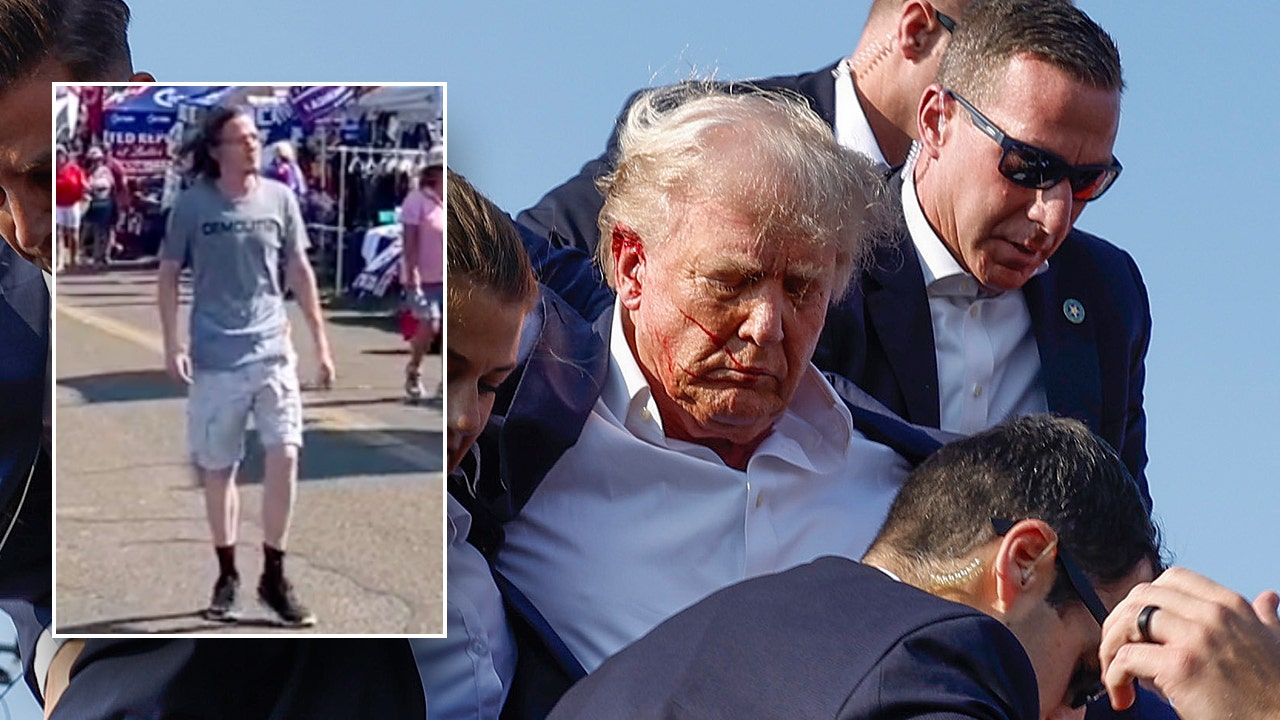
At least five members of the U.S. Secret Service (USSS) have been placed on administrative leave following the July 13 assassination attempt against former President Donald Trump in Butler, Pennsylvania, Fox News has confirmed.
One member of Trump’s personal protective team and four members of the Secret Service’s Pittsburgh Field Office, including the special agent in charge, have been sidelined nearly six weeks after the incident. The five are still employed but are teleworking and are no longer allowed in the field. They cannot do any investigative work.
The news comes after the Secret Service concluded internal interviews to understand how Thomas Matthew Crooks was able to fire several shots from the AGR building in Butler. The Secret Service was not able to conduct the interviews right away because the FBI was interviewing them for a separate criminal investigation, according to a source briefed on both probes.
Separately, Sen. Josh Hawley, R-Mo., on Friday revealed that a Secret Service whistleblower has come forward to claim that officials at Secret Service headquarters encouraged agents in charge of the rally not to request any extra security assets in their formal planning request.
At least five members of the Secret Service have been placed on administrative leave following the July 13 assassination attempt against former President Donald Trump in Butler, Pennsylvania, Fox News has confirmed. (Anna Moneymaker/Getty Images, main, and Iron Clad USA, inset.)
One bullet grazed Trump’s right ear, while firefighter Corey Comperatore was fatally struck. Rally-goers James Copenhaver and David Dutch were also shot and injured.
Former Secret Service Director Kimberly Cheatle resigned less than two weeks after the shooting and after giving her initial testimony about the event before members of Congress. Various lawmakers have called on the Secret Service to make personnel changes and fire employees in the wake of the deadly incident.
Fox News has also learned that the threat to Trump from Iran was communicated internally at the Secret Service prior to the Butler, Pennsylvania, event and the investigation is likely looking into why the Butler event went forward, given the threat.
The Secret Service said in a statement that the agency is committed to investigating the decisions and actions of personnel in relation to the July 13 event.
“The U.S. Secret Service’s mission assurance review is progressing, and we are examining the processes, procedures and factors that led to this operational failure,” Anthony Guglielmi, the USSS chief of communications said in a statement.
“The U.S. Secret Service holds our personnel to the highest professional standards, and any identified and substantiated violations of policy will be investigated by the Office of Professional Responsibility for potential disciplinary action. Given this is a personnel matter, we are not in a position to comment further.”
Former Secret Service Director Kimberly Cheatle testifies before the House Oversight and Accountability Committee about the attempted assassination of former President Donald Trump in Washington on Monday, July 22, 2024. ( AP Photo/Rod Lamkey, Jr.)
The FBI criminal probe and the internal Secret Service review both remain active.
The FBI has previously stated that Crooks accessed the roof of a building by climbing up HVAC equipment and piping. Crooks then traversed multiple rooftops before he found his shooting position on top of a building about 150 yards from where the former president spoke at his rally.
Text messages sent by local law enforcement responsible for monitoring the rally flagged Crooks to colleagues as suspicious at least 90 minutes before he opened fire. Despite this, he was still able to shoot at Trump and the crowd.
House Oversight Committee Chairman Rep. James Comer, R-Ky., welcomed the news that action has been taken on some Secret Service members.
“There must be accountability at the Secret Service for its historic failures that led to the attempted assassination of President Trump,” Comer said.
“Holding negligent employees accountable is the first step. I look forward to the Task Force’s findings of its investigation. We must ensure the Secret Service does not fail again.”
Hawley also welcomed the action taken by the agency, saying it should have happened weeks ago.
“We still need real answers about the attempt on President Trump’s life and accountability for everyone involved,” Hawley said.
Hawley also revealed on Friday whistleblower claims that officials at Secret Service headquarters informally encouraged agents in charge of the Butler rally to not request any extra security assets in their formal planning request as they would be denied because Trump was a former president and not an incumbent president or vice president.
Hawley shared on X a letter he penned to Acting Secret Service Director Ronald Rowe asking for an explanation into who made such a call, if he knew about it and which security assets were left out of the manpower request for the event.
Hawley writes that the assets included counter-sniper teams and counter Sniper Division (CSD) personnel. He writes that counter-snipers were ultimately approved but only a day before the event and that a separate whistleblower claimed previously that CSD personnel would have handcuffed the gunman after he was spotted in the parking lot with a rangefinder.
“Yet you have repeatedly suggested that no security assets had been denied for the Butler event. You must explain this apparent contradiction immediately,” Hawley writes, in part.
Former President Donald Trump pumps his fist as he is rushed offstage during an attempted hit on his life on July 13. (Anna Moneymaker/Getty Images)
Meanwhile, Attorney General Merrick Garland, speaking at an unrelated event, said Friday that he could not comment on any specific suspensions.
“This was a security failure and there is both an internal and external independent investigation,” Garland said. “They will provide lessons learned to prevent such a failure from happening again.”
Sen. Chuck Grassley, R-Iowa, also welcomed news of the agents being put on leave.
“I always say, ‘if heads don’t roll, nothing changes,’” Grassley tells Fox News. “I’m glad the Secret Service has taken a step towards accountability.”
CLICK TO GET THE FOX NEWS APP
Former NYPD inspector Paul Mauro, a Fox News contributor, said that there were serious discrepancies in the planning and operation of the rally.
“Those discrepancies argue more things are not so much mistakes, but instead, institutional rot,” Mauro said. “And what bothers me is that the executives who have been overseeing and not solving the problems that the Secret Service clearly has will likely get off scot-free. And certainly [Homeland Security Secretary] Mayorkas and Cheatle should not be able to ride off into the sunset with their reputations intact.”
Fox News’ Audrey Conklin contributed to this report.
Read the full article from Here


PERRY COUNTY, Pa. (WHP) — Authorities are responding to what state police described as an “active incident” in Marysville Monday afternoon.
The incident is ongoing on Church Street, where law enforcement on scene told CBS 21 that troopers are trying to get someone inside a home there to come out.
Crisis mitigation is also on scene trying to deescalate the situation.
Law enforcement outside a home on Church Street in Marysville, Pa., July 6, 2026.
It’s unknown at this time if anyone has been injuries or what the nature of the response is. CBS 21 is working to learn more.
BE THE FIRST TO COMMENT
This is a developing story. Stay with CBS 21 news for more details as they come in.

DERRY, N.H. (WJAR) — The six New England states are joining forces to help reduce speeding-related crashes and deaths on highways across the region.
Officials announced the “New England Drive to Save Lives” campaign on Monday morning, saying that they were hoping to help shift drivers’ mindsets and foster community responsibility amongst New Englanders on the roads.
As part of the campaign, officers will conduct increased patrols on the road. In addition, highway safety offices throughout New England will hold community outreach events and put public service announcements on social media.
“Throughout the Drive to Save Lives campaign, you will see additional Rhode Island State Police patrols on our highways and local road,” Rhode Island State Police Lt. Brendan Doyle said. “We’ll be working alongside our partners and police departments up and down Interstate 95, and across the state, with one shared goal- saving lives.”
JOIN THE CONVERSATION (1)
The Drive to Save Lives campaign is expected to continue through the end of the month.

Authorities have identified the girl and her older brother who died in a Vermont river after going missing last week.
Sandro Lala, 25, had jumped into the Lamoille River to save his sister, 11-year-old Yazmin Yupangui, when she fell into the Lamoille River near Arrowhead Mountain Lake in Georgia, Vermont, on Wednesday, according to the Vermont State Police.
Autopsies determined that the siblings, who both lived in Cambridge, Vermont, died in accidental drownings, according to police.
Yazmin’s body was found Thursday by a police underwater recovery team, while Lala’s body was found in Arrowhead Mountain Lake on Saturday morning.
Police had previously said a group of relatives were fishing along the shore when a young girl fell into the water, and a man jumped in to try to rescue her. Neither resurfaced after that, prompting a large search, including multiple agencies, on the water near where Lamoille River empties into the lake.
-
North Dakota10 minutes ago
ND ATTORNEY GENERAL TO RELEASE 2025 CRIME STATISTICS – North Dakota Attorney General
-

 Ohio13 minutes ago
Veteran Officer Among 4 Dead in Ohio Shooting
-

 Oklahoma18 minutes ago
FFA members attend Oklahoma FFA Alumni Leadership Camp
-

 Oregon25 minutes ago
Oregon’s Class Surges in Team Recruiting Rankings to No. 3
-

 Pennsylvania28 minutes ago
Pennsylvania State Police on scene of ‘active incident’ in Marysville
-

 Rhode Island33 minutes ago
Rhode Island participates in ‘New England Drive to Save Lives’ campaign
-

 South-Carolina40 minutes ago
Georgetown County Sheriff Carter Weaver named South Carolina Sheriff of the Year: SCSA
-

 South Dakota43 minutes ago
South Dakota native lived near Iranian missile & drone attacks

