Fitness
The Houstonian Club hosts CEC Conference for Group Exercise Instructors


In its commitment to innovation and staying at the forefront of the fitness industry, The Houstonian Club, a premier health and fitness facility in Houston, is hosting its first CEC Conference in over 25 years, in October.

The Houstonian Club is home to 90 group exercise instructors and personal trainers, many of which have been teaching and creating classes for over 20 years. The instructors are considered experts in their fields and have vast knowledge to share with others.
The weekend-long event will offer twelve class formats in 25 sessions, including Jump & Pump, Core Performance, Streamline, and K.A.R.B. Cardio. The information weekend will also feature innovations for cardio classes, yoga, Pilates, and cycle workshops.
For the first time in over 25 years, the CEC Conference will make The Houstonian Club’s exclusive group exercise class formats available to other instructors.
— Melissa Shippy, The Houstonian Club’s Group Exercise Director
HOUSTON, TX, UNITED STATES, August 14, 2024 /EINPresswire.com/ — In its commitment to innovation and staying at the forefront of the fitness industry, The Houstonian Club, a premier health and fitness facility in Houston, is hosting its first CEC Conference in over 25 years, in October. Continuing Education Credits (CEC) are necessary for group fitness instructors to maintain their certifications and competency and may help them further their careers.
Open to instructors from all over the country, this CEC Conference will make The Houstonian Club’s bespoke class formats available to attendees for the first time. The weekend-long event will offer twelve class formats in 25 sessions, including Jump & Pump, Core Performance, Streamline, and K.A.R.B. Cardio. The information weekend will also feature innovations for cardio classes, yoga, Pilates, and cycle workshops.
The Houstonian Club is home to 90 group exercise instructors and personal trainers, many of which have been teaching and creating classes for over 20 years. The instructors are considered experts in their fields and have vast knowledge to share with others. According to Melissa Shippy, The Houstonian Club’s Group Exercise Director, not only will attendees of the CEC Conference be able to tap into that knowledge, it will also allow The Houstonian Club instructors to contribute to the exercise community as a whole.
“Attending a conference that provides CECs is a great way to get all of the certification requirements in one weekend, network with fellow instructors and trainers, and get new ideas to keep classes and workouts fresh and innovative,” said Shippy.
The Houstonian Club offers over 180 group exercise classes each week, making it a highly utilized program and a priority for the members-only club. “We believe it is essential to keep our classes fresh, interesting, innovative, and fun,” said Shippy. “Our members count on us to provide classes and instructors that challenge them and help them maintain their physical and mental health. This commitment to innovation inspired us to host the CEC Conference.”
For more information about the CEC Conference, visit The Houstonian Club website or see the informational brochure here.
Photos available here.
###
Located in the heart of Houston, The Houstonian Hotel, Club & Spa is a Forbes Travel Guide Four-Star secluded retreat adjacent to the city’s iconic Memorial Park and minutes from downtown, the Galleria, and Energy Corridor. The Houstonian recently completed a $70 million master plan renovation and was named in Travel + Leisure’s World Best Awards as the #1 Resort Hotel in Texas. The resort is a member of Preferred Hotels and Resorts and is known for its timeless nature, elegant décor, private fitness club, and its involvement in Houston’s historic events and celebrations. Guests at The Houstonian Hotel may relax and rejuvenate on a 27-acre oasis, with floor-to-ceiling wooded views in its 280 newly renovated guest rooms and suites, including a new Bush Suite with memorabilia from President George H.W. Bush’s time at the property. TRIBUTE restaurant serves authentic Tex-Lex cuisine with an impressive wine list, The Bar & Patio is a classic local favorite, and the Coffee Shop serves guests in the elegant hotel lobby. The hotel has 33,890 square feet of indoor meeting space and 87,349 square feet of outdoor meeting space with a “Houstonian Experiences” menu for corporate and social groups, meetings, and celebrations. The 185,000-square-foot Houstonian Club offers over 180 weekly group exercise classes, aquatic programs, indoor and outdoor tennis, a resort pool with a rockslide, a 25-meter sports lap pool, and a quiet garden pool. Houstonian Club Members and Houstonian Hotel guests enjoy the club’s luxurious locker rooms and wet areas, a fully equipped fitness floor with over 300 pieces of equipment, indoor turfed fitness zone, enhanced group exercise fitness studios, cycle studio, a private yoga studio with aerial silks, and an indoor basketball court. The club also provides 2 areas for children ages 6 weeks to 12 years, kids camps, and special events and programming plus an outdoor playground and butterfly garden. Poolside dining is available at the expansive Arbor Grill, with wood decks, TVs, and a fire pit, and the club’s grab-and-go called Refuel offers light fare and Starbucks Coffee. The club offers a full-time registered dietitian, and a wellness therapy suite called The Covery by The Houstonian Club. At 26,500 square feet, the new Trellis Spa at The Houstonian is the largest luxury spa in the state of Texas. From the outside, it resembles a magnificent European Villa with statuesque architecture and luscious gardens. On the inside, soothing, nature-inspired hues complement a grand, light-filled reception, renovated treatment rooms, sauna and wet areas, a scenic treetop dining room, an indoor Reflection Pool, and tranquil lounging areas. Its outdoor Soaking Pools and Garden provides an authentic contrast bathing experience with open-air cabanas, rocking chairs, a fire pit, and a butterfly art installation. The Houstonian also includes Sage ‘n’ Bloom Floral Studio, providing bespoke floral services for weddings and celebrations, client experiences, and corporate installations on-property and to the public.
One of Houston’s historic gems, the property is known for its grace, comfort, and unparalleled guest experience.
http://www.houstonian.com/the-club
The Houstonian Hotel, Club & Spa / 111 North Post Oak Lane / Houston, Texas 77024
https://www.facebook.com/HoustonianClub
https://www.instagram.com/houstonianclub/
Gabi De la Rosa
The Houstonian Hotel Club & Spa
+1 832-202-9600
email us here


Everyone knows the importance of staying active as you age, with those who exercise more likely to improve their longevity by staying fitter and healthier. But new research suggests exercise variety counts for a lot, too.
It might be time to add a bit more spice to your activity mix.
The Study
The study, published in BMJ Medicine, tracked the weekly exercise habits of 110,000 people – 70,000 men and 40,000 women – over the course of 30 years. Researchers wanted to determine whether there was an association between variation in physical activity and risk of death.
Participants reported how much time per week they spent doing activities such as walking, running, cycling, swimming, rowing, strength training, playing sports, lower-intensity exercises like yoga, outdoor work such as gardening or chopping wood, and even climbing the stairs. Researchers then scored participants according to the variety of physical activity they undertook, which was only measured if it was something they engaged in consistently – playing badminton just once a year doesn’t quite count here.
The Results
Those who engaged in the greatest variety of exercise had a 19% lower risk of all-cause mortality than those who engaged in the least variety. The relationship also held true at every level of physical activity – for example, someone who took part in four different activities had a lower mortality risk than someone who completed only three.
Researchers also highlighted that people who resistance trained for 120 minutes or more per week saw their mortality risk plateau, regardless of exercise variety.
What Does This Mean for You?
It’s all about variety. The research suggests taking part in a wide range of activities is better for you than doing the same amount of exercise in just one discipline, so start mixing things up and reap the benefits. Rather than being extremely regimented week to week and sticking to the same one or two activities, this approach gives you greater freedom to try new things, safe in the knowledge that doing so may be better for your overall health. But don’t go all guns blazing just yet.
‘For people who are less active, the key message is that small amounts can still matter,’ the researchers say. ‘Building a routine gradually may be more important than trying to do a lot at once.’
It’s also fair to assume that combining strength training with cardiovascular exercise, such as running or hiking, will help optimise those benefits even further. Both are associated with greater longevity, so pairing them together is likely to help keep you fitter and healthier for longer.
That said, total exercise volume is still king when it comes to longevity – five hours of strength training beats four hours split between swimming, running and cycling, for example. The NHS recommends that adults over 65 do at least 150 minutes of moderate-intensity activity, or 75 minutes of vigorous-intensity activity, each week to improve health and reduce the risk of heart disease and stroke.
The main message? Lift some weights, get outside as much as you can, and keep your heart pumping with a bit of intensity each week – it’ll help you stay in rude health.
If there’s one thing Kori Sampson knows, it’s how to optimise your body composition for performance. To tap into his knowledge as an elite athlete and coach, we asked him to create a 4-week plan to help you move faster, recover quicker and keep pushing when the fatigue sets in – all while improving your muscle-to-fat ratio.
Ready to build muscle, burn fat and come out the other side looking, feeling and performing better? Click here to get 14 days of free access to the plan via the Men’s Health app.
Ryan is a Senior Writer at Men’s Health UK with a passion for storytelling, health and fitness. Having graduated from Cardiff University in 2020, and later obtaining his NCTJ qualification, Ryan started his career as a Trainee News Writer for sports titles Golf Monthly, Cycling Weekly and Rugby World before progressing to Staff Writer and subsequently Senior Writer with football magazine FourFourTwo.
During his two-and-a-half years there he wrote news stories for the website and features for the magazine, while he also interviewed names such as Les Ferdinand, Ally McCoist, Jamie Redknapp and Antonio Rudiger, among many others. His standout memory, though, came when getting the opportunity to speak to then-Plymouth Argyle manager Steven Schumacher as the club won League One in 2023.
Having grown up a keen footballer and playing for his boyhood side until the age of 16, Ryan got the opportunity to represent Northern Ireland national futsal team eight times, scoring three goals against England, Scotland and Gibraltar. Now past his peak, Ryan prefers to mix weightlifting with running – he achieved a marathon PB of 3:31:49 at Manchester in April 2025, but credits the heat for failing to get below the coveted 3:30 mark…
You can follow Ryan on Instagram or on X

No matter your age, walking is one of the best exercises you can do for your body. Still, the same-old stroll every day can start to feel boring. By incorporating some creative walking exercises to build muscle into your session, you can bust boredom as well as maximize the benefits of your walk.
“Any repetitive motion in one plane of motion, such as walking forward, will activate the same muscles each time,” said Amy West, M.D., a sports medicine physician at Northwell Health in New York. While the muscles you use to walk forward (like the quads, hamstrings, glutes, and calves) are certainly smart to strengthen, there are other muscles in the lower body and core that are important to keep strong as you age. “Our muscles support our joints, so by improving muscle strength you can help reduce impact on your joints,” Dr. West said. “When you use different walking methods, different muscles are activated each time, which promotes balanced muscle development and postural alignment—and could potentially prevent future aches and pains.”
Meet the experts: Amy West, M.D., a sports medicine physician at Northwell Health in New York; Lindsey Benoit O’Connell, C.S.C.S., a certified trainer, a meditation teacher, and the founder of The LAB Wellness; Janet S. Dufek, Ph.D., a professor in the department of kinesiology and nutrition sciences at the University of Nevada, Las Vegas; Samantha Pinkston, P.T., D.P.T., a senior physical therapist at Montefiore Medical Center in New York City; Latreal Mitchell, a personal trainer and health coach.
Lindsey Benoit O’Connell, C.S.C.S., a certified trainer, a meditation teacher, and the founder of The LAB Wellness, agreed: “Different walking styles can help improve balance, coordination, and agility,” she said. Aside from building strength throughout your body, using different walking styles “challenges your brain to work harder to coordinate the steps,” O’Connell added. Then, once you can confidently do all of these, you can add high-intensity intervals or extra resistance. “Mix up your walks during the week by doing different styles on different days,” O’Connell suggested. “Over time, you’ll see big payoffs!”
Read on for fitness experts’ favorite walking variations, plus how each can help you get stronger and improve mobility and balance as you age.
How to walk to build muscle
Backward Walking
Physical therapists often incorporate backward walking (also called “retro walking”) into treatment plans for various leg injuries and stroke rehabilitation because it helps improve balance, coordination, and range of motion in the hips, leading to better mobility and stability, said backward-walking researcher Janet S. Dufek, Ph.D., a professor in the department of kinesiology and nutrition sciences at the University of Nevada, Las Vegas. Walking backward may also help you maintain a healthy weight (varying the exercises you do helps prevent you from plateauing) and reduce your levels of C-reactive protein, a marker of chronic inflammation, based on a study in which overweight individuals walked backward on a treadmill four times a week.
Muscles Worked:
Try It: Simply take steps backward instead of forward. Because you won’t be able to see where you’re going, it’s smart to do this in a safe, controlled environment—ideally on a treadmill at a slow speed so you can use the rails for balance if necessary. If you don’t have access to a treadmill, then your driveway, a flat and even area of sidewalk, or your local track should work. If you’re not walking on a treadmill, Dufek suggested recruiting a partner—they can be your eyes, and you can hold hands with them for additional support while you master this skill. Start with short bouts so your muscles can get used to the new way of moving (and don’t be surprised if they feel fatigued faster than with regular walking): “Begin with 30-second intervals and gradually extend them as you gain confidence and endurance,” O’Connell advised.
Criss-Cross Walking
Ever watch a clip of supermodels strutting along the runway? They lift one foot, cross it in front of the other to take a step, and continue that pattern. This is essentially how you walk criss-cross style. Walking in this manner strengthens muscles that can help you maintain good coordination, hip mobility, and balance, leading to better overall mobility and less risk of injury, said Samantha Pinkston, P.T., D.P.T., a senior physical therapist at Montefiore Medical Center in New York City.
Muscles Worked:
- Hip adductors (in your inner thigh region)
- Hip abductors (in your buttocks)
- Quads
- Calves
Try It: Start by standing with your feet hip-width apart. Lift your right foot and cross it diagonally in front of your left before lowering it to the ground. Then lift your left foot, kick out your knee, and cross it diagonally in front of your right foot in the same way. Think of it as if you’re making an “X” as you stride. Tighten your buttock muscles and breathe to engage your core. “Practice on flat surfaces and avoid overexaggerating your steps to maintain your balance,” suggested O’Connell.
Nanba Walking
You may not have heard of Nanba walking, but you’ve probably seen it in movies featuring samurai warriors who walk by moving the same arm and leg in sync—a more stilted, less fluid stride than traditional walking. Old research from Singapore has found that this style of walking, which originated in Japan, is more stable and energy-efficient than traditional walking, partly because it involves less twisting of the body and promotes greater integration between the upper body and the lower body. It can also promote mindfulness because it causes you to really focus on your movements, said Latreal Mitchell, a personal trainer and health coach.
Muscles Worked:
Try It: Stand with your feet hip-width apart and your arms hanging loosely by your sides. Bend your knees slightly, as if you were holding a mini squat. Try to stay in this position as you move, as “it’s key for engaging the glutes and keeping the focus there so you don’t end up relying on bigger muscles in your legs to do all the work,” said O’Connell. Step forward with your right leg, moving your right arm forward with it; then step forward with your left leg and bring your left arm forward. Focus on your posture, engaging your core and maintaining an open chest, Mitchell advised. “It’s going to feel awkward at first,” O’Connell said, so practice slowly, and then ramp up. This is a great movement to incorporate into a warm-up before or a cooldown following your usual walking workout.
Side-Stepping
Also known as lateral walking, it’s when you walk sideways with relatively small steps, similarly to how a crab scuttles across the sand. You can boost the effort by placing a resistance band around your calves or thighs once you’ve gotten the form down. Side-stepping improves balance, flexibility, and pelvic stability, which can help prevent falls and injuries that could interrupt your lifestyle and walking routine.
Muscles Worked:
- Hips
- Inner thigh muscles
- Lower leg muscles
- Core
- Glutes
Try It: Stand up straight with your feet nearly touching, knees slightly bent, and your chest lifted. Keeping your feet facing forward, step to the side with your right foot and quickly bring the left one to meet it. Continue this pattern, taking 10 steps to the right and pausing, then taking 10 steps to the left. “Keep the steps small to maintain control,” O’Connell suggested. When you’re ready to add a resistance band, position it around your ankles or right above your knees and then perform the steps above. Having the band around your ankles works your lower leg muscles more, whereas placing it above your knees makes your glutes and hips work harder.
Skipping
Conjure your inner child and spend some time skipping. “It provides cardiovascular benefits and is good for bone density,” Mitchell said. “It’s like a gentler form of running.” In fact, East Carolina University researchers found that skipping was lower-impact and reduced the load on the joints compared with running. “Skipping also involves coordination and balance—very important as we age,” Dr. West noted.
Muscles Worked:
- Quads
- Glutes
- Core—plus, cardio!
Try It: Start by standing with your feet hip-width apart. Step forward and hop on your right foot as you lift your left foot off the ground, then step forward and hop on your left foot as you lift your right foot. Continue the pattern from there. During a regular forward walk, you can try incorporating 15-second bursts of skipping every block or two, O’Connell said. As you get stronger and more comfortable, you can lengthen your skipping stride to increase the challenge—and the benefits.

- Amazon still has plenty of home gym deals on the heels of Prime Day.
- Save on editor-tested brands like Brooks, Bowflex, Garmin, and Apple.
- Amazon-exclusive deals feature up to nearly 70% off home gym equipment, workout apparel, fitness tech, and more.
THE WEATHER IS finally turning in our favor here on the East Coast, and that only means one thing: time to get shredded. This is particularly relevant for those who may have gone a little overboard during this year’s bulk, intentional or not. The good news: we’re still seeing tons of post-Prime Day deals on fitness gear, tech, and equipment.
If you’re looking to lighten the load and focus on cardio, high-rep sets, and recovery, increasing your home gym splits might be the way to go. Now’s as good a time as any—we’re looking at over 40 percent off weight benches, foldable treadmills, adjustable dumbbells, and more. In the market for some new summer digs? Save up to 40 percent on editor-tested gym apparel and shoes for a limited time. Fitness trackers, smartwatches, and smart scales are up to almost 50 percent off, too.
SHOP HOME GYM GEAR SALES
We rounded up some of our favorite deals below, and you have ample time to get that six-pack ready to go for summer beach weather. If not, there’s always next year. But you’d better get started now.
Prime Day Home Gym Deals

FEDFitness Adjustable Weight Bench
Now 21% Off
Best Space Saving Flat Bench

FEDFitness Foldable Weight Bench
Now 22% Off
A Budget Friendly Dumbbell

FEDFitness Adjustable Dumbbell
Now 27% Off

Sunny Health & Fitness Foldable 15 Level Auto Incline Treadmill
Now 33% Off

Bowflex Results Series 552 SelectTech Dumbbells (Pair)
Now 7% Off

Best Budget Rower on Amazon

Yosuda Rowing Machine
Now 20% Off
Best Strength Machine Deal

RitFit Pro Smith Machine with Cable Crossover System
Now 15% Off

MERACH Walking Pad Treadmill
Now 10% Off
There are definitely a few steals to be had here. One of our favorite budget adjustable benches, the Flybird Adjustable Weight Bench, is almost 30 percent off and just over $100. This bench pairs well with either the Bowflex Results Series 552 SelectTech Dumbbells (7 percent off) or the budget-friendly Flybird Adjustable Dumbbells (still 31 percent off. FED Fitness (which makes Flybird equipment) offers some of the best wallet-friendly home gym equipment on the market. I use their adjustable Olympic Weight Bench, and I swear it’s better than the commercial one from my gym, and it was less than $300. Their stuff is legit.
The beginner-friendly Yosuda Rowing Machine is 20 percent off and now under $200. Sunny Health and Fitness’ space-saving Foldable Treadmill is over 30 percent off and offers commercial-grade performance from home. You can also grab the Merach Walking Pad for a little over $250 if you want to squeeze a workout in during work.
Prime Day Fitness Tech Deals

Apple Watch Series 11
Now 18% Off

Best Refurbished Watch Deal

Garmin epix Pro (Gen 2) Sapphire Edition
Now 32% Off

Best Looking Fitness Tracker


Withings Body Comp Scale
Now 14% Off
Now’s a good time to upgrade your fitness tracker. The latest Apple Watch Series 11 smartwatch is almost 20 percent off on Amazon. This is a solid option for most people, but if you’re looking for something a little more rugged with enhanced battery life, there are plenty of Garmin deals we love, including almost $200 off the Fenix 8—a rare sale. Our favorite smart scale, the Withings Body Comp Scale, is 14 percent off, while the Oura Ring 4 is 20 percent off.
Prime Day Workout Gear Deals


Brooks Caldera 8
Now 39% Off
Best Fitting T-Shirts for Lifters

True Classic Mens T-Shirts (6-Pack)
Now 33% Off
Best Budget Workout Shirts

Hanes Moves Performance Shorts
Now 66% Off
Editor-Approved Workout Shirt

Under Armour Tech 2.0 Short-Sleeve T-Shirt
Now 25% Off

Skechers Go Walk Max Sneaker
Now 30% Off
We’re seeing up to almost 70 percent off top-tested brands, including Under Armour, Brooks, and Hanes. Take almost 30 percent off the editor-favorite Brooks Ghost 17 and 40 percent off the trail-running staple, the Caldera 8. You can also save 25 percent off our top budget workout shirt, the Under Armour Tech 2.0, which is now even cheaper and under $20.
If you have trouble finding well-fitting t-shirts both in and out of the gym, True Classic is my go-to. They accentuate your upper body and provide a little more of a flattering, relaxed fit; a must-have on cheat day. Hanes also makes some underrated workout apparel through its Hanes Moves line, and the Moves Performance Shorts are almost 70 percent off and under $10. And yes, you read that correctly—they’re $9.
SHOP HOME GYM DEALS
Tim Kohut is the Deals and Trends Editor for Popular Mechanics, Men’s Health, Best Products, and Runner’s World. He has extensive product review and gear coverage expertise, particularly in tech, home, auto, and health. Tim was previously the Deputy Commerce Editor of The Drive and a Commerce Editor at BGR. He’s also overseen gear coverage and strategy at Popular Science, Bob Vila, Outdoor Life, and Field and Stream. He has a strong affinity for cats, Batman, and early 90’s Nicolas Cage films, in that order.
Charles Thorp is the Fitness and Reviews Editor at Men’s Health, where he shares the best product recommendations in gym equipment, recovery tools, supplements, and more. Following an early life in athletics, Charles became a NASM-certified trainer and began writing programs alongside the most respected coaches in the world. Since entering the world of fitness content, Charles has had the opportunity to learn from and train alongside high performance individuals from the NFL, UFC, NBA, Formula 1, CrossFit, US Olympics, and Navy SEALs. When he’s not writing about training programs or gear, he can be seen at the gym or in the wild, putting them to the test.
-
 Business25 seconds ago
Commentary: It’s not just vaccines — from infancy to adolescence, Republicans are waging war on children’s health
-
 Entertainment8 minutes ago
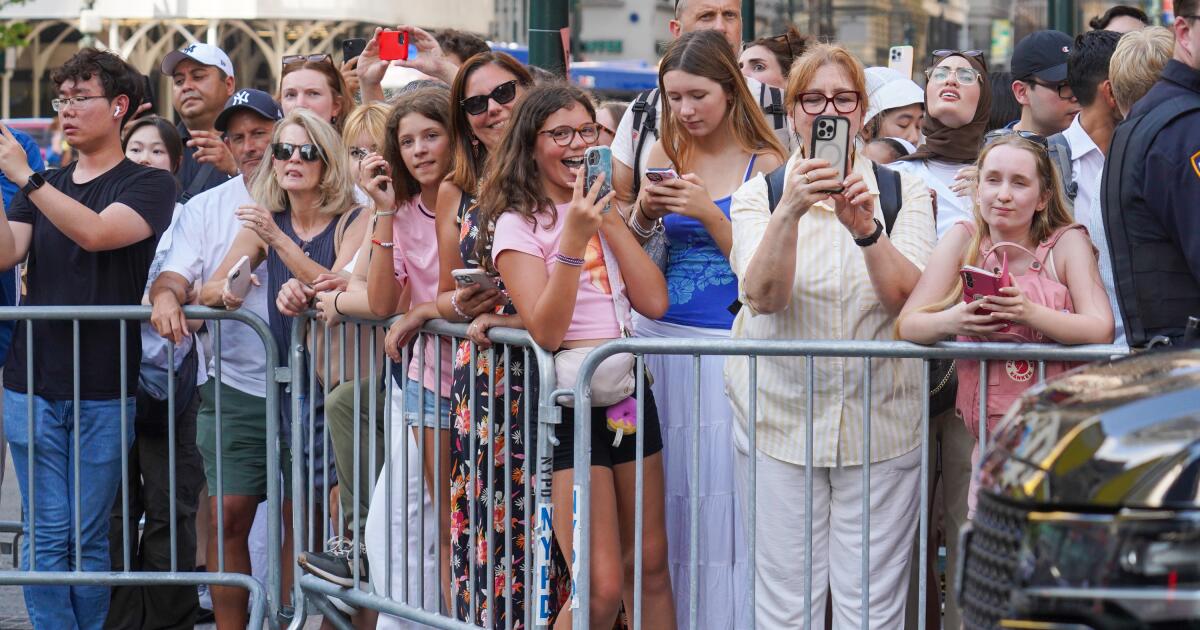
Taylor Swift, Travis Kelce married at lavish Madison Square Garden wedding
-
 Lifestyle10 minutes ago
How to have the best Sunday in L.A., according to Ken Marino
-
Politics15 minutes ago
Trump administration sues California over ‘Glock ban’ law targeting machine gun pistols
-
 Sports26 minutes ago
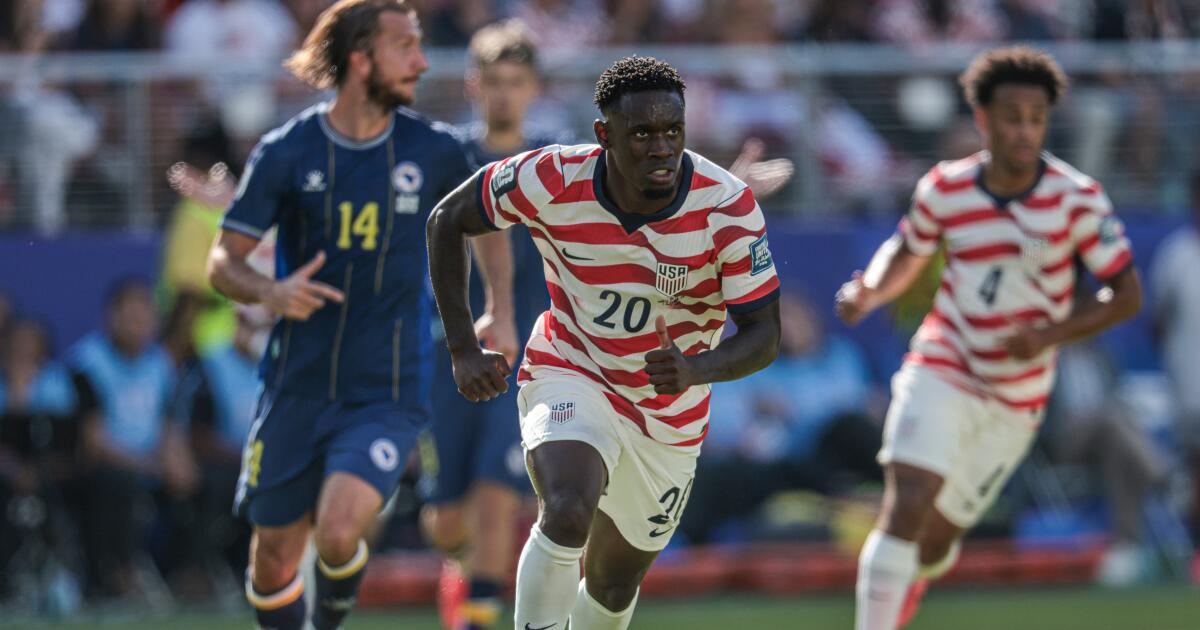
Folarin Balogun urges U.S. to focus on beating Belgium despite red card he calls unjust
-

 World37 minutes ago
Belgian diamond group that won tariff relief gifts Trump ring
-

 News1 hour ago
Family-owned company prepares to put on the largest fireworks display in history: “It is the biggest show that we’ve ever done”
-

 Los Angeles, Ca2 hours ago
Wildfire burning on hillside near Cal State San Bernardino


