Connect with us

West

Colorado residents to vote on hunting ban of mountain lions, other wild cats

Published

on

Colorado residents to vote on hunting ban of mountain lions, other wild cats
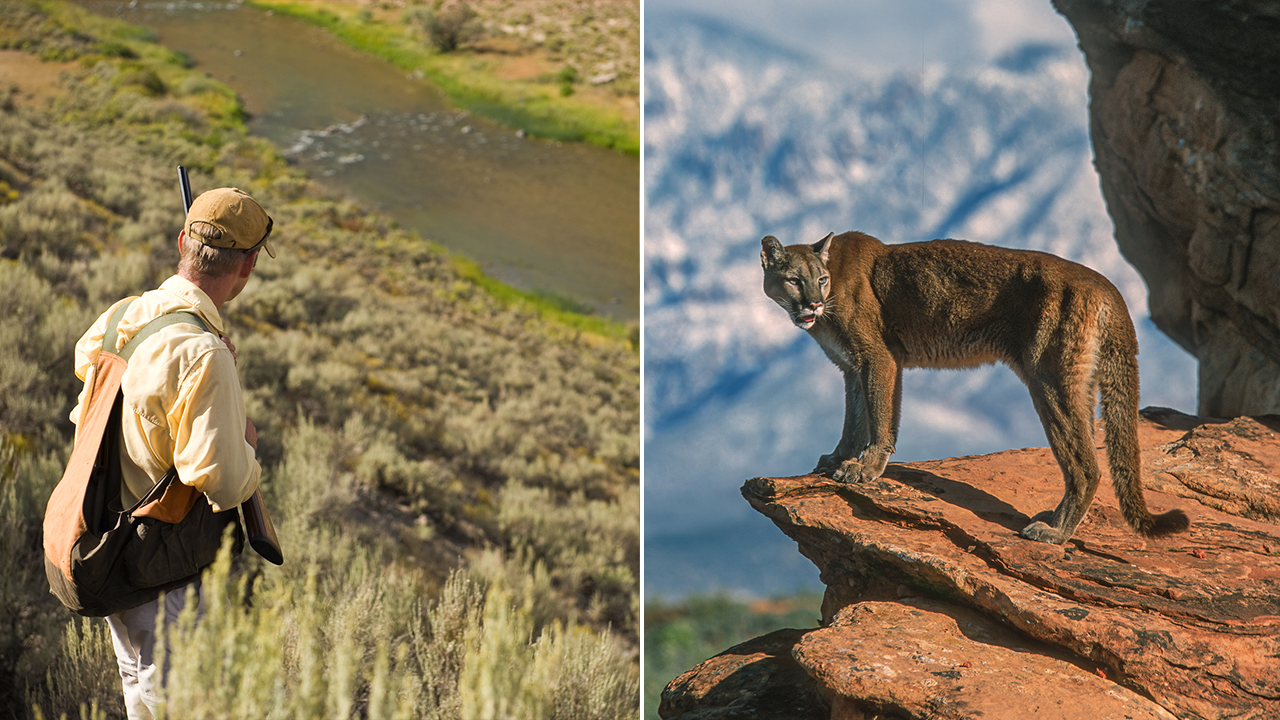
A proposal that would ban the hunting and commercial trapping of mountain lions along with other wild cats will soon be on the Colorado ballot.

The Colorado Secretary of State’s Office confirmed to Fox News Digital that Proposed Initiative #91, “Prohibit Trophy Hunting,” has more than enough signatures to qualify for the general election on Nov. 5.

If the measure passes, bobcats and lynx will also be protected.

PENNSYLVANIA’S ‘PROHIBITION ON SUNDAY HUNTING’ COULD END DUE TO LAWMAKERS

The initiative was heavily backed by wildlife advocates, including the Cats Aren’t Trophies (CATs) organization, which is based in Grand Lake, Colorado.

Advertisement

The Colorado Secretary of State’s Office added a ballot measure that would prohibit the hunting of mountain lions and other wild cats if approved by voters in November. (iStock)

“Colorado voters will have an opportunity to halt the inhumane and needless killing of mountain lions and bobcats for their heads and beautiful fur coats,” Samantha Miller, CATs’ campaign manager, said in a press release.

The proposed ballot measure accumulated nearly 200,000 signatures.

For more Lifestyle articles, visit www.foxnews.com/lifestyle

Mountain lions, also known as pumas, are solitary cats that are most active at dusk and dawn, according to The Mountain Lion Foundation. (iStock)

Advertisement

“While the measure stops the recreational trophy hunting and commercial fur trapping of wild cats, it allows lethal removal of any problem animal for the safety of people, pets or farm and ranch animals,” Miller added.

Last hunting season, Colorado hunters killed 502 cats in the Centennial State, according to Colorado Parks & Wildlife. 

Fox News Digital reached out to Colorado Wildlife & Parks for comment.

Last hunting season, Colorado hunters killed 502 cats in the state, according to Colorado Parks & Wildlife. (iStock)

Advertisement

Though some states have specific regulations on hunting species of wild cats, California has prevented mountain lion hunting since 1972 and, since 1990, the state protects the animals as a “nongame species,” according to the California Department of Fish and Wildlife.

In 2015, California banned trapping of bobcats, while in 2020, bobcat hunting was also banned.

Mountain lions, also known as pumas, are solitary cats that are most active at dusk and dawn, according to the Mountain Lion Foundation in Sacramento.

Read the full article from Here

Advertisement
Continue Reading
Click to comment

Leave a Reply

Your email address will not be published. Required fields are marked *

This site uses Akismet to reduce spam. Learn how your comment data is processed.

Alaska

Simple handwashing stations improved health indicators in parts of rural Alaska

Published

on

Simple handwashing stations improved health indicators in parts of rural Alaska


A Mini-PASS unit and explanatory posters are displayed on Aug. 10, 2021, at the Alaska Native Tribal Health Consortium in Anchorage. ANTHC distributed hundreds of the units during the COVID-19 pandemic to homes in villages that lacked piped water. (Yereth Rosen / Alaska Beacon)

A key step to preventing the spread of diseases like COVID-19 or influenza is simple: washing hands. But lack of piped water in parts of rural Alaska has made that simple practice not so easy to carry out.

Now a technological innovation has boosted rural Alaskans’ ability to do that important disease-fighting task.

The Miniature Portable Alternative Sanitation System, or Mini-PASS, a portable water station that does not require connection to any piped water system, proved effective at helping people wash their hands properly, and there are signs that its use is fending off contagious diseases among children, according to a recently published study.

The Mini-PASS is a stripped-down version of the full Portable Alternative Sanitation System that was also designed by Alaska Native Tribal Health Consortium and its partners.

Advertisement

The full PASS units typically store 50 to 100 gallons of water, and the units include connections to septic tanks, allowing for flush toilets to take the place of “honey buckets,” the plastic-bag-lined buckets commonly used in rural Alaska areas lacking water and sewer systems. The Mini-PASS units lack those septic connections, and they typically allow for storage of 20 gallons of water. Storage tanks are placed above sinks, and used water drains into collection buckets.

The Mini-PASS units are much cheaper than full PASS systems, costing a little over $10,000 for construction and delivery, according to ANTHC. A full PASS system can cost about $50,000 per household, according to ANTHC. That sum is vastly lower than the cost of extending piped water and sanitation service, which can total $400,000 or more per household in parts of rural Alaska.

Simplicity had its virtues during the COVID-19 pandemic. At the time, there was urgency for distributing Mini-PASS units to several rural communities — places where people living in unpiped homes were hauling water, often in difficult circumstances, then using and reusing it in germ-spreading basins.

The consortium, with the help of partners, distributed hundreds of Mini-PASS units to rural households during the height of the COVID-19 pandemic. At least 350 units had been distributed as of 2021, and more have gone out since then.

“The idea was people were not going to be reusing the water, that it was free flowing, that you’d wash your hands, and then it would go into the wastewater bucket, the gray water bucket,” said Laura Eichelberger, an ANTHC research consultant and co-author of the study.

Advertisement

“And because the pandemic was this urgent situation of crisis, they needed to get as many of these units in as they possibly could. And so they took the idea of the PASS and just made it as simple and cheap as possible,” she said.

The recent study used interviews to measure the effectiveness of mini-PASS. In all, there were 163 interviews from 52 households.

Water use is considered an indicator of public health, and the Mini-PASS units led to an increase in water use that expanded over time, the results found. Average water use per person increased by 0.08 gallons per month in households that used the units, meaning that after a year, water use was up by 0.96 gallons a day per person, or 3.6 liters per day, the results found.

Additionally, people with Mini-PASS units reported that children 12 and under had fewer symptoms of contagious diseases.

There was a “statistically significant decrease in the reported symptoms, respiratory in particular, for households who were actively using the Mini-PASS as their primary hand- washing method, compared to those that were still using wash basins,” said Amanda Hansen, the study’s lead author and another ANTHC health researcher.

Advertisement

Prior to the distribution of Mini-PASS units, water use in unpiped villages in Alaska averaged only 5.7 liters per person per day, according to a 2021 study by researchers at Canada’s McGill University. That was well below the World Health Organization standard of 20 liters per person per day, according to that study.

Parts of rural Alaska continue to face daunting challenges in securing adequate water and sanitation services. According to the Alaska Department of Environmental Conservation, more than 30 communities were considered “unserved” as of 2020. The category applied when less than 55% of homes are served by piped, septic and well or covered haul systems.

Still, there has been significant progress in recent years. According to the Environmental Protection Agency, the number of rural Alaska homes without water, sewer or both has decreased by a notable 70% over the past two decades.

Originally published by the Alaska Beacon, an independent, nonpartisan news organization that covers Alaska state government.


Source link

Advertisement
Continue Reading

Arizona

Cardinals WR Joins Patriots for Playoff Push

Published

on

Cardinals WR Joins Patriots for Playoff Push


ARIZONA — Former Arizona Cardinals WR Trent Sherfield Sr. is joining the New England Patriots’ practice squad ahead of their Divisional Round tilt against the Houston Texans.

Sherfield was one of eight Cardinals players that had his contract expire yesterday, effectively making him a free agent. It didn’t take him long to find a new home.

Sherfield played a total of 12 regular season games between the Cardinals and Broncos this year. He signed to Arizona’s practice squad later in the year after a plethora of injuries plagued the Cardinals’ wide receiver room.

Advertisement

For the Cardinals specifically, he had just one target thrown his way through the two games he played after landing in Arizona back in November.

Advertisement

It was initially a homecoming for Sherfield, who began his career with Arizona as an undrafted free agent back in 2018.

“Coming here was a blessing in a lot of different ways,” said Sherfield (h/t AZCardinals.com). “I needed to be here … It’ll be surreal to be back out there.”

Now, Sherfield is a depth piece for one of the league’s hottest teams in New England, who could very well make a push to the Super Bowl if they play to their strengths.

As for the Cardinals, they’re in the midst of a coaching search yet again after Jonathan Gannon was sent packing after three years of service.

Advertisement

“I know our fans are frustrated. I am more frustrated. I know Monti is more frustrated. And so is JG and every one of those coaches and players. We all expected more. But when I look at it, some of the changes that were made with other teams just a year or two years ago, those teams with new coaches from a year or two ago are now in the playoffs, playing this weekend,” Cardinals owner Michael Bidwill said.

Advertisement

“I know we can turn it around, and I’m looking forward to getting going with this search because it’s going to be a great opportunity for us to be that next story where we flip it around.

“We want to win. This was a decision that was based solely off winning. When I look at what other teams have done, and frankly, historically, we’ve done a quick turnaround in our not too distant past, I am looking forward to that, and I hope it’s going to be in the first year, not in the second year,” he said.

“But we’re confident that our search is going to be thorough, it’s going to be broad, and we’re going to select the right coach.”

Latest Arizona Cardinals News


Source link

Advertisement
Continue Reading

California

Push for stricter cap on rent increases dies in the California Legislature

Published

on

Push for stricter cap on rent increases dies in the California Legislature


A contentious housing bill that would have capped rent increases to 5% a year died in the Assembly on Tuesday, a decision greeted with boos and cries of disapproval from spectators packed inside the committee chamber.

Assembly Bill 1157 would have lowered California’s limit on rent increases from 10% to 5% annually and removed a clause that allows the cap to expire in 2030. It also would have extended tenant protections to single-family homes — though the bill’s author, Assemblyman Ash Kalra (D-San José), offered to nix that provision.

“Millions of Californians are still struggling with the high cost of rent,” Kalra said. “We must do something to address the fact that the current law is not enough for many renters.”

Assemblymember Diane Dixon (R-Newport Beach) said she was concerned the Legislature was enacting too many mandates and restrictions on property owners. She pointed to a recent law requiring landlords to equip rentals with a refrigerator.

Advertisement

“That sounds nice and humanly caring and all that and warm and fuzzy but someone has to pay,” she said. “There is a cost to humanity and how far do we squeeze the property owners?”

The California Apartment Assn., California Building Industry Assn., California Chamber of Commerce and California Assn. of Realtors spoke against the legislation during Tuesday’s hearing before the Assembly Judiciary Committee.

Debra Carlton, spokesperson for the apartment association, said the bill sought to overturn the will of the voters who have rejected several ballot measures that would have imposed rent control.

“Rather than addressing the core issue, which is California’s severe housing shortage, AB 1157 places blame on the rental housing industry,” she said. “It sends a chilling message to investors and builders of housing that they are subject to a reversal of legislation and laws by lawmakers. This instability alone threatens to stall or reverse the great work legislators have done in California in the last several years.”

Supporters of the bill included the Alliance of Californians for Community Empowerment Action, a statewide nonprofit that works for economic and social justice. The measure is also sponsored by Housing Now, PICO California, California Public Advocates and Unite Here Local 11.

Advertisement

The legislation failed to collect the votes needed to pass out of committee.

On Monday, proponents rallied outside the Capitol to drum up support. “We are the renters; the mighty mighty renters,” they chanted. “Fighting for justice, affordable housing.”

“My rent is half of my income,” said Claudia Reynolds, who is struggling to make ends meet after a recent hip injury. “I give up a lot of things. I use a cellphone for light; I don’t have heat.”

Lydia Hernandez, a teacher and renter from Claremont, said she used to dream of owning a home. As the first person in her family to obtain a college degree, she thought it was an obtainable goal. But now she worries she won’t even be able to keep up with her apartment’s rent.

Hernandez recalled noticing a woman who had recently become homeless last week on her way to school.

Advertisement

“I started to tear up,” said Hernandez, her voice cracking. “I could see myself in her in my future, where I could spend my retirement years living an unsheltered life.”

After Tuesday’s vote, Anya Svanoe, communications director for ACCE Action, said many of their members felt betrayed.

“While housing production is a very important part of getting us out of this housing crisis, it isn’t enough,” she said. “Families are in dire need of protections right now and we can’t wait for trickle-down housing production.”

In California, 40.6% of households are spending more than 30% of their income on housing, according to an analysis released in 2024 by the Pew Research Center. The U.S. Department of Housing and Urban Development considers households that spend more than 30% of their incomes on housing to be “cost burdened.”

Advertisement


Source link

Continue Reading
Advertisement

Trending
