Midwest
Obama strategist shouts out one candidate for Harris running mate

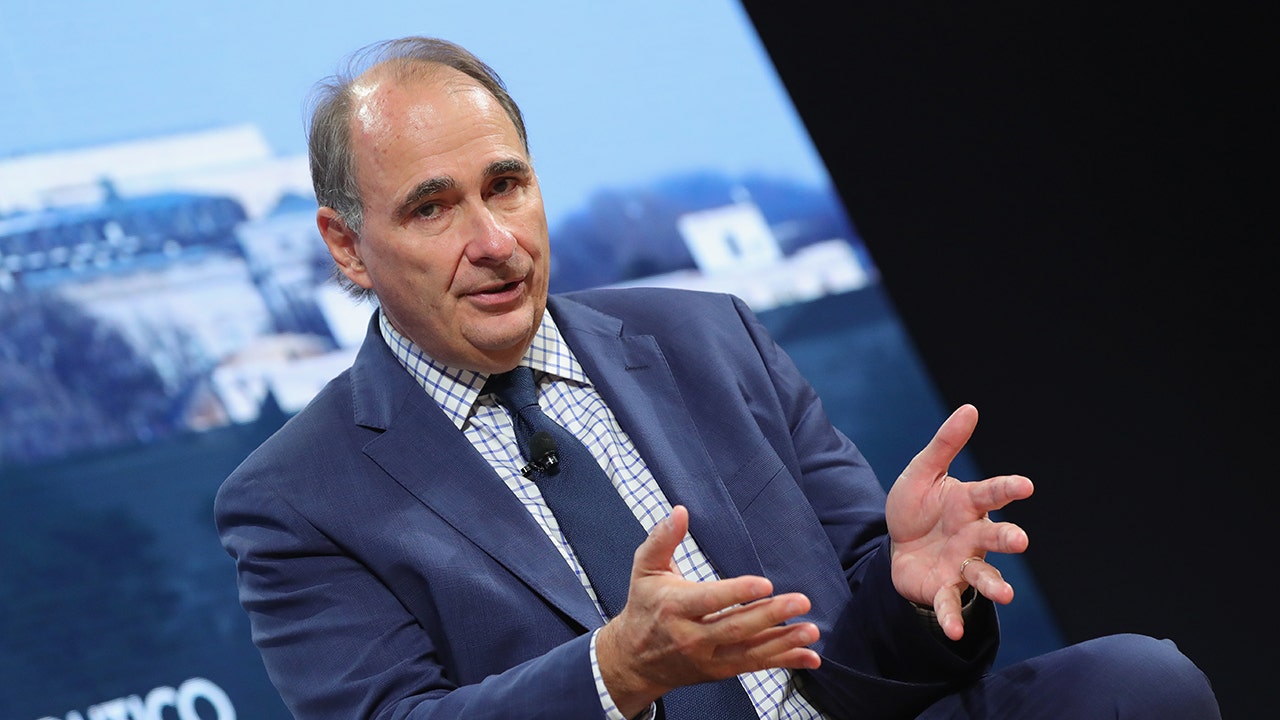
A former Obama strategist has given a shout-out to a current Midwestern governor for his “aggressive campaign” to join the ticket of presumptive Democratic presidential nominee Kamala Harris.
David Axelrod, the chief strategist for former President Obama’s presidential campaigns, praised Minnesota Gov. Tim Walz in a post on social media as reports indicate that Walz is on Harris’ short list to be her vice president.
“Whether he makes it or not, there’s no doubt MN Gov. @Tim_Walz is running the most aggressive campaign for VP in the field,” Axelrod posted along with a glowing Politico report detailing Walz’s “Midwest grit.”
While much of the veepstakes conversation has centered on four names – Arizona Sen. Mark Kelly, Pennsylvania Gov. Josh Shapiro, Kentucky Gov. Andy Beshear and North Carolina Gov. Roy Cooper – Walz is included on the broader list along with Transportation Secretary Pete Buttigieg, Commerce Secretary Gina Raimondo, Illinois Gov. J.B. Pritzker and Michigan Gov. Gretchen Whitmer.
AS HARRIS VEEPSTAKES HEATS UP, UNIONS VOICE SUPPORT FOR SHAPIRO
Minnesota Gov. Tim Walz is on Harris’ short list of potential running mates. (AP Photo/Joe Lamberti, File)
Prior to taking the governor’s office in 2019, Walz served for 12 years in Congress. Before running for Congress, he served for over two decades in the Army National Guard and worked as a social studies teacher.
Walz is a two-term governor of Minnesota. Before running for governor, he served 12 years in Congress. (Stephen Maturen/Getty Images, File)
Walz recently made media headlines for branding former President Trump and his running mate, Ohio Sen. JD Vance, as “just weird” during an MSNBC interview last week.
David Axelrod, the chief strategist for former President Obama’s presidential campaigns, applauded Walz for his “aggressive campaign” to be Harris’ vice president. (Paul Morigi/Getty Images for Concordia Summit, File)
THE WEIRD CAMPAIGN: THE STUNNING DIFFERENCE BETWEEN HARRIS AND VANCE COVERAGE
Harris and other Democrats have since used the “weird” label to describe their opponents and their policies.
CLICK TO GET THE FOX NEWS APP
Trump’s team countered the Democrat’s “weird” campaign on Sunday when Trump spokesman Steven Cheung posted video of Walz calling Trump and Vance “weird” as he stumped for Harris. Chueng accused the likely Democratic nominee and her backers of themselves being out of line for “trying to gaslight everyone into thinking the shooting was staged,” a reference to the assassination attempt at Trump’s rally in Pennsylvania.
The Associated Press contributed to this report.
Read the full article from Here


By TARA SUN
Medill Illinois News Bureau
news@capitolnewsillinois.com
Article Summary
- Family farm bankruptcies surged 46% nationwide in 2025. In the Midwest, filings jumped 70%. In Illinois, they rose 55%.
- Total farm debt is forecast to hit a record $624.7 billion in 2026, as overhead costs like land rent and interest keep climbing.
- Farmers bought a record 2.54 million crop insurance policies in 2025. But when the guaranteed revenue floor falls below production costs, farmers lose money on every bushel.
This summary was written by the reporters and editors who worked on this story.
SPRINGFIELD — With the growing season well underway in Illinois, farmers once again are struggling to turn an abundant harvest into survival.
In 2025, family farm bankruptcies surged 46% nationwide — reaching 315 filings and marking the third consecutive year of increases. The Midwest recorded 121 filings in 2025 — up 70% from the prior year.
The trend has only accelerated. In April alone this year, 62 Chapter 12 farm bankruptcies were filed nationwide – a 130% jump from the prior year and the highest monthly total since February 2020. The USDA projects total farm debt will rise 5.2% to a record $624.7 billion in 2026, with 330 bankruptcy cases filed.
“I’m scared about there being a real farm crisis,” said Eliot Clay, executive director of the Association of Illinois Soil and Water Conservation Districts. “This could come down to people being able to save their farms – just knowing that they could put it into some conservation easement or something. Like, they need anything that they can get.”
For Illinois, the crisis is playing out as lawmakers just finished a budget session that delivered few meaningful results for an industry under siege. Gary Asay, who has farmed in Illinois since 1976 and sold crop insurance for more than 20 years, sees clear reasons to worry.
“The increase in the number of bankruptcies and the increased buying of higher-level crop insurance are both signs of the stress that’s in the industry,” Asay said. “Farmers are under stress. They may be having to borrow more money. Therefore, they want more protection.”
Crop insurance, he pointed out, can’t fully protect farmers from losses. The most common policy, Revenue Protection, covers only up to 85% of projected revenue.
“Even with the best crop insurance coverage you can buy, if that coverage is below your cost of production, you can still lose money without even collecting,” Asay said.
In 2025, U.S. soybean production totaled 4.26 billion bushels, with the average yield per acre estimated at a record high 53.0 bushels per acre. Illinois alone harvested more than 639 million bushels in 2025.
Then, in February 2025, the U.S. imposed a 10% tariff on Chinese products. And China – once the world’s largest buyer of U.S. soybeans – stopped purchasing U.S. crops. Last September marked the first month since 2018 that imports from the U.S. fell to zero, according to China’s General Administration of Customs.
Farmers had entered the 2025 season with a smaller safety net after the projected price for the crop insurance guarantees fell by 8.7% that year. The drop meant less protection heading into the spring planting. But because yields were high, most farms still generated revenue above their guaranteed floor. Although farmers grew plenty, they sold every bushel for less than it cost to produce.
“A lot of farmers cannot sell their corn or soybeans at a profit right now, just because the price is so low,” Asay said.
Bankruptcies in agriculture rarely follow a single bad year. For U.S. farmers, the financial squeeze began well before 2025.
Real estate debt – tied to the land farmers rent or own – is expected to reach $404.3 billion in 2026, a reflection of the high cost of farmland that has squeezed so many operators.
“Overhead costs represent the largest cost component on the U.S. farm, accounting for nearly one-half of total costs during the 2020-24 period,” said Joana Colussi, a research assistant professor of agricultural economics at Purdue University, citing Purdue data. “Eighty percent of the farmers in the Midwest, they rent the land.”
Colussi has tracked the financial squeeze on farmers across the Midwest. When land prices rise, so does the rent – a fixed cost that farmers pay regardless of crop prices or yields. That leaves farmers searching for ways to keep operations going. “The way to continue being competitive is to try to reduce the costs,” she said.
Diversification into niche markets — non-GMO (genetically modified organism), organic or specialty crops — offers one path forward, though Colussi mentioned it’s not a quick fix
Farm crisis reminiscent of the 1980s.
Rep. Charlie Meier, R-Okawville, who is a farmer himself, described the current moment as reminiscent of the 1980s farm crisis. “There were massive bankruptcies in the ‘80s,” Meier said. “A lot, a lot of farms went under.”
The trigger now and then is the unstable export market. But the financial strain was already visible. In 2025, the Federal Reserve Bank of Chicago reported that 5.6% of farm loans were classified as having “major” or “severe” repayment problems — the highest since 2020. That means borrowers were falling behind on payments or reworking their loans. It’s an indicator that many farmers were struggling to repay old debt while borrowing more to plant the next crop.
Ahead of the 2026 legislative session, farm groups pushed for estate tax relief, one of the Illinois Farm Bureau’s top priorities, along with payouts for farmers to protect their land and programs that help them find new buyers for their crops. But in a tight budget year, those priorities stalled.
The Illinois Farm Bureau did not secure passage of the Family Farm Preservation Act, which would have raised the state’s estate tax exemption from $4 million to $6 million, reducing the tax burden on inherited farms and making it easier for young farmers to keep the land and operations intact.
State Rep. Sharon Chung, D-Bloomington, who serves on the House Agriculture Committee, was also unable to get a relatively small boost for farmers through this session.
She pushed for a $10 million increase in funding for Soil and Water Conservation Districts through House Bill 4755. But the final Fiscal Year 2027 budget held funding at $4.5 million for the third straight year, far short of what advocates say districts need. These districts are trusted by local farmers because they work alongside them, offering advice on how to farm more efficiently at a lower cost.
Clay, the district’s executive director, said the biggest need is giving districts “the financial certainty that they can hire and keep people hired.”
Without that, districts see constant turnover. That means farmers lose access to experienced local advisors who understand their land and can help them navigate conservation practices that might save money and keep them afloat.
“Agriculture is the No. 1 producer for our economy in Illinois,” Chung said. “Anything we can do to help prop that up is so important.”
Despite those unpassed bills, farmers did secure a few victories. The final budget included changes to the Farmland Assessment Law — extending a tax break for conservation practices through 2031 — and avoided cuts to key programs, including the Illinois Department of Agriculture, agricultural education and cover-crop incentives that enrich the soil.
While farmers had hoped Springfield could do more, they also recognized that forces shaping the industry go far beyond the influence of legislators: falling crop prices, an unstable export market and rising costs.
As farmers face mounting distress, the history of the 1980s hangs over the heartland.
“There’s just not enough room for error right now. Something that happened in the past can take down a farmer today,” Asay said.
Tara Sun is a graduate student in journalism with Northwestern University’s Medill School of Journalism, Media and Integrated Marketing Communications, and is a fellow in its Medill Illinois News Bureau working in partnership with Capitol News Illinois.
Capitol News Illinois is a nonprofit, nonpartisan news service that distributes state government coverage to hundreds of news outlets statewide. It is funded primarily by the Illinois Press Foundation and the Robert R. McCormick Foundation.

A statewide competition at Indiana county fairs is returning with a focus on fighting hunger as youth participants collect food for local food banks.
The Fight the Hunger, Stock the Trailer contest will again bring together junior fair boards across the state, including those in Carroll and Clinton counties, according to a community announcement. The initiative, organized by Farm Credit Mid-America and sponsored by Rural 1st, encourages young leaders to coordinate donation drives throughout their county fairs.
Participants gather nonperishable food and work with local communities to support nearby food banks. The effort emphasizes youth leadership while creating a direct impact for families facing food insecurity, according to the announcement.
“We’re glad to bring this initiative back to county fairs across Indiana and to see young people step up and get their communities involved,” Craig Carter, regional vice president of agricultural lending at Farm Credit Mid-America, said in the announcement. “The Carroll and Clinton County Fairs bring people together, and this contest gives folks a simple way to come alongside a cause that supports neighbors right here at home. In the end, our communities are the ones who benefit most.”
Record collections highlight growing participation
Youth-led donation drives have expanded steadily since the program began in 2022, with recent totals showing a sharp increase in contributions.
In 2025, participants collected 233,500 pounds of food for more than 70 food banks across Indiana. That total more than doubled the previous year’s 108,000 pounds and marked the fourth consecutive year of record-setting donations, according to the announcement.
Lake County recorded the largest contribution during that period, bringing in 75,122 pounds of food.
Since the competition began, more than 1 million pounds of food have been collected and distributed across Indiana and Ohio.
Financial support and community investment
In addition to food donations, Farm Credit Mid-America provided financial contributions to support participating youth organizations.
Each fair board received $500 for taking part, with additional funding awarded to regional winners. In total, $56,000 was distributed to junior fair boards across Indiana.
The contest is part of broader community investment efforts by Farm Credit Mid-America and its consumer lending brand, Rural 1st, which contributed more than $4 million to programs in 2025. That total included $1.59 million dedicated to youth, college students, and young and beginning farmers.
More information about the initiative is available on Farm Credit Mid-America’s Community Investment webpage.
This story was created with the assistance of Artificial Intelligence (AI). Journalists were involved in every step of the information gathering, review, editing and publishing process. Learn more at cm.usatoday.com/ethical-conduct.

IOWA CITY, Iowa — An Iowa City man is facing a felony theft charge after police say he was involved in an armed robbery in downtown Iowa City earlier this year.
According to the criminal complaint, 20-year-old Boubacar Dioubate is charged with second-degree theft.
Police say the robbery happened around 12:49 a.m. on April 18 in the 100 block of South Clinton Street.
Court documents allege the victim was approached by three suspects who threatened to stab and shoot him. Investigators say one of the suspects held a knife while demanding the victim’s cellphone.
The victim reported that his $500 cellphone, a $1,000 necklace and $200 in cash were stolen, for a total value of about $1,700.
According to the complaint, security cameras captured the incident. Investigators say the footage shows Dioubate assaulting the victim, repeatedly grabbing the victim’s phone and taking the victim’s necklace.
Police also say the stolen cellphone was tracked to Dioubate’s Iowa City address a few hours after the robbery.
Dioubate was arrested, and the charge was filed in Johnson County District Court. The case remains pending.
-
 Connecticut6 minutes ago
New CT laws taking effect July 1: Absentee ballots, zoning, AI
-

 Delaware11 minutes ago
State Police Investigating Shooting in Newark – Delaware State Police – State of Delaware
-

 Florida18 minutes ago
10 places to watch the fireworks in South Florida for 4th of July 2026
-

 Georgia21 minutes ago
Bottoms wants Georgia to meet its universal pre-K pledge | Chattanooga Times Free Press
-

 Hawaii26 minutes ago
Washington Football Pursuing Coveted 2028 Four-Star Hawaii Athlete
-
Idaho33 minutes ago
BYU-Idaho Launches BYUI Live! as New Name for Campus Entertainment
-

 Illinois36 minutes ago
‘A real farm crisis’: Illinois farm bankruptcies rise for 3rd straight year
-

 Indiana41 minutes ago
Carroll and Clinton fairs join food drive to help local food banks

