Hawaii
Using DNA, authorities identify man who brutally killed Dana Ireland in 1991


HONOLULU (HawaiiNewsNow) – Using DNA technology, authorities have identified a Hawaii Island resident as the man who brutally attacked and killed Dana Ireland on Christmas Eve in 1991.
The shocking revelation offers hope of closure in a mystery that gripped Hawaii for decades.
The man’s name is not yet being released, but authorities say he was a resident of Hawaiian Paradise Park. The 57-year old would have been 25 at the time of the crime.
Last week, after law enforcement secured a search warrant for a cheek swab, the man killed himself. He lived within two miles of the fishing trail where Ireland was found, brutally beaten.
She died the next day.
Ireland had been kidnapped, beaten and raped. She died from blood loss.
Special Series from HNN: Who Killed Dana Ireland
DNA collected from seven separate samples were used. Semen found on her body and on her clothes, plus sweat and skin from a Jimmy’z t-shirt were all tested and all pointed to one person.
The Hawaii Innocence Project, working with law enforcement, sent the DNA samples to the California lab Indago Solutions. Steve Kramer, of Indago Solutions, is credited with identifying the man known as the Golden State Killer — who committed more than a dozen murders.
Ken Lawson, of the Hawaii Innocence Project, said Kramer used forensic genealogy testing in the Ireland case. “He was able to go back to records, back to the 1700s here in Hawaii,” Lawson said.
Through that extensive research, Kramer identified one potential suspect in February and gave the results to the FBI.
An FBI agent and Hawaii County police officers subsequently started surveillance on the man and last month, were able to get a fork that the man used and publicly discarded.
That fork was also sent to the lab for more testing and a match was reported in July.
On July 19, court records said officers, with a search warrant, collected DNA from the man using a cheek swab. Days later, the man was found dead in his home from an apparent suicide.
The next day, the DNA results from the cheek swab confirmed, yet again, it was a match.
“He didn’t spend a day in jail,” said Lawson.
Three men were arrested and charged for the murder of Ireland in 1999. Albert Ian Schweitzer spent 23 years in prison before his conviction was vacated in January 2023. In October 2023, his brother Shawn Schweitzer had his conviction vacated.
Frank Pauline died in prison while serving time for the Ireland murder.
The Hawaii and New York Innocence Projects represented the Schweitzer brothers.
Lawson said the man responsible for the crime “took the easy way out” after attacking Ireland and allowing others to go to prison instead.
A hearing is scheduled for Tuesday to discuss the new developments in the case.
Copyright 2024 Hawaii News Now. All rights reserved.



HONOLULU (HawaiiNewsNow) – It’s shaping up to be a slower-than-usual summer for Hawaii’s tourism industry, but business leaders hope events that market the islands’ unique local food and products can turn that around.
The state expects total visitor arrivals to grow only about 2 percent this year. Numbers slid half a percent in April from the previous year, with the largest market, West Coast tourists, falling nearly 5 percent. The statewide hotel occupancy rate averaged 76.4 percent.
Economists blame higher airfares, rising inflation, fewer international visitors and uncertainty following the March kona low storms.
State-supported events like the Hawaii Lodging & Tourism Association’s (HLTA) Hawaii Hotel and Restaurant Show and DBEDT’s Hawaii Made Conference aim to boost tourism by promoting products you can only find in Hawaii.
“We’re going to continue to struggle, but we can’t stop promoting. We can’t stop advocating,” said HLTA President/CEO Mufi Hannemann. “If you can travel during these times, you’re going to come and have a wonderful experience in Hawaii whether you’re just coming for sun and surf or you’re coming here to immerse in our culture or to do business, this is the place to come.”
And those who do come are spending more.
At the Hotel and Restaurant Show this week, local food manufacturers hoped to secure more buyers in the hospitality industry.
Many rely on business and leisure visitors trying their products while in Hawaii and taking them back home where they promote it.
“The traceability that you want to know where your food is coming from,” said June Rees, general manager of Kauai Shrimp, which has 40 ponds off the coast of Kekaha. You’ll find their shrimp on many menus across the islands.
“There are a lot of people that heard about us but never tried, so this show gives us exposure to the new restaurant or chef that have heard about the name but never really tried the product.”
But fewer tourists mean less sales and slower business growth and investment.
Jina Wye is the founder of Okonokai, which makes snacks from native seaweed grown off the Kona coast on Hawaii Island.
“It’s like a superfood that everyone should be eating everyday,” she said. “There’s a lot of just missing infrastructure for manufacturing, but that’s something that we’re working on. It’s actually why I’m part of this whole like DBEDT pavilion because the state is really working hard to develop more infrastructure.”
For the family behind Aloha Star Coffee Farm, getting their award-winning premium kona coffee into airports, hotels and restaurants is key.
“Getting the opportunity to find the market niche that we need,” said Karina Rodriguez, co-owner of Aloha Star Coffee. “We are small, that sometimes we don’t have all the resources for marketing and, and going to the biggest stores, and we are working on that.”
Food entrepreneurs will get another chance to promote their products at DBEDT’s Hawaii Made Conference this Tuesday at the Sheraton Waikiki. Click here to register and for more information.
The 16th Hawaii Food & Wine Festival is another event that promotes local chefs and restaurants while promoting tourism. It spans three weekends from Oct. 16 to Nov. 8 across three islands. Find information here.
Copyright 2026 Hawaii News Now. All rights reserved.


HONOLULU (HawaiiNewsNow) – A piece of equipment designed to provide temporary water access across Oahu is now being targeted by thieves, prompting concerns from officials over rising losses and illegal water use.
The Board of Water Supply rents out temporary meters for construction sites, public events and emergency use when potable water is needed in areas without direct service.
But officials say some of the devices are being stolen despite heavy security measures.
At installation sites, the meters are wrapped in thick steel chains and secured with multiple heavy-duty padlocks to deter tampering and theft.
“For somebody to try and take it, because you saw the chain, it’s the big links. They’re thick links, so you’d have to come with a grinder or an extremely heavy-duty bolt cutter. So it’s not impossible to remove it, but it requires quite a bit of effort to remove it,” said Kathleen Pahinui, public information officer for the Board of Water Supply.
According to the agency, about 22 temporary fire hydrant meters have been illegally removed over the past two and a half years. Eight of those thefts occurred in just the past three months.
Officials say the motive behind the thefts is not confirmed, but potential drivers include scrap value or misuse of the meters to divert water for unauthorized use.
“And we don’t want people basically stealing water because then we all end up paying for that theft,” Pahinui said.
Each temporary meter costs about $3,000 to replace, and the Board of Water Supply says responsibility for protecting the device falls on the permit holder once it is installed.
“The person who has the contract with us has to replace it,” Pahinui said.
State Sen. Brenton Awa said one stolen meter on the North Shore had been serving the Haleiwa Seed Bank, where volunteers are planting coconut and ulu trees for the community.
“We set this up with the Board of Water so that we’re within the rules, we’re paying for the water, for the project, for the community. And then it just wasn’t here one day,” Awa said.
“It’s a piece of metal on the side of the road. Who’s going to steal this thing? But apparently… it’s worth something,” Awa added.
Under Hawaii law, scrap yards are prohibited from purchasing municipal, utility or state owned equipment without proper documentation.
Recyclers say materials commonly found in the meters, including brass and bronze, typically sell for about $2 to $3 per pound depending on grade. While the scrap value is relatively low, companies say functioning used meters can resell for hundreds of dollars.
The Board of Water Supply is urging the public to report any suspicious activity involving temporary meters by calling (808) 748-5000.
Copyright 2026 Hawaii News Now. All rights reserved.
-
 Lifestyle9 minutes ago
What does freedom actually look like? : It’s Been a Minute
-

 Technology19 minutes ago
Barret Zoph is out at OpenAI again after just five months
-

 World24 minutes ago
Iran hardliner behind US deal warns Tehran won’t honor agreement if Trump fails to deliver
-

 Politics31 minutes ago
Top GOP lawmaker rallies around conservative school board member facing calls to resign
-

 Sports39 minutes ago
2026 World Cup Odds: How Far Can Mexico Go After Winning Group A?
-

 Technology46 minutes ago
6 in 10 identity crimes now begin with a new account
-
 Business49 minutes ago
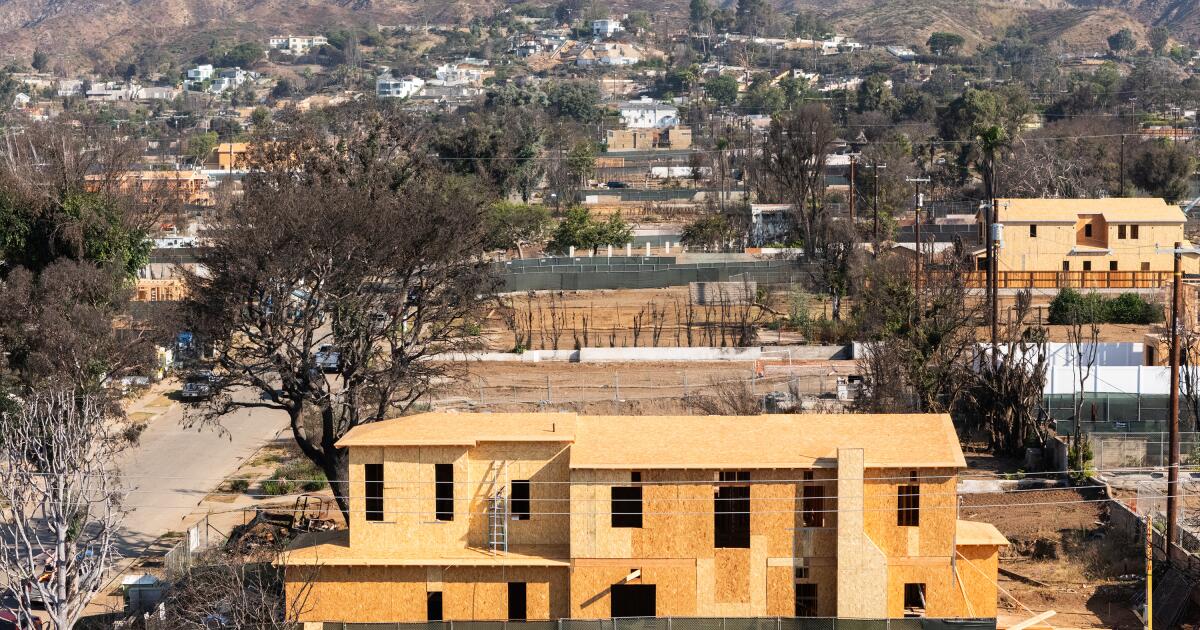
January 2025 wildfire victims seek tougher penalties against State Farm over claims handling
-
 Entertainment54 minutes ago
Review: ‘Sugar,’ with Colin Farrell as an alien private eye, gets a new and improved second season

