Politics
Opinion: From legal bribery to Trump's immunity, a dark theme ran through the Supreme Court's term

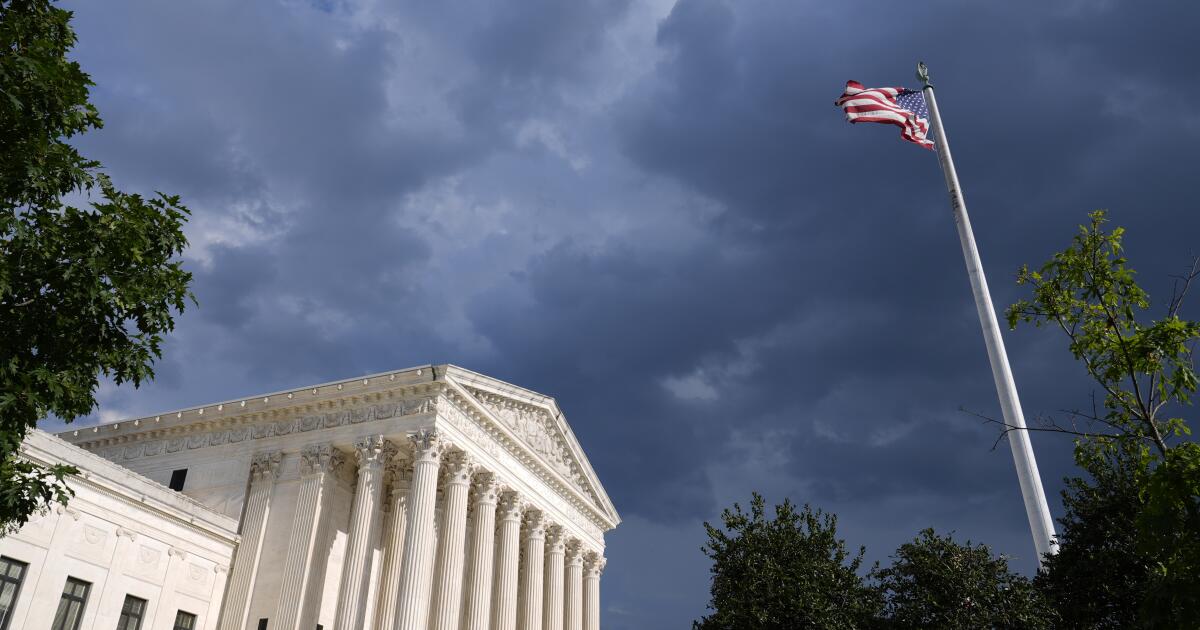
In the three years since conservatives seized a Supreme Court supermajority, they have overruled at least one major precedent a year. This year, from crippling federal agencies to giving presidents sweeping protection from accountability, they showed no signs of slowing down.
While it’s difficult to boil down any Supreme Court term to a single theme, this one was marked by the court’s determination to make the country safe for corruption. Officials who abuse their offices — including Supreme Court justices eager to seize power at the expense of democracy — had a very good year.
Take, for example, Snyder vs. United States, in which the court rewrote federal anti-corruption laws to permit rather than prohibit corruption.
The case concerned a trucking company that paid an Indiana mayor $13,000 for “consulting services” after his city awarded the company a $1.1-million contract. In considering whether state and local officials may receive gifts, tips or gratuities for official acts, the court’s six Republican-appointed justices concluded that such rewards are perfectly legal even though, as Justice Ketanji Brown Jackson explained in dissent, they “are functionally indistinguishable from taking a bribe.”
Jackson pointedly wrote that the majority’s “absurd and atextual reading of the statute is one only today’s Court could love.” Indeed, the majority that decided the case included Justices Clarence Thomas and Samuel A. Alito Jr., who themselves have accepted gifts and rewards from billionaires, some of whom have a stake in the court’s business.
The court’s penchant for insulating abuses of power from accountability is not limited to public corruption. In a series of less noticed cases, the court gave powerful corporations a kind of immunity from regulation even when they endanger the public. These cases are technical, but their effects are profound.
In one such case, the court overruled the 40-year-old so-called Chevron doctrine, asserting that the federal courts, not federal agencies, have the power to determine when corporations violate federal environmental, consumer protection, workplace safety and public health laws. Under Chevron, when a statute was ambiguous, courts were required to defer to the judgments of expert administrative agencies. Now the courts, many of them stocked with conservative judges who are hostile to regulation and keen on catering to corporate interests, have the last word.
That’s not all. The court also claimed the power to second-guess and pick apart agency regulations, making it easier for companies to challenge them. In Ohio vs. Environmental Protection Agency, five Republican justices blocked an EPA anti-pollution rule because they didn’t think the agency’s experts had sufficiently explained their efforts to control ozone pollution.
(It was not clear that the court itself possessed the expertise to render this determination. The majority opinion initially confused nitrogen oxides, which cause smog, with nitrous oxide, the “laughing gas” often used for dental procedures.)
In another attack on agency authority, the court hobbled the Securities and Exchange Commission’s ability to enforce federal securities laws. In SEC vs. Jarkesy, the conservative bloc held that agencies can’t use administrative law judges and internal procedures to impose civil penalties on companies that violate federal securities laws.
Rather, the court declared that companies are entitled to have these cases heard in the federal courts, which are slower than the agencies and populated with Trump appointees handpicked by the Federalist Society partly for their enthusiasm for deregulation. The ruling is likely to force agencies to triage their enforcement of securities laws, focusing on the most egregious violations while abandoning smaller claims often brought by individual investors.
On the last day of the term, the court tilted the legal landscape even further in favor of corporations by inviting more challenges to regulation. In an under-the-radar case, the six conservatives held that plaintiffs may challenge even long-standing agency regulations as long as they claim some new injury from them. As Justice Jackson warned in dissent, this means any new business can contest even thoroughly established regulations, and “well-heeled litigants” can “game the system by creating new entities” to challenge such rules.
The finale of a term preoccupied with protecting corrupt abuses of power was, of course, the decision effectively crowning the president a king unbound by the constraints of law. In Trump vs. United States, the court granted presidents “absolute immunity” from criminal prosecution when they are exercising their core constitutional authority — even if they are abusing that authority for corrupt ends. That means special counsel Jack Smith, for instance, can’t prosecute Donald Trump for pressuring the Department of Justice to gin up baseless allegations of voter fraud.
This decision is all the more terrifying in light of the former president’s promise to seek retribution and prosecute his political rivals and critics. The majority’s embrace of an executive absolutely unfettered by judgment or law was so chilling that Justice Sonia Sotomayor, joined by Justices Elena Kagan and Jackson, was moved to write, “With fear for our democracy, I dissent.”
But the immunity decision goes even further by cloaking presidents with at least a presumption of immunity for any actions that fall within the perimeters of their official duties. There too, the court insisted that the president’s motives are irrelevant even if he corruptly abuses the powers of his office — say, by ordering his subordinates to prosecute or assassinate a rival. Indeed, the court even made it difficult to prove abuses of presidential power by prohibiting prosecutors from introducing evidence of the president’s motives for official acts, which effectively blocks any criminal prosecution of such conduct.
In all, it’s been a banner term for public and private corruption, which the court’s conservatives repeatedly blessed in its various forms. Even in dodging any substantial holding on two key abortion cases, which on the surface had little to do with government or corporate accountability, the court seemed to be striving to limit the salience of reproductive rights in the coming election. So as the court was seizing power and using it to enable corruption, it also invited suspicion that it was corruptly using its own power to boost the electoral fortunes of the party it favors.
Leah Litman is a professor of law at the University of Michigan Law School. Melissa Murray is a professor of law at the New York University School of Law. They are co-hosts of the “Strict Scrutiny” podcast.


Tucker Carlson, who was often at Donald J. Trump’s side during the 2024 presidential campaign, is now expressing remorse for that support, saying he will long be “tormented” by his role helping Mr. Trump return to the White House.
Mr. Carlson, a titan of conservative media who has broken sharply with Mr. Trump over the war with Iran, acknowledged that he was part of the “reason this is happening right now,” referring to the conflict.
“It’s not enough to say, well, I changed my mind — or like, oh, this is bad, I’m out,” Mr. Carlson said in an episode of his podcast released Monday.
“It’s a moment to wrestle with our own consciences,” Mr. Carlson said on the podcast, speaking with his brother, Buckley, a former speechwriter for Mr. Trump. “We’ll be tormented by it for a long time. I will be. And I want to say I’m sorry for misleading people.”
Mr. Carlson, a former Fox News host and a longtime opponent of American foreign interventions, has feuded with Mr. Trump and his allies for weeks over the war, which most Americans oppose, according to opinion polls.
He appeared particularly appalled by a threat Mr. Trump made to Iran on social media on Easter Sunday that the country would be “living in hell” if it did not open the Strait of Hormuz, the vital shipping route that has been clogged during the war. After the post, Mr. Carlson urged White House officials to stand up to the president, saying that Mr. Trump’s behavior was “evil.”
Mr. Trump fired back at Mr. Carlson and other conservative critics of the war in a lengthy Truth Social post two weeks ago, describing them as “Fools” and suggesting that Mr. Carlson should “see a good psychiatrist.” In the post, Mr. Trump said that Mr. Carlson, who was dismissed by Fox News in 2023, had “never been the same” after he left the network.
Asked for comment on Mr. Carlson’s remarks, the White House pointed to Mr. Trump’s social media commentary.
On Friday, Mr. Trump continued to lob insults at Mr. Carlson on social media, writing that “Tucker is a Low IQ person — Always easy to beat, and highly overrated.”
One of the president’s allies, the far-right activist Laura Loomer, wrote on social media on Monday that Mr. Carlson was “trying to hand our country over to the Democrats.”
Mr. Carlson, a right-wing brawler prone to spreading conspiratorial views, was once Fox News’s most popular prime-time host, and his TV program was all but mandatory for many conservatives during Mr. Trump’s first term.
But he was ousted by Fox News after it agreed to pay $787.5 million to resolve a lawsuit filed by Dominion Voting Systems over the network’s promotion of 2020 election misinformation. The case exposed instances in which Mr. Carlson denigrated colleagues and privately attacked Mr. Trump. In a text from Jan. 4, 2021, that the case surfaced, Mr. Carlson wrote of Mr. Trump, “I hate him passionately.”
By 2024, Mr. Carlson had re-emerged as a popular podcaster and smoothed out tensions with Mr. Trump. Mr. Carlson was among those who lobbied Mr. Trump to choose JD Vance as his running mate.
When Mr. Trump made a dramatic appearance at the Republican National Convention in July 2024, days after he was shot in the ear at a rally in Butler, Pa., Mr. Carlson was the first person to greet him.
Cameras later captured the two chuckling together in Mr. Trump’s box at the convention in Milwaukee. From the stage of the convention, Mr. Carlson described Mr. Trump as “the funniest person I have ever met in my life.”
“He’s a wonderful person,” Mr. Carlson said. “I know him well.”

NEWYou can now listen to Fox News articles!
Democrats scored a major victory Tuesday when Virginia voters passed a congressional redistricting referendum that could give the party a significant boost in the battle for the U.S. House of Representatives majority in this year’s midterm elections, The Associated Press reported at 8:49 p.m. ET Tuesday.
The ballot measure gives the Democrat-controlled Virginia legislature — rather than the state’s current nonpartisan commission — temporary redistricting power through the 2030 election. It could result in a 10-1 advantage for Democrats in Virginia’s congressional delegation, up from their current 6-5 edge.
That would give the Democrats four additional left-leaning U.S. House seats ahead of the midterms as the party tries to win back control of the chamber from the GOP, which currently holds a razor-thin majority.
The standalone spring referendum capped months of political crossfire and court battles, sky-high early voting turnout and tons of national attention and money poured into the ballot box showdown.
DEMOCRACY ’26: STAY UP TO DATE WITH THE FOX NEWS ELECTION HUB
Virginia Gov. Abigail Spanberger speaks during a Virginians For Fair Elections canvassing event in Woodbridge, Va., on April 18, 2026. (Graeme Sloan/Bloomberg via Getty Images)
Even though a majority of voters gave the ballot initiative a thumbs-up, it still faces legal challenges.
The Supreme Court of Virginia allowed the referendum to move forward after a lower court struck it down. But legal challenges to the referendum remain unresolved and are still before Virginia’s highest court.
Republicans had railed against the Democrat-backed referendum.
“It’s the most partisan map in America,” former Republican Gov. Glenn Youngkin told supporters at his final campaign stop in northern Virginia on the eve of the election.
Pointing to the Democrats pushing new maps, Youngkin charged, “What they are doing is immoral.”
Teaming up with Youngkin to crisscross the state in leading the GOP opposition to the ballot initiative was former Virginia Attorney General Jason Miyares, who told the crowd the Democrats’ map is one that “you draw when you’re drunk with power.”
BATTLE FOR THE HOUSE RUNS THROUGH VIRGINIA AS COURT OKS HIGH-STAKES REDISTRICTING VOTE
Former Virginia Gov. Glenn Youngkin, right, and former state Attorney General Jason Miyares lead a chant of “no” as they lead Republican efforts to defeat a Democrat-backed congressional redistricting referendum April 20, 2026, in Leesburg, Va. (Paul Steinhauser/Fox News)
Speaking with Fox News Digital ahead of their final election eve rally, Miyares charged that “Democrats want to take away the voices of millions of Virginians and gerrymander the state.”
Youngkin, pointing to the duo’s relentless campaigning in recent weeks, said, “What we’re hearing over and over and over again is Virginians want fair maps. And what the yes vote represents are unfair maps.”
And the two Republicans reiterated their charge that the referendum was an “unconstitutional power grab” by Democratic Gov. Abigail Spanberger and the Democrats who control the state legislature.
As Youngkin and Miyares spoke in Leesburg, President Donald Trump took to the airwaves on a popular Virginia-based conservative talk show and later teamed up with House Speaker Mike Johnson, R-La., to urge voters to defeat the referendum.
Pointing to congressional Democrats, Trump warned that “if they get these additional seats, they’re going to be making changes at the federal level.”
SPANBERGER FACES ‘BAIT AND SWITCH’ BACKLASH AHEAD OF CRUCIAL ELECTION
President Donald Trump headlined a tele town hall on the eve of Virginia’s congressional redistricting referendum urging voters to cast a ballot against the initiative. (Anna Moneymaker/Getty Images)
Democrats countered that the redrawing of the maps was a necessary step to balance partisan gerrymandering already implemented by Republicans in other states at Trump’s urging.
“By voting yes, you have the chance to do something important — not just for the commonwealth, but for our entire country,” former President Barack Obama said in a video released Friday on the eve of the final day of early voting. “By voting yes, you can push back against the Republicans trying to give themselves an unfair advantage in the midterms.
“By voting yes, you can take a temporary step to level the playing field. And we’re counting on you.”
The video by Obama was the former president’s latest effort for the referendum. He had previously appeared in ads released by Virginians for Fair Elections, the Democrat-aligned group working to pass the ballot initiative.
OBAMA GOES ALL IN ON HIGH-STAKES REFERENDUM THAT MAY IMPACT MIDTERM ELECTIONS
But Virginians for Fair Maps, the leading Republican-aligned group opposing redistricting, used past comments by Obama against political gerrymandering in its ads opposing the referendum.
“Because of things like political gerrymandering, our parties have moved further and further apart, and it’s harder and harder to find common ground,” the former president said in an old clip showcased in the spot.
Republicans pointed to comments from Democratic Sen. Tim Kaine, a former Virginia governor and former chair of the Democratic National Committee, who acknowledged over the weekend in a “Fox News Sunday” interview that the new maps don’t represent Virginia’s partisan breakdown.
“Ninety percent of Virginians are not Democrats, that’s true,” Kaine said.
But Kaine added that “about 100% of Virginians want election results to be respected.”
SOROS-BACKED GROUP AMONG LIBERAL ORGS PUMPING EYE-POPPING CASH INTO VIRGINIA GERRYMANDERING EFFORT
And Republicans took aim at Spanberger, who won November’s gubernatorial election by over 15 points as Democrats also captured the lieutenant governor and attorney general offices.
“Abigail Spanberger told everybody last summer that she had no interest in redistricting, and then the first bill she signs is a bill to enable the gerrymandering of the Commonwealth of Virginia. Virginians don’t like this and that’s why independents and a lot of Democrats are voting no too,” Youngkin told Fox News Digital.
Minutes later, Youngkin told the crowd that Spanberger is “trying to disenfranchise millions, millions of Virginians.”
Republicans trained their redistricting firepower on Spanberger since a poll two weeks ago by The Washington Post indicated that the new governor’s approval rating was barely above water, with the highest unfavorable rating for a new Virginia governor in two decades.
“She’s an unpopular governor with an unpopular agenda, and she lied to the voters,” Miyares charged.
Former Virginia Gov. Glenn Youngkin, left, and former state Attorney General Jason Miyares, speak with Fox News Digital on the eve of Virginia’s congressional redistricting referendum in Leesburg, Va., April 20, 2026 (Paul Steinhauser/Fox News)
And Miyares and other top Republicans accused Spanberger of pulling a “bait and switch.”
Spanberger, in an ad in support of the referendum, said she was backing the measure because “it’s directly in response to what other states decide to do and a president who says he’s quote entitled to more Republican seats before this year’s midterms. Our approach is different. It’s temporary. It preserves Virginia’s fair redistricting process into the future.”
Supporters of redistricting dramatically outraised and outspent groups opposed to the referendum, with Virginians for Fair Elections outraising Virginians for Fair Maps by a roughly three-to-one margin. Much of the funding raised by both sides came from so-called “dark money” from nonprofit public policy groups known as 501(c)(4) organizations that are not required to disclose their donors.
Despite the Democrats’ funding advantage, recent polling suggested support for the ballot initiative was only slightly ahead of opposition amid a surge in early voting, which ended on Saturday.
“They have outspent us three to one. They’ve raised over $70 million. And yet this is a close vote,” Youngkin said.
Pointing to the ads in support of the referendum, Youngkin said Virginians “aren’t believing the mistruths. They aren’t believing the lies on TV. They’re actually doing the work themselves and understanding that a no vote is for fair maps and a yes vote is for the most gerrymandered maps in America.”
And Miyares emphasized that Democrats “outspent us, but we have the truth.”
Virginia is the latest battleground in the high-stakes fight between Trump and the GOP and Democrats over congressional redistricting.
Aiming to prevent what happened during his first term in the White House when Democrats reclaimed the House majority in the 2018 midterms, Trump last spring first floated the idea of rare, but not unheard of, mid-decade congressional redistricting.
The mission was simple: redraw congressional district maps in red states to pad the GOP’s fragile House majority to keep control of the chamber in the midterms, when the party in power traditionally faces political headwinds and loses seats.
When asked by reporters last summer about his plan to add Republican-leaning House seats across the country, the president said, “Texas will be the biggest one. And that’ll be five.”
Republican Gov. Greg Abbott of Texas called a special session of the GOP-dominated state legislature to pass the new map.
But Democratic state lawmakers, who broke quorum for two weeks as they fled Texas in a bid to delay the passage of the redistricting bill, energized Democrats across the country.
Among those leading the fight against Trump’s redistricting was Democratic Gov. Gavin Newsom of California.
DEMOCRACY ’26: STAY UP TO DATE WITH THE FOX NEWS ELECTION HUB
California Gov. Gavin Newsom speaks during an election night news conference at a California Democratic Party office in Sacramento Nov. 4, 2025. (Godofredo A. Vásquez/AP Photo)
California voters in November overwhelmingly passed Proposition 50, a ballot initiative that temporarily sidetracked the left-leaning state’s nonpartisan redistricting commission and returned the power to draw the congressional maps to the Democratic-dominated legislature.
That is expected to result in five more Democratic-leaning congressional districts in California, which aimed to counter the move by Texas to redraw their maps.
The fight quickly spread beyond Texas and California.
Republican-controlled Missouri and Ohio and swing state North Carolina, where the GOP dominates the legislature, have drawn new maps as part of the president’s push.
In blows to Republicans, a Utah district judge late last year rejected a congressional district map drawn by the state’s GOP-dominated legislature and instead approved an alternate that will create a Democratic-leaning district ahead of the midterms.
Republicans in Indiana’s Senate in December defied Trump, shooting down a redistricting bill that had passed the state House. The showdown in the Indiana statehouse grabbed plenty of national attention.
Florida is next up.
Two-term Republican Gov. Ron DeSantis and state lawmakers in the GOP-dominated legislature are hoping to pick up an additional three to five right-leaning seats through a redistricting push during a special legislative session that kicks off April 28.
Florida Gov. Ron DeSantis speaks during a news conference in Fort Lauderdale, Fla., July 22, 2025. (Amy Beth Bennett/South Florida Sun Sentinel/Tribune News Service)
Hovering over the redistricting wars is the Supreme Court, which is expected to rule in Louisiana v. Callais, a crucial case that may lead to the overturning of a key provision in the Voting Rights Act.
CLICK HERE TO DOWNLOAD THE FOX NEWS APP
If the ruling goes the way of the conservatives on the high court, it could lead to the redrawing of a slew of majority-minority districts across the county, which would greatly favor Republicans.
But it is very much up in the air when the court will rule and what it will actually decide.
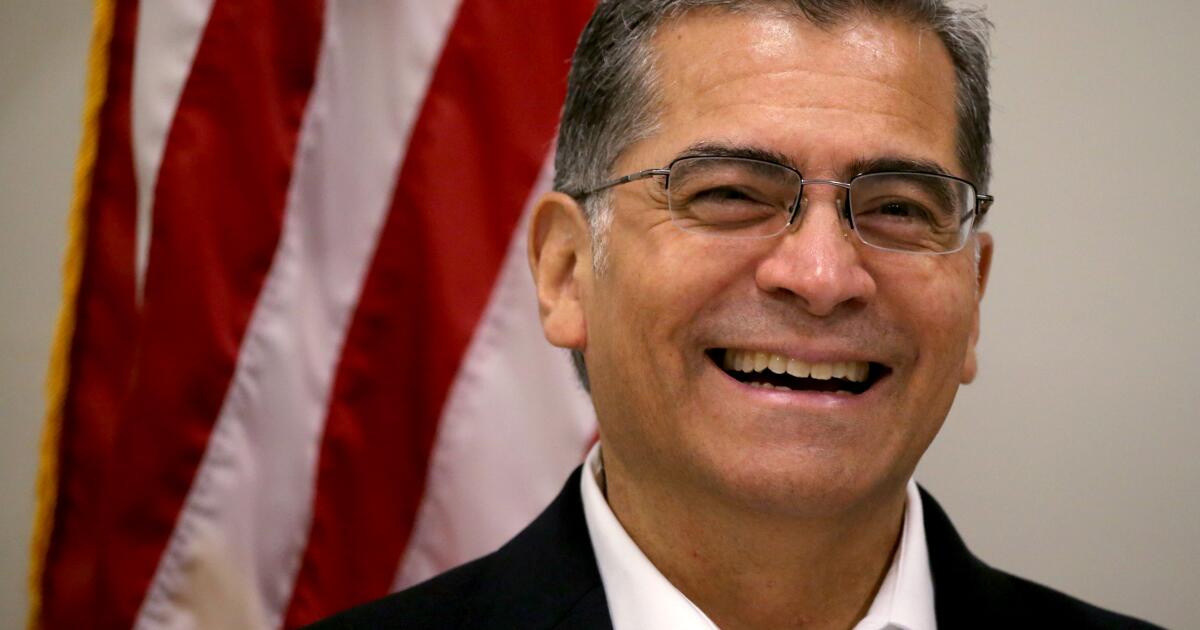
Xavier Becerra, a former Cabinet secretary in President Biden’s administration, appears to be surging in the wildly unsettled California governor’s race.
Until recently, the former U.S. Health and Human Services secretary had been mired in the single digits in polling to replace termed-out Gov. Gavin Newsom and lead the nation’s most populous state.
But after former Rep. Eric Swalwell (D-Dublin) dropped out of the race earlier this month amid accusations of sexual assault and other misconduct, Becerra has seen a boost in polls, fundraising and endorsements.
On Tuesday, Assembly Speaker Robert Rivas endorsed Becerra alongside 14 Democratic members of the legislative body.
Arguing that Californians are under constant threat from President Trump’s policies, Rivas cited Becerra’s decades-long record in public office, including defending Obamacare and young immigrants, or “Dreamers,” to argue that Becerra is best positioned to lead the state.
“There’s no time to learn on the job — we need a governor who’s ready to fight back on day one,” Rivas said in a statement, noting that Becerra sued the Trump administration 122 times while he was California’s attorney general. “We have a strong Democratic field for governor. But right now, we need someone ready on day one. Xavier Becerra is that leader.”
Becerra said he was honored to receive the legislators’ backing.
“I look forward to working with the Speaker and legislators on Day One to tackle the problems Californians care about most — from the skyrocketing cost of groceries and housing to our unyielding fight against the Trump Administration’s disastrous policies,” he said in a prepared statement. “Californians need an experienced and trusted leader who doesn’t need on-the-job training.”
The endorsements come at a critical moment in the governor’s race — just two weeks before ballots begin arriving in Californians’ mailboxes. In addition to Swalwell dropping out, former state Controller Betty Yee ended her bid on Monday because of a lack of resources. On Tuesday, Yee endorsed hedge fund founder turned environmental warrior Tom Steyer.
She said in a video that she was backing Steyer because of his “standing up our democracy and getting young people involved, certainly with respect to our climate and the climate crisis we’re facing.”
Becerra and Steyer are now the Democratic front-runners in the race.
Despite Becerra’s long tenure in state and federal office, the unflashy politician is not well-known among California voters. He was among the underdogs in the 2026 gubernatorial race. Swalwell, by contrast, was among the leading Democratic candidates.
Amy Thoma, a former Republican strategist who is no longer affiliated with a political party, noted that Becerra’s surge comes at a critical moment in the election, shortly before ballots land in Californians’ mailboxes.
“Voters are starting to tune into the race. Yes, they want someone who will stand up to Trump, but it also seems they want someone with experience who can address the very real issues facing the state,” Thoma said.
She added that Becerra’s life story is “incredibly compelling.”
“The word authentic is overused, but every time he talks about his love for this state, for his family and wanting to make California work for everyone, it comes across incredibly sincere,” Thoma said. “Voters can see through candidates who fake it.”
Becerra was respected by colleagues across the aisle, including former GOP legislative leader and state Republican party chairman Jim Brulte. Both men were elected to the state Assembly in 1990 and though their politics often sharply differed. However, they had a warm relationship.
“He was progressive and I am a conservative,” Brulte said. “We never agreed much on policy, but he is a good man with a great heart.”
The 2026 governor’s race has been unlike any in recent memory, with no clear front-runner in a crowded field of candidates and voters just beginning to pay attention to the contest shortly before the June 2 primary.
There were two prominent Republicans and eight prominent Democrats in the race, leading to fears among Democratic leaders in the state that their party’s candidates could be shut out in the general election because of California’s unique primary system. The two candidates who win the most votes in the June 2 primary will move on to the November general election, regardless of party affiliation.
Democratic leaders remain concerned that despite California’s sapphire-blue tilt, the number of their party’s candidates in the race could lead to a splintering of Democratic voters that results in two Republicans advancing to the November ballot.
Six prominent Democrats remain in the race, after Swalwell and Yee dropped out.
The race — lacking a global superstar such as Arnold Schwarzenegger or the scion of a storied political family and former governor like Jerry Brown — is ephemeral. Anything can happen before the June 2 primary.
But Becerra is having a moment. In addition to the new endorsements, he has seen notable movement in polls, most recently in a survey released Monday by the state Democratic Party. Becerra jumped nine points from the party’s last poll, tying Steyer at 13%.
While Becerra will never be able to match Steyer’s deep pockets, he raised more than $1 million on ActBlue, the top Democratic fundraising platform, in the week ending Saturday, making him the biggest fundraiser on the site in the nation.
“Ninety-seven percent were first-time donors,” Becerra’s campaign said in a statement. “This is not a donor base being recycled. It is a movement being born.”
Times staff writer Nicole Nixon contributed to this report from Sacramento.
-

 New York43 minutes ago
Trump’s Immigration Crackdown Pervades Long Island Suburbs
-

 Detroit, MI1 hour ago
Chris Simms projects Detroit Lions first-round NFL draft pick
-

 San Francisco, CA1 hour ago
San Francisco sets $3.4B price tag for public takeover of PG&E
-

 Dallas, TX2 hours ago
Game Day Guide: Stars at Wild | Dallas Stars
-

 Miami, FL2 hours ago
May a steadying presence as Cards hold off Marlins in Miami
-

 Boston, MA2 hours ago
Tyrese Maxey, VJ Edgecombe flex in Boston: Takeaways from Celtics-76ers Game 2
-

 Denver, CO2 hours ago
Motorcyclist seriously injured in Denver hit-and-run crash – AOL
-

 Seattle, WA2 hours ago
Brock: 2 drafts fits at edge rusher for Seattle Seahawks