West
‘Christmas Lawyer’ eyes Supreme Court review in battle with HOA over holiday light show

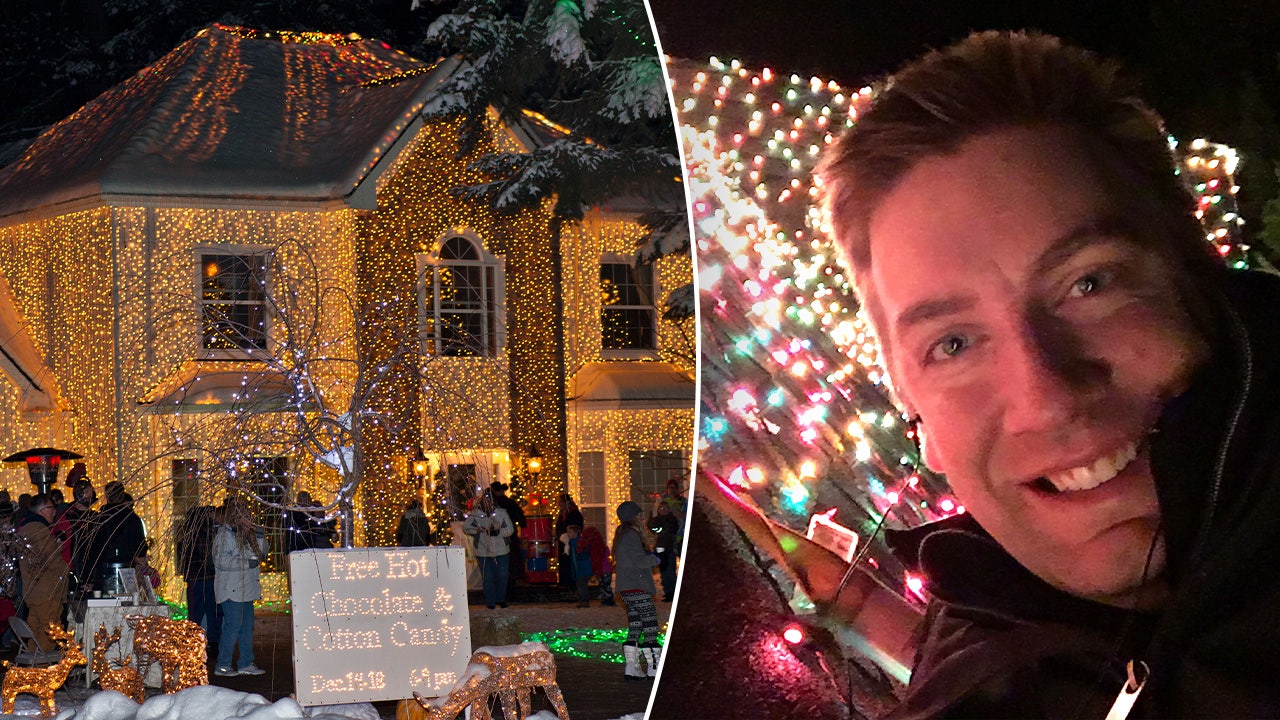
The battle between a man who orchestrated massive Christmas extravaganzas and his former homeowners association could be appealed to the Supreme Court after a lower court issued its long-awaited ruling.
“It was made clear that a jury could find … that there was a hostile atmosphere created, that our family was discriminated against,” Jeremy Morris told Fox News Digital of the ruling.
Morris, an attorney, became popularly referred to as the “Christmas Lawyer” after gaining international notoriety for throwing a five-day holiday light show that drew thousands of revelers to his former home just outside of Hayden, Idaho.
In 2017, a jury unanimously agreed that his HOA discriminated against him on the basis of religion by trying to stop his Christmas show. But in a stunning twist, a federal judge reversed that verdict and ordered Morris to pay the HOA more than $111,000 in legal fees.
Jeremy Morris gained international fame after his former homeowners association tried to stop him from putting on an extravagant Christmas celebration at his family’s house. Almost a decade later, the ensuing court battle still isn’t over. (Courtesy Jeremy Morris)
‘CHRISTMAS LAWYER’ WHO WENT TO WAR WITH HIS HOA IS NOW FACING ANOTHER FIGHT — THE IDAHO STATE BAR
Morris challenged the ruling in the 9th Circuit Court of Appeals, which heard arguments in June 2020. Four years later, a three-judge panel ruled in the HOA’s favor in part and in Morris’ favor in part, teeing the case up for a new jury trial.
But Morris said he is “absolutely” considering appealing to the Supreme Court first.
How the Christmas light fight began
Morris made an offer on his house just after throwing his inaugural light show at his previous home over Christmas 2014.
He informed the West Hayden Estates homeowners association that he planned to repeat the event and the HOA immediately tried to squash the Christmas display, arguing it would likely violate three sections of the community’s covenants, conditions and restrictions. The event would be too big, too noisy and too bright, the board wrote in a letter sent to Morris in January 2015.
Crucially, the letter also pondered whether “non-Christians” would be bothered by the display and expressed concerns that the show would draw “possible undesirables” to the neighborhood.
Morris wrote back, arguing that there was nothing applicable to his event in the CC&Rs and that the board was engaging in religious discrimination. His family closed on the house and moved in.
The HOA board sent this letter to Jeremy Morris in January 2015, outlining rules they believed his Christmas display would violate and worrying that residents who were “non-Christians” might object to the program. ( )
HOA HORROR STORIES: GEORGIA HOMEOWNERS SHARE NIGHTMARISH LEGAL BRAWLS
When Morris started decking his house with around 200,000 individual lights that fall, the HOA’s attorney sent him a letter threatening legal action if he hosted the event without approval from the board.
The show went on anyway. Costumed characters, musicians, a children’s choir, a live nativity scene and even a camel greeted spectators. Morris rented shuttle buses to carry visitors to the event, and volunteers directed cars through the streets around the house, according to court documents.
Tensions grew leading up to the Morris family’s next show. Neighbors were accused of harassing spectators. A bus driver said one resentful resident repeatedly tried to stage an accident when shuttles passed by. Morris said his family received threats, including an in-person confrontation partially caught on camera in which a neighbor offered to “take care of him.”
Morris previously told Fox News Digital that he didn’t want to take legal action and that he offered to waive his rights to proceed with a lawsuit if the HOA agreed to leave his family alone. The HOA refused, he said, and the statute of limitations was almost up on the original letter.
Jury unanimously sided with Morris in discrimination lawsuit, but judge flipped the verdict
Morris sued in January 2017, alleging religious discrimination in violation of the Fair Housing Act. A jury unanimously sided with him and ordered the HOA to pay $75,000.
But Judge B. Lynn Winmill took the unusual step of flipping the verdict and ordering Morris to pay the HOA’s legal fees, concluding the case wasn’t about religious discrimination, but rather the Morris family’s violation of neighborhood rules.
Jeremy Morris’ legal fight with his HOA was the subject of a 2021 Apple TV+ documentary “‘Twas the Fight Before Christmas.” He’s also seeking an agent for his book about the experience. (Courtesy Jeremy Morris)
‘STOP THE NONSENSE’: LAWMAKERS IN ONE STATE MOVE TO GIVE HOMEOWNERS MORE RIGHTS IN HOA DISPUTES
The judge’s order also permanently banned the Morris family from holding another Christmas program that violated the HOA rules, now a moot point since they have moved out of Idaho.
The Morris family appealed, and in June 2020, their case went before the 9th Circuit.
9th Circuit Court of Appeals says letter didn’t break the law, but that HOA may have created a hostile environment
Now, four years later, a three-judge panel affirmed Winmill’s overturning of the jury verdict, concluding that a reasonable jury should not have found the HOA letter from 2015 indicated a preference that a “non-religious individual” buy the Morrises’ home.
But the panel also found that there was enough evidence supporting the jury’s conclusion that the HOA board’s “conduct was motivated at least in part by the Morrises’ religious expression,” according to the more than 100-page ruling.
The panel’s decision was split, with a lengthy dissent from Judge Daniel P. Collins, who suggested the HOA’s behavior was more consistent with making the Morris family “unwelcome” than with enforcing rules. Collins suggested that the board’s action also contributed to harassment toward the Morrises by other residents, physical confrontations and a death threat.
The HOA “categorically denies it interfered with the Morrises’ right to purchase and enjoy their home free from discrimination” and “has always strived to foster an inclusive and welcoming environment for all residents,” its attorney, Peter Smith, wrote in an email to Fox News Digital.
“We look forward to the opportunity to demonstrate in court that the Association acted legally,” Smith continued. “We are confident that the legal proceedings will ultimately vindicate the Association and show that it has not created a hostile neighborhood for the Morrises.”
WATCH MORE FOX NEWS DIGITAL ORIGINALS HERE
“We can retry the case … and I do believe that we would win as we did before,” Morris told Fox News Digital.
But he said the 9th Circuit’s ruling regarding the letter sets a concerning precedent and suggested the outcome would have been different if “non-Christian” was replaced with any other faith.
“If we were to strictly interpret this decision, people of any faith can be discriminated against. You can admit that you’re discriminating against them,” he said. “We all know that no court would do that, but a court just made it clear you can do that to a Christian.”
He added that, “Christians are no longer in the United States given the same property rights as other people.”
The Supreme Court is asked to review more than 7,000 cases each year and usually agrees to hear fewer than 100.
Thousands of people are estimated to have attended the 2015 and 2016 Christmas light displays at Morris’ home near Hayden, Idaho. Morris said the shows ran for a couple of hours on five nights each December. (Courtesy Jeremy Morris)
Separate suit planned against Idaho State Bar
Morris also told Fox News Digital he is moving to sue the Idaho State Bar for an alleged “shakedown” last year, which he compared to mob tactics.
Representatives of the Idaho State Bar scrutinized comments Morris made about the judge who overturned his case — including that he was “corrupt” and an “anti-Christian bigot” who attempted to “rig a jury.”
The bar threatened to pursue disciplinary charges under Idaho’s professional conduct rules, but offered to dismiss the case if Morris gave up his Idaho legal license, according to correspondence shared with Fox News. Bar counsel noted that Morris has moved out of state and the pending “disciplinary grievance” has affected his ability to gain employment in his new home.
Morris says he has notified the bar that he plans to sue for $10 million.
A representative of the Idaho State Bar declined to comment on potential litigation. The spokesperson also declined to comment on Morris’ possible disciplinary actions other than to say that no formal case has been filed.
Ramiro Vargas contributed to the accompanying video.
Read the full article from Here

San Francisco, CA
San Francisco celebrates Black freedom at weekend Juneteenth parade: ‘We’re all people’

SAN FRANCISCO (KGO) — Under bright blue skies, large crowds gathered Saturday to celebrate Juneteenth in San Francisco, dancing, cheering and waving flags in a day of joy marking the end of slavery in the United States.
The holiday commemorates June 19, 1865, when Union troops arrived in Texas and announced that enslaved Black people were free — more than two years after the Emancipation Proclamation. Some view Juneteenth as America’s second Independence Day.
“I think for the greater community to see that Juneteenth is a national holiday and that we represent it, everyone can understand what it means to African American people, what it means the day we were freed from slavery,” said Tamara Walker, an event coordinator.
Now recognized as a federal holiday for the past five years, Juneteenth also represents a broader pursuit of justice.
“I had the pride and honor of voting for this Juneteenth holiday in Congress,” said Rep. Nancy Pelosi, speaker emerita.
MORE: What is Juneteenth and why is it celebrated? What to know for 2026
Festivities included a parade and performances, with participants celebrating community and culture.
Rev. Ishmael Burch of Glide Memorial Church said he has marked the occasion for decades.
“Juneteenth, I’ve been doing it for 35 years: the parade and the festivals. We need Juneteenth. It’s growing in Oakland, Richmond, San Jose — all around,” Burch said.
Organizers and participants emphasized that the holiday also highlights ongoing efforts for equity and opportunity.
“Juneteenth represents us being here, us growing small businesses, us kids having access to safe places to be in the future, being able to have the same access to good schools,” Walker said.
Eighteen-year-old Mekai Smith, the parade’s grand marshal, called the day meaningful.
“It’s truly a blessing to be here. I feel part of my culture is part of Juneteenth,” Smith said.
For attendees like Emeryville resident Trey Green, the celebration was also a chance to share history across generations.
“I just explained to him yesterday what the meaning of Juneteenth is about: for me and him and how it’s a part of our history and now he gets to experience it first-hand,” Green said of his young son.
As the festivities continued, many reflected on the holiday’s importance as both a historical milestone and a moment of unity.
“We’re all people. Doesn’t matter what color we are. We all experience different things. But at the end of the day, we’re all people,” Green said.
Copyright © 2026 KGO-TV. All Rights Reserved.

RTD’s Proposed September Service Changes are designed to further enhance and strengthen RTD’s transit network by refining service, improving reliability, and better aligning resources with customer needs.
As part of the September 2026 Service Change, RTD is advancing a coordinated set of transit service enhancements designed to strengthen reliability, restore key frequencies, and improve access to major destinations across the system. These proposed changes reflect observed utilization trends, operational performance, and lessons learned during recent reconstruction activities, while maintaining flexibility for future evaluation and adjustment. Several of the recommended enhancements are supported by Clean Transit Enterprise (CTE) grant funding and are intended to restore and expand service consistent with the System Optimization Plan (SOP), noting that final CTE allocations are still in development.
You can view all the proposed changes below and learn more by watching our presentation in English or Spanish.
Customer feedback on the Proposed September Service Changes will be collected through July 8. We invite you to virtually attend our public meetings and Ask a Service Planner sessions, or share your feedback through the online survey. Customer feedback is important to RTD, and we thank you for participating however you can!
Public Meetings
Interpretation is available at no cost. Call 303.299.2051 or email [email protected] at least 5 business days before the meeting and tell us the meeting name, date, and the language(s) you need.
Ask a Service Planner 1: Monday, June 22 at noon
Public Meeting 1: Monday, June 22 at 5:30 p.m.
Ask a Service Planner 2: Tuesday, June 23 at noon
Public Meeting 2: Wednesday, June 24 at 5:30 p.m.
Proposed September 2026 Service Changes
In addition to the routes listed below, the following routes also have proposed changes:
23 – West 20th Avenue
Route Adjustment, Schedule Timing
Proposed Change
It is proposed to split the existing Route 20 into Route 20 and Route 23, with Route 23 serving the western portion of Route 20 along 20th Ave., terminating at Union Station on the eastern end.
Reason
Maintains connectivity between Lakewood and Edgewater to downtown Denver.
Updated Map
Survey Link
AL – Denver International Airport to Longmont
Service Increase
Proposed Change
New route would provide hourly service from 6 a.m. to 10 p.m. daily, with service operating from 8th Ave. and Coffman St. to US 287 with a stop at Niwot Park-n-Ride and into Lafayette Park-n-Ride to E-470 to Denver International Airport (DEN).
Reason
Requested by policymakers, stakeholders and customers, service will provide connections from Longmont to Denver Airport via the Lafayette Park-n-Ride
Updated Map
Survey Link
BMFX – Broomfield FlexRide
Service Increase
Proposed Change
Extend weekday service to 9 p.m., with an extra vehicle added during a.m. and p.m. peaks. Add a second vehicle during Saturday peak hours; and implement Sunday service from 9 a.m. to 4 p.m.
Reason
The City and County of Broomfield requested additional service, which can be supported through available grant funding.
Survey Link
WGFX – Wagon Road FlexRide
Service Reduction
Proposed Change
Discontinue service.
Reason
Low utilization, with service averaging 1 boarding per hour at a cost of $158.33 per boarding.
Survey Link
Dashboard: Routes and Lines
A
Union Station – Denver Airport
- Schedule Timing
- Service Reduction
Change
Schedule adjustments, modifying early morning and evening service frequencies as follows:
3 a.m. to 6 a.m.: 30-minute frequency
6:00 a.m. to 7:30 p.m.: 15-minute frequency
7:30 p.m. to end of service: 30-minute frequency (as compared to current schedule, which transitions to 30-minute frequency beginning with the 6:30 p.m. and 7 p.m. departures)
The proposed change to schedule timing would result in the loss of (2) daily morning trips.
Reason
Adjusting the span of 15-minute service better aligns frequency with customer demand by providing more frequent service later into the evening. Schedule changes also create more consistent departure times during periods of 30-minute service, making the schedule easier to understand while improving operational efficiency and better aligning service with contractual requirements.
C
Littleton•Mineral – Union Station
- Service Increase
Change
It is proposed to permanently reinstate the C Line once Downtown Rail Reconstruction Project is complete.
Reason
Provide a stable and consistent service pattern between Littleton•Mineral Station and Union Station to enhance the customer experience.
D
18th•California – Littleton•Mineral Station
- Service Reduction
Change
It is proposed to permanently discontinue the D Line, which is currently not operating per Downtown Rail Reconstruction Project.
Reason
Permanent reinstatement of the C Line will provide service between Littleton•Mineral Station and Union Station, and provide the ability to transfer to Downtown Loop via the I-25•Broadway, Alameda, and 10th•Osage stations.
L
30th•Downing – 16th•Stout
- Route Adjustment
Change
L Line will remain suspended until completion of the Downtown Rail Reconstruction Project in 2027. Upon project completion, the L Line is proposed to return and operate between 30th•Downing and at least I-25•Broadway. Service beyond I-25•Broadway may be considered based on ridership demand, available funding, and operational needs.
Reason
Upon completion of the Downtown Rail Reconstruction Project, reinstating and enhancing L Line service would restore rail service along the corridor, provide additional connections within the light rail network, and support travel options for customers previously served by the D Line through the Downtown Loop.
T
Lincoln Station – I-25•Broadway Station
- Schedule Timing
Change
Minor changes to weekday, Saturday, and Sunday/Holiday schedules.
Reason
Improve passenger connections between the T Line and service to Union Station.
W
Union Station – JeffCo Gov’t Center•Golden Station
- Schedule Timing
Change
Minor changes to weekday, Saturday, and Sunday/Holiday schedules.
Reason
Improve on-time performance and prevent track spacing conflicts with the C and E lines.
1
West 1st Avenue
- Schedule Timing
Change
Minor changes to weekday, Saturday and Sunday/Holiday schedules.
Reason
Improve on-time performance and service reliability.
9
West 10th Avenue
- Schedule Timing
- Route Adjustment
Change
Realignment of stops along route, and relocation to Gate 9 at Union Station.
Reason
Better serve alternating stops in downtown Denver.
10
East 12th Avenue
- Schedule Timing
- Route Adjustment
Change
Reroute service to Decatur•Federal Station as western terminal via Auraria Pkwy., West Colfax Ave., and Federal Blvd.
Reason
Provide bus connection from Downtown to Decatur/Federal to replace discontinued routing segment of Route 15L.
11
Mississippi Avenue
- Schedule Timing
- Seasonal Adjustment
Change
Minor changes to weekday, Saturday and Sunday/Holiday schedules while reinstating seasonal tripper service.
Reason
Improve on-time performance and service reliability while aligning with seasonal ridership levels at South High School.
14
West Florida Avenue
- Schedule Timing
Change
Minor changes to weekday, Saturday and Sunday/Holiday schedules.
Reason
Improve on-time performance and service reliability.
15
East Colfax Avenue
- Schedule Timing
- Route Adjustment
Change
Implement dedicated lane operations along Colfax Avenue between Broadway and Colorado Blvd. while discontinuing western segment of route that serves Decatur•Federal station.
Reason
Support East Colfax Dedicated Lane Operations per progression of Bus Rapid Transit Project.
15L
East Colfax Limited
- Schedule Timing
- Route Adjustment
Change
Reroute service to Union Station while implementing dedicated lane operations along Colfax Avenue between Broadway and Colorado Blvd.
Reason
Support East Colfax Dedicated Lane Operations per progression of Bus Rapid Transit Project, with changes to Route 10 serving the portion of discontinued route.
20
20th Avenue
- Schedule Timing
- Seasonal Adjustment
- Route Adjustment
Change
It is proposed to split the existing Route 20 into Route 20 and Route 23, with Route 20 serving the eastern portion of the route. Decatur•Federal would serve as the western terminal via 15th St., Platte St., Water St., I-25, West Colfax Avenue, and Federal Blvd.
Seasonal tripper service reinstated with morning tripper times adjusted.
Reason
Provide bus connection from Downtown to Decatur/Federal to Replace Route 15L. Better serve East High School morning bell times.
24
University Blvd
- Seasonal Adjustment
Change
Reinstate seasonal tripper service.
Reason
Align with seasonal ridership levels.
32
West 32nd Avenue
- Schedule Timing
- Route Adjustment
Change
Relocate western terminal from Old Town Arvada Station to Clear Creek Crossing Transfer Center in Wheat Ridge via 32nd Avenue.
Reason
Extends access to Wheat Ridge and facilitates transfers to the 72 and 38 at Clear Creek Crossing Transfer Center.
35
Hampden Avenue
- Service Increase
- Seasonal Adjustment
Change
Reinstating seasonal tripper service with an additional morning trip to alleviate overcrowding caused by school bell times at John F. Kennedy High School.
Reason
Alleviate overcrowding per school bell times at John F. Kennedy High School.
37
Smith Road Industrial
- Schedule Timing
Change
Shift Westbound trips for better spacing (targeting even 30 minute intervals). Level of service will not be impacted.
Reason
Create clockface headway to make route easier to utilize.
42
Montbello via Albrook / Green Valley Ranch
- Schedule Timing
- Seasonal Adjustment
Change
Minor schedule adjustments while reinstating seasonal tripper service.
Reason
Improve connections with A Line and operating conditions while aligning with seasonal ridership levels.
45
Montbello / Green Valley Ranch
- Schedule Timing
- Seasonal Adjustment
Change
Minor changes to weekday, Saturday and Sunday/Holiday schedules while reinstating seasonal tripper service.
Reason
Improve on-time performance, service reliability and operating conditions while aligning with seasonal ridership levels.
51
Sheridan Blvd
- Service Increase
- Seasonal Adjustment
Change
Reinstating seasonal tripper service with an additional morning and evening trip to alleviate overcrowding caused by school bell times at John F. Kennedy High School.
Reason
Alleviate overcrowding per school bell times at John F. Kennedy High School.
52
West 52nd Avenue / South Bannock
- Schedule Timing
- Route Adjustment
Change
Reroute to serve to Ralston Road/64th Avenue in Arvada west of the Independence and 58th intersection.
Reason
Rerouting the 52 maintains coverage to 64th/Ralston Road that would otherwise be lost due to the reroute of the route 72. Note: Western terminal located at W 63rd Ave. and Wright St. would not change.
53
North Sheridan Blvd / Broomfield
- Schedule Timing
- Route Adjustment
Change
Extend route to Orchard Pkwy and 144th Ave.
Reason
Provide paratransit service to The Grove Community.
59
West Bowles
- Route Adjustment
Change
Relocate westbound departure gate at Downtown•Littleton Station to Gate C.
Reason
Reduce gate conflicts with route 30.
65
Monaco Parkway
- Schedule Timing
- Seasonal Adjustment
Change
Reinstate seasonal tripper service.
Reason
Align with seasonal ridership levels.
72
72nd Avenue
- Schedule Timing
- Service Increase
- Route Adjustment
Change
Extend route to to Clear Creek Crossing Transfer Center in Wheat Ridge via 58th Ave., adding five weekday trips in the mornings (two eastbound and three westbound).
Reason
Provide additional service and improved connections to Lutheran Hospital earlier in the morning and facilitating transfers to the G line, routes 38 and 32.
73
Quebec Street
- Seasonal Adjustment
- Route Adjustment
Change
Realign routing near Belleview Station (with no changes to current bus stop locations or access). Reinstate seasonal tripper service.
Reason
Route change at Belleview to utilize safer turning movements. Align with seasonal ridership levels.
83L
Cherry Creek / Parker Road Limited
- Schedule Timing
- Route Adjustment
Change
Extend route to DUS from Wade Blank Civic Center Station via 15th and 17th streets.
Reason
Requested by policymakers, stakeholders and customers, service will be extended to Denver Union Station (DUS) from Wade Blank Civic Center Station.
105
Havana Street
- Schedule Timing
Change
Minor changes to weekday, Saturday and Sunday/Holiday schedules.
Reason
Improve on-time performance, service reliability, and operating conditions.
153
Chambers Road
- Schedule Timing
Change
Minor changes to weekday, Saturday and Sunday/Holiday schedules.
Reason
Improve on-time performance, service reliability, and operating conditions.
204
Table Mesa / Moorhead / North 19th
- Schedule Timing
Change
Adjust northbound running times between 7 a.m. – 10 a.m.
Reason
Improve on-time performance, service reliability, and operating conditions.
206
Conestoga / Arapahoe / Fairview High School
- Schedule Timing
Change
Southbound 7:57 a.m. trip adjusted.
Reason
Account for traffic delays due to 8:30 a.m. school start time.
225
Boulder / Lafayette via Baseline
- Seasonal Adjustment
- Route Adjustment
Change
Adjust route to return service to Willoughby Corner before 7 a.m. and after 7 p.m. while reinstating fall/winter service levels.
Reason
Align with seasonal ridership levels.
228
Lafayette / Louisville / Broomfield
- Service Reduction
Change
Discontinue service.
Reason
Low utilization, with service averaging 4 boardings per hour at a cost of $33.31 per boarding.
323
Skyline Crosstown
- Schedule Timing
Change
Shift the 5:52 p.m. weekday, eastbound trip from Bent/DryCreek to 6 p.m.
Reason
Allow for improved connections at 8th Ave. and Coffman St.
AB1
Airport to Boulder
- Schedule Timing
Change
Adjust schedules to align trips into a consistent 30-minute, clock-face pattern (:00 and :30) between US 36 and Table Mesa Park-n-Ride and Denver International Airport (DEN).
Reason
Create more consistent headways from Table Mesa PnR to Denver International Airport
AB2
Airport to Boulder
- Schedule Timing
Change
Adjust schedules to align trips into a consistent 30-minute, clock-face pattern (:00 and :30) between US 36 and Table Mesa Park-n-Ride and Denver International Airport (DEN).
Reason
Create more consistent headways from Table Mesa PnR to Denver International Airport
ART
Art District Connector
- Route Adjustment
Change
Current northbound detour made permanent.
Reason
Traffic-calming infrastructure at 36th Ave. and Marion St prevents current routing.
DASH
Boulder / Lafayette via Louisville
- Schedule Timing
- Seasonal Adjustment
- Route Adjustment
Change
Reinstate service to Willoughby Corner before 7 a.m. and after 7 p.m., with minor schedule adjustments and reinstatement of fall/winter service levels.
Reason
Improve on-time performance and service reliability while supporting seasonal ridership levels.
FREERIDE
16th Street FreeRide
- Schedule Timing
Change
Minor schedule adjustments to weekend service.
Reason
Improve on-time performance.
JUMP
Boulder / Lafayette / Erie via Arapahoe
- Route Adjustment
Change
Route would also serve Gate J at Downtown Boulder Station (Gate M will remain depature gate).
Reason
Addition of service to Gate J allows for safer turn movements from the current routing while improving boarding conditions of paratransit customers who have reported difficulty crossing Canyon Street. Support seasonal ridership levels.
LD
Longmont / Denver
- Schedule Timing
Change
Adjust the 5:30 p.m. departure from Union Station to 5:40 p.m.
Reason
Better align with travel patterns and other departure times at Union Station.
LX2
Longmont / Denver Express
- Schedule Timing
Change
Adjust the 4:06 p.m. departure from Union Station to 4:20 p.m.
Reason
Better align with travel patterns and other departure times at Union Station.
NB1
Boulder / Nederland / Eldora
- Schedule Timing
- Seasonal Adjustment
- Route Adjustment
Change
It is proposed to reinstate seasonal service to Eldora Ski Resort.
Reason
Provide service to/from Eldora Ski Resort.
NB2
Boulder / Nederland / Eldora
- Schedule Timing
- Seasonal Adjustment
- Route Adjustment
Change
It is proposed to reinstate seasonal service to Eldora Ski Resort.
Reason
Provide service to/from Eldora Ski Resort.
SKIP
Broadway (Boulder)
- Schedule Timing
- Seasonal Adjustment
Change
Minor adjustments to weekday schedules while reinstating fall/winter service levels.
Reason
Improve on-time performance while aligning with seasonal ridership levels.
ILFX
Interlocken / Westmoor FlexRide
- Service Increase
Change
Extend weekday service to 9 p.m.
Reason
The City and County of Broomfield requested additional service, which can be supported through available grant funding.

I feel like the guy in the famous commercial attempting to settle the boisterous debate over whether their beverage is best because it “tastes great” or is “less filling” by shouting over their chants: “IT IS BOTH!”
Are you someone who declares Seattle weather’s great when skies are less filled with clouds? Are you instead someone who insists it’s Seattle’s fresh rainfall that tastes great?
It is rare that we can squeeze a heat wave AND rain streak into the same week forecast around here, but whether you’re a sun fan, or a rain fan, this budding forecast’s FOR YOU!*
(*YES, I know I’m mixing my brand slogans**.)
(**Also Gen Z: Ask your parents or nearest Gen X family member. It’ll slay for sure.***)
(*** That last comment was approved by my Gen Z daughter, though with an epic eyeroll.)
IT’S OK. THIS ANALOGY IS JUST PROBABLY NOT THE CHOICE OF THE NEW GENERATION….
Fair point, back to the weather: It’s another heat wave up first and Seattle will be set to ‘Do the Stew.’
In fact, this entire heat event looks like someone just stole the script from last week, only shoved it back a day. Sunday will jump in warmth and reach around the upper 70s to low 80s in Seattle with brief, if any morning clouds. Can’t ask for better weather for Father’s Day.
Our warm, easterly wind will start to energize on Monday which will end up being a warm-to-hot day across Western Washington. Highs should reach the 80s everywhere (even the coast) with upper 80s likely in the Seattle/Puget Sound area. If you want to “follow the script,” that would match the day Seattle hit 89 last week.
Tuesday is expected to be the hottest day of the week with highs reaching into the low 90s in the Puget Sound area (Seattle: 91 last week on peak day), and mid 90s south and east. The coast will start warm but cool off quick during the day.
A Heat Advisory is in effect for Monday and Tuesday for all of Western Washington except the coast where you won’t be hot enough to have heat concerns.
HI. I WANT MY SEATTLE SKIES WITH *MORE* FILLING….
Can do! We’ll begin the cooling process on Wednesday as the marine winds start to push their way into the I-5 corridor. Right now, it’s not a big push then, but it should be enough to get Seattle back into the 80s (FEELS LIKE WE’RE ALREADY IN THE 80s WITH THESE JOKES). It still looks very toasty for the next World Cup game at Lume…er…”Seattle Stadium.”
A stronger marine push comes for Thursday which should end up pretty similar to this Saturday with the morning clouds then sun with highs back into the 70s — though clouds will increase late in the day because…
Rain returns to the forecast for the first time in a few weeks for the end of the week. Long range models are getting more sold on the idea of an area of low pressure developing off B.C.’s Haida Gwaii on Friday and pushing a front through our area that would bring periods of light rain and much cooler temperatures that would stay in the 60s.
That low is then pegged to drop down the B.C. coast and move right through Western Washington on Saturday, peppering us with scattered showers through the weekend (especially Saturday) as highs stay in the 60s.

There is a weak signal for some potential thunderstorms Saturday so we’ll keep an eye there.
Drier and warmer weather returns for the start of next week with what initially look like fairly comfortable temperatures as we near the start of July. No matter if you like rain or heat, that should give most folk a smile.
-

 News16 minutes ago
Newsom declares State of Emergency for Boyle Heights warehouse fire
-

 Los Angeles, Ca2 hours ago
Kids, teens can enjoy free lunch at over 90 parks across Los Angeles
-

 Detroit, MI2 hours ago
Metro Detroit church hosts community event to support youth: “We’re here for you”
-

 San Francisco, CA2 hours ago
San Francisco celebrates Black freedom at weekend Juneteenth parade: ‘We’re all people’
-

 Dallas, TX2 hours ago
Redesign debate intensifies as Dallas convention center faces costly delays
-

 Miami, FL2 hours ago
‘An insane memory’: New World Cup super hero plays in Miami but not with Messi
-

 Boston, MA2 hours ago
FAA investigates close call between two aircraft at intersecting runways at Boston Logan International Airport | CNN
-

 Denver, CO2 hours ago
Proposed September 2026 Service Changes

