Montana
Montana leaders preparing recommendations for property tax legislation

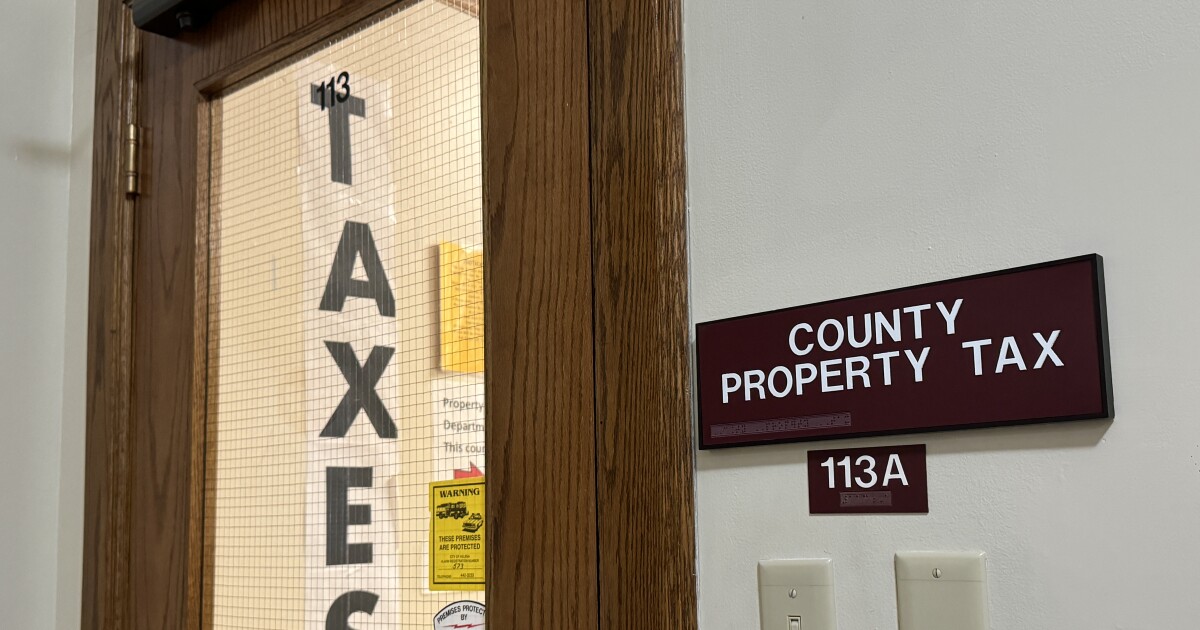
HELENA — For months, state lawmakers and a state task force have been digging into Montana’s property tax system, and now, they’re moving closer to making some recommendations on possible changes.
Rising property taxes became a major political issue in Montana over the last year, after the state announced updated property assessments and many residents saw their home values spike. Since then, the Legislature’s Revenue Interim Committee has been conducting a study on property taxes, and Gov. Greg Gianforte convened a task force to work on addressing the issue.
On Monday, the Revenue Committee held a meeting in Helena, and they got an update on the task force’s work. Sen. Greg Hertz, R-Polson – who sits on both the committee and the task force – said subcommittees have been looking at ideas like requiring larger vote thresholds to pass local government levies, requiring all levies to go before voters for reapproval every ten years, and adjusting the inflation factor that caps how much local governments can raise in revenue from levies.
The task force is set to deliver a report to Gianforte by Aug. 15. Hertz said they’ll be planning for that report at their next meeting July 8, and that they’ll likely have draft recommendations out for public review by late July.
Committee members said they’re waiting to see what the task force recommends, as they consider what actions they want to take on their own.
“I just hope that committee has some clarity pretty soon so we can know what we think our role is in that whole process, too,” said Rep. Larry Brewster, R-Billings.
“Our clarity will be coming soon,” Hertz responded.
The committee also heard updates Monday on a working group led by the Montana Department of Revenue that has been looking at potential changes to how tax rates are set for agricultural land – specifically, how landowners qualify for certain exemptions and reduced rates.
DOR leaders said the current system had created inequities between landowners. They presented three proposed bills Monday: one that would eliminate a land classification that created significantly different tax liabilities based on a parcel’s size, one that would adjust how the state values homes on agricultural land, and one that would require owners of large properties to demonstrate they’re actively using land for agricultural purposes to qualify for a preferential tax rate.
“The purpose of that is for some of these larger properties that have been purchased – say, a 20,000, 30,000-acre ranch – trying to ensure that, if it’s receiving the preferential tax treatment for ag classification, it’s actually being used in an agricultural capacity and not being used just for someone’s recreational playground,” said Bryce Kaatz, bureau chief of DOR’s Property Assessment Division.
In public comment, the committee heard from some people supportive of taking a closer look at these changes and others concerned about potential unintended consequences for agricultural landowners. Committee members decided to delay action and dig deeper into the possible recommendations at their meeting in August, to take a closer look at the impacts.
“There are some significant inequities that exist, and we need to make sure we do everything within our power to set up a predictable, fair and equitable system,” said Rep. Mark Thane, D-Missoula, who sits on the committee and the working group.



The Montana Lottery offers multiple draw games for those aiming to win big.
Here’s a look at June 19, 2026, results for each game:
Winning Mega Millions numbers from June 19 drawing
13-16-21-26-50, Mega Ball: 12
Check Mega Millions payouts and previous drawings here.
Winning Big Sky Bonus numbers from June 19 drawing
05-12-14-30, Bonus: 03
Check Big Sky Bonus payouts and previous drawings here.
Winning Millionaire for Life numbers from June 19 drawing
02-20-28-51-54, Bonus: 02
Check Millionaire for Life payouts and previous drawings here.
Feeling lucky? Explore the latest lottery news & results
When are the Montana Lottery drawings held?
- Powerball: 8:59 p.m. MT on Monday, Wednesday, and Saturday.
- Mega Millions: 9 p.m. MT on Tuesday and Friday.
- Lucky For Life: 8:38 p.m. MT daily.
- Lotto America: 9 p.m. MT on Monday, Wednesday and Saturday.
- Big Sky Bonus: 7:30 p.m. MT daily.
- Powerball Double Play: 8:59 p.m. MT on Monday, Wednesday, and Saturday.
- Montana Cash: 8 p.m. MT on Wednesday and Saturday.
- Millionaire for Life: 9:15 p.m. MT daily.
Missed a draw? Peek at the past week’s winning numbers.
This results page was generated automatically using information from TinBu and a template written and reviewed by a Great Falls Tribune editor. You can send feedback using this form.
Montana
Montana State doctoral student awarded national research service grant for gut microbiome, arsenic research


-

 News3 minutes ago
Video: The Sacred Catholic Site Where Trump Wants a Border Wall
-

 Health25 minutes ago
The Mental Trick That Ends Compulsive Eating and Makes Weight Loss Easier
-
 Lifestyle40 minutes ago
Judy Blume says she’s done writing: ’50 years is enough!’
-

 Education43 minutes ago
Ruth Bader Ginsburg, Booker T. Washington and 6 Other Americans Who Shaped U.S. History
-

 Technology48 minutes ago
Moves of the Diamond Hand is an unfinished, irresistibly weird dice-based RPG
-

 World55 minutes ago
Man charged with attempted murder, released after allegedly forcing toddler into crocodile enclosure at zoo
-

 Politics57 minutes ago
Trump says Iran missiles ‘aren’t the problem’ after White House made them central to war rationale
-

 Health1 hour ago
Popular weight-loss drugs linked to unexpected male fertility benefit

