Montana
Montana Republicans gather for kickoff event in Great Falls


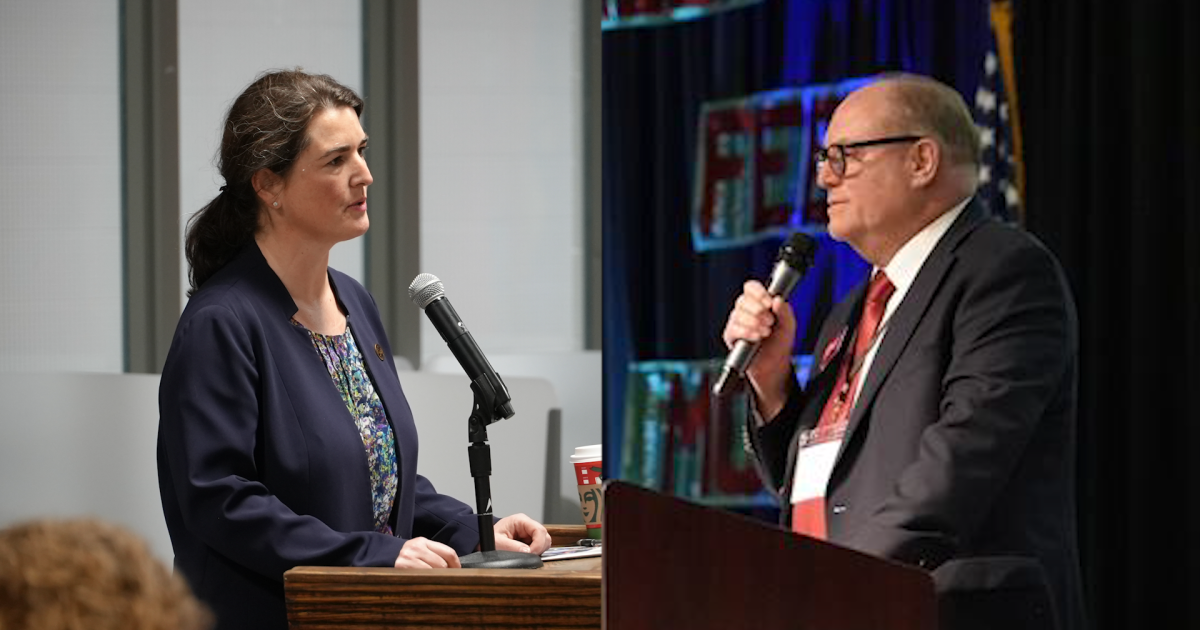
Republicans from across Montana gathered in Great Falls on Friday to kick off the 2026 campaign cycle, highlighting taxes and judicial reform as issues the party is looking to address.
The Montana GOP Winter Kickoff is a two-day event and includes campaign training, networking opportunities and discussion. An inter-party debate over property taxes is set for Saturday afternoon, an issue that has divided Republicans in the state.
Multiple guest speakers, including U.S. Rep. Ryan Zinke and Robert Natelson, a constitutional scholar at the Federalist Society, spoke on Friday afternoon. Gov. Greg Gianforte and Judge Dan Wilson, running for a Supreme Court seat, are expected to speak on Friday night.
Natelson, appearing remotely, spoke about Constitutional Initiative 132, which would change the state’s constitution to protect a nonpartisan judiciary. He is a former University of Montana law professor and twice ran for governor.
The state supreme court has been partisan in favor of Democrats, Natelson said, echoing a Republican theme in the Montana Legislature.
“The fault here is not with the legislature,” Natelson said Friday. “Republican legislators have not been deliberately or inadvertently passing unconstitutional bills. The problem arises because the courts are both misinterpreting the state constitution and because they are ignoring their own rule that democratically adopted laws must be sustained unless they’re proved unconstitutional beyond a reasonable doubt.”
Natelson then launched into examples of overturned bills, several of which dealt with LGBTQ+ issues and others regarding voting laws.
Republicans have tried to legislate bathroom use, transgender athletes and medical treatment for minors with the bills, saying they’re protecting women, but human rights activists have decried some legislation as “devastating” to that community.
Courts have overturned or paused some of the bills, calling several — including SB 99, a ban on gender-affirming care, and another, House Bill 121, dealing with who can go in what bathroom — “discriminatory.”
However, Republicans have also praised certain decisions by state courts, including recently when Judge Christopher Abbott, a Lewis and Clark County District Court judge, ruled for the state party in a decision that said it had the right to strip voting rights from more moderate members of the party.
Montana GOP Chairman Art Wittich spoke on that during Friday remarks.
“It’s not very often you get a district court judge from Helena, Montana, to rule for Republicans,” Wittich said.
As a rule, Republicans see a judiciary stacked against their agenda.
“The attack of the Montana Legislature by leftist litigators and the state judiciary is unprecedented in its scope and audacity anywhere in the United States, anytime in history,” Natelson said.
Natelson went on to point to North Carolina as an example for Montana Republicans. The state switched to partisan judge races, and that state’s supreme court flipped to a Republican majority in two election cycles, he said.
“I urge you to consider CI-132, against that backdrop,” Natelson said.
Zinke, meanwhile, spoke of what President Donald Trump has done during his first year back in office, speaking about immigration, gas prices and decried “fraud, waste and abuse” while pointing to Minnesota.
He also signaled his support for the SAVE Act, which would require some form of proof of citizenship to vote, which could include a birth certificate or passport.
Zinke pointed to a California policy that allows those without proof of legal presence to obtain a driver’s licence.
“You can’t vote twice, and you have to show an ID, a Real ID, in order to vote,” Zinke said of the SAVE Act. “Now in California, you can get a California driver’s license, and you can be illegal. So that’s why you have to show the US citizen ID. You have to show that you’re actually a citizen.”
Advocates of the California policy have pointed to its impacts helping immigrants find better jobs, helping the economy and less criminalization of their daily lives.
Zinke said he is a supporter of NATO, but wants other countries to “pay their share.” He also said progressives are angry, going on to say he hoped differences could be settled over “a beer or a root beer.”
“Sometimes we go across Montana and the other side is angry,” Zinke said. “They’re angry because their world that they thought was being created, DEI and men playing women’s sports, and everyone equal, not on the basis of hard work and merit, but just equal in checks in the mail. You know it’s being crushed under Trump, and I’m happy it’s being crushed.”
The Montana Republican Legislative Campaign Committee also held a brief press conference to introduce candidates, with Wittich, Sen. Greg Hertz, of Polson, and House Speaker Brandon Ler, from Savage, all speaking.
“There’s some crazy ideology that the Democrats are pushing, and so the Republicans have responded to that, but as far as general themes, it’s taxing and spending,” Wittich said. “It’s the same old thing.”





HELENA, Mont — Gov. Greg Gianforte is backing a new effort to keep data centers from driving up Montanans’ power bills.
This week, Gianforte announced Montana is signing on to the Ratepayer Protection Pledge — an initiative endorsed by President Trump.
Several major technology companies like Amazon, Google, Meta, Microsoft, OpenAI, Oracle, and XAI first signed the pledge back in March.
The pledge comes as data center development continues to grow — raising questions about how much new energy will be needed and who will pay for it.
NBC Montana spoke with Julia Haggerty, professor of geography and department head of earth sciences at Montana State University, about whether Montana’s power grid is ready for that growth.
“Not without resolution of significant transmission bottlenecks and massive amounts of new generation. So, while our grid is adequately, relatively adequately equipped to serve the needs of our current load base, it’s definitely not equipped to accommodate the new demands without a lot of expansion,” she said.
According to the pledge, data center developers will pay for new power generation, and infrastructure needed to support their operations.
“It does align with ongoing regulatory efforts to ensure that the cost of new generation associated with data centers is borne by the developers of those data centers and not customers,” Haggerty said.
The governor’s office says Gianforte’s support of the pledge is designed to encourage responsible data center investments while protecting Montana ratepayers from long-term costs.

The Montana Lottery offers multiple draw games for those aiming to win big.
Here’s a look at July 7, 2026, results for each game:
Winning Mega Millions numbers from July 7 drawing
02-31-35-36-63, Mega Ball: 12
Check Mega Millions payouts and previous drawings here.
Winning Big Sky Bonus numbers from July 7 drawing
09-21-24-29, Bonus: 15
Check Big Sky Bonus payouts and previous drawings here.
Winning Millionaire for Life numbers from July 7 drawing
27-43-48-49-50, Bonus: 02
Check Millionaire for Life payouts and previous drawings here.
Feeling lucky? Explore the latest lottery news & results
When are the Montana Lottery drawings held?
- Powerball: 8:59 p.m. MT on Monday, Wednesday, and Saturday.
- Mega Millions: 9 p.m. MT on Tuesday and Friday.
- Lucky For Life: 8:38 p.m. MT daily.
- Lotto America: 9 p.m. MT on Monday, Wednesday and Saturday.
- Big Sky Bonus: 7:30 p.m. MT daily.
- Powerball Double Play: 8:59 p.m. MT on Monday, Wednesday, and Saturday.
- Montana Cash: 8 p.m. MT on Wednesday and Saturday.
- Millionaire for Life: 9:15 p.m. MT daily.
Missed a draw? Peek at the past week’s winning numbers.
This results page was generated automatically using information from TinBu and a template written and reviewed by a Great Falls Tribune editor. You can send feedback using this form.
-
Business1 minute ago
Commentary: Trump wants to let companies make fewer disclosures, thus keeping investors in the dark
-
 Entertainment8 minutes ago
Justin Baldoni and wife break silence after ‘It Ends With Us’ legal battle with Blake Lively
-
 Lifestyle11 minutes ago
A meal with an animated Mona Lisa? Immersive dining goes high tech — but will L.A. eat it up?
-
 Politics16 minutes ago
Nexstar launches its first digital subscription service with The Hill Insider, aimed at political junkies
-
 Science23 minutes ago
Not everyone is leaving California. A new commercial battery maker just landed in Sacramento
-
 Sports26 minutes ago
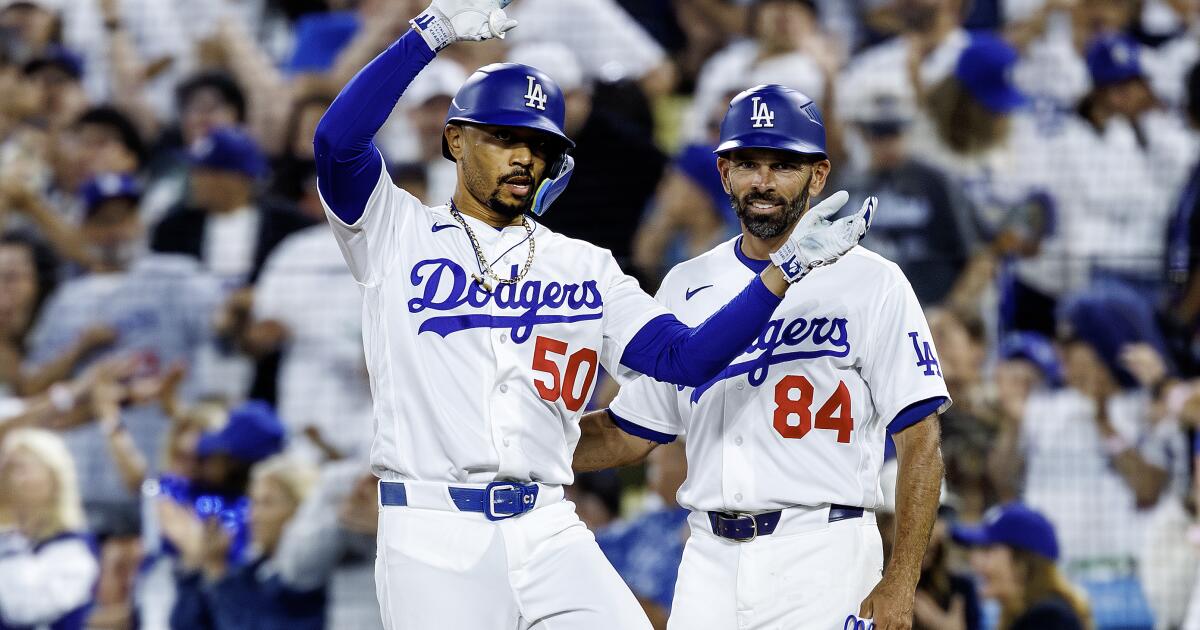
Mookie Betts’ eighth-inning single gives Dodgers the win over the Rockies
-
World38 minutes ago
From sewers to swimming sites: how Europe's cities reclaim their rivers
-

 News1 hour ago
Three more people charged with damaging Reflecting Pool after Trump’s multimillion-dollar restoration | CNN Politics


