Connect with us

Northeast

Trump motions to have judge in New York civil fraud case recused

Published

on

Trump motions to have judge in New York civil fraud case recused
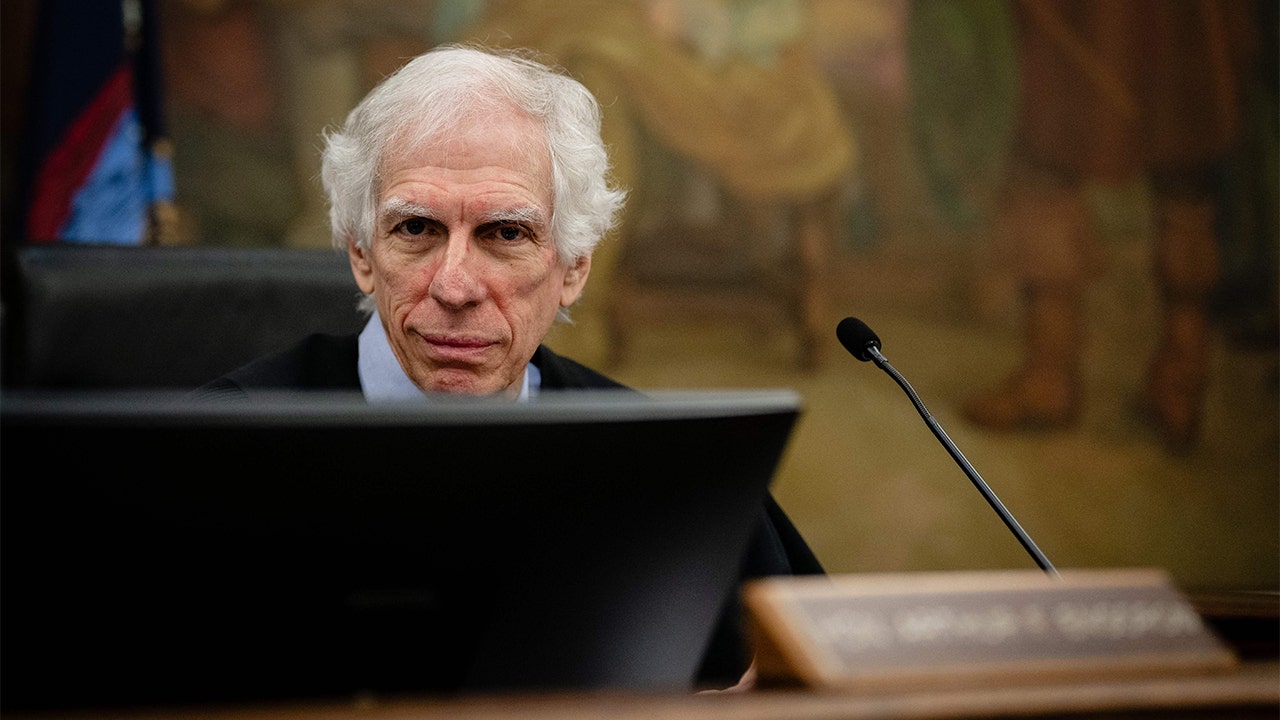
Lawyers for former President Trump have filed a new motion in his New York civil fraud case alleging that the judge engaged in “prohibited communications” and should recuse himself. 

In a motion filed with the New York State Supreme Court, Trump’s lawyers accuse Judge Arthur Engoron of engaging in actions “fundamentally incompatible with the responsibilities attendant to donning the black robe and sitting in judgment.”

That action refers to a conversation Engoron allegedly had with New York City real estate attorney Adam Leitman Bailey “regarding the merits of this case, the permissible scope of the New York State Attorney General’s and this Court’s own authority under Executive Law… and the consequences of this Court’s decision on business in the State.”

“The New York Code of Judicial Conduct exists to ensure that litigants are afforded a fair and impartial trial. Justice Engoron’s communications with Attorney Adam Leitman Bailey regarding the merits of this case, however, directly violate that code and demonstrate that Judge Engoron cannot serve as a fair arbiter. It is clear that Judge Engoron should recuse himself immediately,” Alina Habba, spokesperson for Trump, said in a statement. 

TRUMP POSTS $175M BOND IN NY CIVIL FRAUD CASE, AVERTS ASSET SEIZURE

Advertisement

Justice Arthur Engoron presides over the civil fraud trial of the Trump Organization at the New York State Supreme Court in New York City on Nov. 13, 2023. (Erin Schaff/Pool/AFP via Getty Images)

According to the filing, Bailey told ABC in an interview that he had tried to advise Engoron weeks before the judge’s decision. 

“Although Mr. Bailey claims that President Trump was not mentioned by name in the conversation, when asked whether ‘it was obvious that [his] input was related to this case,’ Mr. Bailey stated ‘well[,] obviously we weren’t talking about the Mets,’” the filing says. 

Engoron in February found Trump liable for more than $350 million in damages in the civil fraud case brought against him by New York Attorney General Letitia James.

James’ case also targeted Trump’s family and the Trump Organization. Engoron ruled that Trump and defendants were liable for “persistent and repeated fraud,” “falsifying business records,” “issuing false financial statements,” “conspiracy to falsify false financial statements,” “insurance fraud” and “conspiracy to commit insurance fraud.”

Advertisement

The judge criticized Trump’s behavior during the trial, saying that he “rarely responded to the questions asked, and he frequently interjected long, irrelevant speeches on issues far beyond the scope of the trial.”

TRUMP UNLOADS ON JUDGE, NYAG FOR TARGETING HIM ‘FOR POLITICAL REASONS’ DURING UNPRECEDENTED TESTIMONY

New York Attorney General Letitia James speaks during a press conference in New York on Sept. 21, 2022. (AP Photo/Brittainy Newman, File)

According to the ABC report cited in the filing, a spokesperson for the court said: 

“[N]o ex parte conversation concerning this matter occurred between Justice Engoron and Mr. Bailey or any other person. The decision Justice Engoron issued February 16 was his alone, was deeply considered, and was wholly uninfluenced by this individual.”

Advertisement

The filing notes that since those allegations have come to light, “it is reported that the New York State Commission on Judicial Conduct has launched an investigation into this Court’s conduct” and that “at least a dozen news outlets have reported on both the alleged ex parte communication and the pending investigation.”

“The law is clear that any communication outside of the presence of the parties or their lawyers must be strictly scrutinized,” lawyers for Trump argue in the filing. “The Court is obligated to avoid attempted ex parte communications, and if an ex parte communication does occur, the Court should, at minimum, promptly notify all parties of the communication.”

“The appropriate remedy for the ex parte communication is notification to the parties and recusal,” it states. 

“Here, it is beyond dispute that neither Defendants nor the Attorney General were present during the purported communication with Mr. Bailey. Nor did this Court ever notify either party that the purported communication took place, which would have at least permitted an opportunity for comment on the substance of the conversation, as conveyed by this Court,” the filing states. 

“Worse yet, Mr. Bailey’s account indicates that this Court not only permitted but welcomed such prohibited communication. According to Mr. Bailey, this Court was an active participant in a conversation concerning the merits of the case, wherein this Court asked Mr. Bailey a ‘lot of questions.’” 

Advertisement

BILL MAHER GRILLS ESPER FOR NOT BACKING BIDEN AFTER CALLING TRUMP A ‘THREAT TO DEMOCRACY: A ’BINARY’ CHOICE

Former President Trump arrives at Trump Tower in New York on May 30 after being found guilty on 34 counts of falsifying business records in the first degree. (Felipe Ramales for Fox News Digital)

Bailey did not immediately respond to Fox News Digital’s request for comment. 

Notably, Bailey years ago successfully sued then-real estate mogul Trump over a condo dispute. 

Advertisement

“For the foregoing reasons, Defendants respectfully request that this Court recuse itself, or, in the alternative, set the matter down for an evidentiary hearing, and grant any such other and further relief it may think proper,” the filing concludes. 

Fox News Digital’s Bradford Betz and Brooke Singman contributed to this report. 

Read the full article from Here

Advertisement
Continue Reading
Click to comment

Leave a Reply

Your email address will not be published. Required fields are marked *

This site uses Akismet to reduce spam. Learn how your comment data is processed.

Boston, MA

Poor Clares’ monastery a case study in why Boston is short on housing – The Boston Globe

Published

on

Poor Clares’ monastery a case study in why Boston is short on housing – The Boston Globe


But the story of the Poor Clares’ monastery — or as it’s known on the books of the Boston Planning Department, 920 Centre Street — is, at least for now, a case study on how housing doesn’t get built in this city.

It’s a story about how one midsized project with everything going for it — a world-class architect, a brilliant landscape designer, and a developer willing to make one compromise after another to the size and layout of the plan — still can’t move the needle in the face of one powerful opponent.

Advertisement

Well, make that one powerful opponent who has the ear of City Hall.

Faced with dwindling numbers in their order (they were down to 10 in 2022) and a Vatican mandate to consolidate, the sisters decided to sell their 2.8-acre parcel and the aging monastery building to developer John Holland. The building, which they had occupied since 1934, was expensive to heat and in need of extensive repairs.

They relocated to Westwood in 2023, hoping to expand those quarters to accommodate another 10 nuns from around the country as soon as the sale of the Jamaica Plain property became final, contingent on the approval of its redevelopment.

They’re still waiting.

The former monastery is neighbor to the Arnold Arboretum, land owned by the city but under a renewable 1,000-year lease to Harvard University. And no question, the 281-acre parcel is a tree-filled treasure for researchers and picnickers alike. Just try getting near the place on Lilac Sunday.

Advertisement

But the Arboretum, or rather its director, William Friedman, a Harvard evolutionary biology professor, has emerged as a powerful foe.

“The development has been part of the city’s planning process for nearly five years and has undergone several revisions,” Sr. Mary Veronica McGuff, the order’s abbess, wrote in a letter to Mayor Michelle Wu in January and shared with the editorial board. “We are very disappointed to learn that the main obstacle is … the Arnold Arboretum.”

She revealed that the order had earlier offered to sell the property to the Arboretum, but was rebuffed.

“It’s upsetting that our progress is now being hindered by an institution that declined the opportunity to take stewardship of the land and is now making unreasonable demands for its redevelopment,” she said in the letter.

In fact, its market rate condo component, once slated to be five stories high, has been reduced to four stories. Those 38 senior rental units planned for the monastery building will include 25 affordable units.

Advertisement

Project architect David Hacin, winner of the Boston Preservation Alliance’s 2022 President’s Award for Excellence, is equally bewildered.

“I don’t understand how a project that is so good on so many levels is being held up for years, literally, over asks that seem, to me, completely unreasonable,” Hacin told Globe business reporter Catherine Carlock. “If we can’t build five-story buildings, how are we going to solve the housing crisis?”

How indeed.

The developers have done shadow studies, a sunlight analysis, and tree root studies to convince Arboretum officials that the planned housing would do no damage to the magnolia tree roots on the perimeter of Harvard’s grounds, which seem to be their main bone of contention.

The project’s landscape architect Mikyoung Kim has surely not acquired her international reputation for “ecological restoration” by murdering magnolia trees.

Advertisement

Friedman has met with Boston’s planning chief, Kairos Shen, but as of Thursday the sisters have not yet been granted a similar opportunity. Nor have they heard from either Wu or Shen (who was copied in on the Jan. 12 letter) since they made their appeal for help “in finding a solution that allows this project to move forward and for our community to finally settle into our new home.”

In a statement to the Globe editorial board, Wu said, “Large properties like 920 Centre Street are significant housing sites for Boston, and we are working actively with all parties to advance a plan that would deliver homes our city needs.”

For the past year, experts have been warning that the slumping number of building permits in Greater Boston — down 44 percent last year from four years ago — do not bode well for an increase in the future housing supply. That dearth in supply is driving up prices and rents.

And while the Wu administration is quick to blame President Trump’s tariffs and rising costs for the construction slump, it fails to look in the mirror. Enabling the kind of Not In My Back Yard obstructionism that is keeping a good project on the drawing boards for years will never get Boston the kind of housing it needs to keep pace with demand and allow this city to thrive.


Editorials represent the views of the Boston Globe Editorial Board. Follow us @GlobeOpinion.

Advertisement


Source link

Continue Reading

Pittsburg, PA

Plum Borough parents charged with supplying alcohol for underage drinking party

Published

on

Plum Borough parents charged with supplying alcohol for underage drinking party


Two parents are facing charges after police say more than 60 teenagers were drinking at a large party in their Plum Borough home.

According to court paperwork, Ian and Corrine Dryburgh have been charged with endangering the welfare of children, corruption of minors, and furnishing liquor to minors stemming from the incident that happened at a home in Plum Borough late last month.

Police said that officers went to the home after receiving a tip about a large party involving high school aged children.

Advertisement

When officers arrived at the home, they found numerous teenagers, empty beer cans and empty seltzer cans, and multiple bottles of vodka.

The parents told police that a birthday party for their 17-year-old daughter got out of hand and that some kids has been kicked out, but more came and they didn’t know what to do.

According to the criminal complaint, officers said they had been called to the home two previous times for similar reasons. 

Police said a total of 66 underage kids were at the home.

Court records show that both parents have been cited via summons and preliminary hearings are scheduled for mid-April. 

Advertisement


Source link

Advertisement
Continue Reading

Connecticut

Connecticut to receive $154 million for rural health

Published

on

Connecticut to receive 4 million for rural health


Connecticut is set to receive more than $154 million aimed at improving health care in rural communities.

The funding comes from the Centers for Medicare & Medicaid Services’ Rural Health Transformation Program, according to a community announcement.

The Connecticut Department of Social Services will lead the initiative, partnering with other state agencies to implement projects across four core areas: population health outcomes, workforce, data and technology, and care transformation and stability, according to the announcement.

Advertisement

The program will include several innovative projects, such as a mobile clinic pilot with four primary care and four dental vans, a health workforce pipeline through the Area Health Education Center and UConn Health Center, and community health navigators.

“Rural Connecticut has unique challenges, and its residents deserve the same access to high-quality care and support as anyone who lives anywhere else,” Lamont said. “This investment allows us to tackle those challenges head-on – from expanding mental health services and building a stronger health care workforce to modernizing our technology infrastructure and connecting residents to the services they need. This is about making sure every corner of Connecticut has the opportunity to thrive.”

The program was developed through extensive public engagement, including more than 250 written comments, meetings with health care providers, local government officials and community organizations, as well as in-person and virtual listening sessions held across the state, according to the announcement.

Andrea Barton Reeves, commissioner of the state Department of Social Services, highlighted the program’s long-term vision.

Advertisement

“This program reflects our commitment to building systems that work for rural residents over the long term,” she said in the release. “We are excited and grateful to CMS for this opportunity to make sure that our investments are coordinated, impactful, and built to last.”

The program aims to bring health care closer to rural residents while supporting the workforce that provides care, said Dr. Manisha Juthani, commissioner of the state Department of Public Health.

“Every person in rural Connecticut deserves good health care close to home, and the people who provide that care deserve real support too,” Juthani said. “This funding helps us bring care to where people are and build the healthcare workforce our communities need. When we invest in both, we give everyone a better chance at staying healthy.”

Additional information about the Rural Health Transformation Program, including opportunities for public engagement, will be made available as implementation proceeds.

For more information, visit the Connecticut Department of Social Services website at ct.gov/dss.

Advertisement

This story was created with the assistance of Artificial Intelligence (AI). Journalists were involved in every step of the information gathering, review, editing and publishing process. Learn more at cm.usatoday.com/ethical-conduct.


Source link

Continue Reading

Trending
