New Jersey
States struggle with unreliable federal funding for making sure elections are secure • New Jersey Monitor


WASHINGTON — The federal government has sought to bolster election security for years through a popular grant program, but the wildly fluctuating funding levels have made it difficult for state officials to plan their budgets and their projects.
Rising misinformation and disinformation about elections, often fueled by conspiracy theories, as well as threats against election workers, make the grants especially important, according to elections officials.
But U.S. House Republicans are seeking to eliminate funding for election security grants — known as Help America Vote Act, or HAVA grants — in this year’s appropriations process, a move they unsuccessfully attempted last year as well.
“We continue to unnecessarily risk the very integrity of our elections and American democracy,” Georgia Democratic Rep. Sanford Bishop said Thursday during committee debate on the funding bill.
Bishop, a senior member of the House Appropriations Committee, said he was “concerned about the outdated and the insecure voting systems around the country that pose a very, very serious threat to our national security and to our democratic system.”
“It is irresponsible to ignore the wake-up call,” Bishop added. “Our nation’s election systems are currently and constantly under attack by foreign actors that are threatening our democratic values.”
The bill was approved by the GOP-led House Appropriations Committee with no money in it for the grants.
Gideon Cohn-Postar, legislative director at Issue One & Issue One Action, said during an interview with States Newsroom that while the grants have traditionally been bipartisan, several factors have affected backing for the program in recent years.
“It remains something that many Republicans in both the House and the Senate support,” Cohn-Postar said. “But it’s also been caught up, I think, in some of the false information about elections that began to spread in 2020.”
Former President Donald Trump, now the presumptive Republican presidential nominee, has continued to falsely claim that the 2020 election was stolen.
Issue One writes on its website that the organization strives to “unite Republicans, Democrats, and independents in the movement to fix our broken political system and build an inclusive democracy that works for everyone”.
Grant funding decreases
Congress approved $55 million in election security grants during the last appropriations process, which wrapped up this spring. That action came after the Republican-controlled House, which proposed zero dollars, conferenced with the Democratic-controlled Senate, which had proposed $75 million in funding.
That final funding level was a decrease from the $75 million that Congress approved in both fiscal 2023 and fiscal 2022.
Congress didn’t approve any election grant funding in the annual appropriations bill during fiscal year 2021. However, that followed lawmakers’ allocation of $425 million in the prior year’s bill as well as an additional $400 million in one of the COVID-19 emergency spending bills.
Cohn-Postar said that several states have sought to make their HAVA grants last more than one year by spending less than they receive, or saving the money up for bigger projects.
Louisiana, for example, hasn’t spent any of its election security grant funding since 2018, in preparation for overhauling its election system. New Hampshire passed a state law that collects the grant funding in an endowment and then only spends a portion of that each year.
But that “careful” budgeting and uncertainty about how much grant funding Congress might provide in the next year has led federal lawmakers to look at states’ use of the grants skeptically, Cohn-Postar said.
“The key thing we’ve come across … is about half of the states have only spent about half of their HAVA grants,” Cohn-Postar said. “And that gets brought up in every conversation that Congress has about these grants. They say, ‘Hey, why should we appropriate more if you haven’t spent?’”
Congress, he said, sometimes uses states’ “careful, thoughtful budgeting as an excuse to not give them money.”
Republicans in Congress are also looking to reduce federal spending overall and have made cuts throughout many of the dozen annual spending bills, including the Financial Services bill, which includes the HAVA grants.
‘Incredibly important’ in Maine
Maine Secretary of State Shenna Bellows said during an interview the grants “have been incredibly important, especially in the absence of sustainable elections funding from the federal government.”
“We have seen the rapid evolution of cybersecurity threats and threats against election infrastructure over the last several years,” Bellows said. “As the threats evolve, so must our preparedness. The election security grants are fundamental to our ability to make investments in improvements in our central voter registration system and cybersecurity protections for that system.”
Congress’ inability or unwillingness to create a predictable, stable funding program for states to administer federal elections is “unfortunate,” she said.
“We are very proud that Maine has always enjoyed safe, free and secure elections,” Bellows said. “But make no mistake, the lack of sustainable ongoing federal funding is a potential vulnerability in the future.”
Washington state Elections Director Stuart Holmes said in an interview he plans his annual budget around not getting HAVA election security grants and is pleasantly surprised when Congress does provide the funding.
“Through my entire career, there’s only been two rounds of HAVA that were significant investments into elections,” Holmes said. “So it’s a great surprise to get an extra million dollars at the beginning of the year. But it does make it pretty much impossible to prepare and plan for anything if you have to spend it.”
The grants don’t expire at the end of the fiscal year and the federal government doesn’t claw back unspent funding, allowing the states to take different approaches to how they use the money.
Holmes said during his interview with States Newsroom that the funding approved in fiscal 2020 allowed the state to “create an entire team of cybersecurity professionals to be dedicated to protecting our infrastructure.”
“In the state of Washington, we have a centralized voter registration and election management system, and never before had we had dedicated election professionals that are watching the logs, preparing our system, testing our system and collaborating with other professionals to do testing,” Holmes said. “So we’re in a better position than we’ve ever been.”
Even so, he said, “local election officials would certainly look forward to a stable funding source from the federal government as it relates to federal elections.”
New Hampshire election fund
New Hampshire Secretary of State David M. Scanlan said when Congress passed the HAVA program in 2002, it told states the funding was primarily to set up a statewide voter registration database, ensure every polling place had accessible voting equipment, provide poll workers with training and set up voter education programs.
The New Hampshire Legislature at the time told the secretary of state to use the initial allocation from Congress to meet the requirements, but then to establish an election fund with the remaining money.
Originally, the secretary of state could use one-twentieth of the total funding in the account for annual costs of maintaining the federal mandates, but that is currently one-twelfth of the total amount in the fund.
“New Hampshire has been doing a good job with the money that we have, but there’s no question that the funds have helped us put in place security measures for our electronic systems,” Scanlan said.
The state, he said, has used its federal election security grants to hire vendors that specialize in keeping the electronic systems safe.
When New Hampshire set up a new voter registration database, the state used the funding to ensure none of the software included anything nefarious.
“We’ve really been making sure that the systems that we’re building are clean and that there’s not something malicious lurking in the shadows,” Scanlan said. “We’ve taken some really good steps that give me real confidence that our systems are in good shape.”
Advocating for ‘consistent, reliable federal funding’
JP Martin, deputy communications director for the Arizona secretary of state, declined States Newsroom’s request for an interview with the secretary of state, offering only to provide written responses to questions on HAVA election security grants.
Martin wrote in an email that “fluctuating levels of federal funding have significantly impacted our strategic planning and budgeting.”
“The uncertainty of future allocations compels us to be cautious with expenditures, focusing on priorities such as enhancing physical security measures for voting equipment,” Martin wrote. “For instance, securing equipment in cages—now requires a liftgate-equipped truck due to their increased weight—demonstrates the challenges of managing technological and budgetary constraints under limited HAVA funding.”
Congress declining to provide election security grants in the future “could significantly strain Arizona’s election infrastructure,” he wrote.
“Currently, the state is under a hiring freeze, and our focus remains on supporting counties, especially with the recent changes such as the date of the primary and legislation extending ballot curing to weekends,” Martin wrote. “We are prioritizing increased cybersecurity training and advocating for consistent, reliable federal funding to ensure the smooth administration of elections, emphasizing the necessity of sustained financial support from Congress.”


A police investigation took place at a Walmart in Cherry Hill, New Jersey on Wednesday morning and shoppers may have noticed an increased presence of officers at the shopping center, officials said.
On social media, the Cherry Hill Police Department alerted residents that an investigation was underway in a Walmart, located along Route 38 in Cherry Hill, New Jersey, at about 9 a.m. on Wednesday.
However, officials did not immediately detail the cause of this increased police presence, other than saying an investigation was underway and “the scene has been secured.”
Police were asking people to avoid the area, if possible, to allow officers the ability to complete this investigation.
However, as of about 10 a.m., police said on social media that the incident was resolved and there was no threat to the public.
OFFICIAL UPDATE: INCIDENT RESOLVED
The police activity at Walmart (500 Route 38) has been resolved without incident. There is no threat to the public.
Thank you to residents and motorists for their patience and cooperation while officers worked in the area. #CherryHillPD pic.twitter.com/668By2Ttht
— Cherry Hill Police Department (@CherryHillPD) July 8, 2026
As of about 10:15 a.m., police had not provided further information on the nature of this investigation, nor did they say if anyone was arrested through the course of this incident.
NBC10 is working to learn more.
This is a breaking news story. It will be updated as new information becomes available.

WILDWOOD, N.J. (WPVI) — Multiple people were rescued from the ocean off Wildwood, New Jersey, over the weekend, and the rescue was caught on video.
It all happened around 7:45 p.m. Sunday on the beach near Schellenger Avenue.
In total, officials say nine people were saved.
The Wildwood Beach Patrol, which was among the responding agencies, posted video of the rescue on Facebook.
A woman who witnessed it all said she was struck by the act of bravery she witnessed.
“What I just experienced was just the most beautiful thing ever. These people just came out of nowhere – I’m talking about like Baywatch – out of nowhere, come out there and save those people in that water. It was so beautiful,” she said.
Officials are reminding beachgoers to only swim when lifeguards are present.
Copyright © 2026 WPVI-TV. All Rights Reserved.
New Jersey
Authorities offer $1,000 reward for tips in brutal stabbing of New Jersey mom | Fox News Video

Fox News national correspondent Bryan Llenas reports the latest details on the tragic murder of 35-year-old psychotherapist Brooke Hanlon, who was found stabbed to death in her Chester, New Jersey home as police continue to search for a suspect.
Fox News national correspondent Bryan Llenas breaks down the investigation into the murder of 35-year-old psychotherapist and new mother Brooke Hanlon in Chester Township, New Jersey. One month after emergency medical personnel responded to an anonymous 4:30 p.m. 911 call reporting a laceration to her chest, local authorities and the Morris County Prosecutor’s Office still have not identified any suspects or made any arrests.
-

 Alaska6 minutes ago
Climate Change Is Helping an Invasive Predator Wreak Havoc on Iconic Alaskan Fish
-

 Arizona8 minutes ago
Arizona man pleads guilty after illegally living in forest for years among ‘1,000lbs of trash’
-

 Arkansas14 minutes ago
Army names intelligence facility for Arkansas Tech graduate
-

 California21 minutes ago
How California Effectively Legalized an Open-Air Sex Market
-

 Colorado23 minutes ago
Julian Lewis Says Deion Sanders’ Colorado ‘Wasn’t Really Looking at Defenses Much’ Last Season
-
 Idaho28 minutes ago
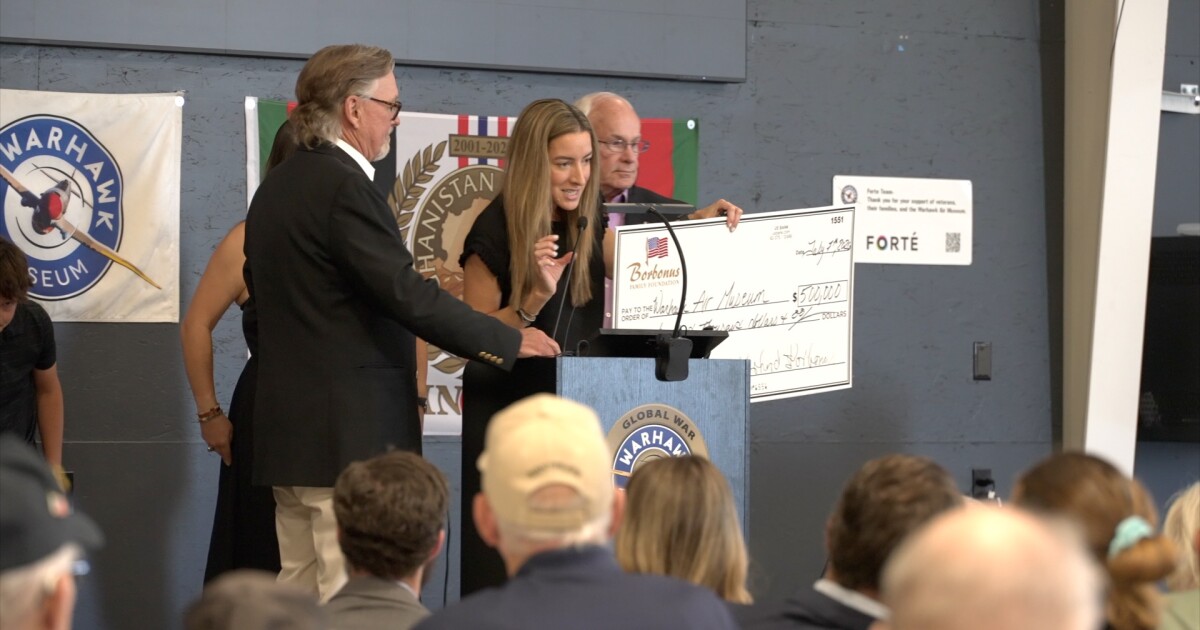
Warhawk Air Museum receives $500K grant honoring fallen Idaho soldier
-

 Connecticut29 minutes ago
Several beaches closed to swimming due to potential bacteria in the water
-

 Delaware36 minutes ago
Delaware Libraries Introduce Digital Literacy Specialists Program – State of Delaware News

