Get the latest Boston sports news
Receive updates on your favorite Boston teams, straight from our newsroom to your inbox.


Depending on who you ask, ranked choice voting can either reward extreme and wealthy candidates in elections or lead to a more publicly-palatable electoral process and encourage voter engagement.
The practice has grown in prevalence in recent elections – particularly in Alaska and Maine, plus Virginia, to some extent – entailing a hierarchical approach to election tallies. Several rounds of tabulation occur after voters are asked at the polls to choose their candidates in order of preference.
In the first round, totals for each candidate are tabulated, and the candidate with the fewest “first votes” is eliminated, and the “second votes” of that candidate’s supporters are added to the totals of the remaining candidates until a winner is decided.
A Republican former Alaska U.S. Senate candidate fell on the side of RCV critics, while a Republican former state lawmaker in Virginia credited it with leading to a political shakeup in his state. Democrats appeared similarly divided.
Democrats in Maine and New York have praised the system, while one Democratic governor appeared to throw up a potential roadblock in the way of his state’s implementation. He later stated that he would support the will of the people in a forthcoming ballot measure.
ALASKA SUES FEDS OVER ‘KNOWINGLY’ POLLUTED NATIVE LANDS
A ballot drop box in Atlantic City (AP)
Ballot measures implementing or banning RCV will appear in Oregon, Alaska, Nevada, Missouri and Colorado. Alabama, Louisiana, Mississippi, Oklahoma and Kentucky also have pre-emptively banned RCV.
Former Virginia State Del. Chris Saxman, a Staunton Republican who is now executive director at the free-enterprise non-profit Virginia Free, told Fox News Digital that RCV worked in the selective way it was implemented in his state.
During the 2021 gubernatorial sweeps, Virginia Republicans utilized RCV in their primary candidate selection process, which led to Glenn Youngkin winning the nomination.
Virginia Republicans voted to hold a convention rather than a primary that year.
After Youngkin was selected, Saxman told Fox News Digital, a consultant approached him at the convention to complain that supporters of perceptibly more conservative candidates had been stymied from attacking the nominee.
GAS CRISIS: ALASKA GOVERNOR SAYS ‘BIDEN IS SEARCHING FOR OIL ANYWHERE ON THE PLANET EXCEPT AT HOME’
“If it wasn’t for this damned ranked choice voting, we could have gone after Youngkin harder, but we couldn’t afford to alienate his voters,” the consultant complained, according to Saxman.
“I was like, ‘So, it’s a problem not to attack a fellow Republican?’,” he said, citing former President Reagan’s noted rule.
Saxman said that situation showed there is value in nuanced reforms to elections like the way the party utilized RCV.
“Complex systems reward small change,” he said, going on to claim that because of the surgical way Virginia Republicans implemented RCV, it led to a political earthquake that November.
Saxman noted the GOP had been out of power in Richmond since the Bush era, but now, suddenly, Youngkin, Lt. Gov. Winsome Sears and Attorney General Jason Miyares supplanted the Democratic establishment.
Saxman said national fundraising groups had largely dismissed Virginia’s governor’s race as a lost cause, but in part thanks to RCV, funding poured in after the Youngkin-Sears-Miyares ticket was announced.
Separately, in New York City, then-Mayor Bill de Blasio celebrated 2021’s contest as the “biggest ranked choice voting election in America,” while many of the competitive races fell during the Democratic primary.
IN THE ONLY STATE BORDERING RUSSIA, ALASKA GOVERNOR SAYS DEFENSES ARE STRONG
On the other side of the country, however, Alaska Republicans appeared ready to dispense with the recently-implemented system, which many blamed for the election of Rep. Mary Peltola, D-Alaska, in a solidly red state as a replacement for the late five-decade GOP mainstay Don Young.
Proponents of RCV in Alaska said in multiple reports that the new system worked in the 2022 race there, in that Peltola – a liberal – Sen. Lisa Murkowski, R-Alaska, – a moderate – and Gov. Mike Dunleavy – a conservative, all won races in the same election.
But Kelly Tshibaka, a Republican who ran for Murkowski’s seat in the nonpartisan primary that year, told Fox News Digital that Alaskans were fooled by proponents of RCV who claimed it would take dark money and extremism out of elections.
She noted how Peltola had prevailed after facing Republicans Nick Begich III – scion of a famous Alaskan political family – and former Gov. Sarah Palin.
Tshibaka said she fully supports the effort to get rid of RCV in the Last Frontier, as its repeal is poised to be a statewide ballot initiative in November pending a legal challenge to the measure.
She pointed to the failed candidacy of Al Gross, a Democrat-turned-Independent who, at times, led in the primary but dropped out. Tshibaka claimed that Gross had been forced from the ballot to make way for Peltola, who was to his left – and therefore claims that RCV quells extremism are unfounded.
WHAT IS RANKED CHOICE VOTING, THE NEW ELECTION PROCESS USED IN ALASKA?
Gross said at the time it was “just too hard to run as a nonpartisan candidate in this race” and that the country was “broken.”
Tshibaka also argued that the system leads to a much smaller pool of voters ultimately electing a candidate as other votes are canceled out in tabulation rounds.
“So, it’s very deceptive on how they sell it to the public,” she said, adding that 2022 is largely seen as the most negative election in the state’s history despite RCV being sold to voters as a moderating force.
“We are baiting the water for negativity. You might have a one-off anecdote here or there. However, what we saw in Maine and Alaska … we’re seeing an increase in extreme negativity.”
Judy Eledge, a former schoolteacher in the Arctic oceanside community of Barrow – or Utqiagvik – who is active in Alaskan conservative circles, said the RCV system has shown to be very confusing to voters:
“You basically don’t get your first choice of who you want to win, and it enables people that otherwise would never win anything,” said Eledge. “It gives them enough to win and basically just destroys the party system within the state when it comes to elections.”
Eledge also claimed that it allows candidates who have substantial outside financial support a leg up, artificially influencing second and third choices.
Rep. Mary Peltola (D-AK) speaks to supporters at a watch party on November 8, 2022, in Anchorage, Alaska. (Getty Images )
In Maine, the implementation of RCV paved the way for Democrat Jared Golden’s surprise 2018 upset over incumbent GOP Rep. Bruce Poliquin, marking the first large-scale test of RCV statewide.
Golden’s campaign told Fox News Digital that RCV is a “nonfactor” in his current race. “Like 2020, this will be a head-to-head race,” a spokesperson for the campaign said.
In response to criticisms, Peltola said that while RCV gets a lot of attention in Alaska, the true denominator is the open-primary system.
“We need more people willing to work with the other party, and Alaska’s system gives those candidates a chance. For instance, I wouldn’t have won a Democratic primary – I’m too conservative, and I talk about things that don’t just appeal to the Democratic base,” Peltola said.
“Open primaries and ranked-choice voting give a voice to the 64% of Alaskans that aren’t Democrats or Republicans.”
Read the full article from Here


Boston Red Sox
No games have been played, but the Red Sox’s series against the New York Mets is already off to a rocky start.
That’s thanks to a series of travel issues that caused a 17-hour delay from the time Boston was supposed to depart Chicago to the time it actually took off. The Red Sox should have left Illinois at 9:45 p.m. Eastern Time Thursday night, landing in New York around midnight.
Instead, the team took off at approximately 3 p.m. ET on Friday. They’ll land around 5 p.m., making it to New York just barely in time for their 7:15 p.m. game against the Mets.
The Boston Globe‘s Tim Healey and Alex Speier reported the delay, and their sources didn’t give any specific reason for the issues, just that Boston “encountered multiple plane issues in trying to continue to New York.”
As of 4 p.m. ET, the Red Sox-Mets game will continue as scheduled at 7:15 p.m. Friday. Sonny Gray is set to take the bump for Boston, which enters Friday an undefeated 6-0 on its recent road trip.
Receive updates on your favorite Boston teams, straight from our newsroom to your inbox.

The concept behind Street Fries is simple: everyone loves fries. Owner Eric Williams has yet to meet anyone who doesn’t light up at the idea of fried potatoes, especially when they’re fresh-cut and piled with toppings.
“From kids to grandma to anyone between, people can’t wait to have fries every day,” he said.
After launching a Pittsburgh-based food truck in 2021 — “gourmet fries that hit the streets,” as Williams described it — the business is expanding with a South Side storefront. Soft-opened on Wednesday, the new Street Fries location plans to serve both a day and late-night crowd, with a grand opening celebration planned for July 18.
A full menu of loaded fries ($10 to $24) includes the truck’s original offerings, top sellers and newer additions, along with a build-your-own fries option ($5 to $10) with a choice of meats, cheeses and sauces.
Everything on the menu has a story, Williams said. The North Sider, or hibachi fries ($20 to $24), topped with steak, shrimp and melted cheddar, came together on the fly after a customer requested the combination during an Allegheny City Brewing pop-up. Cubby’s Favorite ($14 to $16), spicy garlic Parmesan fries, was inspired by a wings-and-fries shop Williams frequented as a college student at Florida State University.
An original or “big fry” bag ($10 to $15) remains the most popular choice, offering seasoned fresh-cut fries and a choice of one sauce.
Inside the restaurant, a neon-lit mural features the truck’s mascot, Mr. Street Fries, by Pittsburgh artist Camerin “Camo” Nesbit, who also painted the Street Fries food truck.
The anime-inspired, sneaker-wearing mascot “is kind of a resemblance of myself,” Williams said. But over time, he’s come to think of Mr. Street Fries as the one guiding the business, with Williams serving as his right-hand man.
Street Fries began taking shape eight years ago while Williams, 38, served as a Peace Corps volunteer in Albania.
“I’ve always wanted to do something bigger than myself,” he said.
As a homesick volunteer making a modest monthly allowance, he started buying 50-pound bags of potatoes for $10. In the largely agricultural country, locals grew potatoes in their backyards, but had never tried deep-fried, crunchy American-style fries or American seasoning.
“I would just serve fries and season them up differently to try to give them and me something new,” Williams remembered. One day, he made a spice blend of curries, salt and pepper and tossed it on fries. An instant hit, the seasoned fries — which still resemble the “original” on Street Fries’ menu — endeared him to both his hosts and fellow expats and Peace Corps volunteers. Later, as part of his community development work, Williams cooked up chili cheese fries for a Halloween fundraiser, selling out after serving 600 teenagers.
“And I was like, ‘You know what? This should be a business,’” he said. “That’s when I really started to learn — I had a knack for engagement and marketing. I can listen to people and give them what they want.”
Shortly before his 30th birthday, Williams sketched the entire Street Fries concept in chalk across a 20-foot wall — an image he still thinks back on today.
After returning stateside, Williams felt that same guiding force again. A native Pittsburgher who graduated from Woodland Hills High School, Williams went to work for the Pittsburgh Mayor’s Office of Community Affairs. For a couple of years, he did double-duty holding Street Fries pop-ups on off-days and weekends while helping launch the City in the Streets block party program in 2023.
During the truck’s first three years, Williams worked 300 events across the region, including Pittsburgh’s Juneteenth celebration, Harambee Ujima Black Arts and Culture Festival in Homewood, and Bloomfield Little Italy Days. The idea of blending festivals, a food business and community development began to percolate.
Williams said he felt called to keep cooking.
“They loved the fries too much,” he laughed. “And I’m like, ‘How can I let this moment go?’… It felt good trying to build something.”
Though the idea of a permanent storefront was in the works eight months ago, Williams found his biggest stage yet when Street Fries became a food vendor during April’s NFL Draft — one of only 13 locals selected out of hundreds of applications.
Street Fries’ busiest single-day events served about 300 people, but during the Draft, a staff of 20 fed roughly 6,000 on opening day alone, ultimately using 5,000 pounds of potatoes.
“The Draft was the most monumental, huge, frightening thing ever, which you only can say after the fact,” Williams said. “But it was such a great opportunity that (I thought), let’s use this to catapult us even more.”
With the new brick-and-mortar restaurant on the South Side, Williams hopes to continue serving the community and plant even deeper roots. Street Fries is also involved with the new South Side Street Fest and is developing a nonprofit tentatively called Hello Neighbor.
The full name of the business, Williams points out, is Street Fries 4Ever.
“And the idea is to keep it forever,” he said. “I want to make the pot bigger, so more people can eat off the plate.”

A woman was arrested and charged with murdering a man whose body was found behind a condominium complex in Farmington in March, police said on Friday.
Cynthia Martinez, 27, was charged with murder, unlawful discharge of a firearm, tampering with evidence, and criminal use of a firearm in connection with the death of 29-year-old Derick William Mercado-Labonte of Bridgeport.
On March 19, officers responded to Talcott Forest Road around 10 a.m. for the report of an untimely death.
They found the body of Mercado-Labonte along the wood line behind a condominium complex. He appeared to have sustained multiple areas of trauma, according to police.
The Office of the Chief Medical Examiner ruled Mercado-Labonte’s death a homicide.
Martinez is being held on a $3,000,000 bond and is scheduled to be arraigned at the Torrington Superior Court on Friday.
Police said no further information will be released at this time, as this remains an active and ongoing investigation.


Belgium to introduce new road tax in 2027, even for transiting drivers
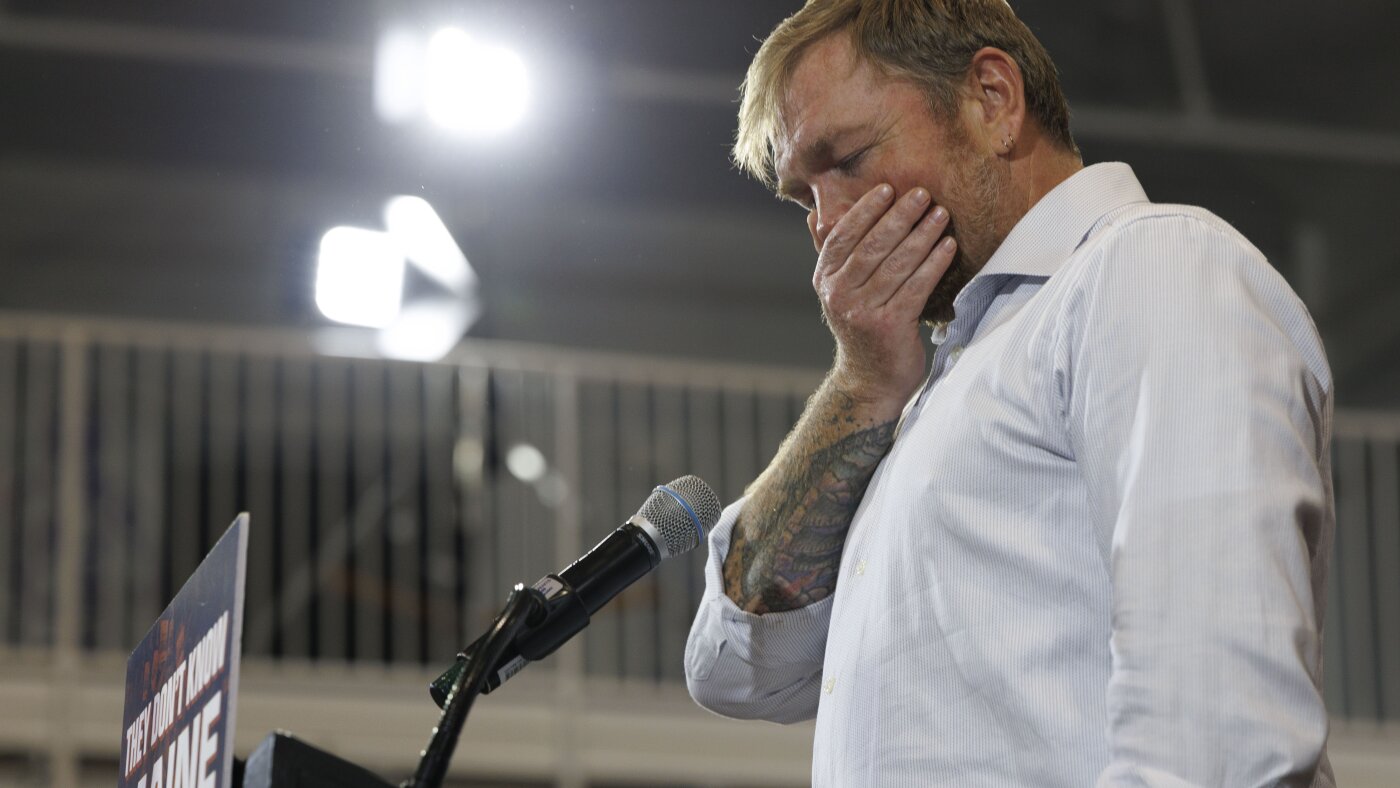
Graham Platner makes it official in Maine, submitting paperwork to leave Senate race


Knee irritation forces Shohei Ohtani out of Friday start, All‑Star game


Detroit Evening Report: Waymo cars blocking first responders – WDET 101.9 FM


San Francisco Mayor Daniel Lurie Blocks Vacant Grocery Store Tax Proposal | KQED


Oregon Battling Miami, Mario Cristobal for Four-Star EDGE Recruit


FC Dallas Forward Logan Farrington Inks Contract Extension


Red Sox face lengthy travel issues ahead of series vs. Mets

