Connect with us

Southwest

On this day in history, June 13, 1966, Supreme Court decision creates Miranda rights for those under arrest

Published

on

On this day in history, June 13, 1966, Supreme Court decision creates Miranda rights for those under arrest

Join Fox News for access to this content

Plus special access to select articles and other premium content with your account – free of charge.

By entering your email and pushing continue, you are agreeing to Fox News’ Terms of Use and Privacy Policy, which includes our Notice of Financial Incentive.

Please enter a valid email address.

Having trouble? Click here.

Most Americans are familiar, at least in passing, with the phrase, “You have the right to remain silent.” 

And on this day in history, June 13, 1966, this right was announced by the U.S. Supreme Court as a principle of American law in the landmark case Miranda v. Arizona.

Advertisement

In a 5-4 decision in the 1966 case, the nation’s high court ruled that an arrested individual is entitled to rights against self-incrimination and to an attorney under the Fifth and Sixth Amendments of the United States Constitution.

Miranda v. Arizona culminated in the famed “Miranda rights” requirement during arrests, according to the Library of Congress. 

ON THIS DAY IN HISTORY, JUNE 12, 1987, REAGAN URGES GORBACHEV TO ‘TEAR DOWN THIS WALL’

In the Miranda v. Arizona Supreme Court case, it was held that the custodial interrogation of an individual must be accompanied by an instruction that the person has the right to remain silent; that any statements the person makes can be used against that person; and that the individual has the right to legal counsel, either retained or appointed, notes the Cornell University School of Law website.

“Absent these safeguards, statements made in this context will be inadmissible in court. These rights have since become known as the Miranda Rights,” that site also noted.

Advertisement

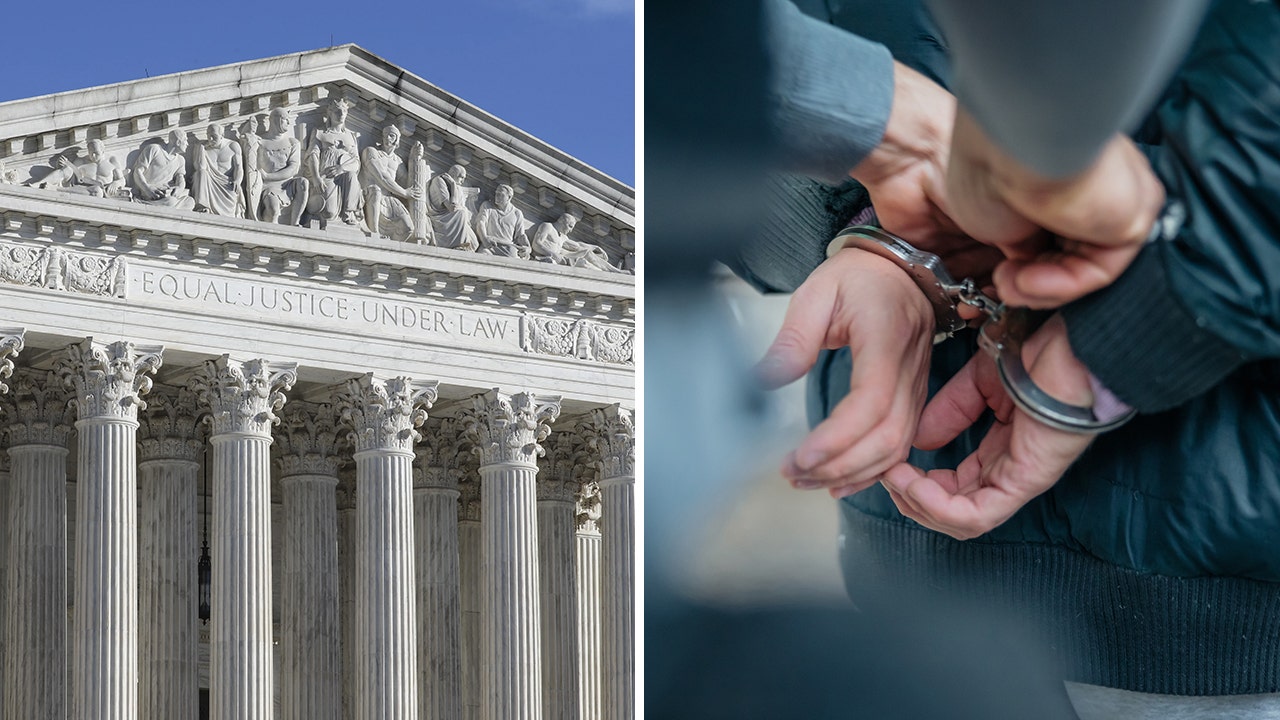
In a Supreme Court decision, the nation’s highest court ruled that an arrested individual is entitled to rights against self-incrimination and to an attorney under the Fifth and Sixth Amendments of the Constitution. (Getty Images/iStock)

The landmark case originated in Phoenix, Arizona. It involved a young man named Ernesto Arturo Miranda, arrested in 1963 based on circumstantial evidence that he had committed a kidnapping and rape, according to the Florida Supreme Court website.

Miranda was brought to police headquarters in Phoenix for questioning, and after a police lineup, law enforcement officers led Miranda to believe he had been positively identified, the site also says.

He was then interrogated by police officers for two hours, which resulted in a signed, written confession, according to the Office of the U.S. Courts on behalf of the Federal Judiciary. 

If police fail to give that warning, any confession they obtain from the suspect can then be challenged at trial or on appeal.

Advertisement

At trial, the oral and written confessions were presented to the jury. 

Miranda was found guilty of kidnapping and rape and was sentenced to 20-30 years imprisonment on each count, the Office of the U.S. Courts also says.

On appeal, the Supreme Court of Arizona “held that Miranda’s constitutional rights were not violated in obtaining the confession,” says the Office of the U.S. Courts.

ON THIS DAY IN HISTORY, JUNE 5, 1968, PRESIDENTIAL HOPEFUL ROBERT F. KENNEDY IS FATALLY SHOT IN LOS ANGELES

However, “Miranda’s case caught the eye of an attorney with the Phoenix chapter of the American Civil Liberties Union, Robert Corcoran,” History.com says. 

Advertisement

“Corcoran reached out to prominent Arizona trial lawyer John J. Flynn, who took over the case and recruited his colleague and expert in constitutional law, John P. Frank, to assist in an appeal to the United States Supreme Court.”

There were two legal issues at hand. First, the Fifth Amendment says that people cannot be forced to be a witness against themselves.

Although suspects may waive their rights to remain silent and to consult an attorney, their waivers are valid (for the purpose of using their statements in court) only if they were performed “voluntarily, knowingly and intelligently.”  (iStock)

Second, the Sixth Amendment gives everyone the right to assistance by an attorney whenever they are accused of a crime, as the Florida Supreme Court outlines on its website.

Chief Justice Earl Warren specified new guidelines to ensure “that the individual is accorded his privilege under the Fifth Amendment to the Constitution not to be compelled to incriminate himself.”

Advertisement

The wording used when a person is read the Miranda Warning, also known as being “Mirandized,” is clear and direct, according to MirandaWarning.org.

“As a result of the case against Miranda, each and every person must now be informed of his or her rights when in custody and about to be interrogated.”

The specific wording is this: “You have the right to remain silent. Anything you say can and will be used against you in a court of law. You have the right to an attorney. If you cannot afford an attorney, one will be provided for you. Do you understand the rights I have just read to you? With these rights in mind, do you wish to speak to me?” the Miranda Warning site notes.

ON THIS DAY IN HISTORY, JUNE 4, 1919, CONGRESS PASSES THE 19TH AMENDMENT, GRANTING WOMEN THE RIGHT TO VOTE

Chief Justice Warren also declared that police may not question (or continue questioning) a suspect in custody if at any stage of the process he “indicates in any manner that he does not wish to be interrogated” or “indicates in any manner … that he wishes to consult with an attorney,” according to Britannica.com.

Advertisement

If police fail to give a Miranda warning, any confession they obtain from a suspect can then be challenged at trial or on appeal. (iStock)

Although suspects may waive their rights to remain silent and to consult an attorney, their waivers are valid (for the purpose of using their statements in court) only if they were performed “voluntarily, knowingly and intelligently.”

If police fail to give that warning, any confession they obtain from the suspect can then be challenged at trial or on appeal, according to the Florida Supreme Court’s website.

Important, too, is the understanding that the Miranda warning is only to be used by law enforcement when a person is in police custody (and usually under arrest) and about to be questioned, says the National Constitution Center in Philadelphia. 

ON THIS DAY IN HISTORY, MAY 17, 1954, SUPREME COURT TROUNCES SEGREGATION IN LANDMARK BROWN V. BOARD CASE

Advertisement

“Anything you say to an investigator or police officer before you’re taken into custody — and read your Miranda rights — can be used in a court of law, which includes interviews where a person is free to leave the premises and conversations at the scene of an alleged crime,” the center also says.

The Supreme Court is seen at sundown in Washington, D.C., on Nov. 6, 2020.  (AP Photo/J. Scott Applewhite, File)

Following the ruling, the Supreme Court overturned Miranda’s conviction, but Miranda was retried and convicted in Oct. 1966.

For more Lifestyle articles, visit www.foxnews/lifestyle

Remaining in prison until 1972, Ernesto Miranda was later stabbed to death in a bar after a poker game in Jan. 1976, says History.com.

Advertisement

“As a result of the case against Miranda, each and every person must now be informed of his or her rights when in custody and about to be interrogated,” the site also says.

More recently, on June 23, 2022, the Supreme Court ruled that law enforcement officers may not be sued for damages under federal civil rights law for failing to issue the Miranda warning to suspects, the same site adds.

Read the full article from Here

Advertisement
Continue Reading
Click to comment

Leave a Reply

Your email address will not be published. Required fields are marked *

This site uses Akismet to reduce spam. Learn how your comment data is processed.

Southwest

Republican senators hit border, touting tougher security and tax cuts, in 2026 kickoff

Published

on

Republican senators hit border, touting tougher security and tax cuts, in 2026 kickoff

NEWYou can now listen to Fox News articles!

Aiming to not only hold but expand their 53-47 majority in November’s midterm elections, top Senate Republicans are showcasing the plummeting rates of border crossings during a stop Friday at the nation’s southern border with Mexico.

And the group, led by Senate Majority Leader John Thune, is also highlighting how President Donald Trump and Republican lawmakers are “putting more money in Americans’ pockets.”

The stop at the border, hosted by One Nation, a nonprofit outside group closely aligned with Thune, is seen as an unofficial kickoff by Senate Republicans ahead of the midterms to tout the sweeping “One Big, Beautiful Bill Act,” Trump’s signature domestic achievement last year that was passed nearly entirely along party lines in the GOP controlled Congress.

At the event at the border, which was a regular stop for Republicans amid the surge in border crossings during then-President Joe Biden’s administration, the GOP senators are teaming up with members of the National Border Patrol Council. And they are highlighting how the passage of the domestic policy measure “secured transformational border security funding,” according to One Nation.

Advertisement

THUNE PREVIEWS SENATE REPUBLICANS’ MIDTERM MESSAGE 

Senate Majority Leader John Thune and fellow Senate Republicans speak to reporters at an event at the nation’s southern border with Mexico, on Jan. 9, 2026. (One Nation)

“This is a remarkable, remarkable difference in just a year,” Thune said at the event. “It’s been an incredible year of progress when it comes to the southern border and the American people are experiencing the benefit of that in the form of having safer streets and safer communities and safer neighborhoods.”

But with Democrats enjoying decisive victories and overperformances in the 2025 elections and in a slew of special elections and other ballot box showdowns last year, which were fueled by their laser focus on affordability amid persistent inflation, the Republican senators are also using Friday’s trip to spotlight the tax cut and energy policy provisions in the bill, which they rebranded as the “Working Families Tax Cut.”

“The Working Families Tax Cut will make buying groceries more affordable for working Americans this year,” the Senate Republicans touted on social media on the eve of the border stop. “Every Democrat voted against it.”

Advertisement

DOUBLING DOWN: TOP HOUSE DEMOCRAT SAYS FOCUS ON HIGH PRICES ‘ABSOLUTELY GOING TO CONTINUE’

And they also highlighted that “Senate Republicans have worked closely with President Trump to lower energy prices and make life more affordable — and the results speak for themselves.”

Thune, at the border, pointed to the tax cut provisions in the GOP measure, including no tax on tips and overtime and reduced rates for seniors on Social Security, along with “the jobs that are going to be created by the pro-growth policies that we put in place….are going to lead us to a place where the American people are seeing their incomes go up.”

But Democrats see the cost of living as their winning issue heading into the midterms.

“If the Republican agenda actually made life more affordable for working Americans, then they wouldn’t be desperately flailing as families struggle to afford groceries, health care, and housing,” Lauren French, communications director at Senate Majority PAC, the top Senate Democrat-aligned outside group, told Fox News Digital. “Instead of focusing on working people, Trump and Senate Republicans are focused on bringing chaos and instability into our communities.”

Advertisement

Senate Majority Leader John Thune, R-S.D., holds a political and policy event Friday at the nation’s southern border with Mexico. (Nathan Posner/Anadolu via Getty Images)

Joining Thune, the longtime senator from South Dakota, at the border is Sen. John Barrasso of Wyoming, number two in Senate Republican leadership.

There are also Sen. John Cornyn of Texas, who faces a bruising GOP primary showdown in March against challengers Texas Attorney General Ken Paxton and Rep. Wesley Hunt; and Republican Sens. Jon Husted of Ohio and Ashley Moody of Florida, who were appointed last year and will face voters this November.

HEALTHCARE, ECONOMY AND THE ‘ONE BIG, BEAUTIFUL BILL’: WELCOME TO THE MIDTERMS

GOP Sens. Pete Ricketts of Nebraska and Mike Rounds of South Dakota, who are up for re-election this year, are also on the trip, as are former Rep. Mike Rogers and former Republican National Committee chair Mike Whatley, the GOP Senate candidates in battlegrounds Michigan and North Carolina who are backed by Thune and the National Republican Senatorial Committee.

Advertisement

“We’re seeing signs already that the economy is starting to tick up and is starting to take hold as the President’s policies are getting in place,” Whatley argued last month in a Fox News Digital interview. “We need to make sure that we have the trade policies, the tax policies, the regulatory policies from this administration that are going to help our small businesses, our manufacturers and our farmers across North Carolina.”

CLICK HERE TO DOWNLOAD THE FOX NEWS APP

But Democrats are energized as the midterm year begins, as they continue to keep their focus on the issue of affordability.

“Donald Trump has lost the economy, is losing his mind, and is going to lose the midterms,” Democratic National Committee chair Ken Martin claimed in a recent statement.

Advertisement

Read the full article from Here

Continue Reading

Southwest

Body found during search for missing Texas teen Camila Mendoza Olmos as another teen girl disappears

Published

on

Body found during search for missing Texas teen Camila Mendoza Olmos as another teen girl disappears

NEWYou can now listen to Fox News articles!

A body was found Tuesday evening as authorities in Bexar County, Texas, grapple with a series of disappearances involving teen girls who all went missing within a week.

The body was found during the search for 19-year-old Camila Olmos, though police said it is too early to determine whether the remains belong to her.

Bexar County Sheriff Javier Salazar said during a news conference that investigators had “just recently found a body in a field” around 4:40 to 4:45 p.m., adding that the medical examiner will determine both the identity of the body and the cause and manner of death.

The body was found by a joint team of sheriff’s deputies and FBI agents in an area of tall grass near a landscaping business, a few hundred yards from Olmos’ home, according to Salazar.

Advertisement

MISSING CAMILA MENDOZ OLMOS: DASHCAM CAPTURES LAST SIGHTING OF TEXAS TEEN WHO VANISHED CHRISTMAS EVE

Camila Olmos was reported missing on Christmas Eve. (Bexar County Sheriff)

A firearm was recovered near the body, which authorities said had been an item of interest during the search.

Salazar said investigators do not currently suspect murder and noted there were indicators consistent with possible self-harm, though he stressed it is too early to draw conclusions while the scene is still being processed.

Olmos was last seen leaving her home in far northwest Bexar County around 7 a.m. on Dec. 24, authorities said. Her case came as two other girls were reported missing in the area. Fourteen-year-old Sofia Gabriela Peters-Cobos has since been found safe, while 17-year-old Angelique Johnson remains missing, according to police.

Advertisement

Law enforcement has said there is no confirmed connection between the cases.

MISSING CAMILA MENDOZ OLMOS: DASHCAM CAPTURES LAST SIGHTING OF TEXAS TEEN WHO VANISHED CHRISTMAS EVE

Angelique Johnson, from San Antonio, Texas, was reported missing. (Bexar County Sheriff’s Office)

Texas Department of Public Safety said the Clear Alert for Olmos has been discontinued, though authorities urged anyone with information related to the cases or the whereabouts of Angelique Johnson to contact the Bexar County Sheriff’s Office.

CLICK HERE TO DOWNLOAD THE FOX NEWS APP

Advertisement

The Bexar County Sheriff’s Office and the San Antonio Police Department did not respond immediately to Fox News Digital’s requests for comment.

Fox News Digital’s Greg Norman and Michael Ruiz contributed to this report.

Read the full article from Here

Advertisement
Continue Reading

Southwest

Former GOP Sen Jon Kyl announces dementia diagnosis, steps away from public life

Published

on

Former GOP Sen Jon Kyl announces dementia diagnosis, steps away from public life

NEWYou can now listen to Fox News articles!

Former Republican Sen. Jon Kyl announced on Tuesday he is withdrawing from public life after being diagnosed with dementia.

Kyl, 83, became one of Arizona’s most prominent Republicans during a career that spanned nearly three decades across both chambers of Congress, including a stint as Senate minority whip.

“I was blessed to represent the people of Arizona in Congress and to have numerous other opportunities to contribute to the political and civic life of our nation and state,” Kyl said in a statement. “However, the time has come for me to withdraw from public life. I have been diagnosed with a neurological disease manifesting as dementia.”

Kyl represented Arizona’s 4th Congressional District in the House from 1987 to 1995 before serving in the U.S. Senate from 1995 to 2013.

Advertisement

DAVID MARCUS: BEN SASSE IS DYING, BUT HIS LETTER TO AMERICA WILL LIVE FOREVER

Former Arizona Republican Senator Jon Kyl announced on Tuesday he is withdrawing from public life after being diagnosed with dementia. (AP Photo/Cliff Owen)

After leaving the Senate, Kyl joined the lobbying firm Covington and Burling, before being appointed in 2018 by then-Gov. Doug Ducey to fill the vacancy caused by the death of former Sen. John McCain.

Kyl held the seat for several months in the Senate before rejoining the firm in 2019, where he helped guide the confirmation of Supreme Court Justice Brett Kavanaugh.

The longtime Arizona lawmaker described himself as “a very fortunate man” despite the diagnosis.

Advertisement

FORMER COLORADO SEN. BEN NIGHTHORSE CAMPBELL DEAD AT 92

Former Arizona Republican Sen. Jon Kyl, left, and Bruce Babbitt, right, former Arizona Republican governor and secretary of the Interior, wave to the crowd as they are recognized during Arizona Gov. Doug Ducey’s state of the state address Monday, Jan. 14, 2019, in Phoenix. (AP Photo/Ross D. Franklin)

“My family and I now head down a path filled with moments of joy and increasing difficulties,” he stated. “I am grateful beyond expression for their love and support, in these coming days as in all the days of my life.”

Kyl moved to Arizona as an 18-year-old freshman to attend the University of Arizona, where he met his wife.

The university said Kyl devoted more than two decades to public service, leaving a lasting impact on water policy, national defense and intelligence.

Advertisement

“His leadership, integrity, and commitment to service reflect the highest ideals of public life,” the university said in a statement.

CLICK HERE TO DOWNLOAD THE FOX NEWS APP

Former Sen. Jon Kyl, R-Ariz., announced he is withdrawing from public life after being diagnosed with dementia. (Andrew Harrer/Bloomberg via Getty Images)

Sen. Mark Kelly, D-Ariz., said Kyl gave “decades of his life” serving Arizona, adding that he’s grateful for the former GOP senator’s “commitment to our state and country.”

The Associated Press contributed to this report.

Advertisement

Read the full article from Here

Continue Reading

Trending
