Lifestyle
In 'Brats,' '80s stars grapple with a label that defined their early careers


St. Elmo’s Fire cast members Rob Lowe, Ally Sheedy, Demi Moore, Emilio Estevez, Mare Winningham, Judd Nelson and Andrew McCarthy.
Silver Screen Collection/Getty Images
hide caption
toggle caption
Silver Screen Collection/Getty Images
How you feel about Andrew McCarthy’s searching, earnest, frequently self-important and occasionally clueless documentary about Hollywood’s so-called “brat pack” of actors — titled, somewhat self-consciously, Brats – may depend on what you think about the whole phenomenon in the first place.
Brats does a great job reminding us why we should care about the subject at all. It notes that the success of teen-focused films in the 1980s — specifically John Hughes films like The Breakfast Club and Pretty in Pink, along with Joel Schumacher’s St. Elmo’s Fire – represented a turning point where the film industry began to feature coming-of-age movies, often with the same group of young actors.
McCarthy, who was in both Pretty in Pink and St. Elmo’s Fire, joined a group of burgeoning talents who would become major stars, including Emilio Estevez, Judd Nelson, Demi Moore, Ally Sheedy, Molly Ringwald and Rob Lowe. The films they starred in — often featuring high school-age kids in various circumstances struggling to find love or acceptance — channeled the struggles of youth across the globe, turning them into Beatles–level stars in the process.
“Hollywood discovered the box office potential of a young audience,” McCarthy says in somber narration over clips from films as disparate as Risky Business, Dirty Dancing, Back to the Future, Footloose and Weird Science. “It seemed that every weekend, there was another movie and another movie and another movie about and starring young people. In the history of Hollywood, it had never been like this.”
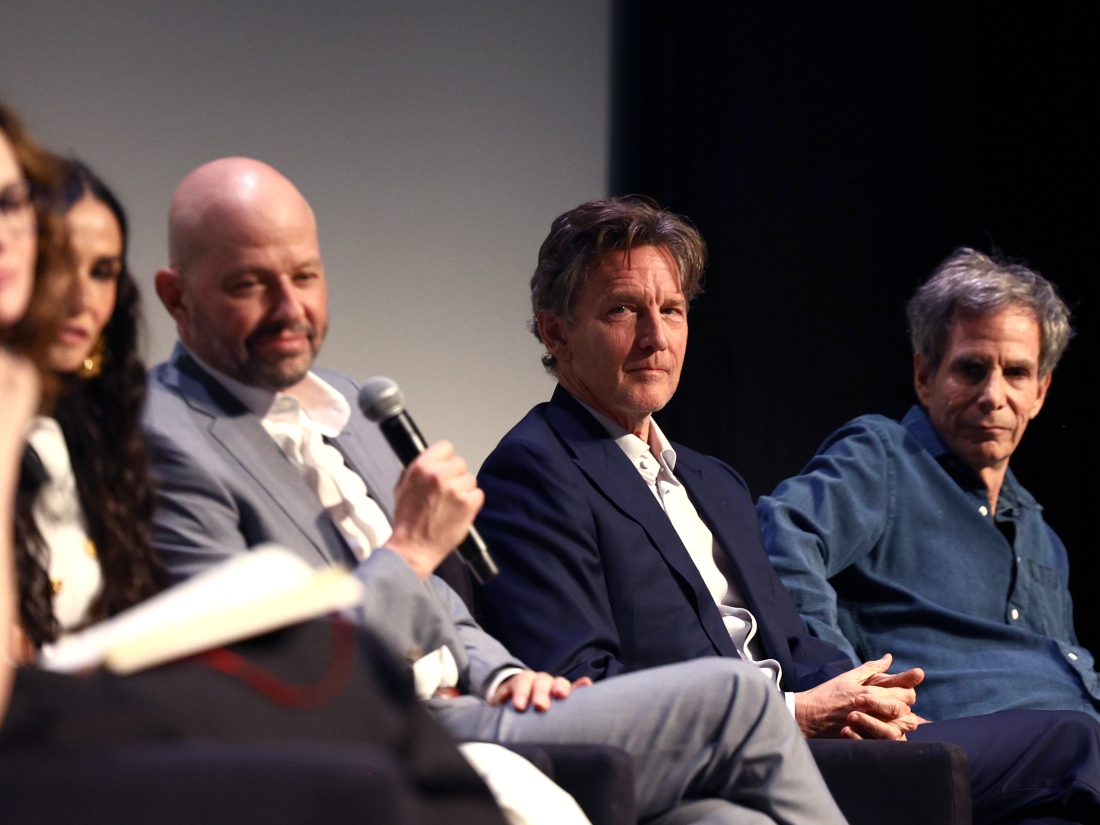
Ally Sheedy, Demi Moore, Jon Cryer, Andrew McCarthy, and David Blum at the Tribeca Film Festival.
Michael J. Le Brecht II/ABC
hide caption
toggle caption
Michael J. Le Brecht II/ABC
Defining the Brat Pack
But then journalist David Blum wrote a story in 1985 for New York magazine titled “Hollywood’s Brat Pack,” centered on time spent partying with Estevez, Lowe and Nelson, that cast shade on the group — lumping them together as unprofessional and over-privileged, while sticking them with a moniker which would follow them all around for decades. (One line described them as “a roving band of famous young stars on the prowl for parties, women, and a good time,” shortly before noting none of them had graduated from college.)
McCarthy, who admits he aspired to be a particularly serious actor back then, really bristled at the term, refusing to talk about it publicly very much. In another delicious irony the film fails to explore, Blum’s original article refers to McCarthy in a way that implies the author may not have even seen him as a bona fide member of the Brat Pack back then — despite the actor’s insistence that the term affected how he was perceived in Hollywood.

Which why it is surprising to see footage of him at the start of Brats, calling up actors he was never very close to but has been professionally linked with for nearly 40 years — suggesting they get together in front of cameras for a documentary he is directing and will star in — to actually talk about this Brat Pack thing.
Estevez, who the article called “the unofficial president of the Brat Pack,” seems wary even in talking for the documentary, while eager to get some things off his chest. Relatively quickly, he apologizes for refusing to star in a movie with McCarthy shortly after the article was published, for fear of feeding the narrative.
“It was naïve of me to think this journalist would be my friend,” Estevez admits, while noting he had never participated in a major magazine profile before Blum’s story. “I had already seen a different path for myself. And I felt derailed.”
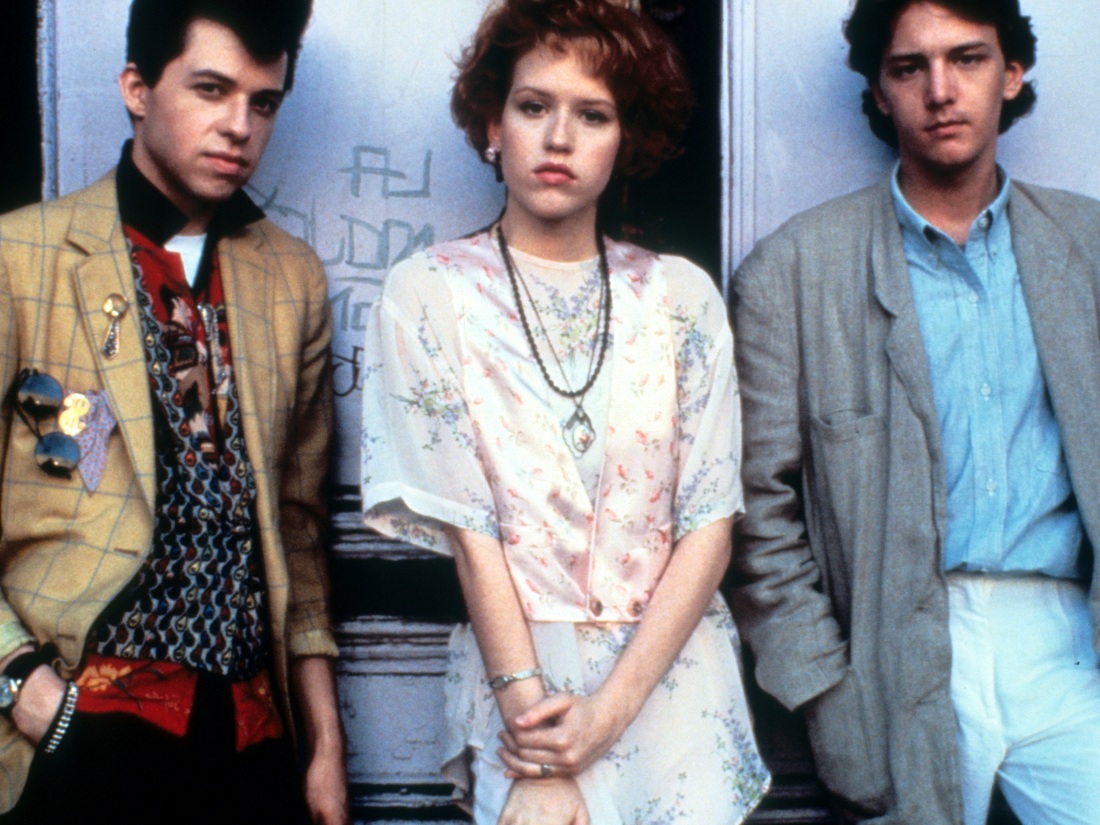
Jon Cryer, Molly Ringwald and Andrew McCarthy on the set of Pretty In Pink in 1986. Molly Ringwald was not involved in the Brats documentary.
Paramount/Getty Images
hide caption
toggle caption
Paramount/Getty Images
A movie with two messages
Scenes like this allow Brats to work on a few different levels at once. Through McCarthy’s own words and his catch ups with other Brat Packers like Estevez, Sheedy, Moore and Lowe, we get a sense of the people at the heart of a massive pop culture phenomenon.
This is a burgeoning genre in the documentary world: films and docuseries looking back at gigantic pop culture moments from decades ago, to reveal the unexplored cost for those at the center of things (think recent documentaries on Britney Spears and child stars on Nickelodeon). And there is value in hearing these performers, held up as legends for so long, grappling with the very understandable feeling they were stereotyped just as their careers were taking off.
“Why did we take [the term Brat Pack] as an offense?” Moore tells McCarthy earnestly in one moment. “I felt a sense of it being unjust. I just felt like it didn’t represent us…But I don’t know if I took it as personal over time as you did.”
Sheedy, Pretty in Pink co-star Jon Cryer and others talk about seeing the enthusiasm around these emerging stars suddenly curdle into insulting assumptions that dismissed their talents. And one of the elements which fueled their success — appearing together as a pack of friends in films — suddenly disappeared, as they all fled the stigma of the term.
But the other, perhaps unintentional effect of watching Brats, is revelation of how the sometimes clueless privilege these so-called Brat Packers enjoyed back then has stuck around, barely examined, decades later.
‘BRATS’ | Official Trailer | June 13 on Hulu
YouTube
Balancing regret with gratitude
Making an impact in Hollywood is difficult. Starring in big movies, even more so. But starring in massive movies that are considered the voice of a generation? That is a once-in-a-lifetime opportunity.
But, instead of feeling gratitude for landing in the right place at the absolutely best time to land parts in films like Class, Less Than Zero, Weekend at Bernie’s and other hits, McCarthy seems to have spent way too much time fretting over whether the Brat Pack label kept him from larger stardom or more serious work. And it doesn’t seem a coincidence that the most successful Brat Packers McCarthy could get on camera — Moore and Lowe — long ago made their peace with a term that has evolved into a more endearing label, softened by nostalgia and filled with respect.
McCarthy asks a lot of good questions, including one that should be simple but really isn’t: Who is in the Brat Pack? Is it just the people Blum cites in his story — including Tom Cruise and Matt Dillon — or should it also include performers who worked with them around the same time, like Jon Cryer? (In Brats, Cryer tells the camera emphatically, “I am not in the Brat Pack.” It’s tough to tell if he’s joking.)
This film also breezes past something that was always a big sticking point for me when it came to Brat Pack movies — the decided lack of racial and ethnic diversity.
McCarthy talks to several fans, critics and experts about the Brat Pack phenomenon. But there is just one Black person who speaks briefly and very soothingly about these films’ lack of diversity, before author Malcolm Gladwell — who is biracial — pops up to assure the director that it made perfect sense for Hughes to center so many of his hit movies on angsty white kids in suburban Chicago.
For fans of color like me, there was always a double edge to the success of Brat Pack-style films. Many themes were universal, but there was a nose-pressed-to-glass element of watching celebrated characters in an environment light years removed from my own experience.
Characters of color, when they did surface, could be the butt of jokes. It would take the rise of Black directors like Spike Lee, Matty Rich and John Singleton to bring the Brat Pack’s youth revolution to Black-centered stories in much smaller films.
Bottom line: actors considered part of the Brat Park were packaged together in big budget films by producers and directors looking to tell certain stories and reach certain audiences. As several people tell McCarthy in the film, even after the article was published, lots of people thought the Brat Pack were still the cool kids in Hollywood – and wanted to be part of that club.
Many other talented performers got left out of that process. And complaining about what you didn’t get — when you did receive massive fame, wealth and career opportunities at an early age — feels a little uncharitable, especially so many years later.
Quizzing the guy who started it all
But then McCarthy actually sits down with the author of the New York piece, David Blum. And your sympathy for the actor and all the other Brat Packers rises again.
That’s because Blum mostly refuses to admit that his article was intentionally negative or sought to take down stars like Estevez and Lowe. He takes pride in creating the phrase, noting that he perhaps should have gotten credit for building the wave of publicity which helped make movies like St. Elmo’s Fire a hit.
But Blum takes little responsibility for how the piece’s negative tone might have impacted his sources — or the implications of writing, without any real warning, a story that seemed quite different from the original feature he had told Estevez he was assembling.
It’s obvious that the actors featured in Blum’s original piece have mostly done well for themselves, crafting careers that outpaced the label he gave them. But even as he’s ending the interview, McCarthy can’t help pushing for an apology — asking the writer, almost plaintively, “Do you think you could have been nicer?”
Nearly 40 years later, it still seems tough for McCarthy to admit that accepting the label and living well — both because of and in spite of it — is likely the best possible response. (He seems to handle it all much better in a recent guest essay for The New York Times.)
It’s also obvious that watching him inexorably led to that conclusion while making this film — a journey brimming with nostalgia, pop culture potency and a bittersweet look back at youthful times — makes for one seriously compelling documentary.



A tarp covers the facade of the John F. Kennedy Memorial Center for the Performing Arts in Washington, D.C., on June 13. A federal judge has asked the arts complex’s leadership to explain the purpose of the tarp and the surrounding scaffolding.
Alex Wroblewski/AFP via Getty Images
hide caption
toggle caption
Alex Wroblewski/AFP via Getty Images
On Wednesday, the federal judge overseeing the Kennedy Center lawsuit ordered the center to give him a status report on the center’s operation and programming within the next few weeks. Judge Christopher R. Cooper also said that the Kennedy Center must explain the purpose and status of the tarp and scaffolding that have been placed over the front of the arts complex, where until recently both President Trump and President John F. Kennedy’s names were both displayed.
In a directive issued last Tuesday, Judge Cooper had given Kennedy Center administrators three days to update him on the arts complex’s immediate plans regarding construction, programming and public access. Trump, who now serves as the center’s chairman, had announced July 5 as the date the venue would close for major renovations.

Last Friday, on Cooper’s due date, lawyers for the Kennedy Center filed a request asking for an extension. In that filing, Matt Floca, who was promoted as the center’s president and CEO in March, said that the Kennedy Center’s current management intends to present its board with “an array of options” for trustees to vote on at their next meeting on an unspecified date in mid-July.
According to Floca, the options are a complete closure for extensive renovations; a partial closure “enabling some continued public access and limited programming” while some renovations are undertaken; and “a highly limited series of phased closures to address only the center’s most serious infrastructure needs while scheduling and maintaining a full slate of programming.”
In his newest order, Cooper denied Floca’s request for an extension. And he mandated that the center file a status report within seven days of the center’s July board meeting or by July 31, whichever date is earliest. He also ruled that the report must “indicate the purpose for and status of the tarp and scaffolding,” which were erected by workers over the center’s front signage in the early morning hours of June 13.
When asked for comment Wednesday, the Kennedy Center pointed back to the documents its legal team submitted to the court.
The tarp and scaffolding on the center’s front portico went up after the Kennedy Center’s administration slow-walked the court-mandated removal of President Trump’s name from the front of the center and from all digital materials, which was supposed to happen no later than June 12. Workers removed the lettering overnight into the following morning, hours after the federal court’s original deadline, and covered the center’s sign with a tarpaulin.
As of Monday, the sign remains hidden from the public.

Trump’s name was scrubbed from all of the Kennedy Center’s digital content on June 4, the same day an email order to do so was issued by the complex’s legal team; NPR obtained this memo the day it was sent out to Kennedy Center staff.
These court orders are part of the ongoing lawsuit filed by Rep. Joyce Beatty, D-Ohio, against President Trump and the board of the Kennedy Center. Earlier this year, Cooper ruled that Beatty, an ex-officio member of the Kennedy Center board, must be allowed to participate in board meetings. NPR has asked Beatty if she plans to vote at the July board meeting, but did not receive an immediate response.
It would be very difficult for the Kennedy Center to revive a thriving programming lineup for the months ahead. Over the past year, many prominent artists canceled their planned appearances, citing the politicization of the venue. Most of the center’s programming staff have departed, either via layoffs or resignations. Unlike top administrators at other major performing arts venues around the country, Matt Floca has no experience in artistic direction, fundraising or arts administration; formerly, he was the center’s head of facilities, and he holds a bachelor’s degree in construction management.
Established artists who typically perform at the Kennedy Center generally have their touring schedules set at least a year in advance, if not multiple years ahead. In years past, the center has publicly announced its upcoming season in mid-spring for performances beginning in September and running through the following summer.

Currently, only a handful of outdoor free movie screenings of nostalgic favorites like The Princess Diaries and Clue appear on the center’s calendar of events, along with some participatory workshops for kids. In the past, the Kennedy Center presented over 2,000 arts and education events each year.
The center also recently became ensnarled in litigation with one of its longtime tenants and artistic partners. On June 12, the Washington National Opera, a company formerly in residence at the Kennedy Center, sued the complex for $17 million. It claims that the Kennedy Center had withheld “years’ worth of donor gifts, bequests and endowment funds” that had been intended specifically for the WNO.

Denis Novikov/Getty Images
I tend to romanticize summer. The movies and TV shows I grew up with made me think that the season was about adventure and big-time transformation.
I imagined myself building a tight-knit friend group and getting out of a pickle together, like in The Sandlot or Camp Nowhere. Or traveling across the world, say, to Greece, like Lena Kaligaris, a character in The Sisterhood of the Traveling Pants, having a whirlwind summer romance and returning an entirely different person.
I’ve never actually had a summer like that.
Even when your expectations are more modest than mine, “so often, the summer just flies by, and we haven’t taken the picnics or gone for the day trip or whatever it was that we thought we were gonna do,” says happiness expert Gretchen Rubin.
Rubin, author of The Happiness Project and host of the podcast Happier With Gretchen Rubin, has been sharing ideas on social media about how to make the season more memorable and satisfying.
She walks through four exercises to help you get what you want — and more — out of the season. Print out our worksheet here, fill it out and stick it on your fridge to keep you accountable. Or take a screenshot and post it to Instagram (don’t forget to tag @NPRLifeKit!).
🍑 Give your summer a theme
Pick a single word or phrase that you want to embrace this season — something that captures the feeling you want to have over the next few months.
“My theme for the summer is ‘ketchup,’” Rubin says. “It has a kind of a summer feeling, because you think of putting ketchup on your burger.”
“It’s a metaphor,” she says. It means to look for “whatever I could add [this season] to make something elevated and more fun.”
Meanwhile, my theme word this summer is “juice.” I no longer think that I need to travel far or completely transform to have a delicious summer. I just need to take advantage of the abundance that the season offers: ripe peaches and tomatoes, juicy softball pitches and the opportunity to feel juicy in my body when I wear a bathing suit.

Print out our worksheet here, fill it out and stick it on your fridge to keep you accountable. Or take a screenshot and post it to Instagram (don’t forget to tag @NPRLifeKit!).
Malaka Gharib/NPR
hide caption
toggle caption
Malaka Gharib/NPR
🪣 Create a summer bucket list
What do you want to do this summer? On my bucket list: ride the Ferris wheel at a summer fair, have more barbecues at my parents’ house and see the sunrise at least once.
There might even be something you don’t necessarily want to do but have been trying to accomplish for a long time — like cleaning out the garage or learning how to swim.
“Some people love a long list with a lot of easy things to cross off,” Rubin says. “I’m a fan of that approach myself.”
But some people like a list with fewer goals that are more ambitious. If you take this path, just make those items realistic, she says. “It’s easy to get discouraged if you set the bar too high.”
🏁 Set a fun challenge
It could be fun to gamify a few of the items on your bucket list — or to come up with an entirely different kind of dare for yourself.
You might try 10 new taco joints this summer or read five romance novels. Or you might come up with a theme, like “Freaky Flavor Friday,” Rubin says. Every Friday, you go to a different ice cream shop and try a new and ambitious flavor.
A good challenge can make your summer feel more memorable, she says. “If you did ‘Freaky Flavor Friday’ all summer long, that would stand out in your mind. Years later, you’d be like, ‘That’s the summer I discovered creamed corn ice cream.’”
Two challenges I’m considering: taking a swim class and rewatching all the best Pixar movies.
🖼️ Take a “five-senses portrait”
Experience the summer through your five senses — then reflect on each one. What does summer look like, smell like, taste like, sound like and feel like?
“It’s one thing to look at photographs, but that’s very flat,” Rubin says. “A ‘five-senses portrait’ puts you back into that experience. It’s a creative, fun way to look back on summer and capture the memories that you’ve created.”
Do this exercise either for your whole summer or for a specific summer adventure, she says. Do it with yourself or with a group. You can journal about it, make a collage, draw a picture or simply have a conversation.
When I think of summer, here’s what comes to mind: the smell of smoke from a crackling outdoor fire and the taste of toasted marshmallows on a stick.
More summer-worthy goals from Life Kit
Learn how to swim. Knowing how to swim can help you have fun at the pool or beach this summer. But it could also save your life. Here are some tips to start swimming at any age.
Focus on rest and relaxation. In Dr. Saundra Dalton-Smith’s book Sacred Rest, she outlines different kinds of rest you may be craving. From the mental to the physical, Dalton-Smith shares how to identify what kind of respite you need and how to embrace rest.
Get into running. Ready to kick-start a new running habit? Coach Martinus Evans breaks down a common misconception to get you into the mindset and offers quick tips on pace, form and more.
Declutter your home. Got piles of stuff you just can’t seem to get rid of? Professional organizer Star Hansen explains how to let go of unnecessary items and keep your home neat and tidy.
This episode was produced by Clare Marie Schneider. The story was edited by Meghan Keane. The visual editor is CJ Riculan. We’d love to hear from you. Leave us a voicemail at 202-216-9823, or email us at LifeKit@npr.org.
Listen to Life Kit on Apple Podcasts and Spotify, and sign up for our newsletter. Follow us on Instagram: @nprlifekit.

Night is falling in Altadena as bats circle, peacocks wail and photographer Kevin Cooley tries to capture what’s left of a tree.
Using strobes and a long exposure time to allow the maximum amount of available light to hit his lens, Cooley snags about 50 shots of the 20-foot-tall tree, which stands vigil over a street where nearly all the homes burned. The tree’s limbs were lopped off in the wake of January 2025’s Eaton fire, which ravaged Altadena and part of Pasadena, but all these months after the fire, there’s new growth on the tree.
Photographer Kevin Cooley sets up a camera to take photos for his series.
(Jason Armond / Los Angeles Times)
Little tufts of green leaves have emerged from the raw cuts where the burned branches once were, proving the tree to be more resilient than its otherwise relatively stark exterior might suggest.
A fine art and news photographer for decades, Cooley, 51, is using pictures like the one he snapped of the tree as part of his new project, “In the Gardens of Eaton.” A collection of 6,000 photos and counting that Cooley has taken around Altadena on wild lots where homes once stood, “In the Gardens of Eaton” aims to capture bits of natural beauty that have endured despite the ravages of the fire and its aftermath.
Cooley has lived in Altadena since 2000 and he knew his neighbors well. He started working on the photo project several months after losing his home in the fire. He’d enlisted a group called Samaritan’s Purse to come up to his lot, where he’d found a metal flat file he’d used to store his photographic prints. Cooley was hopeful some had survived, but when the group popped it open, he says it quickly became clear that the burning metal had acted somewhat like an oven, burning almost everything inside to a charred crisp.

A ponytail palm on Athens Street photographed for Kevin Cooley’s “In the Gardens of Eaton.”
(Kevin Cooley)
One piece Cooley could identify, though, was a 2020 copy of Wired magazine for which he’d shot the cover. It featured a swirling plume of smoke, accompanying the story “The West’s Infernos Are Melting Our Sense of How Fire Works,” and the irony wasn’t lost on him.
“You could still kind of make out the word Wired across the top of the masthead and something about that just blew me away,” Cooley says. “It’s as if the whole thing had come full circle. I immediately wanted to photograph it in the same way I had originally photographed the smoke, which was in a studio with lighting, and I guess that made something click for me. I started feeling like there was a way to make something positive after the fire, and that’s when I started spending more time back in Altadena.”
Driving around town, looking at the lots and the wreckage, Cooley says he started to notice the bits of nature that were trying to persevere. He spotted a begonia poking through a burned fence on his neighbor’s property and snapped a photo, and soon he was accumulating more and more similar images. Cooley says if you’d told him before the fire he’d be taking so many pictures of flowers, he’d have scoffed, but now images like one he captured recently of a group of blooming roses in front of a cluster of dead vines remind him that perseverance is possible no matter the odds.

Cooley stands in front of some of his photos on display in a gallery in Culver City.
(Jason Armond / Los Angeles Times)
“It’s inspiring what nature is doing up there,” Cooley says. “We live in this environment where fire is very much part of the ecology, but people’s gardens are also pushing through. Nonnative species and native species are both there. And people are planting more wildflowers, and it feels cathartic. It’s making me excited to rebuild too, because I really can’t wait to get back.”
Letizia Ragusa, an Altadena resident who lost her home, says Cooley shot her flower-filled lot without her even knowing it. Before the fire, her yard was a wonderland of 16 fruit trees, a koi pond and both a vegetable and an herb garden. All of that was lost in the blaze. As a method of coping and of shoring up the land, Ragusa enlisted a Sierra Madre company called Hardy Californians to plant a remediation seed mix across her lot.

El Molino geraniums captured for Cooley’s “In the Gardens of Eaton.”
(Kevin Cooley)
Seeing the native plants and flowers begin to pop up on her lot was important, Ragusa says. She’s been living in a rental with her family since the fire, and there’s no yard or room for a garden.
“It’s just really comforting to me to have some sense of control when everything else feels so out of control right now,” Ragusa says. “At least I have this little piece of land that I can plant things on and I know it’s what’s going to happen. It’s very predictable, and I also think it makes other people happy. I see people driving and walking by that stop to look at it. And our neighbors have all commented on it too, so that’s nice.”
The pictures Cooley took on Ragusa’s property were of rows of pink and purple native flowers and sunflowers set amid city lights and a dreamy sunset. Ragusa says they’re surreal and beautiful.
“It’s outdoor photography, but with a studio element,” she says, noting that she’s especially open to Cooley’s process because she’s an artist herself, previously producing ceramics and sculpture from a home studio that she also lost.

Cooley works sets up lights for a recent photo shoot.
(Jason Armond / Los Angeles Times)
While the initial photos Cooley took of her yard were from the street and her driveway, she’s since given him permission to go deeper into her lot. It’s something Cooley says is important to him because he knows firsthand that a lot of people’s lots are what he calls “hallowed ground.”
Most of the pictures Cooley has taken so far have been from a distance, though he has set up his equipment near the end of people’s driveways to get a good photo. As word of Cooley’s project has gotten around Altadena — with one resident posting a photo of him on their lot captured via trail cam to a local Facebook group, looking for more information — more and more people have expressed an openness to having him come shoot their gardens.

Honeysuckle on Via Maderas captured for “In the Gardens of Eaton.”
(Kevin Cooley)
Cooley has created a Google Form for interested residents to use and he keeps a spreadsheet of the responses in a clipboard on his car’s dashboard. When he’s at a loss for what to shoot next, he’ll glance at it, mentally mapping out addresses in his mind and looking at resident-submitted descriptions of their lots, which include phrases like “We don’t have much left, but we saved our banana plant” and “[Our house] made me into the gardener I am and I adorned her in plants.”
Cooley says he intends to shoot photos for all the owners who have responded to his Google Form, hoping to gift them prints when the project is complete. Starting in July, he’s headed to Portugal for a six-month art fellowship, but says he plans to continue the photo project later. Cooley would also like to produce an art book of his favorite photos from the project.
He’s also aware that, in some respects, he’s up against a time limit in terms of what he can shoot. He says he spent the beginning part of the project “rushing against the Army Corps” as they were clearing lots, and now he’s trying to photograph rough-and-tumble lots full of nature before their owners level them and start to rebuild.

Calaveras roses photographed for “In the Gardens of Eaton.”
(Kevin Cooley)
Sometimes, Cooley says, he had to shoot on lots where he hadn’t known the owner. When he started the project, he made an effort to track down who lived on the property before he set up his camera, but the process was surprisingly arduous and he’d often lose his intended shot as flowers or plants died or changed shape.
“It wasn’t practical,” Cooley says. “It’s not that I didn’t want to, but I just couldn’t figure it out. I will eventually, though, and then I’ll be able to present people with a photograph when they’re back in their new homes.
“I just think Altadena is a special place,” he says on a spring day. “Six months ago, it was so depressing to come up here, but now it’s not. It’s still emotional, of course, but seeing all the rebuilding, it’s clear that people see value in being here, even now. When all this is done, if Altadena is even 50% or 75% as special as it was before, it’ll still be great.”
-

 Wyoming1 minute ago
Speedy Cow community-owned internet service goes live in Wyoming County
-

 Crypto8 minutes ago
14 AI Models Including Claude, ChatGPT and Grok Predict Bitcoin’s Price Outlook
-

 Finance11 minutes ago
G7 Recommits to Development, Investment Finance to Drive Shared Prosperity
-

 Fitness11 minutes ago
Social Fitness: Why Independent Living Communities Are Vital for Healthy Aging
-

 Movie Reviews26 minutes ago
‘Supergirl’ review: DC Studios serves up a second less-than-super movie
-
World38 minutes ago
FACT FOCUS: Norway brought its own food to the World Cup. But not because it distrusts US products
-

 Health1 hour ago
Does Metformin Help With Weight Loss? How To Maximize Your Results
-
Lifestyle1 hour ago
A judge says the Kennedy Center must update him on its plans — and address that tarp

