Business
Lynn Conway, leading computer scientist and transgender pioneer, dies at 85

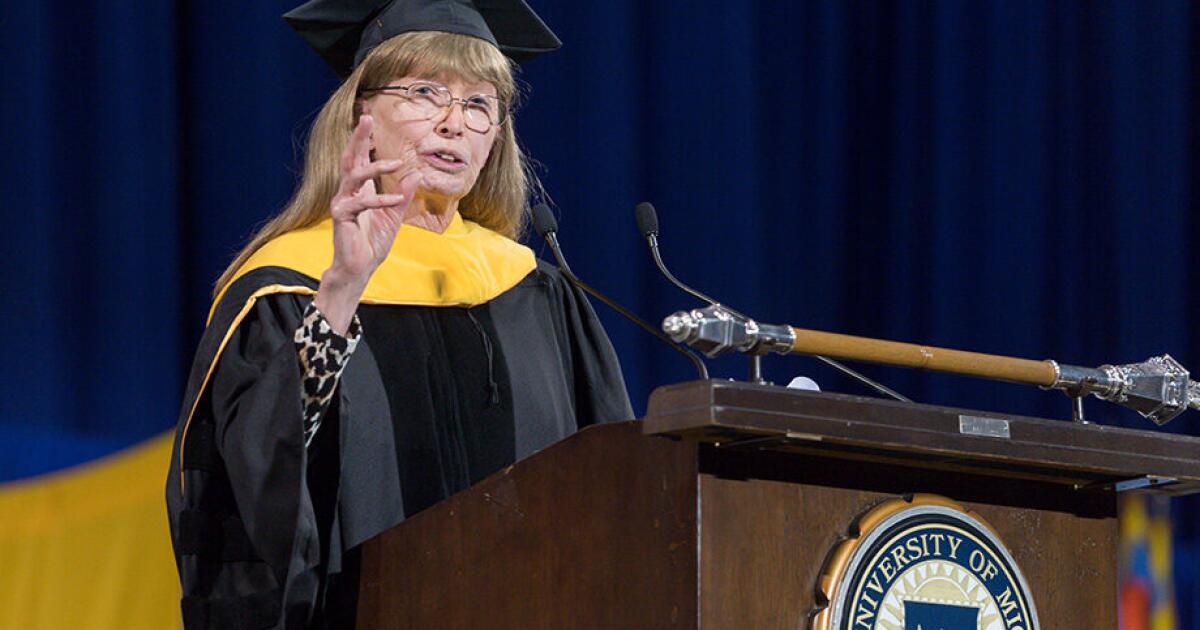
Lynn Conway was the bravest person I ever knew.
It wasn’t merely her struggle to make her way in the male-dominated computer engineering world of the 1960s and 1970s. It was that she did so, with spectacular success, while contending with her own psyche, her family and her bosses at IBM to complete her transgender transition.
Conway died Sunday, according to her husband, Charles Rogers, at home in Jackson, Mich., of a heart condition.
As I recounted in 2020, I first met Conway when I was working on my 1999 book about Xerox PARC, “Dealers of Lightning,” for which she was a uniquely valuable source. In 2000, when she decided to come out as transgender, she allowed me to chronicle her life in a cover story for the Los Angeles Times Magazine titled “Through the Gender Labyrinth.”
Thanks to your courage, your example, and all the people who followed in your footsteps, as a society we are now in a better place.
— IBM apologizes for firing Lynn Conway for her gender transition in 1968
That article traced her journey from childhood as a male in New York’s strait-laced Westchester County to her decision to transition. Years of emotional and psychological turmoil followed, even as he excelled in academic studies.
He won admission to MIT, but flunked out due to a lack of social or medical support. What would have been Conway’s MIT graduation day found Conway in San Francisco, living on the fringes of the gay community, searching for how to fit in as a male. But he did not see himself as a gay man attracted to other men, but as a woman attracted to other men.
In 1961 he enrolled at Columbia University, acquiring bachelor’s and master’s degrees in electrical engineering in only two years. That led to a position on a team at IBM secretly designing the world’s fastest supercomputer, a pet project of IBM President Thomas Watson Jr. Conway moved with the team to Menlo Park, Calif., in the years before the surrounding landscape was dubbed Silicon Valley.
By then Conway had gotten married and was raising two daughters. But family life intensified his inner turmoil, and in 1968 he decided to undertake gender reassignment surgery.
Conway at PARC in the 1970s, in front of her Alto, the lab’s innovative personal computer.
(Lynn Conway)
As I wrote in 2000, Conway had visualized a nearly seamless transition. IBM was supportive, at least at first. It was willing to change the name on company records and execute a transfer to another lab, giving the employee henceforth known as Lynn Conway a fresh start.
But even as the $4,000 operation was still in the planning stage, it became clear that IBM executives could not understand how a transgender employee could fit into a corporate culture that was “still white shirt, blue serge suits and wingtip shoes,” as Conway’s IBM supervisor told me. “This simply wasn’t the IBM image.” The company fired him.
Decades later, Conway was philosophical and nonjudgmental about IBM’s decision. Gender transition and sex reassignment surgery were alien concepts at the time.
“Christine Jorgensen was the last time anything had come out about stuff like this,” Conway told me in 2020. Jorgensen’s transition, which had made front-page news in 1951, had been reduced to a historical curiosity nearly two decades later. T.J. Watson Jr., the president of IBM, “was thinking there would be endless publicity, and I can understand that.”
The family went on welfare for three months. Conway’s wife barred her from contact with her daughters. She would not see them again for 14 years.
Beyond the financial implications, the stigma of banishment from one of the world’s most respected corporations felt like an excommunication.
She sought jobs in the burgeoning electrical engineering community around Stanford, working her way up through start-ups, and in 1973 she was invited to join Xerox’s brand new Palo Alto Research Center, or PARC.
In partnership with Caltech engineering professor Carver Mead, Conway established the design rules for the new technology of “very large-scale integrated circuits” (or, in computer shorthand, VLSI). The pair laid down the rules in a 1979 textbook that a generation of computer and engineering students knew as “Mead-Conway.”
VLSI fostered a revolution in computer microprocessor design that included the Pentium chip, which would power millions of PCs. Conway spread the VLSI gospel by creating a system in which students taking courses at MIT and other technical institutions could get their sample designs rendered in silicon.
Conway’s life journey gave her a unique perspective on the internal dynamics of Xerox’s unique lab, which would invent the personal computer, the laser printer, Ethernet, and other innovations that have become fully integrated into our daily lives. She could see it from the vantage point of an insider, thanks to her experience working on IBM’s supercomputer, and an outsider, thanks to her personal history.
After PARC, she was recruited to head a supercomputer program at the Defense Department’s Advanced Research Projects Agency, or DARPA — sailing through her FBI background check so easily that she became convinced that the Pentagon must have already encountered transgender people in its workforce. A figure of undisputed authority in some of the most abstruse corners of computing, Conway was elected to the National Academy of Engineering in 1989.
She joined the University of Michigan as a professor and associate dean in the College of Engineering. In 2002 she married a fellow engineer, Charles Rogers, and with him lived active life — with a shared passion for white-water canoeing, motocross racing and other adventures — on a 24-acre homestead not far from Ann Arbor, Mich.
In 2020, she received an unexpected gift: A formal apology from IBM for firing her 52 years earlier. At an emotional ceremony witnessed by 1,200 IBM employees signed on to a company website, Diane Gherson, an IBM senior vice president, told her, “Thanks to your courage, your example, and all the people who followed in your footsteps, as a society we are now in a better place…. But that doesn’t help you, Lynn, probably our very first employee to come out. And for that, we deeply regret what you went through — and know I speak for all of us.”
At Michigan, she is remembered for her “positive outlook, warm encouragement, creativity and ‘singular vision,’” the university observed in a retrospective posted Tuesday. “Conway described herself in 2014 as a perennial beginner, never afraid to take on learning how to do new things.”
Her role as a leader in the transgender community may be even more important than her role in the extraordinary advances of the technology revolution of the late 20th century. She fought not a few battles over anti-transgender discrimination and what she called “the systemic psychological pathologization of gender variance.”
On her personal website she reflected with well-deserved pride of having used the website to offer “gender transitioners … information, encouragement and hope for a better future.” When she began to do so in 2000, she recalled, “trans women especially were considered sexually-deviant and mentally-ill by prejudiced psychiatrists and psychologists. By compiling stories of those who went on to fulfilling lives after transition,” she wrote, she tried to provide “role models and hope for the many people then in transition.”
She added , “Fortunately, those dark days have receded. Nowadays many tens of thousands of transitioners have not only moved on into happy and fulfilling lives, but are also open and proud about their life accomplishments.”
It’s a reproach to our society and our politics that Lynn’s confidence that the “dark days” of transgender discrimination and prejudice were past has proven to be premature. I hope that she didn’t allow herself to be too discouraged by the cynicism and hypocrisy of the political leadership in some of our most benighted states, and that she never forgot the extraordinarily positive impact she had on all the communities, professional and personal, of which she was a member.
Lynn Conway faced more challenges in her life than most of us can contemplate. She should be remembered as someone who, to paraphrase William Faulkner, not only faced them, but prevailed over them. And in doing so she enriched us all.



Business
Snap CEO Evan Spiegel and Miranda Kerr help erase $550 million in medical debt for Californians

Snap Chief Executive Evan Spiegel and his wife, supermodel Miranda Kerr, have helped pay off $550 million in medical debt for more than 261,000 Californians.
The couple made a multimillion-dollar donation to Undue Medical Debt, a nonprofit that provides debt relief to people in financial need. The organization acquires medical debt in bulk from hospitals, physician groups, collection agencies and other groups for a fraction of the cost.
“When someone you love is sick. All you want to do is focus on helping them get better,” Kerr said in a video with Spiegel. “That’s why we wanted to support this effort and help relieve medical debt, so families can focus on caring for their loved ones and really supporting their healing.”
The couple and the nonprofit didn’t disclose the exact amount of the donation, but a small gift can go a long way. Every $10 donated to Undue Medical Debt relieves an average of $1,000 in medical debt.
The gift comes as Americans struggle with the medical debt and rising cost of living. California is one of the most expensive states to live in because of soaring housing costs and energy prices. Concerns about wealth inequality have sparked heated political debates about how much billionaires should contribute.
In the United States, 1 in 4 adults are in medical debt, said Undue Medical Debt President and Chief Executive Allison Sesso in a statement.
“It’s a growing crisis undermining healthcare access, economic wellbeing and mental health and we’re so grateful that Evan Spiegel and Miranda Kerr share our belief that no one should go bankrupt because of a cancer diagnosis and no family should have to choose between insulin and groceries,” she said.
Californians whose medical debt have been paid off will start receiving a letter in mid-July from Undue Medical Debt informing them of the debt relief. Individuals can’t request debt relief because the nonprofit acquires bundled debt for thousands of people at once. Those who qualify for debt relief either earn at or below 400% of the federal poverty level or have medical debt that is more than 5% of their income, the nonprofit says on its website.
San Diego County residents benefited the most from the donation with total medical debt relief through the couple’s gift totaling roughly $99 million and affecting 40,369 people. In Los Angeles County, the gift provided $26.7 million in medical debt relief to 17,466 people, according to the nonprofit.
Spiegel, whose net worth is roughly $2 billion, and Kerr have helped relieve debt for others in the past. In 2022, the couple paid off the student loans for the Otis College of Art and Design’s graduating class.
In 2025, Spiegel was among business leaders and philanthropists who helped form the Department of Angels, a group that aims to help L.A.’s fire recovery efforts. The California Community Foundation, Snap, Spiegel and Snapchat co-founder Bobby Murphy committed $10 million to help start that group.
Roughly 200,000 people lost their homes in the January 2025 Los Angeles County wildfires. Spiegel, who grew up in Pacific Palisades and lost his childhood home in the fires, donated $5 million in immediate aid with Snap and Murphy that month.
He said in a statement that California has given so much to him and his family and that he cares “deeply about the wellbeing of our communities.”
“At a time when many families are already facing rising costs across nearly every aspect of daily life, an unexpected medical bill can create financial stress that lasts for years,” Spiegel said.
Undue Medical Debt said it’s abolished more than $40 billion of medical debt in all 50 states.

The electric vehicle company Slate Auto set out in 2022 to make the most affordable electric truck in the country. This week, it unveiled the price tag: $24,950.
At a time when demand for new electric vehicles is cooling and cars are getting harder to afford, Slate’s customizable truck could bring a fresh wave of excitement to the industry.
Deliveries will begin later this year and accelerate in 2027, the company said. Slate’s vehicle is built around a simple concept — pay only for what you actually want.
Buyers will start with a basic truck without power windows or even paint and can then customize it however they like. They can tailor-make their “blank slate” by paying extra for smart phone-compatible screens, speakers, colored wrap or paint. A $5,000 kit even converts the truck into an SUV.
Slate’s design team is based in Los Angeles County and recently moved into a new space in Carson, which employs about 50 workers. The company’s headquarters are in Troy, Mich., and its vehicles will be produced in Warsaw, Ind.
Squeezing out as much cost as possible while making it as easy as Legos to snap on different options has required complex engineering, which is why the company decided to set up its design studio in Southern California. The region is full of experts.
“Slate has done something smart,” said auto industry analyst Brian Moody. “Their EV isn’t only about price, there’s also a strong personalization element. In Southern California, the boxy, retro look will earn it a lot of attention.”


Slate is an EV startup that makes electric trucks and SUVs. Customers buy only the features they want. Photographed on Friday, Dec. 19, 2025. (Myung J. Chun/Los Angeles Times)
The company is building a marketplace of accessories for customers to choose from, including 54 basic wraps that cost less than $500 each. In contrast, a paint job on a car can cost thousands of dollars. The marketplace also offers roof stacks, zip-on seat covers and stereos.
For just under $30,000 total, customers can get a basic SUV in a fastback or squareback style. Whether it’s configured as a truck or SUV, the EV will have an estimated range of 205 miles and will be compatible with Tesla chargers.
“This is the first time in automotive history that consumers are going to get to choose,” said Slate Chief Executive Peter Faricy, who joined the company in March after 13 years with Amazon.
“It started with design, then engineering, and eventually manufacturing, and we figured out innovations in all three of those phases that make the vehicle less expensive,” he said.
For example, Slate vehicles were designed from the beginning to be wrapped instead of painted. The company will offer more than 100 colors of wrap at its launch, or customers can choose a custom color.
Slate did not disclose financial information or how much the vehicles cost to produce. However, Faricy said the company will generate a positive gross margin on its vehicles, meaning they are selling for more than what they cost to make.
“Whether Slate succeeds or fails, it has already influenced the conversation … forcing the industry to ask why affordable vehicles have become so rare,” said Jesse Toprak, an industry analyst and founder of OptiCar.ai. “They are betting on making higher profit margins on the accessories and do-it-yourself angle.”
Slate says it has already received more than 180,000 reservations. The earlier a customer placed their reservation, the sooner they’ll get their vehicle. Pre-orders opened Wednesday for $300, or $250 if the customer has already paid a $50 reservation fee.
Despite the hype, Slate is still a startup that has yet to prove itself in the market. The company has about 750 employees and has raised more than $700 million from Amazon’s Jeff Bezos and others.
“For the vehicle itself, the concept is brilliant,” Toprak said. “I think the execution risk is enormous.”
The EV industry has been under fire from the Trump administration, which has removed incentives for ownership and clean-car goals. Major automakers including Ford and Stellantis have pared back their EV offerings, and other startups have struggled to turn a profit.
The Irvine-based EV company Rivian, which hasn’t reached profitability since its founding in 2009, recently laid off hundreds of workers. It launched its highly anticipated R2 SUV earlier this month, which will eventually be available for less than $45,000.
Lucid, the luxury electric vehicle maker based in Newark, Calif., announced this week that it’s reducing its workforce by 18%. The cuts come just months after it laid off 319 Bay Area employees in February.
Faricy, Slate’s chief executive, said the company’s vehicle will appeal to a wide range of customers.
“There will be a lot of people that are attracted to the affordability but have never had an EV before,” he said.
According to Cox Automotive, the average transaction price for a new EV in the U.S. is $55,000, compared with $49,000 for a gas-powered vehicle.
“The EV market at this point doesn’t have a technology problem anymore,” Toprak said. “It has an affordability problem. Slate is one of the first companies built entirely around solving that.”

Sony Pictures will invest $100 million and take a minority stake in virtual reality venue operator Cosm, as the studio continues to build a business in communal experiences.
As part of the investment, Sony Pictures Chief Executive Ravi Ahuja will also join Cosm’s board of directors, the studio said Wednesday. The size of Sony’s minority stake was not disclosed.
The El Segundo-based Cosm currently operates three venues — one at Hollywood Park in Inglewood, and the others in Dallas and Atlanta. The company plans to open additional venues in Detroit and Cleveland.
Cosm bills itself as a “shared reality venue,” and its facilities center around a massive, wraparound screen that is intended to envelop viewers with additional digital effects. The company has largely focused on sports, though it has also shown Cirque du Soleil shows and done several collaborations with Warner Bros., including recent screenings of 2001’s “Harry Potter and the Sorcerer’s Stone” in honor of the film’s 25th anniversary.
“Cosm sits at the intersection of several trends shaping the future of entertainment,” Ahuja said in a statement. “We’ve followed Cosm since before launch and have been impressed with the quality of the experience and the enthusiasm it’s generating with audiences.”
The investment is Sony’s latest venture into experiential entertainment. In 2024, the Culver City-based studio acquired dine-in theater chain Alamo Drafthouse Cinema.
-

 Missouri4 minutes ago
Missouri Highway Patrol investigating KCPD officer involved shooting
-
Montana7 minutes ago
Montana DEQ works toward impairment designation for Big Hole River
-

 Nebraska12 minutes ago
Tunnel Talk: 5-for-5 impact on Nebraska volleyball, reseat update
-

 Nevada19 minutes ago
Terrible’s takeover of Primm gets Nevada regulatory approval
-

 New Hampshire22 minutes ago
National Guard Helicopter Rescues 80-Year-Old Canadian Hiker From New Hampshire Peak
-

 New Jersey27 minutes ago
New Jersey Hall of Fame Announces Incoming 2026 Class of Inductees
-

 New Mexico34 minutes ago
Former NM GOP treasurer arrested after deadly Las Cruces hit-and-run
-
North Carolina36 minutes ago
NC State, UNC planning nonconference men’s basketball game this season


