News
Creating a throw-away culture: How companies ingrained plastics in modern life


A trash can overflows as people sit outside of the Martin Luther King Jr. Memorial in Washington, D.C.
Jacquelyn Martin/AP/AP
hide caption
toggle caption
Jacquelyn Martin/AP/AP
Just for a minute, think about how much of the plastic you use today will end up as trash. Drink bottles? Grocery bags? Food wrappers? If you live in the United States, it’ll probably add up to about a pound of stuff — just today.
Most plastic is dumped in landfills or becomes pollution in places like rivers and oceans, according to the Organisation for Economic Co-operation and Development. Along the way, it sheds microplastics that can make their way into animals and people. Just 4% of plastic in the U.S. is recycled.
It wasn’t always this way. But over the past 70 years, plastic has become embedded in nearly every aspect of human life. The world produces around 230 times more plastic now than it did in 1950, according to Our World in Data.
As production soared, so did pollution. Many scientists and activists say chemical and fossil fuel companies make too much plastic now for society to manage sustainably. The United Nations says the problem is also being fueled by a “worrying shift” toward single-use products and packaging, which are designed to be used once and thrown away.
Plastic became ingrained in modern life in large part because the plastics industry started working in the 1950s to convince people to embrace the material as cheap, abundant and disposable.
The marketing campaign worked so well that litter soon became a problem across the U.S., and there was a public backlash. The industry responded by pitching recycling. But almost from the outset, corporations knew that recycling probably wouldn’t work to rein in waste, multiple investigations have shown.
Now, faced with spiraling plastic pollution, the U.N has set out to write a legally-binding agreement to deal with the problem. But the negotiations are fraught.
And even if nations can broker a deal, it’ll be a daunting task to actually reduce the world’s consumption of plastic, which is in almost everything, from clothing and diapers to medical devices.
“We’ll continue to need plastic for specific uses,” Inger Andersen, executive director of the United Nations Environment Programme, said at the latest round of U.N. negotiations in Canada in April. “But there’s a growing agreement,” she said, that a lot of single-use plastic “can probably go.”
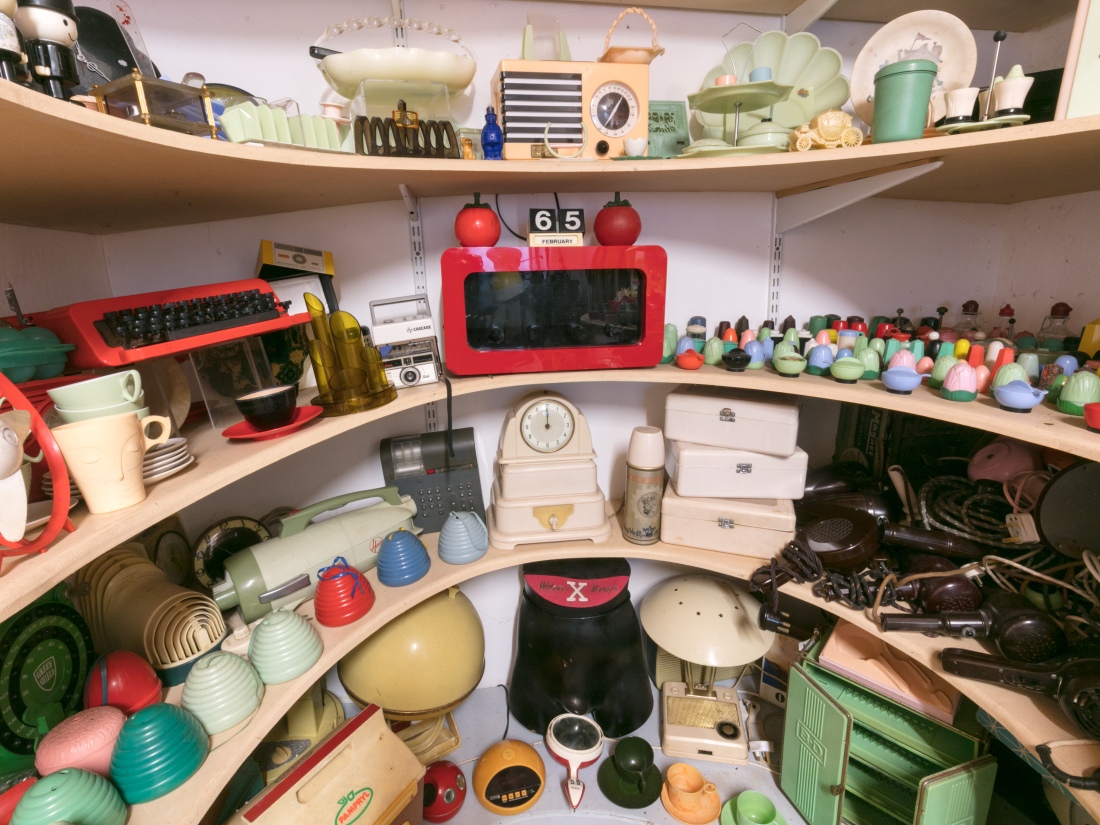
Vintage Bakelite and other plastic objects at a museum in England.
Matt Cardy/Getty Images/Getty Images Europe
hide caption
toggle caption
Matt Cardy/Getty Images/Getty Images Europe
The plastics industry pitched disposability to make more money
As part of the treaty talks, some countries want to cap production of new plastic, which is made from oil and gas. However, those efforts are opposed by big fossil fuel producers that are determined to keep plastic demand growing. State and local governments in the U.S. have tried to limit pollution by passing laws that ban plastic shopping bags or single-use plastic bottles.
The industry has responded by fighting regulations that could hurt demand for its products. It says the solution to environmental problems is better recycling, not using less plastic.
Matt Seaholm, chief executive of the Plastics Industry Association, says his group is advocating on behalf of plastic producers and consumers alike, since “it is an essential part of society at this point.”
Synthetic plastic was patented in the early 1900s. It was known as Bakelite, and it sparked a boom in durable and affordable consumer goods. Soon, companies started selling different kinds of plastic. At first, most of it was marketed as sturdy and reusable. One television ad from 1955 — about a made-up homemaker named Jane in a made-up place called Plasticstown, USA — touts how plastic containers are ideal for families because they won’t break if kids accidentally drop them.
But soon, the messaging started to change. In 1956, the industry learned about a new way to boost sales — and profits. At the plastics industry’s annual conference in New York, Lloyd Stouffer, the editor of an influential trade magazine, urged executives to stop emphasizing plastics’ durability. Stouffer told the companies to focus instead on making a lot of inexpensive, expendable material. Their future, he said, was in the trash can.
Companies got the message. They realized they could sell more plastic if people threw more of it away. “Those corporations were doing what they’re supposed to do, which is make a lot of money,” says Heather Davis, an assistant professor at The New School in New York who’s written about the plastics industry.
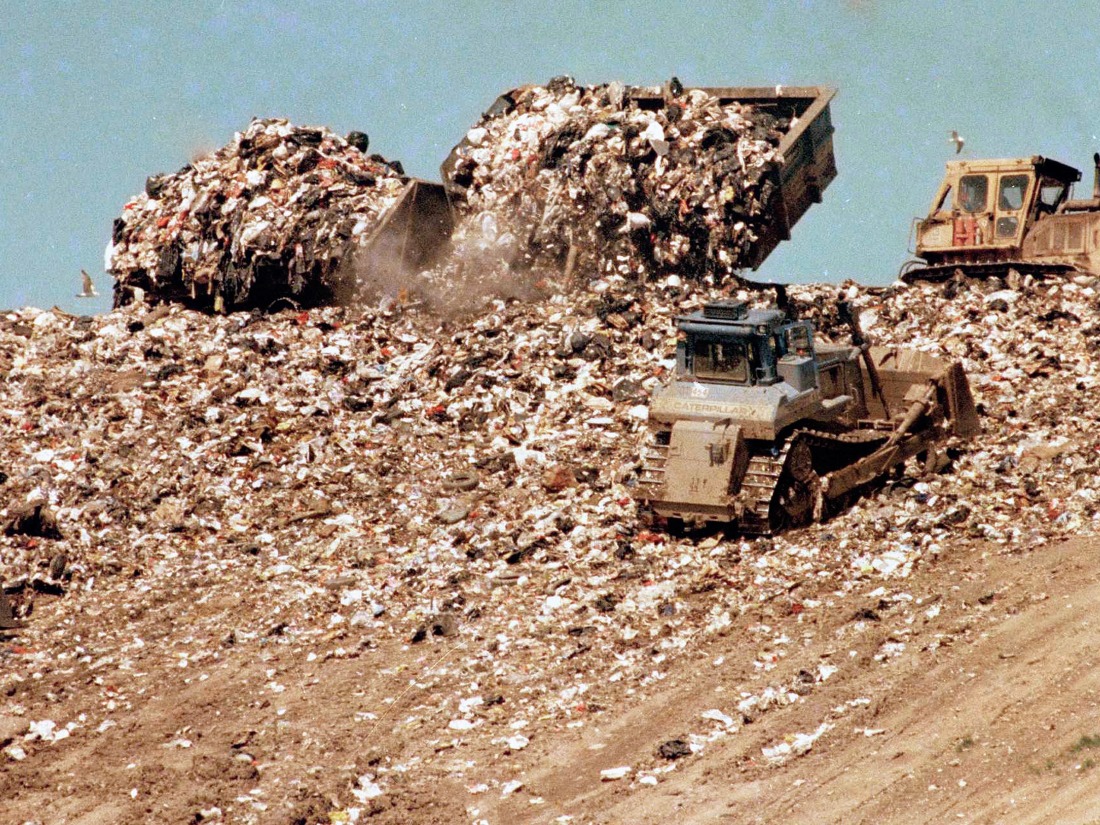
Garbage is dumped at the Fresh Kills Landfill in Staten Island, New York, in 1989.
David Cantor/AP/AP
hide caption
toggle caption
David Cantor/AP/AP
Throw-away living was a foreign concept in 1950s America
But getting people to throw away items after a single use took a lot of work.
Adults in the 1950s had lived through The Great Depression and World War II, and they were trained to save as much as possible, Davis says.
“It was a really difficult sell to the American public in the post-war period, to inculcate people into a throwaway living,” she says. “That is not what people were used to.”
A solution companies came up with was emphasizing that plastic was a low-cost, abundant material.
A 1960 marketing study for Scott Cup said the containers were “almost indestructible,” but that the manufacturer could still convince people to discard them after a few uses. To counter any “pangs of conscience” consumers might feel about throwing them away, the researchers suggested a “direct attack”: Tell people the cups are cheap, they said, and that “there are more where these came from.”
A few years later, Scott ran an advertisement saying its plastic cups were available at “‘toss-away prices.”
In a 1963 report for another plastics conference in Chicago, Stouffer congratulated the industry for filling dumps and garbage cans with plastic bottles and bags.
“The happy day has arrived,” Stouffer wrote, “when nobody any longer considers the [plastic] package too good to throw away.”
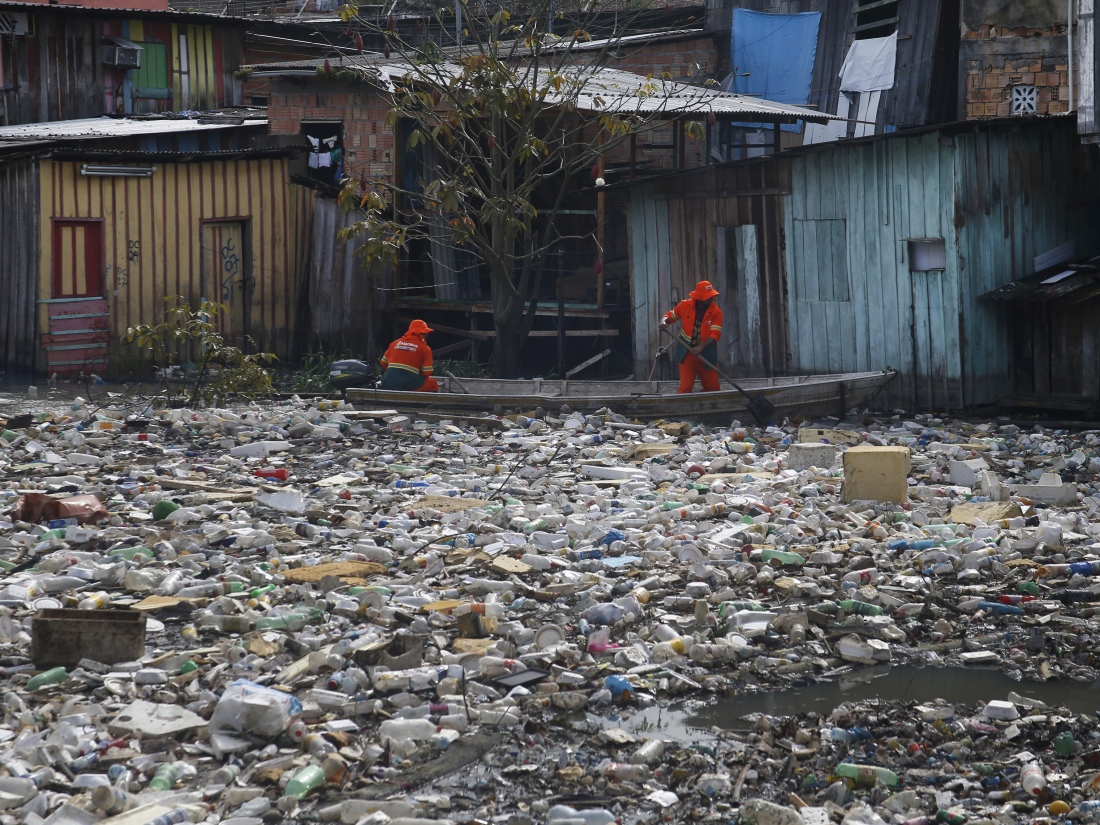
Workers remove garbage floating on the Negro River in Manaus, Brazil.
Edmar Barros/AP/AP
hide caption
toggle caption
Edmar Barros/AP/AP
A booming market hit a consumer backlash
By the early 1970s, plastics were booming. The market was expanding faster than the “rosiest of predictions,” and its growth prospects were “out of sight,” an executive at the chemical company DuPont told the Chamber of Commerce in Parkersburg, West Virginia, in 1973. Soon, big soft drink companies introduced plastic soda bottles.
But the industry faced a growing public-relations problem that was especially threatening to beverage companies, whose names were stamped on the packaging: Plastic litter was becoming an eyesore across the country.
“Even if you’ve convinced people that maybe the disposability of plastics isn’t such a bad thing, people are still seeing this waste out in public,” says Bart Elmore, a professor of environmental history at Ohio State University.
So drink makers went on offense. Elmore says they fought bans on throw-away bottles and joined the plastics industry in pushing recycling as an environmental solution.
However, multiple investigations, including by NPR, have shown that plastics industry representatives long knew that recycling would probably never be effective on a large scale. Officials have said they encouraged recycling to avoid regulations and ensure that demand for plastic kept growing.
Trade groups for plastic companies say those investigations don’t accurately reflect today’s industry.
There isn’t evidence that drink makers were part of those internal discussions about recycling’s viability. But Elmore says they should have had enough information at the time to know recycling was a risky bet.
In 1976 — two years before big soft-drink makers introduced plastic soda bottles — a study by the U.S. Food and Drug Administration concluded that “substantial recycling of plastics is unlikely in the near future.” That echoes the agency’s 1975 draft report that found “recycling of plastic bottles is unlikely to be commercially feasible.”
“To make a gamble like that, where public agencies and public documents are saying this at the time, I think raises real questions about culpability, accountability in an era when I think a lot of people are asking for that,” Elmore says.
Less than 10% of plastic waste is recycled globally. As countries try to negotiate a global waste agreement, activists and scientists are focusing a lot of their attention on chemical and fossil fuel companies that make plastic. But Elmore says consumer goods companies like beverage makers also deserve scrutiny, because they use a ton of plastic packaging and rank as some of the biggest plastic polluters globally.
“If they take a stand, one way or the other, it has a huge global impact,” Elmore says.
A business group called the American Beverage Association said in a statement to NPR that one of its highest priorities is creating a so-called circular economy where plastic is recycled and reused to prevent waste.
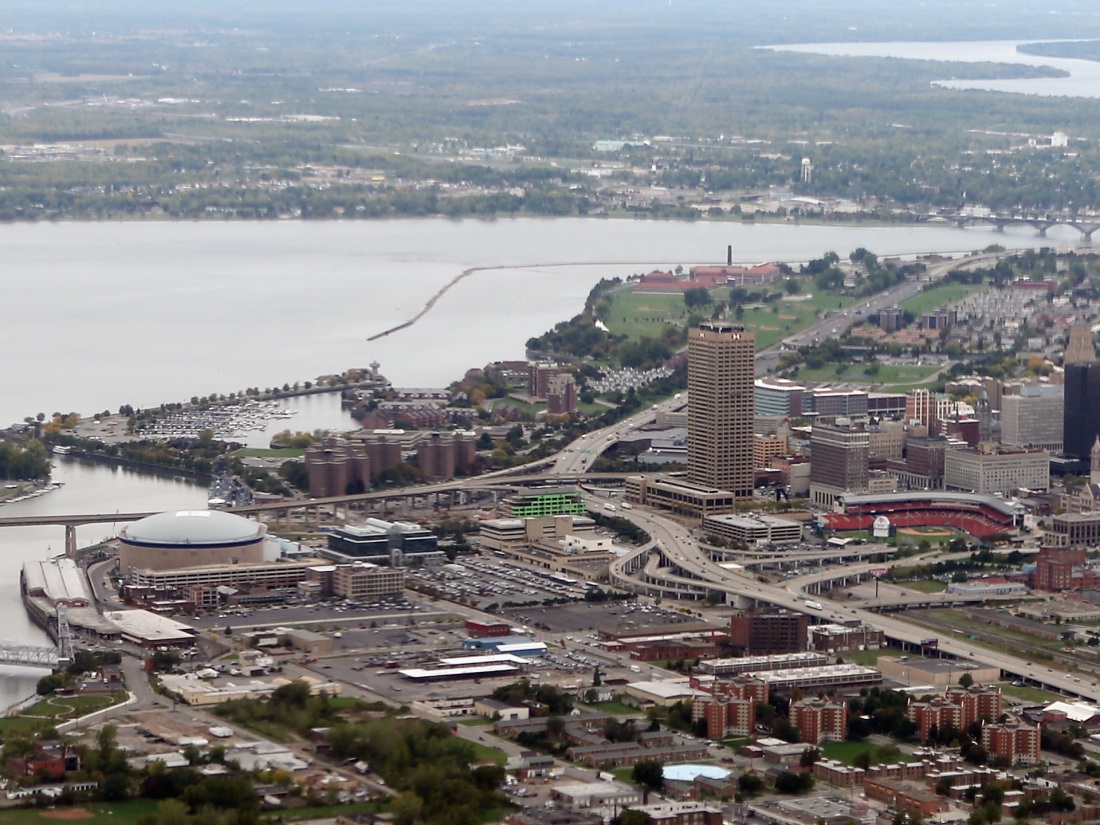
An aerial view of Buffalo, New York, facing Lake Erie.
Bruce Bennett/Getty Images/Getty Images North America
hide caption
toggle caption
Bruce Bennett/Getty Images/Getty Images North America
A lawsuit aims to hold a major plastic polluter accountable
The disposable culture that was fostered by the plastics industry is playing out in places like the Buffalo River, which empties into Lake Erie in western New York. Plastic debris litters the banks of the river, and it breaks down into fragments called microplastics that accumulate in the lake, contaminating drinking water for about 11 million people.
One morning this spring, volunteers met at the river to clean up some of the pollution. “We see plastic tops, bottles, we have single-use plastics from takeout food,” says Jill Jedlicka, who leads Buffalo Niagara Waterkeeper, a nonprofit that organized the event.
It’s constant work. The debris that volunteers collected will be replaced in weeks by more plastic trash. “It’s an onslaught,” Jedlicka says.
A lot of the plastic waste around the Buffalo River is packaging sold by the food and beverage giant PepsiCo, according to a lawsuit that New York State Attorney General Letitia James filed last year against the company. New York prosecutors say plastic pollution around the Buffalo River is a public nuisance, and that Pepsi contributes to the problem by selling tons of single-use packaging.
Activists say lawsuits like the one New York filed against Pepsi are a way to try to hold corporations accountable.
In a court filing, Pepsi said it isn’t responsible for the Buffalo River pollution, and that it shouldn’t have to warn people that plastic waste poses environmental and health risks.
“Consumers are more than capable of purchasing a beverage or snack product, consuming it, and placing the packaging in a recycling or waste bin,” the company said.
Researchers say companies often blame consumers when plastic waste gets into the environment.
Pepsi said in statements to NPR that “no single group or entity bears responsibility for plastic pollution,” and that it is trying to improve recycling and reduce how much new plastic it uses.
However, in its latest sustainability report, Pepsi said its use of new plastic increased slightly in 2022, partly because recycled material was expensive and hard to find. Pepsi isn’t alone: Despite growing public pressure, companies increased their use of new plastic by 11% between 2018 and 2022, according to data compiled by the Ellen MacArthur Foundation.
“There is so much that the plastics industry needs to do to improve the sustainability of plastics,” says Shelie Miller, a professor at the School for Environmental Sustainability at the University of Michigan. But she says consumer culture is also part of the problem.
“If our stance is, consumers should be able to consume whatever they want in whatever quantity they want and it’s someone else’s job to deal with it,” Miller says, “that’s not a path toward sustainability.”


UTAH COUNTY, Utah (ABC4) — Utah County has declared a state of emergency.
According to an announcement from the Utah County Commissioner Skyler Beltran, the county is in a dire position due to the extensive wildfires in the area and high fire risk.
The announcement states that declaring the State of Emergency will allow the county to access additional resources, and notes there is no imminent threat to Utah County residents.
“We have utilized a tremendous amount of our resources (very early in the traditional fire season schedule) responding to the Iron Fire and continue to face ongoing recovery concerns,” the statement read. “This was even before the Maple Peak and Cherry fires, which have now merged and are moving toward the Iron Fire.”
The Iron Fire, which started last week, has burned over 40,000 acres. Around 22,830 of those acres were in Utah County. Reportedly, the county has limited resources available to help those who are evacuating from Juab County, including the 600 residents in the Town of Eureka.
Due to the influx in evacuees, the Utah County Commission says that more resources are necessary to help the evacuation shelters in Elberta, Utah. Additionally, due to the Iron Fire and other wildfires, Utah County is facing immense repair needs to avoid future flooding, loss of homes, and disruption to local economies and ecosystems.
There is “imminent threat” to public safety due to the damage.
The commission also asks the public to be vigilant when handling heavy equipment, using campfires or barbecues, and discharging fireworks, to avoid preventing fires.
Their statement added, “Our firefighters are exhausted, our resources are stretched thin and we are in a very vulnerable position.”
News
A day after Alito’s testy response to Sotomayor’s dissent, court says it was a ‘misunderstanding’

The justices of the U.S. Supreme Court, with Justice Sonia Sotomayor (seated left) and Justice Samuel Alito (seated second from right).
Alex Wong/Getty Images
hide caption
toggle caption
Alex Wong/Getty Images
As the Supreme Court heads into the announcement of its final and hugely important opinions next week, there are reverberations from this week’s announcements, and Justice Samuel Alito’s public rebuke of his colleague Justice Sonia Sotomayor.
On Thursday, Justice Alito summarized from the bench three very big opinions he authored for the court’s six justice conservative majority. Alito, unlike most of his colleagues, doesn’t spend much time on these summaries. And it is rare that a justice has three big opinions to announce, but it is almost the end of the term, and there are a lot of big cases still outstanding.
The first case he announced came and went. Alito then moved on to a second case, this one tests whether migrants may apply for asylum in the U.S. by going to one of several ports of entry along the U.S.-Mexican border, and presenting themselves for admission. This entails presenting documents that persuade an asylum officer that applicants’ fear of persecution in their home country is credible enough to allow them to enter the U.S. while their asylum application is processed. Alito’s opinion ruled in favor of the Trump administration’s policy of refusing all such applicants by blocking them at the border. It was a policy also followed at one time by the Obama administration until it was blocked by the lower courts.
After Alito finished his summary of the opinion, he paused, at which point Justice Sotomayor read a summary of her contrary views in dissent. When she finished, however, Justice Alito did not move on to the announcement of his third opinion. Instead, he did something that nobody in the press corps ever remembers happening before. Looking much as if he had just bitten into a lemon, Alito said, “There is much that I would have added to my bench statement had I known there would be a dissent read.” And he then went on to a short extemporaneous rebuttal.
What caused the hissy fit? Did Sotomayor really fail to tell him she would have an oral dissent? That really would have been a breach of the court’s practices. A justice typically notifies the chief justice and the author of the majority opinion in writing if there is to be an oral dissent.
In response Friday to an inquiry from NPR came this terse statement from the court’s public information office.
“Justice Alito was notified in advance by Justice Sotomayor’s chambers that she would be reading a dissent from the bench. It was a misunderstanding on Justice Alito’s part.”
News
“It’s blood money”: Family of exonerated man in Texas yogurt shop murders speaks out after settlement

The widow and the daughter of Maurice Pierce, one of the four men wrongfully accused in the 1991 Texas yogurt shop murders, have confirmed they signed a multimillion-dollar settlement with the city of Austin.
Kimberli and Marisa Pierce spoke with correspondent Erin Moriarty in a new episode of the podcast “48 Hours: Case by Case.” Moriarty has reported on the yogurt shop murders for over 30 years.
Maurice Pierce’s widow Kimberli made clear that their priority has never been financial compensation. “It’s blood money for us. He died for this money,” Kimberli Pierce said. “It’s about the reform and the changes that need to happen, not only in Austin, but apparently across the country.”
They also went into great detail about what they believe happened when Maurice Pierce was shot and killed by police in 2010.
Maurice Pierce was one of four men, along with Michael Scott, Robert Springsteen and Forrest Welborn, who were wrongfully accused in the murders of four teenage girls in Austin on Dec. 6, 1991. Eliza Thomas, Amy Ayers, and sisters Jennifer and Sarah Harbison were tied up, shot and left inside the yogurt shop as it was set ablaze.
The four men were exonerated in February after investigators linked another man, Robert Eugene Brashers, to the killings. The city of Austin subsequently offered a $35 million settlement. Because Maurice Pierce died in 2010, his share of $10 million will go to Kimberli and Marisa Pierce.
Eight days after the killings, 16-year-old Maurice Pierce was arrested at a mall, carrying a .22, the same caliber handgun connected to the crime. Kimberli Pierce said police told Maurice Pierce that his gun was the murder weapon. He responded by mentioning his friend Forrest Welborn. Maurice Pierce was then wired up and sent to speak with Welborn, but investigators ultimately determined that Welborn and the others knew nothing about the murders, and no charges were filed at that time.
Marisa Pierce has said there was no evidence when her father was questioned, “only a detective and a narrative, a narrative so completely false. It feels evil.”
Nearly eight years later, in 1999, all four men were arrested after Scott and Springsteen confessed to the murders. They later recanted, saying they had been coerced. Springsteen and Scott were tried and convicted, but later those convictions were overturned on constitutional grounds. A subsequent DNA test excluded all four men. Maurice Pierce was never convicted but spent three years in jail before his release in 2003.
Kimberli Pierce said her husband came home a hardened man. She believes police continued to harass Maurice and their family after his release. In 2010, Maurice Pierce was stopped for a routine traffic stop, fled on foot, and was shot and killed by an Austin police officer who said Pierce had stabbed him with a knife.
Marisa and Kimberli Pierce told “48 Hours” that they intend to review the circumstances surrounding the night of Maurice Pierce’s death. Marisa Pierce revealed in new, emotional detail that she was on the phone with her father at the time. She believes he panicked and was only trying to get away, not to hurt anyone. She described her father’s last breaths: “And in those last moments, he had just said I’m sorry, I don’t think you’re gonna see me again, and I love you.”
“48 Hours” reached out to the Austin Police Department about the Pierces’ allegations of harassment and their questions about Maurice Pierce’s death in 2010. The police department said they had no additional comment.
For the Pierce family, the settlement is a starting point, not an end point. They have put forward seven proposed reforms they hope the city of Austin will approve, including appointing a child advocate whenever a minor is questioned, prohibiting deceptive interrogation tactics, educating juveniles about their rights and establishing accountability measures to address tunnel vision in police investigations.
In a statement shared with “48 Hours,” the Pierces wrote: “Real justice is not only about acknowledging harm after the fact but about creating safeguards that prevent future families from enduring the same pain.”
-
 Business38 seconds ago
Commentary: Puncturing the myth of Alan Greenspan, whose policies gave us the Great Recession
-
 Entertainment6 minutes ago
On 10th anniversary, Boleros de Noche’s legacy is celebrated by L.A. City Hall
-
 Lifestyle13 minutes ago
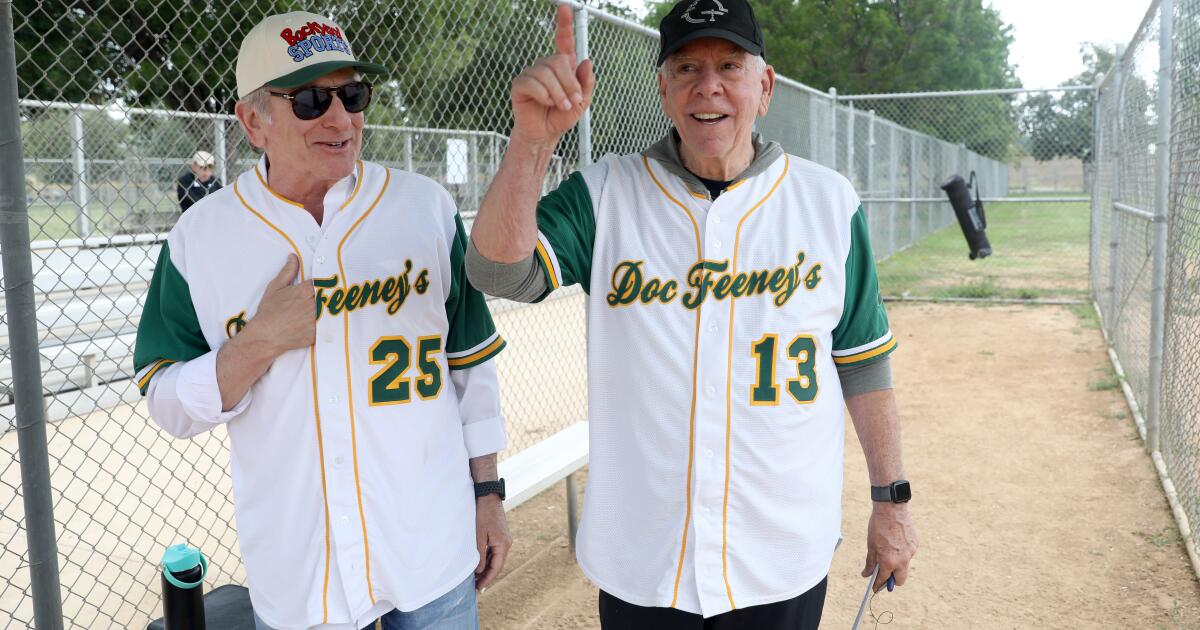
They started playing L.A. Municipal softball 50 years ago. They’re still at it
-
 Politics16 minutes ago
Newsom, California Legislature reach $351.7-billion budget deal
-
 Sports28 minutes ago
Roki Sasaki struggles with command early, Dodgers fall to Padres
-

 World36 minutes ago
Trump threatens 100% tariffs over EU digital tax
-

 News1 hour ago
Utah County declares State of Emergency as wildfires ‘ravage’ the state
-

 Los Angeles, Ca2 hours ago
Man found guilty of sex trafficking victim along L.A.’s Figueroa Corridor

