Mississippi
Miss Mississippi delegates prepare for first night of preliminary competition


JACKSON, Miss. (WLBT) – The Miss Mississippi delegates have been in Vicksburg since Sunday.
Monday night, all 39 rolled through downtown Vicksburg along with Miss Mississippi Vivian O’Neal for the annual parade. Beginning Wednesday night they will take the stage for the first night of preliminary competition.
We talked with three more delegates about Service Initiatives and why they participate in Miss Mississippi.
This is the sixth year Miss Hattiesburg, Katelyn Perry, will compete at Miss Mississippi. Perry says she has grown personally, and each year, she comes back to give it another try.
“I have a very successful 501c3 that I wouldn’t have started if it wasn’t for the confidence that I gained through this organization,” Perry said. “I am getting a Masters’s Degree right now, completely debt-free. I started accumulating scholarship dollars when I was just 12 years old because of this organization.”
Perry has formed a non-profit, Crowns for a Cause, to help raise money for Children’s Miracle Network Hospitals her Service Initiative.
“We have 150 ambassadors from more than 20 states, and I’m able to teach them about why service is so important, and while we do that we advocate for CMN hospitals”, Perry said.
Miss Key to the South Karsyn Ulmer was a semi-finalist in 2023. This is her third year at Miss Mississippi.
Ulmer said, “I almost didn’t come back. I actually waited and competed in the very last prelim.”
Her Service Initiative is Joyce’s Journey named in honor of her aunt.

“My Aunt Joyce, she had Cerebral Palsy, among other disabilities, and I remember being a young girl and going into places with her in public and just seeing people kind of look at her differently, and I hated it because at the end of the day, she was my best friend,” said Ulmer.
Miss Mississippi State University Morgan Nelson is back for a second time. She was also a semi-finalist in 2023.
Nelson said, “It’s truly an opportunity that I want to promote to all girls, young women who look like me and who don’t look like me to be a representative of the state.”
Miss MSU says she wants to help eliminate health disparities and chronic conditions through her Service Initiative.
“Don’t Sugarcoat It encourages Mississippians to just try to eat healthy just for a day,” Nelson said.
Miss Hattiesburg and Miss Key to the South compete in Talent Thursday night. They will be singing. Miss Mississippi State competes in Talent Friday night. She will be dancing.
Each of the six semi-finalists from 2023 received $2,000 scholarships from the Miss Mississippi Corporation. That includes four of the delegates who are back this year, Miss Hattiesburg Katelyn Perry, Miss USM Kat Adcox, Miss Key to the South Karsyn Ulmer, and Miss MSU Morgan Nelson.
Want more WLBT news in your inbox? Click here to subscribe to our newsletter.
See a spelling or grammar error in our story? Please click here to report it and include the headline of the story in your email.
Copyright 2024 WLBT. All rights reserved.



JACKSON, Miss. (WLBT) – Eleven people have been indicted in connection with an alleged Medicaid fraud scheme involving more than $12.3 million.
This according to Mississippi Attorney General Lynn Fitch, who said the indictments involve allegations of fraudulent billing, wire fraud, and/or false documentation seeking to defraud the government.
All 11 charged include:
- Isluv Robertson, 36, of Jackson
- Shawncee Vassar-Cunningham, 51, of Olive Branch
- Katricia Smith, 47, of Olive Branch
- Sheila Boney Collins, 53, of Hollandale
- Ahyana Nicole Crosby, 34, of Laurel
- Angela Nannette Crosby, 51, of Laurel
- Yolanda Evette Blackman, 54, of Hattiesburg
- Linda Jenkins, 46, of Hermanville
- Deja Almore, 30, of Yazoo City
- Curtis Moore, 51, of Gulfport
- Taylor Christian Rushing, 34, of Gautier
Officials said the defendants are accused of participating in health care fraud schemes involving more than $6.5 billion in intended loss.
“These indictments are just the latest efforts we are taking to fight waste, fraud, and corruption,” said Attorney General Lynn Fitch. “I am proud to partner with President Trump to protect taxpayer dollars and ensure that money meant to help those in need is not stolen from safety net programs. I will remain laser-focused on rooting out fraud, recovering money wrongfully stolen from hard-working taxpayers, and holding fraudsters accountable.”
Want more WLBT news in your inbox? Click here to subscribe to our newsletter.
See a spelling or grammar error in our story? Please click here to report it and include the headline of the story in your email.
Copyright 2026 WLBT. All rights reserved.
Mississippi
Governor: At least 47 homes, 50 roads damaged by Mississippi storms, flooding – SuperTalk Mississippi

Gov. Tate Reeves has released updated damage assessments following the severe weather and flooding that inundated parts of southern Mississippi last week.
According to Reeves, assessments through the Mississippi Emergency Management Agency are ongoing, and disaster aid is still being distributed through a mix of federal, state, and local agencies, along with nonprofits. But numbers as of Monday morning showed dozens of homes and businesses damaged and even more public roads affected.

Among the counties with significant impacts are Covington, Forrest, George, Greene, Hancock, Jackson, Pearl River, Perry and Stone. Across those counties and others, at least 47 homes were affected, seven of which were completely destroyed. Nine businesses sustained damaged, six of which are considered major. One farm sustained major damage.
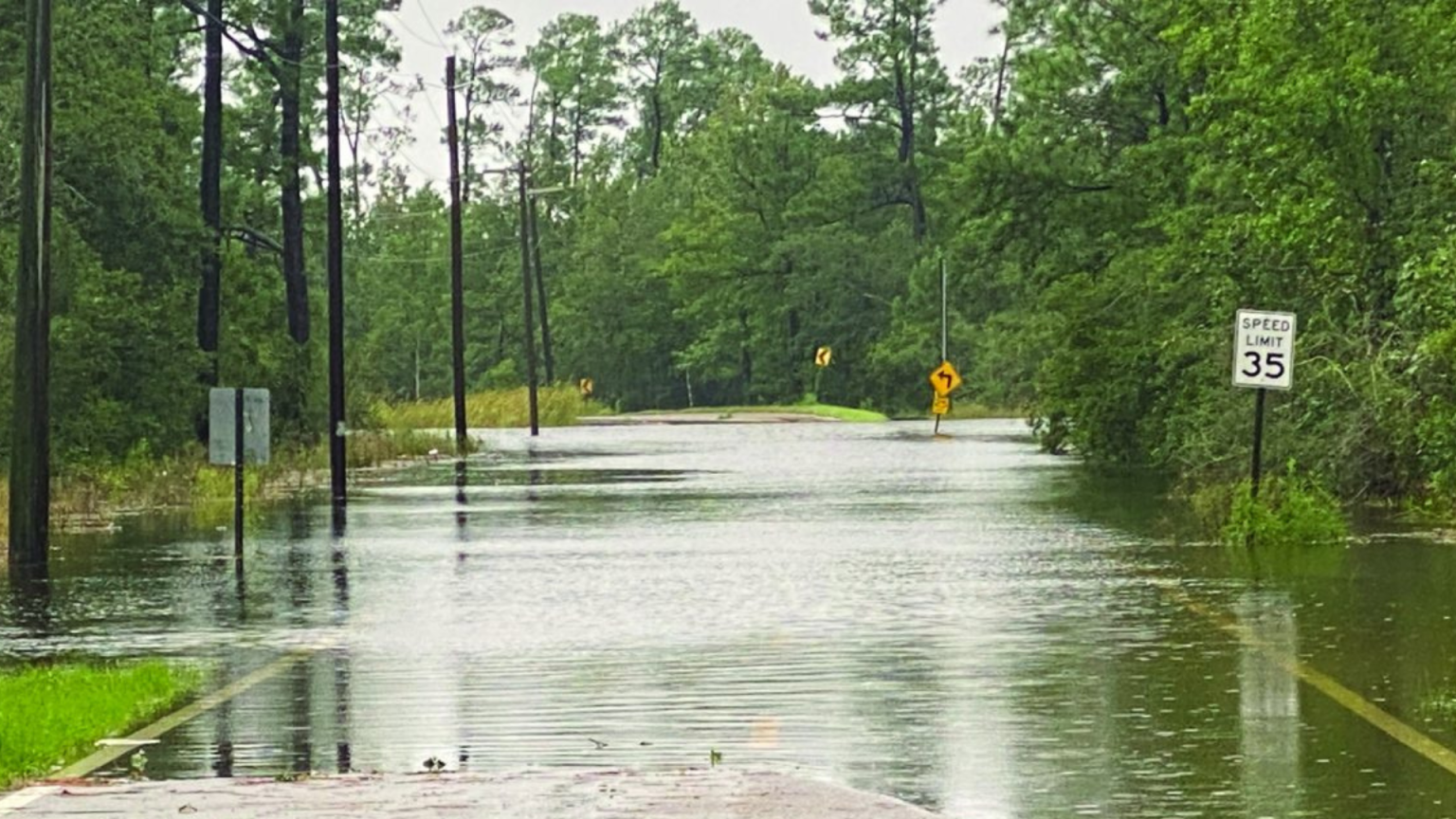
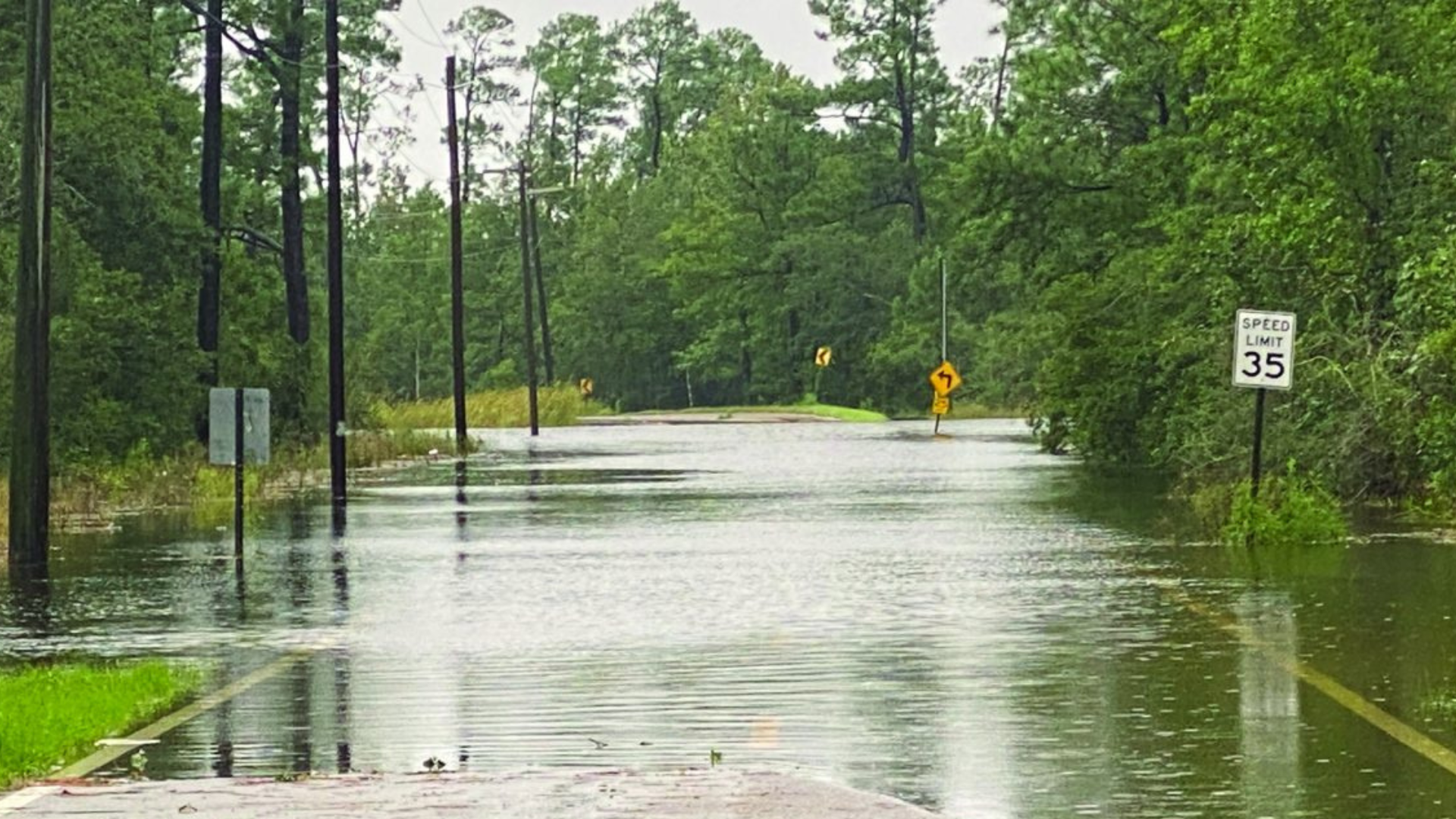
50 public roadways were affected, including four that are considered major and four that were completely destroyed. Two bridges sustained major damage, while two public buildings sustained minor damage.
Reeves said two rivers are in the moderate flood stage – Leaf River near McClain and the Pascagoula River at Graham Ferry.
15 other waterways are in the minor flood stage: Big Black River near Bentonia, Biloxi River near Lyman, Chickasawhay River at Enterprise, Chickasawhay River at Leakesville, East Hobolochitto Creek near Caesar, Pascagoula River at Merrill, Pearl River at Jackson, Pearl River near Pearl River, Pearl River near Philadelphia, Pearl River at Rockport, Strong River at D’Lo, Tallahala Creek at Laurel, Tuscolameta Creek at Laurel, West Hobolochitto Creek near McNeill, and Wolf River around Gulfport.


Damage reports could have worsened on Monday with additional rounds of severe weather in some parts of the state. The worst of the storms and floods came with the remnants of what was Tropical Storm Arthur late last week and into the weekend.

(AP) – A Mississippi family whose 1-year-old child was killed when police fired into a moving vehicle said Monday they want authorities to release video showing whether officers were in danger of being struck when one of them opened fire.
The shooting has sparked outrage in the small city of Senatobia, where some say it’s the latest in a series of troubling encounters between police and Black residents.
Kohen Wiley was riding with his mother and another woman in a Walmart parking lot on June 14 when police responded to a shoplifting call. The family says they were driving away, while the officers say the car was heading toward them.
“I watched my baby take his first breath, and I watched my baby take his last breath,” Vellesiya Wiley said at a news conference Monday.
The other woman in the car, whose name has not been released, suffered “critical injuries,” according to the Mississippi Bureau of Investigation, which is handling the inquiry.
Standing alongside Kohen’s parents and grandparents at a local church, civil rights attorney Ben Crump told reporters Monday that the best way to determine whether the officers were at risk is to publicly release any body camera, dash camera or Walmart security camera video.
“If that is the truth, then show us that,” Crump said. “The longer you delay releasing the video, the more distrustful we become.”
The Mississippi Bureau of Investigation declined to comment on what videos investigators have or whether they would be released, agency spokesperson Bailey Martin said Monday.
“This case has been made a top priority,” Martin said in an emailed statement, “and we currently have multiple agents working tirelessly to ensure every aspect of the investigation is thoroughly examined.”
The agency says the officers weren’t hurt. Senatobia Police Chief Harold Vanderford did not return a phone message seeking comment Monday.
State investigators gave an initial account of the shooting last week, saying that when Senatobia police arrived at the Walmart, they found two women and a child getting into a car and driving away.
“Officers attempted to stop the vehicle, but the driver drove in the direction of the officers, almost striking one. An officer then discharged their weapon and the vehicle fled the scene,” the agency statement said.
Kohen’s mother has said the shoplifting call was over a box of diapers that her friend was carrying — and that she believes her friend had paid for the diapers. State investigators declined to comment on those details.
Crump questioned why police didn’t let the car go and take down the license plate number.
“They were called over a box of diapers and a family now has to bury their baby,” Crump said Monday. “You cannot put those two things next to each other and call it reasonable policing.”
Crump also said an independent autopsy would be performed.
While there’s no question the child was shot by police, he said, details about the angles at which any bullets struck the child could yield clues as to whether the officer fired from in front of the car or off to the side — and therefore whether that officer was in any danger.
Policing expert Ian Adams, who teaches criminal justice at the University of South Carolina, told The Associated Press last week that police should know that “shooting into a moving vehicle is a very bad idea and one to be avoided at almost all costs,” noting the danger to passengers and other bystanders.
Copyright 2026 The Associated Press. All rights reserved.
-

 Alaska35 seconds ago
Air Force’s Fightertown Alaska Plan Takes Shape
-
 Arizona8 minutes ago
Arizona man convicted for role in bringing cocaine to Cincinnati, other US locations for over 5 years
-

 Arkansas10 minutes ago
Registration opens for Arkansas urban deer hunts
-

 California16 minutes ago
Opinion: California is about to get a windfall. Let’s not blow it.
-

 Colorado23 minutes ago
1up Arcade Bar in LoDo pulls the plug as owners prep Lakewood location
-

 Connecticut25 minutes ago
Merrill Recruits Morgan Stanley Branch Manager for Connecticut Market
-

 Delaware30 minutes ago
Delaware County prison warden resigns after just months on the job
-

 Florida38 minutes ago
As Brightline train deaths hit 200+, company rolling out safety plan

